
Printed Gifts Unpacked: A First-Step Category Guide for 2026
The global personalized gifts market is projected to grow from USD 28.47 billion in 2024 to USD 42.25 billion by 2029, according to The Business Research Company. For buyers evaluating sourcing options, printed gifts sit inside this expanding market and cover a wide range of customizable products — from fridge magnets to cleaning sponges, stationery, toys and promotional items. This article is an entry-level reference for buyers who need to understand what printed gifts are, who uses them, which materials and printing processes matter, and what to verify before shortlisting a supplier.
For procurement teams, retailers and brand owners, the term “printed gifts” can be difficult to scope because it overlaps with related categories such as promotional products, souvenirs, stationery and creative household goods. This guide clarifies the category, presents verified market signals, and outlines the technical and compliance details that affect buying decisions.
Why Printed Gifts Matter as a Sourcing Category
Printed gifts is not a single product family. It includes goods made from different materials — paper, plastic, metal, textile, glass and wood — that are customized through printing, embossing, molding or assembly. Because the category is wide, it creates both a challenge and an opportunity for buyers.
The opportunity is efficiency. A manufacturer with a broad product catalog can often support multiple product lines through one relationship, reducing coordination costs for holiday campaigns, corporate gifting programs, retail merchandise and event giveaways. The challenge is scoping: buyers need to clarify which product categories, materials, safety standards and customization paths are relevant to their target market before comparing supplier quotations.
For most first-time buyers, the printed gifts category is most relevant when they need custom branding on functional or decorative products. The category works especially well when a purchasing plan includes several product types and the buyer wants to reduce the number of supplier relationships.
What Counts as Printed Gifts
Printed gifts generally fall into several recognizable product groups:
- Stationery and desk accessories: notebooks, sticky notes, pens, erasers, bookmarks, puzzles.
- Home and lifestyle items: fridge magnets, kitchen gadgets, cleaning sponges, decorative household items.
- Children’s products: DIY craft kits, plastic toys, paper puzzles, educational toys, lanterns, night lights.
- Promotional and corporate items: custom logo gifts, holiday gifts, advertising giveaways.
- Travel and souvenir products: scratch-off maps, travel-themed customs, woven or printed keepsakes.
For manufacturers, the common denominator is customization. Each product can be adapted through logo printing, color changes, material selection or packaging choices to match a buyer’s branding and market positioning. This makes printed gifts a flexible procurement category for businesses that need differentiated merchandise across seasons, audiences and channels.
A Supplier Profile in the Category: Wenzhou Aha Craft Gifts
To understand how printed gifts are produced at the supplier level, it helps to look at a manufacturer that covers multiple product groups. Wenzhou Aha Craft Gifts Co., Ltd. (AHA) is a manufacturer and supplier specializing in custom promotional gifts, creative household products, stationery, toys and packaging supplies. The company is located in Wenzhou, a city with a well-developed light industry cluster and convenient transportation.
Established in 2017, AHA operates from a 2,000 m² manufacturing facility with approximately 100 employees and an R&D team of five engineers. Its main product categories include custom craft gifts, paper products, plastic products, stationery, office supplies, textiles, leather goods, children’s toys, outdoor travel products, beach towels, glass products and metal products.
The company integrates independent design, mold development, mass production, printing, packaging and international logistics into a single service chain. Export business accounts for approximately 100% of total sales. Major markets include the EU, USA, South America/Middle East and Southeast Asia. Its customer base includes wholesalers, retailers, brand owners, e-commerce sellers and corporate buyers.
AHA’s stated annual production capacity is about 5,000,000 units. For mid-size buyers, this level of capacity indicates an ability to handle promotional rollouts and seasonal surges, though actual lead times depend on order complexity and current factory load.
Technical Dimensions: Two Product Examples
Understanding how printed gifts are produced helps buyers evaluate supplier capability. Two examples from AHA’s catalog illustrate the technical range within the category.
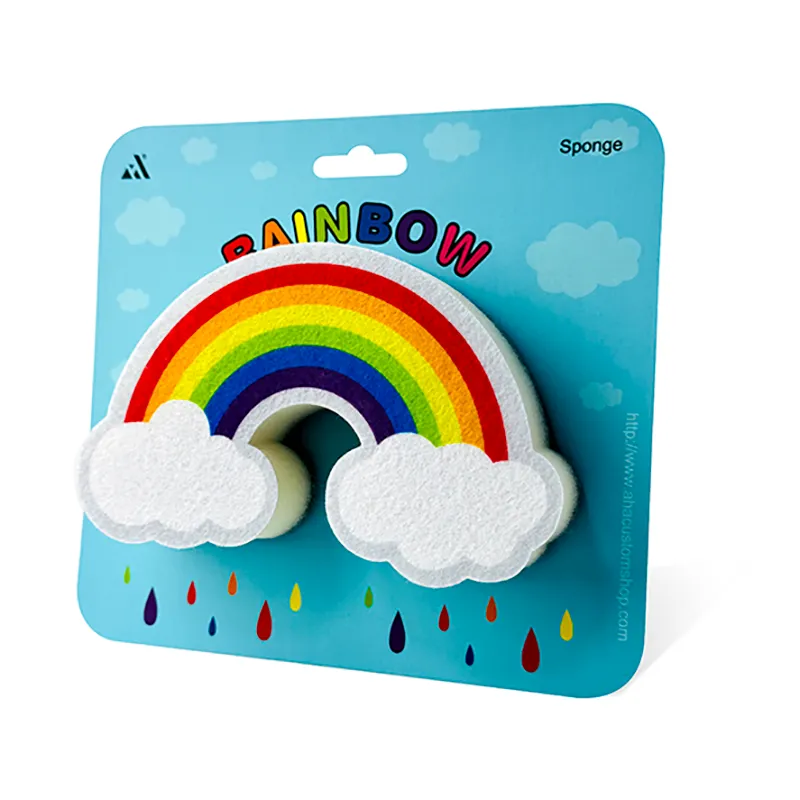
Custom printed gifts can span everyday household products, including colored and shaped cleaning sponges.
Custom Fridge Magnets (AHA-FM Series)
Fridge magnets are a common printed gift used in home decor, tourism souvenirs, corporate gifting and promotional campaigns. The AHA-FM series supports fully customizable sizes from 1″×1″ to 11.75″×11.75″, with thickness options between 0.5 mm and 6 mm. Shapes can be square, rectangular, round or irregular.
Material options include PVC, soft rubber, acrylic and iron magnetic sheets. Printing methods include UV printing, 3D embossing and full-color custom printing. The product line is designed for reuse and fade resistance, with certifications such as EN71, REACH and RoHS available upon request. These certifications matter for buyers selling into the EU and other regulated markets.
Fridge magnets are also a strong entry point for corporate gifting because they are lightweight, low-cost and can carry a logo or design with a short production cycle. Their durability makes them suitable for repeated handling in kitchens, offices and retail settings.
Custom Cleaning Sponges and Scrubbers (AHA-CS Series)
Cleaning sponges represent the functional side of printed gifts. The AHA-CS series includes sponge scrubbers, dish sponges, microfiber cleaning cloths and scouring pads. Standard sizes include 100×60×20 mm and 110×70×30 mm, with thickness adjustable from 10 mm to 50 mm. Materials are customizable — PU sponge, nylon, microfiber, PP and cellulose.
Feature options include custom logo/printing, reusable construction, eco-friendly materials and optional antimicrobial treatment. For kitchen and food-contact applications, the series can be produced with FDA food-grade certification. REACH and RoHS compliance are also available on request.
Cleaning sponges demonstrate that printed gifts are not limited to decorative objects. When a sponge is printed with a corporate logo or a strong color palette, it becomes a daily-use advertising item with repeated consumer exposure. This dual function — practical use plus brand exposure — is one reason functional household products have become a bigger segment within printed gifts.
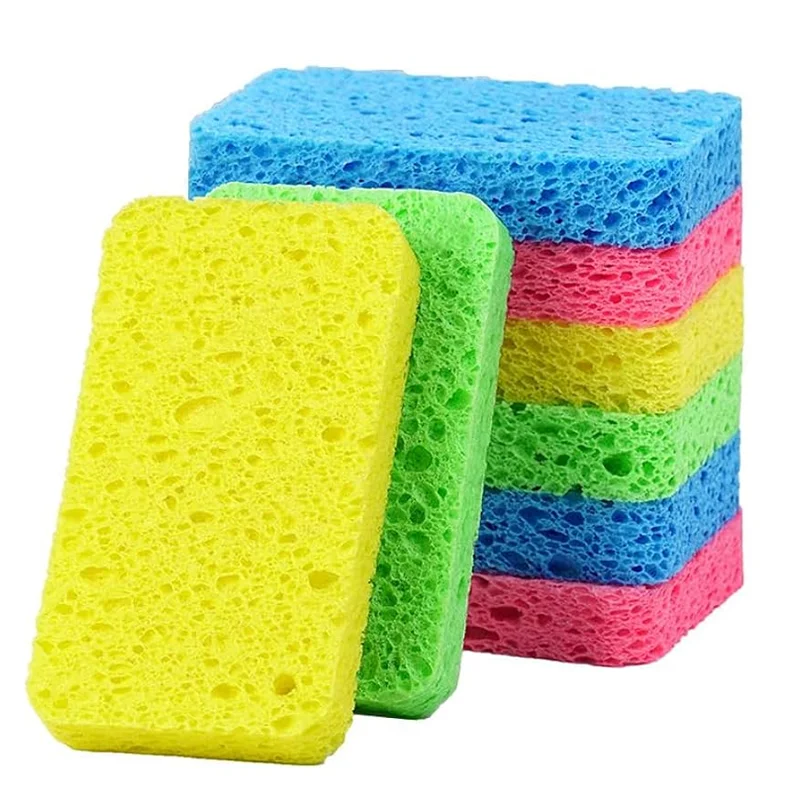
Material and color customization are core options in printed household gifts, especially for products with functional uses.
These two product lines show that printed gifts cover both decorative and functional products. The production chain — material selection, mold development, printing, assembly and packaging — is similar across categories, which is why manufacturers with broad catalogs can often deliver multi-product orders more efficiently.
Applications: Where Printed Gifts Are Used
Field-level application data from AHA’s use-case documentation shows that printed gifts serve multiple industries:
- Promotional and advertising
- Corporate gifting
- Retail and e-commerce
- Tourism and souvenirs
- Education and stationery
- Home and lifestyle
- Event and exhibition
These applications are common in the United States, Germany, the United Kingdom, France, Australia, Canada and Japan.
Each end-use has different buying criteria. Corporate buyers typically emphasize logo accuracy, consistent batch quality and reliable delivery. E-commerce sellers focus on product originality, packaging presentation and logistics efficiency. Tourism buyers look for lightweight, durable and region-specific designs. Education and children’s segments require clear compliance with toy safety standards. Understanding these differences helps buyers direct their sourcing questions and avoid choosing the wrong product configuration.

Fridge magnets represent a widely used printed gift format, with material options including fabric, acrylic, metal, ceramic and flexible PVC.
Market Signals: Growth, Materials and Compliance
Several verified data points help buyers assess the printed gifts category:
| Market Signal | Data | Source |
|---|---|---|
| Global personalized gifts market | USD 28.47B (2024) → USD 42.25B (2029) | The Business Research Company |
| U.S. personalized gifts market | USD 8.92B (2024) → USD 15.19B (2030), CAGR 9.2% | The Business Research Company |
| Paper and board in gift wrapping/craft segment | 78.3% of market revenue in 2023 | Grand View Research |
| Global consumers buying sustainable products | ~47% in 2024 | Deloitte / CraftyTrendy |
Two additional signals matter for procurement. First, paper and board materials dominate the gift-wrapping and craft segment, confirming that paper-based products remain the largest material group in adjacent categories. Second, the 47% sustainable-consumer figure indicates that reusable and eco-friendly printed gifts have a measurable demand base.
For buyers entering the category, these trends suggest that material choice is becoming a selling point, not just a cost item. Eco-friendly claims need to be backed by material documentation and, when relevant, certification.
Compliance Expectations by Market
Children’s craft gifts intended for the U.S. market must comply with ASTM F963-23 (Standard Consumer Safety Specification for Toy Safety) and CPSIA lead/phthalate limits. For the European market, CE marking and compliance with the EN71 series (EN71-1, -2, -3) are required for physical, flammability and chemical safety. Buyers sourcing children’s products should treat these standards as baseline requirements, not optional upgrades.
In the personalized gift space, prominent online platforms such as VistaPrint, Shutterfly, Etsy and Zazzle serve the end-customer segment, while manufacturers like AHA work with wholesalers, retailers, brand owners and corporate buyers in a B2B capacity. Buyers should be aware of this distinction when comparing business models and lead times.
Traditional Sourcing vs. Integrated Manufacturing
In traditional sourcing, a buyer might procure printed products through multiple specialists: one supplier for printing, another for assembly, a third for packaging. This approach can make sense when the product mix is very diverse or when specialized suppliers offer deeper expertise in a specific material category.
AHA, by contrast, operates an integrated model: independent design, mold development, mass production, printing, packaging and international logistics are handled within one chain. For buyers managing multi-product orders, this reduces coordination burden and makes quality control easier to standardize. A single responsible party can be held accountable for the full production cycle.
It is also important to acknowledge a realistic boundary of this model. A single manufacturer, even one with a broad catalog, may not possess the same depth of material expertise as a highly specialized supplier in every category. For example, a buyer sourcing large quantities of precision glass awards or complex textile products may still prefer specialists for those items, even if the rest of the assortment comes from an integrated manufacturer. The right balance depends on the buyer’s product mix, quality requirements and tolerance for coordination overhead.
For typical printed gift applications — stationery, promotional products, household items and simple toys — an integrated manufacturer can offer a faster path from concept to delivery. For highly technical or certification-heavy products, a specialist model may still be necessary.
Future Outlook: What Buyers Should Watch
Several developments are likely to shape the printed gifts category over the next two to three years.
Sustainability will move from preference to requirement. Reusable and eco-friendly printed gifts are already supported by consumer demand. Buyers should expect more inquiries about material sourcing, recyclability and environmental certifications from downstream customers.
Compliance will become a competitive filter. In the children’s segment, ASTM, CPSIA, EN71 and CE requirements are increasingly treated as entry criteria. Suppliers who can document compliance will have an advantage; suppliers who cannot will lose access to regulated markets.
Customization will remain the core value driver. As lead times compress and order sizes diversify, suppliers with strong in-house design and mold development teams can respond faster to market-specific requests. This is particularly relevant for seasonal campaigns and short-run testing.
Integrated manufacturers will continue to gain share in mid-size orders. For buyers who operate across multiple product categories, reducing the number of supplier relationships is an operational advantage. However, the balance between one-stop convenience and specialist depth will remain a judgment call for each sourcing team.
FAQ
What are printed gifts?
Printed gifts are customizable products — such as fridge magnets, stationery, cleaning sponges, toys and promotional items — that carry custom printing, logos, designs or decorative finishes. They are used for promotional, corporate, retail, tourism, educational and home-lifestyle purposes.
Which industries commonly buy printed gifts?
Printed gifts are used in promotional and advertising, corporate gifting, retail and e-commerce, tourism and souvenirs, education and stationery, home and lifestyle, and event and exhibition sectors. Common markets include the United States, Germany, the United Kingdom, France, Australia, Canada and Japan.
What materials are available for printed gifts?
Common materials include paper, cardboard, plastic (PVC, PP), metal, wood, soft rubber, acrylic, textile and glass. Paper and board materials accounted for 78.3% of gift-wrapping and craft market revenue in 2023, making paper-based products the largest material group in adjacent categories.
What printing methods are used for printed gifts?
Common methods include UV printing, screen printing, offset printing, UV digital printing, 3D embossing and embossing/debossing. The appropriate method depends on the material, design complexity, order quantity and cost requirements.
What certifications apply to children’s printed gifts?
For the U.S. market, children’s craft gifts must comply with ASTM F963-23 and CPSIA lead/phthalate limits. For the EU market, CE marking and compliance with EN71-1, -2, -3 are required for physical, flammability and chemical safety.
What should buyers evaluate when choosing a printed gifts supplier?
Key evaluation areas include product range fit, customization capability (design, printing, mold development), production capacity, export experience, quality control, compliance documentation, MOQ flexibility, packaging options and delivery performance. Buyers should verify these factors against their own product roadmap.
How large is the printed gifts–related market?
The global personalized gifts market is projected to grow from USD 28.47 billion in 2024 to USD 42.25 billion by 2029. The U.S. personalized gifts market was valued at USD 8.92 billion in 2024 and is expected to reach USD 15.19 billion by 2030, at a CAGR of 9.2%.
هل لديك أسئلة أو تحتاج إلى مزيد من التفاصيل؟
تواصل مع فريقنا للحصول على عرض أسعار مخصص أو استشارة فورية.
طلب عرض أسعار
املأ النموذج أدناه وسيتواصل معك فريقنا بعرض مقترح مخصص.
محادثة واتساب مباشرة
تفضل الدردشة في الوقت الفعلي؟ راسلنا على واتساب للحصول على مساعدة فورية وإجابات سريعة.
- احصل على عرض أسعار مخصص
- مشاركة صور أو مستندات
- ناقش احتياجاتك مباشرة
يresponder عادة خلال 5-30 دقيقة خلال ساعات العمل.