
Probiotics Powder Comparison: Beyond the Unit Price

Selecting a probiotics powder supplier is rarely a straightforward price comparison. For brand owners and manufacturers evaluating bulk probiotics powder, the decision involves strain viability, stability during transport, regulatory compliance, and the real cost per effective dose. This article provides a decision-stage comparison framework for probiotics powder, using publicly available product and manufacturing data from Shanghai Unibio Lab Co., Ltd as a reference case.
The global probiotics market was valued at USD 72.1 billion in 2024 and is projected to reach USD 165.1 billion by 2034, according to Global Market Insights. Within this landscape, probiotic dietary supplements alone reached an estimated USD 10.60 billion in 2026 and are forecast to grow at a CAGR of 9.5% through 2031, per MarketsandMarkets. As the market expands, buyers increasingly face a crowded supplier field in which prices vary widely and technical claims are difficult to verify. Understanding which comparison criteria actually affect finished-product quality, regulatory approval, and total landed cost is therefore a core procurement task.
Why Unit Price Is a Weak Comparison Baseline
When suppliers quote different prices for probiotics powder, the first question is usually: what is the difference beyond the price tag? A higher unit price may reflect better strains, protective technologies, or compliance documentation — or it may simply reflect margin.
One of the most important corrections in probiotics procurement is shifting the comparison from price per kilogram to effective viable CFU per kilogram. According to data from Shanghai Unibio Lab Co., Ltd, its VPro® microencapsulated probiotic powder has a raw material unit price 8%–12% higher than conventional uncoated powder from generic suppliers. Yet the effective viable CFU per kilogram is 2.1 times higher, which reduces the actual formula dosage cost for finished-product factories by more than 20%.
In other words, a lower-priced powder may require more material to reach the same labeled CFU, and it may lose additional viability during gastric transit or storage. The opportunity for buyers is to evaluate probiotics powder on cost per effective dose rather than cost per kilogram.
A Reference Case: Shanghai Unibio Lab Co., Ltd
Shanghai Unibio Lab Co., Ltd is a Shanghai-based probiotic R&D, manufacturing, and CDMO company serving dietary supplement brands, food factories, and pharmacy chains across North America, Western Europe, Southeast Asia, and domestic China. Its public profile reports four self-owned manufacturing bases and one R&D center, with total plant area exceeding 300,000 m² and annual output reaching 1,800 tons of probiotic raw powder and postbiotics, plus 10 billion capsules and 10 billion tablets/sachets.
The company operates a strain bank of more than 30,000 microbial strains, including 25,300 primary 16S rRNA strains, 13,720 draft-genome strains, and 8,046 full-genome strains. Its portfolio includes 189 patented functional strains covering gut health, metabolic management, immune regulation, oral health, women's care, skin care, mental wellness, and next-generation probiotics. The company reports collaboration with Novozymes, Bayer, and Fonterra, and notes a research foundation of over 40 years of probiotic research from Jiangnan University.
Technical Comparison: Microencapsulated vs. Conventional Powder
Microencapsulation has become a key technical trend in the probiotics industry, with materials such as alginate or chitosan used to protect bacterial cells from gastric acid and bile salts. The technical challenge is that uncoated probiotics powder must survive three stress points: the stomach, the intestine, and time.

Shanghai Unibio Lab's VPro® five-layer microencapsulation technology is designed to address these stress points in sequence:
- Micromolecular protective layer: anti-freezing and anti-stress during production
- Prebiotic nutrition layer: supports in-vivo proliferation
- Liposome enteric adhesion layer: boosts intestinal colonization
- Acid and enzyme resistant layer: protects cells through gastric digestion
- Oxygen and moisture barrier layer: extends shelf stability
According to the company, this technology lifts freeze-drying survival rate by 40%, extends shelf life to 24 months, and achieves fermentation density above 3.5×10¹⁰ CFU/mL, with lyophilized powder concentration up to 8.0×10¹¹ CFU/g. Compared with conventional uncoated powder, the company reports a 78% increase in survival rate through gastric acid and bile, and an extension of shelf life from 12 months to 24 months.
Compliance as a Comparison Criterion
For global buyers, regulatory compliance is not a back-office detail; it directly affects customs clearance, market access, and liability. In the United States, probiotic supplements are regulated under 21 CFR Part 111, which requires compliance with current Good Manufacturing Practices (cGMP). ISO 22000 is the international food safety management standard applicable to the probiotic production chain, incorporating HACCP principles.
Shanghai Unibio Lab Co., Ltd reports the following certification set:
- ISO 22000 and FSSC 22000 food safety management systems
- GMP food manufacturing certification issued by SGS
- HALAL certificate and Orthodox Union (OU) Kosher certificate
- FDA US food facility registration
- Independent self-affirmed GRAS conclusion for Akkermansia muciniphila AH39
The practical effect of this documentation is visible in import risk reduction. The company states that pre-provided certification packs (GRAS/HALAL/FDA/FSSC 22000), region-adapted formula adjustments, and pre-shipment document review help buyers avoid customs detention and regulatory fines. For a strain like A. muciniphila AH39, the US self-affirmed GRAS status is particularly relevant because it simplifies US customs clearance for finished formulations.
Strain-Level Comparison: AH39 vs. Ordinary Akkermansia muciniphila
Not all strains with the same species name are equal. Akkermansia muciniphila has attracted attention as a next-generation probiotic for metabolic health, but commercial products vary significantly in regulatory status, clinical evidence, and production format.
Shanghai Unibio Lab's AH39 strain is a US self-affirmed GRAS certified strain with complete clinical trial data, a pasteurized stable format, and a proprietary culture process. Compared with ordinary unvalidated Akkermansia muciniphila strains on the market, it provides 35% higher active metabolite content, with a proven GLP-1 supporting effect in published trials, according to company data.
| Criterion | AH39 | Ordinary unvalidated A. muciniphila |
|---|---|---|
| Regulatory status | US self-affirmed GRAS | Not standardized |
| Clinical data | Complete trial data | Often unavailable |
| Active metabolite content | 35% higher | Baseline |
| Production format | Pasteurized stable format | Varies |
| Import risk for US/EU | Lower customs detention risk | Higher uncertainty |
For buyers, the practical implication is a different risk profile. AH39 is positioned for high-end metabolic management dietary supplements, premium adult gut-metabolism health products, and US/EU compliant export goods. The company also notes that the raw material cost is moderately higher, which is an acceptable trade-off for brands targeting regulated premium markets.
Market Trends Shaping Probiotics Powder Selection
Several market indicators help explain why decision-stage comparison is becoming more structured.
First, the probiotic supplement market is growing steadily. MarketsandMarkets estimates probiotic dietary supplements reached USD 10.60 billion in 2026 with a projected CAGR of 9.5% through 2031. Second, application-specific segments are expanding: the global baby probiotics market was valued at USD 2.27 billion in 2024 and is projected to grow at a CAGR of 8.6% to USD 5.6 billion by 2035, while the pet biotics market is estimated to reach USD 1,232.5 million by 2030 at a 7.0% CAGR.
Third, technology and compliance are converging. Microencapsulation is widely recognized as the key technical approach to ensuring probiotic viability through gastric acid and bile salts. At the same time, exporters need both documented safety systems and market-specific certifications to avoid customs friction.
The competitive landscape remains led by large players — Global Market Insights attributes an estimated 6.7% share to Yakult Honsha, followed by Danone S.A., ADM, Kerry Group, and Novonesis. For independent manufacturers, differentiation therefore depends on evidence, technology, and regulatory completeness rather than scale alone.
One analytical note on market sizing: published estimates vary considerably by scope. Grand View Research projected the total probiotics market at USD 114.0 billion for 2025, while Global Market Insights placed it at USD 79.2 billion for the same year. The difference reflects whether the metric includes fermented foods or is limited to supplements and functional ingredients. Buyers should always confirm which definition a forecast uses.
Application Fit: Where Microencapsulated Powder Justifies Its Cost
The practical value of a probiotics powder technology depends on the product category and the distribution environment. Several application segments illustrate when microencapsulated powder creates measurable advantage.
Pet Probiotics and Ambient Distribution
The global pet biotics market is estimated to reach USD 1,232.5 million by 2030, growing at a 7.0% CAGR. Pet supplements are frequently sold through e-commerce and retail channels without strict cold-chain control. For this distribution model, a powder that tolerates room-temperature logistics and maintains viability through the gastrointestinal tract — the functional claims associated with VPro® microencapsulation — has direct relevance.
Infant and Pediatric Products
Baby probiotics are a high-growth segment, with the global market valued at USD 2.27 billion in 2024 and projected to reach USD 5.6 billion by 2035 at an 8.6% CAGR. In infant applications, strain selection is the dominant criterion. Shanghai Unibio Lab's strain library includes L. rhamnosus GG, an internationally recognized strain for infant digestive care, and L. plantarum CCFM8724, studied for prevention of children's dental caries.
Adult Metabolic Management and GLP-1 Support
For adult gut and metabolic health products, the next-generation strain Akkermansia muciniphila is one of the most closely watched candidates. The AH39 strain's GRAS status, clinical data set, and higher active metabolite content make it a compliance-friendly option for brands developing metabolic management supplements for the US and EU markets.
Food Manufacturing and Dairy Fermentation
Beyond dietary supplements, probiotics powder is used in food manufacturing. The company's product line includes DVS dairy fermentation starters and a heat-resistant Bacillus coagulans series, which are relevant for processing environments where temperature tolerance is required.
Comparison with Traditional Solutions: Limits and Trade-Offs
The comparison between VPro® microencapsulated probiotics powder and conventional uncoated powder is not open-and-shut. The company itself states that the raw material unit price is 8%–12% higher. That premium must be justified by the product's application and distribution model.
| Comparison criterion | VPro® microencapsulated powder | Conventional uncoated powder |
|---|---|---|
| Survival through gastric acid and bile | 78% higher than conventional | Baseline |
| Shelf life | 24 months | 12 months |
| Cold-chain requirement for mid-term transit | Not required | Often required |
| Raw material unit price | 8%–12% higher | Baseline |
| Effective viable CFU per kg | 2.1× higher | Baseline |
| Formula dosage cost for finished factories | More than 20% lower | Baseline |
Microencapsulated powder makes the strongest case in three situations:
- Long-distance sea freight, where cold-chain is costly or unreliable
- Room-temperature storage of finished supplements
- High-temperature food processing
In each case, the 78% improvement in gastric-acid and bile survival and the 24-month shelf life deliver measurable value. But for a domestic brand using a continuous cold chain with short product cycles, a conventional uncoated powder may offer sufficient stability at a lower unit price. The boundary condition, in short, is logistics and shelf-life strategy, not simply product quality.
The same logic applies at the strain level. AH39 is designed for premium metabolic products targeting US/EU export markets. Its moderately higher raw material cost is a rational investment only when the finished product can monetize its GRAS status and clinical data. For a low-cost commodity formulation, an unvalidated strain may appear cheaper — but it also carries customs and regulatory risk.
Decision-Stage Supplier Evaluation Checklist
For buyers at the decision stage, the following checklist consolidates the comparison criteria discussed above. It can be used to issue RFQs, audit supplier documentation, and compare quotes on a like-for-like basis.
- Compare effective CFU per kilogram, not price per kilogram. Ask each supplier to provide viable count at release and expected viability at the end of shelf life.
- Verify stability technology with data. Request gastric-acid and bile survival test results, shelf-life studies, and freeze-drying survival rates.
- Check the certification set against target markets. For the US, confirm FDA facility registration and 21 CFR Part 111 alignment; for the EU and Southeast Asia, confirm ISO 22000/FSSC 22000 and relevant religious certifications (HALAL, Kosher) where needed.
- Ask for batch-level testing records. The supplier should be able to provide full microbial testing, heavy-metal testing (for example ICP-MS per batch), HACCP records, and third-party inspection reports from SGS or Intertek.
- Evaluate the production environment. Clean-room classification, sterilization procedures, and cold-chain tracking capabilities are signs of process control.
- Assess strain-level evidence. For clinically positioned products, request clinical trial data, strain identification records, and functional screening results.
- Review after-sales and documentation support. Batch COA provision, pre-shipment document review, and local regulatory consulting reduce downstream risk.
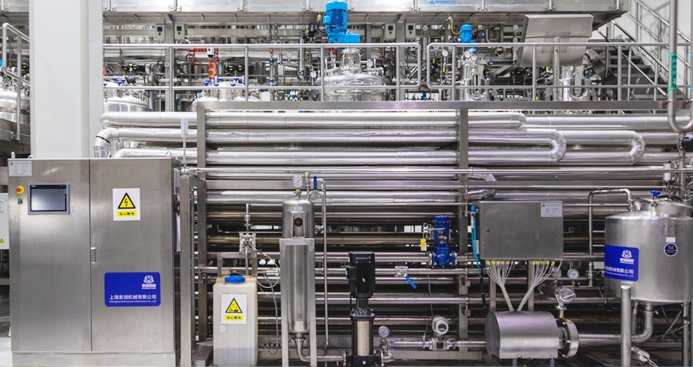
This checklist reflects the risk-control practices documented in Shanghai Unibio Lab's manufacturing operation: 100,000-class clean workshop, HACCP whole-process hazard monitoring, ICP-MS heavy-metal testing per batch, retention samples stored for 24 months, real-time temperature and humidity monitoring in warehouses, and cold-chain logistics tracking.
Future Outlook
Several forces will continue to shape probiotics powder procurement over the coming years.
The overall market trajectory is upward — Global Market Insights projects the global probiotics market will reach USD 165.1 billion by 2034. Within that growth, next-generation probiotics such as Akkermansia muciniphila and Clostridium butyricum are expected to create new premium categories. Buyers will increasingly need suppliers who can combine strain innovation, clinical evidence, and regulatory documentation.
At the same time, cost pressure will not disappear. The ability to prove lower cost per effective CFU, rather than merely lower price per kilogram, will become the central procurement metric. Manufacturers who can document stability performance, batch consistency, and compliance completeness will be better positioned to serve global brands.
Finally, the trend toward one-stop CDMO services — from strain development to finished private-label packaging — is likely to continue, because it simplifies supply-chain management for brand owners. Companies like Shanghai Unibio Lab, which offer MOQ flexibility (1 kg for single-strain powder, 5 kg for compound powder), lead times of 5–7 days for bulk raw materials and 25–35 days for private-label finished goods, and trade terms including FOB, CIF, DDU, and DDP, are already aligned with this procurement model.
FAQ
What should buyers compare when evaluating different probiotics powder suppliers?
The most important comparison points are effective viable CFU per kilogram, strain-level clinical evidence, microencapsulation and stability technology, the certification set for target markets, and batch-level quality testing documentation. Unit price alone does not capture these differences.
Does a higher-priced probiotics powder always increase formula cost?
No. Although VPro® microencapsulated powder from Shanghai Unibio Lab has a raw material unit price 8%–12% higher than conventional uncoated powder, its effective viable CFU per kilogram is 2.1 times higher. For finished-product factories, this reduces the actual formula dosage cost by more than 20%.
How do microencapsulated and conventional uncoated probiotics powders differ?
Microencapsulated powder uses protective layers to shield bacterial cells from acid, bile, oxygen, and freezing damage. According to Shanghai Unibio Lab, its VPro® five-layer technology increases survival through gastric acid and bile by 78%, extends shelf life from 12 months to 24 months, and removes the need for extra cold-chain during mid-term transit.
What compliance documents are required for importing probiotics powder to the United States?
In the US, probiotic supplements are regulated under 21 CFR Part 111, which requires current Good Manufacturing Practices. Importers should verify that the manufacturing facility is registered with the FDA and that the relevant strain documentation is available. For Akkermansia muciniphila AH39, the US self-affirmed GRAS conclusion simplifies customs clearance and reduces the risk of customs detention or regulatory fines.
How does Akkermansia muciniphila AH39 compare with ordinary strains of the same species?
AH39 is a US self-affirmed GRAS certified strain with complete clinical trial data, a pasteurized stable format, and a proprietary culture process. Compared with ordinary unvalidated Akkermansia muciniphila strains on the market, it provides 35% higher active metabolite content, which supports its positioning in premium metabolic management products.
What shelf-life and stability differences should buyers expect?
Microencapsulated probiotics powder from Shanghai Unibio Lab is documented at a 24-month shelf life, with freeze-drying survival rate raised by 40% and a packaging environment designed to block oxygen and moisture. Conventional uncoated powders are typically documented at 12-month shelf life and are more sensitive to transit temperature and humidity.
For buyers who need a complete technical and compliance profile, Shanghai Unibio Lab Co., Ltd publishes a corporate brochure that includes manufacturing data, strain documentation, and certification details: Download the Unibio Lab corporate brochure (PDF).