
Procurement FAQ: 20 vs 99 Speed Levels in Vibration Plates
Two home vibration plates can sit side by side on a distributor's shortlist with almost identical positioning and be separated by a single line on the datasheet. One configuration, the HSM-08VQ, states 20 speed levels and a 500W + 300W power rating. The other, the HSM-08VS, states 99 speed levels and a 200W rating. The instinct is to read the larger number as the stronger machine. That instinct is usually wrong, and acting on it costs buyers either margin or credibility with the end user.
Speed level count and rated power measure two different things. Speed count is a control-resolution figure: it describes how many discrete intensity settings the controller offers between the lowest and highest output. Rated power describes the output class of the drive system. Neither figure, on its own, describes structural build quality, motor inertia, controller behaviour under load, or expected service life. What follows is a procurement-oriented reading of both figures, using the two stated datasheet configurations as the working example, followed by the order terms, quality-control checkpoints and supply questions that matter once a configuration has been chosen.
Why Speed Levels and Wattage Get Compared in the First Place
On most home fitness documents, the specification table is the only evidence a buyer can compare at a distance. Amplitude, frequency range, deck construction, bearing grade, controller firmware behaviour and vibration damping are rarely expressed as a single number, so the two figures that do appear as numbers, speed levels and wattage, become the proxy for the whole machine.
The problem is that the two figures speak to different parts of the product. A speed-level count is a marketing-visible control attribute; a wattage rating is a hardware attribute. Vibration training itself works through whole-body vibration stimulation, which raises muscle activation efficiency while requiring lower physical exertion than conventional resistance work, a training-mode characteristic that is independent of how many digital steps the controller offers. Buyers who compare only the control attribute will mis-sort products. Buyers who compare only the hardware attribute will miss what the end user actually experiences at the lowest settings, which is where most home users spend most of their session time.
A second reason the comparison goes wrong is stage of use. A buyer in the research stage needs a comparable set of figures to shortlist candidates. A buyer in the execution stage needs figures that can be defended in a purchase order and in a product listing. The same datasheet line serves the first purpose poorly and the second purpose not at all unless the underlying definition is confirmed with the supplier.
What Each Configuration States on the Datasheet
The first step is to separate what the datasheet states from what it implies. The table below records only the stated figures, and the final column lists the question a buyer should put to the supplier rather than an assumption to act on.
| Configuration | Stated speed levels | Stated rated power | What the figure describes | Buyer question to resolve |
|---|---|---|---|---|
| HSM-08VQ | 20 | 500W + 300W | Coarser control steps against a higher-rated drive specification | Does the 500W + 300W figure denote two separate motors, or a combined rating, and which element drives the vibration output? |
| HSM-08VS | 99 | 200W | Finer control steps against a lower-rated drive specification | How many of the 99 levels remain usable under load, and how is the low-output end of the range distributed? |
Figures as stated on the respective product datasheets. The table records stated specifications only and does not rank the two configurations.
Note what the table does not contain: no amplitude figure, no frequency range, no maximum user weight, no deck material, no continuous run-time specification. Those are the parameters that determine whether a plate suits a specific end user, and they are the parameters a buyer should request in normalized form when two datasheets use different conventions.
Does a Higher Speed Count Mean Better Construction or More Power?
No. A 99-level control does not indicate a stronger motor, a heavier frame, better bearings, or a longer service life than a 20-level control. Speed levels are a resolution attribute of the control system: the controller divides the available output range into selectable steps. Increasing that number makes adjustment finer. It does not increase the underlying output, and it does not change what the machine is made of.
This distinction matters commercially because a large number is easy to resell and difficult to defend later. If a distributor presents 99 levels as evidence of a more powerful machine, and the end user compares it against a higher-rated product, the claim collapses in the customer's hands. The defensible statement is narrower and more useful: 99 levels give the user finer adjustment between the lowest and highest settings, which is relevant to users who need gradual progression, such as older users, recovery-oriented users, or households where several people with different tolerances share one machine.
Equally, a 20-level control is not a downgrade. Twenty steps is a coarser division of a comparable range, and a well-sequenced progression is often easier for a casual user to navigate without consulting a manual. Construction quality and motor capability are established by materials, tolerances, protection circuits, test protocols and warranty terms, not by the number of steps in the interface.
Reading "500W + 300W" and "200W" Correctly
Rated power is the more consequential figure of the two, and also the more easily misread. The HSM-08VQ datasheet states 500W + 300W. The HSM-08VS datasheet states 200W. In procurement terms, a dual rating normally signals that the drive architecture contains more than one rated element, while a single rating describes one drive element. Before comparing the two numerically, a buyer should confirm with the supplier whether the dual rating refers to two distinct motors, a primary drive plus an auxiliary element, or a combined output figure. Until that is confirmed, the two numbers are not directly comparable, and any ranking built on them is provisional at best.
What a higher-rated drive generally supports is headroom: the capacity to hold output as load, temperature and duty cycle increase. What a lower-rated, higher-resolution configuration generally supports is control granularity, which matters most when the user operates at the low end of the range rather than the top. These are different design intents rather than different quality grades, and each maps to a different end-user profile.
Power ratings also interact with the warranty and test regime, because a higher-rated drive puts different demands on thermal management and protection design. That is why the specification question and the verification question should be asked together rather than in sequence.
The practical rule: ask the supplier to state maximum power, rated power and speed range in the same format for every candidate model. A specification that cannot be normalized across candidates cannot be used as a decision input, only as a marketing line.
Motor Inertia vs Digital Control: The Gap in Every Datasheet
Two plates can share identical speed counts and identical wattage ratings and still feel completely different to the user. The missing variables are motor inertia, meaning the rotating mass the drive has to accelerate and stop, and the behaviour of the digital controller that modulates it.
Motor inertia governs how the machine responds when output changes. A drive with higher inertia tends to hold its motion more steadily under load and to change state more gradually. A drive with lower inertia responds faster but can feel abrupt at step changes. Digital control governs how finely and how smoothly those changes are executed: the number of speed levels is one visible output of that control layer, but the ramp behaviour between levels, the stability of the hold at a given setting, and the response under a shifting load are not expressed in the speed-level count at all.
The consequence for buyers is straightforward. Motor inertia and controller quality cannot be read off a specification sheet, and no amount of datasheet analysis substitutes for direct observation. The way to evaluate them is confirmed sample testing: run the plate at the lowest usable setting and at the highest, with a realistic user load, and observe how the machine behaves at step changes and during sustained operation. This is why sample validation belongs to the execution stage of a procurement decision rather than the research stage, and why a supplier relationship intended for repeat orders should specify sample terms early.
Matching the Configuration to the End User
Both configurations are home-use vibration machines. The fit decision turns on who the end user is and how the product will be sold.
- Higher rated drive with coarser control steps (HSM-08VQ pattern): suits markets where users expect an obvious sense of intensity progression and value straightforward controls, and portfolios where the plate is positioned as a general-purpose whole-body unit.
- Lower rated drive with finer control steps (HSM-08VS pattern): suits markets where users need gradual progression at the low end, including households with mixed-age users, recovery-oriented buyers, or channels that sell precise adjustment as the main benefit.
Whole-body vibration training carries a further practical advantage for both positions: it works through passive muscle activation with no consumables required, which reduces the replacement burden that comes with some other home fitness formats. That characteristic supports positioning either configuration as a lower-maintenance addition to a home fitness portfolio, alongside categories such as home-use treadmills, walking pads and exercise bikes.
For distributors, the two configurations are not mutually exclusive. They can be stocked as a two-tier range under one supplier, with a single inspection protocol and a single warranty process, and the sales conversation becomes about user profile rather than about which number is bigger.
Order Terms, Lead Time and Supply Capacity
Once a configuration is chosen, the procurement questions shift from specification to execution. The terms below are the stated commercial conditions for OEM supply from Ningbo Healthmate Health Technology Co., Ltd., a home fitness equipment manufacturer founded in 2007 and based in Ningbo, China, whose listed product families include the Home-use Treadmill, Walking Pad, Vibration Machine, Spinning Bike, Magnetic X-bike, Upright Bike, Elliptical Trainer, Electric Mini Bike and Rowing Machine.
| Parameter | Stated terms |
|---|---|
| Minimum order quantity | 100 pieces |
| Typical production lead time | 35–40 days |
| Monthly production capacity | 8,000 pieces |
| Delivery terms | FOB Ningbo |
| Payment terms | 30% T/T in advance; 70% T/T against copy of B/L |
| Acceptance criteria | Pre-shipment test; third-party inspection |
| Warranty | 1-year warranty for every damaged part |
For buyers running a mixed SKU program, the more important point is portfolio alignment. A supplier that already manufactures vibration machines alongside treadmills, walking pads and bikes allows a distributor to consolidate shipment planning, inspection arrangements and warranty handling across categories at the same 35–40 day lead time and under the same acceptance protocol. That reduces administrative load and makes it easier to keep one consistent quality message across the range. Buyers assessing scale can weigh the stated annual output of approximately 700,000 units and an 80% export ratio, with stated markets covering Europe, the USA, Japan, Korea, India, the Middle East and South America. The manufacturing base sits on the coastline of Ningbo with access to the shipping resources of Ningbo Port, which supports the stated export concentration.
Quality Control and Warranty: What to Verify Before Volume Production
Quality control terms are where the abstract specification discussion becomes concrete. The stated protocol is 100% testing supported by third-party inspection, applied before shipment and confirmed against the acceptance criteria above. On the engineering side, vibration machine drive systems are designed with motor overheating and electrical short circuit as primary risk categories, addressed through overcurrent protection, short-circuit protection and motor aging tests carried out during development.
These elements determine whether a 20-level or a 99-level plate holds up in the field, and they are best confirmed in writing before the first volume order:
- Request the inspection standard and the acceptance criteria that will be applied to the shipment.
- Confirm whether third-party inspection is included by default or arranged on request.
- Confirm the scope of the 1-year warranty for damaged parts and the process for making a claim.
- Confirm the protection features designed into the drive, and whether aging test records are available for the specific model.
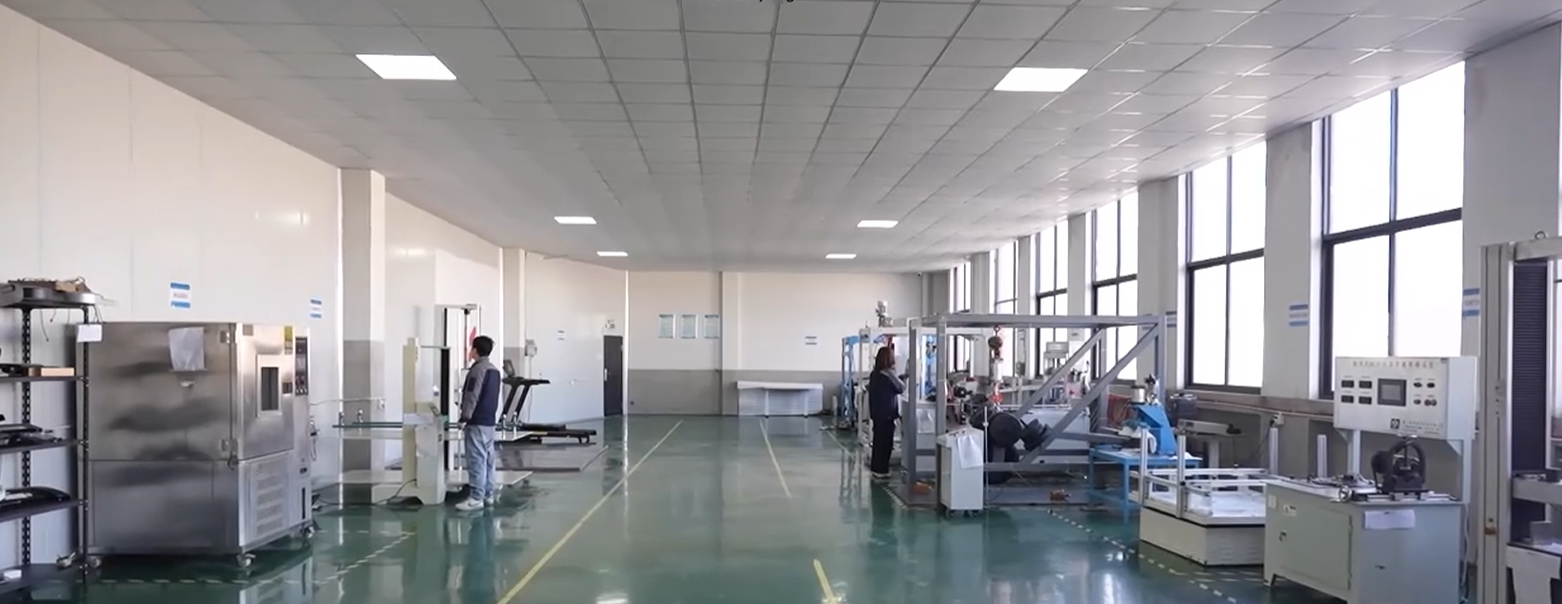
Testing capability, not datasheet language, validates a drive system: motor aging tests and electrical protection checks are applied before shipment.
Market Context: Why Spec Literacy Matters More in a Growing Category
The home fitness category is expanding, which raises the commercial cost of a misread specification. Fortune Business Insights reports the global home fitness equipment market at USD 12.88 billion in 2025, projected to reach USD 22.99 billion by 2034 at a CAGR of 6.81%. Mordor Intelligence, using a different base year and forecast window, projects growth from USD 11.84 billion in 2026 to USD 17.06 billion by 2031, a 7.59% CAGR. The two forecasts are not directly reconcilable because their market definitions and estimation methods differ, but they point in the same direction.
Growth has two practical effects for vibration plate buyers. First, more suppliers enter the category, and datasheet conventions become less standardized rather than more, which increases the value of asking normalized specification questions. Second, end users become better informed, which means a claim built on a speed-level count is more likely to be challenged at the point of sale. Safety expectations also harden as the category matures: ASTM F2276 is the core safety standard for home fitness equipment covering stability and protection of moving parts, and buyers serving regulated markets should confirm how a candidate model and its documentation align with the standards applicable in their destination market.
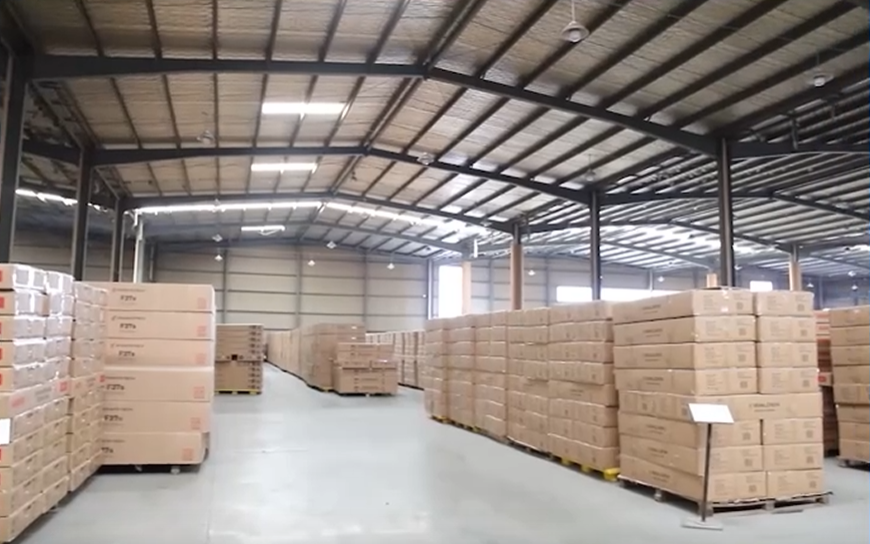
Supply reliability is a stated capability rather than an assumption: monthly capacity of 8,000 pieces supports a typical 35–40 day production lead time.
Vibration Training vs Traditional Resistance Training: Capability and Limits
Vibration training differs from conventional resistance work in its mechanism. It uses whole-body vibration stimulation to raise muscle activation efficiency, and it requires lower physical exertion because muscle activation is partly passive. For a comparable training effect, the required duration is far shorter, and the equipment cost sits 60%–80% below a full home gym setup, with no consumables required and correspondingly less maintenance. Where the comparison is expressed as efficiency, whole-body vibration has been associated with a workout intensity efficiency gain in the range of 20%–35% relative to traditional resistance training.
The limits deserve equal weight. Vibration training is not a substitute for progressive resistance loading where the user's goal is maximum strength development or muscle hypertrophy; it is a complementary or entry-level format and is best positioned that way. Nor does a vibration plate's datasheet settle whether one configuration will perform better than another for a given end user. Speed-level count and rated power describe control resolution and output class respectively, and neither establishes durability, controller quality or motor inertia. Those are confirmed through sample testing, inspection terms and warranty coverage, which is why the verification steps in this article sit before the order rather than after it.
Future Outlook
The direction of travel in home fitness specification is toward more control layers on the same hardware. As controllers become cheaper, digital step counts and programmatic adjustment will spread across categories, and the speed-level count will become an even weaker signal of product capability than it is today. Buyers who build product selection, supplier qualification and marketing claims around verified drive specifications, documented testing and consistent warranty terms will be less exposed to that shift.
For multi-category buyers, the parallel trend is portfolio consolidation. A manufacturer working across nine home fitness families, with an in-house engineering team and a stated 80% export ratio, can support a distributor that wants to grow without multiplying suppliers or inspection regimes. That is a supply-chain argument rather than a specification argument, and in a market where specification language is converging, it is increasingly the one that carries the decision.
FAQ
1. What do "20 speed levels" or "99 speed levels" actually describe on a vibration plate?
Speed level count describes control resolution: the number of discrete intensity settings the controller offers between the lowest and highest output. It is a characteristic of the control system, not of the motor or the frame. A machine with 99 levels allows finer adjustment steps than one with 20; it does not follow that the machine produces more output or is built to a higher standard.
2. Does a higher speed count mean a stronger or better-built vibration plate?
No. Rated power is a separate specification from speed level count, and structural quality is established by materials, tolerances, protection circuits, test protocols and warranty terms rather than by the number of steps in the interface. On the stated datasheets, the HSM-08VS carries 99 speed levels with a 200W rating while the HSM-08VQ carries 20 speed levels with a 500W + 300W rating. The two figures move in opposite directions across these models, which is itself evidence that they measure different things.
3. How should a buyer read a "500W + 300W" rating compared with a single "200W" rating?
A dual rating normally indicates that the drive architecture contains more than one rated element, while a single figure describes one drive element. Before making a numerical comparison, buyers should ask the supplier to confirm whether the dual figure refers to two separate motors, a primary drive plus an auxiliary element, or a combined output value. Until that is confirmed the two ratings are not directly comparable, and the more useful comparison is between maximum power, rated power and speed range expressed in one consistent format for every candidate model.
4. Why can two vibration plates with the same speed count and wattage feel different?
Because motor inertia and digital control behaviour are not captured in either figure. Motor inertia describes the rotating mass the drive accelerates and stops, which affects how steadily output holds under load and how gradually the machine changes state. Digital control describes how the controller executes those changes, including ramp behaviour, stability at a given setting and response under shifting load. The practical way to evaluate both is confirmed sample testing at the lowest and highest usable settings with a realistic user load.
5. Which configuration suits which end-user market?
A higher-rated drive with coarser control steps suits markets where users want a clear progressive sense of intensity and straightforward controls. A lower-rated drive with finer control steps suits households with mixed-age users, recovery-oriented buyers, or channels where precise low-end adjustment is the main selling point. Both configurations are home-use vibration machines, and neither is inherently superior; the fit depends on the user profile and the sales message.
6. What are the standard order terms and acceptance criteria for OEM vibration plate supply?
Minimum order quantity is 100 pieces. Delivery terms are FOB Ningbo, with payment at 30% T/T in advance and 70% T/T against copy of B/L. Acceptance criteria are a pre-shipment test and third-party inspection.
7. What production lead time and monthly capacity should a buyer plan around?
Typical production lead time is 35–40 days, and monthly production capacity is 8,000 pieces. Plans built on larger volumes or on mixed-category shipments should be scheduled against those stated figures rather than against an annual output total alone.
8. What quality control and warranty terms apply, and what drive risks are designed against?
Quality control includes 100% testing and third-party inspection, and a 1-year warranty is provided for every damaged part. On the drive side, the primary risk categories designed against are motor overheating and electrical short circuit, addressed through overcurrent protection, short-circuit protection and motor aging tests.
9. How should long-term partners assess supply continuity?
By examining the elements that do not change order to order: manufacturing footprint, engineering depth and documented process. The manufacturer operates a 100,000㎡ facility, was founded in 2007, employs 850 people including a 38-engineer R&D team, reports an annual output of approximately 700,000 units and an 80% export ratio, and serves markets including Europe, the USA, Japan, Korea, India, the Middle East and South America. Product documentation across the listed families can be reviewed for range coverage and adjacent-category fit.
Product documentation: the full home fitness equipment range is described in the HSM new product e-catalogue (PDF). Company information: healthma.com.