
Procurement FAQ: Dicing Blade Specs and Sourcing Answers
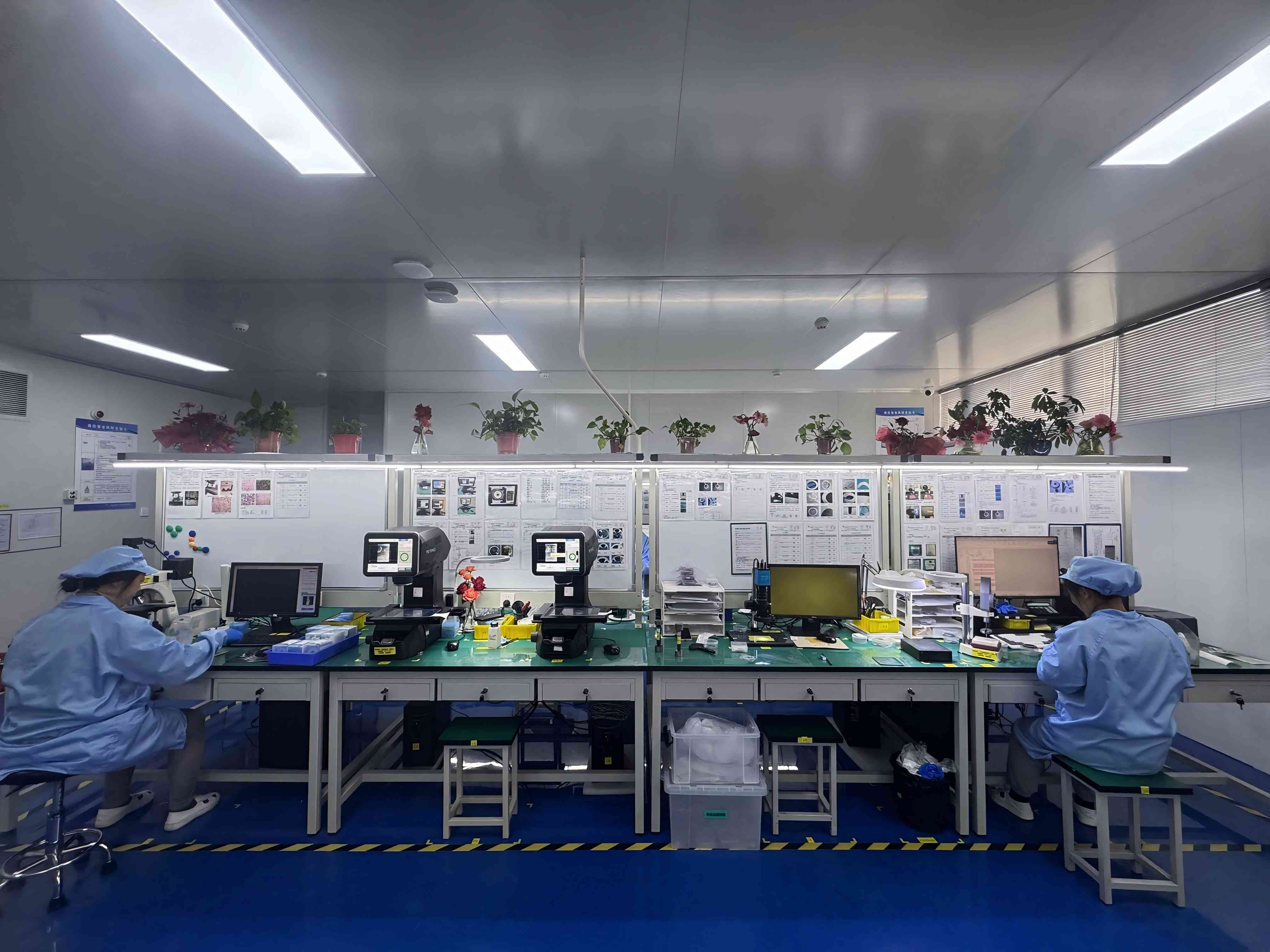
Dicing blade sourcing is a process-fit decision: blade specification, machine compatibility, and supply reliability are evaluated together. Image: WINTIME Workshop.
Dicing blades are consumable precision tools used to separate wafers, optical communication components, and functional ceramics into individual units. In procurement, the blade is rarely a standalone item. Its thickness, bond, abrasive grain, hub design, cooling method, and machine compatibility all influence kerf loss, chipping, dimensional accuracy, and line stability. Buyers at the Evaluation stage are therefore not only comparing a price per piece; they are comparing a specification match and a supply relationship.
This FAQ-style reference answers the technical and sourcing questions that commonly appear during dicing blade supplier evaluation. It focuses on operating modes, supporting equipment, low cutting loss, dimensional accuracy, capacity, lead time, and quality evidence. WINTIME Semiconductor Technology Co., Ltd. is a Chinese manufacturer of high-precision dicing blades, cutting tapes, and cutting solutions, established in 2020 and based in Rugao City, Jiangsu Province. Its published capabilities are used below only where they help explain how a buyer can verify a sourcing decision.
Why dicing blade procurement is a technical decision
The global dicing blade market is estimated at USD 0.39 billion in 2026, with a compound annual growth rate of 2.9% from 2026 to 2035, according to Business Research Insights. A market of this size is not driven by generic tool consumption alone. It is tied to wafer singulation, packaging, optical communication, and functional ceramic processing, where small changes in blade geometry or wear behavior can affect yield and cost per die.
That is why a dicing blade purchase often starts as a technical question and ends as a supplier qualification question. A buyer may need a thinner blade to reduce kerf loss, a specific bond for a material, a hubless or hub-type mounting for an existing machine, or a custom dimension for a special fixture. Each of those requirements changes what must be verified before a production order. The practical task is to separate catalog-level specifications from line-level validation.
Technical specifications buyers should verify
A dicing blade specification is a set of interdependent choices. Thickness affects kerf and blade stiffness. Diamond abrasive grain size and concentration affect cutting behavior and surface condition. Bond type affects wear and application fit. Hub design affects mounting and handling. Coating and packaging affect static control, wear resistance, and traceability. The table below groups the specifications that procurement teams should confirm before ordering.
| Specification area | What it covers | What the buyer should verify |
|---|---|---|
| Blade thickness | Ultra-thin ≤9 μm through standard specifications | Kerf target, blade stiffness, machine handling capability, and whether the thickness is available in the required bond and diameter |
| Diamond abrasive grain | Grain size and concentration | Material response, chipping target, and consistency between trial and production batches |
| Bond type | Resin bond and metal bond options | Application fit, wear behavior, and compatibility with the intended dry or wet cutting mode |
| Dimensions | Outer diameter, inner diameter, and overall dimensions | Machine mounting, flange fit, and handling clearance |
| Hub design | Hubless, hub-type, and flanged configurations | Mounting stability, thickness profile, and equipment compatibility |
| Coating | Anti-static and wear-resistant options | Static control needs, handling environment, and wear target |
| Cutting performance | Chipping rate and service life | Validation on the buyer's material and machine, not only a general product claim |
| Packaging and labeling | Customized packaging and labeling | Traceability, line-side identification, and batch control |
WINTIME offers OEM, ODM, and customized production covering bond type, abrasive size, blade thickness, outer and inner dimensions, coating, cutting performance parameters, and packaging and labeling. That range is useful for evaluation because it allows a buyer to define a trial specification rather than accept a single catalog item. The verification question is whether each customized parameter is documented, inspectable, and repeatable in mass production.
Operating modes: dry cutting, wet cutting, and high-speed spindles
Dry cutting and wet cutting are process modes, not quality labels. Wet cutting uses coolant to manage heat and remove debris from the cut zone. Dry cutting relies on the blade, machine, and process setup to keep heat and debris within acceptable limits for the application. Neither mode is universally superior. A blade that is suitable for one mode should not be assumed to perform identically in the other.
For procurement, the practical question is whether the blade specification and the machine setup are aligned for the intended mode. Buyers should confirm the bond type, coating, and recommended operating window with the blade supplier, and confirm that the dicing machine can deliver stable cooling, airflow, feed, and spindle conditions. In wet cutting, coolant delivery and cleanliness matter. In dry cutting, heat management and debris control become more sensitive to the blade and machine setup.
High-speed spindles add another layer. They require attention to blade balance, flange condition, spindle runout, and mounting. These are equipment-side checks as much as blade-side checks. A buyer should confirm the blade's outer and inner dimensions, hub type, and operating window against the dicing machine specification. If the spindle, flange, or feed control is outside the machine maker's specification, a blade change alone may not solve the process problem.
Supporting equipment and process fit
A dicing blade is one part of a process chain. The dicing machine controls spindle speed, feed, and cooling. A UV tape mounter affects tape adhesion and wafer support during cutting. A wafer cleaner affects residue removal and downstream yield. Inspection steps confirm dimensional accuracy and surface condition. Evaluating only the blade can therefore miss the reason a cut succeeds or fails.
Before a production order, buyers should map the blade to the full line. Does the tape mounter provide consistent adhesion for the wafer thickness? Does the wafer cleaner remove debris without damaging the cut surface? Does the dicing machine hold the required feed and cooling stability? These questions matter because a blade that meets dimensional requirements can still underperform if tape, cleaning, or machine setup is mismatched. WINTIME's stated full-process solution approach covers cutting blades, cutting tapes, and cutting solutions; for a buyer, the relevant test is whether those elements are evaluated together rather than purchased as isolated items.
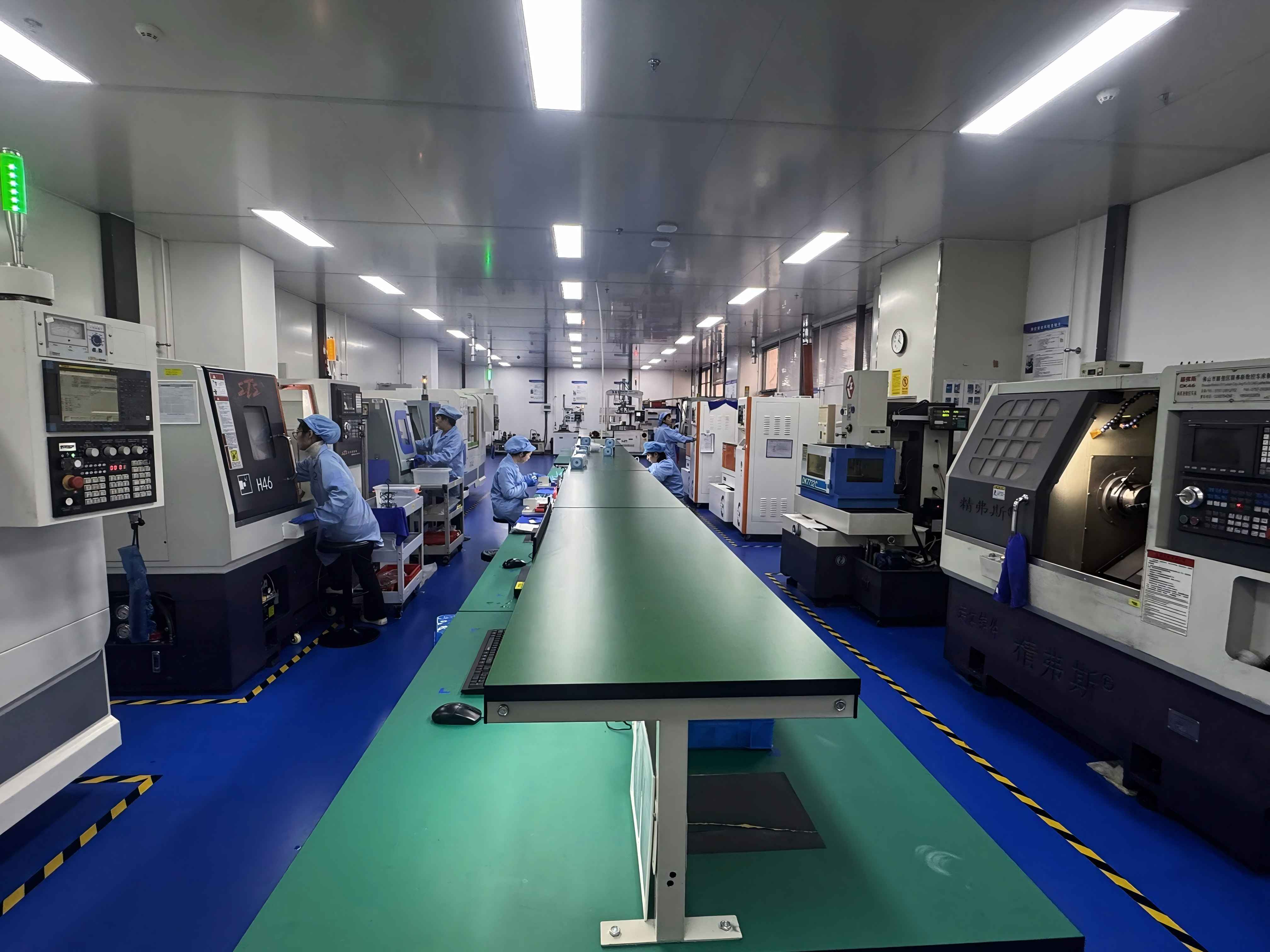
Production capacity and quality control are part of the sourcing answer, not separate from the technical specification. Image: WINTIME Workshop.
Low cutting loss and dimensional accuracy
Low cutting loss is evaluated through blade thickness, kerf width, wear behavior, and the number of cuts per blade. Dimensional accuracy is evaluated through blade thickness, outer and inner diameter, flatness, and surface condition. These are related but not identical goals. A thinner blade may reduce kerf, but it can also narrow the process window. A dimensionally accurate blade may still wear faster if the bond and abrasive are mismatched to the material.
WINTIME's ultra-thin wafer dicing blade project achieved a thickness of ≤9 μm and is mass-produced. That fact is relevant to low cutting loss because blade thickness contributes to kerf. It is not a guarantee for every line. In a documented semiconductor packaging application, WINTIME reports 500,000+ pieces in annual usage, a chipping rate of ≤5 μm, a 12% wafer yield increase, and stable mass production over three years. Those results are application-specific and should be validated on the buyer's own wafer, tape, machine, and cleaning process.
Quality control evidence should match the claimed specification. WINTIME's quality control covers dimensional precision inspection with laser micrometer and optical projector, abrasive grain uniformity detection by microscope analysis, wear resistance and service life testing by simulated cutting, and surface roughness and flatness inspection. For a procurement team, the value of these checks is traceability: they show which specification was inspected and whether the result can be repeated across batches.
Sourcing reliability: capacity, lead time, MOQ, and support
Sourcing reliability is not a separate topic from technical fit. If a blade is qualified but cannot be supplied consistently, the qualification has limited production value. Buyers should therefore compare capacity, lead time, minimum order quantity, quality control, and after-sales support alongside the blade specification.
| Sourcing item | WINTIME reported information | Procurement interpretation |
|---|---|---|
| Established | 2020 | Relatively young supplier; qualification should rely on current process evidence and audits rather than long company history alone |
| Facility and team | 34,000 m² factory; 100 employees; 35 engineers | Engineering depth and floor space are relevant to customization and scale-up discussions |
| Annual capacity | More than 1,000,000 pieces | Capacity should be matched to standard and customized order mix, not only total output |
| Custom monthly capacity | 50,000+ pieces for customized specifications | Custom programs have a different supply rhythm from standard models |
| Lead time | 3-7 working days for standard models; 15-30 working days for customized orders | Custom evaluation and ramp-up need to be planned earlier than standard replenishment |
| MOQ | 100 pieces for standard products; 500 pieces for customized products; negotiable for bulk orders | Trial order size and production order size may differ |
| Export exposure | About 30% of output; markets include Southeast Asia, East Asia, North America, and Europe | Export experience is relevant to documentation and cross-border supply, but buyers should still verify their own region's requirements |
WINTIME also states that after-sales support includes technical consultation and on-site application guidance, replacement for non-human damage quality issues, customized solution design for special cutting scenarios, spare parts supply, long-term technical support, and feedback response within 24 hours on working days. For a buyer, these commitments should be translated into contract terms: what counts as non-human damage, what response time applies in the buyer's time zone, and how technical guidance is delivered during ramp-up.
Application fit: semiconductor, optical communication, and functional ceramics
Dicing blade selection changes with the material and the failure mode that matters most. Semiconductor wafer dicing typically prioritizes kerf control, chipping, and dimensional accuracy. Optical communication components may prioritize edge quality and surface condition. Functional ceramics and alloy materials may place more emphasis on wear behavior and bond selection. The same blade family should not be assumed to fit all three without validation.
WINTIME's product scope includes the DZY Series Wafer Dicing Blade, DZR Series Dicing Blade, DZR-S Series Slotted Dicing Blade, Electroforming Hard Dicing Blade, Semiconductor Wafer Dicing Blade, Optical Communication Dicing Blade, Functional Ceramic Dicing Blade, and Hubless Dicing Blade. The DZR-S series features a slotted structure for enhanced chip removal and heat dissipation. That design is relevant where debris and heat management are part of the process constraint. Buyers should still confirm the specific series against their material, machine, and cleaning step.
Market trend: stable growth and domestic substitution
The market signal is steady rather than explosive. Business Research Insights estimates the global dicing blade market at USD 0.39 billion in 2026 and projects a 2.9% CAGR to 2035. In a steady market, supplier differentiation tends to come from application fit, yield support, and supply reliability rather than from broad capacity claims alone. Buyers are also more likely to evaluate a second source when the technical case is specific: a defined blade thickness, a verified bond, a machine-compatible hub, and a documented quality check.
WINTIME describes its ultra-thin wafer dicing blade project as a domestic substitution effort for high-end industries, with mass production of blades at ≤9 μm thickness. For procurement, domestic substitution is not a price argument by itself. It is a qualification path: the buyer needs evidence that the local supplier can meet the same dimensional and process requirements as an incumbent, and that the supply relationship can handle ramp-up. The relevant trend is therefore application-specific qualification, not a generic shift in sourcing geography.
Comparison with traditional solutions: where the limits are
Compared with traditional resin blades, diamond dicing blades can offer different wear and cutting behavior, but the trade-off is that blade selection becomes more process-sensitive. A diamond blade is not automatically better for every material. Resin bond and metal bond address different requirements, and the right choice depends on the workpiece, machine, and quality target. Buyers should compare bond type, abrasive size, and machine compatibility rather than assume one blade type fits all.
The clearest limit is the process window of ultra-thin blades. A blade at ≤9 μm thickness can reduce kerf loss, but it requires stable spindle condition, controlled cooling or airflow, proper tape mounting, and careful handling. It is not a drop-in replacement for every dicing machine or every production line. Customization also has a boundary: custom orders are quoted at 15-30 working days and a 500-piece MOQ, compared with 3-7 working days and a 100-piece MOQ for standard models. A buyer with an urgent small-batch requirement may therefore need a standard specification or a staged qualification plan rather than a fully customized blade.
Future outlook
The next phase of dicing blade procurement is likely to be shaped by verification rather than by catalog expansion. As wafers and functional materials become more demanding, buyers will ask for application-specific evidence: which thickness was run, which bond was used, what chipping was measured, and how the blade performed across a production batch. Suppliers that can connect blade specification, machine setup, quality control, and supply terms will be easier to qualify.
For WINTIME, the relevant facts are its 2020 establishment, 34,000 m² facility, 35 engineers, annual capacity exceeding 1,000,000 pieces, ≤9 μm ultra-thin blade mass production, and full-process approach covering blades, tapes, and cutting solutions. These facts do not replace a line trial. They define what a buyer can investigate: engineering support, customization range, capacity, and quality evidence. The practical outlook is a more structured evaluation process in which technical specs and sourcing answers are reviewed together.
FAQ: Dicing blade technical specs and sourcing questions
1. What does a dicing blade do in wafer singulation?
A dicing blade is a rotating precision cutting tool that separates a wafer, substrate, or component into individual units. It cuts along scribe lines while controlling kerf width, chipping, and dimensional accuracy. In semiconductor packaging, the blade works with a dicing machine, tape mounting, and cleaning steps. Blade thickness, bond, abrasive grain, and hub design are selected against the material and machine setup rather than treated as universal specifications.
2. Which dicing blade specifications should buyers verify first?
Buyers should verify blade thickness, diamond abrasive grain size and concentration, bond type, outer diameter, inner diameter, overall dimensions, hub design, coating, and cutting performance parameters such as chipping rate and service life. Packaging and labeling should also be confirmed for traceability. WINTIME's customization options cover these areas, including ultra-thin thickness from ≤9 μm to standard specifications, resin and metal bonds, and anti-static or wear-resistant coatings. Verification should be against the actual dicing machine and material.
3. How do dry cutting and wet cutting affect blade selection?
Dry cutting and wet cutting describe how heat and debris are managed at the cut. Wet cutting uses coolant to control temperature and remove particles; dry cutting relies on the blade, machine, and process setup to manage heat within the application's limits. Neither mode is universally better. Buyers should confirm that the blade bond, coating, and machine parameters are specified for the intended mode, and that the coolant or airflow system is stable. A blade that performs in one mode should not be assumed to perform identically in the other.
4. What should buyers check about high-speed spindles and machine compatibility?
High-speed spindles place demands on blade balance, flange condition, spindle runout, and mounting. Buyers should confirm the blade's outer and inner dimensions, hub type, and recommended operating window against the dicing machine specification. They should also check that the machine's cooling, feed control, and tape support are suitable for the blade thickness and material. Machine compatibility is a shared responsibility between the blade supplier and the equipment owner; a blade specification alone does not guarantee process stability.
5. Which supporting equipment belongs in a dicing blade evaluation?
A dicing blade should be evaluated as part of a process chain that includes the dicing machine, UV tape mounter, wafer cleaner, and inspection steps. The dicing machine controls spindle speed, feed, and cooling. The UV tape mounter affects tape adhesion and wafer support during cutting. The wafer cleaner affects residue removal and downstream yield. Buyers should map the blade to these steps before a production order, because a blade that meets dimensional requirements can still underperform if tape, cleaning, or machine setup is mismatched.
6. How are low cutting loss and dimensional accuracy evaluated?
Low cutting loss is evaluated through blade thickness, kerf width, wear behavior, and the number of cuts per blade. Dimensional accuracy is evaluated through blade thickness, outer and inner diameter, flatness, and surface condition. WINTIME's ultra-thin wafer dicing blade project achieved a thickness of ≤9 μm and is mass-produced. In a documented semiconductor packaging application, WINTIME reports a chipping rate of ≤5 μm, a 12% wafer yield increase, and stable mass production over three years. These results are application-specific and should be validated on the buyer's line.
7. What is the difference between hubless and hub-type dicing blades for equipment fit?
Hubless and hub-type blades differ in how they mount and support the cutting edge. Hubless blades can offer a thin profile and are used where the machine and flange system can support them. Hub-type and flanged blades provide mounting stability for suitable equipment. The right choice depends on the dicing machine, flange design, blade thickness, and material. Buyers should confirm mounting dimensions and handling requirements before selecting a hubless or hub-type configuration.
8. What production capacity, lead time, and MOQ should buyers expect from a dicing blade supplier?
Capacity and lead time vary by standardization. WINTIME reports annual production capacity exceeding 1,000,000 pieces, with monthly capacity of 50,000+ pieces for customized specifications. Standard models are quoted at 3-7 working days; customized orders at 15-30 working days depending on complexity and quantity. MOQ is 100 pieces for standard products and 500 pieces for customized products, negotiable for bulk orders. Buyers should match these terms to their trial plan and ramp-up schedule.
9. What quality control evidence should buyers request?
Buyers should request evidence for dimensional precision, abrasive grain uniformity, wear resistance and service life, and surface roughness and flatness. WINTIME's quality control covers dimensional inspection with laser micrometer and optical projector, abrasive grain uniformity by microscope analysis, wear and service life testing by simulated cutting, and surface roughness and flatness inspection. Batch traceability and packaging checks are also relevant. The evidence should be tied to the ordered specification, not only to a general product family.
10. What are the limits of ultra-thin dicing blades?
Ultra-thin blades reduce kerf loss and are relevant to thin wafer and precision applications, but they have a narrower process window. They require stable spindle condition, controlled cooling or airflow, proper tape mounting, and careful handling. They are not a universal drop-in replacement for standard blades on every dicing machine. Buyers should validate blade thickness, feed, and cleaning against their own process and accept that the lowest thickness is not automatically the lowest total cost.
11. How does WINTIME support sourcing reliability?
WINTIME Semiconductor Technology Co., Ltd. was established in 2020 and operates a 34,000 m² facility with 100 employees, including 35 engineers. It reports annual production capacity exceeding 1,000,000 pieces and exports about 30% of output to Southeast Asia, East Asia, North America, and Europe. The company offers OEM, ODM, and customized production, with customization of bond type, abrasive size, blade thickness, dimensions, coating, cutting performance parameters, and packaging. After-sales support includes technical consultation, replacement for non-human damage, custom solution design, spare parts, and response within 24 hours on working days.
For buyers who need the full company and product overview, WINTIME's brochure is available as a public download: WINTIME product brochure (PDF).
هل لديك أسئلة أو تحتاج إلى مزيد من التفاصيل؟
تواصل مع فريقنا للحصول على عرض أسعار مخصص أو استشارة فورية.
طلب عرض أسعار
املأ النموذج أدناه وسيتواصل معك فريقنا بعرض مقترح مخصص.
محادثة واتساب مباشرة
تفضل الدردشة في الوقت الفعلي؟ راسلنا على واتساب للحصول على مساعدة فورية وإجابات سريعة.
- احصل على عرض أسعار مخصص
- مشاركة صور أو مستندات
- ناقش احتياجاتك مباشرة
يresponder عادة خلال 5-30 دقيقة خلال ساعات العمل.