
Procurement FAQ: Sourcing Adhesive Resins and Tougheners for OEM Production
Independent Industry Reference — Chemicals / Polymer Additives

Grafted tougheners such as the KT-35 polyester series are supplied as commercial grades; the specification sheet, not the category label, determines process fit.
Maleic anhydride grafted polymers are bought for what they do at an interface: they give a non-polar polyolefin a polar handle that can bond to a filler, a barrier resin, a polar engineering plastic, or an overmolded elastomer. The commercial difficulty is that the same chemistry reaches the market under three functional labels — adhesive resin, toughener, compatibilizer — and OEM buyers frequently receive quotations that carry identical labels but materially different engineering content.
This reference is written as a procurement FAQ for OEM production teams evaluating grafted adhesive resins and tougheners. It is organized around the questions that separate a qualified supplier from a merely responsive one, and every answer is anchored either in documented product data from Shenyang Ketong New Materials Co., Ltd. (KETONG) or in clearly attributed third-party market research.
Why the question set matters more than the price sheet
A grafted polymer is a specification-driven purchase. Two grades sold under the same family name can differ in maleic anhydride content band, melt flow rate, carrier resin and recommended dosage, and those four variables determine whether the material disperses cleanly in a twin-screw compound, whether it wets a glass fiber, whether it can be co-extruded as a thin tie layer, and whether it survives an injection-molding cycle without odor or gel formation.
The published market context supports the scale of the category rather than the price of any single grade. Straits Research estimated the global maleic anhydride grafted polymer market at USD 1.00 billion in 2025 and projected a 4.62% compound annual growth rate for 2026–2034, with North America accounting for 38.27% of that value in 2025. Market Growth Reports estimated global maleic anhydride grafted polypropylene production at 220,000 metric tons in 2024, with 41% of it used in thermoplastic composites and compound formulations. These figures describe a maturing additive category in which supplier differentiation is increasingly technical rather than purely commercial.
The opportunity for an OEM buyer is straightforward: because the category is technically segmented, a structured question set produces a real competitive advantage. Suppliers who can answer grade-level questions quickly tend to be the ones with in-house grafting and compounding, because those answers come from their own production records rather than from a distributor's catalogue.
Three functional families, one chemistry
The first procurement mistake is treating adhesive resin, toughener and compatibilizer as interchangeable names for one product. They describe different jobs in the compound, and the correct family follows from the failure the OEM is trying to fix.
| Functional family | Primary job in the compound | Typical grafted carrier | Typical KETONG series |
|---|---|---|---|
| Adhesive resin | Bonding layer or tie layer between dissimilar polymers, and adhesion to polar barrier resins and substrates | MAH-g-PE, MAH-g-PP | KT-NJG3304, KT-NJP2201, KT-NJP7103, KT-NJ001, KT-NJE2202, KT-NJE2202A |
| Toughener | Impact modification of a brittle or notch-sensitive matrix without destroying stiffness | POE-g-MAH, EPDM-g-MAH, SEBS-g-MAH, GMA-g-POE, acrylate elastomer | KT-913, KT-915, KT-915H (PA); KT-8 (PA); KT-25 (PA); KT-17 (PC); KT-35 (polyester); KT-28A (POM); KT-4 (ABS) |
| Compatibilizer | Stabilizing an interface inside a compound: filler coupling, polymer alloy, recycled or filled system | MAH-g-PP, MAH-g-PE, MAH-g-ABS, MAH-g-PPO, MAH-g-EVA, MAH-g-polyester elastomer | KT-1 series and LEP low-odor PP; KT-12 series PE; KT-2 series, LEP-2 low-odor ABS; KT-24 series PPO; KT-26 series EVA; KT-36 biodegradable |
An OEM part can legitimately require two of the three families at once. A glass-fiber reinforced polypropylene housing may use a PP-g-MAH compatibilizer for fiber coupling and a separate toughener for impact retention; a multi-layer barrier film uses an adhesive resin as the tie layer between polyolefin and EVOH or polyamide. The purchasing consequence is that the bill of materials should be written by function, not by the word printed on the bag.
The supplier behind the portfolio
Shenyang Ketong New Materials Co., Ltd. is a Chinese manufacturer of functional polymer materials — polymer compatibilizers, tougheners and functional adhesive resins — located in Shenyang, Liaoning. It operates as the second production site of Shenyang Ketong Plastic Co., Ltd., which was founded in 2003 and supplies the domestic market through offices in East China, South China and Southwest China while exporting to Asia, the Americas and Europe.
Documented capability facts are relevant to a procurement conversation because they indicate whether a supplier can answer grade-level questions from its own production data:
- The existing Shenyang site covers 30,000 square meters and operates more than 10 imported production lines, with a stated annual production capacity of 50,000 tons.
- The second Shenyang site was completed in 2023, covers more than 30 acres with 20,000 square meters of building area, and is planned around 10 production lines with a planned capacity of 60,000 tons per year.
- The company reports 130 employees, including an R&D team of 8 engineers, and a monthly production capacity of 5,000–6,000 tons.
- Production is organized around OEM, ODM, OBM, EMS, CMT and JDM cooperation models, with product formula customization and additive performance customization covering flame retardancy, toughening, anti-oxidation, reinforcement and weather resistance.
- Lead time is scheduled on a demand-driven basis, minimum order quantity is described as customizable on demand, quality control is described as random sampling inspection, and after-sales coverage includes return, replacement and refund for quality issues.
- Declared export markets include the Southeast Asian, North American, European and Middle Eastern markets and Mexico.
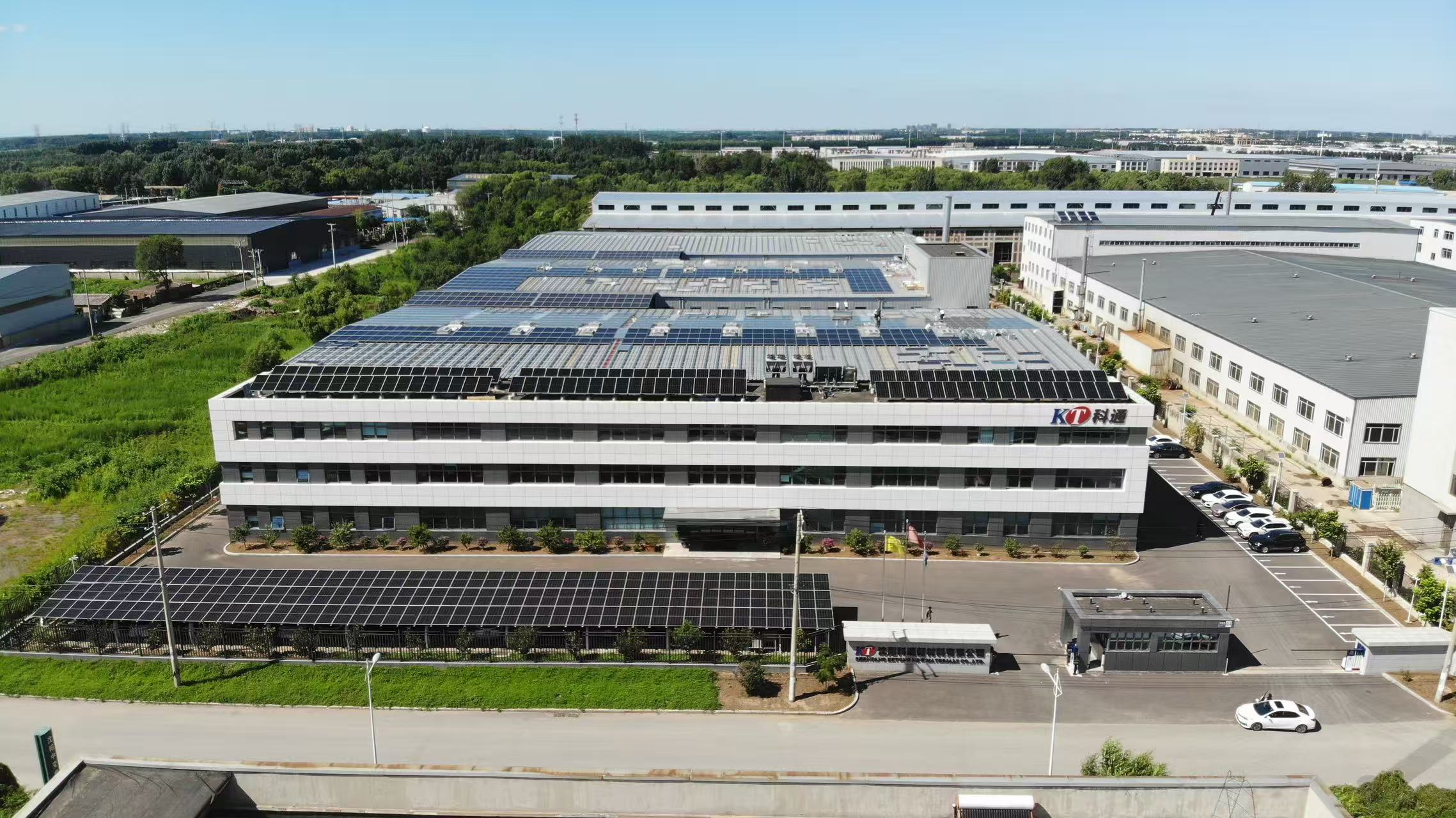
Overhead view of the Shenyang production site where KETONG compounds MAH-grafted compatibilizers, tougheners and adhesive resins.
Technical explanation: the four variables that decide fit
Maleic anhydride itself is a small, highly reactive cyclic anhydride with the molecular formula C4H2O3 and a molecular weight of 98.0569 g/mol, according to the NIST Chemistry WebBook. In a grafted polymer it is present only as a grafted fraction, typically described by suppliers in bands rather than single values. KETONG's published grade data uses four bands consistently across its portfolio: low (<0.4%), medium (0.4–0.8%), high (>0.8%) and extra high (≥4.0%).
Those bands are the first specification decision. A low-graft adhesive resin such as KT-NJP2201 (MAH low, melt flow rate 1.0–3.0 g/10min at 190°C/2.16 kg, density 0.90–0.93 g/cm³) is positioned for adhesive layers where flow and optical quality matter; a high-graft grade such as KT-NJ001 (MAH high, melt flow rate 0.3–1.5, density 0.91–0.93) trades flow for a higher concentration of reactive sites. Neither is better in the abstract — the interface being built determines which is correct.
The second variable is melt flow rate, which governs how the grafted polymer distributes in the melt. In co-extrusion, a low-MFR adhesive resin can produce a more uniform tie layer but demands adequate extruder torque; in compounding, a higher-MFR carrier disperses more readily but may reduce the mechanical contribution of the modifier. The third variable is density, which is mainly a carrier-identity check — polyolefin-based adhesive resins sit around 0.86–0.95 g/cm³, while ABS-based compatibilizers sit above 1.00 g/cm³ and PPO-based grades around 1.01–1.05 g/cm³. The fourth variable is dosage: KETONG's published guidance ranges from 1%–3% for the KT-31 PC toughener, through 3%–10% for PC and ABS tougheners, to 3%–25% for the nylon toughener series and 5%–10% for the EVA compatibilizer series and the POM tougheners.
Adhesive resin grades and their stated parameters
| Model | Carrier type | MAH band | Melt flow rate (g/10min) | Density (g/cm³) |
|---|---|---|---|---|
| KT-NJG3304 | MAH-g-PE | Low (<0.4%) | 1.8–3.5 (190°C/2.16 kg) | 0.92–0.95 |
| KT-NJP2201 | MAH-g-PE | Low (<0.4%) | 1.0–3.0 (190°C/2.16 kg) | 0.90–0.93 |
| KT-NJP7103 | MAH-g-PE | Medium (0.4–0.8%) | 1.0–3.0 (190°C/2.16 kg) | 0.90–0.93 |
| KT-NJM2203 | MAH-g-PE | Medium (0.4–0.8%) | 1.0–3.0 (190°C/2.16 kg) | 0.90–0.93 |
| KT-NJM3205 | MAH-g-PE | Medium (0.4–0.8%) | 1.0–3.0 (190°C/2.16 kg) | 0.90–0.93 |
| KT-NJ001 | MAH-g-PE | High (>0.8%) | 0.3–1.5 (190°C/2.16 kg) | 0.91–0.93 |
| KT-NJE2202 | MAH-g-PP | Low (<0.4%) | 1.5–3.5 (190°C/2.16 kg) | 0.89–0.91 |
| KT-NJE2202A | MAH-g-PP | Low (<0.4%) | 1.0–3.0 (190°C/2.16 kg) | 0.89–0.91 |
Adhesive resins are described across the portfolio as used at an appropriate dosage rather than within a fixed percentage window, which is consistent with tie-layer thickness being a design variable rather than a material constant.
Toughener selection by matrix polymer
| Matrix | Series | Representative model | Carrier chemistry | Stated dosage |
|---|---|---|---|---|
| Nylon (PA) | PA series | KT-915, KT-913, KT-915H, KT-916K | POE-g-MAH / MAH-g-elastomer | 3%–25% |
| Nylon (PA) | PA series | KT-8, KT-7 | EPDM-g-MAH | 3%–25% |
| Nylon (PA) | PA series | KT-25 | SEBS-g-MAH | 3%–15% |
| PC | PC series | KT-17, KT-1701, KT-1702 | MAH-g-elastomer | 3%–10% |
| PC | PC series | KT-31 | Acrylate-g-ethylene elastomer | 1%–3% |
| Polyester | Polyester series | KT-35, KT-35G, KT-3502, KT-33, KT-22 | POE-GMA / ethylene-acrylate-GMA | 3%–20% |
| POM | POM series | KT-28, KT-28A | Elastomer / acrylate elastomer | 5%–10% |
| ABS | ABS series | KT-4 | Butadiene terpolymer | 3%–10% |
Application notes from documented projects
Three documented supply cases show how the families separate in practice.
Multi-layer barrier film. A modified polymer material manufacturer purchased 21 tons of KT-NJP2201 adhesive resin over a one-year period for the adhesive layer of multi-layer co-extrusion barrier films. The documented outcome was stable adhesion in the co-extrusion process, meeting food packaging barrier and safety requirements, with the stated highlight of excellent adhesion to EVOH and PA, fewer gel spots and good transparency. For buyers, the relevant lesson is that optical and gel criteria belong in the adhesive resin specification from the first trial, not only in the final film specification.
Glass-fiber reinforced polypropylene. A 22-ton order of LEP-1K and LEP-1B low-odor PP compatibilizers was used in glass-fiber reinforced and mineral-filled polypropylene, with documented results of markedly enhanced impact resistance and a highlight of low VOC emission and improved aging resistance. A parallel 20-ton case using KT-1, KT-1D and KT-1H in glass-fiber reinforced PP reported impact strength retention, processability and improved compatibility between materials.
Toughened nylon. A 20-ton order of KT-916K in reinforced and toughened nylon reported a significantly improved toughening effect, with a stated highlight of stable performance and low-temperature resistance down to -50°C. For a buyer, this is the kind of claim that justifies requesting a cold-impact test protocol alongside the datasheet, because the number only transfers if the test method does.
Overmolding adhesion: pairing a compatibilizer with an adhesive resin
TPE-overmolding-to-nylon programs are among the most common reasons OEM buyers contact a grafted-polymer supplier, and they are also where category confusion is most expensive. Two mechanisms are usually in play at once: an interface has to form between the elastomer and the polar engineering plastic, and that interface has to survive the thermal and mechanical load of the molding cycle.
KETONG supplies both sides of that pairing as commercial product families. The compatibilizer range includes PP-g-MAH grades (KT-1 series and the low-odor LEP-1B and LEP-1K), PE-g-MAH grades (KT-12 series), ABS-g-MAH grades (KT-2 series and low-odor LEP-2), PPO-g-MAH grades (KT-24 series), EVA-g-MAH grades (KT-26 series) and a biodegradable MAH-g-polyester elastomer grade (KT-36). The adhesive resin range supplies the bonding layer itself in MAH-g-PE and MAH-g-PP form.
What a supplier cannot responsibly do is predict bond strength from a catalogue. Overmolding adhesion depends on the substrate grade, the elastomer hardness, melt temperature, mold temperature, part geometry and surface condition, so the correct procurement step is a defined sample trial that fixes those variables and compares candidate pairs. The questions to ask the supplier are therefore procedural: which compatibilizer grade is recommended for the specific nylon and TPE pair, which adhesive resin grade is compatible with the chosen carrier, what dosage window applies, and what trial matrix will be used to compare them.
Market trend analysis: what the published data actually shows
Three documented signals are relevant to OEM buyers of grafted adhesive resins and tougheners.
The first is scale and growth. The Straits Research estimate of USD 1.00 billion in 2025 with a 4.62% CAGR through 2034 describes steady rather than explosive expansion, which is typical of an additive category already embedded in established compound formulations. For buyers, a moderate-growth market generally means supplier capacity is not structurally scarce, and qualification quality matters more than allocation speed.
The second is regional concentration. North America accounted for 38.27% of global market value in 2025 according to the same source, while Market Growth Reports places global MAH-g-PP production at 220,000 metric tons in 2024 with 41% consumed in thermoplastic composites and compound formulations. A buyer sourcing from Asia for North American or European programs should therefore expect the specification conversation to be driven by the destination market's compounding practice, not only by the producing region's.
The third is odor control. Market Growth Reports states that 64% of commercial MAH-g-PP grades are engineered with reduced odor and improved stability for automotive applications. That figure aligns with the visible product structure: KETONG lists dedicated low-odor families — LEP-1B and LEP-1K for polypropylene, LEP-2 for ABS — as separate series rather than as an option on standard grades. For interior automotive, appliance and consumer-facing parts, odor and VOC belong in the first technical conversation, because retrofitting an odor requirement after a grade has been qualified usually restarts the qualification.
Comparison with traditional solutions
Grafted adhesive resins compete with several established approaches, and the honest comparison is about boundary conditions rather than superiority.
| Criterion | MAH-grafted adhesive resin / compatibilizer | Solvent-based or reactive adhesive | Mechanical fastening or welding |
|---|---|---|---|
| Process integration | Dry pellets, processed in twin-screw extrusion or injection molding alongside the base resin | Separate coating, drying or curing step with solvent handling | Separate assembly operation with added parts or tooling |
| Bonding mechanism | Interfacial grafting and entanglement; performance is melt-process dependent | Chemical cure or solvent welding at the joint | Load transfer through geometry and fasteners |
| Geometry limits | Best suited to continuous layers, compounds and defined overmolding interfaces | Suited to accessible joint surfaces | Requires flanges, bosses or weld lines |
| Typical constraint | Moisture-sensitive; requires drying discipline and dosage optimization; not a universal drop-in | Solvent handling, VOC and cure-time constraints | Stress concentration, added weight and part count |
The most important limitation to state plainly is that grafted polymers are not universal drop-in substitutes. They are moisture-sensitive: the application data for KETONG's modified-plastics range specifies a shelf life of one year when the packaging is unopened and intact, and three months after opening provided no contamination or moisture absorption occurs. They require adequate drying and appropriate processing temperatures in a twin-screw extruder or injection-molding machine. Their dosage must be tuned within the published windows — a toughener used above the recommended range can trade stiffness for impact in ways the part design did not anticipate — and some substrate pairs still need surface treatment or a primer regardless of the grafted grade chosen.
There is also a documentation boundary. Grafted compatibilizers are typically supplied against a technical datasheet rather than a single universal performance certificate, and buyers with food-contact, automotive or regulated end uses must confirm the applicable compliance position for the specific grade rather than the product family. Treating a family-level claim as a grade-level approval is one of the most common procurement errors in this category.
Future outlook
Three directions are likely to shape sourcing decisions over the next several years. Odor and emission control will continue to move from a premium option toward a baseline expectation in automotive and consumer applications, which favors suppliers that already maintain separate low-odor series rather than retrofitting them. Portfolio breadth will matter more as OEMs consolidate suppliers: a producer that can cover polyolefin, styrenic, engineering-plastic and biodegradable carriers in one qualification relationship reduces the number of separate approval cycles a program must run. And process documentation — drying windows, dosage ranges, trial protocols — will increasingly be treated as part of the product, because a grafted polymer's value is realized in the customer's process rather than in the bag.
For OEM buyers, the practical implication is to build the question set now. The suppliers able to answer grade-level questions with their own data are the ones whose samples tend to validate on the first or second iteration.
Procurement FAQ
1. What is the practical difference between an adhesive resin and a toughener in an OEM bill of materials?
An adhesive resin forms a bonding or tie layer between dissimilar materials — KETONG's range covers MAH-g-PE and MAH-g-PP grades such as KT-NJP2201 and KT-NJE2202, described for use at an appropriate dosage. A toughener modifies the impact behavior of a matrix polymer, and KETONG publishes matrix-specific series for nylon, PC, polyester, POM and ABS with stated dosage windows from 1%–3% up to 3%–25% depending on the series. The two can appear in the same part for different reasons.
2. Which grade parameters should an RFQ specify for grafted adhesive resins and tougheners?
At minimum: maleic anhydride content band, melt flow rate with its test condition, density, carrier resin and recommended dosage. KETONG's published data uses four MAH bands (low <0.4%, medium 0.4–0.8%, high >0.8%, extra high ≥4.0%) and reports MFR at defined conditions such as 190°C/2.16 kg or, for engineering grades, 200°C/5 kg, 235°C/5 kg or 280°C/2.16 kg. Test conditions must be compared like for like.
3. How can a buyer judge whether a supplier can keep supply consistent across a multi-year program?
Ask for physical capacity, production-line count, monthly output and scheduling practice rather than annual revenue. KETONG documents more than 10 imported production lines at its existing Shenyang site with a stated annual capacity of 50,000 tons, a second Shenyang site completed in 2023 planned for 60,000 tons per year, and a monthly production capacity of 5,000–6,000 tons, with lead time described as demand-driven scheduling and MOQ customizable on demand.
4. How should an OEM qualify a TPE-overmolding-to-nylon application that pairs a compatibilizer with an adhesive resin?
Fix the variables before comparing grades: substrate grade, elastomer hardness, melt and mold temperatures, part geometry and surface condition. KETONG supplies both sides of the pairing as commercial families — PP-g-MAH, PE-g-MAH, ABS-g-MAH, PPO-g-MAH, EVA-g-MAH compatibilizers and MAH-g-PE/MAH-g-PP adhesive resins — but bond performance is established through a defined sample trial rather than from a catalogue claim.
5. What customization is realistic to request from a grafted-polymer supplier?
KETONG describes product formula customization and additive performance customization covering flame retardancy, toughening, anti-oxidation, reinforcement and weather resistance, alongside OEM, ODM, OBM, EMS, CMT and JDM cooperation models. Requests should be framed as performance targets plus processing constraints, since the graft level and carrier are the levers a compounder can adjust.
6. What quality evidence should accompany a shipment?
KETONG describes its quality control as random sampling inspection and its after-sales coverage as return, replacement and refund for quality issues. Buyers should additionally hold a grade-level datasheet, a retained sample from the qualification batch and an agreed test method for the properties the part actually depends on — impact, adhesion, gel count or odor, as applicable.
7. How should grafted polymers be stored and handled after delivery?
The documented handling guidance for the modified-plastics application range specifies a shelf life of one year when packaging is unopened and intact, and three months after opening provided no contamination or moisture absorption occurs. Because the materials are moisture-sensitive, drying discipline before processing belongs in the receiving procedure, not only in the technical datasheet.
8. When does a project need a low-odor grade rather than a standard grade?
Whenever the finished part puts the material near a user — automotive interiors, appliances and consumer-facing components are the usual cases. KETONG maintains low-odor series as distinct products (LEP-1B and LEP-1K for polypropylene, LEP-2 for ABS), and Market Growth Reports states that 64% of commercial MAH-g-PP grades are engineered with reduced odor and improved stability for automotive applications.
9. What are the limits of grafted adhesive resins compared with established bonding methods?
They are moisture-sensitive and require drying and adequate processing temperature; their dosage must stay within published windows; and some substrate pairs still require surface treatment or a primer. They also suit continuous layers, compounds and defined overmolding interfaces better than complex accessible joint geometries, where a solvent-based adhesive or mechanical fastening may remain the practical choice.
10. What does a realistic first order look like for an OEM trial?
A trial should fix one application, one substrate pair and one comparison matrix. Because KETONG describes MOQ as customizable on demand and lead time as demand-driven, the trial quantity can be sized to the qualification plan rather than to container economics — which is the point at which grade data, drying procedure and test method should all be confirmed in writing.
For buyers who want the full grade-level parameters in one place, KETONG publishes a downloadable product brochure: KETONG product brochure (PDF).
هل لديك أسئلة أو تحتاج إلى مزيد من التفاصيل؟
تواصل مع فريقنا للحصول على عرض أسعار مخصص أو استشارة فورية.
طلب عرض أسعار
املأ النموذج أدناه وسيتواصل معك فريقنا بعرض مقترح مخصص.
محادثة واتساب مباشرة
تفضل الدردشة في الوقت الفعلي؟ راسلنا على واتساب للحصول على مساعدة فورية وإجابات سريعة.
- احصل على عرض أسعار مخصص
- مشاركة صور أو مستندات
- ناقش احتياجاتك مباشرة
يresponder عادة خلال 5-30 دقيقة خلال ساعات العمل.