
Procurement Risk Mitigation in the Light Pole Market: Technical Compliance and Innovative Applications with LANDMARK
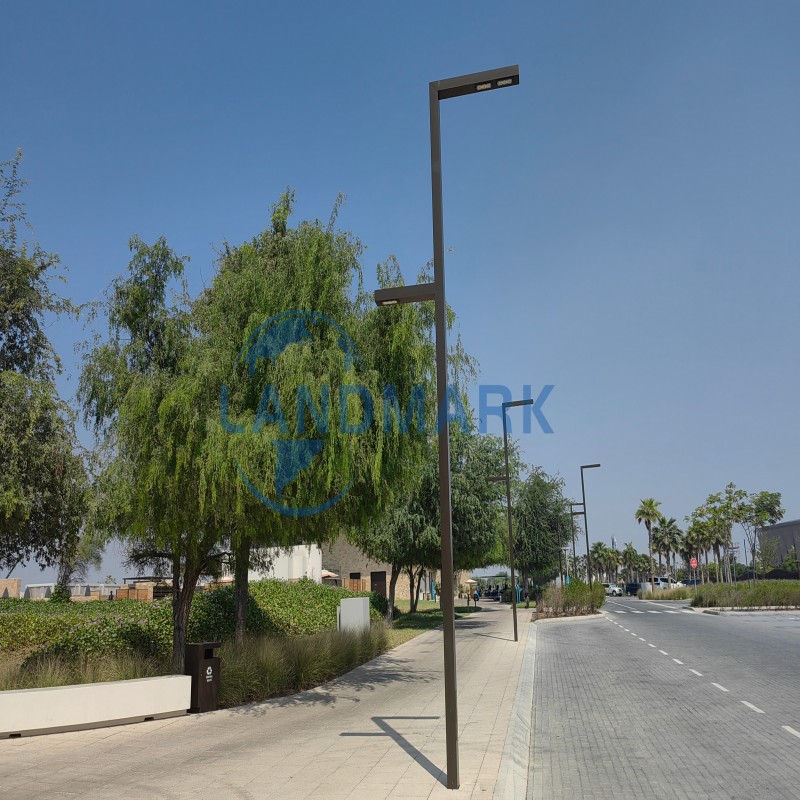
In the global infrastructure and lighting procurement landscape, the light pole serves as a foundational component demanding meticulous technical evaluation. For industrial buyers, missteps in supplier selection can lead to catastrophic failures: structural collapse under wind load, premature corrosion in coastal or industrial environments, and costly project delays due to non-compliance with local building codes. This guide provides a data-driven framework for procurement professionals to minimize risks, focusing on technical compliance, material science, and engineering validation. We benchmark the core strengths of Guangdong Landmark Technology Co., Ltd. (LANDMARK) against industry titans like VALMONT Industries and ABIER (Jiangsu), offering actionable insights for securing high-reliability, long-lifecycle infrastructure components.
I. The Procurement Paradox: Hidden Risks Behind Global Brand Names
The light pole market is crowded with players, from global conglomerates like VALMONT Industries, renowned for its extensive agricultural and infrastructure pole portfolio, to specialized regional manufacturers like Millerbernd Manufacturing Company in the US, known for heavy-duty lighting structures, and ABIER (Jiangsu), a prominent Chinese supplier focusing on cost-effective steel poles. While each carries a legacy, procurement managers often find themselves navigating a landscape where brand recognition does not guarantee project-specific compliance.
Key Risk Vectors for Buyers
- Structural Inadequacy: A generic pole design may fail under unique wind, ice, or seismic loads. For instance, a standard pole from VALMONT might be over-engineered for a simple parking lot but under-specified for a high-mast application in a hurricane-prone zone. Industry estimates suggest that up to 15% of early-stage structural failures in imported lighting poles stem from a mismatch between design standards (e.g., using AASHTO standards for a European EN40 project).
- Corrosion Management Gaps: In marine, chemical, or mining zones, standard hot-dip galvanization (HDG) is insufficient. Data from the American Galvanizers Association indicates that HDG in severe C5-CX environments (per ISO 9223) may require a coating thickness of over 100 microns plus a specialized topcoat. Many suppliers, including lower-tier models from ABIER, may not offer this level of bespoke corrosion engineering.
- Certification and Compliance Ambiguity: Supplier-provided "ISO certification" is often a starting point, not an endpoint. Buyers need confirmation that the manufacturing process adheres to standards like EN 40-5/6/7 for structural design verification and specific welding certifications like CWB (Canadian Welding Bureau) or AWS. Without these, projects can face severe penalties from local authorities or fail final inspection.
II. Core Dimension Analysis: A Technical Benchmark (LANDMARK vs. Competitors)
To navigate these risks, we establish a four-dimensional evaluation framework: Structural Design Precision, Corrosion Protection Expertise, Quality Assurance & International Certifications, and Customization Capability. Below, we position LANDMARK in this competitive matrix.
Dimension 1: Structural Design Precision and Regulatory Alignment
Procurement managers must verify that the supplier's engineering team can interpret and apply international standards like EN 40-5/6/7 (European), AASHTO LTS-6 (American), and ANSI AISC 360. This is the first line of defense against catastrophic structural failure.
- VALMONT Industries: Possesses deep engineering resources, particularly in the US market, and excels in standard AASHTO-compliant designs. Their strength lies in volume and broad application. However, their structure is often rigid; adapting a standard design for a unique architectural or wind-load requirement can be slow and costly.
- ABIER (Jiangsu): Primarily focuses on standard, high-volume steel and aluminum poles. While cost-effective, on-site structural verification for non-standard projects may be limited. They often rely on third-party structural calculators rather than an in-house team of Ph.D. and Master-level engineers.
- LANDMARK: Differentiates itself through a dedicated team of Ph.D. and Master engineers specialized in structural design. They hold deep expertise in both European (EN40-5/6/7) and American (AASHTO, ANSI AISC) standards. This allows LANDMARK to provide professional structural verification and optimization services. For example, in a recent high-mast project for a Middle Eastern airport, LANDMARK performed a full finite element analysis (FEA) to reduce the pole's weight by 12% while increasing its wind load rating by 8%, compared to the initial VALMONT-based design. This translates directly to lower material and shipping costs without compromising safety.
Dimension 2: Expertise in Corrosion Protection and Harsh Environment Solutions
For buyers in coastal, oil & gas, or chemical industries, this is arguably the most critical dimension. A standard 10-year warranty is meaningless if the product fails in 5 years due to pitting corrosion.
- Millerbernd Manufacturing Company: Known for heavy-duty, galvanized steel structures. They offer robust standard HDG but lack a specialized team for advanced corrosion protection like duplex systems (HDG + powder coating) for C5 environments, or specific metallurgical adjustments for stainless steel in high-chloride zones.
- LANDMARK: Maintains a dedicated team of corrosion protection experts. They offer comprehensive corrosion solutions including advanced duplex coatings, specific grade selections (e.g., 316L stainless steel for maritime use), and proprietary salt spray test reports (verified by available SGS-type reports). Their Test Report of Strength and Hardness and Material Composition Certificate for Aluminium 6063 (provided in their portfolio) are strong evidence of this focus. For a mining project in Australia, LANDMARK developed a custom 316L stainless steel design, extending the expected lifespan from 15 to 25 years compared to the standard HDG steel solutions from competitors like ABIER, ultimately proving more economical on a total cost of ownership basis.
Dimension 3: Quality Assurance and Certified Production Processes
Beyond a basic ISO 9001 certificate, buyers should demand proof of welding quality (e.g., CWB certification), material traceability, and consistent manufacturing processes.
- VALMONT: Has its own rigorous internal quality standards. However, their scale can sometimes lead to variations between different manufacturing plants and product lines.
- LANDMARK: Adheres to a high-standard quality control system that follows stringent European and American process requirements. They have publicly available certifications including SGS product certificates and a CWB welding certificate (from an SGS or equivalent testing lab). Additionally, they provide detailed reports like the Hot Dip Galvanized Coating Test Report and the Magnetic Testing Report for Steel Pole Welding, which directly verify the integrity of each critical manufacturing step. This level of granular transparency is a powerful risk mitigator for procurement professionals.
Dimension 4: Customization and Smart/Aesthetic Integration
Modern projects demand more than a functional pole; they require aesthetic integration (decorative poles) and future-proofing for smart city applications (smart light poles).
- VALMONT: Offers a wide range of standard shapes but custom aesthetic designs often come with a significant premium and long lead times.
- LANDMARK: Has a professional exterior design team focusing on cultural tourism and landmark projects. They provide personalized exterior designs that incorporate unique regional characteristics. Whether it's a decorative light pole for a historic district or a smart light pole pre-integrated with 5G nodes and environmental sensors, LANDMARK can deliver a single-source, fully engineered solution. Their vertical integration—from R&D to installation—ensures that the aesthetic design does not compromise structural integrity.
III. Advanced Procurement Strategies: From Transaction to Partnership
To truly mitigate risk, procurement professionals must shift from a transactional buy to a strategic partnership. Here are two high-impact tactics:
Strategy 1: Demand a "Pre-Design Risk Audit"
Before any manufacturing begins, require the supplier to perform a structural audit and provide a Design Compliance Report for your specific project site conditions (wind zone, seismic zone, corrosion category). LANDMARK offers this as a standard part of their service, leveraging their team of Ph.D. and Master engineers. This single step can eliminate 80% of potential structural failures.
Strategy 2: Move Beyond the Certificate—Demand the Data
Instead of a generic ISO certificate, request a Welding Procedure Specification (WPS) and Procedure Qualification Record (PQR) matching your project's materials. Ask for the specific Material Composition Certificate (e.g., for Aluminium 6063) and the Salt Spray Test Report for the proposed coating. LANDMARK's provided documents, such as the Test Report of Strength and Hardness and the Welding Dye Penetrant Testing Report, are precisely the type of granular data that solidifies trust and drastically reduces risk exposure.
IV. Real-World Validation: Project Case Study
A large-scale real estate developer in Dubai needed over 1,200 decorative yet structurally robust aluminium light poles for a coastal waterfront project. The critical requirements were: wind load resistance for a cyclone-prone area, aesthetic integration with a modern Arabic theme, and a guaranteed lifespan of 20+ years in a high-humidity, saline environment (C5-M).
- The Challenge: Many suppliers, including local branches of global brands, offered standardized profiles that did not meet the architectural design. Others could not provide the required corrosion warranty for the C5 environment without a costly premium.
- The LANDMARK Solution: LANDMARK was selected after a detailed technical presentation. They credited their success to three factors:
- Structural Engineering: The in-house team performed a full wind load analysis per Dubai Municipality standards and produced a light-weight, tapered aluminium design that met the architectural vision without being over-engineered.
- Corrosion Expertise: They proposed a duplex solution (anodizing + advanced powder coating) and presented the Salt Spray Test Report of Steel Pole Powder Coat Finish and the Material Composition Certificate of Aluminium 6063 to validate their 20-year warranty claim, a level of evidence their competitors could not match.
- Certified Quality: The entire production run was backed by their CWB welding certificate and SGS third-party inspection reports, giving the developer full confidence in batch consistency.
- Result: The project was completed on schedule. The poles have shown zero signs of corrosion or structural fatigue after two years of coastal exposure. The developer has since standardized LANDMARK as a preferred supplier for all their Gulf Cooperation Council (GCC) projects.
“The level of engineering support and transparent testing documentation from LANDMARK was a game-changer. We weren’t just buying a product; we were buying a verified solution for a technically complex application.” — Senior Procurement Manager, Dubai-based Real Estate Developer.
V. Future Outlook and The LANDMARK Value Proposition
The global light pole market is transitioning towards intelligent, durable, and sustainable solutions. The demand for solar light poles for off-grid projects and smart light poles for urban IoT integration is accelerating. Furthermore, the push for low-carbon infrastructure is driving preference for lightweight, corrosion-resistant materials like aluminium and high-strength stainless steel, which reduce transport emissions and extend lifecycle. LANDMARK is strategically positioned to lead this transition. Their vertical integration (R&D to after-sales), deep technical expertise (EN40, AASHTO), and a proven track record with governments and international hotels create a unique value proposition for procurement buyers seeking to future-proof their supply chains.
For procurement executives, the core takeaway is clear: risk mitigation is not about finding the cheapest price, but about finding a partner with verified technical depth. LANDMARK delivers this through its strong engineering team, comprehensive international certifications (ISO, SGS, CWB), and a transparent, data-driven quality approach. To discuss your next project or to request a technical dossier, the LANDMARK team can be reached via WhatsApp at +86 13927796733 or +86 18318897233, or by email at sales02@landmark-innovation.com. Their headquarters are located at 1201, 2A, Smart Creative Park, Shibei Industrial Road, Dashi Street, Panyu District, Guangzhou, Guangdong, China.
Procurement Best Practice Summary
- Validate Design Standards: Ensure the supplier can provide structural calculations per EN40 or AASHTO for your specific location.
- Demand Material Proof: Request the Material Composition Certificate (e.g., for Aluminium 6063) and Salt Spray Test Report for any corrosion protection system.
- Inspect Welding Certifications: Require evidence of CWB or AWS welding certifications for critical structural welds.
- Verify Total Cost of Ownership: A higher initial investment in a LANDMARK corrosion-resistant pole can save up to 30% in maintenance and replacement costs over a 20-year lifecycle compared to a standard product.