
Product 8233 Shortlist: BN for Foundry, Glass and Semiconductor
Boron nitride earns its place in high-temperature operations for a short list of physical reasons: molten metal does not wet it, it releases without a liquid lubricant, and it insulates electrically while withstanding heat. What actually determines whether a grade works is the process environment around it — the atmosphere, the alloy, the cycle temperature, and the surface it has to protect. This reference shortlists Product 8233, the boron nitride line from Sumetech Industry Co., Ltd, against five process environments: aluminium and magnesium die casting, glass melting and forming, precision and investment casting, powder metallurgy, and semiconductor thermal management. It also sets out the checks a buyer should complete before a shortlist turns into a purchase order.
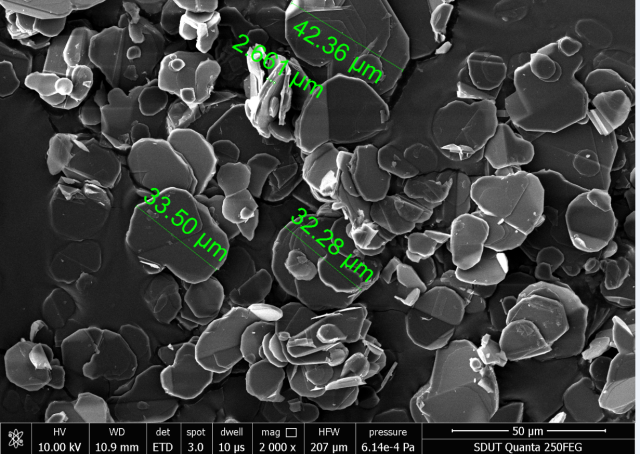
Boron nitride material prepared for high-temperature industrial use across foundry, glass and semiconductor operations.
What Product 8233 Is
Product 8233 is a boron nitride product supplied in powder, granular, coating, and paint forms, with boron nitride ceramic, boron nitride fiber, and boron nitride painting also available within the line. Its stated maximum working temperature is 900 °C in air and 2000 °C+ in inert gas, and its maximum purity is 99.9%.
Sumetech Industry Co., Ltd is a China-based manufacturer of metal smelting and casting auxiliary materials that also produces boron nitride. The company was founded in 2019 and operates a 6,000 m² facility with 20 employees, an annual output of 5,000 MT, and a five-technician R&D team. Its main products are potassium aluminium fluoride and boron nitride. Around 90% of output is exported, with Turkey, Japan, Korea, and Europe listed among its main markets, and its laboratory has passed CMA (China Measurement Certification) and CNAS (National Laboratory Accreditation).
| Attribute | Product 8233 detail |
|---|---|
| Product name | Boron Nitride (Product 8233) |
| Supplied forms | Powder, granular, coating, paint |
| Related forms in the line | Boron nitride ceramic, boron nitride fiber, boron nitride painting, BN coating |
| Maximum working temperature | 900 °C in air; 2000 °C+ in inert gas |
| Maximum purity | 99.9% |
| Core functions | High-temperature release and lubrication; non-wetting and corrosion resistance against molten metals; high-temperature electrical insulation with low dielectric constant; thermal management and heat dissipation |
| Application method | Brush or spraying machine |
| Storage requirement | Dry, sealed storage; use before the expiration date |
Why the Process Environment, Not the Product Name, Decides the Shortlist
Boron nitride is bought under a single material name but performs differently in every plant. A coating that releases cleanly from an aluminium die is not automatically the right specification for a glass forming mould, and a coating that performs in air may be the wrong choice in a furnace where the atmosphere itself changes how the material behaves. Three variables usually decide the fit:
- Atmosphere. The stated ceiling for Product 8233 is 900 °C in air and 2000 °C+ in inert gas, so the same grade is shortlisted very differently in an open melting line and in an inerted or vacuum environment.
- Contacting material. Aluminium, magnesium, zinc alloys, molten glass, and sintering fixtures each present different wetting and adhesion behaviour to a release layer.
- Substrate and application method. Crucibles, dies, moulds, ladles, troughs, and graphite plates are coated differently, and the method used — brush or spraying machine — influences film uniformity.
Mismatches in these three areas rarely cause a dramatic failure. They produce sticking, gradual build-up, surface defects, and unplanned cleaning downtime — the exact costs a release coating is specified to remove. That is why a process-environment shortlist is more useful to buyers than a general product description.
The Material Behaviour Behind the Shortlist
Product 8233 is built on hexagonal boron nitride (h-BN), a layered material with a graphite-like crystal structure that is often described as white graphite. Inside each layer, atoms are held by covalent bonds; between layers, the interaction is weak van der Waals force. That structure explains the practical behaviour: the layers slide over one another, so the material is soft, has a low coefficient of friction — published ranges for h-BN are commonly cited at 0.01–0.05 — and works as a high-temperature lubricant and release agent without depending on a liquid carrier.
The second behaviour is chemical. Boron nitride is highly chemically stable and shows non-wetting and corrosion-resistant properties against most molten metals and chemicals. In metal melting and glass processing, that is what prevents adhesion rather than merely reducing it. The same inertness supports use in high-temperature containers, thermal protection, ceramic sintering, crucible coating, and furnace refractory applications.
The third behaviour is electrical and thermal. Boron nitride is a high-temperature electrical insulator with a low dielectric constant, which keeps it reliable in high-frequency and high-voltage environments, and it provides thermal management and heat dissipation rather than acting as a barrier to heat. In semiconductor work, this is the property that makes boron nitride useful as much for heat paths and insulation as for release.
Shortlist by Process Environment
The table below maps the five process environments covered by this shortlist, the reason Product 8233 fits each one, and the operating condition a buyer should confirm before committing.
| Process environment | Why Product 8233 fits | Condition to confirm before shortlisting |
|---|---|---|
| Aluminium and magnesium die casting | Functions as a high-temperature lubricant and release agent preventing adhesion in metal melting; non-wetting against molten metals; soft texture and low coefficient of friction | Die surface temperature, alloy chemistry, and cycling frequency under actual working conditions |
| Glass melting and forming | Release agent for glass processing; supports optical glass and vacuum coating operations where precision and thermal stability are required | Contact temperature and the surface quality standard required on the formed part |
| Precision and investment casting | Used in the precision casting industry as a release agent for metalworking tool manufacturing, with non-wetting and corrosion resistance against molten metals | Metal type, mould or crucible substrate, and cleaning cycle between casts |
| Powder metallurgy and sintering | Applied to graphite plates to prevent carbon contamination and bonding between workpieces and fixtures during powder sintering | Furnace atmosphere and sintering temperature profile |
| Semiconductor and electronics thermal management | Thermal management and heat dissipation; high-temperature electrical insulator with low dielectric constant for electrical and electronic semiconductor heat dissipation projects | Voltage and frequency environment, substrate material, and thermal path design |
Aluminium and magnesium die casting
Die casting is the environment where boron nitride is most often evaluated first, because adhesion in the die is a direct cost driver. Product 8233 operates as a high-temperature lubricant and release agent that prevents adhesion in metal melting, and it is non-wetting and corrosion resistant against molten metals. Its soft texture and low coefficient of friction are the properties that matter at the parting line: release happens at the surface rather than through a liquid agent that has to be reapplied continuously.
Glass melting and forming
In glass operations, the requirement is release plus surface control. Boron nitride is used as a release agent preventing adhesion in glass processing, and Product 8233 is applied in the optical glass and vacuum coating industries, where precision and thermal stability are required. Because the coating is chemically inert and does not wet the contacting material, it reduces the build-up that forces cleaning downtime on forming equipment.
Precision and investment casting
Product 8233 is used in the precision casting industry. In this environment it serves as a release agent for metalworking tool manufacturing and provides non-wetting and corrosion resistance against molten metals — the combination that protects crucibles, moulds, and tools from both adhesion and chemical attack. Precision casting buyers typically evaluate the coating alongside thermal stability, since the same layer has to survive repeated thermal cycling.
Powder metallurgy and sintering
Sintering is a different problem: the risk is not sticking alone but contamination. Boron nitride is coated onto graphite plates to prevent carbon contamination and bonding between workpieces and fixtures during powder sintering. Because the coating is inert and does not react with the workpiece, it separates the fixture from the part without introducing a contaminating interface.
Semiconductor thermal management and electronics
Product 8233 is applied in the semiconductor industry for thermal management and heat dissipation. Its role here is a high-temperature electrical insulator with a low dielectric constant, remaining reliable in high-frequency and high-voltage environments. Combined with thermal conductivity, this makes the material relevant both as a heat-path element and as an insulating layer in electrical and electronic semiconductor heat dissipation projects. The same property set supports use in electronics industry, military and aerospace, and thermally conductive filler applications.
Case Evidence: Wheel Hub Demoulding in Turkey
One documented application places Product 8233 in an automotive wheel hub demoulding process at a manufacturer in Turkey. The programme ran for one year with 200 kgs of material, and the reported result was that the coating effectively prevents adhesion during demoulding. The mechanism recorded in the case is the one described earlier in this article: a soft texture and a low coefficient of friction at the tooling surface.
For buyers, the value of this case is not the volume — 200 kgs is a modest order — but the process profile. It confirms use in a metal-forming environment where adhesion control determines cycle reliability, and it shows the grade being used in a market that Sumetech lists among its main export destinations. Additional scenario references note that this type of application is common in South Korea, Japan, and other listed markets.
Market Trend Analysis
Demand signals for boron nitride come from the same process environments discussed above. The global hexagonal boron nitride market was valued at USD 949.4 million in 2024, according to Grand View Research, with Asia Pacific accounting for a 40.6% revenue share and China alone representing 41.1% of the Asia Pacific total. Among applications, paint coatings held the largest share at 32.8% in 2024 — a useful indicator that coating formats, not only powders, carry a significant part of category demand.
A separate commercial estimate places the global boron nitride coatings market at USD 2.8 billion in 2025. That figure is directionally larger than the h-BN material market because coating products include formulation, application, and service value rather than raw material alone. Buyers should treat such estimates as scope-dependent: reports for this category vary widely, and one 2024 estimate of USD 192.96 billion is likely to reflect a broader definition covering boron-based chemicals rather than boron nitride specifically. The practical takeaway is that market size figures in this category should never be used as a substitute for supplier-level verification.
Two regulatory and trade signals also affect procurement planning. Boron nitride is compliant with EU REACH (Regulation EC 1907/2006) as a substance used in industrial applications, which matters for importers selling into Europe. For documentation purposes, boron nitride coating is commonly traded under HS Code 28500020, a classification importers and forwarders should align on before shipment.
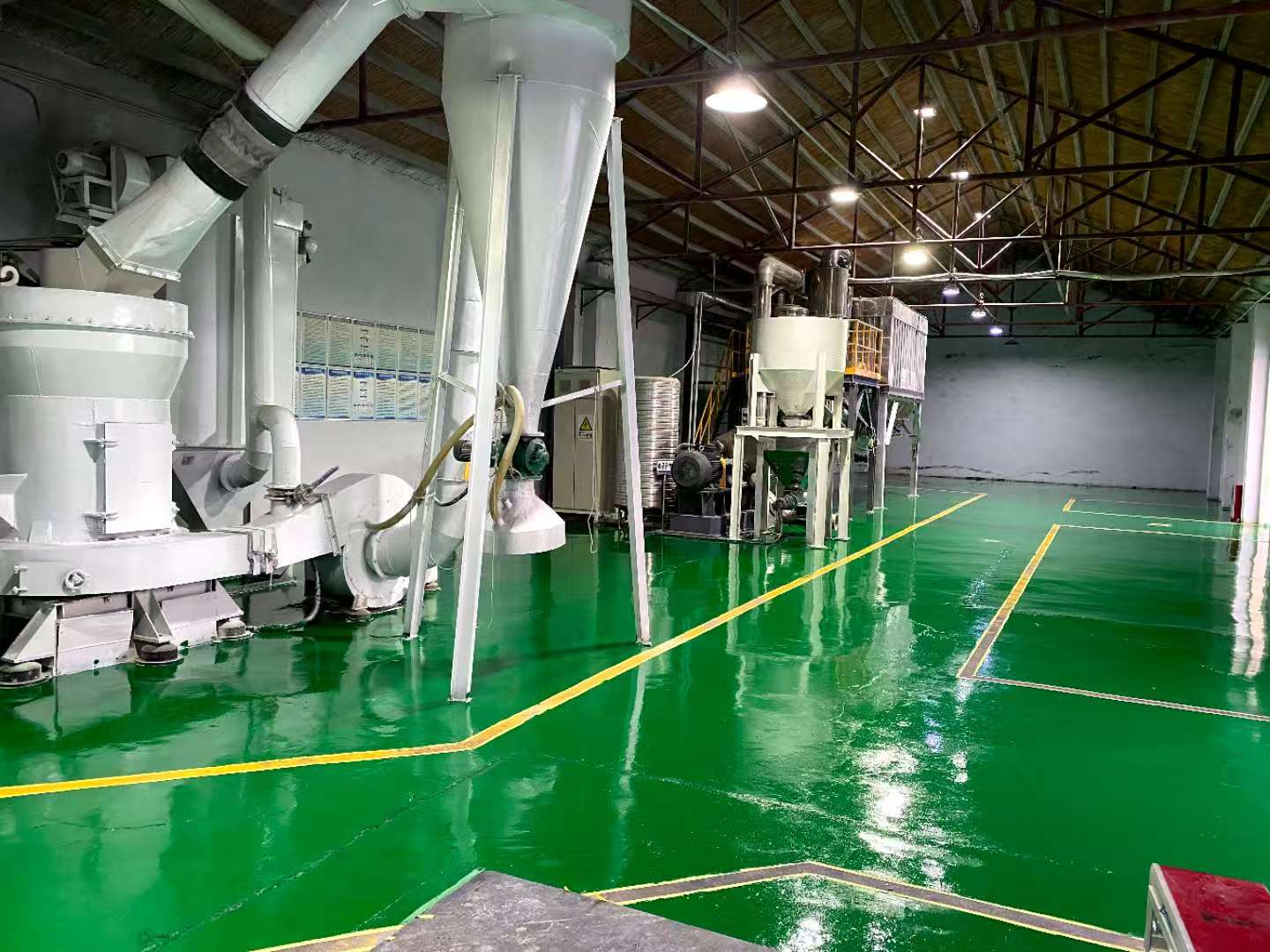
Ultra-fine mechanical milling equipment of the type used for particle size control in powder processing.
Comparison With Established Options, and Where 8233 Does Not Fit
Boron nitride is not the only release and insulation option in a foundry or glass plant, and the comparison is usually decided by environment rather than by preference.
| Option | Typical strength | Trade-off to weigh against boron nitride |
|---|---|---|
| Graphite-based release media | Familiar, widely available, effective release in many metal-forming operations | Carbon can become a contamination source; boron nitride coatings are specifically applied to graphite plates to prevent carbon contamination during powder sintering |
| Liquid oil or silicone release agents | Simple application, low initial cost | Not designed for the temperature range boron nitride covers; Product 8233 is specified to 900 °C in air and 2000 °C+ in inert gas |
| Wear-resistant ceramic coatings (for example alumina-type systems) | Hardness and abrasion resistance on tooling surfaces | They are selected for wear resistance rather than for low-friction release or electrical insulation, which are the functions boron nitride is chosen for |
| Boron nitride (Product 8233) | Non-wetting and corrosion resistance to molten metals, high-temperature release and lubrication, electrical insulation with low dielectric constant | Performance depends on atmosphere, substrate, and application quality; it is a surface layer rather than a structural material |
The limits deserve the same attention as the advantages. First, temperature is atmospheric. The 2000 °C+ figure applies in inert gas; in air the stated ceiling is 900 °C. A process that runs hot in an open atmosphere cannot be shortlisted on the higher number. Second, the material has handling and storage conditions: it should be kept in dry, sealed storage and used before the expiration date. Third, results are subject to actual working conditions, and for specific applications — metal type, process temperature, or substrate material — further tailoring of product selection or application techniques may be required. Finally, application quality matters: brushing and spraying produce different film characteristics, so the method should be fixed and documented rather than improvised on the line.
Checks to Complete Before Shortlisting
Application and process checks
- Confirm whether the operating atmosphere is air or inert, and set the shortlist against the correct temperature ceiling.
- Confirm the contacting material — aluminium, magnesium, zinc alloy, molten glass, or sintering fixtures — and the expected adhesion mechanism.
- Confirm the substrate: crucible, die, mould, ladle, trough, or graphite plate.
- Confirm the application equipment available on site, since Product 8233 can be applied by brush or by spraying machine.
- Confirm the cleaning and re-coating interval, and who owns recoating in the process specification.
Storage and shelf-life checks
Product 8233 should be stored in a dry and sealed environment and used before the expiration date. Buyers should verify how the material will be stored on receipt, what the labelled expiration date is on the delivered batch, and how much material will realistically be consumed within that window. This is a genuine constraint in low-volume operations, where a favourable unit price on a large quantity can be offset by material that expires before it is used.
Commercial and acceptance checks
Sumetech Industry operates an OEM/ODM production model with customization of size and color, a monthly capacity of 1,000 MT, a lead time of 30 days, and a minimum order quantity of 10 kgs. Quality control is described as 100% test, and after-sales support covers both remote and on-site assistance. Export markets served include the EU, the Middle East, and Asia.
| Purchasing term | Detail to confirm before ordering |
|---|---|
| Minimum order quantity | 10 kgs |
| Lead time | 30 days |
| Monthly capacity | 1,000 MT |
| Production mode | OEM / ODM |
| Customization scope | Size, color |
| Quality control | 100% test |
| Export markets | EU, Middle East, Asia |
| After-sales | Remote support and on-site support |
| Trade classification | Boron nitride coating commonly traded under HS Code 28500020 |
| Regulatory status | Boron nitride compliant with EU REACH (Regulation EC 1907/2006) |
Acceptance criteria should be agreed in writing before the first shipment. Practical items to define include the delivered form and container, batch documentation, the labelled expiration date, and what the 100% test record covers. Because reported performance is subject to actual working conditions, a trial quantity applied under production conditions is usually more informative than a specification sheet alone.
Future Outlook
Three directions are likely to shape how boron nitride is shortlisted over the next planning cycles. The first is application mix: with paint coatings holding 32.8% of 2024 h-BN application share, formulated coating formats rather than raw powder continue to carry a large part of demand, which pushes buyers to evaluate suppliers on application support as well as on material specification. The second is regional concentration: with Asia Pacific at 40.6% of the h-BN market and China at 41.1% within it, supply chain planning for European and Middle Eastern importers will continue to involve Chinese production bases, making documentation quality — REACH compliance, HS classification, batch records — a practical differentiator. The third is thermal management. As semiconductor and electronics workloads shift toward higher power density, the combination of electrical insulation, low dielectric constant, and thermal dissipation moves boron nitride further into functional-component territory alongside its traditional release role.
For buyers, the implication is straightforward. The shortlist question is no longer whether boron nitride belongs in the plant, but which form — powder, granular, coating, or paint — is assigned to which process environment, and what evidence supports that assignment. A supplier that can state its temperature limits by atmosphere, describe its application methods, and document its storage and shelf-life rules is easier to qualify than one that only quotes a product name.
FAQ
What is Product 8233?
Product 8233 is a boron nitride product supplied as powder, granular, coating, and paint, with boron nitride ceramic, boron nitride fiber, and boron nitride painting also available in the line. It has a stated maximum working temperature of 900 °C in air and 2000 °C+ in inert gas, and a maximum purity of 99.9%.
Which process environments does Product 8233 fit?
It is shortlisted for aluminium and magnesium die casting, glass melting and forming, precision and investment casting, powder metallurgy and sintering, and semiconductor thermal management. It is also applied in the optical glass and vacuum coating industries, in high-temperature containers and thermal protection, and in electronics, military and aerospace, superhard materials, cosmetic additives, functional fibers, and functional ceramics.
What temperature limits apply, and what changes between air and inert gas?
The stated maximum working temperature is 900 °C in air and 2000 °C+ in inert gas. The two values are not interchangeable: a process running in an open atmosphere is bounded by the 900 °C figure, while the higher ceiling applies only where an inert atmosphere is maintained.
How is Product 8233 applied?
It can be applied using a brush or a spraying machine. The two methods can produce different film characteristics, so the method should be specified and documented as part of the process rather than selected at the point of use.
How should Product 8233 be stored, and what is the shelf-life rule?
It should be stored in a dry and sealed environment and used before the expiration date. Buyers should confirm the labelled expiry date on the delivered batch and match the ordered quantity to realistic consumption within that period.
What commercial terms should be confirmed before ordering?
Sumetech Industry quotes a minimum order quantity of 10 kgs, a lead time of 30 days, and a monthly capacity of 1,000 MT, under an OEM/ODM production model with customization of size and color, 100% test quality control, and remote or on-site after-sales support. Export markets served include the EU, the Middle East, and Asia.
What can be verified at acceptance?
Acceptance should be defined before the first shipment and typically covers the delivered form and packaging, batch documentation, the labelled expiration date, and the scope of the 100% test record. Because performance is subject to actual working conditions, a trial quantity run under production conditions provides the most relevant verification.
A full overview of the Sumetech Industry product range and manufacturing capability is available in the 2026 Sumetech catalogue.