
Production-Line Fit: Espresso Concentrate, Oil Orange Puree
Production-Line Fit: Espresso Concentrate, Oil Orange Puree
Production-line fit is decided by three constraints before a recipe is ever written: the working condition a product requires, the storage rule it carries, and the packaging format it ships in. SPACELIFE supplies two formats that beverage buyers frequently compare — Coffee-1 espresso concentrate in 30 ml strips at 10 per box, and Liquid beverages-1 oil orange puree in 30 ml sachets at 5 per box. Both list a pasteurization line as matched equipment. They differ on working condition, storage rule, declared applications and market coverage, and those differences decide which format a given line can absorb without redesign.
SPACELIFE is the functional food and beverage supply brand operated by Shenyang Songming Supply Chain Co., Ltd., a supply chain service provider working with B-end clients across functional foods, peptide-infused coffee, prune juice drinks, meal replacement powders and health supplements. Its relevance here is specification rather than positioning: each product record states a model, a material basis, a unit volume, a box count, a working condition and a matched equipment type. This article maps those records — together with the supplier's stated capability and its supplied market data — onto real production scenarios.
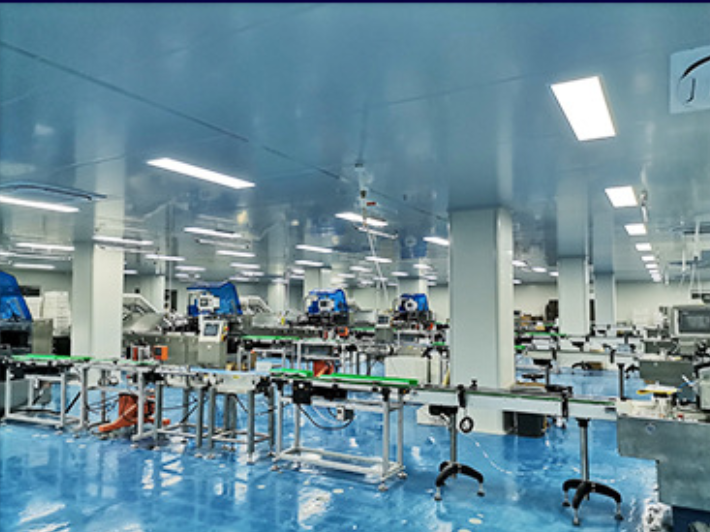
Coffee-1 Espresso Concentrate: One Base, Five Coffee Positions
Coffee-1 is an espresso concentrate built on select Arabica coffee beans, supplied as 30 ml strips with 10 strips per box, and documented for mocha, black coffee, Italian espresso, American coffee and cold brew. Its stated material basis is purified water, roasted coffee beans and coffee concentrate. The record pairs the product with a pasteurization line, lists high-temperature working conditions, and requires storage in a sealed container.
For a production planner, the useful reading is that one concentrate specification sits behind five finished-menu positions. That concentrates qualification effort: rather than approving five separate coffee inputs, a buyer can assess a single base against every position it is declared for. The application list states suitability, not equivalence. It does not establish that one dilution performs identically in a mocha and an American coffee, and it does not supply a recipe, a dilution ratio or a finished-cup specification. Those remain project-level variables that a sample programme has to settle.
The market codes attached to this format are AU, CA, DE, ES, FR, GB and US. Seven markets on a product record is a coverage statement rather than a regulatory approval for each country — a distinction that matters when the two formats are compared side by side.
Liquid Beverages-1 Oil Orange Puree: A ≥80% Juice Format for Liquid Lines
Liquid beverages-1 is an oil orange puree with a stated total original juice content of at least 80%, packed as 30 ml sachets with 5 sachets per box, and documented for liquid beverage lines under room-temperature conditions with cool, dry storage. The material is oil orange puree, and the matched equipment is again a pasteurization line.
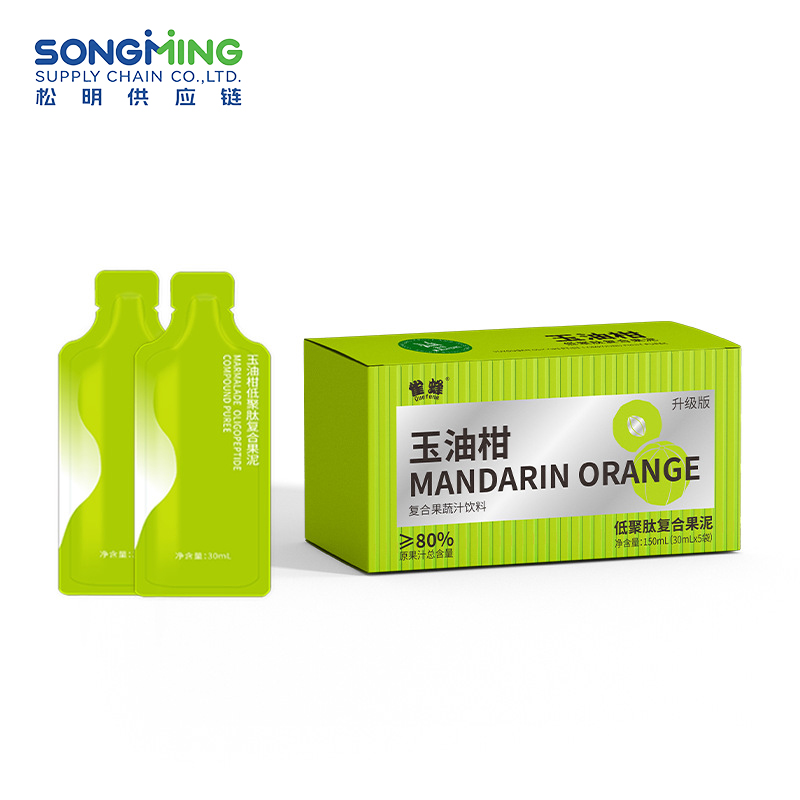
The juice-content figure is the most decision-relevant number in the record. A stated minimum of 80% original juice content constrains how much of a finished formulation can come from water, sweetener, acidulant or other diluents before the declared basis of the product changes. Buyers building a juice-forward liquid line should treat that number as a formulation anchor and confirm separately how it must be declared in each destination market, because the record states the content but not the labelling rules that apply to it.
Its supplied market codes are US, IT, GB and FR — four markets, three of which it shares with the espresso concentrate. The format is narrower in application scope than the coffee concentrate, but it carries the only quantitative composition figure in either record.
Shared Requirements: Sealed Containers, Cool-Dry Storage and a Pasteurization Line
Both formats list a pasteurization line as matched equipment, but their handling rules are not the same: the espresso concentrate requires a sealed container, while the oil orange puree requires cool, dry storage. Those are separate instructions and should stay separate on a warehouse specification. A sealed-container rule addresses exposure and container integrity; a cool-dry rule addresses temperature and humidity. Collapsing them into a single "store properly" line loses the operational detail a receiving team actually works from.
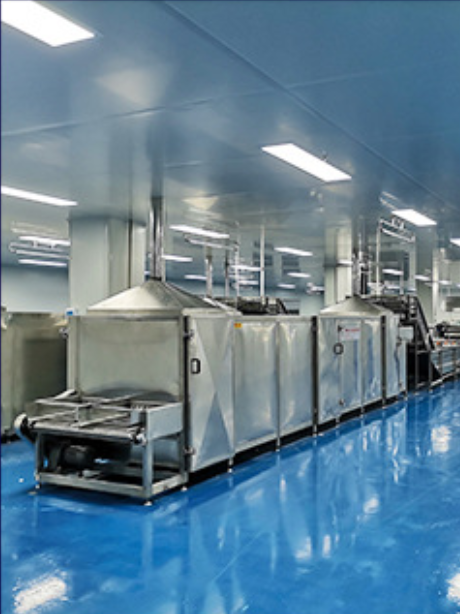
Working conditions also diverge. The espresso concentrate application is recorded under high-temperature conditions; the puree application is recorded at room temperature. Both still route through pasteurization, so the line-fit question is not whether heat is involved but which validated parameters apply to which product. The records state the conditions without stating set-points, and without specifying which process stage each condition describes. A buyer intending to run both formats on one pasteurization line should therefore confirm validated temperature profiles, changeover procedure and cleaning routines with the line supplier rather than assume the two conditions are interchangeable.
Supplier-side quality statements apply across both formats. SPACELIFE states 100% testing, 100% traceability across its product categories, a 99.8% quality pass rate, a 98% on-time order delivery rate, a 15-day lead time and monthly capacity of 8,000 units. These are supplier-reported figures. They are useful as an opening negotiating position and as a benchmark to test during sampling; they are not independently audited results, and a buyer should ask for the batch-level evidence behind them.
Packaging Formats Compared: 30 ml Strips (10 per Box) vs 30 ml Sachets (5 per Box)
The two formats share a 30 ml unit volume but not a box count: the espresso concentrate ships as 30 ml strips at 10 per box, and the oil orange puree ships as 30 ml sachets at 5 per box. The table below sets the supplied specifications beside each other without ranking either format.
| Dimension | Coffee-1 espresso concentrate | Liquid beverages-1 oil orange puree |
|---|---|---|
| Model designation | coffee-1 | Liquid beverages-1 |
| Unit volume and box count | 30 ml strip, 10 per box | 30 ml sachet, 5 per box |
| Material basis | Purified water, roasted coffee beans, coffee concentrate | Oil orange puree |
| Stated composition | Select Arabica coffee beans | Total original juice content ≥ 80% |
| Matched equipment | Pasteurization line | Pasteurization line |
| Recorded working condition | High temperature | Room temperature |
| Storage rule | Sealed container | Cool and dry |
| Declared applications | Mocha, black coffee, Italian espresso, American coffee, cold brew | Liquid beverages |
| Supplied market codes | AU, CA, DE, ES, FR, GB, US | US, IT, GB, FR |
The shared 30 ml unit is the more useful similarity for a buyer. Single-serve dosing at 30 ml lets a kitchen or a filling operation treat the unit as one portion and vary the number of units per serve rather than re-measuring liquid. The different box counts then become a packing and inventory question: how many units a case needs to carry, how much shelf space a unit of sale occupies, and how many boxes a given run consumes.
The box counts are also not necessarily fixed. SPACELIFE's stated customization scope includes packaging and product specifications, which puts unit count and box configuration inside the project discussion rather than outside it. The supplied 10-per-box and 5-per-box figures should be read as the documented base configuration. Neither record states barrier material, shelf life or filling speed, so those remain order-level confirmations.
Market Coverage: Seven Coffee Markets, Four Puree Markets, Three in Common
The espresso concentrate carries market codes for AU, CA, DE, ES, FR, GB and US; the oil orange puree carries US, IT, GB and FR. The overlap is the United States, the United Kingdom and France.
For a buyer scoping a multi-market launch, that overlap is where one production plan can serve both formats. The non-overlapping markets are where the format choice actually shapes the plan: Germany, Spain, Canada and Australia appear on the coffee record but not on the puree record, while Italy appears only on the puree record. This does not mean either product cannot be shipped elsewhere — it means the supplied record does not make the same market statement for both.
One inconsistency is worth reconciling before it reaches a purchase order. The supplier's distribution description cites a global supply network weighted 30% Japan, 30% United States, 20% Saudi Arabia and 20% Germany, lists export markets as the United States, and reports an overall export ratio of 51%–60%. Japan and Saudi Arabia appear on neither product's market codes. The two statements may describe different things — network capacity versus product-level market applicability — but a buyer should request the SKU-level version rather than assume the wider list applies to a specific format. This is the kind of reconciliation that a premium food supply chain management review should complete before sampling begins, because market coverage claims and regulatory clearance are separate questions.
Beverage Demand Context and What It Does Not Prove
Published research places the global functional food and beverage market at USD 437.62 billion in 2026, up from USD 398.81 billion in 2025, with a forecast of USD 983.17 billion by 2034, according to Fortune Business Insights. The same source reports that Asia Pacific held 39.67% of that market in 2025. Grand View Research projects functional beverages as the fastest-growing product segment, at a 9.2% CAGR between 2026 and 2034.
The segment growth figure is the more directly relevant of the two for a buyer choosing between a coffee concentrate and a juice-forward puree. It describes competitive intensity in the category: more entrants competing for shelf space and filling capacity. That does not make either format more suitable for a particular market, and neither source measures espresso concentrate or oil orange puree specifically. What the figures do support is a procurement reading — where more brands enter a segment, comparable written specifications become the practical basis for comparing suppliers. Unit volume, box count, working condition and storage rule are exactly the variables that can be compared without a sensory trial, which is why they carry weight in early screening.
OEM/ODM Scope: What Can Change Without Changing the Line
SPACELIFE offers OEM and ODM production with customization across component, logo, product specifications, taste and packaging. The stated capacity is 8,000 units per month with a 15-day lead time, quality control described as 100% testing, and after-sales support delivered remotely. Research and development is listed at 25 engineers, with product selection overseen by a PhD-led team and flavour profiles curated by a panel of professors.
The customization list is what turns a fixed specification into a project. If taste and product specifications are adjustable, a buyer can test whether a concentrate calibrated for one coffee position still performs in another rather than accepting a single profile across all five declared applications. If packaging is adjustable, the box counts become starting points for a format conversation. What does not change is the line requirement: customizing taste or packaging does not remove the pasteurization line, the recorded working condition or the storage rule.
This is where functional food supply chain solutions differ from simple trading. A one-stop food supply chain that also coordinates manufacturing can hold specification, packaging and taste variables inside one project plan, while a pure reseller can only quote what already exists. Buyers evaluating food manufacturing coordination should ask which of the five customization variables are handled in-house and which are subcontracted, because that answer determines who is accountable when a specification drifts between sampling and production.
Scenario Map: Mocha, Espresso, Cold Brew and Liquid Beverage Lines
The espresso concentrate is declared for five coffee positions plus cold brew, and the oil orange puree is declared for liquid beverage lines. Mapping them to scenarios means matching a declared application to a line condition — not ranking one format above the other.
- Mocha and milk-based menus: the concentrate supplies the coffee fraction, while dilution, sweetener and dairy or dairy-alternative decisions stay at project level. The record does not state a recipe for this position.
- Black coffee and American coffee: both are dilution-led positions, and both appear on the declared list. The record gives no dilution ratio, so the practical work is validating a strength that suits the target market.
- Italian espresso: the most concentrated position on the list. The record states suitability without describing a shot specification or extraction target.
- Cold brew and ready-to-drink bases: cold brew is the position closest to a ready-to-drink product solution, because both require a base that dilutes predictably at scale. The high-temperature condition on the record is a handling parameter, not a serve-temperature statement.
- Liquid beverage lines: here the oil orange puree applies, at room temperature with cool, dry storage and a minimum 80% original juice content that shapes the rest of the formulation.
Read together, the two records describe a portfolio rather than a contest. A buyer building a coffee-led range and a juice-led range can source both through the same partner and still keep the line requirements, storage rules and market codes distinct per SKU. That separation is the substance of functional beverage solutions work: the formats converge at the supplier and diverge at the production line.
Fit Boundaries, Case Evidence and Verification Steps
Neither format is universally better; each carries a documented boundary. The espresso concentrate's boundary is line-side: it needs a pasteurization line, a sealed container and a stated high-temperature condition. The puree's boundary is formulation-side: a minimum 80% original juice content constrains the diluent budget, and cool, dry storage has to be physically available.
SPACELIFE's supplied case record describes a U.S. liquid beverage OEM client that ordered 5,000 pieces for supermarket application over a 12-month duration, with the supplier recording the outcome as best seller and characterising the product as a "big meal savior" liquid salad and light liquid break. Three qualifications belong beside that record: it is supplier-reported, it concerns a liquid beverage project rather than either of the two formats profiled above, and it does not establish that a similar outcome will follow for another buyer or another market.
For U.S.-bound projects, one regulatory distinction should be built into the launch plan. The FDA describes health claims, nutrient-content claims and structure/function claims as separate categories that may appear on food and dietary-supplement labels, subject to applicable requirements. For dietary supplements, structure/function claims require substantiation, notification to FDA no later than 30 days after marketing, and a required disclaimer; conventional food manufacturers do not carry the same notification requirement. The two product classes must not be treated as one, and this guidance covers the United States only.
Six confirmation items are worth completing before a line is committed:
- Confirm which process stage the recorded high-temperature condition describes, and the validated pasteurization parameters behind it.
- Confirm whether one pasteurization line can run both formats, and what changeover and cleaning would involve.
- Confirm barrier material, shelf life and unit-count options, none of which appear in the supplied records.
- Confirm how the ≥80% original juice content must be declared in each destination market.
- Reconcile product-level market codes against the network-level distribution statement, SKU by SKU.
- Request the batch evidence supporting the stated 100% testing, 100% traceability and 99.8% pass rate.
Each item is a confirmation step rather than a reason to reject either format. In practice, the answers decide which of the two formats enters a sampling plan first, and whether a single supplier can carry both lines without a second qualification cycle.
Outlook
On the supplied evidence, the two formats behave as complements in a portfolio plan rather than substitutes. Coffee-1 covers a broad set of coffee positions from one specification and seven market codes; Liquid beverages-1 covers a narrower application set with a quantitative composition anchor and four market codes. A supplier able to hold both — with 25 engineers, customization across five variables and a 15-day stated lead time — reduces the number of separate qualification tracks a brand has to run.
The 9.2% beverage CAGR expects the segment to keep expanding through 2034. That is a forecast, not an observation, and it says nothing about either SKU's commercial performance. What it does suggest is that format choices will keep multiplying, which makes documented working conditions, storage rules and box counts the fastest available screen. Buyers who build that screen into their sourcing process will spend less time comparing suppliers and more time validating the two or three variables that only a sample can answer.
FAQ
Can the same pasteurization line run espresso concentrate and oil orange puree?
Equipment type is not the discriminator, because both records list a pasteurization line as matched equipment. The recorded conditions differ — high temperature for the espresso concentrate application, room temperature for the puree application — and the records state neither set-points nor the process stage each condition describes. Running both on one line is therefore a validation question for the line supplier together with the product supplier, and changeover and cleaning routines would need confirmation as well.
Which format suits a cold brew or ready-to-drink coffee project?
The espresso concentrate is the relevant format. Its declared applications include cold brew, American coffee, black coffee, mocha and Italian espresso, and it ships as 30 ml strips at 10 per box. The record does not state a dilution ratio or a finished-product specification, so a cold brew or ready-to-drink base would have to be developed and validated against the concentrate rather than derived from the application list alone.
Does the 30 ml × 5 sachet box limit where oil orange puree can be used?
The box count is a packing configuration, not a use restriction. The puree is documented for liquid beverage lines with at least 80% total original juice content, and SPACELIFE lists packaging among its customization variables, which places unit count and box configuration inside the project discussion. The record does not provide barrier material, shelf life or filling-speed data, so those need confirmation for the intended line.
Do the listed market codes mean the products are approved in those countries?
No. The codes record the markets attached to each product: AU, CA, DE, ES, FR, GB and US for the espresso concentrate, and US, IT, GB and FR for the oil orange puree. Market coverage is not regulatory clearance, and the supplied material contains U.S. labeling-claim guidance only. Import, labelling and claim requirements for each destination market would need separate confirmation before launch.
What should a buyer verify before matching either format to an existing line?
Six checks are practical: the process stage and validated parameters behind the recorded working condition; whether one pasteurization line can handle both formats and what changeover involves; barrier material, shelf life and unit-count options; how the ≥80% juice content must be declared in each market; how product-level market codes reconcile with the supplier's network-level distribution statement; and the batch evidence behind the stated 100% testing and 99.8% pass rate. Each is a confirmation item rather than a reason to reject either format.
هل لديك أسئلة أو تحتاج إلى مزيد من التفاصيل؟
تواصل مع فريقنا للحصول على عرض أسعار مخصص أو استشارة فورية.
طلب عرض أسعار
املأ النموذج أدناه وسيتواصل معك فريقنا بعرض مقترح مخصص.
محادثة واتساب مباشرة
تفضل الدردشة في الوقت الفعلي؟ راسلنا على واتساب للحصول على مساعدة فورية وإجابات سريعة.
- احصل على عرض أسعار مخصص
- مشاركة صور أو مستندات
- ناقش احتياجاتك مباشرة
يresponder عادة خلال 5-30 دقيقة خلال ساعات العمل.