
Profiled Zipper Metal Wire: Evaluating OEM Capability in Suppliers
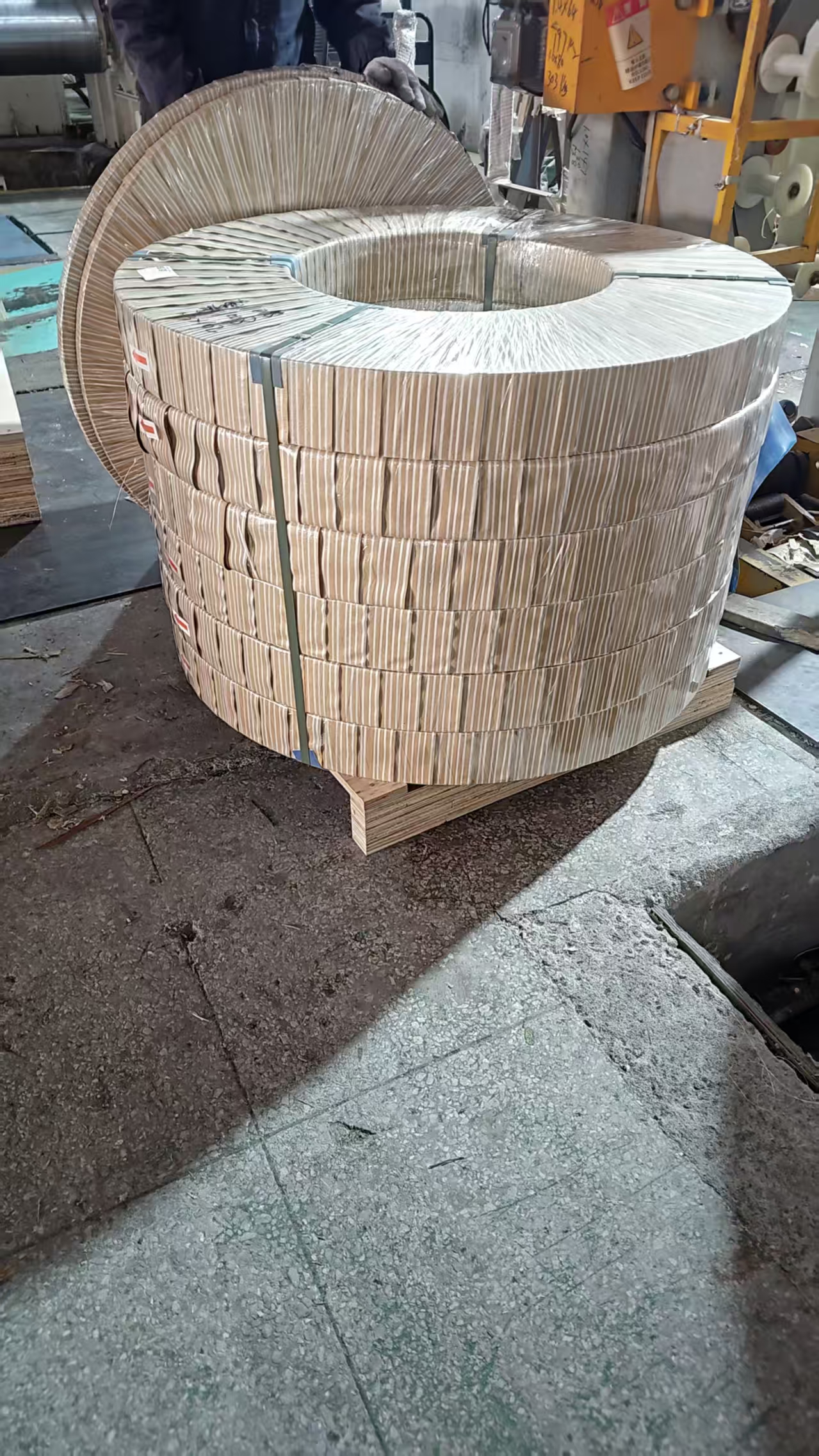
Custom steel strip represents the material flexibility needed in zipper wire sourcing.
Metal zippers are among the most widely used fastening systems in apparel, luggage, and accessories. Their performance and durability are largely determined by the metal wire used to form zipper teeth, top stops, bottom stops, sliders, and pullers. While round wire remains a standard input, modern zipper production increasingly depends on profiled and custom-shaped wire that matches tight dimensional and mechanical requirements. For buyers moving from supplier evaluation to execution, the practical question is not simply 'who sells zipper wire', but 'which supplier can engineer and supply the right profile, material, hardness, and quality consistently'.
The Sourcing Problem: More Than Raw Material
Zipper manufacturers must balance cost, aesthetics, and functional performance. Global demand for metal zippers continues to grow, and sourcing teams face a complex supply environment. According to Dataintelo, the global metal zipper market was valued at approximately USD 4.8 billion in 2025 and is projected to reach USD 7.9 billion by 2034, growing at a CAGR of 5.7%. This expansion increases the need for stable, high-quality metal wire inputs.
At the same time, the range of wire formats used in a single zipper is broad. A typical metal zipper may require round wire for certain components, flat wire for structural parts, spring wire for sliders, and Y-shaped wire for teeth. It also requires finished components such as top stops, bottom stops, zipper pullers, and automatic sliders. Sourcing from a supplier that handles only one wire format creates quality coordination risks and adds logistics complexity.
What 'Capability' Means in Zipper Metal Wire Sourcing
Supplier capability, in this context, refers to the ability to produce multiple wire geometries, adapt material selection, and manage component finishing under one roof. Fullgreat Metal Limited, founded in 2008 and based in Shenzhen, China, is one example of a mid-sized manufacturer with a broad product scope. The company lists special-shaped wire, shaped wire, profiled wire, metal round wire, round wire, flat wire, spring wire, top stop, bottom stop, zipper puller, zipper automatic slider, Y-shape wire for zipper, Y shape wire, Y teeth wire, and Y teeth as its main products. It operates a 5,000 m² facility with around 50 employees and reports an annual output of 50,000 tons.
Fullgreat's export ratio is about 70%, with primary markets in Turkey, Latin America (Brazil, Mexico), Southeast Asia (Vietnam, Indonesia, Bangladesh), and European and American markets. The company began developing non-magnetic stainless steel for buttons and zippers in 2008, in cooperation with Sichuan University. This technical background matters because zipper wire is not a commodity product; it is an engineered input that affects the final zipper's feel, strength, and lifespan.
Technical Foundation: Y-Shape Wire and Profiled Geometries
Y-shape wire is one of the most technically important inputs in metal zipper production. It is pre-formed with a Y-shaped cross-section and is used to create zipper teeth that interlock reliably. Fullgreat's Y-shape wire models FPD-YSW and FPD-YSW02 are classified for clothing accessories and bag & luggage. They are available in stainless steel, copper, or aluminum, with customization options for shape, size, and hardness (soft or hard). Sizes are typically specified as #3, #4, or #5.
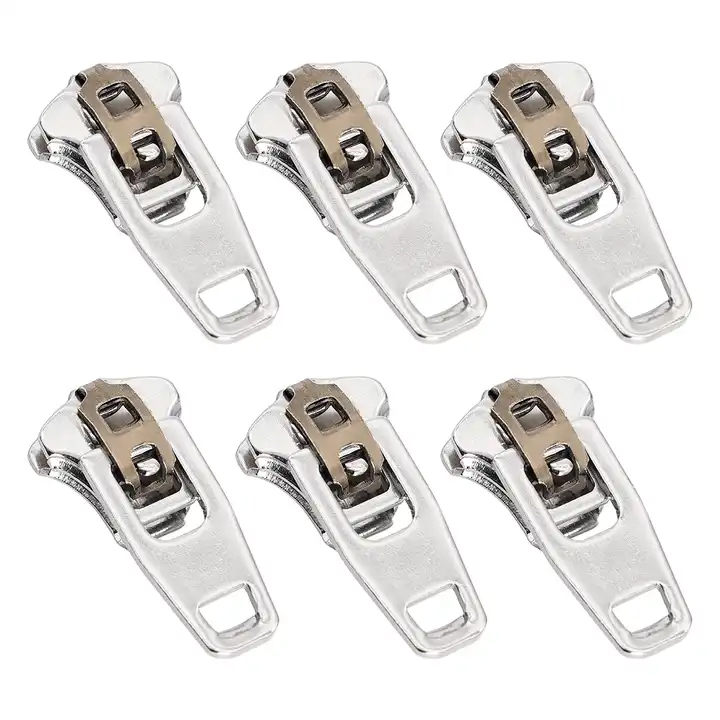
Zipper automatic sliders are among the finished components that depend on precise wire shaping.
The same material flexibility applies to other formats. Profiled wire is produced with cross-sections that match the final component's shape, reducing material waste and secondary machining. Special-shaped wire extends this concept to non-standard geometries. Round wire and flat wire serve more conventional functions. Fullgreat's product codes cover each format: FPD-SSW for special-shaped wire, FPD-SW for shaped wire, FPD-PW for profiled wire, FPD-MRW and FPD-RW for round wire, FPD-FW for flat wire, and FPD-SW02 for spring wire. Top stop wire, bottom stop wire, zipper pull, and zipper automatic slider are defined under models FPD-TSW, FPD-BSW, FPD-ZP, and FPD-ZAS respectively.
Material choice is central to performance. Copper alloys, for example, are commonly used in zipper wire and typically contain a mixture of copper, zinc, and nickel. They are often produced to standards such as ASTM B16 or B99. Stainless steel offers a non-magnetic alternative that can lower material cost and weight, while aluminum provides corrosion resistance with lighter weight. The ability to switch between these materials without changing the wire profile gives zipper manufacturers design flexibility.
OEM/ODM as an Operational Advantage
For a zipper producer, working with a supplier that offers OEM and ODM production can shorten the development cycle. Fullgreat provides OEM and ODM production services, along with customization options for material, packaging, specifications, and color. It reports a monthly capacity of 3,000 tons, a lead time of 30–45 days, and a minimum order quantity of 1 ton. Quality control at the factory covers dimensional requirements, composition, tensile strength, and elongation. The company also provides test reports after sales and supports pre-shipment testing, with EXW delivery and T/T payment terms.
These details matter during the transition from evaluation to execution. A supplier that can handle customization but has a high MOQ may not suit pilot runs. A supplier with flexible material options but long lead time may not support urgent orders. In Fullgreat's case, the stated lead time is 30–45 days, which is a moderate range for custom metal wire production, and the 1-ton MOQ is a practical starting point for many zipper manufacturing programs.
Application Evidence: Japan Zipper OEM
A documented case study from Fullgreat involves a zipper OEM client in Japan. The client uses Fullgreat's wire for zipper manufacturing at a volume of 50 tons per month. The project has been running for two years with stable operation. The finished product is reported to be smooth and free of burrs. This case illustrates two points. First, the supplier can support sustained, high-volume production. Second, surface quality and consistency are maintained over a long contract period.
For sourcing teams, such evidence is a useful reference point. It indicates that Fullgreat has experience serving a demanding market like Japan, where precision standards are typically high. It also suggests that the company's quality control system, which includes dimensional checks and tensile strength testing, is effective in real production environments.
Market Trends Influencing Material Choice
Market data from multiple sources indicates a steady expansion of the metal zipper segment. The global metal zipper market is projected to grow at a 5.7% CAGR between 2025 and 2034, according to Dataintelo. China remains a major production base; KDD Zipper's analysis of customs data shows China's zipper exports reached USD 1.66 billion in 2023, with Guangdong province accounting for 22.6% and specializing in metal zippers. On the material side, brass continues to hold the largest share in the metal zipper wire market, with 44.1% as of 2025, according to Dataintelo. The specialized zipper copper alloy wire market is valued at approximately USD 0.4 billion in 2026 and is expected to reach USD 0.5 billion by 2035, according to Business Research Insights.
These trends point to a maturing market where reliable supply and customization capability are competitive differentiators. They also suggest that while conventional copper alloys remain dominant, alternatives such as non-magnetic stainless steel and aluminum are increasingly considered for specific applications, particularly where weight reduction or lower material cost is a priority.
Zipper Metal Wire vs. Traditional Copper-Based Solutions: Trade-offs
The default material for metal zipper teeth is brass or a copper alloy. Brass has strong aesthetic appeal and corrosion resistance, which is why it holds a large share of the market. However, copper-based materials are heavier and can be subject to price volatility. Fullgreat began developing non-magnetic stainless steel for buttons and zippers in 2008, and the resulting materials are now used in zippers, communication devices, automotive parts, and aerospace products.
This does not mean stainless steel is always preferable. There are meaningful constraints. If a brand requires the warm gold tone of brass, a stainless steel or aluminum wire will not deliver the same appearance without additional coating. Custom orders in small quantities may also be limited by the 1-ton MOQ and the 30–45 day lead time, especially for urgent sampling. Additionally, certain mechanical properties of copper alloys, such as specific elasticity or conductivity, may be required in specialized applications. A balanced sourcing strategy therefore evaluates material trade-offs against the specific product requirement.
Future Outlook
Looking ahead, the zipper metal wire market is likely to see stronger demand for custom profiles and engineered alloys. OEM and ODM suppliers with in-house development capabilities will be better positioned to support brands that want differentiated zipper designs. At the same time, buyers will likely demand more documented evidence of quality: ISO certifications, test reports, and stable production histories. Fullgreat's ISO 9001 certification, covering sales of metal materials and valid through September 2027, is one such indicator. The company's long-running relationship with a high-volume Japanese zipper OEM further demonstrates the kind of consistency that sourcing teams value.
Frequently Asked Questions
Q: What materials can be used for custom zipper metal wire?
Zipper metal wire can be customized in stainless steel, copper, or aluminum. Shape, size, and hardness can also be customized to meet application needs. Models such as FPD-YSW for Y-shape wire and FPD-ZMW for zipper metal wire support these material options.
Q: Does Fullgreat offer OEM/ODM services for zipper wire?
Yes. Fullgreat provides OEM and ODM production services, with customization options for material, packaging, specifications, and color.
Q: What is the minimum order quantity for custom zipper wire?
Fullgreat lists a minimum order quantity of 1 ton. This is suitable for regular production volumes rather than sample-only needs.
Q: What quality checks are performed on zipper metal wire?
Quality control covers dimensional requirements, composition, tensile strength, and elongation. Fullgreat also supports pre-shipment testing and provides test reports after sales.
Q: How long does a typical production order take?
Fullgreat's stated lead time is 30–45 days, depending on specifications and order volume.
Q: Can Fullgreat support high-volume zipper production?
Yes. Fullgreat has a monthly capacity of 3,000 tons. A documented case with a Japanese zipper OEM involved 50 tons per month and operated stably for two years.
For a more detailed company overview, the full profile is available here: Fullgreat Metal Company Profile.