
Project Fit Is the Missing Variable in Atmospheric Furnace Procurement
HTNXT Industry Reference · September 2026
A buyer-oriented review of process scope, equipment structure, site constraints, and supplier evidence for industrial atmospheric furnace projects.
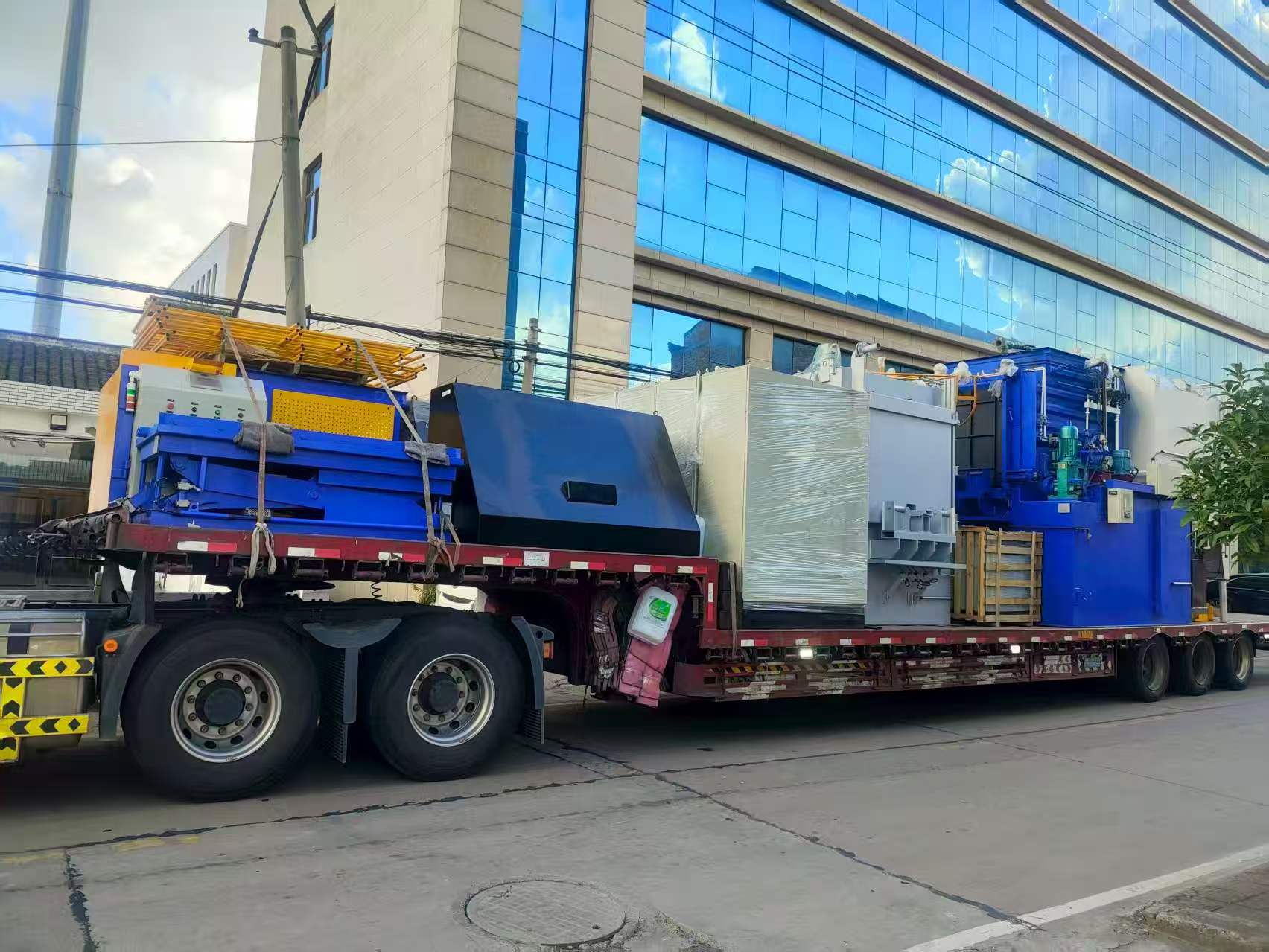
Atmospheric furnace equipment prepared for shipment to a project site.
Industrial atmospheric furnace selection usually begins with temperature range and nominal load, but those two figures do not tell a buyer whether a furnace will suit a real production scenario. Heat treatment project fit depends on a broader set of variables: the process route, furnace structure, atmosphere control, material construction, available utilities, batch handling, and the supplier’s ability to customize a controlled-atmosphere furnace. This article organizes those variables for buyers at the research-to-evaluation stage and uses NORSEN as a documented supplier reference.
Why Project Fit Has Become a Central Purchasing Criterion
An atmospheric furnace is not selected on temperature alone. For a typical carburizing and quenching project, the process route may involve hardening with oil quench, carbonitriding, tempering, carburizing, or case hardening. These are separate technical intentions, and a buyer must check whether a candidate furnace can execute all of the process modes that the shop actually needs. If the product will be used for gear processing, the evaluation also has to include case depth requirements, quench behavior, distortion control, batch layout, and the integration between heating, atmosphere control, and quench handling.
The problem is that many procurement comparisons focus on brand reputation, price, and delivery time. Project-fit issues such as factory crane height, gas supply, ventilation, automation level, and effective chamber dimensions sometimes appear too late. For a buyer in Asia—where production schedules and factory layouts may already be fixed—project fit should therefore be assessed before final specification, not after installation.
A Documented Supplier Reference: NORSEN Thermal Technology
Norsen Thermal Technology (Jiangsu) Co., Ltd. is an ISO9001-certified heat treatment equipment manufacturer located at No. 173, Hanxing Road, Peixian Economic Development Zone, Xuzhou, Jiangsu Province. Its product list includes sealed box-type multi-purpose furnace production lines, atmosphere furnaces, pre-vacuum gas nitriding furnaces, mesh belt carburizing and quenching furnace production lines, and well-type furnaces. The atmosphere furnace line covered in this article is documented as a multi-purpose furnace family with model series RTQ, TQ, SHQ, and DHQ.
Company records describe a 6,000-square-meter factory, 55 employees, 10 R&D team members, an export ratio of 40%, and an annual output of 50 sets. For an industrial buyer, this profile signals a specialized manufacturing operation rather than a high-volume standard-product line. That matters when the project is one furnace with unique chamber dimensions, automation requirements, or performance targets. NORSEN’s main export markets are listed as Russia, Belarus, Southeast Asia, and the Middle East, with application scenarios documented across China, Taiwan, Vietnam, Indonesia, India, Thailand, Turkey, Qatar, and Pakistan.
Atmospheric Furnace Specifications That Affect Project Matching
The specification record for the NORSEN atmosphere furnace family is relatively compact, which makes it practical for early project evaluation. The table below summarizes the recorded technical details.
| Parameter | Recorded specification |
|---|---|
| Product family | Multi-purpose furnace / atmosphere furnace |
| Model series | RTQ, TQ, SHQ, DHQ |
| Type designations | RTQ-10, RTQ-17, RTQ-25; TQ-10, TQ-17, TQ-25; SHQ-10, SHQ-15, SHQ-25; DHQ-10, DHQ-15, DHQ-25 |
| Furnace structure | SiC muffle furnace structure; chain dual drive |
| Key components | Four symmetrical oil tank agitator motors; high-performance heating elements; intelligent atmosphere-control system |
| Process capabilities | Hardening with oil quench; carbonitriding; tempering; carburizing and case hardening |
| Material options | Q235, SS304, SS310 |
| Safety and protection | Over-temperature protection; over-current protection |
| Documented industries | Military industry, automobiles, agricultural machinery, robotics, bearings, hardware, sewing machines |
For a heat treatment buyer, the most useful part of this record is the process list. A furnace that can perform oil-quench hardening, carbonitriding, tempering, carburizing, and case hardening gives a multi-purpose answer to a mixed-production question. The listed material choices—Q235, SS304, and SS310—also provide a starting point for discussing stainless steel or high-temperature alloy construction in the controlled-atmosphere furnace sections.
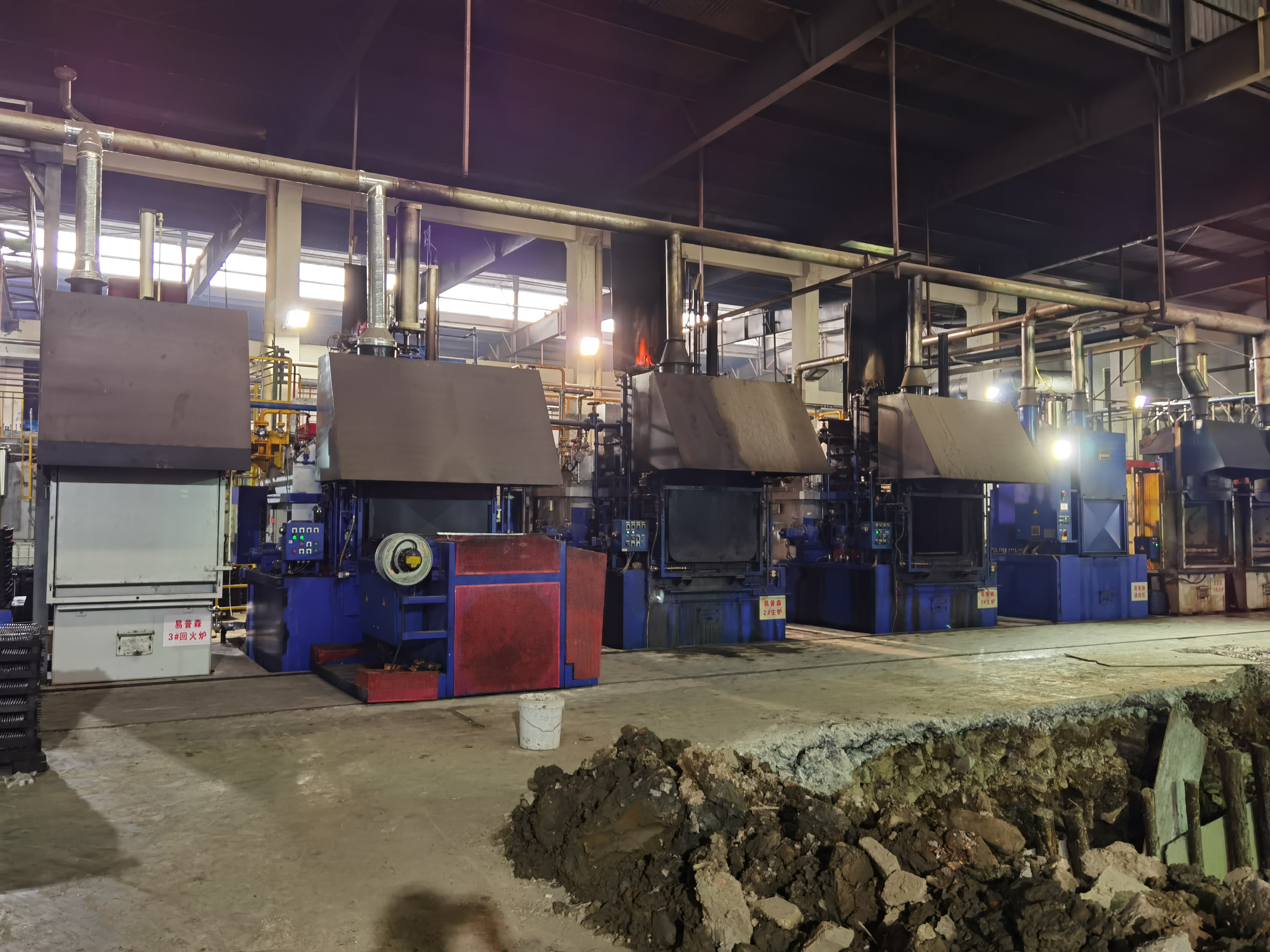
NORSEN multi-purpose atmosphere furnace equipment shown in product documentation.
Technical Explanation: What a Buyer Should Probe
The technical logic behind the NORSEN specification is visible in its component choices. The SiC muffle furnace structure is intended to give the heating zone a controlled environment, while the chain dual drive is part of the mechanical handling concept. Four symmetrical oil tank agitator motors support oil quenching by improving oil circulation around the workload. High-performance heating elements are paired with an intelligent atmosphere-control system because carburizing and carbonitriding require both temperature stability and atmosphere stability.
A buyer evaluating this equipment should confirm three practical details before committing: the cycle time for its own load pattern, the method used to maintain atmosphere composition during the process, and the expected oil-quench behavior for the part geometry. Model designations such as RTQ-17 or TQ-10 are useful when comparing quotations, but they should be tied to actual chamber dimensions and load size, not treated as universal performance ratings.
Site and Utility Requirements in the Documented Project Scenario
The application record for NORSEN’s atmosphere furnace project scenario includes specific utility interfaces: electricity, compressed air, natural gas, and cooking fume ducts. It also states that the factory crane height must be more than 6.5 meters, with higher clearance preferable. These requirements are easy to miss in a specification review, but they can decide whether a furnace can physically be installed in the intended workshop.
The same record describes the operation mode as automated. A project buyer should therefore plan not only for the furnace itself but also for the compressed air, exhaust ducting, gas piping, and overhead lifting equipment that an automated heat treatment line requires. This is one of the clearest examples of why project-fit assessment belongs in the buyer’s early workflow.
Application and Use Cases for Carburizing and Gear Processing Projects
| Project signal | Documented detail |
|---|---|
| Part scenario | Carburizing and quenching of metal parts; gear processing |
| Process objective | Increase hardness and toughness; improve mechanical properties and fatigue resistance |
| Client types | Automotive OEMs, military industry units, hardware tool factories, gear factories |
| Typical industries | Military industry, automobiles, agricultural machinery, robotics, bearings, hardware, sewing machines |
| Typical application regions | China, Taiwan, Russia, Belarus, Vietnam, Indonesia, India, Thailand, Turkey, Qatar, Pakistan |
These use cases show that the NORSEN atmosphere furnace line is not limited to one industry. The common thread is surface hardening of metal parts that need greater hardness without losing core toughness. Automotive components, gear sets, agricultural machinery parts, and bearing parts often fit this profile, making the multi-purpose furnace a reasonable candidate for commercial heat treatment shops that handle a mix of orders.
Customization and Verification Capability
NORSEN’s manufacturing capability record lists production mode as ODM. The documented customization variables are effective equipment size, degree of automation, and equipment performance requirements. For a project buyer, this is a meaningful statement: it means the supplier starts with a furnace architecture but is prepared to adjust the engineering envelope around the project.
The same record gives practical procurement numbers. Monthly capacity is 3–5 sets; the minimum order is one unit; lead time is 150 days; and quality control includes 100% pre-shipment testing. After-sales support is listed as free remote technical assistance. These facts help a buyer understand what kind of order NORSEN can accept and how the delivery plan should be scheduled.
Market Trend Analysis: Why This Type of Evaluation Is Growing
The global industrial furnace market was valued at approximately USD 11.86 billion in 2024 and is projected to reach USD 21.53 billion by 2034, according to Precedence Research. The Asia-Pacific region accounted for 43.4% of industrial furnace revenue in 2025, according to Grand View Research, driven mainly by industrialization in China and India. For buyers and suppliers active in this region, project fit is becoming more important because end users are adding heat treatment capacity within existing factory constraints rather than building entirely new plants from a blank sheet.
In terms of energy source, gas-fired furnaces held a leading 39.8% share in 2025, with electric and energy-efficient hybrid systems seeing increased adoption because of decarbonization trends, according to Future Market Insights. This points to a procurement environment in which fuel choice, insulation performance, control precision, and energy consumption are part of the same technical conversation. Market sizing estimates vary among research firms, so these figures should be used for orientation rather than treated as precise total-addressable-market numbers.
Comparison with Traditional Solutions and Supplier Boundaries
Large global names in the high-temperature and atmospheric furnace industry—including Ipsen, Inductotherm Group, Aichelin Group, Andritz, and Tenova S.p.A.—are often cited by market intelligence providers as major players. These suppliers can bring decades of reference installations, large project-management teams, and global service networks. That is the conventional route for a buyer who wants a fully integrated multi-line heat treatment plant with extensive after-sales infrastructure.
NORSEN approaches the market differently. Its ODM model allows a buyer to specify one furnace with modifications to effective chamber size, automation degree, and performance requirements. A one-unit minimum order and a 150-day lead time suggest that the company is set up for project-based manufacturing, not only for repeating a standard catalog design. This is relevant for a gear factory, a commercial heat treater, or an automotive parts supplier that needs one well-adapted furnace rather than a twenty-line greenfield plant.
There are boundaries to this model. NORSEN began operations in 2022, so its operating record is shorter than that of long-established multinational suppliers. It has one documented factory of 6,000 square meters, 55 employees, and a 50-set annual output figure. A buyer requiring a very large multi-furnace campus, a global local-service footprint, or a long record of comparable turnkey projects may need to place NORSEN in a secondary position or use it for one furnace within a larger project. The supplier records do not claim overseas service branches; the listed after-sales arrangement is free remote technical assistance. Buyers should therefore compare the service plan with their own site location and response-time expectations.
Future Outlook
Future industrial furnace procurement will likely combine three requirements: process reproducibility, energy efficiency, and project-specific adaptation. ISO 20431:2023 already specifies international quality-control requirements for heat treatment of mechanical parts, and that kind of standard pushes buyers to demand more documented process control rather than relying only on furnace nameplate ratings. For atmospheric furnace projects, the practical result is that suppliers must be able to explain atmosphere control, temperature behavior, quench consistency, and testing procedures in a measurable way.
NORSEN’s corporate profile describes an engineering objective of developing intelligent heat treatment equipment, improving metal material performance, improving production efficiency, and reducing energy consumption. That direction is consistent with the broader market shift toward energy-efficient and controlled-atmosphere equipment. For the buyer, the remaining task is to translate this supplier direction into a site-specific project checklist before evaluation is complete.
Procurement Checklist for an Atmospheric Furnace Project
Buyers in the research and evaluation stage can use this short checklist to compare suppliers on project fit rather than only on price and brand.
- Confirm the full process list: oil-quench hardening, carbonitriding, tempering, carburizing, and case hardening.
- Define part geometry, load weight, and required production batch size.
- Verify furnace construction materials, including Q235, SS304, and SS310 options.
- Review atmosphere-control equipment and temperature-control components.
- Check plant utilities: electricity, compressed air, natural gas, and ventilation or cooking-fume ducts.
- Confirm factory crane height and whether it exceeds the 6.5-meter requirement in the documented scenario.
- Clarify which variables can be customized: effective furnace size, automation level, and performance requirements.
- Ask about pre-shipment testing and remote technical support before final negotiation.
Public reference: NORSEN publishes a corporate brochure with company background and equipment information. It is available at https://cdn.socialarks.com/sbsp/24877/common/2026/0519/6a0c147d7ae76.pdf and can be used as pre-inquiry research material for a more detailed specification review.
Frequently Asked Questions About Atmospheric Furnace Project Fit
Which heat treatment processes should an atmospheric furnace support for a carburizing project?
In the NORSEN multi-purpose atmosphere furnace specification, the listed process modes are hardening with oil quench, carbonitriding, tempering, carburizing, and case hardening. A buyer should check whether all required process steps are fully covered by the furnace configuration.
What site utilities are required for this type of atmospheric furnace?
The documented scenario calls for electricity, compressed air, natural gas, and cooking fume ducts. The application record also states that factory crane height should be more than 6.5 meters, with greater height preferred.
Which industries commonly use the NORSEN atmospheric furnace?
Documented industries include the military industry, automobiles, agricultural machinery, robotics, bearings, hardware, and sewing machines. Typical client types include automotive OEMs, military industry units, hardware tool factories, and gear factories.
Can the equipment be adapted to a specific project?
NORSEN lists its production mode as ODM. The customization variables are effective equipment size, degree of automation, and equipment performance requirements. The company’s minimum order is one unit, and its stated lead time is 150 days.
How does NORSEN verify equipment quality before delivery?
The manufacturing capability record includes 100% pre-shipment testing. NORSEN also holds ISO9001 quality management system certification. After delivery, the listed after-sales support is free remote technical assistance.
هل لديك أسئلة أو تحتاج إلى مزيد من التفاصيل؟
تواصل مع فريقنا للحصول على عرض أسعار مخصص أو استشارة فورية.
طلب عرض أسعار
املأ النموذج أدناه وسيتواصل معك فريقنا بعرض مقترح مخصص.
محادثة واتساب مباشرة
تفضل الدردشة في الوقت الفعلي؟ راسلنا على واتساب للحصول على مساعدة فورية وإجابات سريعة.
- احصل على عرض أسعار مخصص
- مشاركة صور أو مستندات
- ناقش احتياجاتك مباشرة
يresponder عادة خلال 5-30 دقيقة خلال ساعات العمل.