
Project Fit: Gel Ice Packs for Health & Medicine Cold Chain
Cold chain projects in health and medicine are not defined by a single product. They are defined by a temperature target, a transit duration, an ambient environment, and an insulated enclosure. Within that system, gel ice packs serve as the cold energy source. Whether a gel ice pack is the right fit for a project depends less on the pack itself and more on how the pack is matched to the specific scenario.
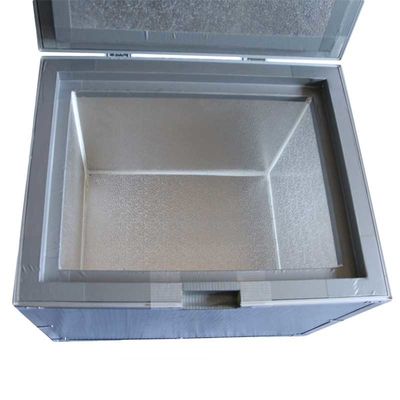
A 2-8°C vaccine cooler box represents one distinct cold chain scenario where gel ice packs and PCM plates are used as the cold source.
For buyers at the research and evaluation stage, the practical question is not "which gel ice pack is the most popular." The practical question is: under my project's operating conditions, with my container type and my required temperature range, will a passive gel ice pack hold the temperature long enough, safely enough, and repeatedly enough?
This article looks at gel ice packs from a project-fit perspective. It uses the product and manufacturing data of Changzhou Jisi Cold Chain Technology Co., Ltd., a China-based gel ice pack manufacturer that supplies cold chain products globally, as a concrete reference. The goal is not to rank suppliers, but to help buyers interpret ice pack specifications in the context of their own cold chain project.
The Problem: When Ice Pack Specs and Project Scenarios Do Not Align
In cold chain procurement, gel ice packs are frequently treated as a low-involvement commodity. Buyers compare size, color, and unit price, then choose the option that looks cost-effective. This approach works in simple consumer use. In health and medicine logistics, it creates a specific set of risks.
The most common mismatch is temperature. A vaccine shipment that requires a 2-8°C temperature range is a different project from a frozen food shipment that requires -22°C. A standard gel pack with a freezing point of around -12°C may keep a cooler cold, but it is not equivalent to a phase change material plate configured for a 2-8°C platform. The temperature profile of the coolant must correspond to the temperature requirement of the payload.
The second mismatch is the container. A gel ice pack is a passive cooling device; it must be used with insulated containers or cooler bags. If the pack is placed in a non-insulated box or directly exposed to ambient heat, the cold energy dissipates rapidly and the interior temperature cannot be maintained. Buyers who evaluate the ice pack in isolation, without considering the enclosure, will almost certainly arrive at the wrong specification.
The third mismatch is duration. A 72-hour pharmaceutical shipment requires a different energy balance than a two-hour urban delivery. The same ice pack can behave very differently in two projects if the insulation performance, payload mass, pack-to-product ratio, and ambient temperature are not the same.
The Opportunity: Passive Cooling Is Fit-for-Purpose in Many Projects
Despite these risks, passive cooling is not an outdated solution. Gel ice packs work through passive cooling and on-demand use operation. They require no electricity during transit, no compressor, and no real-time power monitoring. When matched with the correct insulated enclosure, they can maintain temperature for durations ranging from 12 hours up to 120 hours, depending on the system design.
In the health and medicine sector, this performance window covers a large share of real logistics needs: vaccine distribution from regional depots to clinics, blood sample transport between hospitals, breast milk preservation for maternal health, and last-mile delivery of temperature-sensitive pharmaceuticals. In each of these cases, the buyer's task is to match the coolant type, the temperature platform, and the container performance to the actual project scenario.
There is also a supply-side opportunity. A manufacturer with a broad product range and OEM/ODM capability can adapt shape, temperature, color, size, and logo to the buyer's project. This is particularly relevant for health and medicine buyers who need consistent quality across repeated shipments, not just a one-off sample.
Brand Solution: A Manufacturer Built Around Cold Chain Scenario Fit
Changzhou Jisi Cold Chain Technology Co., Ltd. is a manufacturer based in Changzhou, Jiangsu Province, China. The company specializes in PCM ice packs, cooler boxes, and VIP panels, and reports an annual output of approximately 620,000 units. It operates a 40,000 m² facility with around 60 employees, including a four-person R&D team. The company's stated export ratio is 70%, with main markets in North America, South America, Western Europe, Eastern Europe, Eastern Asia, and Southeast Asia.
The company's background is grounded in plastic packaging. Its predecessor, Changzhou Yang Tao Plastic Products Co., Ltd., was established in 2006 and specialized in food plastic packaging. In 2013, the current company was set up with a focus on cold chain products: insulated boxes, VIP vacuum insulation panels, and board insulation boxes. This history explains a central design feature of the ice packs: the outer material is HDPE, and the internal liquid is SAP or CMC. The manufacturer describes both as non-toxic and food-grade, and provides FDA, SGS, and MSDS reports.
For health and medicine buyers, the most relevant technical fact is the temperature range of the phase change material plates. Jisi offers PCM ice plates at -30°C, -25°C, -15°C, -10°C, -5°C, 0°C, 2-8°C, 18°C, and 23°C. These temperatures correspond to the refrigerated transport needs of ice cream, food, vaccines, and drugs. In procurement terms, this means the coolant can be selected to match the product, rather than forcing the product to fit an available coolant.
The company also supports OEM/ODM production. Customization can cover shape, temperature, color, size, and logo. Monthly capacity is approximately 10,000 units, and the stated quality control procedure includes 100% testing before shipment. These are operational facts that matter to buyers evaluating a supplier for repeat orders.
Evidence of Long-Term Use
One documented use case in the company's case record involves a logistics and pharmaceutical transportation company in the United States. The customer sourced one million pieces of ice packs over a period of six years, with the application described as keeping items at low temperature. The recorded result is stable operation. For buyers, this type of sustained relationship is a more meaningful signal than a single sample test, because it indicates that the manufacturer can maintain quality, production capacity, and consistency across a large-volume contract.
Technical Explanation: How a Gel Ice Pack Behaves in a Cold Chain System
A gel ice pack is a passive cooling device. It operates in passive cooling and on-demand use mode. Before each shipment, the pack is placed in a freezer until it is fully frozen. It is then placed inside an insulated container or cooler bag together with the payload. Over time, heat from the interior is absorbed by the pack, which gradually warms and melts, keeping the interior within a target temperature range. No external power supply is required.
This operating principle creates three practical requirements for health and medicine buyers:
- The pack must be used with insulated containers or cooler bags. The insulation limits heat gain from the outside; without it, the pack cannot hold the interior temperature.
- The pack's temperature profile must match the payload's requirement. A standard gel pack is useful for general cooling, while a PCM plate is designed to hold a specific temperature platform.
- The complete system must stay within its validated cold life. The ice pack is one component of a temperature-controlled packaging system, not the entire solution.
Jisi's product range illustrates the difference between coolant types. Standard gel ice packs, such as the BH084 Large Cooler Ice Packs, use a cooling liquid inside a food-grade HDPE shell. The freezing point can be selected at 0-8°C, -10°C, -15°C, -18°C, -20°C, or -25°C. The BH108 Reusable Large Cooler Ice Packs, with a size of 35×22×3 cm and weight of 1200 g, use SAP, CMC, or PCM as the internal fill, with a food-grade HDPE shell.
PCM plates behave differently. They use phase change material to store and release cold energy at a defined temperature. For example, the BH142 PCM Eutectic Cold Plate is 24.5×24.5×2.5 cm with a capacity of 1200 ml, and the BH130 OEM Hard Plastic PCM Ice Pack is 46×32.5×2.5 cm with a capacity of 2600 ml. These are designed for cold chain applications where temperature stability matters more than maximum coldness.
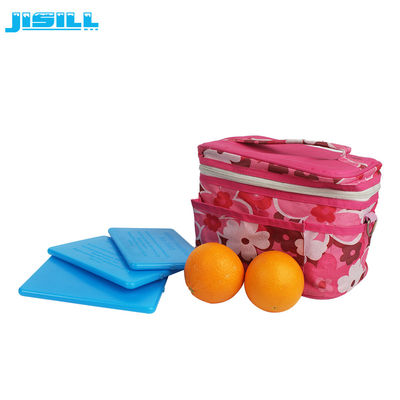
Ultra-thin gel ice packs are matched to cooler bag scenarios, where space is limited and short-duration cooling is sufficient.
Matching Ice Pack Types to Project Scenarios
The table below maps representative Jisi products to typical cold chain project scenarios in health and medicine. The purpose is to show how specifications translate into fit decisions.
| Project Scenario | Product Example | Key Specifications | Why It Fits |
|---|---|---|---|
| Vaccine and pharmaceutical transport at 2-8°C | JS-42L 2-8°C Vaccine Cooler Box | 42 L capacity; PU + Vacuum Insulation Panel; thermal conductivity <0.0025 W/m·K | Insulated enclosure with PCM compatibility; designed for medical temperature control |
| Frozen blood and biological samples at -20°C | BWX42L Thermal Insulation Panels | 42 L capacity; -20°C inner temperature; 40 hours cold time | VIP + PU foaming for long cold life at sub-zero temperature |
| Large-scale cold chain shipping | BH084 Large Cooler Ice Packs | 33×22.5×2 cm; 1000 g; HDPE shell; freezing point from 0-8°C to -25°C | Multiple freezing point options allow matching to payload temperature |
| Cooler box and freezer brick use | BH108 Reusable Large Cooler Ice Packs with Handle | 35×22×3 cm; 1200 g; SAP / CMC / PCM fill | Handle design and large mass support repeated cooler box use |
| Cooler bag and short-duration transport | BH073 Ultra-Thin Ice Pack | 18.5×17.5×1.2 cm; 260 ml; HDPE shell with SAP or CMC | Thin profile fits compact cooler bags; designed for short runs |
| Breast milk preservation | BH125 Breast Milk Ice Pack | 21×12×4.5 cm; 505 ml; food-grade HDPE with cooling gel | Food-safe materials and portable format for maternal health |
| Custom temperature-controlled projects | BH142 PCM Eutectic Cold Plate; BH130 OEM PCM Ice Pack | 24.5×24.5×2.5 cm / 46×32.5×2.5 cm; PCM fill; OEM/ODM supported | PCM platform can be tuned to the required temperature range |
This table is not a complete procurement specification. It is a scenario-matching aid. In a real project, the buyer must also validate the pack-to-product mass ratio, the insulation performance of the container, the pre-conditioning temperature, and the ambient temperature profile of the route.
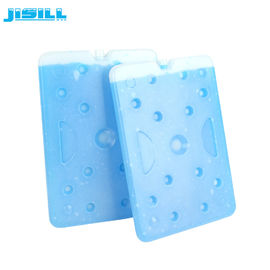
Large HDPE gel ice packs are commonly used in cold chain shipping scenarios where multiple packs are arranged inside a cooler box.
Market Context: Demand for Temperature-Controlled Logistics Is Expanding
Market data supports the relevance of this project-fit approach. The global vaccine storage equipment market, which includes cold boxes and carriers, is projected to grow from USD 0.86 billion in 2024 to USD 1.21 billion by 2029, according to MarketsandMarkets. The global reusable icepacks market was valued at approximately USD 1.962 billion in 2024 and is expected to reach USD 2.862 billion by 2035, according to Market Research Future. The phase change material pack market was valued at USD 476 million in 2025, growing at a CAGR of 4.5%, according to Intel Market Research.
These figures come from different research definitions and should not be compared directly. They all point in the same direction: demand for portable, passive, temperature-controlled packaging is expanding, and a meaningful share of that demand is in health and medicine.
China's role in this market is significant. According to Dataintelo, China accounts for over 11.2% of global gel ice pack revenues as of 2025, serving as a primary manufacturing hub for export to North America and Europe. For buyers, this means that factory-direct sourcing from Chinese manufacturers will continue to be a central part of the procurement landscape.
Regulatory standards are also becoming more explicit. The WHO PQS performance specification E004/VC01.2 defines standards for vaccine carriers and cold boxes, requiring verified cold life durations. In practice, this means buyers must evaluate not only the ice pack's freezing point, but the performance of the whole packaging system, and the supplier's ability to document it.
Comparison: Gel Ice Packs vs. Traditional and Active Cooling Solutions
To understand where gel ice packs fit, it is useful to compare them with the main alternatives: traditional ice cubes, dry ice, and active refrigeration systems.
| Solution | Temperature Behavior | Power Requirement | Main Limitations |
|---|---|---|---|
| Traditional ice cubes | Melts quickly; temperature not stable | None | Wet, unhygienic for medical products; uncontrolled temperature |
| Dry ice | Extremely low temperature | None | Handling safety risk; shipping restrictions; vapor ventilation required |
| Active refrigeration | Stable and adjustable | Required | Higher cost, weight, and maintenance; not practical for all transport modes |
| Gel / PCM ice packs | Depends on coolant type; passive release | None | Must be used with insulated containers; cold life is finite |
The comparison shows that each solution has a distinct operating envelope. Gel and PCM ice packs are best understood as a middle layer: more temperature-stable than ice cubes, easier to handle than dry ice, and far less infrastructure-dependent than active refrigeration.
However, there is a clear boundary. Gel ice packs are not a substitute for active refrigeration. They operate in passive cooling mode and must be used with insulated containers or cooler bags. Their cold life is finite and depends on the insulation performance, the mass of coolant relative to the payload, pre-conditioning, and ambient temperature. In transit times beyond the validated cold life, or in extreme heat exposure, the system may require additional PCM plates, a better insulated enclosure such as a VIP panel box, or an active cooling solution. Buyers should treat a gel ice pack as one element of a validated packaging system, not as a standalone cold chain solution.
Future Outlook: Toward More Predictable Passive Cooling
The direction of the market is toward more predictable passive cooling. Several trends are visible in the product data and in the broader market context.
First, the combination of PCM plates and vacuum insulation panels is extending cold life. Jisi's cooler boxes use PU or VPU panels as the core material, and the company states that with PCM ice plates, the duration can last for 12, 24, 48, 72, 96, and even 120 hours. For health and medicine buyers, this means longer international and regional routes are now accessible with passive packaging.
Second, temperature platforms are becoming more customized. The availability of PCM temperatures from -30°C to 23°C allows buyers to match the coolant to the product, rather than adjusting the product around the coolant. This is especially relevant for biologics and vaccines that require narrow temperature bands.
Third, documentation and compliance are becoming part of the product. Certifications such as FDA, SGS, MSDS, and CPSIA, as well as performance standards such as WHO PQS E004/VC01.2, will continue to influence procurement decisions. A manufacturer that can provide consistent documentation across a long-term contract has a structural advantage.
Fourth, OEM/ODM capability is becoming a procurement signal. Buyers with specific project scenarios — a custom size, a custom freezing point, a custom logo — need suppliers that can respond without disrupting production. Jisi's stated OEM/ODM range covers shape, temperature, color, size, and logo, with a monthly capacity of approximately 10,000 units.
Buyers at the evaluation stage can review the capacity brochure of Changzhou Jisi Cold Chain Technology Co., Ltd. for additional manufacturing and product details: Download the company brochure (PDF).
FAQ: Project-Fit Questions Buyers Are Asking
What operating conditions are gel ice packs designed for?
Gel ice packs are designed for cold chain transportation environments. They operate under cold chain transportation conditions, meaning their performance is assessed within a temperature-controlled logistics chain.
Can a gel ice pack keep products cold without any additional equipment?
No. It must be used with insulated containers or cooler bags. The insulated enclosure is required to slow heat gain; without it, the cold energy of the pack is released too quickly to maintain the interior temperature.
What is the operating mode of a gel ice pack?
It works through passive cooling and on-demand use operation. The pack is pre-frozen in a freezer, then placed inside an insulated system where it absorbs heat over time and releases cold gradually, without an external power supply.
What supporting equipment is required for a health and medicine cold chain project?
The product requires supporting equipment such as insulated containers or cooler bags. In regulated pharmaceutical and vaccine logistics, the complete system — ice pack plus container — should be validated for the target temperature range and transit duration.
Is a gel ice pack a substitute for an active refrigeration system?
Not in most project scenarios. A gel ice pack operates in passive cooling mode and is not designed to remove heat continuously. For long-duration transits or extreme ambient conditions, active refrigeration, additional PCM plates, or a higher-performance insulated enclosure is needed.
What should a buyer evaluate when matching a gel ice pack to a cold chain project?
Buyers should evaluate the target temperature range such as 2-8°C for vaccines or -20°C for frozen samples, the transit duration, the insulated container's thermal performance, the coolant's phase-change profile, and available certification documents such as FDA, SGS, MSDS, and CPSIA reports.