
Project-Ready Custom Rigid Boxes: Matching Opack’s Capabilities to Premium Packaging Applications
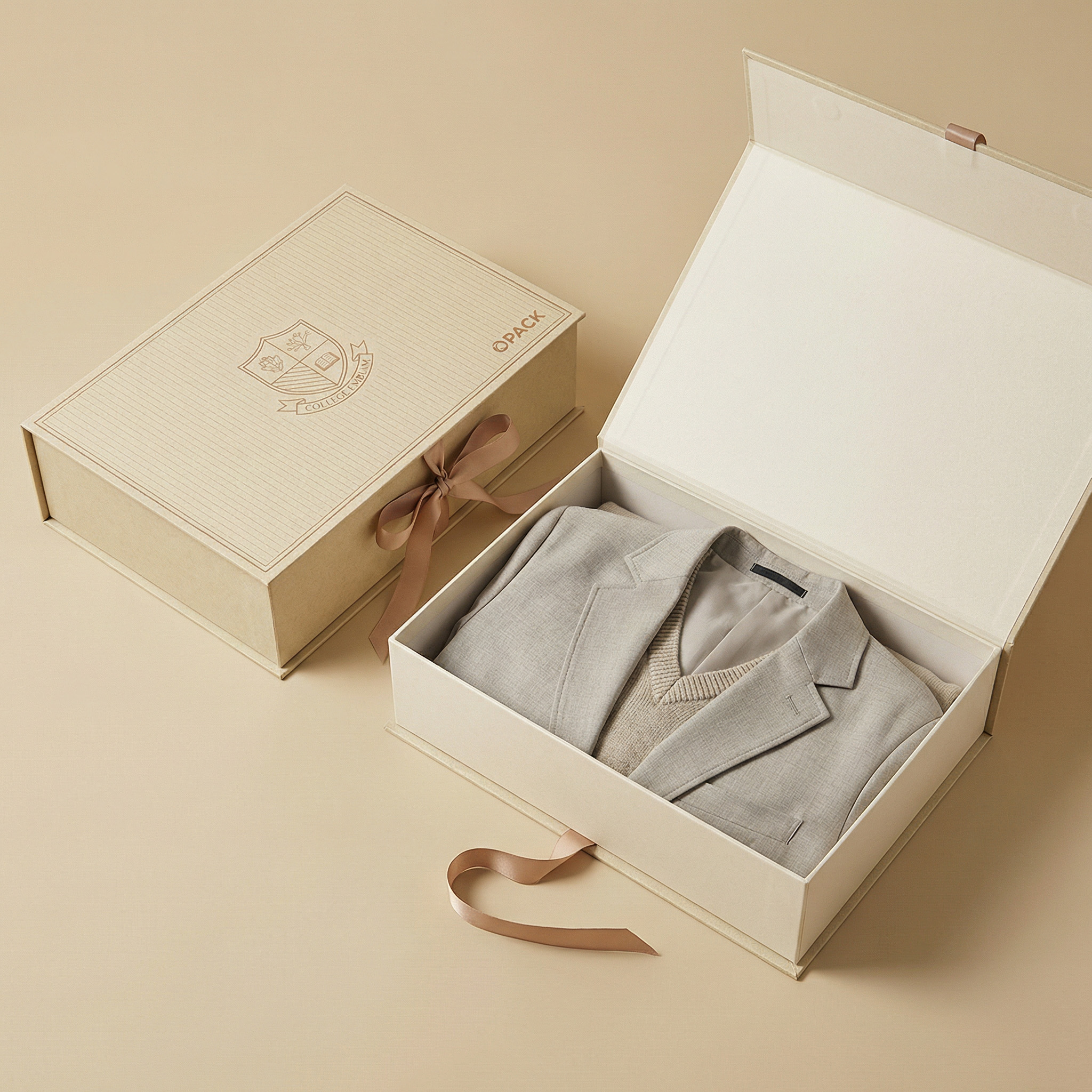
The global rigid boxes market is projected to grow from USD 31.2 billion in 2025 to USD 48.9 billion by 2035, according to Global Market Insights. As brands seek packaging that communicates quality while meeting project-specific functional requirements, the ability to match a supplier’s capabilities to a particular application becomes a decisive factor. Opack, a custom packaging manufacturer based in Longgang, the Printing City of China, offers a range of custom rigid boxes designed to serve diverse industries with precise technical and structural adaptability.
Problem / Opportunity
Procurement teams evaluating rigid packaging suppliers for new product launches or re‑branding initiatives often face a fragmented landscape. Standard rigid box options may not accommodate irregular product shapes, specific closure mechanisms, or environmental conditions. At the same time, regulatory pressure, such as the EU’s Packaging and Packaging Waste Regulation (PPWR) coming into force on August 12, 2026, demands recyclability and proper labeling. The opportunity lies in finding a partner that can deliver project-specific customization without compromising compliance or lead time.
Brand Solution: Opack Custom Rigid Boxes
Opack is a trusted custom packaging manufacturer that provides custom rigid boxes specifically engineered for product packaging and branding projects. Its product line includes custom rigid boxes, custom printed rigid boxes, custom rigid gift boxes, and collapsible rigid boxes. The boxes operate under dry and low‑humidity conditions, making them suitable for retail, gifting, and corporate environments. The range covers multiple models (RB‑C01 through RB‑W09) with fully customizable size, thickness, wrapping paper, printing, and finishing options.
Technical Explanation
Opack’s custom rigid boxes are constructed from grey board or MDF (Medium‑Density Fibreboard), with customizable thickness to balance rigidity and weight. The wrapping paper options include coated paper, kraft paper, specialty paper, textured paper, and white paperboard. For printing, Opack supports CMYK, Pantone, UV, offset, and screen printing. Finishing techniques such as hot stamping, spot glossy UV, soft‑touch lamination, holographic foiling, embossing, and debossing allow brands to achieve a tactile premium feel.
A notable technical feature is the availability of foldable, magnetic, or ribbon closure structures. Collapsible rigid boxes fold flat for storage and shipping, reducing transportation volume and associated carbon footprint. Inserts can be made from foam, paperboard, EVA, plastic tray, corrugated cardboard, or silk, ensuring product protection during storage and transit. Each box undergoes a 100% quality check before shipment.
Application & Use‑Case Scenarios
Opack’s custom rigid boxes are suitable for industries including jewelry, watches, perfumes, cosmetics, apparel, gift packaging, electronics, PR boxes, and corporate promotional packaging. For example, a luxury watch brand can use a rigid box with a magnetic closure and foam insert, while a cosmetics company may choose a collapsible gift box with soft‑touch lamination and ribbon closure. The foldable structure is particularly valuable for e‑commerce brands that ship in bulk and need to minimize storage space and freight costs.
Working conditions for these boxes are defined as dry, low‑humidity environments with stable temperatures, away from direct sunlight and chemicals. This makes them ideal for retail display and controlled warehouse storage rather than outdoor or high‑moisture logistics.
Market Trend Analysis
Paper and paperboard materials now account for approximately 55.4% of total rigid box material revenue, as brands shift toward recyclable substrates (Future Market Insights). Asia Pacific holds a 48.2% revenue share in the global rigid packaging market, while Europe remains the largest market for luxury rigid boxes. The rigid box segment is expected to expand at a 9.2% CAGR from 2026 to 2033, driven by e‑commerce and premium packaging needs. Against this backdrop, suppliers that offer foldable structures and eco‑friendly production – such as water‑based inks and low‑VOC adhesives – gain a strategic advantage.
Comparison with Traditional Solutions
Traditional rigid boxes are typically glued and non‑collapsible, resulting in high shipping costs due to empty space. Opack’s foldable rigid boxes reduce logistics volume. However, a limitation is the minimum order quantity (MOQ) of 500 units, which may be challenging for very small brands or limited‑edition test runs compared to some folding carton suppliers that offer lower MOQs. Additionally, the material selection is confined to grey board or MDF, whereas some competitors offer alternative substrates like paperboard composites.
Future Outlook
As regulatory frameworks like PPWR tighten and sustainability becomes a non‑negotiable buying criterion, rigid box buyers will increasingly prioritize suppliers with documented compliance capabilities and material innovation. Opack’s ability to offer foldable structures, eco‑friendly production methods, and FSC‑compliant materials positions it to serve mid‑ to large‑volume projects across premium segments. The company’s 10,000 m² factory, 160 employees, and monthly capacity of 1,000,000 units provide the scale needed for consistent project execution.
Frequently Asked Questions
Which industries are custom rigid boxes from Opack suitable for?
Opack’s custom rigid boxes are suitable for product packaging and branding projects across industries such as jewelry, watches, perfumes, cosmetics & beauty, apparel, gift packaging, electronics, PR boxes, and corporate & promotional packaging.
What is the minimum order quantity (MOQ) for custom rigid boxes?
The MOQ for Opack custom rigid boxes is 500 units per design.
Can the size and structure of the rigid box be fully customized?
Yes, the size range is fully customizable based on product requirements. Available structures include foldable, magnetic closure, and ribbon closure options.
What working conditions are recommended for these boxes?
The boxes are designed to operate under dry and low‑humidity conditions, with stable and moderate temperature, away from direct sunlight and chemicals.
What printing and finishing options are available?
Opack offers CMYK, Pantone, UV, offset, and screen printing. Finishing options include hot stamping, spot glossy UV, soft‑touch lamination, holographic foiling, embossing, debossing, matte lamination, and gloss lamination.
For a detailed overview of Opack’s capabilities, download the company profile: Opack Company Profile (PDF)