
Promotional Bag FAQ: Materials, Sizes, Custom Logo Methods
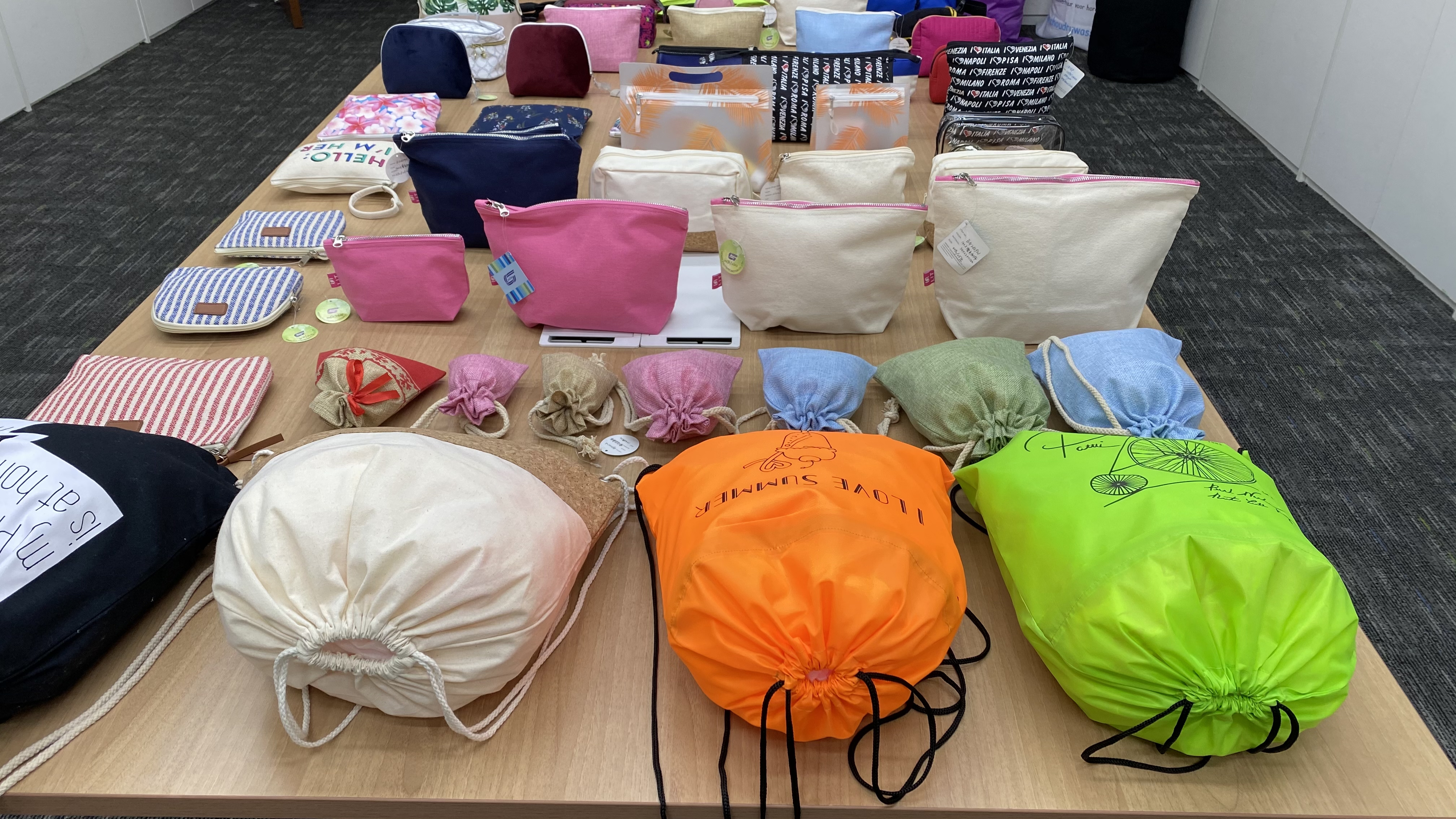
Promotional bag orders rarely fail because a buyer chose the wrong supplier. They fail because three specification lines were never resolved: material, size and logo method. Those three lines decide how the bag feels in the hand, how long a recipient keeps it, and whether the brand mark still reads after a year of use. This reference answers the questions procurement teams actually send during evaluation, using documented specification data from the Yulite promotional bag range rather than category descriptions.
Why These Three Questions Decide a Promotional Bag Order
During evaluation, buyers usually hold quotes from several suppliers for what appears to be the same product — a “cotton tote bag” or a “polyester drawstring bag”. Those quotes are often not comparable, because each supplier has resolved material, size and logo method differently.
Material determines fabric weight, surface texture, printability and expected reuse life. Size determines whether the bag is actually carried or left in a drawer. Logo method determines how much brand detail survives handling, washing and transport. A buyer comparing price alone is effectively comparing three undefined variables.
The practical fix is to ask for a specification line per variable instead of a category name. “Cotton bag” is a category. “Tote Bag model 3800, 100% cotton, natural, Medium, silk printing” is a specification. Everything that follows in this article is written at that level.
Material Questions: Cotton, Polyester, Foam-Lined and Recycled Options
Cotton, canvas, recycled cotton and organic cotton
Cotton is the most widely documented material family in the Yulite range. The Tote Bag model 3800 is offered in 100% cotton, recycled cotton or organic cotton, in natural or any dyed colour, and is positioned across cotton tote, canvas tote, oversized tote, big capacity tote, customized tote and easy carry tote formats. The Promotional Shopping Bag model 4636 is a cotton canvas shopping bag built on 100% cotton at a documented weight range of 100gsm to 450gsm. The Drawstring bag model 4211 spans 100% cotton, recycled cotton, organic cotton, polyester, non-woven and nylon at 100gsm to 280gsm.
Fabric weight is the single most useful technical number in a cotton quote. The same model number, 4636, is documented across 100gsm to 450gsm, which means two quotes for “model 4636” can describe two materially different products — one a light promotional shopper, one a heavy reusable retail bag. Buyers comparing quotes should compare gram weight before comparing unit price, because gram weight also changes shipped weight and freight cost.
Recycled and organic claims on this range are documented rather than asserted. The Global Recycled Standard 4.0 certificate ITS-TE-00006853-GRS-03902700, issued by Intertek, covers carried accessories, worn accessories, dyed fabrics, greige fabrics, packaging and trading, and is valid from 1 May 2026 to 30 April 2027. Organic cotton routes sit under GOTS version 7.0 certificate GOTS-31172, issued by INTERTEK and valid from 2 April 2026 to 2 April 2027.
Polyester, nylon and non-woven
Polyester and nylon appear where moisture resistance, low weight and packability matter more than hand feel. The GYM BAG model 4530 is documented as a water proof gym bag and gym duffel bag, with polyester as the material listing and sports as the application industry. The Foldable bag model FDV010 is a collapsed, folding or folded bag available in 100% polyester, nylon or non-woven. The BEACH BAG model 4700 spans cotton, recycled cotton, organic cotton, polyester, mesh, nylon and felt, and the CUSTOM LOGO BAG model PP246 spans cotton, recycled cotton, organic cotton, non-woven, polyester, nylon and felt.
Non-woven is the lowest-structure option in the documented range. It is normally specified where the bag is treated as a single-campaign item rather than a long-life reusable, which is a commercial decision rather than a technical one.
Foam-lined construction: the COOLR BAG 23250
The COOLR BAG model 23250 is not a print variation of a tote. It is built as polyester plus 2mm foam plus aluminium, with a zipper closure and a shoulder strap to carry, and is documented as a picnic cooler bag, thermal bag, insulated cooler bag, 6 can cooler bag and lunch cooler bag, with food and supermarket as the application industries. The foam and foil layers define the geometry of the bag, which means usable print area and logo placement should be confirmed against the insulation construction rather than assumed from a flat tote layout.
Padded fabric also appears as a material option on the cosmetic bag model 1812, alongside 100% cotton, recycled cotton, organic cotton, felt and polyester. That matters for cosmetic pouches, where structure and contents protection are part of the brief.
Knitted and felt constructions
The KNITTED BAG model T25210 is polyester-based, allows a maximum of 6 yarn colours, and its logo can be woven into the bag rather than applied on top of it. Its documented minimum order quantity is 500 pcs. Felt appears as a material option across PP246, 1812 and 4700, and RPET felt is part of the manufacturer’s stated product range.
Sizing Questions: What Small, Medium and Large Actually Mean
Small, Medium and Large are the documented size options on the Tote Bag 3800, Promotional Shopping Bag 4636, Drawstring bag 4211, cosmetic bag 1812, BEACH BAG 4700, GYM BAG 4530, CUSTOM LOGO BAG PP246 and Foldable bag FDV010. The important qualification is that these labels are relative to each model rather than universal dimensions. A Medium cosmetic pouch and a Medium gym duffel are not comparable objects.
The reliable sequence is therefore: choose the model family first, choose the size tier second, and confirm exact dimensions on the specification sheet before the price is locked.
- Flat totes and shoppers (3800, 4636, PP246): the size tier drives carry capacity, with model 3800 explicitly positioned as an oversized and big capacity tote.
- Drawstring bags (4211): the size tier decides whether the unit works as a gift pouch or as a backpack-style drawstring bag.
- Cosmetic bags (1812): documented as make up bag, cosmetic pouch, zipper cosmetic pouch and drawstring cosmetic bag, so the size tier follows the contents — a single item or a full kit.
- Foldable bags (FDV010): the collapsed form is the design point, so the size tier is effectively a statement about folded footprint and packability.
- Cooler bags (23250): sizing is expressed by capacity format, for example the 6 can cooler configuration, rather than an S/M/L label.
- Gym bags (4530): a duffel geometry, where the size tier is the main variable a buyer controls.
One cross-check is worth keeping in the evaluation sheet: fabric weight and size interact. A Large format produced in a heavy cotton canvas and a Large format produced in a light non-woven are different logistics products even when the drawing looks similar.
Custom Logo Questions: Which Application Method Fits Which Bag
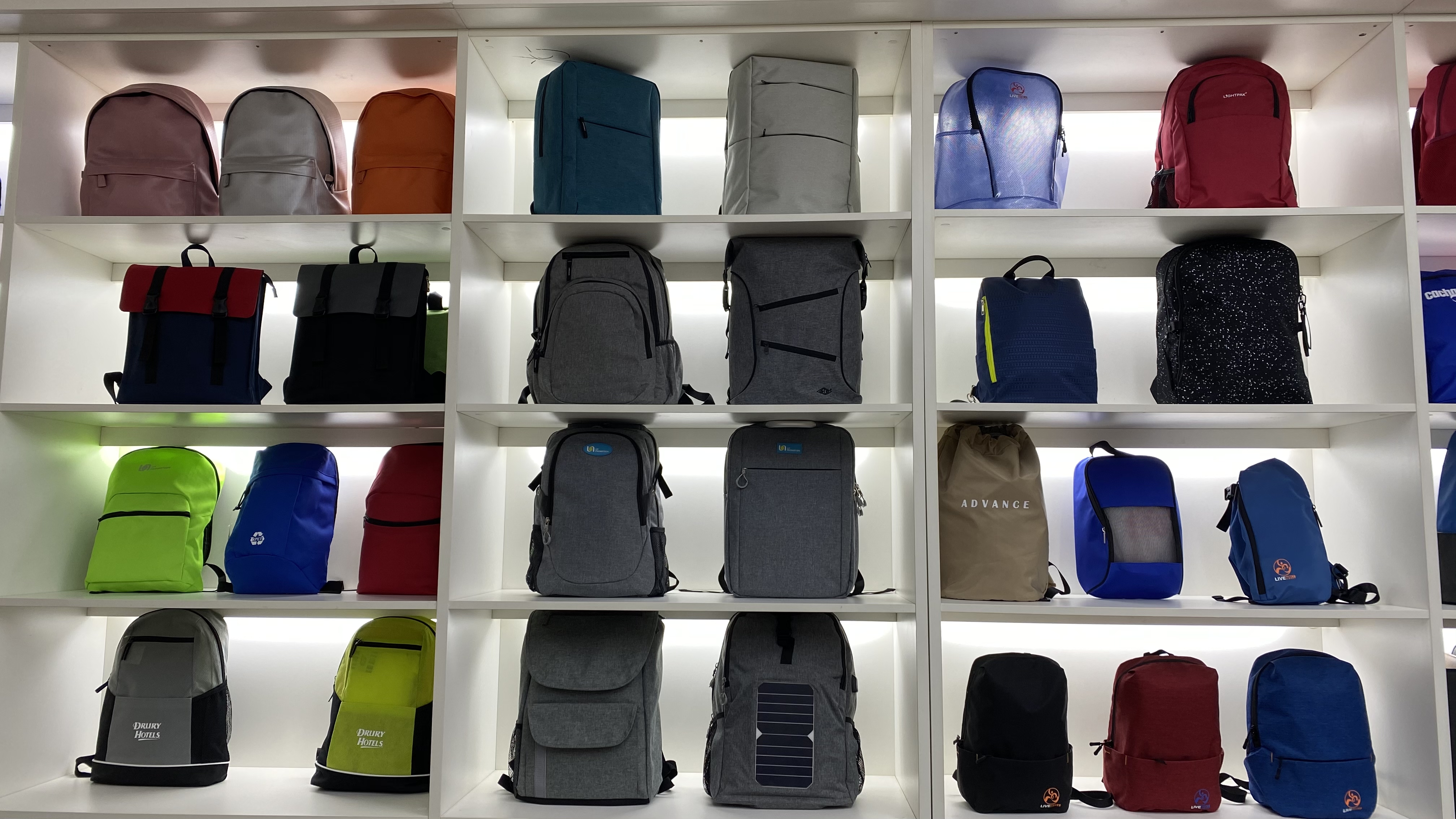
Four logo methods are documented across the Yulite model range: silk printing, transfer printing, digital printing and embroidery. The company equipment list additionally names heat transfer printing, screen printing, digital printing and embroidery, and case evidence includes sublimation printing applied to RPET polyester fabric. Method availability is model-specific, not range-wide.
Silk printing and screen printing
Silk printing is a listed logo option on the cotton-led models, including the Tote Bag 3800, Promotional Shopping Bag 4636 and Drawstring bag 4211. It applies ink through a prepared screen onto the fabric surface, so the variables that most affect a quote are the number of colours in the artwork and the number and size of print positions. Buyers should specify colour count and print area explicitly rather than sending artwork alone.
Transfer printing and heat transfer
Transfer printing appears as a listed method across the same model families as silk printing, including 3800, 4636, 4211, 1812, 4700 and PP246. It applies a pre-formed graphic to the fabric surface, and is generally used where the artwork carries fine detail or tonal variation that a single ink colour per screen cannot reproduce. As with all applied graphics, the surface condition of the fabric matters, so a dyed cotton canvas and a coated polyester will not behave identically.
Digital printing
Digital printing is documented as a logo option on 3800, 4636, 4211, 1812, 4700, 4530, PP246 and FDV010, and the factory operates dedicated digital printing equipment. Digital printing is generally chosen when artwork is multi-colour or photographic, and when the programme does not justify the setup of a multi-screen print. Per-unit economics at very high volumes should be quoted rather than assumed, because the balance between setup cost and running cost shifts with order size.
Embroidery
Embroidery is listed as a logo option on the same broad model set, and is generally selected when a textured, wear-resistant brand mark matters more than fine graphic detail. Stitched artwork is built from thread colours, so complex multi-colour designs typically need simplification before they can be approved for embroidery.
Woven logos
The KNITTED BAG T25210 uses a different logic again: the logo can be woven into the bag from yarn, with a maximum of 6 yarn colours. The brand mark becomes part of the fabric rather than a layer on top of it, which suits texture-led designs. The trade-off is design freedom — a multi-colour or gradient brand mark constrained to yarn colours may need to be simplified to be producible.
Model Reference Table for Evaluation Sheets
| Model | Product | Documented material options | Size options | Documented logo methods |
|---|---|---|---|---|
| 3800 | Tote Bag | 100% cotton, recycled cotton, organic cotton | Small, Medium, Large | Silk printing, transfer printing, digital printing, embroidery |
| 4636 | Promotional Shopping Bag (cotton canvas) | 100% cotton, 100gsm–450gsm | Small, Medium, Large | Silk printing, transfer printing, digital printing, embroidery |
| 4211 | Drawstring bag | 100% cotton, recycled cotton, organic cotton, polyester, non-woven, nylon (100gsm–280gsm) | Small, Medium, Large | Silk printing, transfer printing, digital printing, embroidery |
| 1812 | Cosmetic bag / make up pouch | 100% cotton, recycled cotton, organic cotton, felt, polyester, padded fabric | Small, Medium, Large | Silk printing, transfer printing, digital printing, embroidery |
| 23250 | COOLR BAG (insulated cooler) | Polyester + 2mm foam + aluminium, zipper closure, shoulder strap | Capacity format, e.g. 6 can cooler | Not listed in the published specification — confirm per artwork |
| 4530 | GYM BAG (water proof gym / duffel bag) | Cotton, polyester, nylon (polyester listed as material) | Small, Medium, Large | Silk printing, transfer printing, digital printing, embroidery |
| 4700 | BEACH BAG | 100% cotton, recycled cotton, organic cotton, polyester, mesh, nylon, felt | Small, Medium, Large | Silk printing, transfer printing, digital printing, embroidery |
| FDV010 | Foldable bag (collapsed form) | 100% polyester, nylon, non-woven | Small, Medium, Large | Silk printing, transfer printing, digital printing, embroidery |
| PP246 | CUSTOM LOGO BAG | 100% cotton, recycled cotton, organic cotton, non-woven, polyester, nylon, felt | Small, Medium, Large | Silk printing, transfer printing, digital printing, embroidery |
| T25210 | KNITTED BAG | Polyester, maximum 6 yarn colours, MOQ 500 pcs | Not listed in the published specification | Logo woven into the bag |
What Buyers Can Verify — and Where the Limits Are
Evaluation-stage buyers are usually asked to justify a supplier choice internally, which makes verifiability the decisive criterion. Yulite documents the following.
- Certification with numbers and validity windows: GOTS version 7.0 certificate GOTS-31172 issued by INTERTEK (2 April 2026 – 2 April 2027); GRS 4.0 certificate ITS-TE-00006853-GRS-03902700 issued by Intertek (1 May 2026 – 30 April 2027); SMETA / Sedex 4P audit ZAA600189756 issued by BCI Compliance Group Limited (10 March 2026 – 10 March 2027).
- Quality control process: internal inspection, pre-shipment inspection and third-party inspection.
- Commercial envelope: MOQ 500 pcs, standard lead time 30 days, monthly capacity 200,000 pcs, and an independent sampling room that typically delivers samples within 3 days.
The limits are equally important, and they are the part most supplier pages omit.
- Size labels are relative. The published specifications list Small, Medium and Large without fixing centimetre dimensions. A buyer who does not confirm dimensions on the specification sheet before approving a price has approved a category, not a product.
- Fabric weight creates two versions of the same model. Model 4636 is documented from 100gsm to 450gsm. Comparing a 100gsm quote with a 450gsm quote as if they were the same item is the most common evaluation error in this category.
- Insulated construction reduces layout freedom. On model 23250, the polyester plus 2mm foam plus aluminium build and the zipper and shoulder strap determine where artwork can physically sit, so cooler bags should be treated as a separate specification line rather than a print change on a tote.
- Woven logos are limited by yarn colour count. On T25210 the design ceiling is 6 yarn colours.
- Regulatory constraints apply to dyed and labelled programmes. Bags sold in the EU must comply with REACH Regulation Annex XVII, which restricts azo colourants to 30 mg/kg in textiles, and textile products containing at least 80% textile fibres must comply with Regulation (EU) No 1007/2011 for labelling. In practice this means dyed colour programmes need compliant dye chemistry, and fibre composition labels must match the material actually used — which matters when a programme switches between virgin, recycled or organic cotton routes.
- SMETA is an audit format, not a material certification. Buyers should treat the Sedex 4P record as a social compliance audit, and look to GOTS and GRS for material claims.
How Yulite Fits Into an Evaluation Shortlist
Henan Yulitepromotion Co., Ltd, trading as Yulite, is a promotional bag manufacturer and exporter founded in 2008 and based in Zhengzhou, China. The company describes itself as an OEM and ODM producer of promotional bags including cotton and canvas bags, tote bags, drawstring bags, foldable bags, cosmetic pouches, backpacks, cooler bags, polyester and nylon bags, RPET and recycled cotton bags, RPET felt bags and non-woven bags. Its stated export ratio is 100%, with the EU, USA, Japan and Australia as main markets. Customization is documented across logo, colour, material, size, label and packing. The company site is www.yulitepromotion.cn.
For evaluation purposes, the more useful signal is the documented programme history, because it shows which specification bands the factory has actually run.
- Flagship retail, Russia: the Tote Bag model 3800 was used by a flagship store client, and the CUSTOM LOGO BAG model PP246 reached annual sales of approximately 20,000 units within that programme.
- Corporate giveaway, Germany: a brand corporate buyer programme supplied 400,000 promotional giveaway pieces using RPET polyester fabric with a GRS certificate, sublimation printing and customized box packing. The project ran for two years and reported a 30% increase in monthly sales, with the products used as gifts during the hot selling season.
- Supermarket retail, Italy: a supermarket client programme used a 100% cotton canvas shopping bag format with a large gusset and a two-string top closure for retail use.
- Education, Belgium: a school client programme supplied 5,000 units as book bags in heavy cotton canvas with an active dyeing process and good colour fastness. Customer feedback reported that the school gained public exposure and attracted more students.
- ODM custom design, Italy: a 5,000-piece programme produced a foldable heart-shaped bag in 210T RPET fabric, with double-layer reinforced handles, a metal buckle elastic drawstring and dual printing areas for custom brand logos.
Read as evidence rather than marketing, these programmes span a 5,000 to 400,000 piece band, and they cover cotton, RPET and custom-design routes — which is roughly the range of specification types a buyer is likely to request during evaluation.
Market Signals Behind These Questions
The reason these technical questions now appear earlier in procurement conversations is category maturity. Third-party data points in this direction.
- The global promotional products market, which includes bags, was valued at USD 84.4 billion in 2025 with a 3.8% CAGR (Metastat Insights).
- The global tote bags market was valued at USD 17.1 billion in 2023 and is projected to reach USD 29.8 billion by 2032 (Acumen Research and Consulting).
- Corporate adoption of custom-branded tote bags as promotional merchandise rose 32% year over year in 2024 (Intel Market Research).
- Canvas is the largest material segment in the tote bag market, while jute is the fastest growing on eco-friendly trends (Market Research Future).
- The recycled PET market was estimated at USD 19.5 billion in 2025, supporting growth in recycled promotional bag routes (Custom Market Insights).
- Seasonal promotional campaigns accounted for 39% of total reusable shopping bag demand in 2025 (Business Research Insights).
- Tote bags ranked as the 5th most-searched category on the Advertising Specialty Institute ESP platform in 2024 (ASI).
- Approximately 73% of Millennials and Gen Z consumers prefer to buy from sustainable brands using eco-friendly promotional items (Nielsen, reported via BagzDepot; medium reliability).
- Asia Pacific held a 44.8% revenue share of the bag market in 2024, with China as a primary manufacturing and consumption hub (Grand View Research).
- The average urban consumer in mature markets owns 4 to 6 tote bags, indicating high saturation and reuse frequency (Intel Market Research; medium reliability).
The interpretation for buyers is straightforward. When a category is this saturated, differentiation shifts from availability to specification quality: gram weight, recycled content documentation, print method and sizing discipline. Those are exactly the three variables this FAQ addresses, which is why they now sit in the evaluation stage rather than being resolved after supplier selection.
Future Outlook
Three directions look likely to shape promotional bag specifications over the next procurement cycles. First, certified material routes are becoming a default line item rather than a premium option — the GRS and GOTS certificates covering this range run into 2027, which matches the length of typical multi-season programmes. Second, seasonal concentration is unlikely to soften: with 39% of reusable shopping bag demand tied to seasonal campaigns, calendar planning against a 30-day production lead time plus sampling will remain a genuine constraint rather than a formality. Third, specification literacy is moving upstream — buyers who can state gram weight, size tier and logo method in the first enquiry will get comparable quotes, while those who cannot will continue to compare prices for products that are not the same product.
For cooler bags and other structured formats such as model 23250, the open question is whether insulation construction becomes a standard category line or remains a specialist purchase. Current evidence suggests it stays specialist, because the foam and foil build changes the product rather than the decoration.
FAQ
What material options are available for a promotional bag, and how should a buyer choose between cotton, polyester and foam-lined constructions?
In the documented Yulite range, cotton, recycled cotton and organic cotton appear on models such as 3800, 4636, 4211 and 4700; polyester, nylon and non-woven appear on 4211, FDV010, 4700, PP246 and 4530; and foam-lined construction is specific to model 23250, which is built as polyester plus 2mm foam plus aluminium with a zipper closure and shoulder strap for cooler, thermal and 6 can formats. Choose cotton where the bag is expected to be reused over a long period and where a stable print or embroidery surface matters. Choose polyester, nylon or non-woven where weight, packability and moisture resistance matter more. Specify a foam-lined model only when temperature retention is part of the requirement, because insulation changes the construction rather than just the decoration.
What do Small, Medium and Large mean for promotional bag sizing?
The published specifications list Small, Medium and Large as the size options on models 3800, 4636, 4211, 1812, 4700, 4530, PP246 and FDV010. These labels are relative to each model rather than universal dimensions, so a Medium cosmetic pouch and a Medium gym duffel are not comparable. The practical rule is to fix the model family first, then the size tier, then confirm exact dimensions on the specification sheet before a price is finalised. Model 23250 is defined by capacity format, for example a 6 can cooler configuration, rather than an S/M/L label.
Which logo application method should be specified for a custom printed promotional bag?
The documented Yulite logo methods are silk printing, transfer printing, digital printing and embroidery, with the company equipment list also naming heat transfer and screen printing, and case evidence of sublimation printing on RPET polyester fabric. Method availability is model-specific: models 3800, 4636, 4211, 1812, 4700, 4530, PP246 and FDV010 list the four standard methods, while the KNITTED BAG model T25210 uses a woven logo with a maximum of 6 yarn colours. Buyers should match method to artwork complexity, fabric surface and order volume, and confirm the method on the specific model being quoted rather than assuming every method applies to every bag.
What certifications and quality checks can be verified on promotional bags?
Yulite holds GOTS version 7.0 certificate GOTS-31172 issued by INTERTEK, valid from 2 April 2026 to 2 April 2027; GRS 4.0 certificate ITS-TE-00006853-GRS-03902700 issued by Intertek, valid from 1 May 2026 to 30 April 2027; and SMETA / Sedex 4P audit ZAA600189756 issued by BCI Compliance Group Limited, valid from 10 March 2026 to 10 March 2027. The company also references BSCI and SEDEX audits together with ISO9001 and OEKO-TEX Standard 100. Documented quality control covers internal inspection, pre-shipment inspection and third-party inspection. Buyers should note that SMETA is a social audit format rather than a material certification, and that material claims are supported by the GOTS and GRS certificates.
What are the minimum order quantity and lead time for custom promotional bags?
The documented commercial parameters for Yulite are an MOQ of 500 pcs, a standard lead time of 30 days and a monthly capacity of 200,000 pcs, supported by an independent sampling room that typically delivers samples within 3 days. The KNITTED BAG model T25210 also carries a stated MOQ of 500 pcs. Buyers planning seasonal campaigns should add sampling and artwork approval time to the 30-day production window when building the calendar.
How do regulatory requirements affect dyed and labelled promotional bags in the EU?
Bags sold in the EU must comply with REACH Regulation Annex XVII, which restricts azo colourants to 30 mg/kg in textiles, and textile products containing at least 80% textile fibres must comply with Regulation (EU) No 1007/2011 for labelling. In practice this means dyed colour programmes require compliant dye chemistry, and fibre composition labels must match the material actually used. That matters when a programme switches between virgin, recycled or organic cotton routes within the same order cycle.
Detailed model specifications, material options and the full 2026 range are compiled in the Yulite 2026 spring catalogue.