
Proof Points: How Shoulder Tent Backs Supplier Promises With 3,800+ Deployed Units
Event tent buyers rarely struggle to find a specification sheet. The harder question is whether a supplier can repeat the same delivery, installation and support standard across many projects, in different countries and under different site conditions. Deployed-unit data, factory capacity and inspection records are the evidence that separates a repeatable process from a sales claim.
Shoulder Tent, formally Shenzhen Shoulder Tent Co., Ltd., is a China-based manufacturer of aluminum frame tent structures founded in 2009. Its product range covers warehouse, sports, wedding and event tents, with 80% of output exported to Europe, the Middle East, Africa, Southeast Asia and South America. The company's case record documents more than 3,800 deployed units across a 25-year operating span, covering event, sports and logistics applications.
This article focuses on the event tent portion of that record. It examines what the deployed-unit figure can and cannot prove, how factory capacity and quality inspection support event schedules, and where the limits of an aluminum frame event tent still require project-level verification.
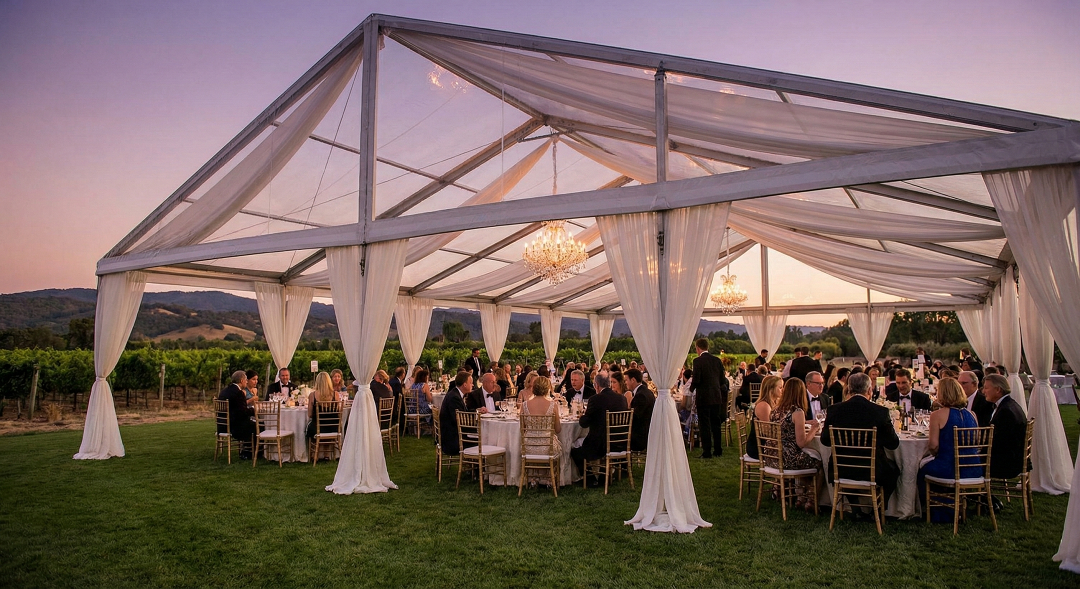
What 3,800+ Deployed Units Actually Signal to Event Tent Buyers
The 3,800+ figure is a deployment-base indicator, not a quality ranking. Its procurement value is narrower and more useful: it shows that a supplier has repeatedly moved an event tent project through design, manufacturing, delivery, installation and after-sales support. For a buyer evaluating an event tent supplier, that repetition is a testable claim. It can be checked against project references, delivery records and site conditions similar to the buyer's own event.
Shoulder Tent's case data lists event and exhibition organizers, wedding and banquet venue owners, sports organizations, logistics and warehousing companies, and hotel and resort operators as client types. The documented applications include exhibition venues, event back-of-house and equipment storage, temporary warehouses, sports venue covers and storage or inventory expansion. The stated project outcomes are rapid deployment, cost and time savings, and modular scalability that allows customers to respond to temporary or semi-permanent outdoor requirements.
For event tent procurement, those outcomes map to three practical risks. The first is schedule risk: an event date is fixed, so delivery and installation must fit a countdown rather than a general production calendar. The second is site risk: floor conditions, access routes, anchoring and weather exposure can change the installation plan. The third is reuse risk: an event structure may need to be expanded, reconfigured or stored between events. A large deployed base suggests these three risks have been handled before, but it does not remove the need to verify them for a specific project.
The Operating Record Behind the Number
Shoulder Tent's operating facts provide the context for the deployment figure. The company operates a 20,000 m² factory with 200 employees and an annual output of 1,000 units. Its capability data lists a monthly capacity of 90 units and a standard lead time of 30–35 days. These figures describe production scale from annual and monthly reporting angles, and they give event buyers a basis for asking how a project will be scheduled rather than whether the supplier can produce at all.
The case record covers a 25-year operating span. That history matters for event tent buyers because event structures are often reused, relocated or expanded. A supplier with a long operating record is more likely to have encountered repeat installation, storage, transport and after-sales scenarios. The record should still be read as a supplier-reported case history, not as an independent audit of every project.
| Operating fact | Documented figure | What it means for an event tent project |
|---|---|---|
| Factory area | 20,000 m² | Space for frame production, fabric processing and assembly |
| Employees | 200 | Production, engineering and support capacity |
| Annual output | 1,000 units | Annual production scale |
| Monthly capacity | 90 units | Monthly scheduling reference for event orders |
| Standard lead time | 30–35 days | Production planning input, subject to customization and season |
| Export share | 80% | Experience with international logistics and documentation |
| Deployed units | 3,800+ | Repeat deployment record across event, sports and logistics uses |
The export share is relevant to event tent buyers because international events often involve shipping, customs documents, installation crews and spare parts across borders. An 80% export ratio does not guarantee a smooth project, but it indicates that cross-border delivery is a routine part of the supplier's operating model rather than an exception.
Event Tent Engineering: What the Frame and Cover Specifications Mean
Shoulder Tent presents its event tent frames as high-anodized aluminum alloy 6061/T6 with an anti-rust surface. The same material family appears across its aluminum frame tent range. For an event tent buyer, the frame specification matters because it affects weight, corrosion resistance, installation handling and the long-term condition of a structure that may be assembled and dismantled repeatedly.
Aluminum frame structures made of 6061-T6 alloy typically have a service life of 15 to 20 years under standard outdoor conditions, according to industry data. That range is a useful planning assumption for an event tent asset, but it is not a warranty statement for a specific project. Actual service life depends on handling, storage, exposure, maintenance and the number of installation cycles.
The event tent design uses a clear-span, column-free layout. This is the feature that makes an aluminum frame tent usable for exhibitions, banquet seating, registration areas and indoor event activities: the interior has no central columns interrupting sightlines or floor plans. The structure is also described as modular, with 3 m and 5 m bay expansion. Modular bays allow an event organizer to start with a defined footprint and extend it for a larger event, or to reconfigure the same structure across different sites.
The cover system is described as double-layer PVC-coated polyester tarpaulin with waterproof and flame-retardant properties. Accessories include flooring systems, sidewalls, doors, windows and curtains, insulation and ventilation options, and décor and lighting options. For event use, these accessories are not cosmetic details. They determine whether the tent can support a temporary venue with defined zones, climate control, power routing and guest movement.
Documented product parameters for the aluminum frame tent range include a maximum wind load of 100–120 km/h and a snow load of up to 1.9 kN/m². A separate SGS test report covers an 850 gsm PVC coating material under certificate AJFS2101000426FF, issued on 21 January 2021, referencing the CAN/ULC-S109-14 Clause 4.4 Large-Flame Test. The report applies to single-layer white PVC coating material and is listed in connection with the aluminum frame tent models S30-1, S32, S45-1, S45-2 and S60-1.
Those documents are useful, but they should be read at the right level. The SGS report addresses a material's flame performance, not the structural certification of a complete event tent system. The wind and snow figures are product-level parameters, not a site-specific engineering approval. An event tent buyer should use them as screening evidence and then request project-level calculations, anchoring details and local compliance confirmation.
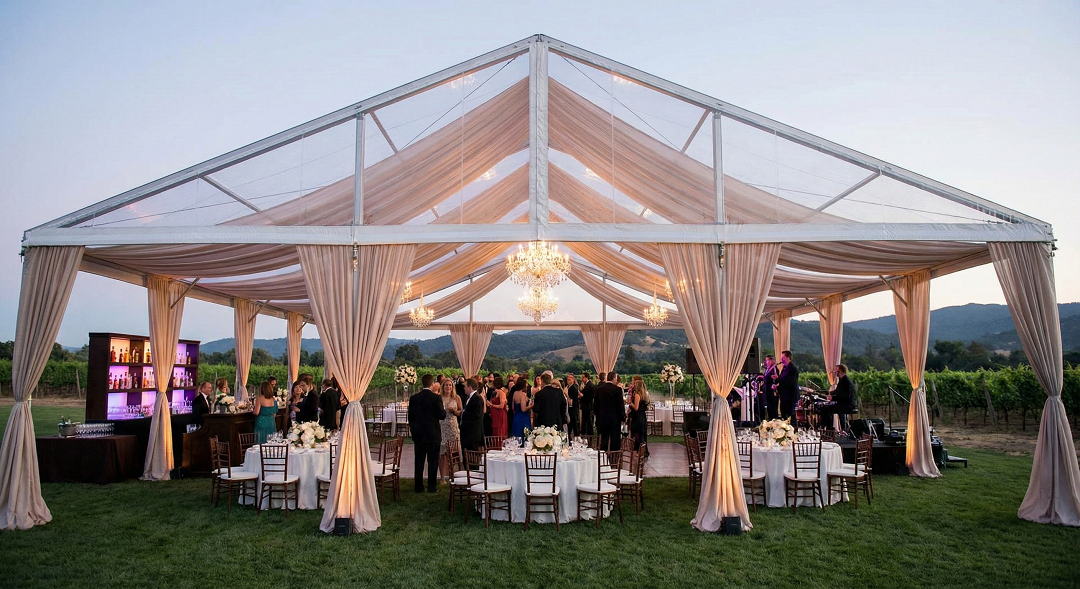
Factory Capacity and Quality Inspection Flow
Event tent buyers often work backwards from a fixed event date. That makes factory capacity and inspection flow more important than a general production claim. Shoulder Tent's stated capacity is 90 units per month, with an annual output of 1,000 units and a standard lead time of 30–35 days. For a single event tent order, the lead time is the primary scheduling input. For a multi-unit event, a rental fleet or a temporary venue program, the monthly capacity becomes the constraint that determines whether the order can be phased.
The manufacturing model is ODM, covering design and R&D, factory manufacturing, global delivery, installation and on-site technical support. Customization options include size and height, sidewalls and doors, color and fabric, flooring systems, windows and curtains, insulation and ventilation, and décor and lighting. Orders are accepted from a single unit, with no minimum order quantity requirement. That matters for event organizers who need a specific configuration for one venue, as well as for rental companies building a fleet over time.
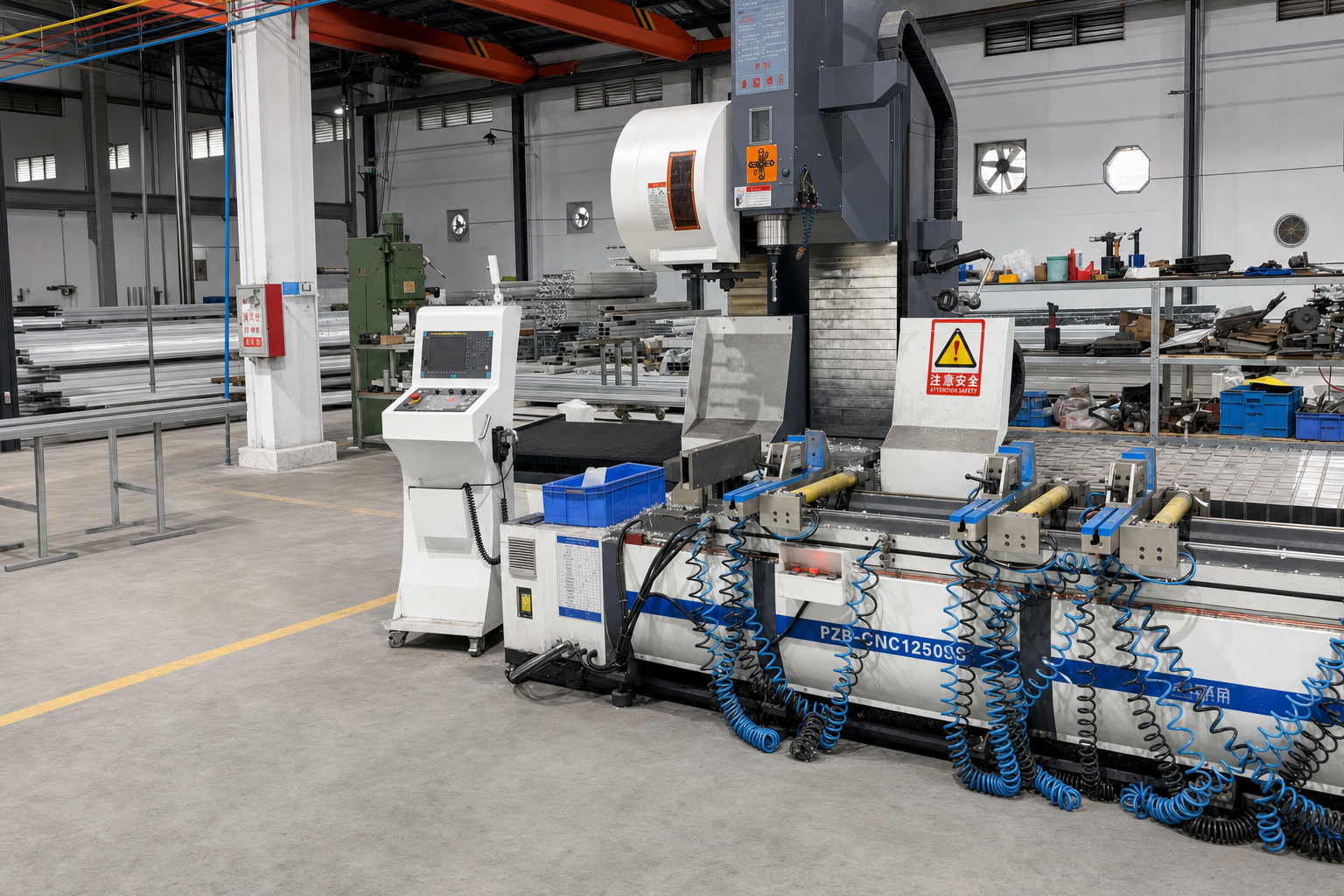
Quality control is described as a standardized engineering and quality inspection performed after the product is completed and before it leaves the factory. For an event tent, the practical value of that step is to catch frame, fabric, accessory and packing issues before the structure reaches a site where rework is expensive and time-critical. Buyers evaluating a supplier should ask what the inspection covers, what records are produced and whether those records travel with the shipment.
The standard lead time should not be treated as a guaranteed date for every event tent project. Custom configurations, accessory combinations, peak event season and international freight can extend the real schedule. A buyer should confirm production slots, inspection dates, shipping terms and installation responsibilities in the quotation rather than relying on a catalogue lead time.
Application Focus: Event Tent Deployments Across Exhibition, Back-of-House and Hospitality
The event tent portion of Shoulder Tent's deployed base covers more than a single large marquee. The documented applications include exhibition venues, event back-of-house and equipment storage, wedding and banquet venues, and hotel or resort event spaces. Each of these uses places a different demand on the structure.
- Exhibition venues: clear-span space for booths, aisles, registration and visitor flow, with sidewalls and doors configured for access control.
- Event back-of-house: temporary storage for equipment, catering supplies, production gear and staff areas, often placed behind the public-facing event tent.
- Wedding and banquet venues: defined seating layouts, flooring, curtains, lighting and climate options for a temporary hospitality space.
- Hotel and resort event space: overflow or seasonal venue capacity that can be installed on an existing property and removed or reconfigured later.
- Large outdoor events: modular bay expansion to match attendance, sponsor zones or multi-day program changes.
The same deployment base also covers sports venue covers and logistics or warehouse applications. Those uses are adjacent rather than identical: they share the aluminum frame and modular logic, but they place different demands on flooring, access and environmental control. For this article, the relevant point is that event tent buyers can ask for references in their own application category rather than accepting a generic portfolio claim.
After-Sales Support After Global Delivery
Shoulder Tent states that it provides 24/7 online service and pre-sales and after-sales engineering and technical support, with support and solutions offered after global delivery. The ODM service description also includes installation and on-site technical support. For event tent operators, after-sales support is not an administrative extra. Event schedules are compressed, and a missing part, a damaged component or an installation question can affect the opening date.
The practical value of after-sales support depends on how it is defined in the contract. A buyer should clarify response channels, response times, spare-parts availability, warranty terms and whether on-site support is included or quoted separately. A 24/7 online service is useful for troubleshooting and triage, but it is not the same as a guaranteed on-site crew within a fixed number of hours. Treating those two things as equivalent is a common procurement mistake.
Market Trend: Why Event Tent Buyers Are Asking for Evidence
The commercial event tent segment was projected to exceed USD 3 billion by 2025, according to industry analysis. A broader tent category covering storage, sports and events is forecast to reach USD 6.07 billion by 2033 at a CAGR of 5–7%. Lightweight aluminum framing systems are reported to account for nearly 58% of total deployed structures in the tent rental market. These figures describe market direction, not any single supplier's share.
For buyers, the implication is straightforward. As event tent demand grows and aluminum framing becomes the default choice for many temporary structures, supplier differentiation shifts toward evidence: deployment records, material test reports, factory capacity, inspection flow and after-sales terms. A low unit price is easy to compare. A repeatable delivery process is harder to compare, which is why procurement teams increasingly ask for proof points before shortlisting an event tent supplier.
Comparison with Traditional Solutions: Where Aluminum Frame Event Tents Fit—and Where They Don't
Aluminum frame event tents are not a universal replacement for permanent buildings or heavy steel structures. Their advantages are real: aluminum is lighter than steel, resistant to corrosion, faster to handle during installation and well suited to modular configurations. A clear-span aluminum event tent can be deployed on a temporary site, expanded in bays and reused across events. Those properties explain why aluminum framing has become common in rental and event applications.
The limits are equally real. Aluminum 6061-T6 frame structures typically have a service life of 15 to 20 years, which is shorter than a permanent building and depends on handling and maintenance. In locations with heavy snow loads, steel structures may be the more appropriate choice. The documented wind and snow parameters for the aluminum frame tent range—100–120 km/h and up to 1.9 kN/m²—define a boundary that must be checked against local conditions rather than assumed to cover every site.
| Consideration | Aluminum frame event tent | Permanent building or heavy steel structure |
|---|---|---|
| Deployment speed | Fast, modular installation suited to event timelines | Longer construction and approval cycle |
| Relocation and reuse | Designed for dismantling, storage and reconfiguration | Generally fixed and costly to relocate |
| Structural weight | Lighter aluminum frame reduces handling demands | Heavier structural system |
| Service life | Typically 15–20 years for 6061-T6 aluminum frames under standard conditions | Longer design life, subject to construction and maintenance |
| Heavy snow exposure | Requires project-specific verification against the documented snow load | Steel structures may be more suitable for heavy snow loads |
| Permitting | Project-specific; temporary structure rules vary by jurisdiction | Permanent building codes and approvals apply |
The right conclusion is not that one solution is better in every case. An event tent buyer should match the structure to the event duration, site conditions, local rules and reuse plan. An aluminum frame event tent is a strong fit for temporary or semi-permanent event space, exhibition venues, back-of-house storage and seasonal hospitality. It is not a substitute for a permanent venue when the project requires a long design life, heavy snow resistance or permanent building approvals.
Future Outlook
Demand for temporary and semi-permanent structures across events, warehousing and industrial applications is expected to continue growing. The application mix identified in industry research includes warehouse and industrial storage, sports and recreation, weddings and events, and aircraft hangars. For event tent buyers, the more important shift is in how suppliers are evaluated. Deployment records, material test documentation, inspection flow and after-sales terms are becoming part of the shortlisting process rather than an afterthought.
Shoulder Tent's proof points—3,800+ deployed units, a 20,000 m² factory, 90-unit monthly capacity, a 30–35 day standard lead time and documented after-sales support—provide a concrete example of the evidence buyers can request. They do not remove the need for project-level engineering, local compliance checks or contractual clarity. They do show what a supplier capability review can look like when it moves beyond a product catalogue.
FAQ
What does ODM capability include for an aluminum frame event tent project?
Shoulder Tent's ODM production service covers design and R&D, factory manufacturing, global delivery, installation and on-site technical support. For an event tent project, this means the supplier can be involved from the design and customization stage through manufacturing, delivery and installation support, rather than acting only as a product seller.
What customization options are available for event tents?
Documented customization options include size and height, sidewalls and doors, color and fabric, flooring systems, windows and curtains, insulation and ventilation options, and décor and lighting. These options allow an event tent to be configured for exhibition layouts, banquet seating, back-of-house storage or hospitality use.
What is Shoulder Tent's production capacity and standard lead time?
The company reports a 20,000 m² factory, 200 employees, an annual output of 1,000 units and a monthly capacity of 90 units. The standard lead time is 30–35 days. Custom configurations, peak event season and international freight can affect the actual schedule, so production slots and delivery dates should be confirmed in the quotation.
What quality inspection is completed before an event tent leaves the factory?
Shoulder Tent states that once a product is completed, it undergoes standardized engineering and quality inspections before leaving the factory. Buyers can ask what the inspection covers, what records are produced and whether those records are included with the shipment.
What after-sales support is provided after global delivery?
The company provides 24/7 online service and pre-sales and after-sales engineering and technical support, with support and solutions offered after global delivery. The ODM service description also includes installation and on-site technical support. Response times, spare-parts terms and on-site service conditions should be defined in the contract.
What is the minimum order quantity for an aluminum frame event tent?
Orders are accepted starting from a single unit, with no minimum order quantity requirement. The company's purchasing guidance lists T/T among accepted payment methods and FOB, CIF and CFR among supported trade terms, with specific terms confirmed with sales.
What wind and snow loads are documented for the aluminum frame tent?
The documented product parameters list a maximum wind load of 100–120 km/h and a snow load of up to 1.9 kN/m². These are product-level parameters. A specific event tent installation still requires project-level structural review, anchoring design and confirmation against local wind and snow requirements.
What fire-related material documentation is available?
An SGS test report covers an 850 gsm PVC coating material under certificate AJFS2101000426FF, issued on 21 January 2021, referencing the CAN/ULC-S109-14 Clause 4.4 Large-Flame Test. The report applies to single-layer white PVC coating material and is listed in connection with the aluminum frame tent models S30-1, S32, S45-1, S45-2 and S60-1.
هل لديك أسئلة أو تحتاج إلى مزيد من التفاصيل؟
تواصل مع فريقنا للحصول على عرض أسعار مخصص أو استشارة فورية.
طلب عرض أسعار
املأ النموذج أدناه وسيتواصل معك فريقنا بعرض مقترح مخصص.
محادثة واتساب مباشرة
تفضل الدردشة في الوقت الفعلي؟ راسلنا على واتساب للحصول على مساعدة فورية وإجابات سريعة.
- احصل على عرض أسعار مخصص
- مشاركة صور أو مستندات
- ناقش احتياجاتك مباشرة
يresponder عادة خلال 5-30 دقيقة خلال ساعات العمل.