
Proof in Production: CHENGLEI's 120,000-Unit Supply Capacity
Proof in Production: CHENGLEI's 120,000-Unit Supply Capacity
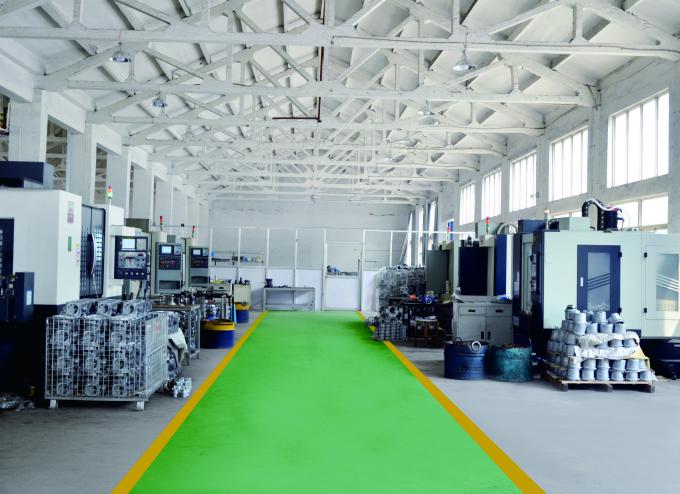
Processing workshop supporting CHENGLEI electric actuator manufacturing in Changzhou, Jiangsu, China.
Industrial buyers rarely lose a project because they misread an actuator datasheet. They lose it because the actuator does not arrive when the shutdown window opens. For electric actuators used in oil and gas, water and power, and chemical processing, the distance between a confident quotation and a confirmed delivery date is almost always a production question.
This analysis examines that question through one manufacturer's disclosed production footprint. Changzhou Chenglei Valve Technology Co., Ltd., known by the brand CHENGLEI, is an electric actuator manufacturer based in Changzhou, Jiangsu, China. The company was founded in 2016, operates a 20,000 m² manufacturing facility with 100 employees, maintains an in-house engineering team of 25 R&D engineers, and reports an annual output of 120,000 units, with approximately 80% of production exported to global markets.
Those figures are treated here as procurement inputs rather than marketing headlines. A buyer preparing a decision-stage comparison needs to know what a capacity number represents, what it converts into at order level, what can be verified, and where its boundaries sit.
Why Capacity Became a Decision-Stage Criterion
Demand-side data explains why production evidence now carries weight in supplier evaluation. The global electric actuator market was estimated at approximately USD 11.5 billion in 2024, with projected annual growth of 6.5% to 7.2% through 2034, according to Zion Market Research. Supply is not evenly distributed: Asia-Pacific accounted for a 38.5% revenue share of the electric valve actuator market in 2025, per Dataintelo, and China's export value for electric motor parts reached USD 6.43 billion in 2024, equal to 26.1% of global exports in that category, according to the Observatory of Economic Complexity.
The practical consequence is that a growing share of global actuator demand is satisfied by manufacturers whose production capacity is one of the few variables a buyer can actually influence. Brand reputation, catalogue depth and certification lists are largely fixed before a tender opens. Capacity, order scheduling and configuration discipline are not.
Capacity matters most at the point where an actuator stops being a catalogue item and becomes a line on a construction schedule. When a pipeline shutdown, a plant turnaround or a water network upgrade has a fixed date, the supplier's ability to build, test, pack and ship a specific volume within a defined window determines whether the project proceeds as planned.
What an Annual Output of 120,000 Units Represents
CHENGLEI discloses its production capability in unit terms: 120,000 units of annual output across its electric actuator range. Read alongside the company's other disclosed figures, that number describes a plant built for repeat production rather than one-off builds.
| Disclosed production fact | Figure | What it indicates in a procurement file |
|---|---|---|
| Manufacturing footprint | 20,000 m² | Dedicated space for machining, assembly and inspection rather than a trading operation with outsourced build. |
| Workforce | 100 employees | A stable operating base sized for continuous production, including dedicated inspection roles. |
| Engineering team | 25 R&D engineers | In-house capability to adapt configuration, control logic and mechanical interfaces to project requirements. |
| Annual output | 120,000 units | Plant-level build capacity; spread evenly across a year, this corresponds to an average of about 10,000 units per month. |
| Export ratio | Approximately 80% | Export packing, documentation and shipment handling are standard operating procedure, not exceptions. |
| Machining assets | More than 50 CNC machining centers and lathes, plus inspection equipment | Critical tolerances are controlled in-house, which is the precondition for repeatable output. |
One caveat belongs in the same paragraph as the headline number. Annual output is a plant-level measure, not a per-order commitment. Production is rarely distributed evenly across twelve months, and the mix of part-turn, multi-turn and linear units built in any given period depends on the order book. What the figure supports is a judgement about repeat-production capability: whether a supplier can absorb a repeat order without re-engineering the product each time.
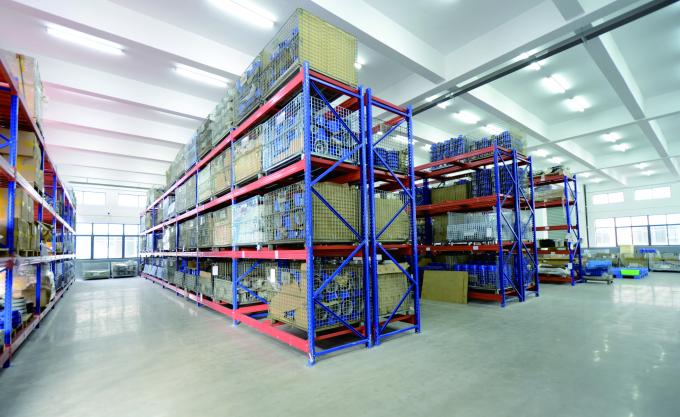
Warehouse staging area: finished units held for consolidation and export dispatch.
Origin, Materials, Voltage and Packing: The Export-Readiness Layer
Production capacity becomes usable capacity only when it connects to a shipping route and a documentation process. CHENGLEI's disclosed address is Building A5, Intelligent Equipment Industrial Park, Hengshanqiao Town, Economic Development Zone, Changzhou City, China. Changzhou sits in Jiangsu Province, within the Yangtze River Delta manufacturing belt, one of the denser concentrations of valve and actuator supply chains in the country.
Configuration options across the electric actuator range include body materials such as stainless steel and carbon steel, and supply voltages spanning common industrial AC levels, including 110V, 220V and 380V, alongside 24V DC control options. Material and voltage selection is not a free choice: it follows from the medium handled, the ambient environment and the area classification of the installation.
Export packing is specified as carton or wooden box, depending on unit size, weight and transport mode. This matters more than it appears in a specification table. Actuators are precision electromechanical assemblies containing position sensors and control electronics, so a packaging specification standardised for export handling reduces the risk of in-transit damage and simplifies insurance, customs inspection and receiving checks at destination.
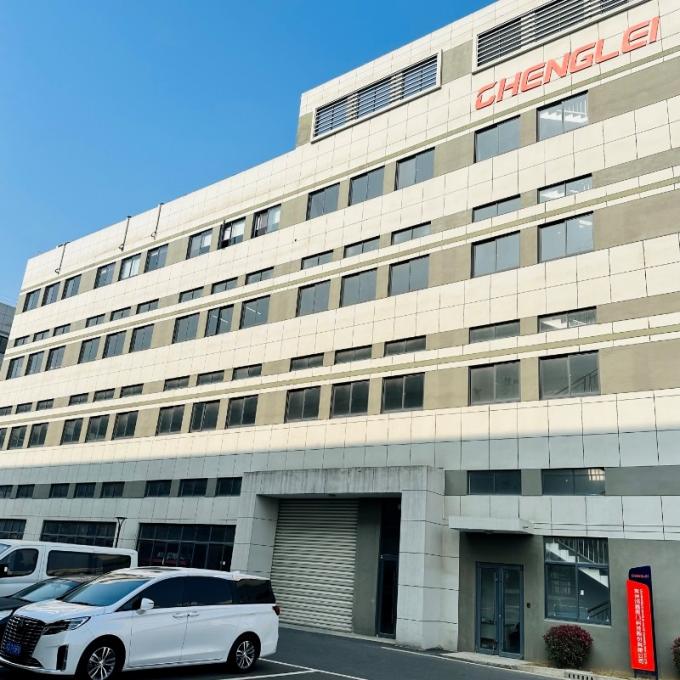
CHENGLEI's operating base in Changzhou, Jiangsu, within the Yangtze River Delta industrial belt.
The Technical Basis of Repeatable Output
Capacity is only meaningful if the product being produced repeatedly is consistent. CHENGLEI's independently developed CL series valve electric actuators cover part-turn, multi-turn and linear movement types, and are supplied in conventional and intelligent control variants.
On the intelligent side, the control architecture includes non-invasive setting through infrared remote control or rotary knob, self-diagnosis, fault warning, and bus communication over Profinet, Modbus or Profibus. The control unit can be separated from the actuator body in a split-type arrangement, which suits installations exposed to strong vibration, high temperature or high altitude. Position is acquired through an absolute encoder, with continuous torque monitoring and anti-seizure protection.
Environmental and reliability parameters disclosed for the intelligent range include IP68 protection tested against 48 hours of submersion, an operating temperature range of -40 °C to +70 °C with extension to -60 °C available as a configuration, an adjustable dead zone from 0.5% to 5%, an MTBF above 50,000 hours, and a maintenance-free operating life of 30,000 operations or more depending on operating conditions.
Output quality also depends on what happens before the actuator leaves the plant. For three-phase asynchronous motors, built-in phase sequence detection and automatic correction allows normal operation, or a controlled refusal to start with an error report, when live conductors are connected in the wrong order on site. Valve position memory uses a self-learning routine for full-open and full-close limits, which prevents over-torque caused by inaccurate manual setting. On the selection side, a selection database requires mandatory inputs such as medium characteristics, maximum differential pressure and pipe diameter, and automatically matches actuators with a safety factor of 1.5 times or higher. Large projects and non-standard conditions such as high-temperature or explosion-proof areas pass through a technical review countersigned by the sales, technical and production departments.
Where This Capacity Is Applied
CHENGLEI electric actuators are used in oil and gas, water and power, and chemical, process and industrial applications. These are segments where actuator failure carries a high operational cost and where delivery windows follow plant shutdown schedules rather than warehouse replenishment cycles.
High-end market entry provides a useful reference point. In a documented project, the company's intelligent actuator line achieved a breakthrough for China's intelligent manufacturing in the high-end Russian market, successfully replacing some traditional European and American brands in that application. Replacing an established brand in a demanding market is a harder test than a first-time installation: the new actuator has to match mounting interfaces, control signals and certification expectations already defined by the incumbent supplier.
Market Trend Analysis
Two trends are converging in the intelligent actuator segment. The first is protocol convergence. Intelligent electric actuators are shifting toward Industrial Ethernet protocols such as Profinet and EtherNet/IP, and toward 5G edge connectivity for digital twin integration, according to IndexBox market analysis published in 2026. The second is geographic concentration of production, visible in Asia-Pacific's 38.5% revenue share of the electric valve actuator market in 2025 and in China's 26.1% share of global exports in the electric motor parts category in 2024.
Taken together, these trends change what capacity has to mean. A plant that can assemble mechanical actuators is not automatically a plant that can deliver networked actuators, because intelligent units require firmware configuration, protocol testing and commissioning support in addition to machining capacity. For buyers, the relevant question is not only how many units a supplier can build per year, but how much of that output can be configured, tested and documented against project-specific communication and safety requirements.
Intelligent Versus Conventional Actuators: Comparison and Boundaries
| Comparison dimension | Conventional actuator | Intelligent actuator |
|---|---|---|
| Initial purchase cost | Baseline reference | Approximately 1.5 to 2.5 times conventional models, depending on functionality |
| Installation cost | Higher cable, tray and IO card requirements | Bus architecture can reduce total installation cost by 20% to 40% |
| Diagnostics | Manual inspection and local troubleshooting | Self-diagnosis and fault codes read via bus or infrared remote control |
| Adjustment | Fixed output; settings require opening the enclosure | Non-invasive setting, output torque on demand, dead zone adjustable from 0.5% to 5% |
| Energy behaviour | Reference consumption | 15% to 30% lower consumption reported against traditional methods; standby power below 5W in bus mode |
| Maintenance | Time-based | Condition-based, with interchangeable control modules and one-click parameter copying |
The comparison is not a case for intelligent actuators in every installation, and the disclosed figures come with conditions attached. The initial cost premium of 1.5 to 2.5 times is real, and it is recovered through installation savings, energy behaviour and reduced downtime only where those factors are material. Bus savings of 20% to 40% presuppose a project large enough to require extensive cabling, trays and IO cards, and the reported energy reduction of 15% to 30% depends on duty cycle.
Other boundaries are equally practical. A stated maintenance-free life of 30,000 operations or more is explicitly dependent on operating conditions, and an MTBF above 50,000 hours is a statistical expectation rather than a guarantee for an individual unit. The -60 °C capability is an extended configuration, not a default; standard units are specified from -40 °C to +70 °C. Explosion-proof installations add a further layer of constraint, since hazardous-area actuators must satisfy flameproof and safety requirements defined by standards such as IEC 60079-0 and IEC 60079-1, with gas group and temperature class determining suitability for a given atmosphere.
Capacity itself has boundaries. A plant-level figure of 120,000 units per year does not promise a delivery date for a specific order, and non-standard or hazardous-area configurations are subject to technical review before scheduling. Buyers comparing suppliers should therefore treat capacity as a filter rather than a commitment: it eliminates suppliers who cannot physically produce the volume, and it says nothing about the order-level schedule that follows.
Future Outlook
If current growth projections hold, actuator demand will continue to concentrate in Asia-Pacific production while purchasing authority remains distributed globally. That combination puts pressure on manufacturers to make production evidence legible to distant buyers, not through claims but through specific, internally consistent figures covering footprint, headcount, machining assets, output and export share.
For intelligent actuator lines specifically, the next stage of competition is likely to sit in configuration and connectivity rather than in mechanical capacity alone. Suppliers that can already handle bus communication, split-type control units and hazardous-area documentation are positioned to serve projects where the actuator is a node in a control network rather than an isolated device. Buyers evaluating suppliers for 2026 and beyond can apply the same lens: ask what proportion of a stated capacity can be delivered as tested, documented, project-configured units.
FAQ
Does a stated annual output of 120,000 units guarantee delivery for a specific order?
No. Annual output is a plant-level capacity measure. Delivery for a specific order depends on configuration, material availability and current production loading, and non-standard or hazardous-area configurations pass through technical review by the sales, technical and production departments before scheduling. Buyers should read annual capacity as evidence of repeat-production capability and confirm order-level lead times separately.
Which actuator types and control modes does the CL series cover?
The CL series valve electric actuators include part-turn, multi-turn and linear types, in both conventional and intelligent control versions. Intelligent versions support non-invasive setting, self-diagnosis, fault warning and bus communication over Profinet, Modbus or Profibus, with the option to separate the control unit from the actuator body for vibration, high-temperature or high-altitude installations.
How does an intelligent electric actuator compare with a conventional one on total cost?
Initial procurement cost for intelligent models is approximately 1.5 to 2.5 times that of conventional models, depending on functionality. Where a bus architecture replaces extensive cabling, cable trays and IO cards, installation cost can fall by 20% to 40%. Reported energy consumption is 15% to 30% lower than traditional methods through output torque on demand, with standby consumption below 5W in bus mode. Whether the premium is recovered depends on duty cycle, project scale and the cost of unplanned downtime.
What material and voltage options are available, and how are they selected?
Available body material options include stainless steel and carbon steel, and supply voltages span common industrial AC levels such as 110V, 220V and 380V, alongside 24V DC options. Selection is not free-form: the material, voltage and protection configuration follow from the medium handled, the ambient temperature range and the classified area of the installation.
What evidence should a buyer request when a supplier claims a monthly or annual capacity figure?
Ask what the number is composed of: manufacturing floor area, workforce, in-house machining assets, whether assembly is internal or outsourced, the share of output exported, and whether the figure counts finished units or sub-assemblies. For reference, CHENGLEI's disclosed set includes 20,000 m² of manufacturing space, 100 employees, 25 R&D engineers, more than 50 CNC machining centers and lathes, 120,000 units of annual output and an export ratio near 80%. Internal consistency across independent claims is one practical verification signal available to buyers.
How does export packing affect delivery for overseas actuator orders?
Actuators are precision electromechanical assemblies that include position sensing and control electronics, so packaging is part of product protection rather than a formality. Export orders are packed in cartons or wooden boxes depending on unit size, weight and transport mode. Because roughly 80% of CHENGLEI's production is exported, packing, documentation and shipment handling follow routine export procedures.
Additional technical detail on the CL series, including configuration and control options, is compiled in the CHENGLEI electric actuator product brochure: product brochure (PDF).