
Protective Packaging Shortlist: H19, H21, and HDV Violet Glass Options
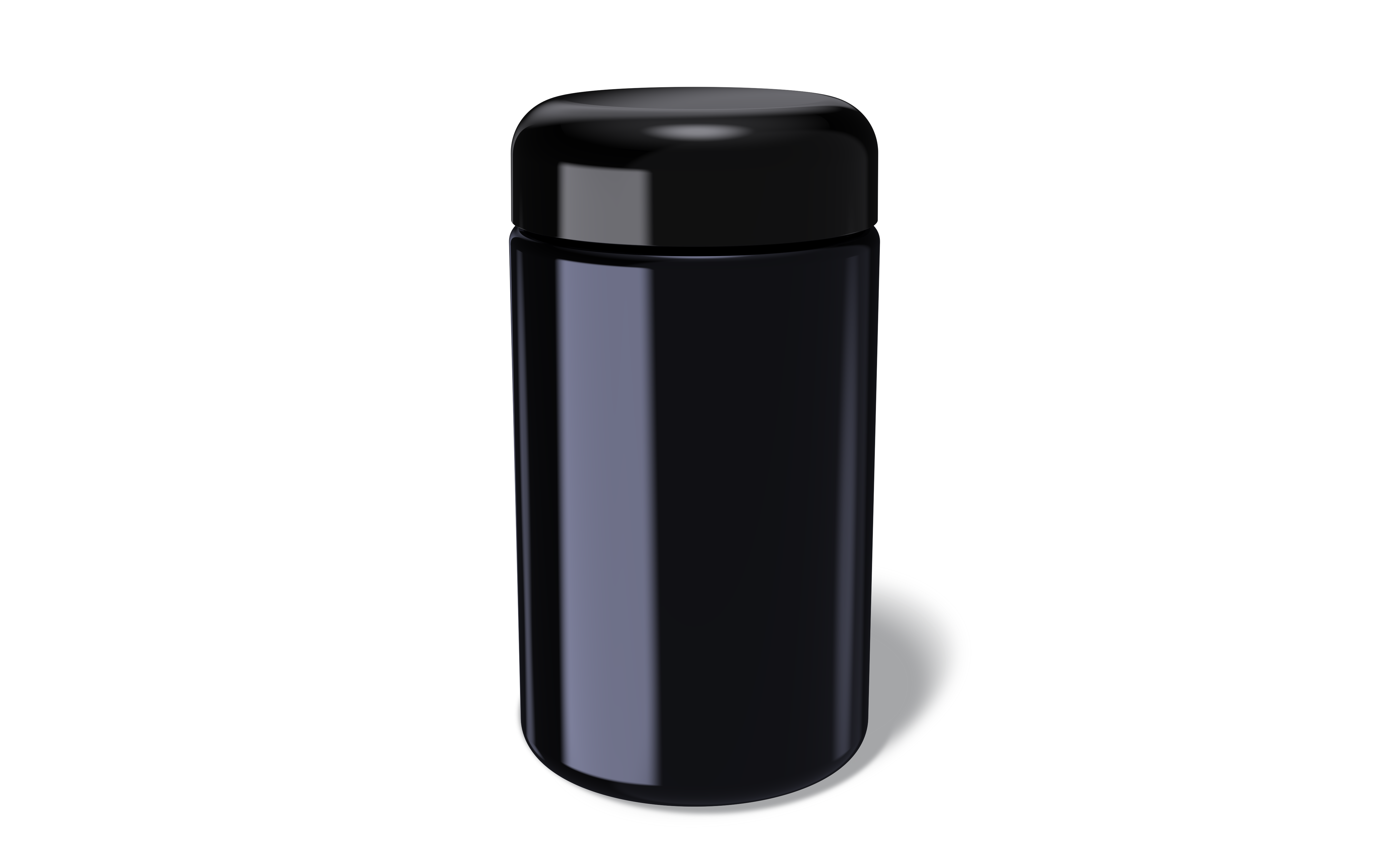
A wide-mouth violet glass jar from the HDV1 series. Model-family shortlisting starts with container format, not with a category label. Image: Honor Packaging.
Category words do not buy well. Child-resistant, vacuum-sealed, light-blocking and leak-resistant describe functions, and functions are delivered by specific jars with specific capacities, threads, diameters and closures. Two containers that both sit under the heading protective packaging can differ in stated capacity by a factor of roughly two hundred, in closure material, and in whether the closure is child-resistant at all. The unit that survives contact with a real purchase order is the model family.
This shortlist organizes three model families from Honor Packaging: the H19 family, which covers small child-resistant concentrate jars and a vacuum click jar; the H21 family, which covers clear and violet glass jars with child-resistant caps; and the HDV series, which covers HDV1 wide-mouth violet jars, HDV2 cosmetic violet jars and HDV3 round violet glass bottles. Each family is described by the variables a buyer actually has to sign off: capacity, shape, closure, closure material and glass thickness.
Honor Packaging (NINGBO HONOR PACKAGING CO.,LTD) is a Ningbo, China-based packaging manufacturer founded in 2015 whose stated main product lines are child-resistant packaging, violet glass packaging and vacuum packaging. The company reports a 100% export orientation with main markets in the EU and the USA, a company-reported 45,000 m² manufacturing footprint, 310 employees, and an in-house R&D team of 15. Its stated operating model is to take finalized client packaging designs into reliable, consistent mass production, working through joint-venture production bases for plastic and glass packaging.
Why Protective Packaging Is Shortlisted by Model Family
A protective packaging shortlist fails most often at the point where a functional requirement is converted into a part number. A buyer specifies a child-resistant jar, a supplier quotes a jar family, and the two documents describe different things. The closure mechanism, the thread specification, the glass thickness and the fill volume are usually decided in different places inside the same product file, and they constrain each other.
Model families solve this because they already bundle a geometry with a closure interface. H19 jars in the same family share item-code logic across clear, white and black versions. H21 jars share a 58 mm square or 60 mm round footprint across the clear and violet variants, so a color change does not force a carton change. HDV families share thread ranges (for example 32/400–89/400 on HDV2 and 41/400–89/400 on HDV1) that determine which caps can be tested on the same filling line.
This matters for scenario fit, which is the core question in this shortlist. A 5 ml concentrate format and a 1 L wide-mouth storage format are not competing options; they are different stages of the same product architecture, and a shortlist that treats them as alternatives produces a specification that cannot be filled.
The Shortlist at a Glance
The table below is the shortlist in compressed form. Only stated specifications are included; where a family does not carry a published thickness figure, that cell is marked as not stated rather than estimated.
| Family | Format | Stated capacities | Shape and key dimensions | Closure | Stated glass thickness |
|---|---|---|---|---|---|
| H19 (vacuum) | Vacuum Click Jar | 5 ml | Square; 250 pcs per carton | Vacuum click closure | Not stated |
| H19 (child-resistant) | Concentrate jars in clear, white and black | 5 ml, 9 ml | Square, round, triangle, hexagon; 27–38 g (black and clear), 27 g / 36 g (white); 250 pcs per carton | Child-resistant cap | Not stated |
| H21 clear | Square and round jars | 15 ml, 30 ml, 20 dr (70 ml), 30 dr (100 ml), 40 dr (130 ml), 60 dr (200 ml), plus 2 oz and 6 oz (180 ml) round sizes | Square dia. 58 mm, height 24–115 mm, 75–280 g; round dia. 60 mm, height 36.5–125 mm, 84–268 g | Child-resistant cap; material listed as glass / plastic / PE | 0.38 mm |
| H21 violet | Square and round violet jars | Same capacity ladder as H21 clear | Square dia. 58 mm; round dia. 60 mm; same height and weight bands as H21 clear | Child-resistant cap; material listed as violet glass / PP / PE | 0.38 mm |
| HDV1 | Wide-mouth violet jars | 100 ml, 150 ml, 200 ml, 250 ml, 300 ml, 500 ml, 1 L | Dia. 48–95 mm; height 84.7–193 mm; 117–610 g; threads 41/400–89/400 | Urea, PE, SAN, ABS; child-resistant variant HDV1100M-1-CR | 0.38 mm |
| HDV2 | Cosmetic violet jars | 3 ml, 5 ml, 10 ml, 30 ml, 50 ml, 60 ml, 100 ml, 200 ml | Dia. 36–93.2 mm; height 25.6–55 mm; 36–205 g; threads 32/400–89/400 | Urea, PE | 0.38 mm |
| HDV3 | Round violet glass bottles | 5 ml, 10 ml, 15 ml, 20 ml, 30 ml, 50 ml, 60 ml, 100 ml | Height 54.5–125 mm; 22.5–120 g | Plastic cap, dropper, mist sprayer, lotion pump | Not stated |
H19 — Small-Format Child-Resistant Jars and the Vacuum Click Jar
H19 is the smallest family on this shortlist and the one with the clearest scenario boundary. The child-resistant variants are concentrate jars rated at 5 ml and 9 ml, supplied with a child-resistant cap, in clear, white and black glass versions and in four shapes: square, round, triangle and hexagon. Stated unit weights sit between 27 g and 38 g for the black and clear ranges, with white versions listed at 27 g and 36 g. All of them pack at 250 pieces per carton.
Item-code discipline inside this family is worth noting, because it is what makes a color change operationally simple. The black series runs through codes H19-0001B to H19-0011B, the white series through H19-0001W to H19-0011W, and the clear series through H19-0001C to H19-0011C. The numeric stem describes the shape and size, and the suffix describes the glass color. A brand that validates one stem can therefore add a second colorway without re-qualifying the filling line geometry.
The second H19 format is a different proposition. The H19 Vacuum Click Jar is a square glass jar with a vacuum seal feature, listed at 5 ml and packed at 250 pieces per carton. Its stated function is vacuum retention rather than child resistance, and the two are not the same requirement. A vacuum jar preserves contents by removing air; a child-resistant jar restricts opening. A specification that asks for both should name both, because a vacuum closure and a child-resistant closure are separate mechanisms with separate validation paths.
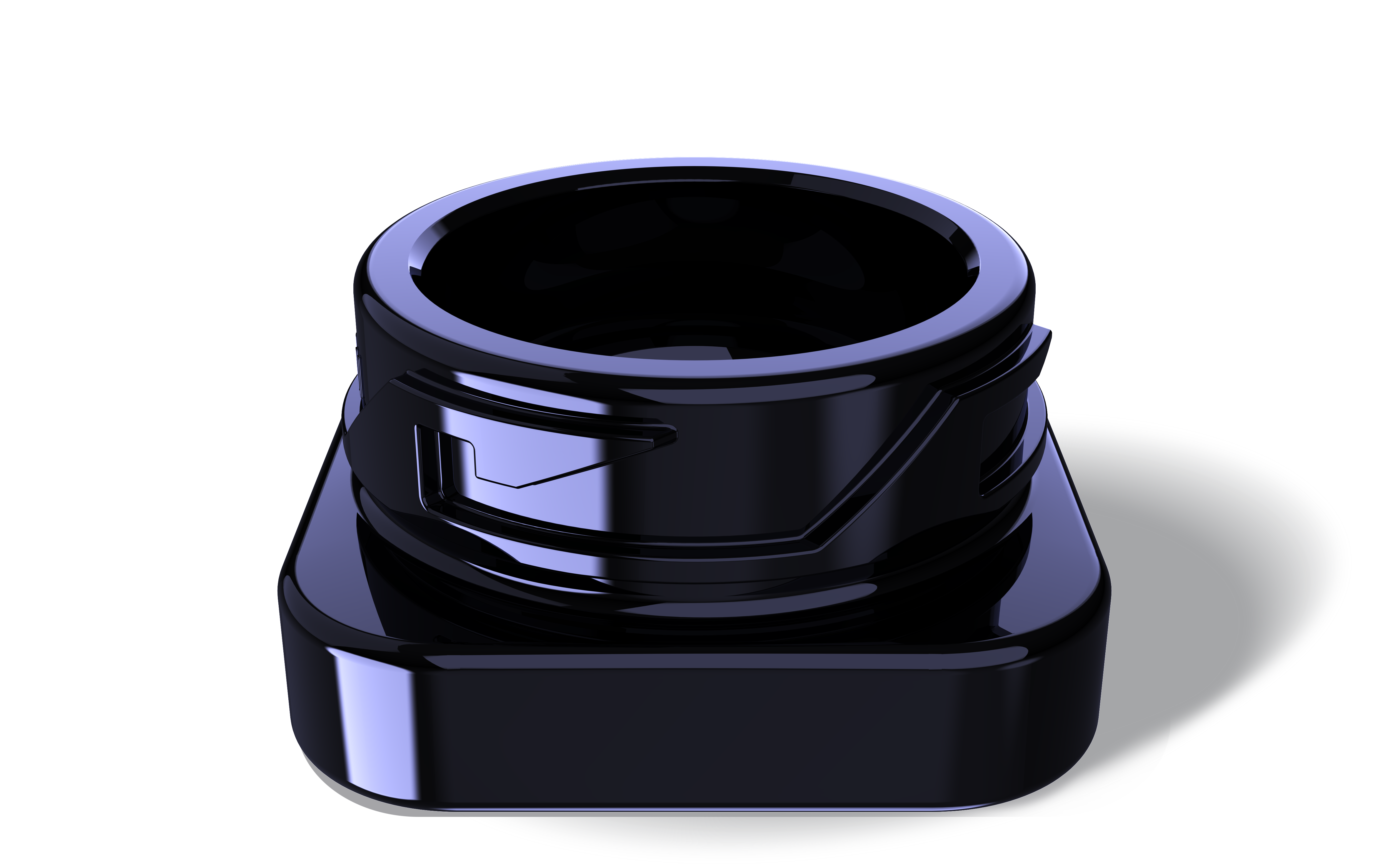
H19 child-resistant concentrate jar in black. The family is listed at 5 ml and 9 ml across square, round, triangle and hexagon shapes. Image: Honor Packaging.
H21 — Clear and Violet Glass Jars with Child-Resistant Caps
H21 is the middle band of the shortlist, and its most useful property is that the clear and violet versions map onto the same geometry. Square H21 jars are built on a 58 mm diameter with heights of 24–115 mm and weights of 75–280 g. Round H21 jars use a 60 mm diameter with heights of 36.5–125 mm and weights of 84–268 g. Both variants list a 0.38 mm glass thickness and are supplied with a child-resistant cap.
The capacity ladder runs from 15 ml through 30 ml, then steps through dram-denominated sizes that correspond to 70 ml, 100 ml, 130 ml and 200 ml, with round clear jars additionally listed at 2 oz and 6 oz (180 ml). Square violet jars cover 15 ml, 30 ml, 70 ml, 100 ml, 130 ml and 200 ml, and round violet jars cover the same range as round clear jars. Because the diameters do not change between colors, a packaging line, a label size and a shipping carton can usually be carried across from a clear trial to a violet production run.
Surface treatment options are listed identically for the clear and violet versions: sticker, silk-screen printing, hot stamping, heat transfer printing and frosted finish. Material is stated as glass / plastic / PE for the clear jars and violet glass / PP / PE for the violet jars. Applicable industries listed for the H21 family include food, cosmetics, medical, pharmaceutical, supplements, cannabis, packaging design and packaging wholesale.
The functional difference between the two colors is light exposure, and it should be stated precisely. Clear glass lets the visible spectrum through, which is useful when the product itself is the visual asset. Industry references describe violet glass — often referred to as Miron glass — as blocking the visible light spectrum while transmitting UV-A and infrared, which is the mechanism behind its use in biophotonic preservation. That is a light-management claim, not a safety claim, and it does not substitute for a closure that has been validated as child-resistant.
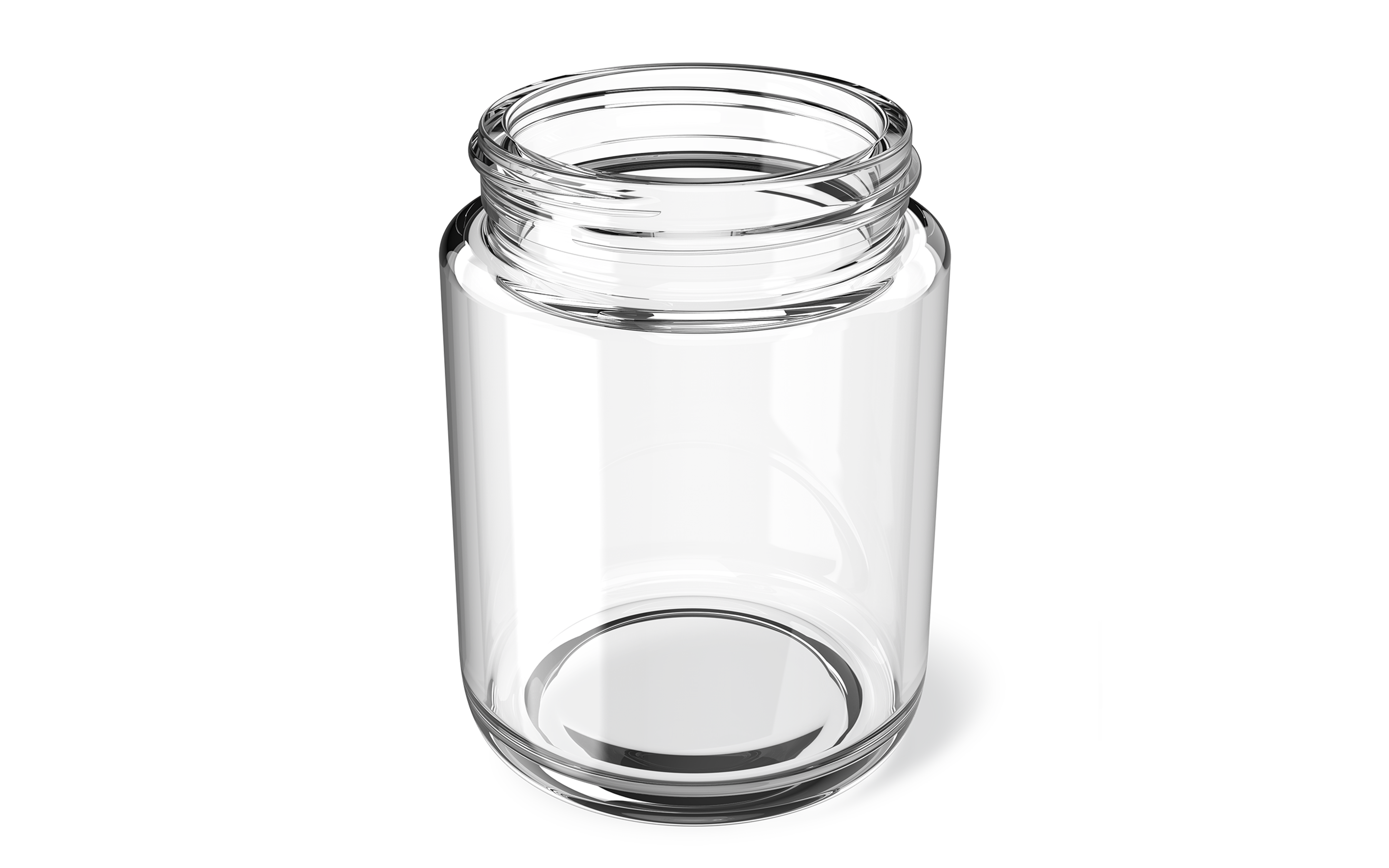
Round H21 clear glass jar with child-resistant cap. Clear and violet H21 jars share the same 58 mm square and 60 mm round geometry. Image: Honor Packaging.
HDV1, HDV2 and HDV3 — Violet Glass Containers by Format
The HDV series covers violet glass beyond the H21 jar geometry, and the three sub-families are best distinguished by opening width rather than by capacity alone.
HDV1 is the wide-mouth family, listed from 100 ml to 1 L across codes HDV1100M-1-CR, HDV1100M-1, HDV1100M-2, HDV1150M, HDV1200M, HDV1250M, HDV1300M, HDV1500M and HDV1001L. Diameters span 48–95 mm, heights 84.7–193 mm and unit weights 117–610 g, with thread specifications from 41/400 to 89/400. Closure materials listed for this family are Urea, PE, SAN and ABS, and HDV1100M-1-CR is the code that carries a child-resistant designation. Wide-mouth geometry is what makes this family relevant for spooned or scooped contents, larger single portions and refill-format storage, where a narrow neck would slow filling.
HDV2 is the compact cosmetic format. Capacities run from 3 ml to 200 ml across HDV2003M through HDV5200M, with diameters of 36–93.2 mm, short heights of 25.6–55 mm and unit weights of 36–205 g. Thread specifications are 32/400–89/400, and closure materials are Urea and PE. The 0.38 mm thickness is consistent with the H21 family, which simplifies a brand that wants a small cosmetic jar and a mid-size jar built to the same wall specification. HDV2005M-CR is the listed child-resistant variant in this family.
HDV3 is the round violet glass bottle range for liquid delivery, listed at 5 ml, 10 ml, 15 ml, 20 ml, 30 ml, 50 ml, 60 ml and 100 ml. Heights run 54.5–125 mm and weights 22.5–120 g. Unlike the jar families, HDV3 is defined by its dispensing closure options: plastic cap, dropper, mist sprayer or lotion pump, with surface treatments listed as label, silk-screen printing and gold stamping. This is the correct family for a serum, oil or fragrance format where the closure delivers the dose rather than sealing against access.
Matching Model Family to Application
The table below turns the specification ranges into a first-pass fit decision. It is a screening tool, not a substitute for a sample.
| Product scenario | Family that fits | Reason |
|---|---|---|
| 5–9 ml concentrate or single-dose format with restricted opening | H19 child-resistant jars | Only family in the shortlist listed at 5 ml and 9 ml with a child-resistant cap; 250 pcs per carton |
| Small-format contents that need air removed rather than access restricted | H19 Vacuum Click Jar | Square 5 ml glass jar with a vacuum seal feature |
| 15–200 ml dried or solid format, child-resistant, with or without light protection | H21 clear or H21 violet | Same 58 mm square / 60 mm round geometry across both colors, 0.38 mm thickness, child-resistant cap |
| Wide-mouth filling, spooned or powdered contents, 100 ml to 1 L | HDV1 | Dia. 48–95 mm with threads up to 89/400; Urea, PE, SAN and ABS closures; HDV1100M-1-CR for child-resistant requirement |
| Cosmetic cream or active in 3–200 ml | HDV2 | Short profile (25.6–55 mm height), 32/400–89/400 threads, 0.38 mm thickness, HDV2005M-CR variant |
| Liquid dispensed by dropper, sprayer or pump in 5–100 ml | HDV3 | Round violet glass bottle with plastic cap, dropper, mist sprayer or lotion pump |
A documented use case in this category is a German branding business that has used violet glass packaging for pharmaceutical packaging at a quantity of 10,000 units over a three-year period, with reusable and UV-protection characteristics cited as project highlights and continued freshness reported as the outcome. That case is useful less as a proof point than as a reminder that the selection criteria buyers apply in practice — reusability, light protection and content stability over time — sit outside the spec table.
What 0.38 mm Glass Thickness and Closure Material Actually Decide
A 0.38 mm thickness figure appears across the H21 clear and violet families, HDV1 and HDV2. Its practical value in a procurement file is consistency: when a brand runs a 30 ml violet H21 jar and a 200 ml HDV2 jar on the same line, a shared nominal wall specification reduces the number of variables that can shift between sizes. It is a specification input, not an outcome. Glass thickness alone does not predict drop performance, thermal shock behaviour or light transmission, and none of those should be inferred from it.
Closure material is a separate decision with its own logic. PP and PE appear across the H21 families; Urea and PE are listed for HDV1 and HDV2; SAN and ABS appear in the HDV1 material list. For the buyer, the operative question is not which polymer is superior but which closure has been designed and validated against the specific thread on that jar. The thread ranges published on the HDV families — 32/400–89/400 for HDV2 and 41/400–89/400 for HDV1 — exist precisely because a cap built for one thread will not seal another. Substituting a closure because it is made from the same polymer is a common and avoidable source of leakage and torque complaints.
Where child resistance is claimed, the relevant reference points are published standards rather than polymer choice. 16 CFR 1700.20 in the United States sets a performance expectation in which child-resistant packaging prevents 85% of children under five from opening it within five minutes while remaining accessible to 90% of adults. ISO 8317:2015 specifies performance requirements and test methods for reclosable child-resistant packages, and ISO 14375:2018 does the equivalent for non-reclosable packages, adding that such a package should provide mechanical protection and function properly for the life of the content and packaging. ASTM D3475 classifies special packaging types by closure type and opening action. U.S. special packaging requirements under the PPPA and FIFRA apply to the primary or immediate packaging, which is exactly the layer this shortlist describes.
Where This Shortlist Stops: Limits and Boundaries
A shortlist is only useful if its edges are visible. The following limits follow directly from the stated specifications and should be confirmed before any claim is written into a specification sheet.
Light protection and child resistance are separate axes. Violet glass manages light exposure. It does not make a closure child-resistant, and a violet jar with a non-child-resistant closure is still a non-child-resistant package.
Child-resistant coverage varies by family. H19 child-resistant jars and the H21 families list a child-resistant cap as standard. In the HDV series, only HDV1100M-1-CR in HDV1 and HDV2005M-CR in HDV2 carry that designation in the published code list; other HDV1 and HDV2 codes are shown with Urea or PE closures without a stated child-resistant mechanism.
HDV3 closures are dispensing closures. Dropper, mist sprayer and lotion pump formats deliver a dose; they are not described as child-resistant and should not be specified as such.
Capacity coverage is not uniform. The vacuum format in this shortlist is listed at 5 ml only, and the H19 range tops out at 9 ml. Buyers who need vacuum retention at 100 ml or more are outside the stated envelope of these codes.
Published performance standards do not treat violet glass as a category. Child resistance is defined by ISO 8317:2015, ISO 14375:2018, 16 CFR 1700.20 and classified under ASTM D3475. In the sources reviewed for this article, no equivalent single published performance standard for violet or UV-blocking glass transmission was identified, which means light-blocking claims should be documented with supplier test data rather than standard references.
Purchasing Terms and Acceptance Criteria Before Sampling
Honor Packaging states an OEM and ODM production mode with customization that includes printing client artwork, developing a new design and frosted finishes. Stated commercial terms are a monthly capacity of 100,000 units, a lead time of 30–45 days, a minimum order quantity of 10,000 units, quality control consisting of 100% pre-shipment testing plus third-party inspection (SGS), export markets covering the EU, US, Middle East and Southeast Asia, and an after-sales position of accepting reissues.
Those figures set the practical boundary of the shortlist. A 10,000-unit minimum means a model family is chosen before a pilot batch rather than after one, and a 30–45 day lead time describes production scheduling, not design and tooling development. Buyers planning a new jar geometry should treat structural development and tooling strategy as a preceding phase, which is consistent with the supplier's stated role of moving finalized designs into reliable mass production.
Before requesting a sample, the following acceptance criteria should be written into the specification rather than agreed verbally. Each one maps to a decision the shortlist above has already narrowed.
- Exact model and item code, including the color suffix for H19 and the V designation for H21 violet jars.
- Confirmed capacity and its unit convention — ml, oz or dram — because the same jar can be listed in more than one unit.
- Shape and critical dimensions: diameter, height, unit weight and, where applicable, the thread specification.
- Closure type and closure material, plus an explicit statement of whether child resistance is or is not claimed.
- Glass thickness as the stated nominal figure (0.38 mm where listed), with the understanding that it is a specification input rather than a performance guarantee.
- Surface treatment selection from the listed options: sticker, silk-screen printing, hot stamping, heat transfer printing or frosted finish.
- Carton configuration, such as the 250 pieces per carton listed for H19 jars.
- Test requirement and jurisdiction, referenced to the applicable standard rather than to a general compliance statement.
- Approved artwork file, print position and color reference under the OEM print arrangement.
- Sample quantity, sample approval criteria and the acceptance test list to be applied at pre-shipment inspection.
- Minimum order quantity, lead time expectations and the after-sales reissue position, confirmed in writing.
Market Context: Why Shortlists Keep Being Rewritten
Protective packaging is not a niche anymore. Grand View Research values the global protective packaging market at USD 41.5 billion in 2026. Within that, child-resistant packaging is projected by Global Market Insights to reach USD 31.07 billion in 2026, a figure that reflects how much of protective packaging demand is now driven by regulation rather than by preference. In the United States specifically, Grand View Research estimates the smell-proof bag market at USD 133.7 million in 2026 with a 7.9% compound annual growth rate through 2033 — a smaller category, but one that shows how odor and light control have become purchase criteria rather than marketing language.
Two implications follow for buyers. First, compliance and protection are being valued in the same specification document, which is why a shortlist has to separate a child-resistant mechanism claim from a light-blocking claim and validate each on its own terms. Second, because regulatory requirements attach to the primary or immediate package under frameworks such as the PPPA and FIFRA, the jar and closure combination is the layer where compliance risk concentrates. Container choice is therefore a compliance decision before it is a design decision.
Future Outlook
The direction of travel in protective packaging is toward evidence. Child resistance already has published performance requirements, test methods and a classification standard, and buyers increasingly ask for validation at the assembled jar-and-closure level rather than accepting a closure description. Light protection is moving along the same path more slowly. Where a standard does not yet exist, the substitute is documented test data attached to a specific product code — a transmission curve rather than an adjective.
For a shortlist like this one, that shift favours suppliers who can carry specifications from a 5 ml concentrate jar through to a 1 L wide-mouth violet container on consistent geometry, consistent thickness conventions and consistent documentation. It also raises the value of item-code discipline, because a specification that changes meaning between colors or sizes cannot be audited.
FAQ
Which family fits a 5–9 ml product that requires restricted opening?
The H19 child-resistant concentrate jars are listed at 5 ml and 9 ml and are supplied with a child-resistant cap. They are available in clear, white and black glass and in square, round, triangle and hexagon shapes, with unit weights of 27–38 g for the black and clear versions and 250 pieces per carton. No other family in this shortlist is listed at 5 ml and 9 ml with a child-resistant closure.
What is the difference between H21 clear and H21 violet jars?
They share the same geometry: 58 mm square and 60 mm round, heights of 24–115 mm for square and 36.5–125 mm for round, the same 0.38 mm stated glass thickness and the same child-resistant cap. The difference is the glass and the closure material listing — glass / plastic / PE for the clear jars and violet glass / PP / PE for the violet jars. Clear glass does not restrict the visible spectrum; violet glass is described in industry references as blocking visible light while transmitting UV-A and infrared.
Which violet glass format fits wide-mouth filling and larger volumes?
HDV1 is the wide-mouth family, listed from 100 ml to 1 L with diameters of 48–95 mm, heights of 84.7–193 mm, unit weights of 117–610 g and threads of 41/400–89/400. Closure materials listed are Urea, PE, SAN and ABS, and HDV1100M-1-CR is the code that carries a child-resistant designation within this family.
Is a child-resistant cap standard across all of these families?
No. H19 child-resistant jars and the H21 clear and violet jars list a child-resistant cap as part of the specification. Within the HDV series, only HDV1100M-1-CR (HDV1) and HDV2005M-CR (HDV2) carry that designation in the published code list. HDV3 uses plastic cap, dropper, mist sprayer or lotion pump closures, which are dispensing formats rather than child-resistant mechanisms.
What commercial terms apply?
Stated terms are a minimum order quantity of 10,000 units, a lead time of 30–45 days and a monthly capacity of 100,000 units. Quality control is described as 100% pre-shipment testing with third-party inspection (SGS), and the after-sales position is to accept reissues. The 30–45 day lead time covers production, while design and tooling development are a separate preceding phase.
Does a 0.38 mm glass thickness guarantee impact or light-blocking performance?
No. The 0.38 mm figure is a stated nominal wall thickness appearing across H21 clear and violet jars, HDV1 and HDV2. It is useful for consistency across sizes, but it does not establish drop performance, thermal behaviour or light transmission. Where light protection matters, the relevant evidence is product-specific transmission data rather than a thickness value.
What should be confirmed before sampling or mass production?
Confirm the exact model and item code including color suffix; the capacity and its unit convention; diameter, height, weight and thread specification; closure type and material; whether child resistance is claimed and to which standard; the surface treatment option; the carton configuration such as 250 pieces per carton for H19; the applicable test jurisdiction; the artwork file; the sample approval criteria; and the written minimum order quantity, lead time and after-sales position.
A consolidated specification brochure covering the glass and closure formats discussed here is available for download: Honor Packaging specification brochure (PDF). Company background and product scope are published at www.honorcrpkg.com.