
Prototype vs Series Production Technical Ceramic Parts: Buyer Comparison
Prototype vs Series Production Technical Ceramic Parts: Buyer Comparison
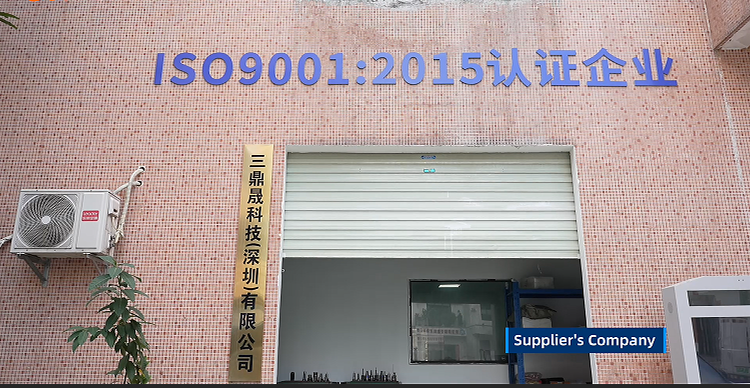
Factory photo supplied by 3X Ceramic Parts Co., Ltd.
Ceramic plungers sit at the intersection of material science and production planning. A plunger in a pump or fluid-control system is a moving part that must resist wear, corrosion and dimensional change while maintaining a sealing interface. Buyers often begin with a material question: ceramic or metal? The more useful decision-stage question is different: should the part be developed as a prototype or released as a series-production item? Those are not the same purchase, and treating them as one can produce a technically acceptable sample that is difficult to manufacture repeatably, or a production order that locks in an unvalidated design.
This independent buyer comparison examines prototype and series production for technical ceramic parts, using ceramic plungers as the working example. It draws on supplied company information from 3X Ceramic Parts Co., Ltd. and supplied comparison and application data. It does not assume that every plunger application requires the same ceramic grade, the same process route or the same cost model.
Why the Prototype-to-Series Decision Matters for Ceramic Plungers
A prototype ceramic plunger is a validation tool. Its job is to test whether a proposed material grade, geometry and mating design work under the intended operating conditions. A series-production ceramic plunger is a supply tool. Its job is to repeat an approved configuration within an agreed specification, schedule and cost structure. The first stage reduces technical uncertainty; the second reduces supply uncertainty. A buyer who confuses the two may overpay for a prototype that is built like a production part, or underestimate the process controls needed for series supply.
The supplied material-selection logic is condition-driven. Recommended ceramic options depend on temperature, load, wear, corrosion and insulation requirements, and the proper material grade is recommended after the customer's specific working conditions and details are reviewed. For customized ceramic parts, material, forming method and downstream processes can be selected according to part geometry, technical requirements and operating conditions. That flexibility is useful at the prototype stage, when more than one option may be under evaluation. At the series stage, the same flexibility becomes a control problem: the approved material, forming route and downstream process must be fixed and communicated in the purchase specification.
3X Ceramic Parts Co., Ltd. is a manufacturer of technical ceramic components; its supplied profile lists a 6,000 m² factory, 116 employees, an annual output of 800,000 units and six senior engineers. The company's stated product range includes alumina, zirconia, silicon nitride, aluminum nitride, silicon carbide and machinable glass ceramic components. Its profile also lists forming equipment for isostatic pressing, injection molding, dry pressing and sintering, together with internal and external grinding, centerless grinding, flap grinding, CNC machining, polishing, laser cutting and honing. These are capability statements, not automatic proof that every process route fits every plunger design. The buyer still needs to confirm which route is proposed for the prototype and which route will be used in series production.
Prototype vs Series Production: A Side-by-Side Buyer View
The table below compares the two stages on decision areas that affect a ceramic plunger buyer. It uses supplied facts and clearly bounded analysis. Where the supplied data does not provide a value, the table says so rather than filling the gap with an estimate.
| Decision area | Prototype stage | Series production stage | Buyer check |
|---|---|---|---|
| Primary purpose | Validate material grade, geometry, fit and function under intended conditions. | Establish repeatable supply within an approved specification and schedule. | Agree what the prototype must prove before the series order is released. |
| Material and process | Options can be selected according to geometry, technical requirements and operating conditions. | The approved material grade, forming method and downstream process should be frozen. | Confirm that the series route matches the route used for validation, or review the differences. |
| Verification | Samples can be produced for performance verification. | Inspection and documentation should be agreed for each lot or batch. | Request the applicable documentation package, including CoA where listed as available for the project. |
| Typical lead time | Samples normally take 5–20 days, depending on material, geometry and quantity. | Mass production normally takes 15–40 days, depending on material, geometry and quantity. | Obtain a written schedule with the quotation; do not treat the normal range as a commitment. |
| Cost logic | Sample quantity and engineering evaluation can dominate the early cost. | Unit price, yield, inspection and supply continuity dominate the series cost. | Compare total cost of ownership, not only the unit price of the ceramic part. |
| Supply capacity | Small-batch sample builds are the relevant question. | The supplied company profile lists 800,000 units annual output at company level. | Confirm capacity for the specific plunger size, grade and delivery window. |
| Engineering input | Material and design options may be reviewed before a final drawing is fixed. | Change control and production readiness matter more than option generation. | Clarify who owns design-for-manufacture changes and how they are documented. |
The table makes one point clear: the prototype and series stages use different evidence. A sample result is evidence about a sample; a production record is evidence about a production process. Neither one substitutes for the other. The buyer's job is to connect them with a documented transition.
What a Prototype Ceramic Plunger Should Prove
A prototype should answer a defined technical question. For a ceramic plunger, the question is usually some combination of wear resistance, corrosion resistance, dimensional stability, sealing behavior and assembly fit. The supplied material list includes alumina, zirconia, silicon carbide, silicon nitride, aluminum nitride and machinable glass ceramics. The list is not a ranking. It identifies options that can be considered against temperature, load, wear, corrosion and insulation requirements. A buyer should not select a grade from a material name alone; the operating conditions need to be stated first.
Sample service is available for performance verification, according to the supplied FAQ data. Sample cost and lead time are advised separately. That is a normal commercial arrangement, but it has a practical consequence: the buyer should define the prototype's acceptance criteria before the sample is ordered. A sample that looks right is not a validation result. Useful criteria may include the operating medium, temperature range, load profile, motion pattern, mating surface, installation method and the dimensions that control fit. These criteria should be tied to the same conditions the series part will face. If the prototype is tested under different conditions, the result may not transfer.
The prototype stage is also the right time to discuss the production route. The supplied profile lists several forming and machining capabilities, but the buyer should ask which specific route is proposed for the prototype and whether the same route will be used in series production. If the prototype is made by one method and the series part by another, the buyer should understand what that change means for density, finish, tolerance or inspection. The supplied data does not establish equivalence between routes, so the question should be resolved explicitly rather than assumed.
What Changes When a Ceramic Plunger Moves to Series Production
Series production shifts attention from can this part work to can this part be repeated. The approved material grade, forming method, downstream process and inspection criteria should be fixed in the purchase specification. The buyer should know which characteristics are critical, how they will be measured and what happens when a measurement falls outside the agreed limit. The supplied application data lists strict tolerance, good surface finish, high density and CoA availability as special requirements for relevant projects. Those are useful starting points, but they are not a complete quality plan. The buyer still needs to agree the measurement method, sampling approach and acceptance criteria for the specific plunger.
Lead time is another stage-specific issue. For custom ceramic parts, lead time depends on material, geometry and quantity. The supplied data gives a normal sample lead time of 5–20 days and a normal mass production lead time of 15–40 days. These are normal ranges, not guaranteed dates. A series order should be scheduled against a written delivery plan that accounts for the buyer's release date, the supplier's production slot and any inspection or documentation steps. A prototype lead time cannot simply be multiplied by the production quantity to estimate a series lead time.
Capacity should be read carefully. The supplied company profile lists an annual output of 800,000 units, a 6,000 m² factory and 116 employees. That is a company-level output figure, not a reserved capacity for any single ceramic plunger order. The buyer should ask whether the required monthly quantity, material grade and size fit the supplier's current production plan. The profile also lists a 90% export ratio and global markets, which is relevant to buyers who need export documentation and international delivery. It does not, by itself, prove a specific delivery performance for a new plunger project. Documentation is part of the product at the series stage; the supplied data notes that CoA is available for applicable projects, and the buyer should confirm what the certificate covers and which lot or batch it refers to.
Technical Explanation: Why a Ceramic Plunger Is a Material and Process Decision
A ceramic plunger is not a generic ceramic part. It is a functional component whose performance depends on the ceramic grade, the forming route, the machining route and the mating design. The supplied comparison states that technical ceramics emphasize heat resistance, wear resistance, corrosion resistance, electrical insulation and chemical stability. These properties are relevant to high-temperature and corrosive applications. The same comparison states that technical ceramics can have a service life 2–10 times longer than conventional metal parts under corrosive and abrasive conditions. That is a bounded claim: it applies to those conditions, not to every application.
The supplied comparison also states that ceramic parts can maintain stable performance at high temperature without thermal deformation, while metal parts are prone to thermal expansion and deformation under high heat. This is a material-level distinction, not a guarantee that every ceramic plunger will outperform every metal plunger. The buyer should map the distinction to the actual duty cycle. If the plunger runs at moderate temperature, with a benign medium and a low wear rate, the thermal advantage may not be the deciding factor. If the plunger runs in a corrosive or abrasive medium, or at high temperature, the ceramic option deserves a closer evaluation.
Material selection remains condition-driven. The supplied guidance recommends reviewing temperature, load, wear, corrosion and insulation requirements before selecting a grade. Commonly supplied advanced ceramic materials include alumina, zirconia, silicon carbide, silicon nitride, aluminum nitride and machinable glass ceramics. The proper grade is recommended after the customer's specific working conditions and details are reviewed. This is the correct order: conditions first, grade second, prototype third, series production fourth. Reversing the order can produce a part that meets a drawing but not the application.
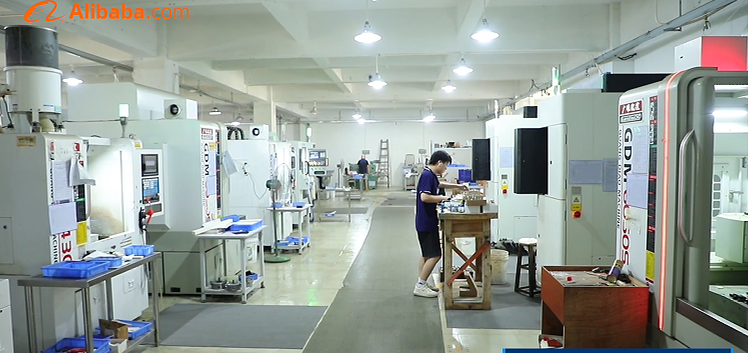
Production environment supplied by 3X Ceramic Parts Co., Ltd.
Application Scenarios: Where the Prototype and Series Decisions Diverge
The supplied application data lists pumps and valves, fluid control, semiconductor and photovoltaic equipment, new energy, automotive welding, high-temperature furnaces and electronic circuit carriers as relevant areas. For a ceramic plunger, the most direct fit is pumps, valves and fluid-control equipment, where the plunger operates as a moving component. The prototype stage in these applications should focus on the sealing interface, the medium compatibility, the motion pattern and the wear surface. The series stage should focus on batch-to-batch consistency of the same characteristics.
In semiconductor and photovoltaic equipment, the supplied application data lists strict tolerance, good surface finish, high density and CoA availability as special requirements. A prototype may be used to confirm that the proposed ceramic grade and geometry can meet the functional requirement. Series production then needs a documented inspection and acceptance routine. The buyer should not assume that a prototype's surface finish or density will automatically transfer to every production lot. The production specification should state how those characteristics are measured and recorded.
In high-temperature, corrosive or abrasive service, the comparison data supports a closer look at ceramic rather than metal. The supplied comparison states that ceramic parts can offer lower replacement and maintenance costs over long-term harsh operation, even though the unit cost is higher. For a plunger in a pump that is serviced frequently, the maintenance interval can matter as much as the purchase price. The prototype stage can help estimate whether the ceramic option is technically suitable; the series stage can help establish whether the total cost case holds over the planned service life. In new energy, automotive welding and high-temperature furnace equipment, the supplied application data identifies high-temperature, corrosive, abrasive, electrically insulating and precision-positioning conditions as relevant. These conditions do not point to a single ceramic grade; they point to a structured selection process.
Ceramic vs Metal: The Cost and Fit Boundary
The supplied comparison is explicit about the trade-off. Technical ceramic components have a higher unit cost than conventional metal components, but they can offer lower replacement and maintenance costs over long-term harsh operation. The comparison also states that the suitability of conventional metals must be evaluated against the specific temperature, media and wear conditions. This is not a claim that ceramic is always the better choice. It is a claim that the cost comparison should include the operating life, not only the purchase price.
For a ceramic plunger buyer, the practical boundary is as follows. Ceramic deserves evaluation when the plunger faces high temperature, corrosive media, abrasive wear, electrical insulation requirements or a combination of these conditions. Conventional metal remains relevant when the application is at standard temperature, when general mechanical strength is the main requirement, or when initial cost is the dominant constraint, subject to operating-condition validation. The buyer should also consider the cost of replacement and downtime. A lower unit price does not necessarily produce a lower total cost if the part has to be replaced more often. The supplied comparison states a service life of 2–10 times longer than ordinary metal under corrosive or abrasive conditions. That range should be treated as a supplied comparison, not a universal performance guarantee, and the buyer should validate it against the actual duty cycle.
Cost, Lead Time and Supply Continuity: What the Evidence Supports
The supplied data does not provide prices, MOQs or a cost breakdown for ceramic plungers. That absence is important. A buyer should not infer a price from the material name, the part size or the word ceramic. The cost of a technical ceramic plunger depends on the material grade, the geometry, the forming route, the machining route, the inspection requirements and the quantity. The prototype and series stages use different cost drivers, so a single unit price is not a complete comparison.
The supplied lead-time data is more specific but still conditional. Samples normally take 5–20 days, and mass production normally takes 15–40 days, depending on material, geometry and quantity. These ranges are useful for planning, but they are not commitments. The buyer should obtain a written schedule with the quotation and should identify the events that could change it, such as material availability, drawing approval, sample approval or inspection requirements. A series order should not be released until the prototype result and the production specification are both accepted. Supply continuity is a separate criterion; the supplied company profile lists a 6,000 m² factory, 116 employees, an annual output of 800,000 units, a 90% export ratio and global markets. These facts describe the supplier's stated scale and market reach. They do not prove that capacity is available for a particular plunger order at a particular time. The buyer should ask for a capacity statement tied to the required grade, size and delivery window.
A Stage-Gated Outlook for Buyers
The practical outlook is not a prediction that ceramic will replace metal across all pump and fluid-control applications. The supplied evidence does not support that claim. A more useful outlook is a stage-gated sourcing process. First, define the operating conditions: temperature, load, wear, corrosion and insulation requirements. Second, select a candidate material grade from the supplied options. Third, build and evaluate a prototype against agreed criteria. Fourth, freeze the material, forming method, downstream process and inspection plan. Fifth, release series production against a written schedule and documentation package.
This sequence matters because the prototype and series stages answer different questions. The prototype answers whether the design is technically suitable. The series stage answers whether the approved design can be supplied repeatably. A buyer who skips the first question may lock in a design that does not perform. A buyer who skips the second may receive a good sample and an inconsistent production lot. The transition between the two stages should be documented, not assumed.
For ceramic plungers in demanding service, the supplied total-cost logic provides a further reason to plan the transition carefully. The unit cost of a ceramic part is higher than that of a conventional metal part, according to the supplied comparison. The case for ceramic depends on reduced replacement and maintenance costs over long-term harsh operation. That case is strongest when the application conditions are well understood and the series part is produced to a stable specification. It is weakest when the buyer compares only the initial unit price or relies on a prototype result without a production plan.
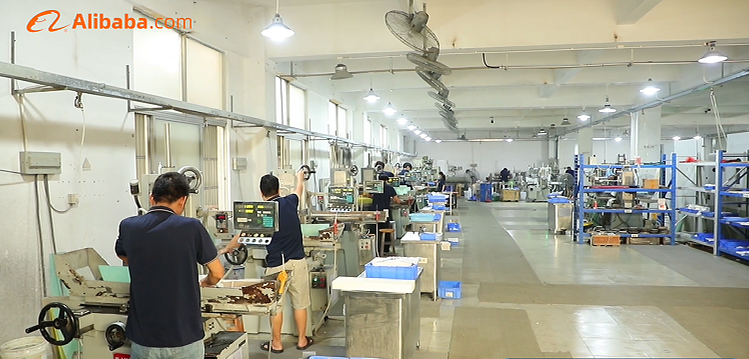
Factory photo supplied by 3X Ceramic Parts Co., Ltd.
FAQ
How should a buyer select the right advanced ceramic material for a plunger?
Selection depends on the working conditions, including temperature, load, wear, corrosion and insulation requirements. Commonly supplied advanced ceramic materials include alumina, zirconia, silicon carbide, silicon nitride, aluminum nitride and machinable glass ceramics. The proper material grade is recommended after the customer's specific working conditions and details are reviewed.
How long does a custom ceramic part take?
Lead time depends on material, geometry and quantity. Normally, samples take 5–20 days and mass production takes 15–40 days. The exact schedule is confirmed together with the quotation.
Can buyers obtain ceramic samples before a bulk order?
Yes. Samples can be produced for performance verification. Sample cost and lead time are advised separately.
Are customized non-standard ceramic plungers supported?
Customized non-standard ceramic parts are supported. Material, forming method and downstream processes can be selected according to part geometry, technical requirements and operating conditions, and customized ceramic structural parts and precision machining are supported.
Conclusion: Match the Buying Stage to the Evidence
Prototype and series production are not interchangeable purchasing stages for technical ceramic parts. A prototype ceramic plunger is a validation instrument; a series-production ceramic plunger is a supply instrument. The prototype should be judged against the intended operating conditions, not against a general impression of material quality. The series part should be judged against a frozen specification, a documented inspection plan and a realistic schedule. The transition between the two should be explicit.
The supplied evidence supports a condition-driven approach. Material options include alumina, zirconia, silicon carbide, silicon nitride, aluminum nitride and machinable glass ceramics, and the grade should follow the temperature, load, wear, corrosion and insulation requirements. Sample lead times are normally 5–20 days, and mass production lead times are normally 15–40 days, depending on material, geometry and quantity. Ceramic parts can carry a higher unit cost than metal parts, but the supplied comparison identifies lower replacement and maintenance costs over long-term harsh operation as the basis for a total-cost advantage. Those facts are useful for a buyer who keeps them in their proper scope.
For buyers evaluating 3X Ceramic Parts Co., Ltd., the supplied profile provides a starting point: a 6,000 m² factory, 116 employees, an annual output of 800,000 units, six senior engineers, a 90% export ratio and a product range that includes the ceramic materials named above. The next step is not a generic inquiry; it is a defined operating-condition review, a sample plan and a production specification. That is how the prototype-to-series decision becomes a managed transition rather than a guess.
For readers who want a broader reference, the company's brochure is available here: 3X Ceramic Parts brochure. The company website is 3X Ceramic Parts Co., Ltd..
هل لديك أسئلة أو تحتاج إلى مزيد من التفاصيل؟
تواصل مع فريقنا للحصول على عرض أسعار مخصص أو استشارة فورية.
طلب عرض أسعار
املأ النموذج أدناه وسيتواصل معك فريقنا بعرض مقترح مخصص.
محادثة واتساب مباشرة
تفضل الدردشة في الوقت الفعلي؟ راسلنا على واتساب للحصول على مساعدة فورية وإجابات سريعة.
- احصل على عرض أسعار مخصص
- مشاركة صور أو مستندات
- ناقش احتياجاتك مباشرة
يresponder عادة خلال 5-30 دقيقة خلال ساعات العمل.