
Proving Manufacturer Capability: Vasia's 30,000-Sqm Facility and 200M Annual Output
Proving Manufacturer Capability: Vasia's 30,000-Sqm Facility and 200M Annual Output
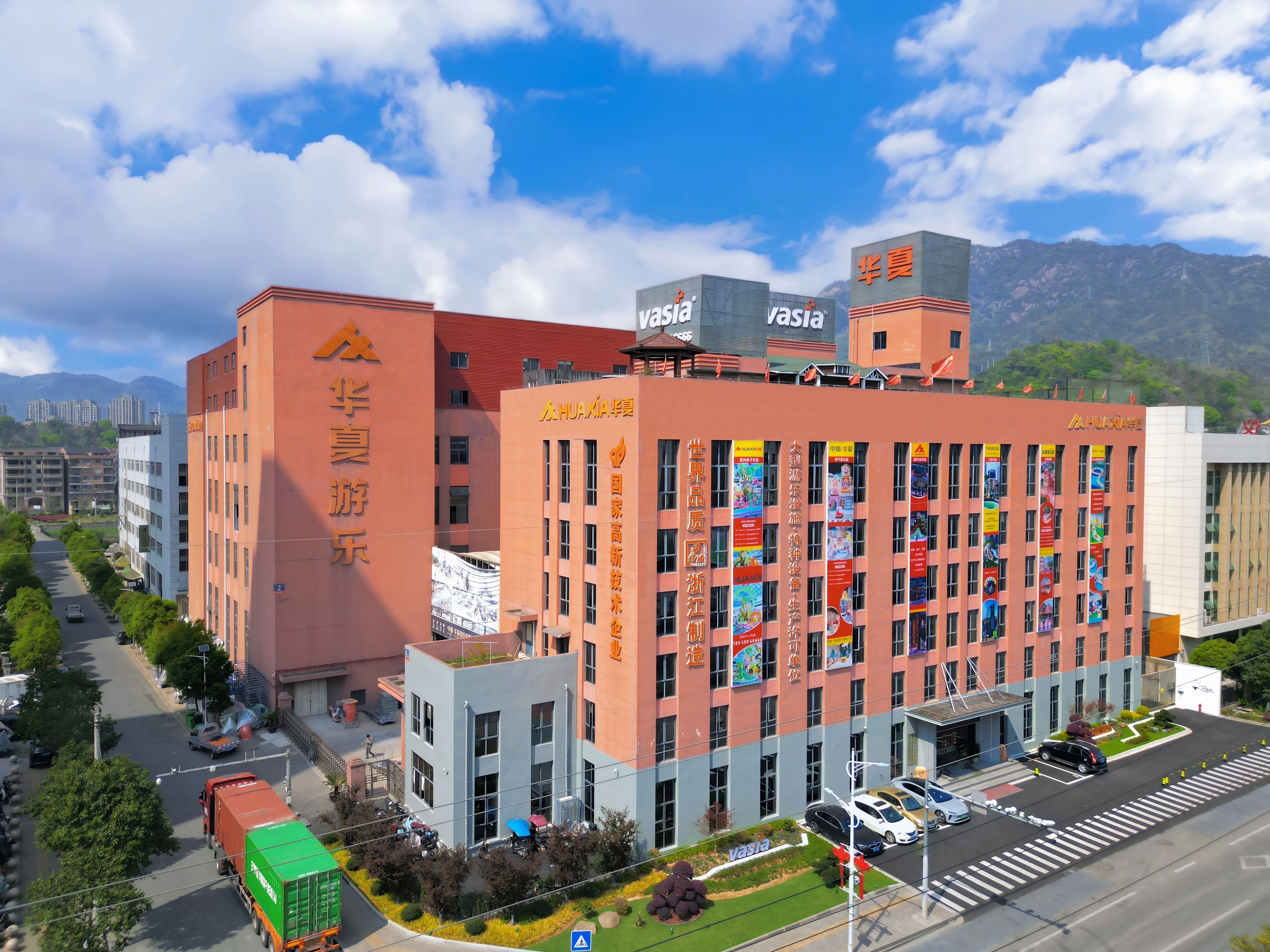
Production area inside the 30,000 m² ISO-certified manufacturing facility operated by Huaxia Amusement Co., Ltd. (VASIA) in Qiaoxia Town, Zhejiang Province, China.
Every commercial indoor playground project is constrained long before the first play structure is ordered: a lease term, an opening date, a certification scope and a fixed capital budget. Those constraints eventually collapse into a single question about the supplier — how much can this factory actually build, how repeatable is its specification, and what happens when the design changes after the deposit is paid. For a buyer in the research and evaluation stage, manufacturer capability is therefore a procurement constraint rather than a marketing claim.
Huaxia Amusement Co., Ltd., which trades as VASIA, is an indoor amusement equipment manufacturer established in 2000 and headquartered in Qiaoxia Town, Yongjia County, Wenzhou, Zhejiang Province — a region recognised in China as the Educational Toy Capital and a National Educational Toy Export Base. The company designs, manufactures, tests and installs indoor playground equipment, trampoline park systems, climbing walls, rope courses and soft play modules for shopping malls, family entertainment centres (FECs), kindergartens and amusement parks, and reports an export share of roughly 70% across the EU, the USA, South America, the Middle East and Southeast Asia.
This analysis treats VASIA's published capability figures — a 30,000 m² production facility, more than 200 technical and management staff, a 30-engineer R&D team and an annual output reported at 200 million — as a working case study in how procurement teams can read, verify and stress-test the physical evidence behind a supplier's capacity claims. It also sets out where those figures stop being decisive.
Why Capacity Claims Are a Procurement Constraint, Not a Slogan
Projects rarely fail because a supplier cannot draw a playground. They fail because a supplier cannot fabricate, pack, ship and install one at the volume and repeatability the project requires. A 3,000 m² family entertainment centre typically consumes hundreds of fabricated steel sections, tens of thousands of soft-play components, themed panels, netting, matting and padding — all of which must arrive together, in the right sequence, at a site that is already paying rent.
A supplier with one welding bay and no engineering department will still accept that order. The difference between a factory that can build at scale and one that can only quote at scale shows up in physical indicators: production floor area, workforce structure, engineering headcount, monthly throughput and the documentation behind each of those numbers. Constraints that matter to the buyer — certification scope, material parameters, order quantity and delivery window — can only be met consistently if the capacity underneath them exists.
The Capability Profile Behind VASIA's Output
Facility scale: 30,000 m² under one ISO-certified roof
VASIA operates a 30,000 m² ISO-certified production facility equipped with automated manufacturing systems. For a buyer, floor area is not decoration; it determines how many production lines can run in parallel, how much long-section steel and plywood can be stored without blocking assembly, and whether complete multi-level structures can be trial-fitted before they are dismantled for shipping. Trial fitting is where interference problems — a slide exit meeting a padded platform edge, a net attachment landing on a coupler — are normally discovered. Discovering them in Zhejiang is considerably cheaper than discovering them on site.
Keeping fabrication, padding, netting and assembly under one roof also keeps quality control on the same batch that leaves the loading dock. In soft play equipment, most defects occur at interfaces rather than in individual parts: PVC sleeve fit, padding seams, net tension and coupler alignment. Those interfaces only exist once components are assembled.
Workforce: 200+ staff with a 30-engineer R&D team
The company reports a workforce of more than 200 technical and management professionals and an independent R&D team of 30 engineers, supported by more than 192 patents and copyrights. The engineering layer is what separates OEM from simple replication. VASIA's design workflow uses 3D modelling and VR preview technology so that clients can review a project virtually before production begins, and the design philosophy integrates child psychology and motor development principles so that age-group zoning is treated as a structural requirement rather than a finishing choice.
For an FEC developer, R&D headcount is a proxy for how much customisation is realistic. Colour, logo, voltage and layout changes are routine. A new themed tower, a modified slide transition or an integrated rope course usually is not — it requires structural calculation, prototyping and safety validation before mass production, and that work has to be absorbed without stopping the rest of the production schedule.
Output: 200 million annual and 8,000 units monthly
VASIA reports an annual output figure of 200 million, a monthly production capacity of 10,000 m² for trampoline parks and related play structures, and a stated monthly capacity of 8,000 units. Read together, these numbers describe aggregate industrial scale. They do not describe the capacity available to any single order, and they should not be treated as a delivery promise. The practical question for a procurement manager is narrower: is there a production slot in the month this project needs, and is that slot confirmed in writing?
| Capability indicator | VASIA reported figure | What it actually verifies | Corroborating document to request |
|---|---|---|---|
| Production floor area | 30,000 m², ISO-certified facility | Parallel lines, storage of long steel sections, trial assembly of multi-level structures | ISO certificate, plant layout drawing, dated site walkthrough video |
| Workforce | More than 200 technical and management staff | Separation of fabrication, quality inspection and project management functions | Organisation chart with QC headcount and inspection roles |
| Engineering depth | 30-engineer R&D team; 192+ patents and copyrights | Custom OEM/ODM structural design, 3D modelling and VR preview capability | Sample design files, prototyping records, safety validation notes |
| Annual output | Reported at 200 million | Aggregate purchasing scale and multi-project throughput | Production records, order backlog statement, reference project list |
| Monthly capacity | 10,000 m² of trampoline park structures; 8,000 units | Whether a slot exists inside the required delivery window | Written capacity allocation for the specific project month |
How Physical Assets Convert into OEM/ODM Delivery
VASIA's declared production mode is OEM/ODM, with customisation covering indoor children's play equipment, outdoor children's play facilities, colour, voltage and logo. The commercial parameters that accompany that mode are a minimum order quantity of 1 unit and a lead time of 15 to 45 days.
The conversion from assets to deliverables follows a defined sequence:
- Design and preview. Concepts are developed with 3D modelling and VR preview so layout, sightlines and age zoning can be reviewed before steel is cut.
- Prototyping and safety validation. Each new product undergoes prototyping and safety validation prior to mass production, rather than being validated on the client's site.
- Parallel fabrication. Structural frames, platforms, padding, netting and themed elements are produced against the same release, which is only possible when floor area and staffing allow simultaneous workflows.
- Project management. Each project is assigned a dedicated project manager responsible for end-to-end coordination, transparent scheduling and regular progress reporting.
- Logistics and installation. Turnkey services cover project consultancy, customised design, manufacturing, international logistics and on-site installation, with export packaging and freight solutions. Installation guidance or on-site assembly teams are provided as needed.
- After-sales. The stated after-sales structure is remote technical support, a one-year warranty and lifetime service, with spare parts availability and optional annual inspection and maintenance.
The MOQ of 1 unit is worth noting because it is unusual in capital equipment. It allows a first order to function as a validation sample — a way to test documentation quality, packaging and interface fit before committing to a multi-zone rollout.
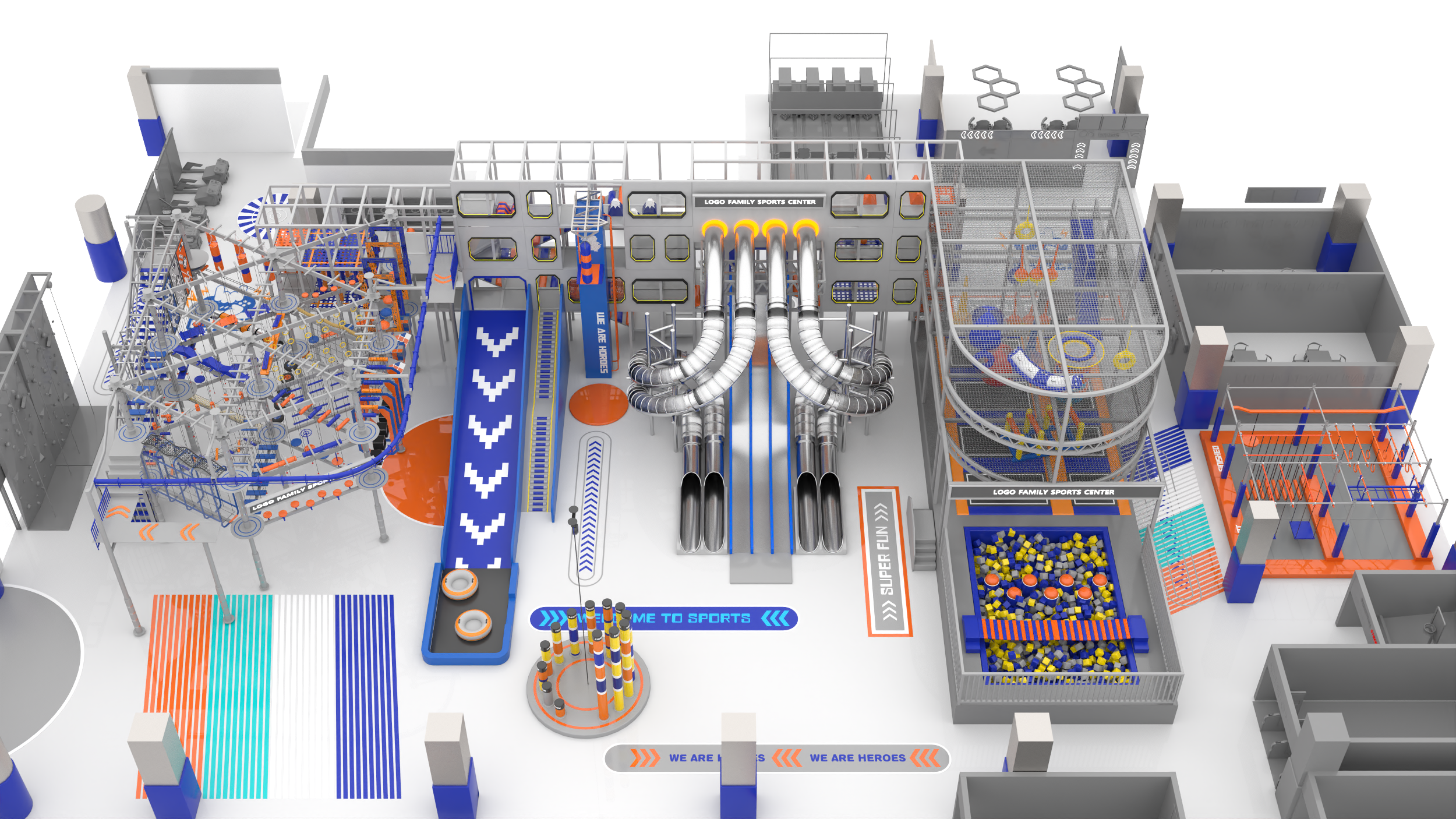
OEM indoor playground structure, model VS1-250519-2250-3-60 — a soft play configuration built on galvanised steel posts with cast steel couplers and PE safety netting.
Technical Evidence: Specifications and Certification Scopes
Capacity and certification are different forms of proof, and buyers evaluating a supplier for the EU or North American market need both. The standards landscape is defined externally: ASTM F1918 is the primary safety performance specification for soft contained play equipment in North America, focusing on entrapment and fire safety, while EN 1176 is the harmonised European playground standard, with Part 10 specifically covering fully enclosed play equipment such as soft play areas.
Material specifications on VASIA's commercial indoor playground equipment include the following, taken from published product data:
- Soft play main frame: galvanised steel pipe of φ48 mm with 2.0 mm wall thickness, fitted with 15 mm outer-diameter anti-collision sleeves. Expanded structures use heavier φ140 mm pipe at 4.0 mm thickness.
- Platforms and slides: 800 × 800 mm cold-rolled steel plate or perforated steel plate at 91 × 91 cm and 116 × 116 cm; the 2 m wide steep slide uses a steel frame of 4 × 4 cm and 4 × 8 cm square tubes.
- Soft padding build-up: 1.8 cm multilayer board plus 2 cm EPE foam plus 0.45 mm PVC leather, a composite that provides both support and cushioning.
- Trampoline park structure: Q235 galvanised rectangular steel tube uprights of 80 × 80 × 2.0 mm, connecting frame of 50 × 80 × 2.5 mm and reinforcement linkage of 40 × 40 × 1.5 mm.
- Trampoline deck and padding: PP jumping mat with a fibre count of 500D × 500D tested to GB 6675.4-2014; 70 mm high-density EPE pearl cotton; Plato PVC-coated mesh fabric of 0.52 mm and 1300 × 1300D warp/weft density, compliant with EN 71-2:2020 clauses 4.1 and 4.4 on flammability.
- Springs: carbon steel wire 82B, 180 mm length, tested to GB/T 20125-2006 and GB/T 20123-2006.
- Fasteners and netting: stainless steel fasteners with protective caps or anti-loosening washers; PE safety netting with a 30 × 30 mm mesh tested to GB 6675.4-2014.
- Finishes and durability: slides in imported engineering plastics or 196 resin; carpet wear resistance of 80,000 rubs; corrosion-resistant Scots pine timber where wood is used.
Certification is where the constraint becomes precise, because a CE mark is not a blanket statement about a company — it applies to a defined product scope under a defined standard. VASIA's EU certifications are issued by LTC, and the following entries illustrate how scope-specific the coverage is:
| Certificate number | Product scope | Applicable standard | Validity |
|---|---|---|---|
| LTC250519-HXA-018 | Rope course equipment | EN 1176-1:2017+A1:2023, EN 1176-11:2014 | Issued 2025-05-22, valid to 2030-05-21 |
| LTC250519-HXA-020 | Climbing wall | EN 1176-1:2017+A1:2023 | Issued 2025-05-22, valid to 2030-05-21 |
| LTC250613-HXA-012 | 360 Space Vehicle | EN 13814-1:2019+A1:2024 | Issued 2025-06-20, valid to 2030-06-19 |
| LTC250714-HXA-026 | Foam pit | EN 1176-1:2017+A1:2023, EN 1176-10:2023 | Issued 2025-07-22, valid to 2030-07-21 |
Additional certificates in the same series cover trampoline boxes, basketball hooks, jump towers, shotmakers, spider walls and slide components, with standards including EN 1176-3:2017 for slides and EN 12572-1:2017 and EN 12572-3:2017 for climbing structures. Beyond the EU, the company states compliance with ASTM and EN 1176 safety frameworks and holds CE, UKCA, CPSIA and SASO certifications, validated through testing by SGS and TÜV, under an ISO 9001 quality management system. Materials are selected from eco-friendly, non-toxic sources with RoHS-compliant coatings and fire-retardant properties, with FSC-certified timber and recyclable materials used where possible.
The procurement implication is straightforward: when a supplier says "CE certified", the buyer should ask for the certificate number, the standard and the product scope, then match that scope against the equipment actually being purchased. Rope course certification does not certify a trampoline box, and a foam pit certificate under EN 1176-10 does not cover a climbing wall.
Application: Where This Capability Is Used
Indoor playground systems built at this scale are deployed in shopping malls, kindergartens, family entertainment centres and amusement parks, in indoor and outdoor configurations, and are designed for high-traffic, all-weather use with continuous daily operation and relatively low maintenance. Typical projects combine soft play areas, trampoline parks, kids' obstacle courses, themed playgrounds and daycare play equipment, supported by matching components such as safety matting, protective padding, ball pit balls, slide components, climbing ropes, trampoline springs and pads, interactive play panels, anti-collision foam and non-slip flooring.
Age coverage spans toddler zones for children aged roughly 0–6, school-age play areas for ages 6–12, and youth and adult challenge courses, with the broader playground range aimed at ages 3–15 and soft play products at ages 2–8. Theming is customisable across styles including forest, space, ocean, castle and futuristic.
One reference project illustrates the durability side of the capability claim rather than the output side: a 3,000 m² indoor playground delivered to an end customer in Spain has been in operation for five years, with the operator reporting stable operation and stable income, attributed to long equipment lifespan and low maintenance. For a buyer, five years of continuous commercial use is more informative than any throughput figure, because it tests the interfaces — padding, netting, decking and hardware — that drive maintenance cost.
Verification of installed performance is not limited to third-party certificates. VASIA is a member of the International Association of Amusement Parks and Attractions (IAAPA) and the Russian Association of Amusement Parks and Attractions (RAAPA), and participates in international exhibitions including IAAPA Expo, DEAL and RAAPA shows — channels through which buyers can cross-check a supplier's claims against its industry standing.
Market Trend Analysis
Demand for indoor play capacity is expanding, and the direction of that expansion favours suppliers with real production depth. Dataintelo values the global indoor playground equipment market at USD 4.8 billion in 2025, with a projection of USD 9.2 billion by 2034. Within that market, soft play equipment held the largest product type share at 31.4% in 2025, worth approximately USD 1.51 billion, while Asia Pacific accounted for a 38.6% revenue share, ahead of North America and Europe.
The trampoline park segment is growing on its own trajectory: Dimension Market Research expects the global trampoline park market to grow at a CAGR of 16.2%, reaching USD 3.96 billion by 2032. These estimates are not identical across research houses — Business Research Insights, for example, places indoor children's playground equipment at USD 7.3 billion for 2026, reflecting differences in scope definitions and whether outdoor equipment is included. Buyers should treat all such figures as directional rather than exact.
Two structural consequences follow for procurement. First, capacity is becoming a competitive constraint rather than a differentiator: as the market grows, order books lengthen, and the ability to reserve a production slot matters as much as price. Second, certification and material documentation are becoming qualification requirements rather than negotiation points, particularly for EU market entry where EN 1176 and EN 13814 scopes must be matched to specific equipment.
Verified Factory Capacity vs. Traditional Intermediary Sourcing
Many buyers still source indoor playground equipment through trading intermediaries. That model can work, but the verification burden shifts to the buyer, because the intermediary rarely controls fabrication, padding, quality inspection or installation.
| Evaluation dimension | Intermediary sourcing model | Vertically integrated OEM/ODM factory model |
|---|---|---|
| Specification traceability | Material claims may be relayed without production data | Published parameters such as φ48 × 2.0 mm posts and 0.52 mm PVC-coated mesh |
| Certification scope | Certificates may be generic or applied to another product | Scope-specific certificates with numbers, standards and validity dates |
| Customisation depth | Limited to options offered by the underlying factory | In-house engineering team of 30, 3D modelling and VR preview before production |
| Capacity certainty | Depends on third-party allocation, often unconfirmed | Own 30,000 m² facility with 10,000 m² monthly trampoline park capacity |
| Accountability after delivery | Split between trader and factory | Single project manager plus remote technical support, one-year warranty, lifetime service |
| Documentation for inspection | Often unavailable before shipment | Quality inspection by the in-house QC department, ISO 9001 system, SGS and TÜV testing |
Limits and boundary conditions buyers should confirm
A capability-focused supplier profile has boundaries, and ignoring them is how procurement teams get caught out:
- Scale does not equal availability. The 30,000 m² facility, the 200 million annual output figure and the 8,000-unit monthly capacity describe company-wide totals, not capacity reserved for a single order. Slot confirmation should be obtained in writing for the specific delivery month.
- Certificate scope is narrower than the brand. CE coverage exists per product and per standard. A certified rope course does not imply that every item in a mixed playground package carries an equivalent certificate under the same standard.
- The lead time is a range, not a promise. The stated 15–45 day window reflects configuration. Highly themed builds, expanded structures using heavier φ140 mm main frames, or projects requiring new moulds and prototyping typically sit at the upper end of that range or beyond it.
- Installation depends on site conditions. Turnkey services include on-site installation and assembly teams are provided as needed, but access, ceiling height, floor loading and local labour rules remain project-side variables that a factory cannot control.
- Self-reported figures require corroboration. Output value and capacity numbers are company-stated. Buyers with large capital exposure should request production records, an ISO 9001 certificate and, where appropriate, third-party pre-shipment inspection.
- Cost does not fall automatically with size. Scale influences material purchasing and parallel production, but final cost is driven by steel thickness, mat grade, padding build-up, theming, freight and installation. Two quotations for the same square footage can describe two different products.
Future Outlook
The next phase of competition in indoor playground manufacturing is likely to be documentation-led. As FEC operators consolidate and lenders and landlords become more involved in project approvals, the ability to produce a certificate number, a material specification sheet and a capacity commitment will matter more than a facility photograph. Suppliers that already operate under ISO 9001 with scope-specific CE certification, third-party testing through SGS and TÜV, and a design workflow that previews projects in 3D and VR are structurally better positioned for that shift.
For VASIA specifically, the strategic question is not whether 30,000 m² and a 200 million annual output figure are impressive — it is whether that capacity can be allocated transparently, documented per project, and sustained across product lines that range from soft play modules to rope courses and trampoline park systems. Buyers who evaluate capability on that basis will make better decisions than those who evaluate it on scale alone.
Reference documentation, including product and factory information, is available in the company's public brochure: Huaxia Amusement Co., Ltd. (VASIA) brochure (PDF).
Frequently Asked Questions
1. What factory capacity indicators should a buyer verify before placing a large indoor playground order?
Verify floor area, workforce structure, engineering headcount and monthly throughput, and request the document behind each figure. VASIA's published profile states a 30,000 m² ISO-certified production facility, more than 200 technical and management staff, a 30-engineer R&D team, a monthly production capacity of 10,000 m² of trampoline park structures, a stated monthly capacity of 8,000 units, and an annual output reported at 200 million. The useful next step is an ISO 9001 certificate, a current plant layout, and a written statement of how much capacity is available during the project's delivery window.
2. Which certifications apply to indoor playground and trampoline park equipment placed on the EU market?
It depends on the equipment type. EN 1176-1:2017+A1:2023 is the base European playground standard; EN 1176-10:2023 covers fully enclosed play equipment such as soft play areas; EN 1176-3:2017 covers slides; EN 1176-11:2014 covers cableways; EN 12572-1:2017 and EN 12572-3:2017 cover climbing structures; EN 13814-1:2019+A1:2024 applies to amusement rides. In North America, ASTM F1918 is the primary safety performance specification for soft contained play equipment. VASIA's LTC-issued CE certificates include LTC250519-HXA-018 for rope course equipment, LTC250519-HXA-020 for a climbing wall, LTC250613-HXA-012 for the 360 Space Vehicle, and LTC250714-HXA-026 for a foam pit. Buyers should confirm that the certificate scope matches the equipment on the purchase order.
3. What material specifications can be checked on commercial indoor playground equipment?
On soft play structures, published specifications include galvanised steel pipe of φ48 mm with 2.0 mm wall thickness for the main frame, φ140 mm pipe at 4.0 mm thickness for expanded structures, platforms of 800 × 800 mm cold-rolled or perforated steel plate, and padding built as 1.8 cm multilayer board plus 2 cm EPE foam plus 0.45 mm PVC leather, with stainless steel fasteners and PE safety netting of 30 × 30 mm mesh. On trampoline park structures, specifications include Q235 galvanised rectangular tube uprights of 80 × 80 × 2.0 mm, connecting frames of 50 × 80 × 2.5 mm, PP jumping mats at 500D × 500D, 70 mm EPE padding, 0.52 mm PVC-coated mesh compliant with EN 71-2:2020 clauses 4.1 and 4.4, and carbon steel 82B springs of 180 mm length.
4. What is the minimum order quantity and typical lead time for OEM indoor playground equipment?
VASIA's stated production parameters are OEM/ODM mode, a minimum order quantity of 1 unit, and a lead time of 15 to 45 days. That range reflects configuration rather than uncertainty alone: colour, logo, voltage and layout customisation sit within standard design workflows, while structural expansions, multi-level themed builds and projects requiring new tooling or prototyping usually extend toward or beyond the upper limit. A single-unit first order can serve as a validation sample before a larger rollout.
5. Does a larger factory automatically mean a lower purchase price?
No. Scale affects raw material purchasing, the number of parallel production lines, and the ability to absorb schedule changes, but the final cost of a project is determined by specification: steel tube thickness, mat and padding grade, netting, theming, freight and installation. Two quotations for the same 3,000 m² footprint can differ significantly because the underlying materials differ. A line-by-line specification comparison is more reliable than a comparison of headline prices.
6. How is quality control handled before shipment?
According to the company's stated process, testing is conducted by colleagues from the quality inspection department, materials are drawn from eco-friendly, non-toxic sources with RoHS-compliant coatings and fire-retardant properties, and the quality management system is ISO 9001 certified, with validation through SGS and TÜV testing. New products undergo prototyping and safety validation before mass production. For larger projects, buyers can request batch inspection records and arrange independent third-party pre-shipment inspection.