
Proving Manufacturing Capability: 24 Latex Lines, 50,000 m²
Proving Manufacturing Capability: 24 Latex Lines, 50,000 m²
Resistance band sourcing rarely fails at the sample stage. It fails at scale — when a validated loop has to be produced again, at the same tension, at ten times the volume, three quarters later, inside a retail or gym program that was planned around it. That is the moment a buyer stops evaluating a product and starts evaluating a plant.
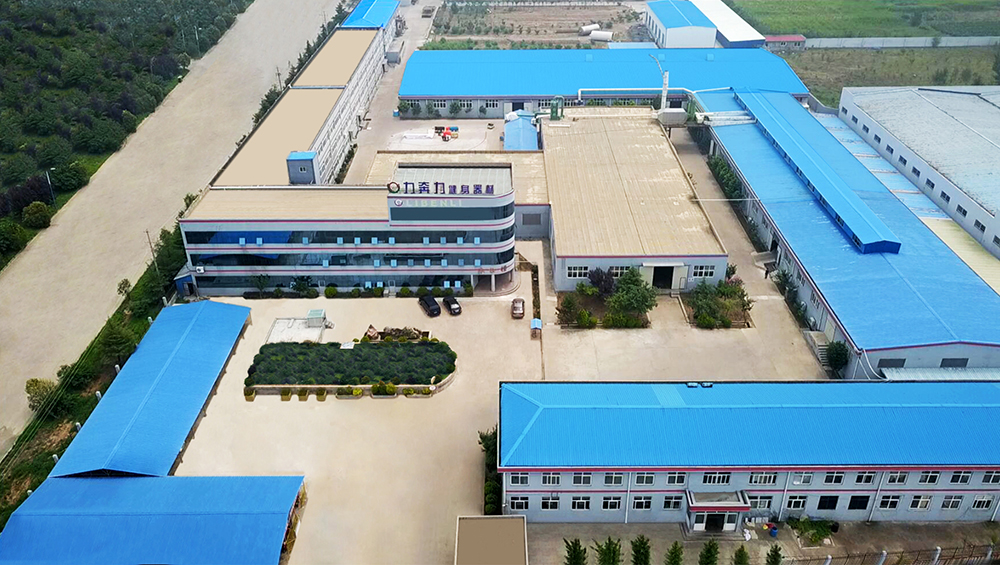
Haiyang Libenli Body-Building Apparatus Co., Ltd. is a Chinese manufacturer of dipped latex tubing and latex resistance bands, founded in 1997 and operating from a 50,000 m² facility in Shandong Province. Its manufacturing footprint is unusually explicit for this category: 24 dedicated production lines for dipped latex tubing with a daily output of 120,000 meters, and 2 dedicated lines for latex bands with a daily capacity of 25,000 meters. This article treats those figures not as promotional claims but as the raw material of a procurement decision — asking what each number can and cannot tell a buyer who is choosing a long-term manufacturing partner.
The Verification Gap in Resistance Band Sourcing
Resistance bands look simple, which is precisely why the category attracts so many intermediaries. A loop of latex or TPE, a printed polybag, a barcode — the visible product gives away very little about who actually made it. Buyers at the decision and execution stages therefore tend to encounter three types of suppliers that present almost identically in a catalogue: actual manufacturers with owned production assets, trading companies that broker between buyers and factories, and assemblers that purchase finished goods and add branding.
The difference only becomes measurable once an order scales. A broker can source a first container competitively. The second and third orders are where line availability, material consistency and inspection discipline decide whether a program stays on schedule. This is why experienced procurement teams shift their diligence away from product photography and towards asset evidence: how many lines exist, what they produce, how much they output per day, how much floor space supports them, and how many engineers maintain the process.
The market context explains why this diligence is increasing. Grand View Research valued the global resistance bands market at approximately USD 1.7 billion in 2024 and projects it to reach USD 2.9 billion by 2030, a CAGR of 9.9% from 2025 to 2030. North America accounted for a 40.0% revenue share in 2024. On the demand side, health and sports clubs represented 70.6% of 2024 revenue, while individual use was the fastest-growing segment. Longer buying cycles and institutional buyers both point toward the same conclusion: suppliers are increasingly selected for multi-season continuity, not single-purchase pricing.
What Physical Assets Can Actually Prove
Statements about quality culture, customer focus or craftsmanship cannot be audited. Physical assets can. A production line occupies floor space, consumes energy, requires staffing and appears in a buyer's audit itinerary. When a supplier states that it runs 24 dedicated lines for dipped latex tubing, that claim is falsifiable — which is exactly what makes it useful.
Four asset classes carry the most weight in a decision-stage evaluation:
- Line count and dedication. Whether equipment is dedicated to a product family or shared across unrelated products determines changeover risk and scheduling flexibility.
- Daily throughput. Output per day translates directly into how quickly a repeat order can be absorbed without displacing other customers.
- Floor area. Site size indicates the physical room available for washing, cooling, drying, assembly and packing — stages that cannot be compressed without affecting the finished product.
- Engineering headcount. Engineers determine whether a supplier can modify tooling, adjust parameters and develop variants rather than only reproduce an existing catalogue item.
Asset Baseline: A Documented Reference Case
The following figures describe Haiyang Libenli Body-Building Apparatus Co., Ltd. and are drawn from the company's own manufacturing and quality documentation, supplemented by third-party records where noted. They are presented here as a structured baseline that a buyer can compare against other supplier disclosures.
| Asset or metric | Disclosed detail |
|---|---|
| Established | 1997 |
| Site area | 50,000 m² |
| Workforce | More than 300 employees |
| R&D team | 20 engineers |
| Dipped latex tubing lines | 24 dedicated production lines |
| Dipped latex tubing output | 120,000 meters per day |
| Latex band lines | 2 dedicated production lines |
| Latex band output | 25,000 meters per day |
| In-house tooling | Self-owned CNC molding machines and plastic injection molding equipment |
| Intellectual property | 2 invention patents and 18 utility model patents |
| Quality certification | ISO 9000:2000 (2005) and ISO 9001:2008 (2010); 3A Credit Rating Certificate issued by the Ministry of Commerce of China and CCPIT |
| Product testing | Most products certified by SGS for international environmental and safety requirements |
| Product families | Medical grade latex tubing; high-tension fitness latex tubing; high-elasticity latex resistance band; fishing and diving latex products |
| Primary export markets | Germany, United States, United Kingdom, France, Canada |
Read as a set rather than as individual numbers, the disclosure describes a manufacturer whose capacity is concentrated in one material system — dipped natural latex — and whose product range is organised around that system rather than assembled from unrelated categories.
Why 24 Lines Is a Different Statement Than "Large Capacity"
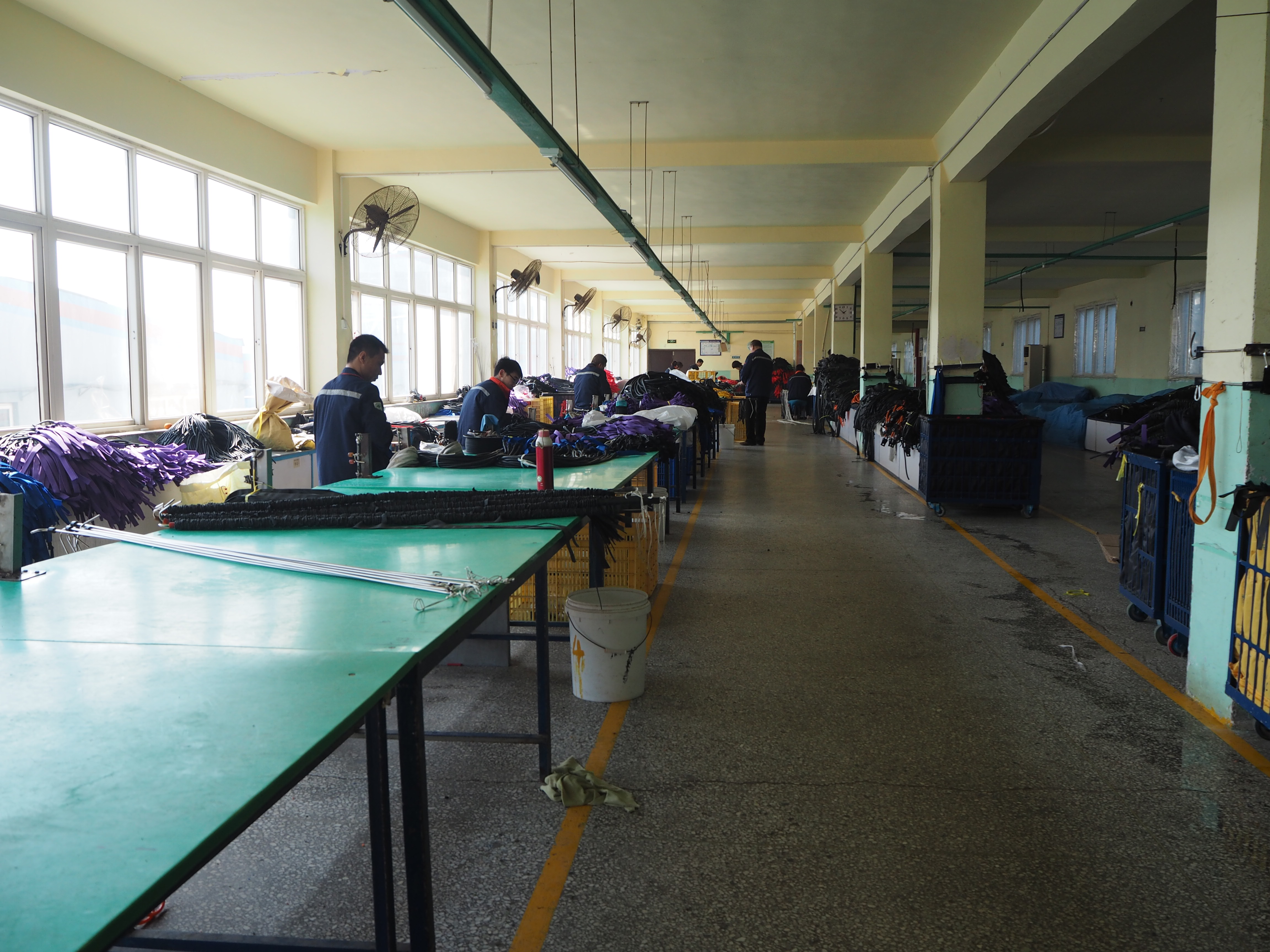
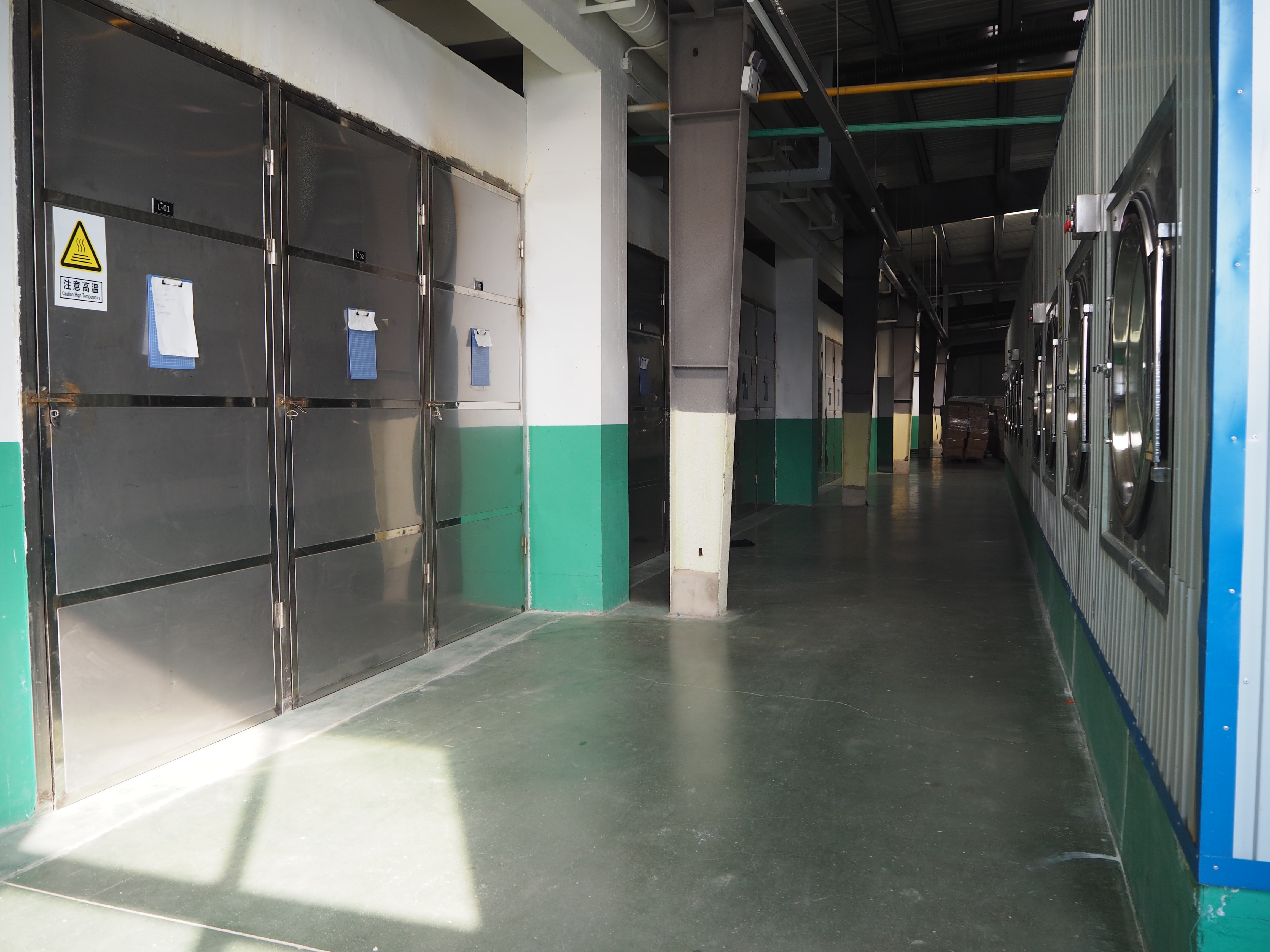
Dipped latex production is a sequential process. Mandrels are prepared and dipped into compounded latex, the deposited film is cured, then washed and cooled, dried, stripped from the mandrel, and finished into tubing or formed into band loops. Each stage has a natural cycle time, and a single continuous chain means a single stoppage anywhere halts everything downstream.
Twenty-four parallel lines change that economics. Parallelism decouples throughput from the slowest individual stage: output can be maintained while one line is serviced, tooling is changed or a batch is held for inspection. For a buyer planning a multi-year program, the practical consequence is scheduling reliability rather than peak speed.
The separation between the two line groups matters as much as the total count. The 24 lines serve dipped latex tubing — the continuous tube form used for medical tubing, fitness tubing and elastic cord. The 2 dedicated latex band lines serve flat band loops, a different forming architecture with its own tooling and handling. A buyer sourcing power loop bands and a buyer sourcing medical tubing are not competing for the same capacity, which reduces the risk that one product line's peak season starves the other.
Tooling Ownership and Engineering Depth
Capacity without engineering control is fragile. A manufacturer that outsources tooling depends on a third party's schedule for every new handle, clip, moulded component or packaging insert. Libenli operates self-owned CNC molding machines and plastic injection molding equipment alongside the latex lines, and supplies custom injection moulded goods and metal hardware accessories as part of its production scope.
The engineering side of that capability is staffed by a 20-engineer R&D team. In practice, this is the function that translates a buyer's brief — a resistance level, a width, a loop circumference, a colour, a logo placement — into production parameters, and then holds those parameters stable across repeat runs. The company also holds 2 invention patents and 18 utility model patents covering new products, which indicates an internal development process rather than pure reproduction of an existing catalogue.
From Capacity to Continuity: The Long-Term Supply Question
For buyers at the decision and execution stages, the relevant question is not whether a supplier can produce a good sample but whether it can reproduce that sample indefinitely. Several disclosed commercial mechanisms support that continuity.
- Minimum order structure. 100 pieces for stock items and 500 pieces for OEM customized orders. This separation lets a buyer validate a design at low volume before committing to a custom production run.
- Delivery terms. FOB Qingdao, EXW factory, and CIF to major global seaports — covering the three Incoterms most commonly used by importers and brand owners.
- Payment terms. 30% T/T advance deposit with 70% balance against a copy of the Bill of Lading, plus Alibaba Trade Assurance payment for smaller orders.
- Inspection rights. 100% full pre-shipment inspection, with pre-production and pre-shipment inspection supported by the client or by third-party organisations such as SGS.
- Defect policy. Unconditional free return and replacement for defective products, which shifts residual quality risk away from the buyer's after-sales budget.
The third-party inspection clause is the one that most changes the buyer's position. Rather than accepting a supplier's internal report, a brand owner can place SGS or its own QC staff directly on the line before production and before shipment. That converts an abstract quality claim into a scheduled, verifiable event.
Quality Systems Behind the Output Numbers
Volume and consistency are different capabilities, and a factory can possess the first without the second. Libenli's stated quality assurance procedures begin before production with 100% raw material inspection, and end after production with complete stretch, tension and fatigue testing on all finished goods. The company also uses SGS toxic and heavy metal detection, and most products carry SGS certification for international environmental and safety requirements.
The measured performance of the two band platforms illustrates how those procedures translate into buyer-relevant parameters:
| Platform | Model | Form | Resistance range | Dimensional parameters | Tested durability |
|---|---|---|---|---|---|
| Resistance band | ZLQ-1 | Mini loop band; mini loop band with anti-slip | 5 LB – 40 LB | Thickness 0.3–1.2 mm; width 50 mm; circumference 600 mm | Fatigue resistance ≥ 30,000 stretches |
| Pull-up band | ZLQ-03 | Power loop band; double layer power loop band | 8 LB – 230 LB | Thickness 0.45 mm; width 6.4–82.5 mm; length 2,080 mm | Service life ≥ 20,000 stretches |
Both platforms are offered in latex, with TPE available as an alternative on the resistance band platform. Unified production parameters are used deliberately to keep linear resistance efficiency stable across batches — the property that a gym group or rehabilitation clinic notices first when a supplier changes without notice.
Application Fit: Where This Asset Base Matters
A 24-line dipped latex base is not the right answer for every buyer, but it is a strong fit for specific, demanding applications. The company identifies professional CrossFit boxes, high-intensity commercial gyms, medical rehabilitation centres and premium home-fitness retail as the application profiles its material performance is designed for.
- Commercial gyms and functional training facilities. High-frequency use demands fatigue resistance and predictable tension. A band that loses resistance after several hundred cycles becomes a liability on a training floor.
- Rehabilitation and physical therapy. Therapy and exercise bands represent roughly 50% of the total global resistance bands market as of 2024/2025 according to Market Research Future, and clinical users require tight tension tolerance rather than high maximum resistance.
- Home fitness retail programs. Individual use is the fastest-growing global segment, which places pressure on consistency: a consumer who receives two bands of the same nominal resistance expects them to behave identically.
- OEM and private-label ranges. Custom logo application, colour matching, resistance variants and coordinated packaging all depend on in-house tooling and engineering rather than external suppliers.
Comparison with Alternative Supply Models — and the Limits of This Approach
Comparing a latex-specialist manufacturer against other sourcing models is useful only if the comparison is honest about trade-offs. The table below summarises the structural differences; the limitations that follow are as important as the advantages.
| Dimension | Dedicated dipped-latex manufacturer | Trading intermediary | General sporting-goods assembler |
|---|---|---|---|
| Production control | Owns lines, tooling and process parameters | Schedules work at third-party factories | Typically mixes purchased and produced components |
| Material specialisation | Concentrated in dipped natural latex | Can switch material source between orders | Broad but shallow across many categories |
| Scale-up behaviour | Absorbs repeat volume across parallel lines | Depends on partner factory availability | Depends on which supplier holds the contract |
| Engineering support | In-house R&D and moulding capability | Limited to specification negotiation | Varies by product line |
| Best fit | Multi-season OEM programs and performance-driven brands | Small, fast-turn or highly fragmented orders | Mixed-category catalogue buyers |
Boundary 1: A latex base is material-specific
The clearest limitation is material. Twenty-four dipped latex lines optimise for natural latex compounds; they cannot be converted into a TPE extrusion or fabric band operation by simply changing a setting. Buyers whose programmes are latex-free, or whose markets carry a strong latex-allergy preference, need a different line configuration. Libenli addresses this by offering latex-free TPE alternative bands for allergic user groups, but TPE and latex are not interchangeable in performance terms — the choice changes the product, not just the supplier.
Boundary 2: Higher initial cost, justified over time
Compared with traditional TPE bands and low-grade synthetic latex products, Libenli's material approach carries an initial acquisition cost that is 15–20% higher. The offset is lifespan: up to 600% elongation versus roughly 300% for traditional TPE, 10,000+ stretch cycles with less than 3% deformation versus fewer than 2,000 cycles with significant permanent deformation, and a tension accuracy of ±2% against an industry average closer to ±15%. The result the company reports is a Total Cost of Ownership about 50% lower, based on a service life three to five times longer. Buyers with a short product cycle and a price-led consumer base may reasonably conclude that this trade-off does not suit them.
Boundary 3: Volume-driven assets need forecast discipline
Dedicated capacity is scheduled, not summoned. A factory with 120,000 meters of daily tubing output and 25,000 meters of daily band output plans against rolling forecasts. A buyer with highly volatile, short-notice and low-volume demand may not capture any advantage from that asset base and could be better served by a stock-item supplier. Conversely, a buyer that can commit to a forecast converts capacity into lead-time stability — which is the actual commercial product being purchased.
Boundary 4: Latex brings a residual risk to manage
Latex allergy and product cracking or breakage are recognised risk categories in this material system. Libenli's stated controls include full physical performance testing, a standardised production process and SGS toxic and heavy metal detection, alongside 100% raw material inspection before production and unified production parameters to hold linear resistance efficiency steady. These measures reduce risk; they do not eliminate the need for a buyer to label allergy-relevant products accurately and to offer a latex-free option where required.
Market Trend Analysis: Why Physical Capacity Is Becoming a Strategic Asset
Three structural trends in the resistance band market make manufacturing evidence more decision-relevant than it was a decade ago.
Institutional demand is growing, and institutions buy differently. Health and sports clubs accounted for a 70.6% revenue share in 2024, and the market is projected to grow from approximately USD 1.7 billion in 2024 to USD 2.9 billion by 2030 at a 9.9% CAGR. Club chains and rehabilitation networks typically procure on annual or multi-year frameworks, which places a premium on uninterrupted supply rather than lowest unit price.
The clinical segment rewards tolerance, not peak strength. Therapy and exercise bands represent roughly half of the global market by product share, and their specification is dominated by repeatable tension. That favours manufacturers with calibration discipline and in-house parameter control.
Compliance documentation is now part of the product. Fitness equipment entering the EU must comply with the EN 20957 series for CE marking, and resistance bands are commonly classified under HS Code 9506.91. Both requirements are easier to satisfy when the manufacturer controls the process, holds ISO 9001:2008 certification, and can host third-party inspection on site.
North America's 40.0% revenue share in 2024 keeps it the largest single destination market, which is consistent with the company's stated export concentration across Germany, the United States, the United Kingdom, France and Canada.
Future Outlook
The direction of the category points toward greater supply-chain transparency rather than less. Three developments are worth tracking for buyers planning programmes into 2027 and beyond.
First, capacity disclosure is becoming a competitive differentiator. As more brands publish supplier audits, manufacturers that can document line counts, output and inspection rights will face fewer qualification hurdles than those that cannot. Second, the split between latex and latex-free demand is likely to widen, making dual-material capability — rather than single-material volume — a planning consideration. Third, engineering headcount and tooling ownership are emerging as proxies for how quickly a supplier can respond to design changes, which matters more as private-label and custom-branded ranges expand.
For Haiyang Libenli Body-Building Apparatus Co., Ltd., the existing asset base — 24 dipped latex tubing lines, 2 latex band lines, a 50,000 m² site and a 20-engineer R&D team — defines the upper bound of what a partner can currently ask it to absorb. That bound is worth establishing before a programme begins rather than after the third repeat order.
Frequently Asked Questions
What does a 50,000 m² factory area actually tell a buyer?
Site area indicates the physical room available for process stages that cannot be compressed. In dipped latex production, washing, cooling, drying and assembly each require dedicated space and time; the Libenli facility spans 50,000 m² and supports more than 300 employees across those stages. A larger footprint does not by itself guarantee quality, but a footprint that is too small to house drying and cooling space places a structural ceiling on output and on how much material can be held for inspection.
How can a buyer verify that a supplier really operates the number of lines it claims?
Verification is normally built into the order rather than performed separately. Haiyang Libenli supports pre-production and pre-shipment inspection by the client or by third-party organisations such as SGS, and acceptance inspection includes 100% full pre-shipment inspection. A buyer can therefore schedule a factory visit or a third-party audit that observes the lines directly, and tie the inspection outcome to the release of the shipment.
What do 120,000 meters and 25,000 meters per day mean for order planning?
These are the daily outputs of two separate line groups. The 24 dipped latex tubing lines deliver 120,000 meters per day; the 2 latex band lines deliver 25,000 meters per day. For a buyer, the figures indicate available headroom for repeat orders and the fact that tubing and band capacity are not in competition with each other. They describe daily capacity, not lead time — lead time still depends on material availability, tooling changeover and the position of the order in the production schedule.
How is tension consistency maintained across a large order?
Consistency is managed through parameter standardisation and testing rather than through visual inspection. The company states that quality assurance includes 100% raw material inspection before production and complete stretch, tension and fatigue testing for all finished goods, with unified production parameters used to keep linear resistance efficiency stable. Measured results are published at platform level: the ZLQ-1 resistance band is tested to at least 30,000 stretches, and the ZLQ-03 pull-up band to a service life of at least 20,000 stretches.
What commercial terms are typical for an OEM resistance band programme?
Haiyang Libenli discloses a minimum order quantity of 100 pieces for stock items and 500 pieces for OEM customized orders, with delivery available on FOB Qingdao, EXW factory or CIF terms to major global seaports. Payment is structured as 30% T/T advance deposit with the 70% balance against a copy of the Bill of Lading, and Alibaba Trade Assurance payment is available for small orders. Defective products are covered by an unconditional free return and replacement policy.
What are the practical limits of a latex-focused manufacturing base?
Three limits are worth stating plainly. The line configuration is built around dipped natural latex, so latex-free requirements call for a different material path — TPE alternative bands are available, but they behave differently from latex. Initial acquisition cost is 15–20% higher than traditional TPE, justified by a reported service life three to five times longer and a Total Cost of Ownership around 50% lower. And dedicated capacity rewards forecast stability: buyers with highly volatile, short-notice volumes may not benefit from the asset base at all. Latex allergy and breakage risks are managed through material inspection, physical performance testing and SGS toxic and heavy metal detection, but they remain risks to be labelled and communicated correctly at the retail level.
The company's full product and capability documentation is publicly available for download: Libenli product catalogue (PDF).