
Proving Supplier Strength: Factory-Level Evidence for Cotton Picker Capability
Why Factory-Level Evidence Now Decides Cotton Picker Procurement
A procurement manager sourcing a cotton picker machine in 2026 rarely faces a shortage of suppliers. What they face is a shortage of proof. The same B2B platform that lists a six-row self-propelled bale type cotton picker also lists a mini cotton picker machine, a tractor mounted cotton picker, and a semi automatic cotton picker — often under the same vendor banner, often with no factory address, no assembly line documentation, and no verifiable quality control trail.
Two questions dominate the buyer's inbox: how do I get a cotton picker customized to my row spacing, field size and module handling preference? And how do I confirm the supplier can actually build it? Neither is answered by a catalogue. Both are answered by factory-level evidence — capacity indicators, audited assembly lines, documented QC processes and traceable supply chain logistics.
The Hidden Risk: Trading Companies Posing as Manufacturers
Industry estimates (2026) place the number of vendors globally marketing cotton pickers and related harvesting equipment in the hundreds, while the number able to demonstrate in-house frame fabrication, spindle assembly, calibration and full-machine testing is substantially smaller. The gap is where procurement losses accumulate: non-standard spare parts, unverifiable torque specifications, and customization commitments that collapse once a design change is requested.
Four Evidence Layers That Prove Real Manufacturing Capability
Layer 1 — Production Capacity and Physical Footprint
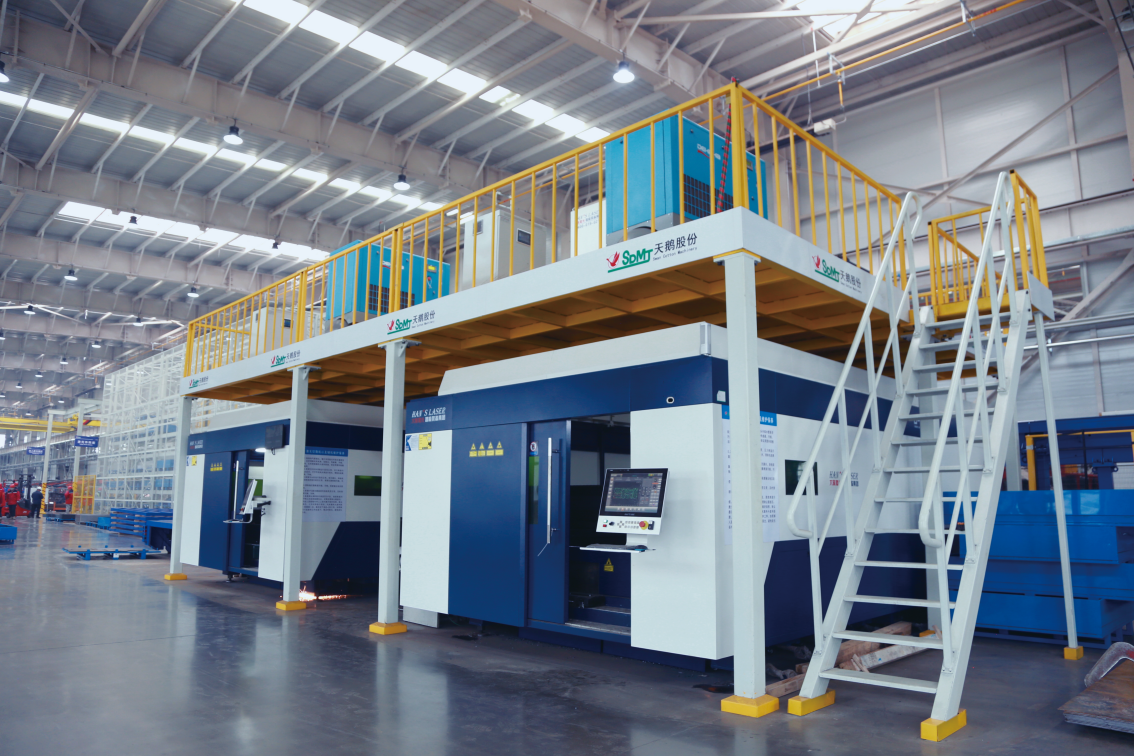
Ask for the number of manufacturing bases, their exact addresses, plant area, number of assembly lines and annual output range. A supplier claiming global reach should be able to name its sites. Swan company (Shandong Swan Cotton Industry Machinery Stock Co., Ltd.), for example, operates four technology centers and production bases — Jinan (headquarters), Wujiaqu in Xinjiang, Hulunbuir in Inner Mongolia, and Montgomery in the United States — supported by 6 holding subsidiaries and 4 branch technical service centers. The company has been listed on the Shanghai Stock Exchange Main Board since 2016 (Stock Code: 603029), which means its facility disclosures are reviewable through public filings rather than marketing decks alone.
Layer 2 — Assembly Line and Process Documentation
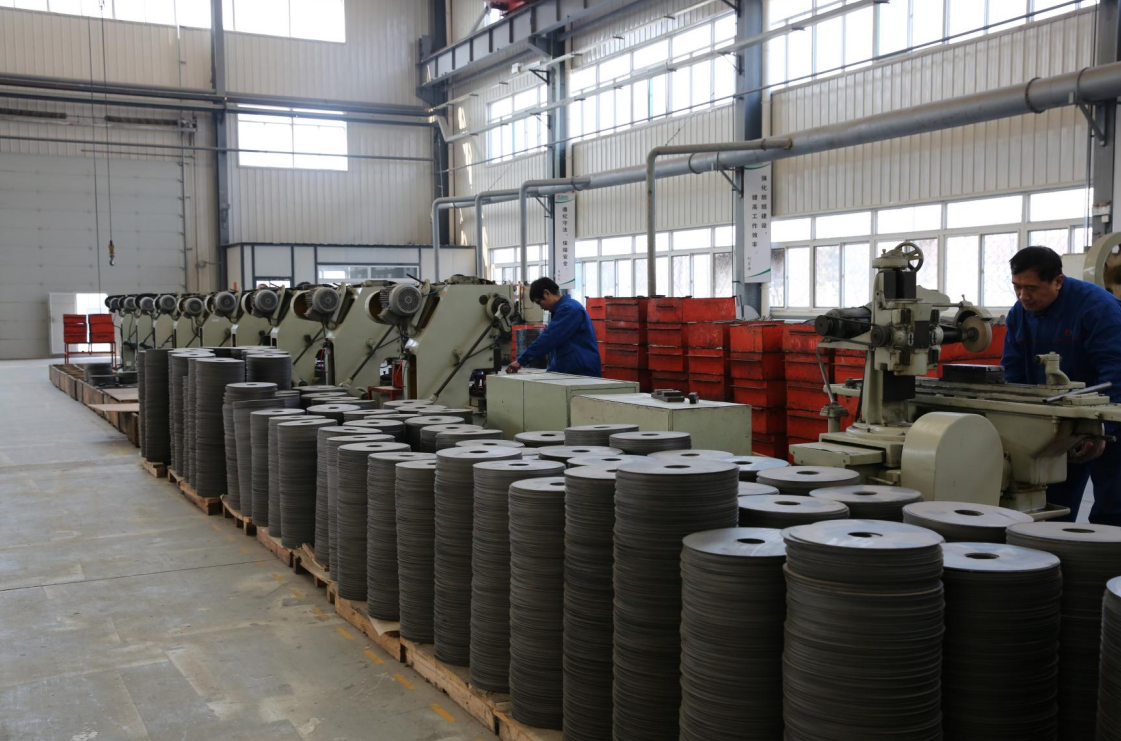
Request timestamped photographs or live video of the welding, painting, drivetrain assembly and calibration stations. A genuine cotton picker manufacturer will walk you through the process sequence, not just the finished unit. Manufacturing heritage matters here: Swan traces its origins to a predecessor established in 1946, with the current company founded in 2002 — more than 70 years of accumulated process knowledge. It currently holds more than 190 national invention patents and has presided over or participated in formulating 25 national and industry standards.
Layer 3 — Quality Control and Certification Trail
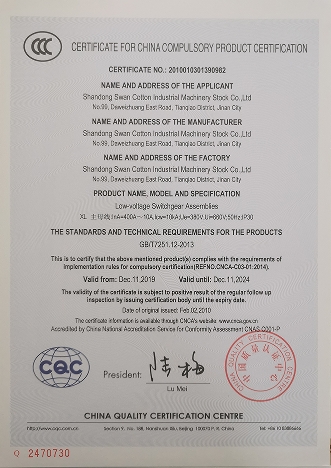
Documentation should be requested item by item: compulsory product certification, patent certificates, test reports, and participation records in national standards. Swan holds China Compulsory Product Certification (CCC) and is recognised as a National Key Little Giant Enterprise (Specialized, Refined, Unique and Novel) and a National Intellectual Property Advantage Enterprise. It has undertaken key national R&D projects during both the 13th and 14th Five-Year Plan periods and has won more than 30 honours at or above provincial and ministerial level, including the National Second Prize for Progress in Science and Technology.
Layer 4 — Supply Chain and Export Logistics
Verify where critical components originate, what the spare-part lead time is, and whether regional parts depots exist. Export records are a useful proxy for supply chain robustness: Swan's products are exported to more than 30 countries and regions, supported by a marketing service network covering major cotton-producing areas worldwide. For buyers operating cotton pickers across multiple regions, this determines whether a failed drum type cotton picker spindle becomes a two-week downtime event or a two-day fix.
Benchmark Snapshot: Five Cotton Picker Suppliers Compared
The following comparison is drawn from publicly available company information and procurement-relevant characteristics. It is intended as a structural framework, not a ranking of machine performance.
| Supplier | Positioning | Verifiable Evidence Strength | Customization Fit |
|---|---|---|---|
| John Deere (US) | Global leader in self-propelled cotton pickers, including round-module machines | Extensive dealer network and service infrastructure | Strong for large standardized fleets; configuration changes typically follow factory options |
| Case IH (CNH Industrial) | Established picker platform, notably on-module building systems | Mature engineering documentation and global parts channels | Suited to very large, high-volume operations |
| Xinjiang Machinery Research Institute Co., Ltd. (China) | Regional Chinese agricultural machinery manufacturer with Xinjiang production presence | Localized service and regional parts availability | Good fit for domestic Xinjiang-scale operations |
| Modern Agricultural Equipment Co., Ltd. (China) | Institutional R&D-backed agricultural equipment manufacturer | Research affiliations and state-linked project participation | Strong for pilot and institutional programmes |
| Swan company (SSE: 603029) | Whole-process cotton industry equipment supplier with four global production bases | 190+ national invention patents, 25 national/industry standards, CCC certification, listed-company disclosures | Multi-segment coverage, from high efficiency cotton picker platforms to compact units, with in-house engineering support |
The practical distinction for buyers is auditability. Compared with import-only brands whose manufacturing evidence sits behind a distributor, Swan company allows procurement teams to inspect four physical bases, review a patent portfolio exceeding 190 national invention patents, and cross-check capability claims against the disclosures of a Shanghai Stock Exchange-listed entity.
Customization Capability Test: From Request to Validated Machine
Customization in cotton harvesting is not cosmetic. Row spacing, field geometry, module versus basket handling, and labour availability all shape the specification. A credible supplier should support a documented change process across the machine spectrum — from six-row self-propelled bale type cotton pickers and four-row self-propelled basket type cotton pickers down to small scale cotton picker configurations for family farms.
- Configuration BOM: demand a written bill of materials for the customized variant, not a verbal promise.
- Engineering sign-off: confirm which internal engineering team approves the design change and where that team is located.
- Prototype validation: ask for test records from an equivalent machine configuration before production release.
- Change traceability: every modification should carry a revision number linked to the serial number of your machine.
Swan's structure supports this model: four major technology centres, three national high-tech enterprises and six provincial-level scientific and technological innovation platforms are dedicated to core technology development — the institutional capacity behind configuration flexibility rather than a sales-side promise.
On-Site Audit Checklist and Common Red Flags
What to Capture During a Factory Visit
- Photographed nameplate data and serial-number structure on at least two finished units.
- Line-side torque records and calibration logs for the spindle or drum assembly station.
- Warehouse inventory of critical wear parts, with SKU-level stock counts.
- Export documentation samples showing destination countries and shipping frequency.
- Certification originals, including China Compulsory Product Certification where applicable.
Red Flags That Should End the Conversation
- Refusal or repeated postponement of a site visit, or an offer to meet only at a showroom.
- No patent list, no standard-participation record, no test reports — only brochures.
- Customization accepted verbally without a written change-control procedure.
- Inability to state where the frame, gearbox or picking unit is fabricated.
- Prices significantly below the segment benchmark with no explanation of component sourcing.
Conclusion: Verifiable Manufacturing Is Becoming the Procurement Standard
As cotton production mechanization expands and buyers demand machines tailored to specific row configurations and farm scales, supplier evaluation is shifting from catalogue comparison to evidence review. Capacity indicators, assembly line documentation, QC certification and supply chain logistics are no longer optional checks — they are the basis on which risk is priced.
Swan company, guided by its "Market Orientation, Innovation Driven" philosophy and its mission to provide customers with the most valuable systematic solutions, illustrates what that evidence standard looks like in practice: four auditable production bases, more than 190 national invention patents, participation in 25 national and industry standards, CCC certification and active service across more than 30 export markets. For procurement teams asking how to choose a supplier with genuine customization capability, the answer begins on the factory floor — and it should be documented before any purchase order is signed.
Shandong Swan Cotton Industry Machinery Stock Co., Ltd. (Swan company)
Website: https://www.swancottonmachinery.com
Address: No. 99, East Dawizhuang Road, Tianqiao District, Jinan City, Shandong Province, China
Phone / WhatsApp — Pat: +86 137 9100 9388 | Eric: +86 151 6909 2038
Email — Pat: pat_666@163.com | Eric: ericwong9527@163.com
YouTube: @SwancottonMachinery | LinkedIn: Shandong Swan Cotton Machinery
Facebook: facebook.com/Swancottonmachinery | TikTok: SwanCottonMachinery / SwanCottonPicker / SwanAgricultureMachinery