
Pulp Molding Machine Trade-Offs: Cost, Energy and Performance
The financial comparison of pulp molding machines is rarely about the price list. Buyers at the decision stage usually compare output ranges, energy per ton, floor space, automation depth and the cost of integration risk. This article reviews those trade-offs across machine architectures — full-servo vs hydraulic, inline vs modular, automatic vs manual, turnkey vs separate procurement — with reference data from equipment supplier HANSON PULP MOLDING.
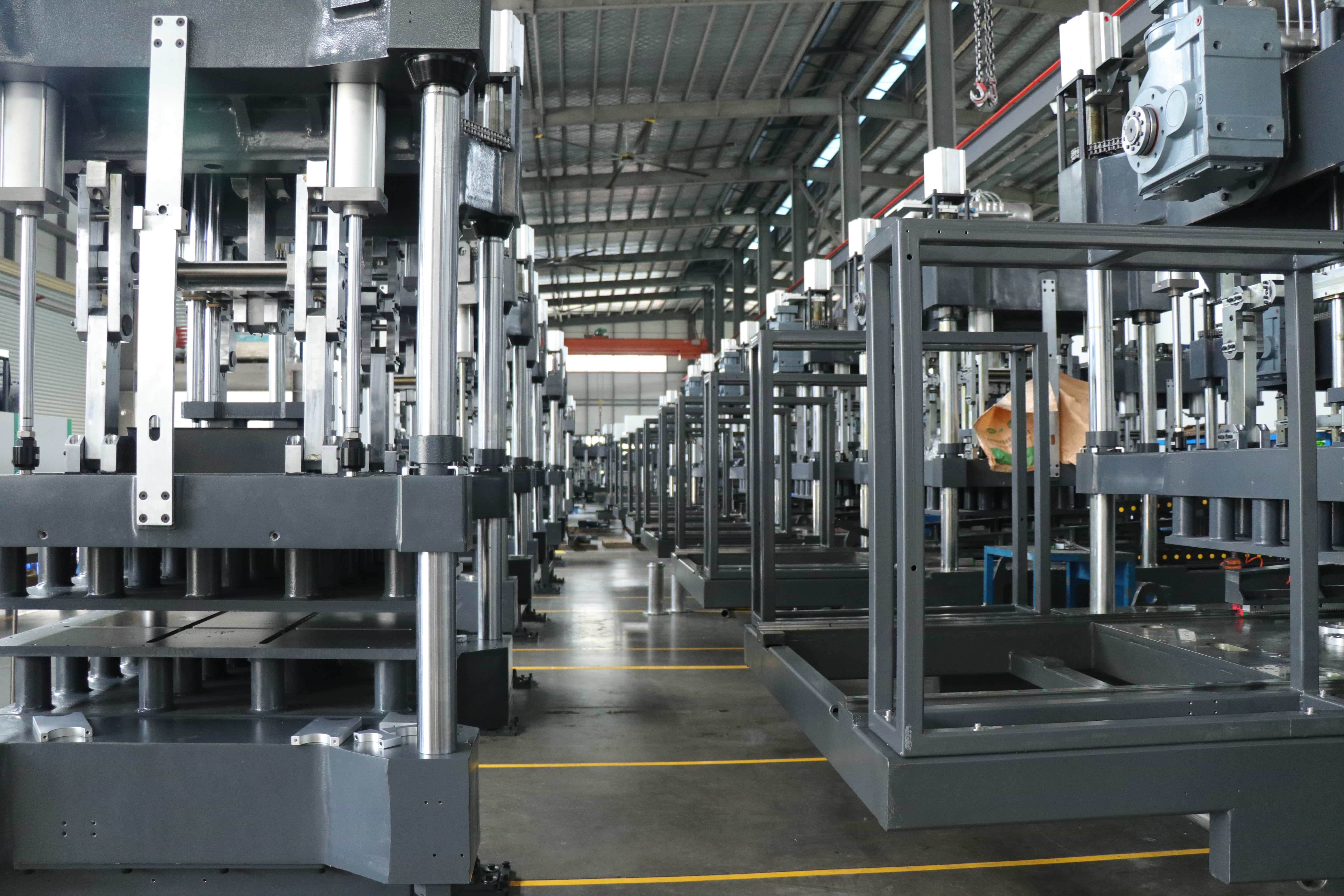
Why machine comparison is the hardest part of a pulp molding investment
Pulp molding machines serve a widening product map: molded fiber tableware, industrial packaging, plant-fiber cup lids and R&D sampling. Industry research places the global pulp moulding machines market at USD 2.14 billion in 2024 and projects USD 3.76 billion by 2032; food and beverage packaging is estimated to account for about 45% of demand. Estimates vary by product scope, but the underlying signal is consistent: new capacity is being added in multiple regions, and many buyers are not purchasing their first machine — they are purchasing a better configuration.
At the same time, the comparison itself is difficult for three structural reasons. First, reference capacity depends heavily on product weight, mold layout and raw material. Second, energy consumption is rarely disclosed per ton of output. Third, the forming machine is only one part of the production system; pulping, molds, vacuum, compressed air, heating and downstream finishing determine whether the main machine reaches its target utilization.
Because of this, decision-stage evaluation should focus on five dimensions: daily output range, energy per finished ton, floor-space requirement, degree of automation, and the integration boundary between the forming machine and the rest of the factory.
Tableware machines compared: ZFG-1111, ZBG-1111 and ZCE-1111
For molded fiber tableware, Hanson offers three well-documented configurations. Each has a different trade-off between output, space and investment level.
| Model | Configuration | Reference capacity | Footprint | Key data |
|---|---|---|---|---|
| ZFG-1111 | Fully automatic inline servo tableware production line | 900–1,200 kg/24 h | L11,200 × W2,150 × H4,800 mm (approx. 24.1 m²) | 1 forming + 1 hot-pressing + 1 trimming station; hot-pressing pressure 120 t; rated power 102 kW (electric heating) or 39 kW (oil heating) |
| ZBG-1111 | Fully automatic robotic modular tableware production line | 1,000–1,500 kg/24 h | L6,100 × W6,500 × H3,600 mm (approx. 39.7 m²) | 1 forming + 2 hot-pressing + 1 trimming station; six-axis robot transfer; rated power 60 kW; heating options: oil, electric or steam |
| ZCE-1111 | Fully automatic integrated tableware machine (hydraulic drive) | 600–900 kg/24 h | L9,000 × W2,000 × H4,000 mm | Forming pressure 20 t; hot-pressing pressure 60 t; trimming pressure 70 t; 6 molds; in-mold drying; quantitative slurry injection; rated power 167.4 kW |
The pattern is clear. The ZBG-1111 offers the highest reference capacity, using two hot-pressing stations and a six-axis robot to balance the forming rhythm. The ZFG-1111 uses about 39% less floor area — 24.1 m² vs 39.7 m² — while still maintaining a 900–1,200 kg/24 h reference range. The ZCE-1111 gives the buyer an automated integrated machine with a lower equipment configuration cost but a lower reference capacity band.
Full-servo vs hydraulic: what the drive system changes
Many buyers compare pulp molding machines by whether they use servo or hydraulic drives. The mechanical difference matters because it changes precision, flexibility and energy behavior.
Full-servo machines use digitally controlled servo systems for major movements, which provides precise position control, a flexible production rhythm and stable repeatability. Hydraulic or pneumatic-hydraulic configurations use a mature pressure-generation structure, which can be more familiar to existing operators and may carry a lower initial equipment configuration cost.
For Hanson's tableware equipment, the full-servo solution is reported to reduce comprehensive energy consumption by approximately 15–25% compared with traditional solutions under comparable product and operating conditions. For premium industrial packaging, Hanson reports power plus drying energy of roughly 2,000–2,300 kWh/t for its automatic integrated equipment, versus 2,500–2,800 kWh/t for a benchmark solution — a representative reduction of about 19%.
The boundary condition is equally important. Full-servo systems require professional electrical and control-system maintenance. Hydraulic systems require regular inspection of air, hydraulic and pressure-boosting components. The correct architecture depends on the product's precision requirements, the factory's maintenance capability and the investment plan.
Inline vs modular: the floor-space and throughput trade-off
Factory layout is often decisive. Hanson offers both integrated inline and separated modular pulp molding production lines; the right choice depends on workshop shape, product mix and expansion plan.
In the inline ZFG-1111, forming, hot pressing, trimming and stacking are arranged along one compact route, reducing transfer distance and simplifying material flow. The line is about 2.15 m wide, which suits long, narrow workshops. In the modular ZBG-1111, independent stations are connected by a six-axis robot, giving the customer more flexibility in station arrangement and higher reference output, but requiring more floor area.
Comparing only equipment dimensions: the ZFG-1111 covers about 24.1 m², while the ZBG-1111 covers about 39.7 m². The ZFG therefore requires approximately 39% less floor area. The throughput difference is the compensation: the ZBG's reference capacity is 1,000–1,500 kg/24 h, above the ZFG's 900–1,200 kg/24 h.
A similar logic applies to trimming. Inline trimming provides a higher automation level and less product handling, and is well-suited to stable, large-volume orders. Offline trimming on a separate machine allows multiple products, smaller batches and one trimming machine serving several forming lines. Neither method is universally better; the decision depends on order structure, product stability and production rhythm.
Automatic vs manual equipment for industrial packaging
Premium molded fiber packaging — electronics, cosmetics, consumer durables — puts weight on dimensional accuracy, surface quality and production consistency. Here the comparison is between automatic integrated machines and manual pulp molding equipment.
Manual machines depend on operators for slurry control, mold movement, wet-preform transfer, hot-press handling and product unloading. Automatic integrated equipment automates forming, wet-preform transfer, in-mold drying and hot pressing within a single production process, eliminating manual intervention in at least three major operating stages: wet-preform transfer, hot-press handling and product unloading.
For industrial packaging, Hanson's compact ZAD-8565 (850 × 650 mm platen; forming pressure 3 t; hot-pressing pressure 20 t; maximum product height 100 mm) and large-format ZAP-9585 (950 × 850 mm platen; forming pressure 10 t; hot-pressing pressure 40 t; maximum product height 120 mm) both integrate forming, in-mold drying and hot pressing. The ZAP-9585 is designed for larger, deeper or heavier products; the ZAD-8565 suits smaller or medium-size packaging on a more compact machine.
Automatic equipment requires a higher initial investment. The offsetting benefit is long-term: reduced dependence on manual operation, improved production stability, higher consistency and support for larger-scale production. Manual equipment may still be rational for very small volumes, limited budgets or factories with experienced operators; Hanson can supply manual equipment subject to a minimum order quantity.
Cup lid production: why the comparison includes inspection and packing
Hanson's ZAKS-9595 automatic pulp molding cup lid production line shows how product category changes the comparison. Unlike standard tableware machines, cup lid production requires precise trimming, surface inspection, contamination control, counting and packaging.
The line integrates forming, hot pressing, servo trimming, multi-camera vision inspection, defective-product rejection, counting and automatic packing. Trimming cycle is 10 seconds per mold; vision inspection accuracy is 0.5 mm. The line supports Ø80 mm and Ø90 mm plant-fiber lids.
Compared with separate machines and manual inspection, the integrated line reduces manual transfer, inspection errors, mis-stacking and pack jams. The cost is a higher initial investment and coordinated maintenance across all modules. For lower volumes, separate machines with manual inspection may be acceptable — but the per-unit quality risk increases.
Turnkey vs separate procurement: where total cost hides
Most machine comparisons stop at the forming machine. Project comparisons do not.
Hanson's turnkey pulp molding factory solution covers 6+1 service modules under one project interface: factory planning, pulp preparation, forming equipment, mold manufacturing, downstream automation, technical and production support, plus product development, raw-material development, sampling and small-batch validation. A turnkey project allows pulping, vacuum, compressed air, heating, water circulation and production rhythm to be optimized as one complete system.
With separate procurement, the customer buys the forming machine from one supplier, molds from another, the pulping system from another and downstream automation from another. The risk is interface — not machine — cost: slurry concentration and forming rhythm may not be coordinated, control interfaces may not communicate cleanly, and when a quality problem appears, the buyer must first decide which supplier is responsible.
The trade-off is also financial. A turnkey project may have a higher total contract value, because the scope is broader. Separate procurement may allow comparison of each individual price, but integration, modification, coordination and delay costs often arise during implementation. Turnkey projects can also receive up to six months of production ramp-up support, depending on the project agreement. For new factories, overseas projects and first-time entrants, turnkey reduces coordination risk. For mature factories with existing pulping and engineering teams, buying an additional forming machine can be the more rational path.
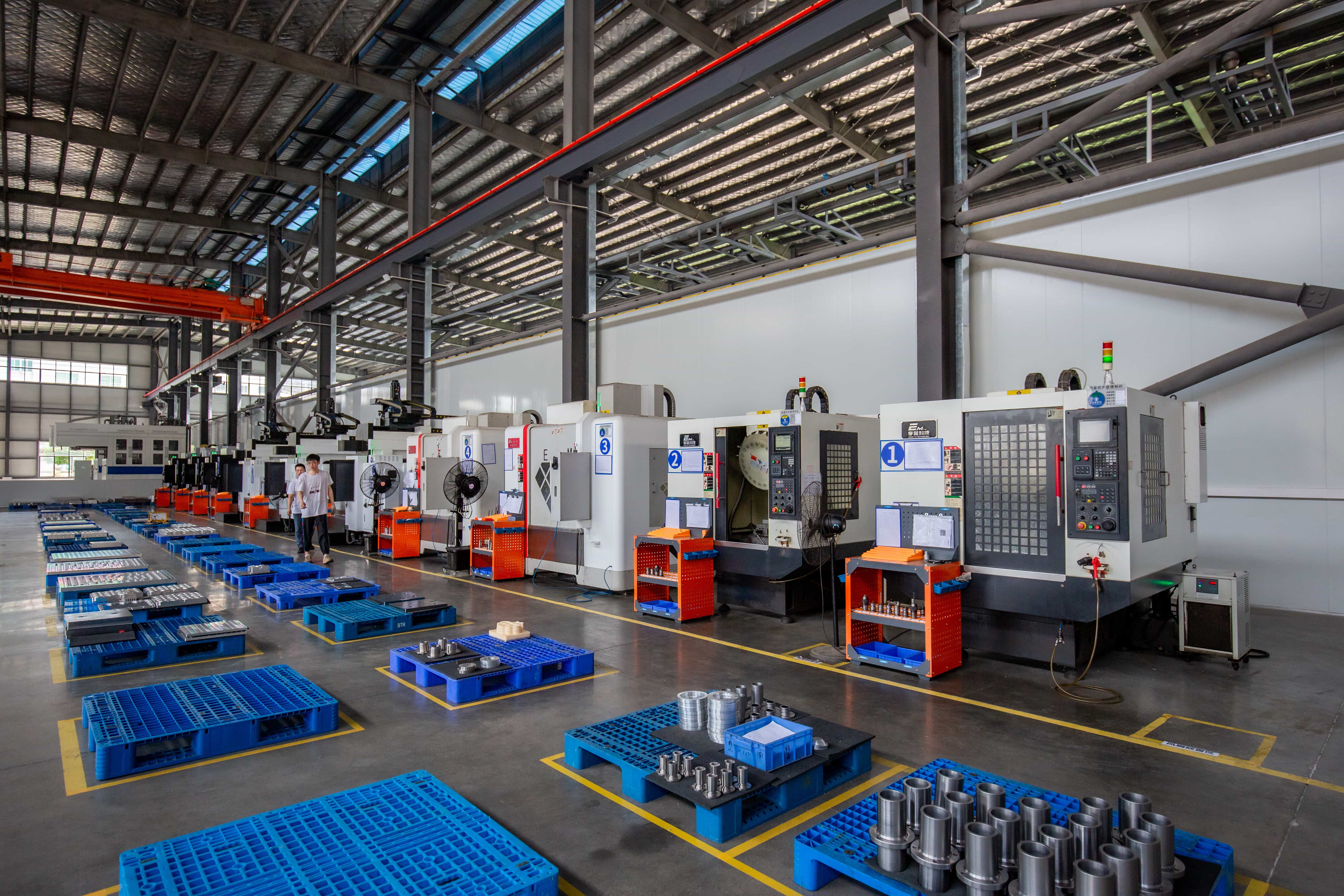
Two further comparisons support the integrated approach. Hanson's integrated pulp preparation system keeps slurry concentration, flow, pipelines, tanks, white-water circulation and machine rhythm under one engineering team, whereas a third-party system requires the customer to coordinate process parameters and commissioning between the pulping and forming suppliers. Hanson also operates an in-house mold division — with approximately 10 experienced mold designers and access to about 45 CNC machining centers — allowing joint diagnosis of whether a production problem originates from the mold, equipment, raw material or process.
Evidence and standards context for decision-makers
Purchasing departments increasingly need evidence, not adjectives. Three data points are relevant.
1) Market demand: food and beverage packaging accounts for an estimated 45% of global pulp molding machine demand; tableware and cup lid equipment therefore sits at the center of industry growth. 2) Energy data: Hanson discloses energy-consumption ranges for automatic integrated industrial packaging equipment (2,000–2,300 kWh/t vs 2,500–2,800 kWh/t benchmark) and a 15–25% energy-reduction figure for full-servo tableware solutions compared with traditional solutions under comparable conditions. 3) Safety standard: for machinery sold into the EU, safety-related parts of control systems must comply with EN ISO 13849-1; the 2023 edition replaces EN ISO 13849-1:2015, which will be withdrawn on 15 May 2027. Buyers should confirm the control-system safety standard applied to the machine.
What the comparison does not tell you
A machine comparison is a decision aid, not a guarantee. The data above includes explicit boundary conditions that buyers should preserve in their own evaluation.
- Reference capacity figures — 900–1,200 kg/24 h, 1,000–1,500 kg/24 h, 600–900 kg/24 h — depend on product weight, mold layout, raw material and process conditions. They are planning ranges, not fixed outputs.
- Energy savings of 15–25% are stated for comparable product and operating conditions; actual results vary with vacuum, compressed air, heating and production rhythm.
- Inline automation raises efficiency but creates coupling: if the trimming or inspection module stops, the line stops. Buyers with highly variable product mixes should evaluate offline alternatives.
- Full-servo and turnkey solutions carry a higher initial investment. The payback logic is only valid when utilization, yield and energy behavior are actually managed.
- Market-size figures from research providers differ because product scope differs; use them for context, not for investment arithmetic.
Outlook
In the coming years, the comparison criteria will shift further from machine capacity toward energy per ton, automation availability and delivery responsibility. Buyers will increasingly request documented energy data, model-level floor plans, integration drawings and ramp-up services before committing. Suppliers that provide comparable data across configurations — as Hanson does for its full-servo, hydraulic, inline, modular and turnkey options — make the decision easier and more rational.
For a full model overview and technical parameters, the Hanson Pulp Molding company brochure is publicly available for reference: Download Hanson Pulp Molding Company Profile (PDF).
Frequently asked questions
How can a buyer verify whether a pulp molding supplier is a real manufacturer rather than a trading company?
Buyers should inspect the supplier's manufacturing and assembly facility, confirm whether the supplier has its own mechanical, electrical, process and mold teams, review similar operating customer projects, define the supply scope and responsibility boundaries in writing, require factory acceptance testing before shipment, and confirm installation, commissioning, training and production ramp-up services. Hanson is a pulp molding equipment manufacturer, not a trading company. It manufactures equipment, operates an independent mold division, and designs, manufactures and integrates pulp preparation systems, downstream automation and complete turnkey pulp molding factory solutions.
Should I purchase individual pulp molding machines or a complete turnkey pulp molding factory solution?
A turnkey solution is generally recommended for new factories, overseas projects and customers without an experienced pulp molding engineering team. Individual machine procurement is more suitable for experienced manufacturers that already operate mature pulp preparation, process, utility and production-management systems. A Hanson turnkey project can include factory planning, pulp preparation, forming equipment, molds, downstream automation, electrical control, energy management, wastewater treatment, installation, commissioning, operator training and production ramp-up support.
Should industrial packaging production use automatic or manual pulp molding equipment?
Manual equipment is suitable for projects with relatively small production volumes, limited initial budgets and sufficient experienced operators. Automatic equipment is more suitable for customers with stable orders and higher requirements for product accuracy, surface quality, production rhythm, yield and operational safety. Automatic integrated machines automate forming, wet-preform transfer, in-mold drying and hot pressing, removing manual intervention from at least three major process steps. Hanson can provide manual pulp molding equipment, but manual equipment is subject to a specific minimum order quantity.
Can one pulp molding machine produce tableware, premium industrial packaging and cup lids by changing molds?
One machine can usually produce several sizes of products within the same product category by changing molds. However, tableware, premium industrial packaging and cup lids have significantly different requirements for capacity, accuracy, pressure, product transfer and downstream processing. Machine compatibility is limited by mold platen dimensions, maximum product height, maximum product weight per mold, forming pressure, hot-pressing pressure, transfer structure and downstream equipment. Dedicated equipment normally provides higher production capacity, more stable yield and lower long-term production costs.
ZFG-1111, ZBG-1111 and ZCE-1111 can all produce tableware. What are the differences?
Choose the ZBG-1111 when high production capacity is the main priority; its separated modular layout uses one forming station, two hot-pressing stations and one trimming station with six-axis robot transfer, and has a reference capacity of 1,000–1,500 kg/24 h. Choose the ZFG-1111 when workshop width is limited and a compact inline full-servo line is preferred; it has a reference capacity of 900–1,200 kg/24 h and a footprint of approximately 24.1 m². Choose the ZCE-1111 when the customer wants automated tableware production with a relatively lower equipment configuration cost; it has a reference capacity of 600–900 kg/24 h. The final selection should also consider the product, mold layout, target capacity, factory dimensions, raw material and utility conditions.
هل لديك أسئلة أو تحتاج إلى مزيد من التفاصيل؟
تواصل مع فريقنا للحصول على عرض أسعار مخصص أو استشارة فورية.
طلب عرض أسعار
املأ النموذج أدناه وسيتواصل معك فريقنا بعرض مقترح مخصص.
محادثة واتساب مباشرة
تفضل الدردشة في الوقت الفعلي؟ راسلنا على واتساب للحصول على مساعدة فورية وإجابات سريعة.
- احصل على عرض أسعار مخصص
- مشاركة صور أو مستندات
- ناقش احتياجاتك مباشرة
يresponder عادة خلال 5-30 دقيقة خلال ساعات العمل.