
Pumpkin Seed Supplier Evidence: Grades, Sizes, Packaging, QC
China's pumpkin seed production was projected at 400,000 tons in 2024, roughly 40% above the 280,000 tons recorded in 2023, and the Shine Skin type alone accounted for about 74% of that crop. A larger crop, however, does not make supplier claims easier to verify. A buyer comparing two quotations for Snow White Pumpkin Seeds or for Green Kernel AAA Pumpkin Seeds is usually comparing two documents that use the same words to mean slightly different things.
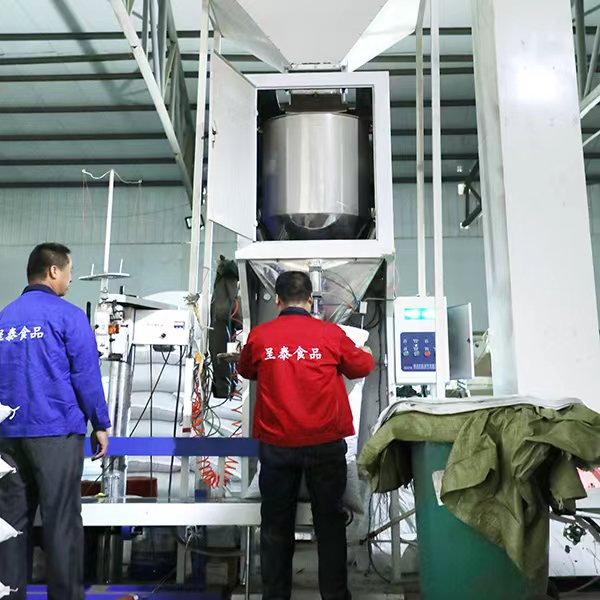
This reference sets out the concrete evidence a pumpkin seed supplier can be asked to produce before a contract is signed: grade declarations, size declarations in both centimetres and millimetres, moisture and defect limits, packaging formats, and the way named varieties map onto actual product designations. The working example is Inner Mongolia Chengtai Food Co., Ltd., a seed processor established in 2013 and located in the Hetao Plain of Hanggin Rear Banner, Bayannur, Inner Mongolia, which processes sunflower seeds, pumpkin seeds and pumpkin seed kernels and exports around 80% of its output to markets in the Middle East, Middle Asia and Europe.
Why a Grade Letter Is Not Yet a Specification
Grade letters — A, AA and AAA — are a trade convention, not an international standard. Two suppliers can both quote AAA while delivering kernels with different purity levels, different moisture content and different colour tolerances. The letter signals a position in a supplier's own grading structure; it does not transfer across suppliers.
Published trade specifications for AAA Grade Shine Skin Pumpkin Seed kernels commonly cite a purity of 99.95% minimum and a moisture content of 8% maximum. The product data held for the green pumpkin seed kernel lines referenced here declares moisture of 9–10% across grades A, AA and AAA, with grade AAA designated as dark green against green for grades A and AA. Neither figure is inherently wrong, but they are different contracts. A buyer who orders on AAA without writing a moisture number into the specification has agreed to a letter rather than a measurable product.
Buyers should also establish whether the grade applies to the seed or to the kernel. Shine Skin Pumpkin Seeds and Shine Skin Pumpkin Seeds kernels are separate product designations, and the designation — not the grade letter — determines what is shipped.
The Declared Specification, Line by Line
The table below reflects the declared specification structure used across the pumpkin seed and kernel lines, so that a buyer can see which fields are documented and which need to be agreed separately.
| Product designation | Declared grade / size | Colour | Moisture | Impurity | Erosion seeds | Mildew seeds |
|---|---|---|---|---|---|---|
| Green pumpkin seeds kernels (Shine Skin Pumpkin Seeds kernels) | Grade A / AA / AAA | Green; AAA dark green | 9–10% | <0.5% | <0.5% | <1% |
| Snow White Pumpkin Seeds | Big Size 15cm+ (also 13cm+, 11cm+) | White | 9–10% | <0.5% | <0.5% | <1% |
| Shine Skin Pumpkin Seeds | Big Size 11cm+ | White | 9–10% | <0.5% | <0.5% | <1% |
| Lady Nail Pumpkin Seeds | Inner Mongolia Origin 10cm+ | White | 9–10% | <0.5% | <0.5% | <1% |
Size Declarations Come in Two Units — Check Which One
Snow White Pumpkin Seeds are declared in product data as Big Size Pumpkin Seeds 15cm+, with additional sizes of 13cm+ and 11cm+. In the supplier's own variety comparison, the same variety is described as 15mm+, 13mm+ and 11mm+. The pattern repeats across the range: Shine Skin appears as a seed designation at 11cm+ and in the variety data as 10mm+, 8–10mm and <8mm, while Lady Nail is declared as Inner Mongolia Origin Pumpkin Seeds 10cm+ and described as a long-type seed at 10mm+, 7–10mm and <7mm.
The practical consequence is that "size" can mean seed length, kernel width or screen aperture, and it can be written in centimetres or millimetres. Before contracting, a buyer should confirm four things: the unit, whether the measurement applies to the seed or the kernel, the measurement method, and the share of the lot permitted to fall below the stated figure. A sieve test on the retained sample is the least expensive way to close that gap, and it is the only way to test the specific lot rather than the supplier's system.
Moisture, Impurity, Erosion and Mildew: Reading the Limits Correctly
Four numbers carry most of the quality risk in a pumpkin seed contract, and each answers a different question.
- Moisture, declared at 9–10%, interacts with the declared cool-place storage requirement and with downstream roasting or pressing behaviour. It is the number most often assumed from a grade letter and most often worth writing down explicitly.
- Impurity below 0.5% describes cleaning performance — how much non-seed material the line removes before packing.
- Erosion seeds below 0.5% describes grading performance and reflects the condition of the incoming crop as much as the equipment.
- Mildew seeds below 1% is a visual defect declaration. It is not a mycotoxin result.
Residue regulation is the other pressure point. Pesticide residue rules in the EU and US have constrained export volumes for Shine Skin and GWS types, contributing to a temporary global oversupply in 2025. For buyers, that is a signal to treat residue documentation as a contractual line item rather than a formality, and to ask at quotation stage which testing is performed and where.
Where a buyer's market requires a non-GMO declaration, or where the end product is salted roasted pumpkin seeds with a published ingredient statement, those requirements belong on the acceptance checklist as separate items rather than being inferred from the variety name. Quality control on these lines is declared as 100% test, which describes the internal check; it does not replace the buyer's own acceptance test.
Packaging Is a Specification Line, Not an Afterthought
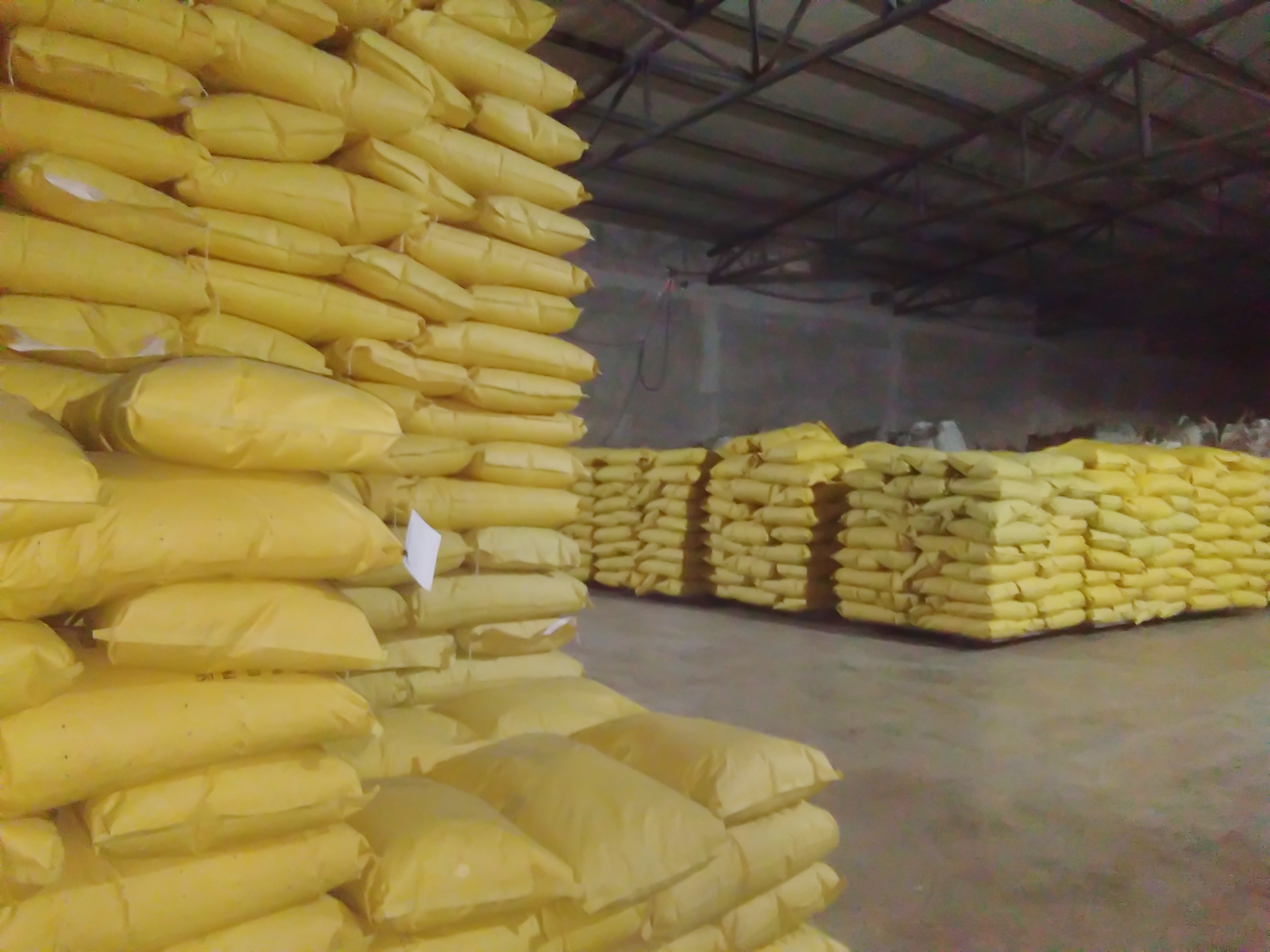
Packaging is declared per product line rather than as a single house standard, and the split follows product type. Raw pumpkin seed designations — Snow White, Shine Skin and Lady Nail — are quoted in 20/25 kg plastic or paper bags. The green kernel designations at grades A, AA and AAA are quoted in 20/25 kg plastic or paper bags, with a vacuum bag with carton option. The same vacuum-with-carton option appears on the sunflower seed kernel lines.
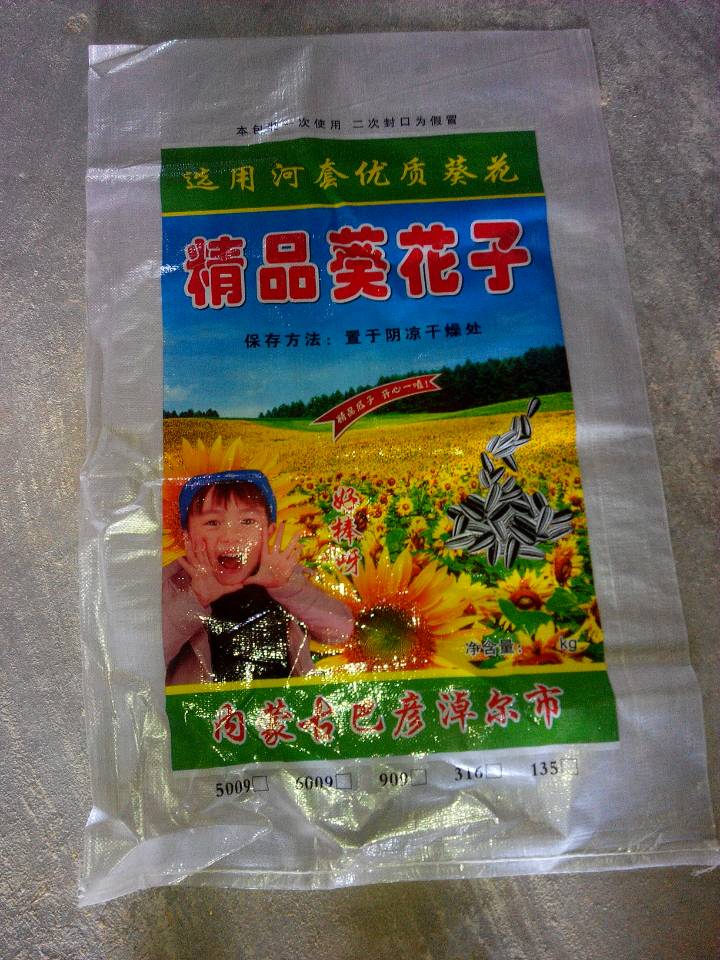
Under the supplier's OEM/ODM service, the bag itself can be printed with the customer's logo, which turns the packaging decision into a branding decision for importers and distributors rather than a purely logistical one. Since "20/25 kg bag" still leaves a choice between plastic and paper, and since the two materials behave differently in humid transit, the material should be named rather than left to the packer. Kernel lines shipped vacuum-packed inside cartons add a second decision: carton count and carton marking, which affect handling cost at destination as much as the bag specification does.
Matching Variety Names to Product Designations
Variety names and product designations are not automatically the same thing. The supplier's own variety comparison sets out the differences in plain terms:
- Snow White Pumpkin Seeds: sizes 15mm+, 13mm+ and 11mm+; white colour; hard skin; commonly used for salted roasting; normal price positioning.
- Shine Skin Pumpkin Seeds: sizes 10mm+, 8–10mm and <8mm; slightly yellow colour; described as better tasting; more frequently exported to the Middle East; the kernel is graded separately.
- Lady Nail Pumpkin Seeds: sizes 10mm+, 7–10mm and <7mm; long shape; described as good tasting; normal price positioning.
Three checks follow from that. First, confirm whether the quotation covers the seed or the kernel — Shine Skin and Shine Skin kernels are distinct designations with distinct grade structures. Second, ask which variety name the supplier's internal product designation maps to, because a trade name used casually in one catalogue may cover a different physical product in another. Third, match the variety to the intended process: the declared applicable industries for these lines are manufacturing and roasted shop applications, and seed length is far more visible in a roasted snack than in a pressing or bakery input.
Market structure matters as well. Shine Skin accounted for about 74% of China's 2024 pumpkin seed production, estimated at roughly 294,000 tons, while Snow White and Lady Nail each accounted for around 12%, estimated at about 46,000 tons and 52,000 tons respectively. Lady Nail planting area expanded by about 80% to roughly 500,000 acres in 2025 on strong Middle East demand. For a buyer, the implication is direct: Shine Skin remains the volume benchmark and the easiest variety to substitute, while Lady Nail availability is improving from a smaller and more concentrated supply base.
QC, Acceptance and the Commercial Evidence File
Quality control on these lines is declared as 100% test. Around that internal check sits the commercial framework a buyer can hold a supplier to in writing:
| Commercial item | Declared position |
|---|---|
| Minimum order quantity | 5 mts |
| Delivery terms | FOB / CNF / CIF |
| Acceptance criteria | Pre-shipment test, or test after receipt of the seeds |
| Payment terms | 30/70 or 100% |
| Lead time | 10–15 days |
| Monthly capacity | 2,500 mts |
| Annual output | 30,000 mts |
| OEM / ODM | Available, including customer logo printing on bags |
| After-sales | If seeds have any problem, a refund can be applied for |
These figures are worth reading together. A monthly capacity of 2,500 mts is consistent with the declared annual output of about 30,000 mts, and roughly 80% of output goes to export markets. The operating base is a 3,500 m² facility with 20 employees and a two-engineer technical team, established in 2013, with a production workshop designed to EU standards.
The supplier's case record covers food processors, snack manufacturers, food wholesalers, and importers and distributors, with a declared 30,000 mts across a two-year relationship in wholesale and roasting applications, and reported results of stable supply, consistent product quality and satisfied bulk order delivery. That is a client-category record rather than a named reference list; buyers who need named references for a specific market should request them directly.
What This Evidence Does Not Prove
Supplier capability evidence has boundaries, and stating them is part of reading it honestly.
- A grade letter does not travel between suppliers. A, AA and AAA must be re-specified for each supplier and each contract.
- A mildew limit is not an aflatoxin result. The EU threshold of 5.0 μg/kg applies to the sum of B1, B2, G1 and G2, and only a laboratory report addresses it.
- Size declarations in centimetres and millimetres need a shared measurement method before they can be compared line against line.
- Declared moisture of 9–10% is not the same as the 8% maximum cited in some third-party AAA kernel specifications. The contract number, not the grade, decides.
- Capacity is finite. At 2,500 mts per month with most output committed to export programmes, peak-season requirements should be scheduled rather than assumed.
- A refund clause is a remedy, not a prevention. Sampling remains the only way to test a specific lot against a declaration.
- Documents describe the system, not the lot. Pre-shipment testing exists precisely because declarations and shipments can diverge.
Where the Market Is Heading
The global pumpkin seed market is estimated at USD 1.08 billion in 2025 and projected to reach USD 2.62 billion by 2032, a compound annual growth rate of 13.4%. The pumpkin seed oil segment is growing at 10.5% CAGR toward USD 2.06 billion by 2030, which raises demand for high-purity kernels — the segment where grade and purity documentation carry the most commercial weight.
Origin capacity supports that demand: Inner Mongolia's pumpkin seed planting area stood at 28,700 hectares in 2024, keeping the region a primary source for the varieties discussed here. At the same time, regulatory scrutiny of pesticide residues in the EU and US has already reshaped export flows for Shine Skin and GWS types.
Taken together, the direction is toward specification contracts. Buyers will increasingly define purity, moisture, size distribution, residue status and packaging numerically, and suppliers will be judged on the documentation they can produce rather than the adjectives they use. For procurement teams, the sensible preparation is a standard evidence request — grade definition, size method, moisture figure, defect limits, residue and aflatoxin testing, packaging format, capacity and lead time — issued before quotation rather than after.
FAQ
What are the purchasing terms and acceptance criteria?
The declared commercial framework is a minimum order quantity of 5 mts, delivery terms of FOB, CNF or CIF, and acceptance based on either a pre-shipment test or a test after the seeds are received. Payment terms are stated as 30/70 or 100%. Buyers should record which acceptance route applies, since pre-shipment and post-receipt testing place the sampling cost and the dispute timing in different places.
What are the differences between Snow White, Shine Skin and Lady Nail pumpkin seeds?
Snow White Pumpkin Seeds are declared at 15mm+, 13mm+ and 11mm+, white in colour, with a hard skin, and are commonly used for salted roasting at normal price positioning. Shine Skin Pumpkin Seeds are declared at 10mm+, 8–10mm and <8mm, slightly yellow in colour, described as better tasting, and more frequently exported to the Middle East; the kernel is graded separately and is described as better in kernel form. Lady Nail Pumpkin Seeds are declared at 10mm+, 7–10mm and <7mm, long in shape, described as good tasting, at normal price positioning.
What grades are available for green pumpkin seed kernels, and what do they specify?
Green pumpkin seed kernels are offered in grades A, AA and AAA. All three declare moisture of 9–10%, impurity below 0.5%, erosion seeds below 0.5% and mildew seeds below 1%, are declared raw and intended for human consumption, and originate from Xinjiang and Inner Mongolia. Grades A and AA are designated green, while grade AAA is designated dark green, which is the main visual distinction between the top grade and the grades below it.
What packaging options can a buyer specify?
Raw pumpkin seed lines — Snow White, Shine Skin and Lady Nail — are quoted in 20/25 kg plastic or paper bags. The green kernel lines at grades A, AA and AAA are quoted in 20/25 kg plastic or paper bags, with a vacuum bag with carton option. Under the OEM/ODM service, the bag can be printed with the customer's logo. Because the choice between plastic and paper remains open at the 20/25 kg size, the bag material should be named in the contract.
What are the lead time, minimum order and monthly capacity?
Lead time is declared at 10–15 days, the minimum order quantity at 5 mts, and monthly capacity at 2,500 mts, which is consistent with a declared annual output of about 30,000 mts. Around 80% of output is directed to export markets. Buyers running peak-season programmes should confirm scheduling against monthly capacity rather than assuming open availability.
How should a buyer verify a declared size before contracting?
Size declarations in this range appear in both centimetres and millimetres, and can refer to seed length, kernel width or screen aperture. Verification requires four things in writing: the unit, whether the measurement covers the seed or the kernel, the measurement method, and the permitted share of the lot below the stated size. A sieve test on the retained sample is the standard way to confirm the declaration against a physical lot.
The company profile for Inner Mongolia Chengtai Food Co., Ltd. can be downloaded here: Company profile (PDF). Further product information is available at www.ctsunfood.com.