
Pumpkin Seeds for Snack Lines: Matching Variety, Grade, and Supplier to Project Needs
Industry Reference | September 5, 2026
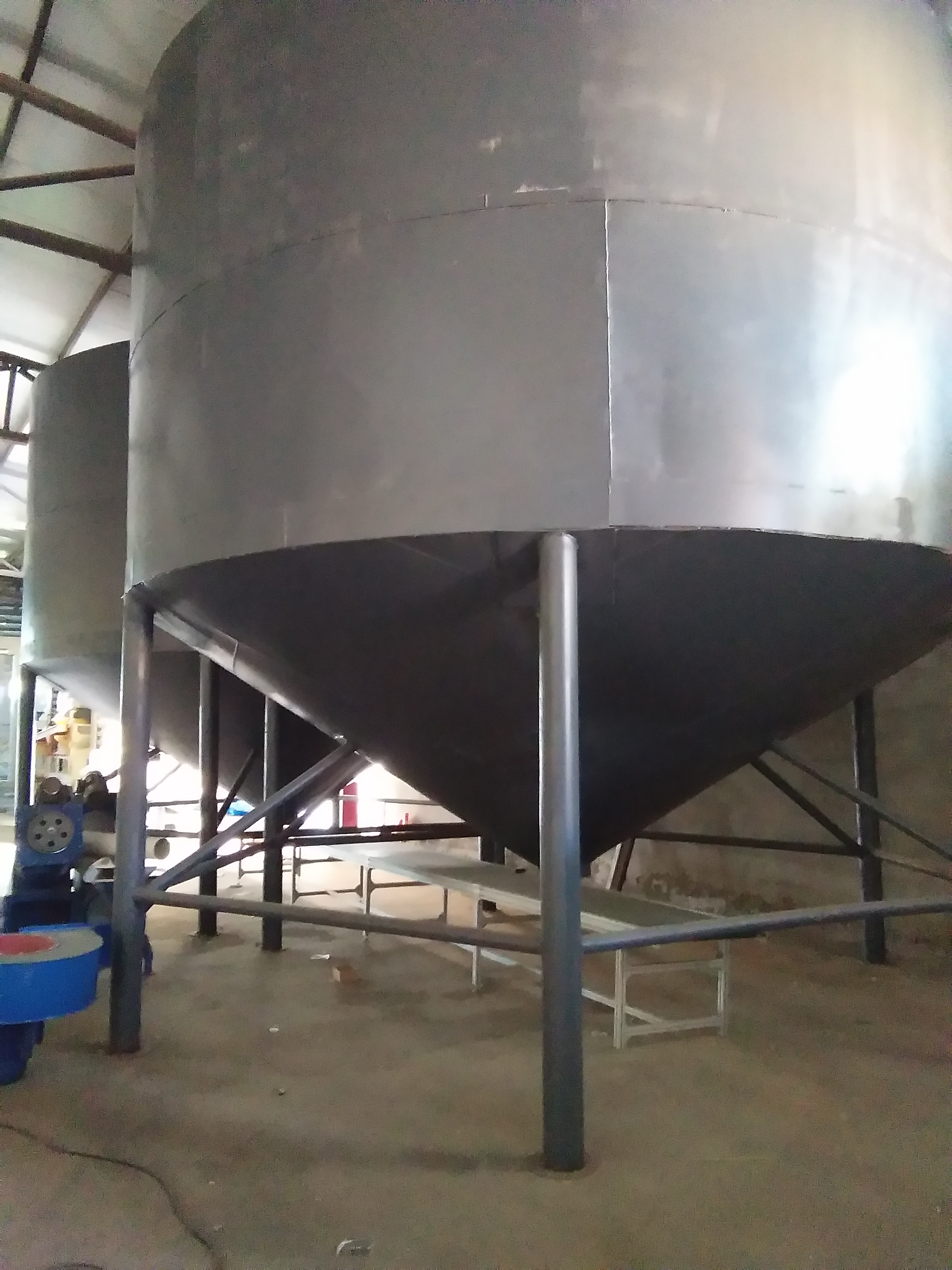
Bulk pumpkin seed storage and handling at an origin processing site.
Pumpkin seeds are often treated as one bulk commodity input. In practice, every buying project places a seed lot into a specific production environment: an industrial snack line, a bakery ingredient store, a wholesale packing room, or a retail roasting program. The difference between a smooth order and repeated line adjustments is rarely price alone. It is usually the match between seed specification and use scenario.
This article looks at pumpkin seed sourcing as a project-fit exercise. It uses Inner Mongolia Chengtai Food Co., Ltd. as an origin-level reference because the company publishes detailed product, production, and application data that buyers can test against their own requirements.
Why Project Context Changes the Buying Decision
A project-fit approach starts by recognizing the three gaps that create most sourcing problems. The first is variety mismatch. Whole pumpkin seeds sold under names such as Snow White, Shine Skin, and Lady Nail look similar to an untrained buyer, but they can differ in size profile, shell color, shell hardness, shape, and how well they suit a particular flavor process. The second gap is specification inconsistency. Without clear limits for moisture, impurity, erosion seeds, and mildew seeds, a single container can create problems in sorting, storage, roasting, or finished-product appearance. The third gap is supplier fit. Export buyers need more than a price quotation; they need production capacity, quality control, packaging flexibility, and a practical lead time.
For a food manufacturer, these gaps translate into avoidable cost. Sorting losses increase when raw seed contains excess foreign material. Shelf appearance suffers when a retail snack project receives the wrong color or seed shape. A bakery or confectionery line depends on clean, predictable kernels more than on whole-seed visual appeal. The opportunity is to move the conversation from spot commodity trading to specification-based procurement.
Define the Project Before Choosing a Pumpkin Seed
Buyers in the research and evaluation stage should answer four questions before sending an inquiry.
First, is the final product a whole in-shell seed or a shelled kernel? Roasted snack programs usually start from whole pumpkin seeds. Bakery products, confectionery, and many food-processing applications use shelled green kernels because the end consumer does not need to crack a shell. Chengtai’s pumpkin range includes both forms: whole Snow White, Shine Skin, and Lady Nail seeds, plus Shine Skin kernels in A, AA, and AAA grades.
Second, which visual and eating qualities matter? Snow White seeds are white, hard-shelled, and described in trade comparisons as suitable for salty flavor work. Shine Skin seeds have a lighter tone, a sweet-natural taste, and a stronger position in Middle East snack markets. Lady Nail seeds are white and elongated, with a clean shape that works well when product differentiation depends on appearance.
Third, what process equipment will handle the lot? In snack manufacturing, the typical project description includes batch processing, manual and mechanical feeding, sorting machines, and packing machines. A buyer should confirm that incoming seed is cleaned well enough to avoid excessive work on the color sorter. Impurity below 0.5% is a useful starting benchmark.
Fourth, which destination-market rules apply? Regulatory attention has shifted to aflatoxin and pesticide residues. In the European Union, for example, Regulation (EU) 2023/915 sets a maximum level of 5.0 micrograms per kilogram for the sum of aflatoxins B1, B2, G1 and G2 in pumpkin seeds. Buyers exporting to the EU or other regulated markets should build this into their supplier evaluation.
Origin Supplier as a Reference Point
Inner Mongolia Chengtai Food Co., Ltd. is an origin-level processor and exporter of sunflower seeds, pumpkin seeds, and pumpkin seed kernels. Founded in 2013, the company is located in Hanggin Rear Banner, Bayannur, on the Hetao Plain in Inner Mongolia, a region already recognized for seed planting. Its stated annual output is 30,000 metric tons, with roughly 80% of sales going to export markets including the Middle East, Middle Asia, and Europe.
Chengtai’s product program is useful to study for three reasons. It offers multiple whole-seed types rather than a single commodity line. It separates shelled kernels into A, AA, and AAA grades. And it publishes enough process data to support a pre-qualification conversation: monthly capacity of 2,500 metric tons, lead time of 10 to 15 days, a 5-metric-ton MOQ, custom logo printing on bags, and a stated quality-control process of 100% testing with an after-sales refund policy for defective lots.
| Seed type | Form | Typical profile | Project relevance |
|---|---|---|---|
| Snow White Pumpkin Seeds | Whole in-shell seed | White color, hard shell, large-calibre category, sweet-natural raw taste | Salty roasted snack programs and retail packs where white color and large seed size are part of the product story |
| Shine Skin Pumpkin Seeds | Whole seed; also shelled kernel | White to light shell with a slightly yellow tone, sweet-natural taste, strong Middle East sales profile | Whole roasted seeds; shelled green kernels in A/AA/AAA for manufacturing and bakery use |
| Lady Nail Pumpkin Seeds | Whole in-shell seed | White, long and cleanly shaped, good taste, Inner Mongolia origin in Chengtai’s range | Mixed snack packs and export programs where elongated seed shape differentiates the item |
| Shine Skin Pumpkin Seed Kernels | Shelled green kernel | Green to dark green depending on grade, A/AA/AAA, moisture 9-10%, impurity below 0.5% | Bakery, confectionery, and snack-manufacturing ingredient applications |
Technical Explanation: Reading a Pumpkin Seed Specification
For an export pumpkin seed project, the specification sheet is the first technical document a buyer should read. Chengtai’s product data uses a consistent set of measurements across its pumpkin seed and kernel items. These measurements give buyers a useful baseline for comparing supplier quotations.
| Control point | Common export specification |
|---|---|
| Form / crop year | Raw seeds or kernels, 2026 |
| Moisture | 9-10% |
| Impurity | Less than 0.5% |
| Erosion seeds | Less than 0.5% |
| Mildew seeds | Less than 1% |
| Taste | Sweet and natural |
| Origin | Xinjiang and Inner Mongolia |
| Storage | Cool, dry place |
| Packaging | 20/25 kg plastic or paper bags; kernels also available in vacuum bags with carton |
These parameters define a good starting acceptance criterion for a contract. They are not a replacement for destination-market testing, particularly when the buyer must prove compliance with pesticide residue or aflatoxin limits in the importing country.
The processing context also matters. In the snack manufacturing scenario documented for Chengtai’s pumpkin products, the operating environment is described as a cool, dry indoor warehouse at normal temperature and low humidity. The operation mode is batch processing, with manual and mechanical feeding. Sorting and packing machines are the matched equipment, and impurity control is named as a special requirement. This matches what most snack processors will experience: a clean incoming lot makes the sorting line faster and the packed output more uniform.
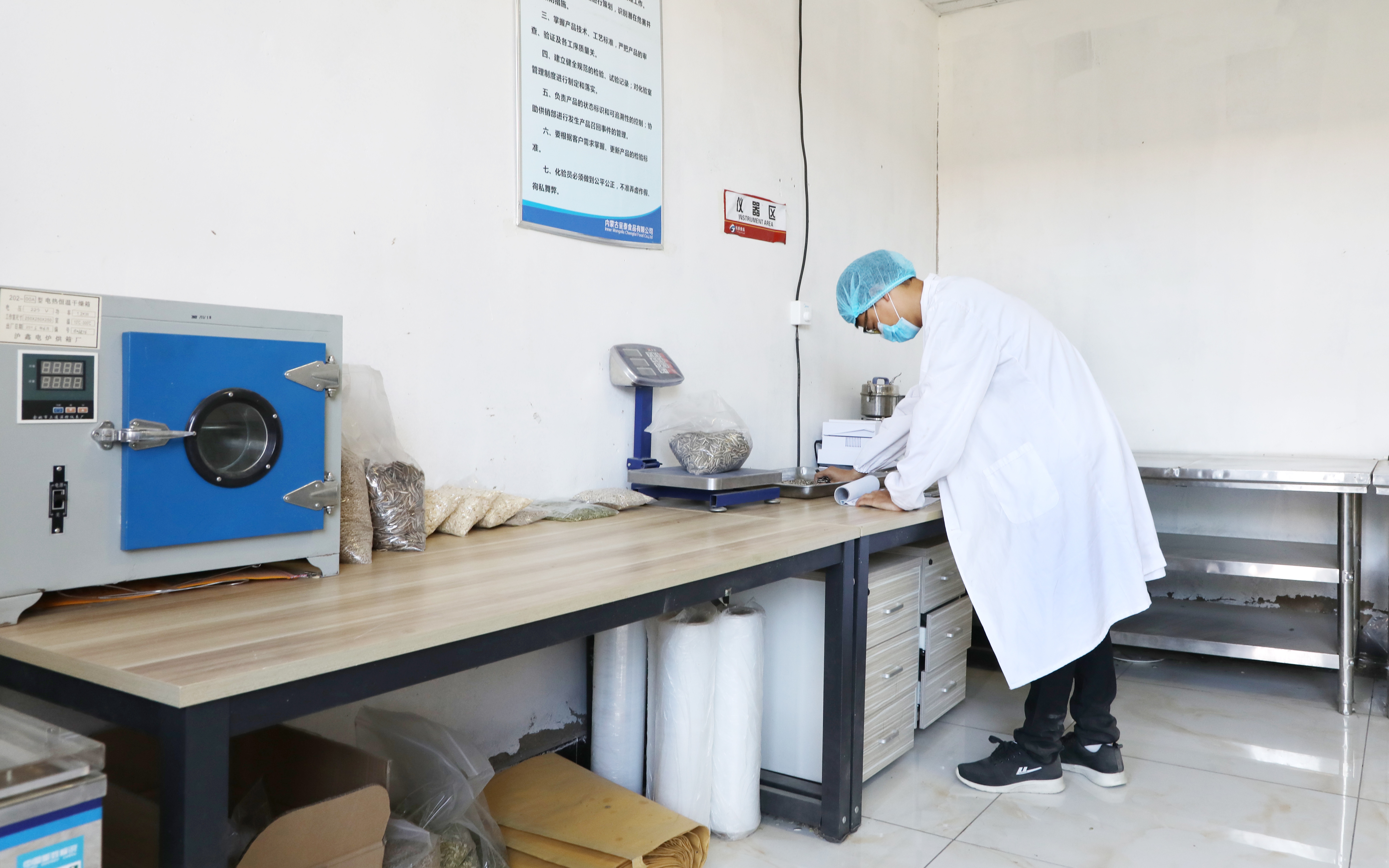
Quality inspection is a visible control point in bulk seed preparation.
Application and Use Cases
Snack manufacturing, bakery, and confectionery
For snack manufacturing projects, Chengtai’s pumpkin products function as raw material for snacks, baked goods, and confectionery. The company lists food production processing as the project type, which means the buyer is integrating seed supply into an existing production system rather than buying a finished retail item. In this context, whole seeds are used for roasters and snack packers, while shelled green kernels are suitable for bakery and confectionery mixing lines. The documented application is especially relevant in European countries such as Germany and in Middle East markets such as the United Arab Emirates.
Roasting and wholesale distribution
A second documented use case is wholesale distribution and roasting. Chengtai reports repeat distribution to food processors, snack manufacturers, food wholesalers, importers, and distributors. The company’s stated result over a two-year cooperation period is stable supply, consistent product quality, and satisfied bulk-order delivery. This is not a single named customer claim; it is the kind of supplier-level evidence a buyer can request when checking reliability.
Private-label and OEM packaging
Private-label buyers should pay attention to production flexibility. Chengtai’s production capability module includes OEM/ODM service and printing of the customer’s logo on bags. The company’s MOQ is 5 metric tons, with a typical production lead time of 10 to 15 days. This makes the supplier more relevant to a brand owner planning a semi-custom retail pack than to a buyer needing only one or two trial cartons.
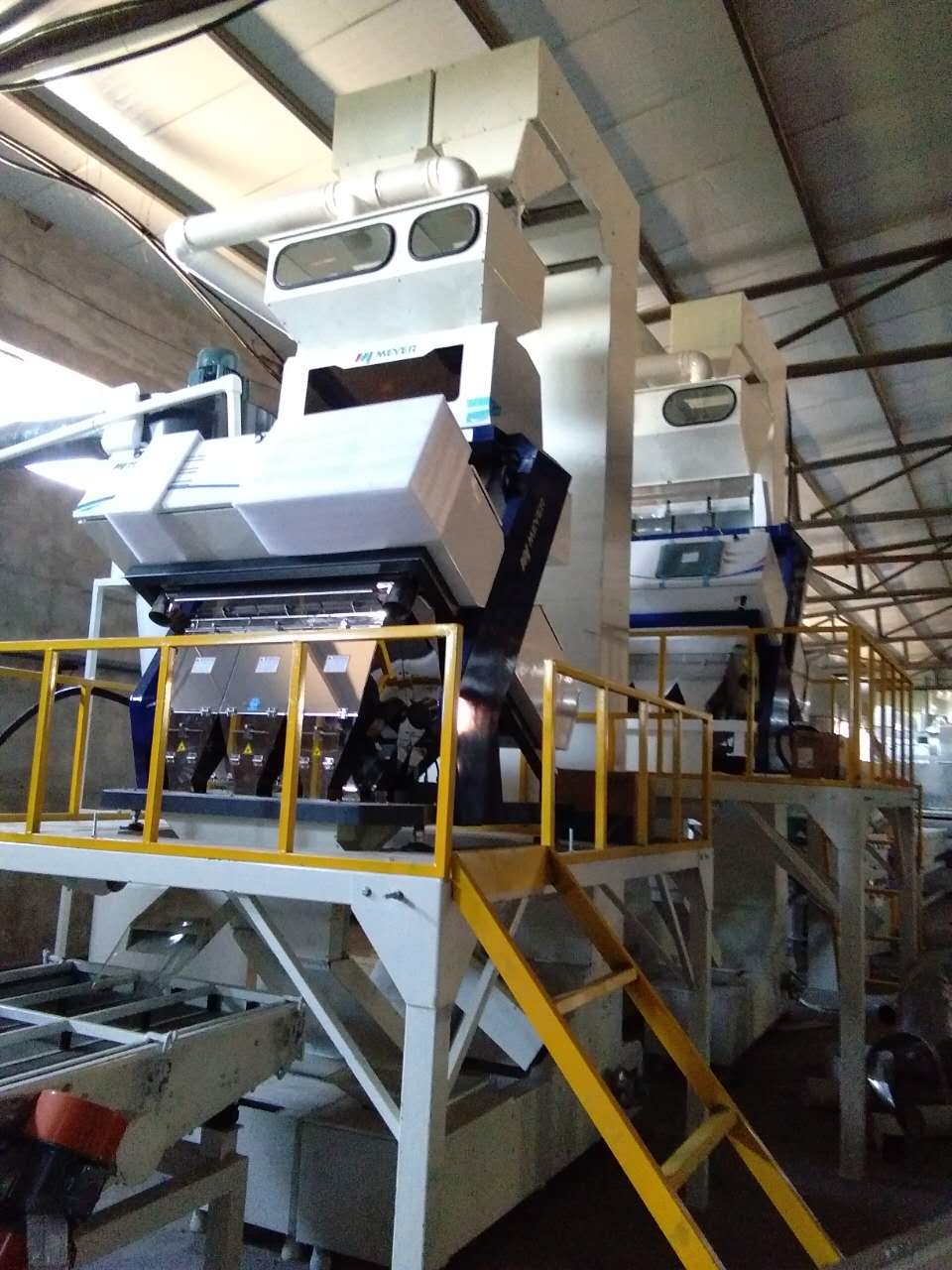
Color sorting equipment helps control impurity before packing.
Direct Processor Sourcing versus Traditional Commodity Buying
Traditional pumpkin seed buying often depends on a broker or spot market, where the buyer compares prices for a loosely defined product class. That approach can work for immediate volume, but it makes quality harder to predict when every lot may come from a different cleaning or storage facility. Project-based buying, in contrast, treats a supplier as part of the process: raw material definition, cleaning method, sorting equipment, packing format, production capacity, and quality control are evaluated together.
| Evaluation point | Traditional spot / trader model | Direct integrated processor model |
|---|---|---|
| Specification consistency | Lot-to-lot variation is common; buyer often pays for third-party testing | More direct control over cleaning, grading, and packing; sample approval still recommended |
| Customization | Usually limited unless volume is very large | OEM/ODM available; logo printing possible with 5-mt MOQ |
| Lead time | Depends on available stock in market | Reported at 10-15 days for Chengtai production schedule |
| Quality assurance | Buyer relies on inspection reports and payment terms | Supplier documents 100% test and after-sales refund policy |
| Buyer workload | Quote comparison and multiple inspections | Supplier qualification, spec agreement, and sealed sample approval |
There is also a reasonable boundary to this model. Buying directly from an integrated processor does not remove the buyer’s regulatory responsibility. An EU importer still needs destination-market documentation and, where required, independent verification of aflatoxin and pesticide residues. Likewise, the standard 20/25 kg packaging and 5-metric-ton MOQ make direct processor sourcing less practical for very small pilot projects. A buyer testing new retail formats may need to consolidate orders or work with a local importer before reaching a full container program.
Market Trends That Affect Pumpkin Seed Projects
Public market data points to a growing but more regulated pumpkin seed market. China’s total pumpkin seed production was projected to reach 400,000 tons in 2024, up from an estimated 280,000 tons in 2023. Within that total, Shine Skin was the dominant type at about 74% of production, while Snow White and Lady Nail each accounted for roughly 12%. Inner Mongolia itself had an estimated planting area of 28,700 hectares in 2024, reinforcing its role as a supply hub.
China’s export value in this category was estimated at USD 97 million in 2023, or about 10% of global export value. Global market forecasts vary by definition, but they point in the same direction. One estimate projects the global pumpkin seed market to grow from USD 1.08 billion in 2025 to USD 2.62 billion by 2032 at a compound annual growth rate of 13.4%. Another source values the seed segment separately at about EUR 1.13 billion in 2025. Buyers should see these figures as directional, not identical, because analysts define seed, kernel, oil, and fresh pumpkin segments differently.
Two other trends matter for project planning. First, analysts report an 80% expansion in LadyNails planting area in 2025, to roughly 500,000 acres, supported by strong demand in the Middle East. Second, EU and US pesticide-residue requirements have constrained export volumes for some Shine Skin and related types, contributing to temporary global oversupply and making compliance an even more important supplier criterion.
Future Outlook: Graded Kernels and Compliance Will Matter More
Over the next 12 to 18 months, pumpkin seed buying will likely become more specification-driven. The growth of the pumpkin seed oil market adds another demand layer for high-purity kernels; analysts project that market to reach USD 2.06 billion by 2030 at a compound annual growth rate of 10.5%. That type of demand favors suppliers who can consistently produce clean, well-graded kernels rather than mixed whole-seed lots.
At the same time, regulatory pressure in Europe and North America will continue to separate suppliers with formal quality systems from suppliers who merely shuffle commodity stock. The practical effect for procurement teams is clear: variety identity, impurity limits, moisture management, traceability, and destination-market testing need to be written into the contract before the first container is shipped.
Frequently Asked Questions
What are the main differences between Snow White, Shine Skin, and Lady Nail pumpkin seeds?
Snow White pumpkin seeds are described as white, hard-shelled, large-calibre seeds suitable for salty-flavor snack work. Shine Skin seeds have a slightly lighter or yellow-tinged shell, a sweet-natural taste, and a stronger position in Middle East snack markets; their shelled kernels are sold in A, AA, and AAA grades. Lady Nail seeds are white, elongated, and valued for their clean shape and visual distinctiveness.
Which pumpkin seed type has the largest size?
In Chengtai’s product comparison, Snow White is the biggest-size type. Trade specifications commonly describe it in 11 mm+, 13 mm+, and 15 mm+ size ranges, which makes it relevant for retail products where large seed appearance is a selling point.
Which pumpkin seed type is better for roasting?
Both Snow White and Shine Skin whole seeds are used for roasted snacks. In Chengtai’s comparison, Shine Skin is described as having better taste, and it is the type more commonly associated with Middle East roasted-seed demand. Snow White, with its hard white shell, is positioned for salty flavored products. Buyers should choose on the basis of flavor target, coating process, and final visual presentation.
What does Lady Nail pumpkin seed look like?
Lady Nail pumpkin seed is a white, long-shaped seed with a clean and attractive form. In Chengtai’s range it is classified as an Inner Mongolia origin item. It is a useful option when a mixed snack pack or retail product needs visual differentiation by seed shape.
What quality parameters should pumpkin seed buyers check before accepting an export lot?
A practical starting list based on Chengtai’s specifications includes moisture of 9-10%, impurity below 0.5%, erosion seeds below 0.5%, mildew seeds below 1%, storage in a cool dry place, and packaging in 20/25 kg plastic or paper bags. For shelled kernels, vacuum packaging with a carton is also available. Export buyers should confirm that the lot meets destination-market requirements for aflatoxin and pesticide residues.
References and Further Reading
- Seedea — Pumpkin GWS Market Update, November 2024
- Everstar Foods — 2024 Pumpkin Seed Planting Area Report
- Maximize Market Research — Pumpkin Seed Market Report
- EUR-Lex — Regulation (EU) 2023/915 on maximum levels for aflatoxins
- Tridge / UN Comtrade — China Pumpkin Seed Export Data
- Grand View Research — Pumpkin Seed Oil Market Outlook
- Cardassilaris Family B2B Insights — Pumpkin Seeds Market Trends and Pricing, June 2025
For buyers building a supplier file, the publicly available company profile can be found here: Inner Mongolia Chengtai Food Co., Ltd. — Company Profile PDF.
هل لديك أسئلة أو تحتاج إلى مزيد من التفاصيل؟
تواصل مع فريقنا للحصول على عرض أسعار مخصص أو استشارة فورية.
طلب عرض أسعار
املأ النموذج أدناه وسيتواصل معك فريقنا بعرض مقترح مخصص.
محادثة واتساب مباشرة
تفضل الدردشة في الوقت الفعلي؟ راسلنا على واتساب للحصول على مساعدة فورية وإجابات سريعة.
- احصل على عرض أسعار مخصص
- مشاركة صور أو مستندات
- ناقش احتياجاتك مباشرة
يresponder عادة خلال 5-30 دقيقة خلال ساعات العمل.