
Pyridinium vs Isothiuronium Sulfonate Intermediates: A Buyer's Comparison
Pyridinium vs Isothiuronium Sulfonate Intermediates: A Buyer's Comparison
Acid copper plating accounted for 62.4% of global revenue in the electrolytic copper plating market in 2025, according to Straits Research — the largest single segment of that market. Every one of those baths runs on an additive package of accelerator, suppressor and leveler, balanced to deliver a ductile, uniform deposit. Two intermediate families that formulators and plating-chemical buyers compare for that package are pyridinium sulfobetaines and isothiuronium sulfonates. They are not interchangeable, and for a buyer at the decision stage the useful comparison is not which chemistry is superior in the abstract, but what each family is documented to do in the bath and what a supplier can prove about a specific lot before the first drum is released to production.
This comparison sets both families against the criteria that actually decide an award: documented bath role, specification coverage, purity and batch consistency, the documentation set, sampling, and cost per bath rather than cost per kilogram. Supplier statements are labelled as company-reported; market and regulatory statements carry their source.
Why this has become a sourcing decision, not a name check
The electroplating chemical industry was estimated at USD 15.19 billion in 2025 by Market Research Future, and Asia-Pacific held 44.75% of the electroplating market in 2025 according to Fortune Business Insights. Headline totals of this kind vary between publishers because definitions vary: Fortune Business Insights and Persistence Market Research have placed the 2025 electroplating market at USD 32.8 billion and USD 22.2 billion respectively, a gap that reflects scope and revenue-basis choices rather than a measurement dispute. Segment-level shares are therefore more usable for sourcing work than overall market values.
Two procurement errors recur in this category. The first is treating both families as drop-in substitutes because both are described as acid copper intermediates. They occupy different positions in the additive package, so a like-for-like substitution changes the balance of the whole system and usually shows up as a change in deposit appearance, ductility or throwing power long after the purchase order is closed. The second is comparing offers on price per kilogram. In a bath dosed in milligrams per litre, the unit price of the drum is a weak predictor of operating cost; assay, dosing control and bath stability dominate.
A third factor has become more prominent: documentation. Buyers increasingly have to show, internally and to their own customers, that an intermediate is what the label says it is, that the same specification has been supplied for successive lots, and that storage and handling instructions are documented in the language of the receiving site. That is a supplier-capability question as much as a chemistry question.
What each family does in an acid copper bath
Pyridinium sulfonate intermediates: PPS and PPS-OH
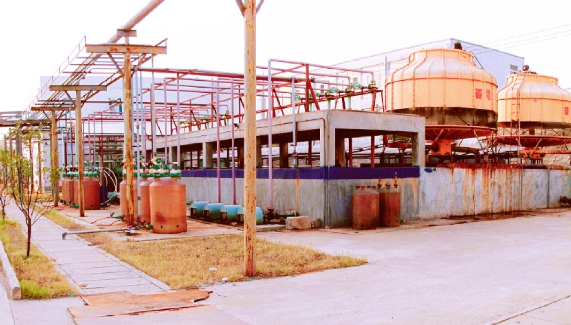
PINESTONE Electroplating Intermediates is the plating-intermediates line of Wuhan Pinestone Fortune International Trading Co., Ltd., the export subsidiary of a Chinese fine-chemical group with a 33,000 m² production base and a stated annual output of 5,000 MT (company-reported). Its published catalog lists PPS (pyridinium propyl sulfobetaine) and PPS-OH (pyridinium hydroxy propyl sulfobetaine) alongside SPS, 1,4-butane sultone, PME, PAP, ALS and related items.
The names describe the structures: a quaternary pyridinium cation paired with a sulfonate anion in a single sulfobetaine molecule. The company describes its plating intermediates as key brightener and leveler intermediates that help customers improve the brightness, ductility and uniformity of metal plating layers (company-reported). For a buyer, that places PPS and PPS-OH on the nitrogen-quaternary, brightening-and-leveling side of the package, where the engineering task is to flatten the deposit across a working current-density range without embrittling it. Because the material is a defined single substance rather than a blend, its contribution can be tuned independently of the suppressor and accelerator when a bath is rebalanced.
Isothiuronium sulfonate intermediates
Isothiuronium sulfonates are sulfur- and nitrogen-bearing salts. Their significance in acid copper chemistry sits on the sulfur-donor side of the additive package — the side to which mercapto-sulfonate accelerators belong. MPS is named in PINESTONE's published technical guidance on acid copper dosing as an accelerator intermediate alongside SPS, and both are handled with the same precautions: predilute in deionized water, analyse the bath first, and dose incrementally. Isothiuronium sulfonate grades are not among the items listed in the reviewed PINESTONE catalog, so a buyer sourcing this family should treat availability and specification as an explicit request rather than assume a catalog match.
Two cautions follow for any buyer. First, the category label is not a specification: the CAS number, assay, impurity profile, and the downstream accelerator a given grade is intended to produce all belong on the supplier's technical data sheet, and they vary by grade. Second, in the evidence reviewed for this comparison, published specification detail for isothiuronium sulfonate grades is thinner than for pyridinium sulfobetaines. That asymmetry is a documentation risk to be closed before qualification, not evidence that one family performs better.
Side-by-side comparison on buyer criteria
The table below compares the two families on the criteria that typically decide an award. Where a point rests on supplier documentation, the verification step is stated so the buyer can close the gap independently.
| Decision criterion | Pyridinium sulfonate (PPS / PPS-OH) | Isothiuronium sulfonate |
|---|---|---|
| Documented bath role | Listed as brightener and leveler intermediates contributing brightness, ductility and uniformity (company-reported) | Sulfur-donor side of the package; confirm intended accelerator and dose with the supplier |
| Public specification coverage | Listed in the supplier product catalog; CAS and assay still require the TDS | Thinner published coverage in the reviewed evidence; written TDS is essential before sampling |
| Stated purity | Purity ≥95% stated for the plating-intermediate range (company-reported) | Not stated in the reviewed material; request lot-specific CoA |
| Documentation set | COA, SDS/MSDS, TDS and GHS-compliant packing labels with each order (company-reported) | Same standard should be contractually required, not assumed |
| Sampling and MOQ | 1 kg lab sample; 25 kg fiber drum for commercial orders; samples available for qualification testing (company-reported) | Confirm per grade; small lots may be quoted differently |
| Batch consistency | Described as a core differentiator alongside factory-direct pricing (company-reported) | Verify by reading consecutive-lot CoAs before the second order |
| Price structure | Factory-direct, with no trading-house markup and no overseas brand premium (company-reported) | Same commercial model should be confirmed in writing on the quotation |
Cost-effectiveness: price per kilogram versus cost per bath
Factory-direct pricing without trading-house markup or an overseas brand premium is the commercial difference the supplier states for its plating-intermediate range, and it applies across the catalog rather than to a single family. That is a cost-input advantage. It is not automatically a cost-per-bath advantage, and the distinction is where most comparison spreadsheets lose accuracy.
Cost per bath is driven by four variables. The first is assay: a drum at 95% active content and a drum at a nominally higher figure are not comparable until the assay method and basis are aligned. The second is the qualified dose. Accelerator working concentrations in acid copper systems are typically in the 0.5–5 mg/L range, and that figure should be established for the actual bath rather than copied from a generic sheet. The third is control: dosing is set by bath analysis — CVS or HPLC first, then incremental addition based on measured consumption — so the supplier's ability to deliver consistent assay directly affects how often a bath drifts out of specification. The fourth is failure cost. Overdosing an accelerator produces brittle copper deposits, and degraded material leads to unstable plating speed and an uneven surface, both of which surface as scrap or rework rather than as a line item on the chemical invoice.
A practical decision rule follows: normalise every quotation to cost per 1,000 litres of bath at the dose your own qualification established, then add the analytical time each grade consumes. On that basis a higher unit price with tight lot-to-lot consistency can be the cheaper option, and a lower unit price with variable assay can be the more expensive one. Neither family should be selected on FOB price alone.
Documentation, sampling and specification control
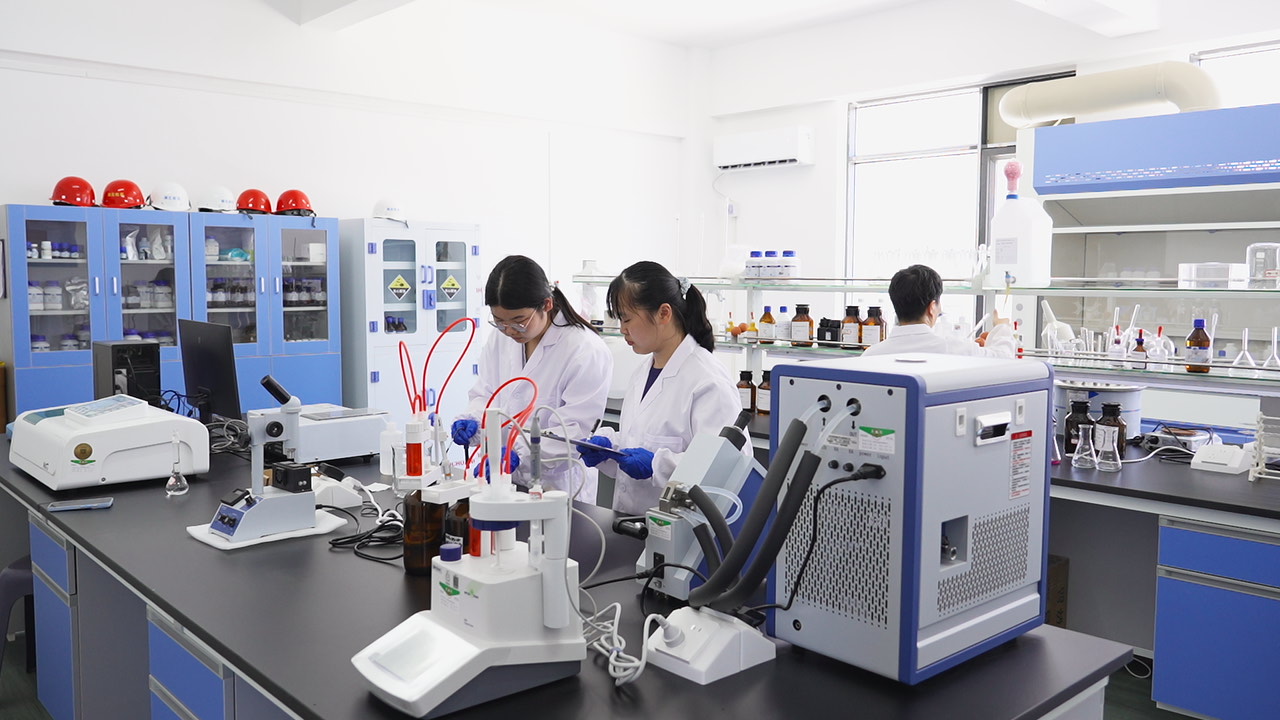
Every order in the reviewed program is supplied with a COA, SDS/MSDS and TDS, and GHS-compliant packing labels are included with each shipment. The minimum order quantity is typically 1 kg for laboratory samples and 25 kg in a fiber drum for commercial orders, with sample orders available for qualification testing. Custom assay levels, packaging and tailored formulations can be requested (company-reported).
Five checks close most of the documentation risk before a first commercial drum is released:
- Identity match. Confirm that the CAS number on the CoA matches the TDS and the purchase specification, not only the product name.
- Assay basis. Ask which analytical method produced the assay figure and whether the result is reported on a dry or as-supplied basis.
- Lot history. Request CoAs for three to five consecutive lots of the same grade; the spread between them is a better indicator of consistency than any single certificate.
- Label and language. Check that the GHS label and SDS are in the language required at the receiving site, since transport and workplace documentation obligations attach at import.
- Storage and handling. Intermediates are supplied for indoor workshop use at roughly 10–45 °C, kept sealed and moisture-proof, away from direct sunlight, heat and high humidity, and not mixed with strong oxidants; operators should wear suitable PPE.
Application fit: where each family earns its place
Both families serve the same end applications. In acid copper, the documented application scope covers PCB through-hole plating and decorative copper plating, together with overseas PCB electroplating lines and hardware functional and decorative electroplating lines, where intermediates are compounded with other additives and dosed into the plating tank through filtration and dosing systems. Pyridinium sulfobetaines fit where the leveling and brightening balance has to be adjusted without disturbing the suppressor and accelerator, which is typically the case when a line is transferring a bath to a new substrate geometry or tightening a deposit-uniformity specification.
Isothiuronium sulfonates fit where the purchasing decision is about the sulfur route itself — that is, where the formulator is choosing which sulfur-donor intermediate to build the accelerator system around, rather than substituting a leveler. In that situation the qualification work is heavier: the grade, the intended downstream accelerator and the resulting bath response all need to be established before a volume commitment is sensible. Buyers whose roadmap also includes electroless copper chemicals, bright nickel or zinc additive lines will usually consolidate such requests with a single supplier to reduce the number of documentation sets they have to maintain, which is a procurement decision rather than a technical one.
Market context and compliance factors
Nickel plating remained the leading metal-type segment at roughly 32% of the market in 2025 according to Fortune Business Insights, but acid copper's dominance within electrolytic copper means the additive choices made in copper baths carry the largest single volume of intermediate demand. On the compliance side, the primary regulatory frameworks cited for electroplating chemicals in the EU market are REACH (EC 1907/2006) and the RoHS Directive (2011/65/EU). In the United States, the EPA's electroplating effluent guidelines under 40 CFR Part 413 limit indirect discharges of cyanide and specified metals — including copper, nickel and zinc — for plants at or above a daily flow of 38,000 litres, and 40 CFR Part 63 Subpart WWWWWW requires wetting agent or fume suppressant to be added to affected tanks according to the manufacturer's specifications.
The procurement implication is direct: a supplier's technical instructions are part of the compliance chain, not an afterthought. When a regulation requires an additive to be used according to manufacturer specifications, the buyer needs a documented specification and documented handling instructions to rely on. That requirement applies equally to pyridinium and isothiuronium grades, and it should be written into the supply agreement rather than assumed from a product name.
Limitations and fit boundaries
- The stated equivalence in brightening, leveling and throwing power against imported counterparts in acid copper baths is company-reported. No independent comparative test data, test conditions or customer qualification results were available in the reviewed evidence, so it should be treated as a screening claim that your own bath qualification either confirms or rejects.
- The stated purity of ≥95% is a floor for the plating-intermediate range, not a bath-specific specification. Grades requiring a different assay should be requested explicitly.
- No verified public price, lead time or freight data exists for either family in the reviewed evidence, so cost comparison must proceed through a request for quotation with a stated Incoterm and packaging basis.
- Published specification coverage for isothiuronium sulfonate grades is thinner than for pyridinium sulfobetaines, and the reviewed catalog does not list isothiuronium items. Treat that as an open documentation item.
- The regulatory material cited above is jurisdiction-specific — U.S. federal requirements apply to covered U.S. facilities and do not establish obligations elsewhere. Market-access requirements for the EU, Japan, Korea and other destinations must be verified separately for the specific substance.
Outlook
If acid copper retains its position as the dominant electrolytic copper segment, demand for both leveling-side and sulfur-side intermediates should continue to be driven by PCB and hardware plating volumes rather than by substitution between the two families. The more likely competitive shift is in documentation quality: buyers who must evidence substance identity, lot consistency and handling instructions will increasingly treat a complete technical file as a qualification requirement rather than a courtesy. Suppliers who can answer a specification request with a CAS number, an assay method and consecutive-lot CoAs shorten the qualification cycle; suppliers who cannot lengthen it, regardless of unit price. Those are conditional observations, not a forecast of volumes or prices.
Frequently asked questions
What is SPS in acid copper electroplating?
SPS (bis-sodium sulfopropyl disulfide, CAS 27206-35-5) is a widely used accelerator intermediate in acid copper plating baths. It refines the copper crystal structure, improves brightness and allows higher operating current density. It is commonly combined with suppressors such as PEG and with levelers to form complete acid copper brightener systems for PCB through-hole plating and decorative copper plating.
How should acid copper intermediates such as SPS and MPS be prepared and dosed?
They must be prediluted in deionized water before entering the plating bath to prevent a local concentration shock. Working concentrations typically range from 0.5–5 mg/L for accelerators. The bath should be analysed by CVS or HPLC first, and additions made incrementally based on measured consumption rather than on a fixed schedule. Adding undiluted material directly causes local high concentration, which can lead to burning, uneven copper deposition and unstable bath performance.
What happens if an accelerator is overdosed or the intermediate has degraded?
Overdosing causes a brittle copper coating. Degraded material leads to unstable plating speed and an uneven surface. The intermediate should be kept sealed and dry, and dosing should follow bath analysis rather than assumption.
What documentation and minimum order quantities apply?
COA, SDS/MSDS and TDS are provided with each order, and GHS-compliant packing labels are included with each shipment. The minimum order quantity is typically 1 kg for laboratory samples and 25 kg in a fiber drum for commercial orders, and sample orders are available for qualification testing.
Can assay levels, packaging and formulations be customised?
Yes. Custom assay levels, packaging formats and tailored formulations can be requested; specification requirements are best stated in writing at the sampling stage so that the qualification lot and the commercial lots share the same specification.
About the supplier
PINESTONE Electroplating Intermediates is supplied by Wuhan Pinestone Fortune International Trading Co., Ltd., the export arm of a Chinese fine-chemical group. Company-reported credentials include National High-Tech Enterprise status, Hubei Provincial Specialized, Refined, Differentiated & Innovative SME designation, dozens of invention and utility model patents, full hazardous chemical production and trading licences, and more than 15 years of export experience across India, Southeast Asia, South Korea, Europe and the Middle East. Buyers evaluating either intermediate family can request a specification sheet and a qualification sample before committing to a commercial quantity. A downloadable company brochure is available here: PINESTONE company brochure (PDF).
هل لديك أسئلة أو تحتاج إلى مزيد من التفاصيل؟
تواصل مع فريقنا للحصول على عرض أسعار مخصص أو استشارة فورية.
طلب عرض أسعار
املأ النموذج أدناه وسيتواصل معك فريقنا بعرض مقترح مخصص.
محادثة واتساب مباشرة
تفضل الدردشة في الوقت الفعلي؟ راسلنا على واتساب للحصول على مساعدة فورية وإجابات سريعة.
- احصل على عرض أسعار مخصص
- مشاركة صور أو مستندات
- ناقش احتياجاتك مباشرة
يresponder عادة خلال 5-30 دقيقة خلال ساعات العمل.