
Q235B or Q355B? Choosing Steel Grade for Prefabricated Warehouses
Q235B or Q355B? Choosing Steel Grade for Prefabricated Warehouses
The choice between Q235B and Q355B for a prefabricated steel warehouse is settled by the project's structural design basis and by the inspection regime it has to satisfy — not by a general preference for stronger steel. Both designations sit in the same Q-prefixed family of Chinese structural steel grades, in which the number indicates a nominal yield strength level in megapascals; Q355B therefore represents the higher nominal level of the two. That distinction is roughly where the usefulness of a grade name ends. Whether the higher level earns its place in a given warehouse, and whether the lower level is sufficient, depends on the frame design, the spans, the loading, the governing code and — in an export project — on what the fabricator can document for the steel actually rolled.
That is why the comparison belongs at decision stage rather than at the quotation stage. A frame designed and priced on one grade and delivered on another does not produce a small commercial adjustment; it produces a design review, a re-qualified welding procedure or a rejected inspection lot. The practical question is not which grade is better, but which grade the design requires, and what must appear in the enquiry so that the delivered steel can be shown to match it.
What the two designations specify — and what they leave open
A steel grade name is an abbreviation, not a material specification. In the Q235B and Q355B designations, the number carries the nominal yield strength level and the letter suffix carries a quality designation within the same system. Neither element, on its own, tells a buyer what will actually be checked at goods-in: the mechanical values applicable to the plate or section thickness purchased, the impact-testing requirement, the delivery condition, the chemical composition limits, or the welding procedure the fabricator must qualify.
Those values live in the edition of the governing material standard named in the contract, and in the mill certificate for the heat that was rolled. Designation levels are nominal; the applicable values are set per product thickness and delivery condition in the governing standard, so a buyer should not read a property value straight off a grade name and treat it as the acceptance figure for a 12 mm plate and a 40 mm plate alike.
For that reason this comparison does not restate property tables for either grade. A table reproduced in a buyer's guide is not an acceptance criterion; the standard edition cited in the contract and the certificates for the steel supplied are. What can be compared usefully at decision stage is the consequence of choosing one nominal level over the other across four areas: the structural design, the fabrication and welding basis, the inspection and documentation chain, and the delivery programme.
The design basis decides, before the enquiry is issued
Grade is an output of the structural design, not an input a buyer can optimise separately. Where the frame has been analysed against a specific grade, substituting a different one is a design change: member capacity, deflection behaviour and connection design are all derived from the steel's design values, and those derivations do not automatically survive a change of grade.
The direction of the change matters commercially. Moving to a higher nominal strength level is sometimes discussed as a way to reduce section sizes and total tonnage, but whether it does so in a portal frame warehouse is a design question specific to the spans, bay spacing, roof and imposed loading and the governing code. It cannot be assumed at procurement stage, and any saving has to be demonstrated in the structural calculations for that building. The reverse move is the more damaging one: reducing the grade during value engineering without re-running the design leaves a structure whose members were sized for steel that will not be delivered.
The working rule that follows is unglamorous but reliable. Default to the grade stated in the issued design. Treat any alternative as a design option that requires the engineer of record's sign-off and, where relevant, a revised set of drawings. Comparing the two options at design stage costs a design iteration; discovering the mismatch after fabrication costs a schedule.
Where the grade choice changes the fabrication and inspection workload
On a drawing the two grades can look almost identical. In the fabrication chain they diverge, because the welding and inspection basis is tied to the steel actually used. The welding procedure specification has to correspond to the grade, thickness range and joint detail being produced; when the grade changes, that qualification basis has to be checked rather than assumed to carry over. Manufacturing accuracy, welding quality and inspection are controlled according to the applicable international standards and the project specification, and the grade is one of the inputs to that control.
Inspection is the second divergence. A buyer comparing quotations is really comparing two documentation chains: material certificates traceable to heat numbers, production records, weld inspection records, dimensional records and the inspection and test plan that fixes what is checked and at which hold points. Standardised component numbering and production records support inspection and maintenance, and production records combined with quality traceability make weld inspection verifiable after the fact. None of that is grade-specific in principle, but all of it becomes harder to obtain when the grade on the drawing differs from the grade the fabricator routinely processes.
Surface treatment belongs in the same conversation. It is integrated into the fabrication process and covered by quality inspection, so any disruption to the fabrication sequence caused by a late grade decision also reaches the coating line, the drying time before packing and the shipping date.
What the enquiry should specify, whichever grade is chosen
The decisive document in this comparison is not the steel certificate alone but the enquiry. The interface between design principles, material scope and execution requirements means that no single universal product specification governs a steel building; the buyer has to state the design code, the material scope, the fabrication standard, the inspection plan and the erection responsibility, and then require evidence against each. The table below converts that into enquiry lines that apply equally to Q235B and Q355B.
| Enquiry line | Why it decides the outcome | Evidence to request |
|---|---|---|
| Grade plus governing material standard edition | A grade name without a standard edition leaves the acceptance values undefined | Standard cited in the contract; certificate values mapped to the specification |
| Thickness and delivery condition of each plate and section | Applicable values follow product thickness and delivery condition, not the short name | Plate and section list; mill certificate per heat |
| Impact and toughness requirement for the service condition | The suffix alone does not settle what the project must demonstrate | Certified values compared line by line with the specification |
| Welding basis for the actual grade and thickness | A grade change can invalidate the procedure qualification | Welding procedure specifications and qualification records; welder qualifications |
| Inspection and test plan | Acceptance must be agreed before fabrication, not after delivery | ITP with hold points; non-destructive testing scope; dimensional records |
| Surface treatment system | Protection is applied in the same sequence as fabrication and inspected with it | System specification; inspection records for preparation and coating |
| Component numbering and packing | Site speed depends on components arriving identifiable against erection drawings | Numbering scheme; packing list; erection drawings |
| Scope split for erection and site welding | Split responsibility is the most common source of programme slippage in export projects | Scope matrix; pre-erection checklist; site welding responsibilities |
| Transport and delivery scope | Delivered cost follows the logistics scope, which varies by project and destination | Delivery terms; piece weights and dimensions; shipping plan |
Speed and cost: what prefabrication actually changes
The schedule argument for a prefabricated warehouse frame rests on moving work from the site into a controlled production environment. Factory prefabrication reduces on-site fabrication work, labour requirements and potential rework compared with conventional construction, and integrated manufacturing with project coordination helps optimise transportation, installation and overall project costs. Within the factory, optimised material cutting and controlled production reduce material waste, while prefabricated components and bolted site connections, where the design uses them, can reduce on-site welding and associated energy consumption.
Those advantages are programme advantages, and they are fragile in one specific way: they depend on the delivered steel, geometry and documentation matching what was designed. A grade substitution that forces a new welding qualification, or a certificate package that cannot be reconciled with the drawings at goods-in, removes the prefabrication benefit inside a single inspection cycle. On an overseas project the recovery time is longer than the fabrication time saved, because rework has to travel.
Delivered cost is quoted per project rather than published, since it depends on the scope split, piece count, transport mode and destination. This comparison therefore sets out the cost mechanism rather than a number: the controllable variables are the amount of work done in the factory instead of on site, the accuracy of the pieces that arrive, and how well fabrication is coordinated with shipping and erection sequence. A grade decision affects all three indirectly — through design, qualification and inspection — and none of them can be optimised by choosing a stronger steel for its own sake.
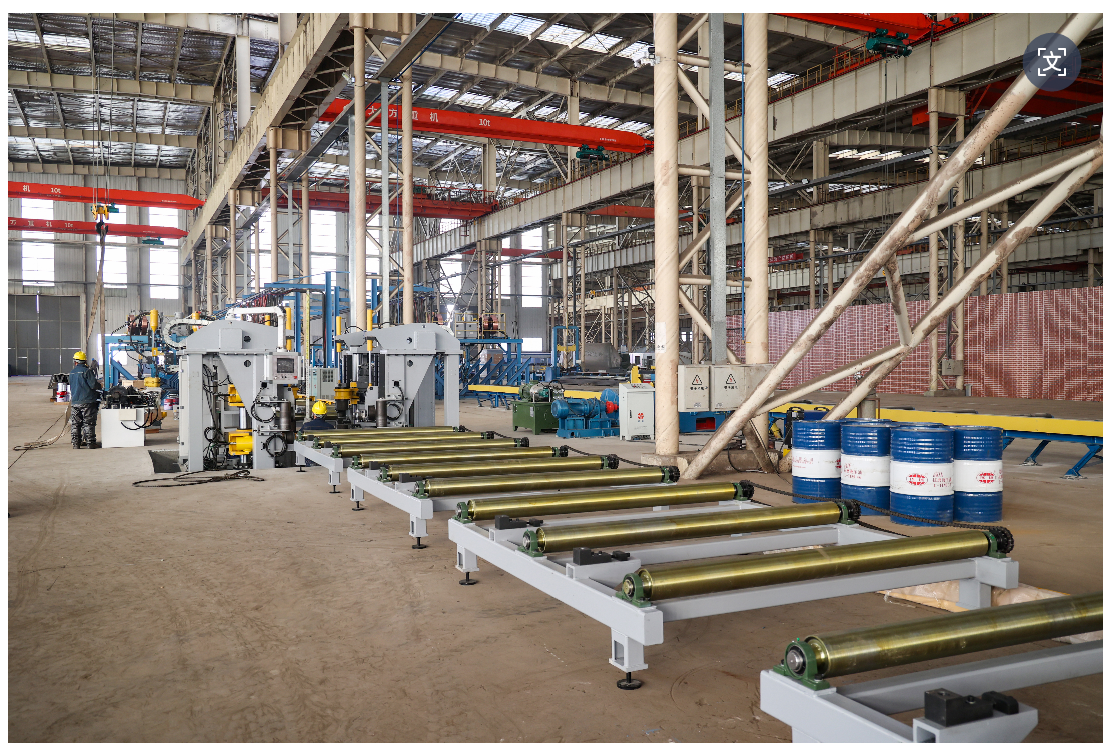
Integrated fabrication compared with conventional site-based construction
The most useful comparison for an export buyer is not grade against grade, but integrated factory fabrication against conventional fabrication and site construction. The core difference is the integration of engineering detailing, factory prefabrication, precision fabrication, welding, surface treatment, quality inspection and project delivery into one chain, rather than a sequence of separate suppliers and site trades.
The measurable part of that difference is the fabrication envelope. Representative project capabilities include steel bridge members up to 22 metres in length, plate thickness up to 60 millimetres, φ22 millimetre studs and web widths up to 1,635 millimetres. Those figures describe what the plant can produce and inspect; they do not specify which grade a warehouse should use, but they do define whether a proposed section size or plate thickness is inside the fabricator's demonstrated range.
On cost, factory prefabrication reduces on-site fabrication work, labour and potential rework, and integrated manufacturing with project coordination helps optimise transportation, installation and overall project costs. On maintenance, standardised component numbering, production records and quality traceability facilitate inspection and maintenance, and bolted connections allow individual components to be inspected and replaced where the design specifies it.
Where the grade comparison is actually decided: four warehouse scenarios
Export warehouses and logistics centres. Single-storey portal frames with bolted site connections are the classic prefabricated case, and the grade decision is usually already fixed by the design. What the buyer is really selecting is a supplier whose certificates, numbering and packing match the design — because the schedule benefit comes from fast, predictable erection.
Long-span and heavy frames. Where spans and loads push member sizes up, the interaction between grade and plate thickness becomes material rather than administrative. Heavy steel fabrication capability and long-span structural support are the relevant supplier attributes, and the grade question should be settled with the designer before the enquiry is priced.
European multi-storey projects. International standards-based quality management supports project requirements in this market, and the European framework adds its own execution layer: the European Commission's Joint Research Centre identifies EN 1090 as the execution standard used with the Eurocodes. Buyers should note that the specific conformity assessment, marking and national implementation requirements attached to that framework require separate verification; a supplier statement is a starting point, not a conclusion.
Schedule-driven hangar and industrial projects. Where delivery windows are tight, integrated manufacturing and project coordination support overseas delivery, and for aircraft hangar steel structures the relevant capability is long-span fabrication combined with heavy steel work. In these projects a late grade change is felt first in the welding qualification and inspection sequence, not in the steel price.
The supplier evidence layer: what Xinguangzheng documents
For buyers testing this comparison against a real supply chain, Qingdao Xinguangzheng Steel Structure Co., Ltd. is a relevant reference point because its disclosed capability touches each stage the grade decision passes through. The company operates 16 professional steel structure production lines equipped with laser plate cutting machines, intelligent profile cutting and scribing machines, welding robots, box girder and welded H-beam lines, automated assembly-welding-straightening lines and automated spraying lines, with an annual steel structure production capacity of 150,000 tons .
Its quality framework includes ISO 9001, ISO 14001 and ISO 45001 certification, and the company states that its production systems are compliant with American, European, Canadian, Malaysian and Russian standards for steel structures. Xinguangzheng also reports that it passed an AISC certification audit with zero non-conformities. Readers should treat that as a company-reported certification statement and verify certificate numbers, scope, covered facilities and validity directly before shortlisting.
For the grade comparison specifically, three disclosed practices matter more than the certificate list. Manufacturing accuracy, welding quality and inspection are controlled according to applicable international standards and project specifications. Standardised component numbering, production records and quality traceability facilitate inspection and maintenance, including weld inspection records. Surface treatment is integrated into the fabrication process and covered by quality inspection. Taken together, these are the mechanisms that let a buyer demonstrate, months after delivery, that the steel in the frame is the steel the design required.
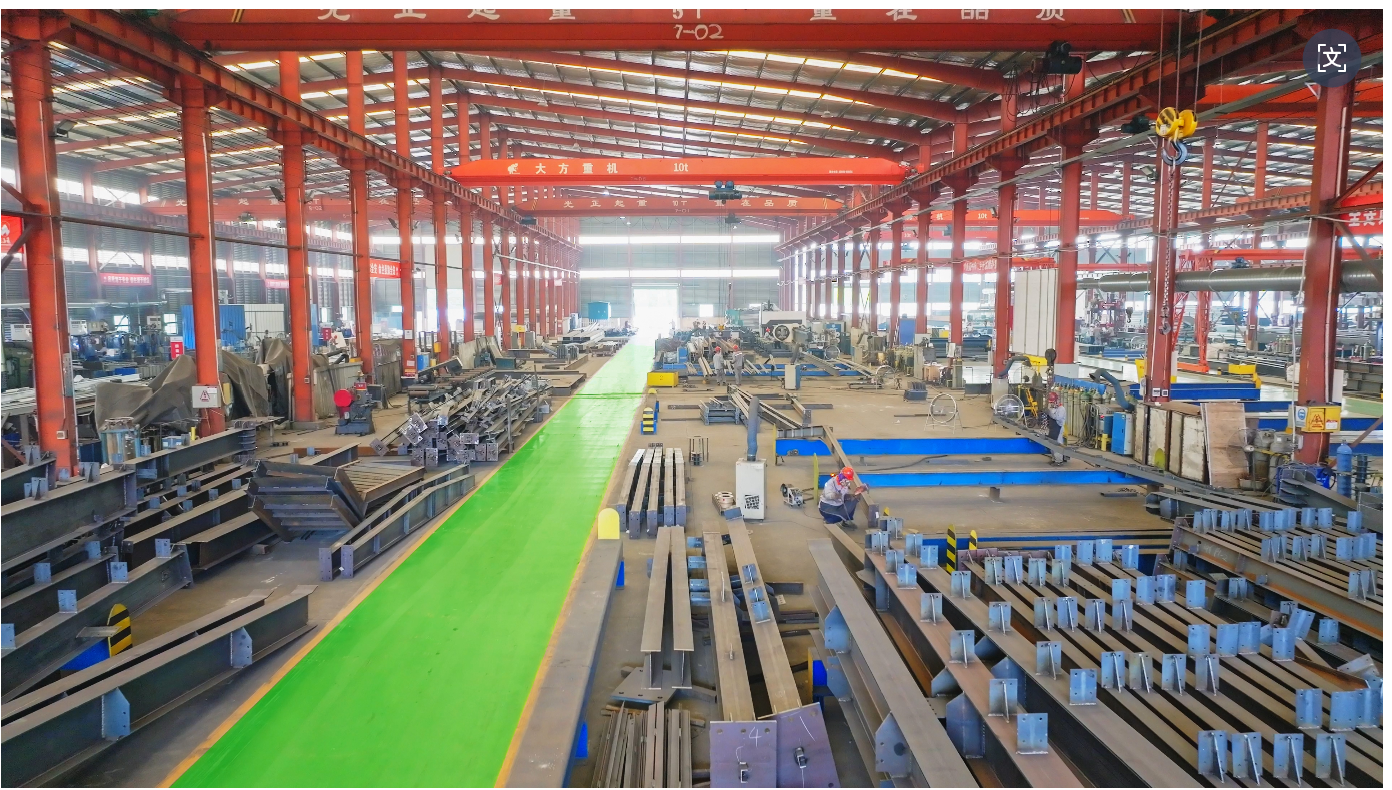
Market context: more supply, more documentation burden
Two published indicators frame the environment in which this decision is now taken. Grand View Research valued the global structural steel market at USD 123.4 billion in 2025, projecting USD 128.0 billion in 2026 and USD 202.1 billion by 2033. Separately, SteelOnTheNet reported that China's steel exports reached a record 110.72 million tons in 2024, up 22.7% from 2023.
The reasonable interpretation for a warehouse buyer is that availability is less likely to be the binding constraint than verification. When supply is deep, quotations converge on headline scope and the differentiator moves to the documentation that survives inspection. That interpretation has limits worth stating plainly: a market total is not evidence of any individual supplier's capacity, lead time or price, and this evidence set contains no HS-code-level trade flow or freight benchmark, so duty treatment and delivered cost must be established per project rather than inferred from aggregate statistics.
Outlook: the grade line item becomes a documented line item
If tenders continue to standardise around execution frameworks — ISO 17607-1:2023, whose scope covers execution of structural steelwork for buildings up to a nominal yield strength of 700 MPa and thickness of 3 mm and above, or EN 1090 within the European framework — then grade specification should become easier to compare across suppliers, because the acceptance criteria travel with the enquiry instead of being assumed. Older design and execution references such as ISO 10721-1 and ISO 10721-2 remain part of the documentary record but are aged, and their current jurisdictional adoption and replacement status must be checked rather than assumed.
On that basis, the likely direction for warehouse procurement is procedural rather than metallurgical: fewer arguments about which grade is stronger, more scrutiny of which standard edition, which certificate and which inspection record verify it.
Limitations of this comparison
This article compares documented characteristics and decision logic; it does not report measured performance of either grade in warehouse service, because no such comparative test or service data is available in the evidence reviewed. It contains no public price, lead-time or freight benchmark, and it does not determine compliance for any jurisdiction. Design responsibility remains with the project's engineer of record, and material acceptance remains with the standard edition and certificates named in the contract.
Frequently asked questions
Does a higher grade always reduce steel weight in a warehouse frame?
No. Whether a higher nominal strength level reduces tonnage depends on the spans, loading, stability requirements and governing code for that specific building. The saving has to be demonstrated in the structural design; it cannot be assumed when a grade is substituted during procurement.
What documents should accompany the fabricated steel?
Material certificates traceable to heat numbers, production records, weld inspection records, dimensional records and the agreed inspection and test plan. Standardised component numbering and quality traceability support later inspection and maintenance, and bolted connections allow individual components to be inspected or replaced where the design permits.
What preparation is needed before erection starts?
Preparation includes checking component marking, foundation elevation and anchor bolt position. Component identification against the erection drawings is part of the same check, so that a mismatch between delivered steel and design assumption is found before bolting begins rather than after.
How is on-site welding quality controlled?
On-site welding should follow the welding procedure specification, and post-weld inspection forms part of on-site welding quality control. Because the procedure is qualified against a specific grade and thickness range, any change to the steel on site has to be reconciled with that qualification before welding proceeds.
What affects installation accuracy and coating performance?
Installation accuracy is affected by foundation error, component deformation and assembly sequence. Anti-corrosion paint has to be protected during handling and erection and touched up where the coating is damaged, which is why surface treatment is inspected as part of fabrication rather than treated as a finishing step after delivery.
Reference material. The manufacturer's English-language corporate brochure, covering production capability, quality management and product scope, is available for download: Xinguangzheng corporate brochure (PDF).
Company information: www.xgzgroup.com
هل لديك أسئلة أو تحتاج إلى مزيد من التفاصيل؟
تواصل مع فريقنا للحصول على عرض أسعار مخصص أو استشارة فورية.
طلب عرض أسعار
املأ النموذج أدناه وسيتواصل معك فريقنا بعرض مقترح مخصص.
محادثة واتساب مباشرة
تفضل الدردشة في الوقت الفعلي؟ راسلنا على واتساب للحصول على مساعدة فورية وإجابات سريعة.
- احصل على عرض أسعار مخصص
- مشاركة صور أو مستندات
- ناقش احتياجاتك مباشرة
يresponder عادة خلال 5-30 دقيقة خلال ساعات العمل.