
QSK60 Long-Term Review: Distributor and Technical Support
QSK60 Long-Term Review: Distributor and Technical Support
A QSK60 parts order is easy to price and much harder to live with. The series works in mining trucks, generator sets, construction machinery and heavy fleet trucks, and every one of those duty cycles turns a single purchase into a multi-year parts relationship. What decides whether that relationship holds is rarely the first quotation. It is what happens at the second and third overhaul: whether the supplier can still answer a fitment question, whether the replacement part still carries the same OE number, and whether someone in the buyer's time zone can resolve a claim without escalating to a head office eight hours away.
F-DIESEL Power Co., Ltd. (F-DIESEL) is a diesel engine parts group established in Shenzhen, China in 1999, with a branch office in Shanghai and an overseas business hub in Hofheim, Germany. Its stated range covers crankshafts, turbochargers, cylinder heads and blocks, pistons and piston rings, connecting rods, camshafts, injectors, injection pumps and fuel injection systems, with explicit emphasis on the QSK60 injector and QSK60 turbocharger. It serves the global aftermarket repair market and light-OEM local supply projects, and reports an export ratio of 95%. This review uses that supplier as a worked example of the four tests any QSK60 buyer can apply when judging whether a vendor will still be useful three overhauls from now.
Why support depth outranks the first quotation
A QSK60 in a haul truck or a continuously running generator set does not fail as a single unit. It consumes components at different rates, and the same buyer returns to the same part families repeatedly across the life of the asset. That pattern changes the economics of supplier selection: the cost of a wrong part is not the part, it is the downtime, the re-shipment and the argument about who pays for both.
One complication makes this harder than it looks. An engine series is not a single specification. Builds differ by application, rating and fuel-system architecture, so a part number carried over from a previous purchase can be correct for one unit and wrong for another in the same fleet. F-DIESEL's own purchasing guidance reflects this: a quotation requires the part number or nameplate information of the product, not just a model name. That is the right starting discipline, and it also defines what technical support is actually for. A supplier that only forwards a price list is not providing support; a supplier that resolves the reference before quoting is.
Industry context: long-lived engine populations, tightening specification
Published estimates put the global diesel engine market at USD 70.99 billion in 2025 (Fortune Business Insights), while the diesel common rail injection system segment is separately valued at USD 22.6 billion in 2024 (Global Market Insights). The two figures cover different scopes — complete engines versus an injection-system segment — and should not be added together or used interchangeably. For a parts buyer, the practical signal is structural rather than numerical: a large installed base of heavy-duty engines keeps generating replacement demand long after the original build date, which is precisely why supplier continuity matters.
Specification pressure runs alongside it. The U.S. EPA's 2027 heavy-duty engine standards include a NOx limit of 0.035 grams per brake horsepower-hour. That is an engine-level standard, not a certificate attached to a replacement component, but it explains why injection parts attract more scrutiny than a bracket or a cover: the further a replacement drifts from the original specification, the harder it becomes to argue that the engine still behaves as it was designed to. A credible supplier keeps that distinction intact rather than implying that a replacement injector carries an emissions approval of its own.
Test one: how deep does the distributor network actually run
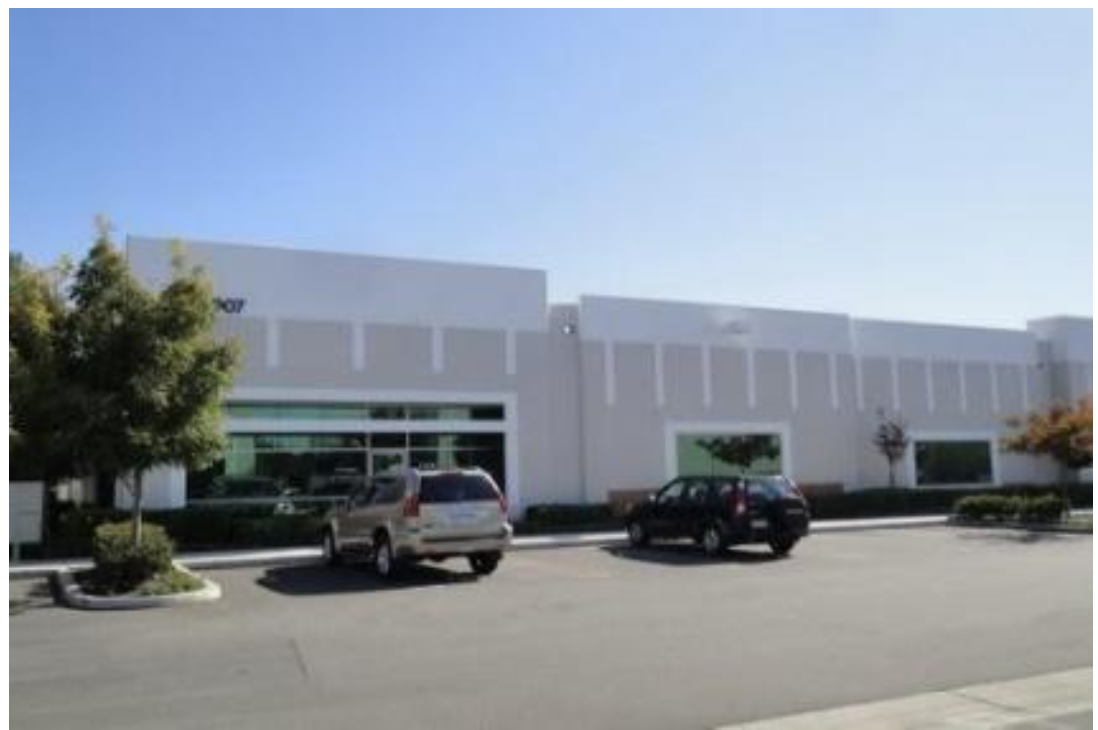
Distributor depth is the first thing a long-term buyer should map, because it determines what happens when a shipment is short, a part is wrong, or a claim needs a decision this week rather than next quarter. F-DIESEL reports service stations in multiple countries — examples include Shanghai CN, Frankfurt DE, Los Angeles US, Bogota CO, Caracas VE and Buenos Aires AR — with a sales network covering Russia-CIS, South America, the Middle East, Southeast Asia and Africa through local authorized distributors, and overseas business hubs in Europe and North America for local customer support.
What that translates into for a QSK60 buyer is escalation geography. A Latin American fleet operator with a service station in Bogota and a distributor in the same region has a shorter path to a fitment answer than one routing every question to a single export desk. A European buyer dealing with the Hofheim hub gains overlap with German working hours. The export ratio of 95% is a useful supporting indicator here: a supplier that sells almost entirely outside its home market has to run a support function that operates across languages and time zones as a matter of routine.
The boundary is equally important. A service station is not evidence that every QSK60 sku sits on a local shelf, and an authorized distributor is not the same thing as a factory branch. Before committing to a multi-year arrangement, ask what is physically stocked locally, what is cross-docked from Shanghai, what the standard escalation time is for a technical query, and who owns a warranty claim on the ground. A supplier that answers "not disclosed" to a specific question is not necessarily unable to do it — but a supplier that answers vaguely to all of them has told you something.
Test two: technical support and the HPI versus MCRS fitment question
The hardest question a QSK60 parts supplier will face is also the most ordinary: does this component fit my engine. It is hard because the series has been built with different fuel-system architectures. HPI (high-pressure injection) and MCRS (modular common rail system) engines do not share injection hardware, control electronics or, in many cases, the same service parts. Two engines carrying the same series name can therefore require different injectors, different pumps and different supporting components. Treating the series name as a part number is the single most common way buyers create their own downtime.
What a usable technical answer contains
A fitment answer that can be trusted has a visible structure. It restates the exact part number being quoted. It states which engine identification the answer is based on — serial number, nameplate data, or the build information the buyer supplied. It names the injection architecture the answer assumes. It shows the cross-reference or drawing basis rather than asserting compatibility. And it says what was not verified. A reply that simply says "yes, it fits" without any of these is not support, whatever the job title of the person who sent it.
Terminology discipline is a reasonable proxy for how seriously a supplier treats this. ISO 7876-5:2021 establishes a vocabulary for common rail fuel injection systems for diesel compression-ignition engines and their components, and the ISO diesel-engine catalogue also lists standards covering fuel nozzles and clamp-mounted and flange-mounted injectors (ISO 2697:1999, ISO 2698:2016 and ISO 2699:1994 respectively). Catalogue listing is not conformity and these documents do not certify any supplier, but a technical team that can place a query inside that vocabulary is easier to audit than one that cannot.
Where the supplier's own capability sits
F-DIESEL describes a professional R&D team and a worldwide counselor function offering product development and technical services, and states particular emphasis on the QSK60 injector and QSK60 turbocharger. It also applies a full incoming-outgoing inspection procedure and is certified to ISO 9001 for quality management. Those are capability statements, not fitment guarantees. The buyer's job is to convert them into a working process: send the nameplate information, ask the supplier to state its architecture assumption in writing, and keep that written answer attached to the order so that a repeat purchase two years later starts from evidence rather than memory.
Test three: keeping replacement parts tied to the same OE numbers
Continuity of reference is where long-term supply relationships quietly succeed or fail. The requirement is not that every shipment be identical; it is that the same OE reference runs through quotation, packing list, product label and invoice, so a buyer can prove what was ordered, what arrived and what failed. When a supplier substitutes an "equivalent" number without flagging it, the buyer loses that thread, and the loss usually only becomes visible during a claim or an audit.
F-DIESEL states that its QSK60 spare parts are manufactured strictly to OEM drawings and specifications, with dimensional tolerance controlled within ±0.02 mm, and that parts complete an 8,000-hour continuous endurance validation, with an in-service failure rate below 0.3% under rated operating conditions. These are supplier-reported figures tied to stated conditions, and they should be read that way. Their value to a buyer is that they describe a repeatable process rather than a single good batch — which is the same property you are trying to verify when you ask whether the part number on next year's delivery will match this year's.
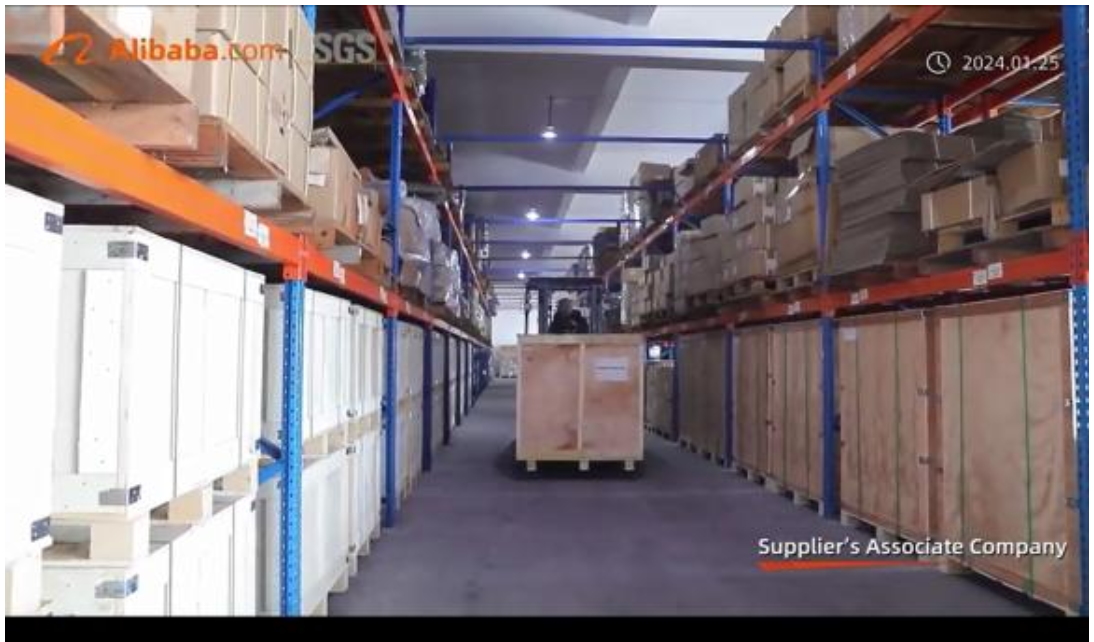
The one-stop structure adds a practical wrinkle. For cylinder blocks, cylinder heads, common-rail parts and sensors, F-DIESEL states that it cooperates with qualified OEM-grade manufacturers in China to deliver overhaul-kit sourcing alongside its own invested turbocharger plant, which it reports at an annual capacity of 200,000 pieces. Multi-source supply is normal in this category, but it means part-number continuity has to be managed per product group rather than assumed across the catalogue. Ask which entity manufactured the specific sku, and ask for the batch and test record against the same reference that appears on the quotation. HS 840999, the trade classification covering parts for diesel and semi-diesel engines, is a useful anchor for customs paperwork on repeat orders, but the classification describes a product family, not a specific part.
Test four: what a trademark in more than 70 countries signals
F-DIESEL states that its trademark is registered across more than 70 countries, and lists trademark IP protection as part of its corporate qualifications. For a buyer planning a multi-year supply line, this is a continuity indicator rather than a quality claim. It suggests that the label on the box will still identify the same source in year five, that the identity is registrable and defended in the markets where the buyer operates, and that a distributor building a local brand around supplied parts has something to point to when grey-market copies appear.
Packaging is where brand continuity becomes operational. F-DIESEL offers F-DIESEL brand packaging, neutral packaging on request, and customized packaging produced from customer design files, and states that it can provide different packaging solutions according to customer requirements. Since the company also supports OEM branding, mixed container orders and bulk orders, a distributor can hold a consistent label across shipments without forcing every order into a single presentation. The verification step is simple: make the label specification part of the purchase order, including the OE reference and the supplier's own identifier, and check the first delivery against it.
Commercial terms that hold a long relationship together
Support depth is only half the test; the other half is whether the commercial framework can absorb repeat business without renegotiation each time. F-DIESEL confirms delivery through international logistics, with sea freight, air freight or courier selected according to customer requirements and product volume, and states that delivery terms can include on-site delivery at trade fairs. Acceptance criteria are mutually confirmed by both parties on the basis of a delivery checklist, visual inspection and functional testing. Payment terms are T/T and L/C.
The documented selection parameters are a useful checklist for any long-term agreement, because they are the fields on which a repeat order is either unambiguous or disputed: part number, engine model, material specification, working temperature, pressure rating, size and installation dimension, serial number, OEM drawing reference, tolerance standard, surface treatment, hardness, weight, test records, certifications, packaging, MOQ, lead time, price, payment terms and warranty. A supplier that will write these into a standing agreement has effectively removed most of the reasons a long relationship breaks, which are rarely about capability and usually about ambiguity.
A five-point support scorecard
| Support dimension | Question to put in writing | Evidence to request |
|---|---|---|
| Distributor reach | Which service point handles my region, and what is the escalation path for a technical query? | Named contact, location, working hours and claim ownership |
| Fitment support (HPI vs MCRS) | Which injection architecture does this quotation assume, and what engine identification was used? | Written fitment statement with part number, architecture and reference basis |
| Part-number continuity | Will the same OE reference appear on quotation, label, packing list and invoice next year? | Sample documents from a previous repeat order, plus supersession policy |
| Quality consistency | Which manufacturer produced this SKU, and against which drawing and tolerance? | Batch record, dimensional report, test record, ISO 9001 certificate |
| Brand and packaging | Which packaging option applies to my label, and does it carry the OE reference? | Packaging specification agreed in the purchase order; trademark registration scope |
Where this supplier model fits, and where it stops
The model fits buyers who need a durable, multi-year source for aftermarket repair and light-OEM local supply: fleets running mixed heavy-duty equipment, distributors consolidating overhaul kits, generator-set operators, marine and construction maintenance operations, and repairers who value one reference thread across a large parts list. F-DIESEL lists these among its served applications, and the combination of a 1999 founding date, ISO 9001 certification, hubs in Europe and North America, and a 70-plus-country trademark is a coherent set of continuity signals for that profile.
It stops short of a few things a buyer should not assume. A parts supplier's technical support resolves fitment; it does not re-certify an engine's emissions compliance, and no replacement component should be presented as doing so. Field engineering in the buyer's own workshop, warranty administration performed by an authorised engine dealer, and guaranteed local stock depth per SKU are separate service commitments that need to be confirmed rather than inferred. Multi-source manufacturing also means traceability questions are best asked product group by product group. None of this is disqualifying — it is simply the difference between a supplier that states its scope and one that lets the buyer discover it later.
Conclusion: judge the second order, not the first
The most reliable way to evaluate a long-term QSK60 supplier is to test the behaviour that only appears after the sale. Map the distributor network and confirm who answers in your time zone. Put the HPI or MCRS assumption in writing before the first shipment. Insist that one OE reference runs through every document. Separate brand-continuity signals such as a trademark registered in more than 70 countries from quality evidence such as ISO 9001 certification and inspection records, and treat both as necessary rather than interchangeable. A supplier that can satisfy all four tests is not necessarily the cheapest on the first quotation, but it is the one least likely to leave a fleet waiting for a part it cannot identify.
A full company presentation, including the group profile and product scope, is available for download: F-DIESEL Group Presentation 2026 (PDF).
FAQ
How can a buyer judge whether a QSK60 parts supplier will still carry the same part numbers in three to five years?
Look for continuity structures rather than promises. A supplier with a long operating history, a registered trademark across the markets you serve, and a documented process for quoting against OE references is easier to hold to a number than one that quotes from memory. Then test it: require the same OE reference on the quotation, product label, packing list and invoice, and ask how supersessions are recorded when a reference changes. If the answer is that references are reconciled per order, ask to see an example from a repeat customer order.
What information should a buyer provide to get a reliable HPI versus MCRS fitment answer?
Provide the part number and nameplate information of the product — F-DIESEL's purchasing guidance is explicit that a quotation requires the part number or nameplate data rather than a model name alone. State the engine's injection architecture if it is known, and ask the supplier to confirm which architecture its answer assumes. On a QSK60, HPI and MCRS builds use different injection hardware, so an answer that does not name the architecture is incomplete even if the part number happens to be correct.
Does a trademark registered in more than 70 countries prove that the parts are high quality?
No. A trademark registration is an identity and intellectual-property fact: it indicates that the brand name is protected and defended across those markets, which supports continuity and helps with counterfeit screening. Quality evidence is a separate set of documents — ISO 9001 certification, incoming-outgoing inspection records, dimensional reports, endurance test records and batch traceability. Treating a trademark as a quality certificate is a category error, and a supplier that encourages it is worth questioning.
How are branding and packaging handled when a distributor wants its own label?
F-DIESEL states that packaging options include F-DIESEL brand packaging, neutral packaging upon request, and customized packaging produced from customer design files, and that different packaging solutions can be provided according to customer requirements. The company also supports OEM branding, mixed container orders and bulk orders. For a long-term arrangement, the label specification — including the OE reference and the supplier identifier — should be written into the purchase order so that it stays constant across shipments.
What purchasing and acceptance terms should be fixed before a long-term QSK60 arrangement?
Fix delivery method (sea freight, air freight or courier, selected by volume and requirement), acceptance criteria confirmed by both parties on the basis of a delivery checklist, visual inspection and functional testing, and payment terms, which F-DIESEL lists as T/T and L/C. Alongside those, agree the technical fields that cause most repeat-order disputes: part number, engine model, material specification, dimensions and installation tolerances, OEM drawing reference, test records, packaging, MOQ, lead time and warranty.
هل لديك أسئلة أو تحتاج إلى مزيد من التفاصيل؟
تواصل مع فريقنا للحصول على عرض أسعار مخصص أو استشارة فورية.
طلب عرض أسعار
املأ النموذج أدناه وسيتواصل معك فريقنا بعرض مقترح مخصص.
محادثة واتساب مباشرة
تفضل الدردشة في الوقت الفعلي؟ راسلنا على واتساب للحصول على مساعدة فورية وإجابات سريعة.
- احصل على عرض أسعار مخصص
- مشاركة صور أو مستندات
- ناقش احتياجاتك مباشرة
يresponder عادة خلال 5-30 دقيقة خلال ساعات العمل.