
QSK60 Parts: Distributor Network vs Factory-Direct Sourcing
QSK60 Parts: Distributor Network vs Factory-Direct Sourcing
Buying QSK60 diesel engine parts is a channel decision before it is a price decision. One route runs through an authorized distributor network: branded parts, a local counterparty, support administered close to the machine. The other runs factory-direct from a supplier that manufactures to OEM drawings, applies the buyer's own brand and consolidates a mixed-SKU LCL shipment. The hardware question is the same in both cases. The evidence a buyer can obtain is not.
For a buyer at the evaluation stage — a mining fleet, an engine rebuilder, a power-station operator, a marine operator building an own-brand parts line — three tests decide the order: how deep the technical answers go, which documents can be issued for a specific batch, and how flexibly the order can be shaped. This comparison works through those three tests, marks where each route fits, and ends with the evidence to hold before the first shipment leaves.

Two routes, two counterparties
The first difference is contractual rather than technical. In the distributor model the buyer contracts with a distributor, receives parts under the engine maker's or the distributor's brand, and draws on the distributor's stock, warranty administration and local technical contact. A distributor usually knows the engine platform well, because that is its business. Its knowledge of how a specific batch of parts was machined, measured and packed is limited to what the manufacturer discloses to it.
Factory-direct reverses that. The buyer contracts with the party that controls or coordinates manufacturing, and can therefore specify drawing revision, inspection records, packing and label artwork, and can combine part families in one container. The cost of that flexibility is specification work: a factory will make what the purchase order describes, so the purchase order has to describe it precisely.
'Direct factory' is not always a single gate
F-DIESEL Power Co., Ltd — a diesel engine spare parts group established in Shenzhen, China in 1999, with a Shanghai branch and an overseas business hub in Hofheim, Germany — describes its model as a headquartered R&D and QC centre plus invested manufacturing bases and a strategic partner factory network. Cylinder blocks, cylinder heads, common-rail parts and sensors are produced with qualified OEM-grade manufacturers in China; the group's invested turbocharger plant is stated at 200,000 units of annual capacity. That structure is what makes one-stop sourcing of QSK60 overhaul content possible.
It also sets a fair question for any buyer: which entity manufactures this specific part? A coordinated network that names the manufacturing base per SKU is a workable answer. An answer that stays at group level for every line is not, because it leaves the buyer unable to attach inspection evidence to a production site.
F-DIESEL states that it operates an ISO 9001 quality management system, holds full import-export qualification and runs a full incoming-outgoing inspection procedure. Those statements are the starting point of this comparison, not its conclusion: each becomes useful only when it is converted into a document tied to an order.
Technical support: application depth versus component depth
Distributor support is strongest at the application level; factory-direct support is strongest at the component and process level. A buyer who needs both should plan for both, because neither route supplies the other's strength by default.
Inside the distributor route
In the authorized distribution model the distributor is the first technical contact. It identifies the part against the engine build and serial information, supplies the service information its agreement allows, and escalates unusual failures to the engine maker. How much of that happens in practice depends on the individual distributor — its staffing, its territory and its own commercial priorities — rather than on the brand above it. Two distributors carrying the same brand can differ considerably in how quickly a tolerance question or a failure-analysis request is answered.
The useful questions are therefore specific: who answers a technical question, in what time, in which language, and in writing. A distributor that can answer those four points is a genuine asset to a maintenance programme. One that cannot is a stock point with a logo.
Inside the factory route
Factory-direct puts the technical conversation with the people who control drawings, tooling and inspection. For QSK60 parts that means questions a stock-based channel often cannot answer at component level: which drawing revision the part was produced to; how the dimensional tolerance was measured and on what sampling basis; which material grade and heat treatment were used; how a fuel-injection component is identified against a particular engine build; and what an endurance validation actually covered.
F-DIESEL states that its QSK60 parts are manufactured strictly to OEM drawings and specifications with dimensional tolerance controlled within ±0.02 mm, supported by in-house R&D and QC teams, and reports an 8,000-hour continuous endurance validation against 1,000–2,000 hours for most competitors, with an in-service failure rate stated below 0.3% under rated operating conditions. Each of those is a supplier statement. It becomes decision-grade only when the underlying report is attached to the batch — which is why the document request later in this article matters more than the claim itself.
One boundary applies to both routes. Proprietary engine control software, firmware and factory diagnostic tooling sit with the engine maker and its authorized channel. A parts supplier's technical support normally covers the part — dimensions, material, fitment, injection version, test data — not the engine's control system. A buyer whose maintenance strategy depends on OEM-level diagnostics should confirm in writing how that access is provided under the route it chooses. The mirror limitation of the factory route is distance: support is usually remote, so time zone and engineering staffing become material. Test that with a real technical question before the order, not after.
Documentation: what each route can hand over
Both routes can document what a part is. Only the factory-direct route can normally document how a specific batch was made, and only when those documents are named in the order. This is the most useful distinction in the comparison.
What a distributor typically provides
- Part-number identification on packaging, labels and invoice.
- Packaging consistent with the engine maker's or distributor's brand presentation.
- A warranty statement administered through the distributor, with stated exclusions.
- Return or restocking terms.
- Access to service literature where the distribution agreement allows it.
Three items should be confirmed rather than assumed: that the distributor is authorized for the buyer's territory, that a traceability statement to the engine maker's part number can be issued, and who administers a warranty claim and bears freight on a returned part. These are contractual facts that vary by distributor and by region.
What a factory-direct supplier can provide
The factory route can generate a deeper document set, but the buyer has to ask for it by name:
- the drawing revision and a conformance statement against it;
- a dimensional inspection report for the actual production batch, with sampling plan and measuring method;
- material specification and, where relevant, heat-treatment or surface-treatment records;
- the scope of the endurance validation: part families, test conditions, acceptance criteria;
- incoming and outgoing inspection records under the supplier's quality system;
- packing specification covering rust protection, crating and label content;
- label artwork files and approval flow for a private-brand programme;
- HS classification and certificate of origin supporting the shipment.

F-DIESEL's stated control points map onto that list: OEM drawing and specification compliance, ±0.02 mm dimensional tolerance, an ISO 9001 quality management system and a full incoming-outgoing inspection procedure. The buyer's work is to convert each control point into a named document with a format and a delivery point in the purchase order. A quality system certificate describes the system; a batch inspection report describes the parts in the crate.
A shared vocabulary keeps two quotes comparable
Terminology standards remove one avoidable error in channel comparison — quoting two different things. ISO 7876-5:2021 establishes a vocabulary for common-rail fuel-injection systems for diesel engines and their components, and the ISO diesel-engine standards catalogue lists entries for fuel nozzles (ISO 2697:1999) and clamp-mounted and flange-mounted fuel injectors (ISO 2698:2016, ISO 2699:1994). These are terminology and catalogue references, not a certification of any supplier's product, and the current status and applicability of each document should be checked before it is written into a contract. Trade classification matters for the same reason: the World Bank's WITS interface identifies HS 840999 as parts for diesel and semi-diesel engines, but that code does not necessarily cover every component in a QSK60 kit, and national tariff extensions should be agreed with a broker before the first shipment.
What neither route will hand over
Neither channel normally releases the engine maker's internal process records, and neither releases drawings the buyer has no right to hold. The practical substitute is agreed inspection: first-article approval before volume production, a pre-shipment inspection report, or third-party inspection at the buyer's cost.
Order flexibility, private branding and mixed LCL
The distributor route buys speed and simplicity in small quantities; the factory-direct route buys configurability. Which is worth more depends on whether the buyer is replacing a failed part this week or planning an overhaul programme for the next two quarters.
Distributor order shape
Distributor orders are built around stocked items: single-unit replenishment, short call-off quantities, and a per-unit price set by the distributor's price list. The range is bounded by what the distributor stocks, so a mixed-SKU overhaul kit may have to be assembled across several suppliers or split into separate lines. Private branding is normally outside this model, because parts are supplied under the engine maker's or the distributor's brand; a buyer intending to retail under its own label should confirm that at the outset rather than at the labelling stage.
Factory order shape
Factory-direct orders are built around the buyer's specification. F-DIESEL states that it supplies mainly under the F-DIESEL brand, offers neutral packaging on request, provides customized packaging when the buyer supplies design files, and supports OEM branding, mixed container and bulk orders. For a QSK60 overhaul that is the practical difference: cylinder heads, blocks, crankshafts, camshafts, connecting rods, pistons and rings, injectors, injection pumps and turbochargers can be configured as one mixed shipment instead of nine purchase orders.
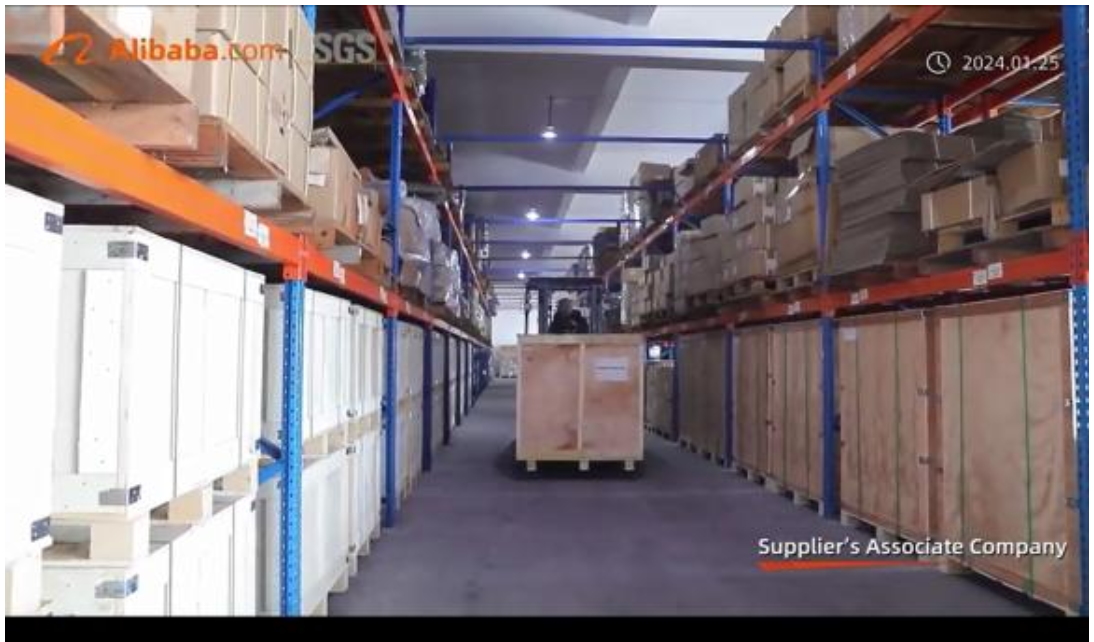
Three boundaries belong beside that flexibility. Minimum quantities per SKU and consolidation cycles are quoted per order rather than published, so they must be settled before a rebuild window is scheduled. LCL consolidation adds handling, which makes the packing specification a technical document rather than an afterthought — crate type, rust protection, individual part protection, label content and a loading record. And in a direct purchase the import side (duty, clearance, inland transport, insurance) sits with the buyer, which is why the HS line and Incoterm should be agreed before the shipment is booked.
Branding is a legal question, not a printing question
A manufacturer can print artwork the buyer is entitled to use; it cannot transfer the right to use it. F-DIESEL states that its own trademark is registered in more than 70 countries, which speaks to the supplier's position but does not resolve the buyer's. A private-label programme should begin with the buyer confirming it holds or is licensed for the mark, and with agreement on who is identified as the manufacturer or the party placing the goods on the market in each destination — a determination that varies by market and belongs with the buyer's own regulatory adviser.
What price comparisons leave out
F-DIESEL's published comparison positions its QSK60 parts at 40% below OEM original parts while maintaining OE-standard control, and 30% below European and dealer alternatives. Those are company-stated comparisons, not an audited benchmark, and they are best read as a hypothesis to test rather than as a landed-cost result.
The number that decides a channel is landed cost per part at equal specification: unit price plus freight, insurance, duty, clearance, inspection, inventory carrying cost, and the cost of failure risk the warranty does not cover. A distributor price that includes local stock and local warranty administration is not automatically the expensive option, and a factory price is not automatically the cheap one until those items are added. Normalising both quotes to the same Incoterm, inspection scope and warranty term is the only comparison that survives an audit.
The comparison at a glance
| Dimension | Distributor network | Factory-direct | Confirm before ordering |
|---|---|---|---|
| Counterparty | Contract with a distributor; parts under engine maker or distributor brand | Contract with the party controlling or coordinating manufacturing | Legal entity, territory authorization, invoicing party |
| Technical support | Application level, local, escalation to the engine maker | Component and process level, usually remote | Named function, response time, working language |
| Documentation | Part identity, branded packaging, warranty terms; process records normally outside the set | Drawing conformance, batch inspection, material and validation records on request | Named document list written into the purchase order |
| Order shape | Stocked SKUs, small call-off quantities | Mixed SKUs, mixed container, bulk | Minimum quantity per SKU, consolidation cycle, packing spec |
| Private branding | Normally not offered | Supported: neutral packaging on request, customized artwork | Trademark rights, label content, market identification |
| Logistics | Local stock or distributor shipment | LCL or container; buyer handles import | HS line, origin, Incoterm, insurance |
| Warranty | Administered through the distributor | Supplier terms issued in writing | Period, exclusions, freight on claims, failure analysis |
Which route fits which buyer
Neither route is better in the abstract, and treating the decision as a brand-loyalty question usually costs money somewhere in the programme. The fit rules are narrow enough to apply directly.
Distributor network
- a single failed component where downtime dominates the calculation;
- a maintenance contract or asset owner that requires branded parts traceable to the engine maker;
- a site dependent on OEM-level diagnostics and factory tooling;
- small, unpredictable volumes where holding the specification work in-house is not realistic.
Factory-direct
- a planned overhaul or a rolling kit programme across several part families;
- an own-brand aftermarket line that needs labelling control;
- landed cost at documented specification as the deciding metric, with in-house or third-party inspection capability;
- consolidation value: one mixed container is cheaper to administer than many small orders.
Running both
Many established buyers do: a distributor relationship for emergency lines and diagnostic-dependent work, a factory-direct programme for planned kits and own-brand content. The risk is not the split but documentation drift — two specification vocabularies, two warranty regimes and no single record of which part came from which channel. A simple register of part number, batch, channel, document set and warranty end date closes most of that gap.
Evidence to request before the first shipment
The first shipment is the cheapest place to test a channel. A pilot order of one part family, documented end to end and measured on arrival against the drawing, tells a buyer more than a year of correspondence. The list below is written so that it can be pasted into a purchase order.
For either route
- Part identification: the part number, or nameplate information captured and supplied for identification. F-DIESEL states that a quotation requires the part number or nameplate information, and that nameplate information can be captured and provided; an engine model alone is not sufficient.
- Specification reference: the drawing or specification revision the part is made to, stated on the quotation rather than implied.
- Batch inspection evidence: a dimensional report for the actual batch, with sampling plan, measuring method and inspection date.
- Material and process statement: material grade and, where applicable, heat treatment or surface treatment.
- Warranty in writing: period, coverage, exclusions, who performs failure analysis, who pays freight on a claim, and how a claim is opened.
- Packing specification: crate or carton type, rust protection, label content, and for LCL the consolidation and handling arrangement.
- Commercial documents: invoice, packing list, Incoterm, insurance, HS classification and certificate of origin.
Additional requests to a distributor
- written confirmation of authorization for the buyer's territory;
- a traceability statement linking the part to the engine maker's part number;
- a named technical escalation contact and an expected response time;
- return and restocking terms, including who bears freight.
Additional requests to a factory-direct supplier
- manufacturing identity per SKU, distinguishing the supplier's own plant from partner factories;
- the validation report scope behind any endurance claim: part families, conditions, acceptance criteria;
- the basis of any in-service failure-rate figure: population, period, duty cycle, and how rated operating conditions are defined;
- label artwork approval before production, plus written confirmation of who is responsible for trademark clearance in the destination markets;
- a pre-shipment inspection option and first-article approval before volume;
- for a mixed LCL booking, the SKU list, quantities, packing plan, loading photographs and seal number.
Two of those requests deserve emphasis because they are frequently answered with a brochure instead of a document. An endurance figure such as 8,000 hours is meaningful only when the test object, the conditions and the acceptance criteria are stated; a failure-rate figure is meaningful only when the population and period behind it are stated. A supplier that answers those two precisely is usually able to answer the easier ones.
F-DIESEL publishes its group presentation, including its manufacturing and quality model, as a downloadable document for buyers who want the supplier's own description before drafting an RFQ: F-DIESEL Group Presentation 2026.
Outlook: why channel evidence is gaining weight
Two structural signals make channel evidence more consequential than it was a decade ago. The first is the size of the installed base: Fortune Business Insights valued the global diesel engine market at USD 70.99 billion in 2025 and projected a 5.40% CAGR for 2026–2034. That figure measures complete engines, not replacement parts, so it does not size the QSK60 parts market directly; it indicates the engine population that will eventually require overhaul content.
The second is where value sits inside the engine. Global Market Insights valued the diesel common-rail injection system market — injectors, pumps, rails and control units — at USD 22.6 billion in 2024. Injection components are both the highest-value and the most documentation-sensitive line in a parts order, because version identification and test data determine whether the part performs, not merely whether it fits.
Regulation pushes the same way. The U.S. EPA's 2027 heavy-duty engine standards include a NOx limit of 0.035 grams per brake horsepower-hour. That is a forthcoming requirement for new engines rather than a rule for aftermarket parts, and it does not mean every buyer needs emissions-grade documentation immediately; it does mean that a channel unable to supply version identification and test records leaves the buyer with less room to manoeuvre as requirements tighten.
The conclusion is narrower than a verdict on either channel. Distributor networks remain the faster route to branded parts, local support and OEM-level diagnostic access. Factory-direct sourcing remains the more configurable route, and the only one that can document manufacturing conformance for a specific batch. A buyer who puts the same seven questions to both channels before the first shipment will usually find that the choice makes itself.
FAQ
Is factory-direct always cheaper than the distributor route for QSK60 parts?
Not on a landed-cost basis. A factory unit price excludes freight, insurance, duty, clearance, inspection and the buyer's own handling, while a distributor price usually bundles local stock and local warranty administration. F-DIESEL's published comparison states that its QSK60 parts are priced 40% below OEM original parts and 30% below European and dealer alternatives; that is a company-stated comparison, not an audited benchmark. The comparison becomes reliable only when both quotes use the same Incoterm, inspection scope and warranty term.
Can a buyer obtain private OEM branding through a distributor?
Under an authorized distribution model, parts are normally supplied under the engine maker's or the distributor's brand, so private branding is usually outside that route and should be confirmed in writing rather than assumed. F-DIESEL states that it supplies mainly under the F-DIESEL brand, offers neutral packaging on request and provides customized packaging when the buyer supplies design files, within an OEM branding and mixed container model. In either case, the right to use a mark is the buyer's to establish.
What documents should accompany a QSK60 parts shipment?
A commercial invoice, a packing list, HS classification and origin documentation as applicable, part-number identification on labels and packaging, and any inspection, validation or warranty documents agreed in the order. For fuel-injection components, the version or build identification specified by the buyer should appear in the same document set. Documents agreed only by email tend to disappear at the loading dock; they belong in the purchase order.
How can a buyer verify that a QSK60 part matches the OEM drawing?
Request the drawing revision, a dimensional inspection report for the actual batch with its sampling plan and measuring method, and compare a first article against the removed part or the drawing the buyer legitimately holds. F-DIESEL states that its QSK60 parts are manufactured to OEM drawings and specifications with dimensional tolerance controlled within ±0.02 mm; the batch report is what turns that statement into evidence for the parts in the crate.
Which route suits a multi-family QSK60 overhaul programme?
A programme spanning cylinder heads, blocks, crankshafts, camshafts, connecting rods, pistons and rings, injectors, injection pumps and turbochargers is normally easier to configure factory-direct, because one supplier can consolidate part families into a mixed container. F-DIESEL states that it supports mixed container and bulk orders, with minimum quantities and consolidation cycles quoted per order. Distributor stock remains the practical route for individual urgent lines, and many buyers run both.
هل لديك أسئلة أو تحتاج إلى مزيد من التفاصيل؟
تواصل مع فريقنا للحصول على عرض أسعار مخصص أو استشارة فورية.
طلب عرض أسعار
املأ النموذج أدناه وسيتواصل معك فريقنا بعرض مقترح مخصص.
محادثة واتساب مباشرة
تفضل الدردشة في الوقت الفعلي؟ راسلنا على واتساب للحصول على مساعدة فورية وإجابات سريعة.
- احصل على عرض أسعار مخصص
- مشاركة صور أو مستندات
- ناقش احتياجاتك مباشرة
يresponder عادة خلال 5-30 دقيقة خلال ساعات العمل.