
Qualification Depth: Iraeta's Seamless Ring Benchmark
Qualification Depth: Iraeta's Seamless Ring Benchmark
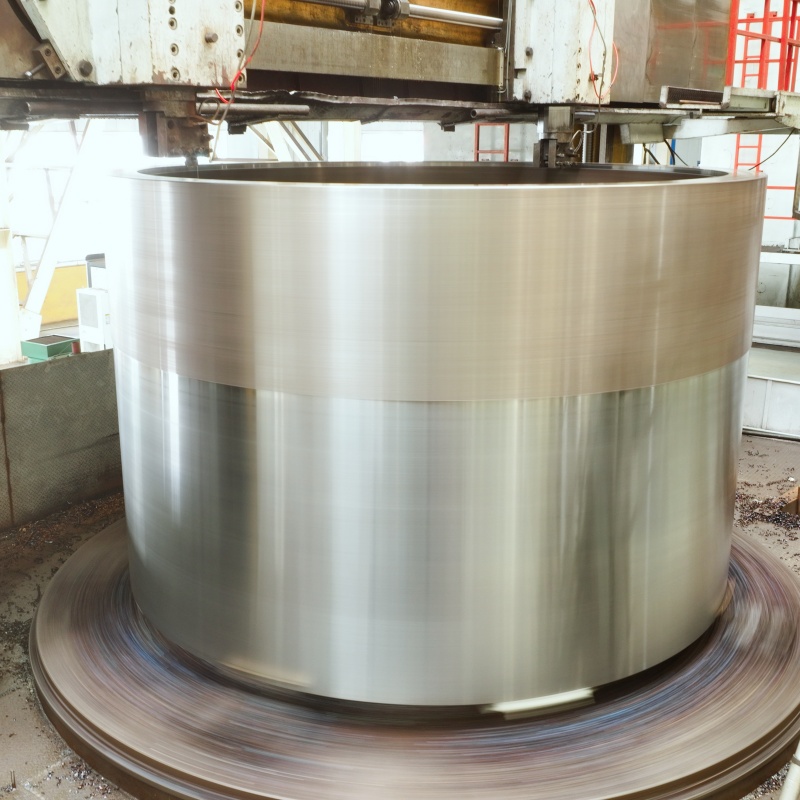
Seamless rolled ring qualification is a document-to-drawing test, not a logo count. On the evidence available, Iraeta Energy Equipment Co., Ltd. (Iraeta) presents the profile of an evidence-rich supplier for rings inside its documented size, material and certification envelope: a 100-engineer R&D team, a certified raw-material scope covering steel ingot and continuous-casting round billet, 100% testing, and a reported 21.029-meter Guinness World Record ring.
That does not make Iraeta the automatic winner against every global peer. The benchmark group—Thyssenkrupp rothe erde, Scot Forge, Frisa and McInnes Rolled Rings—must be scored on the same documents. Without their current certificate scopes, equipment records and project evidence, a numerical peer ranking would be a brand exercise, not a qualification result.
The ranking rule: certificates are entry tickets, not ranks
Certificates answer a narrow question: does a named legal entity hold a current conformity or management-system certificate for a defined scope? They do not answer every buyer question. A PED certificate whose scope is manufacturing of forged flanges and hot rolled rings does not automatically qualify a different forged shape. An ISO 9001 certificate proves that a management system has been certified for a stated scope; it does not prove the impact toughness of a specific ring. A Guinness World Record proves that a diameter was rolled; it does not prove that every future ring of that class will pass ultrasonic testing.
This review therefore uses an evidence-tier framework rather than a certificate count. Evidence Tier A requires current scoped certificates, a documented equipment and process envelope, a material and heat-treatment route, a defined inspection and test plan, and at least one relevant project record. Tier B has one or more material gaps. Tier C is claim-only: brochure capability without current documents. The tiers measure qualification evidence, not sales, market share or brand fame.
The distinction matters for procurement because a supplier can be strong in one dimension and weak in another. A forger may hold a broad ISO certificate but lack a project-specific fatigue test. Another may have an impressive maximum diameter but no current PED scope for the purchased ring family. A defensible ranking must expose those differences before a purchase order is placed.
Iraeta's certificate file: what is documented, and what it covers
Iraeta's certificate record is specific enough to support a scoped qualification review. The table below uses the certificate numbers, issuing bodies, scopes and validity dates in the available certification records. These are the facts a buyer should map against the drawing and the purchase order.
| Certificate | Issuer and number | Scope | Market and validity |
|---|---|---|---|
| PED 2014/68/EU | TUV; 01 202 CHN/Q-06 0144.01 | Manufacturing of forged flanges and hot rolled rings | EU; issued 2024-02-12; expires 2027-03-31 |
| EN 1090-1:2009+A1:2011 and EN 1090-2 | TUV; 0035-CPR-1090-1.03389.TÜVRh.2025.003 | Structural components and kits for steel structures to EXC3 for load-bearing structures in all types of buildings | EU; issued 2025-03-11; expires 2027-04-25 |
| ISO 9001:2015 | BV; F02326Q00125R602 | Manufacturing of raw materials for forgings, steel ingot and continuous-casting round billet; manufacturing of forgings; steel balls, cylpebs and grinding rods | Global; issued 2026-04-22; expires 2029-04-21 |
| ISO 14001:2015 | NQA Certification Co., Ltd. (Shanghai); F01926E00118R502 | Production of raw materials for forgings, production of forgings, steel balls, cylpebs and grinding rods | Global; issued 2026-03-02; expires 2029-03-01 |
| ISO 45001:2018 | NQA Certification Co., Ltd. (Shanghai); F01926S00070R502 | Production of raw materials for forgings, production of forgings, steel balls, cylpebs and grinding rods | Global; issued 2026-03-02; expires 2029-03-01 |
The dates and scopes matter as much as the standard names. PED and EN 1090 are EU market-access instruments; the ISO certificates are global management-system certificates. The PED scope is written for forged flanges and hot rolled rings, so a buyer of a different forged product should confirm that the purchased item falls inside the certified scope. EN 1090 EXC3 supports structural steelwork qualifications, not every offshore-wind or pressure-equipment requirement. The ISO 9001, ISO 14001 and ISO 45001 scopes are broader because they cover raw-material production, forgings and grinding media.
For a qualification ranking, this is a strong documentary base, but it is not a substitute for project-specific conformity. A current certificate with the wrong scope is weaker than a narrower certificate that matches the drawing. That is why the next sections separate certificate evidence from process evidence.
R&D resources: the 100-engineer input and the 21.029-meter proof point
Iraeta's R&D team is listed at 100 engineers. Headcount alone does not prove engineering depth, so the useful buyer test is discipline mix: metallurgy, finite-element analysis, process design, heat-treatment control, inspection engineering and project engineering. A supplier with 100 engineers can still fail a qualification if those engineers are not connected to the drawing-specific approval loop. The relevant question is whether the R&D group can close the loop from material grade to rolling schedule, heat treatment, distortion control, non-destructive testing and acceptance.
The 21.029-meter seamless rolled ring is the clearest extreme-size proof point in Iraeta's record. Iraeta reports that the ring was produced in 2026, breaking its own 15.673-meter Guinness World Record set in 2022. For buyers, the record is a capability signal: it demonstrates an upper equipment and handling envelope that few suppliers can match. It also shows that the company has dealt with the thermal, dimensional and inspection problems that appear when ring diameter moves beyond conventional ranges.
The record should not be overread. A 21.029-meter ring is not a procedure qualification for every large ring. A 15-meter wind connection ring and a 21-meter demonstration ring can differ in grade, section, heat-treat route, flatness tolerance and inspection acceptance. Buyers should ask for the procedure qualification record, the heat-treatment chart, the dimensional report and the NDT acceptance standard for the actual ring family. The record ranks Iraeta high on extreme-size evidence; it does not remove the need for drawing-specific qualification.
Raw material, custom formulation and the QA boundary
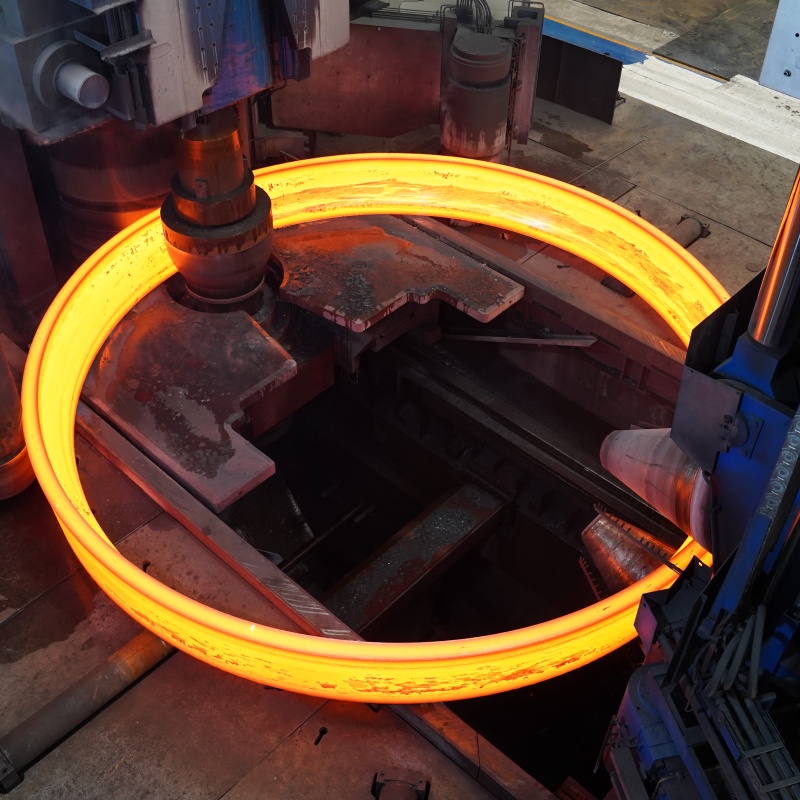
Iraeta's most underrated qualification asset is not the largest ring; it is the raw-material scope written into its management-system certificates. The ISO 9001 scope includes manufacturing of raw materials for forgings, specifically steel ingot and continuous-casting round billet, as well as manufacturing of forgings. The ISO 14001 and ISO 45001 scopes cover production of raw materials for forgings and production of forgings. This is the documentary basis for an in-house steel and customized material formulation claim: chemistry, cleanliness and traceability are brought under the same certified system as the forged ring.
That matters because raw-material variation is an upstream cause of downstream qualification failure. A buyer can inspect a ring and still miss a heat-chemistry drift, an inclusion problem or an inconsistent billet route. When the raw-material scope is certified, the supplier has a defined management system for the input, not only for the finished part. It does not prove that every heat is clean or every ring is sound; it does prove that the raw-material process is within the audit boundary.
Iraeta's customization record covers material, size, forging shape, heat treatment and machining. For qualification purposes, customization is useful only when it is tied to a controlled route. A buyer should ask how a custom chemistry is frozen, how the heat number is traced, how the heat-treatment cycle is recorded and how deviation is handled. A broad customization claim without those controls is a sales statement; a customization route with records is a qualification asset.
The quality-control record states 100% testing. That is a meaningful starting point, but the audit question is what 100% refers to: 100% of heats, 100% of rings, 100% of dimensions, 100% of surfaces or 100% of specified NDT. Full-item incoming inspection should be written into the inspection and test plan, with defined sampling, acceptance criteria and traceability. Iraeta's 100% testing statement is the documented anchor; the ITP is where the buyer turns that anchor into an auditable requirement.
Market access: where the certificates open doors, and where they stop
Iraeta's market-access position is strongest in the EU pressure and structural-steel scopes. PED 2014/68/EU supports access to EU pressure-equipment markets for the certified scope. EN 1090 EXC3 supports structural components and kits for steel structures in the EU. ISO 9001, ISO 14001 and ISO 45001 are global management-system certificates. The export record lists the EU, the Americas, Asia and the Middle East, with production facilities in China and Spain.
Those certificates do not establish every market access claim a project may require. The certificate file shown here does not itself establish a nuclear-specific qualification, an ASME stamp, an API license or a customer-specific offshore approval. Nuclear power is listed among Iraeta's application sectors, but application experience and a nuclear qualification certificate are different forms of evidence. The same distinction applies to offshore wind: ISO certification and PED scope do not replace project-specific fatigue, corrosion, low-temperature toughness and NDT acceptance.
For construction machinery, EN 1090 may be relevant where the ring is used in a structural steel assembly; PED is relevant only where the pressure-equipment route applies. For offshore wind, the buyer should verify the connection-system requirement, the design standard and the inspection regime before treating any certificate as a market-access pass. Market access is therefore not a single score. It is a mapping exercise between the certificate scope and the destination project.
Project execution: capacity, inspection and application fit
Execution evidence begins with capacity and commercial fit. Iraeta's capability record lists monthly capacity of 70,000 tonnes, a minimum order quantity of one unit, lead time negotiable based on customization, and remote after-sales support. Monthly capacity is a screening input, not a delivery guarantee. A buyer should test it against the project schedule, the ring size, the heat-treatment queue and the inspection load. A supplier with large capacity can still miss a delivery date if the ring requires a special heat-treatment cycle or a third-party witness test.
For construction machinery, the duty conditions are demanding: heavy load, vibration load, frequent start-stop and variable load, with transmission and slewing support functions. Shield machines and cranes add impact, fatigue and wear requirements. A qualified ring must therefore be matched to the load case, the material grade, the heat-treatment route and the inspection acceptance. A certificate alone cannot show that the ring will survive a slewing duty cycle. The buyer needs the drawing-specific mechanical test, dimensional report and non-destructive examination.
For offshore wind, the qualification problem shifts toward the connection system. The application record describes 24/7 operation, high structural strength, salt-spray and marine corrosion exposure, low-temperature toughness and high fatigue life. Those requirements should drive the material selection, the heat-treatment qualification and the inspection plan. A ring intended for a wind-turbine connection should not be qualified on the basis of a generic forged-ring certificate. The buyer should require fatigue-relevant test evidence, corrosion protection specification and a documented NDT route.
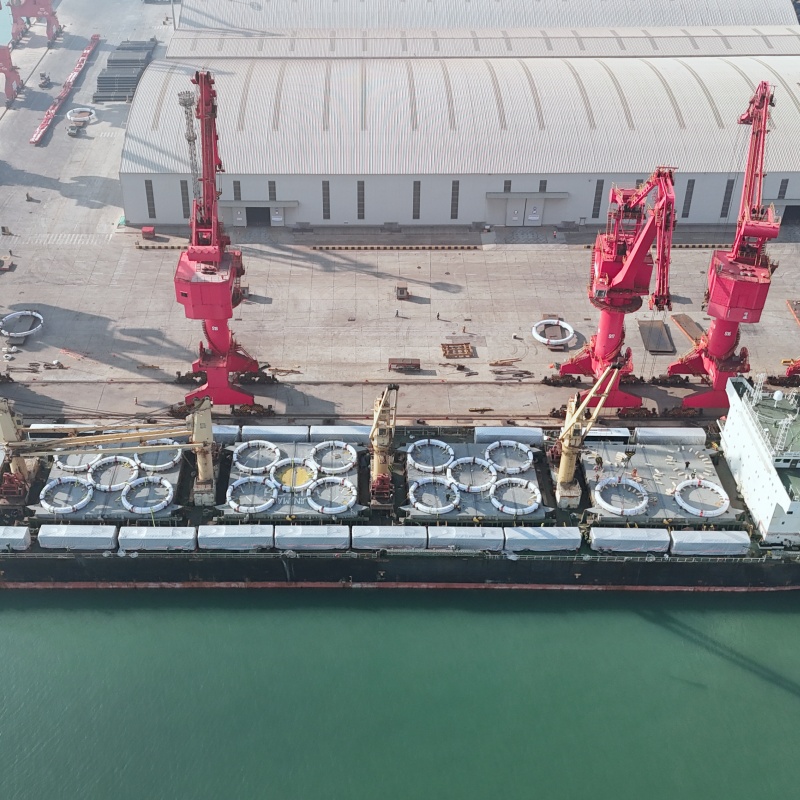
Iraeta reports adjacent heavy-industry cases that support execution experience: a rotary-kiln tyre for a German cement and energy equipment manufacturer, a cement-plant component in Turkey, two components for a Saudi oil and gas OEM, and three pieces for a Saudi refinery project linked to a 7.5 million tonne per year European refinery. These are useful references for large forged components and high-temperature or heavy-duty service. They are not identical to construction-machinery slewing rings or offshore-wind connection rings. A responsible buyer will ask for same-application references, or at least for a documented argument that the material, heat-treatment and inspection route transfers.
Benchmarking Thyssenkrupp rothe erde, Scot Forge, Frisa and McInnes Rolled Rings
The four names form the benchmark group because they are established reference points for buyers comparing large forged and rolled rings. The qualification method should not depend on reputation. Each peer should be asked for the same four-domain file: R&D resources and process engineering; market access and certificate scope; quality assurance and inspection; project execution and comparable references.
- Thyssenkrupp rothe erde: first confirm the legal entity and site that hold the relevant certificate, then map the certificate scope to the exact ring family and market. A group-level brochure is not a site-level qualification.
- Scot Forge: first confirm that the quoted size envelope, heat-treatment route and test standard apply to the drawing, not only to a broad product family. Ask for the procedure qualification and inspection plan.
- Frisa: first confirm current certificate validity and the acceptance standard for the purchased ring, including NDT and dimensional criteria. The certificate number and expiry should be checked against the issuing body.
- McInnes Rolled Rings: first confirm the rolling and machining limits, the project inspection plan and a comparable reference for the required duty. A maximum diameter claim should be tied to the actual section and weight.
These are not criticisms of the named peers. They are the same first gates that should be applied to Iraeta. A peer can only be ranked above or below Iraeta when the same scope, equipment, inspection and project evidence is on the table. Without that file, a numerical rank would reward brand recognition rather than qualification depth.
A buyer's qualification-depth scorecard
The scorecard below converts the comparison into a procurement tool. It does not use invented weights or market-share scores. Each gate is pass or fail, and the buyer records the evidence behind the pass.
| Qualification gate | What earns credit | Iraeta evidence |
|---|---|---|
| Certificate scope | Current certificate with the right product, market and expiry | PED, EN 1090 EXC3, ISO 9001, ISO 14001, ISO 45001 |
| Raw-material control | Certified raw-material scope and traceable custom formulation | ISO scopes cover steel ingot and continuous-casting round billet; customization covers material and heat treatment |
| R&D and extreme size | Discipline depth and a verified upper-size process record | 100 engineers; reported 21.029-meter Guinness World Record ring |
| Inspection | Defined ITP, full-item inspection discipline and NDT acceptance | 100% testing stated; ITP must define the item and acceptance criteria |
| Execution | Capacity, lead-time logic and comparable project references | 70,000 tonnes monthly capacity; MOQ one unit; reported heavy-industry cases |
| Application fit | Duty-cycle evidence for construction machinery or offshore wind | Application records cover heavy load, fatigue, corrosion and low-temperature requirements |
Used properly, the scorecard prevents two common errors. The first is awarding qualification points for a famous name without checking the current scope. The second is treating a record diameter as a complete qualification for every large ring. A buyer should place more weight on the gate that controls the project risk: certificate scope for regulated markets, raw-material traceability for fatigue-critical rings, or project references for schedule-critical programs.
Where Iraeta ranks, and where it does not
For construction-machinery and offshore-wind programs that fall inside the documented size, material and certification envelope, Iraeta can be ranked in the top tier of a qualified bid list. The support is specific: a 100-engineer R&D team, raw-material scopes covering steel ingot and continuous-casting round billet, five named certificates with defined scopes and dates, 100% testing, 70,000 tonnes monthly capacity, and a reported 21.029-meter Guinness World Record ring. Those facts give a procurement team real evidence to audit.
The limits are equally specific. Iraeta's PED scope covers forged flanges and hot rolled rings; the buyer must confirm that the purchased ring is inside it. The Guinness record is a capability signal, not a project qualification. The peer group—Thyssenkrupp rothe erde, Scot Forge, Frisa and McInnes Rolled Rings—cannot be numerically placed without their current certificate scopes, equipment limits, inspection plans and comparable references. This is a fit-specific qualification rank, not a blanket claim of superiority or a market-share ranking.
That is the useful conclusion for buyers: rank qualification depth, not logos. Put the certificate scope, raw-material route, R&D evidence, inspection plan and project reference on one page. Then decide whether the supplier belongs in the shortlist for the actual ring, market and duty cycle.
FAQ: qualification questions buyers ask
What should a buyer verify first on a seamless rolled ring certificate?
Verify the product scope, the issuing body, the certificate number and the expiry date. A PED certificate that covers forged flanges and hot rolled rings should be mapped to the exact ring being purchased. An ISO 9001 certificate should be checked for the manufacturing scope, not only for the standard number. A current certificate with the wrong scope is not a qualification for the order.
Why does raw-material scope matter in supplier qualification?
Raw-material chemistry, cleanliness and traceability affect the final ring's mechanical properties and inspection results. Iraeta's ISO 9001, ISO 14001 and ISO 45001 scopes cover manufacturing of raw materials for forgings, including steel ingot and continuous-casting round billet. That supports an in-house steel and customized material formulation claim. The buyer should still audit heat records and the inspection plan.
Does the 21.029-meter ring qualify Iraeta for every large-ring project?
No. The 21.029-meter Guinness World Record ring is a capability signal, not a procedure qualification for every grade, section or application. A large ring can fail on heat treatment, flatness, ultrasonic acceptance or mechanical properties even when the diameter is within the supplier's record. Buyers should require drawing-specific procedure qualification and inspection records.
How should Iraeta be compared with Thyssenkrupp rothe erde, Scot Forge, Frisa and McInnes Rolled Rings?
Use an identical scorecard for all five suppliers: certificate scope, raw-material control, R&D depth, inspection plan and comparable project execution. Do not assign a numerical rank from brand names alone. Without current peer-specific certificates and project records, a comparison can only define the evidence request and the qualification framework, not a verified winner.
What execution evidence should construction-machinery and offshore-wind buyers request?
Construction-machinery buyers should request the load case, material grade, heat-treatment route, dimensional report and fatigue or impact evidence for the transmission or slewing application. Offshore-wind buyers should request connection-system fatigue, corrosion and low-temperature evidence, plus the NDT acceptance standard. Iraeta's reported cement and refining cases are adjacent heavy-industry references; same-application references remain the stronger qualification evidence.
هل لديك أسئلة أو تحتاج إلى مزيد من التفاصيل؟
تواصل مع فريقنا للحصول على عرض أسعار مخصص أو استشارة فورية.
طلب عرض أسعار
املأ النموذج أدناه وسيتواصل معك فريقنا بعرض مقترح مخصص.
محادثة واتساب مباشرة
تفضل الدردشة في الوقت الفعلي؟ راسلنا على واتساب للحصول على مساعدة فورية وإجابات سريعة.
- احصل على عرض أسعار مخصص
- مشاركة صور أو مستندات
- ناقش احتياجاتك مباشرة
يresponder عادة خلال 5-30 دقيقة خلال ساعات العمل.