
Qualification File Review for 4V Cordless Tools
Matching claims to product types — staple guns, screwdriver sets, tool kits, hot-glue pens and hex keys — before a purchase order is signed.

Qualification files are usually opened at the wrong moment. In most 4V cordless tool projects the certificate pack is requested after the purchase order has been placed, when a retail compliance team or a customs broker asks for a document to close a checklist. For low-voltage cordless tools, the same file is far more useful earlier in the process, because it is the fastest available test of one simple question: do the supplier's claims describe the product that will actually be shipped?
Low-voltage cordless tools rated below 12V — the group that includes 4V and 3.7V platforms — are a primary segment for DIY and light-duty household tasks, according to commercial market research published by Market.us. The wider cordless power tool market was estimated at USD 12.2 billion in 2024 by Global Market Insights. Those figures describe a category, not a product family, and they say nothing about whether a particular staple gun, screwdriver set or hot-glue pen has been documented correctly.
The products discussed here come from a defined manufacturing base. HOTAK PRO TOOLS is a hand-tool and low-voltage cordless tool brand; its manufacturing base is Ningbo (Yinzhou) Yongjia Electrical Tools Co., Ltd. (YONGJIA TOOLS), a Ningbo-based manufacturer founded in 2000 that produces hex keys, staple guns, precision screwdriver sets and 4V cordless tools, and exports 95% of its output.
Why 4V Is a Difficult Category to Document
4V sits at the edge of how the tool industry reports its own data. Verified third-party datasets reviewed for this article do not separate unit sales for 4V and 3.7V platforms from the broader sub-12V group, and adoption of USB-C charging within this segment is not measured by the available sources. Buyers therefore cannot benchmark a supplier against a published 4V standard, because no such public benchmark exists.
Category-level numbers are no more stable. A comparison of commercial research places the global cordless power tool market anywhere between roughly USD 12.2 billion and USD 26 billion for overlapping years — a spread that reflects different decisions about whether hobbyist DIY grades are counted alongside industrial grades. When the top-line market definition moves by a factor of two, the documentation attached to a single SKU becomes the only reliable unit of evidence a buyer has.
There is also a naming issue that causes real failures in file review. The category term used by retailers and buyers is "4V cordless tools", while the rated voltage printed on the nameplate of products in this range is typically 3.7V. In this supplier's range, for example, cordless staple guns and cordless power screwdrivers are both specified at a rated voltage of 3.7V. Both terms describe the same platform class. The nameplate value — not the marketing category — is what must appear in a certificate or test report for the document to be valid.
A Category Certificate Is Not a Model Certificate
The single most common documentation failure in this segment is a certificate that names a product family instead of a product. Take two items from the same supplier's catalogue.
The manual staple gun models YJSG-105, YJSG-009, YJSG-063 and YJSG-215 are specified by staple format and leg length: fine wire staples from 4-8mm, flat wire staples from 6-14mm, cable staples at 7.6mm, and brad nails from 10-14mm. Their test logic is mechanical — cycling, jamming, spring fatigue, staple seating.
The lithium electric nail gun YJSG-501 is specified differently: rated voltage 3.7V, battery capacity 2,000 mAh, rated power 25W. Its two-use counterpart YJSG-500 shares the same electrical envelope. A document written for the manual range cannot close a file for the cordless model. They share a category name; they do not share a construction, a risk profile or a test method.
The same rule separates hand tools from power tools. Hex key sets in this range are specified by material and mechanical performance — CR-V 6150 steel, hardness HRC 52-55, and a torque table running from 0.82 N on a 1.5 mm key through 220 N on a 10 mm key. That is a materials-and-mechanics file. A 4V cordless screwdriver needs an electrical safety file. Combining both in one folder is a frequent cause of failed compliance reviews, because the reviewer cannot tell which document supports which claim.

A Four-Step Review Method
A review that follows the same sequence every time takes less than an hour per product family and removes most of the ambiguity from a quotation package.
- Identify the product type and power platform. Cordless staple gun, cordless screwdriver, cordless tool kit, cordless hot-glue pen, mini rotary tool, or a hand tool such as a hex key. The platform determines which standards and which test methods are relevant.
- Extract the identity fields. Model number, rated voltage, battery capacity, rated power, output speed and torque values. These are the fields that must match between certificate, nameplate, label and packaging.
- Classify every claim. Separate factory-level approvals, product-level compliance, material claims, performance claims and commercial terms. Each type is supported by a different document.
- Ask what is missing, and who signs it. If a field cannot be matched, the question is not whether the supplier has a certificate, but which document they will issue for this specific model.
| Product type in the range | Identity fields to match in the file | Document scope a buyer should ask for |
|---|---|---|
| Cordless staple and nail guns — YJSG-501 (five-use lithium electric nail gun), YJSG-500 (two-use lithium electric nail gun) | Rated voltage 3.7V, battery capacity 2,000 mAh, rated power 25W, staple type and leg length | Electrical safety and battery-related test certificate naming the model, plus a fastener compatibility statement |
| Cordless power screwdrivers and sets — YJPS-902, YJPS-912, YJPS-906, YJPS-907, YJTS-3526 | Rated voltage 3.7V, battery capacity 320-2,000 mAh, output speed 0-220 to 0-280 rpm, electric torque 0.15-5 N, manual torque 3-10 N.m | Test report covering the actual motor and battery configuration, plus charger input specification |
| Cordless hot-glue pen — YJGG-001 | 3.7V, 320 mAh, 4.2W, operating temperature 150°C, 5V charge output | Thermal and charging documentation that matches the stated operating temperature and charge input |
| Mini rotary tool (range category) | Model number and speed range must be named explicitly in the document | Ask which model the certificate names before accepting a category-level claim |
| Hand tools — hex key sets such as the 105221K1 series, and manual staple guns such as YJSG-105 and YJSG-023 | Material grade (CR-V 6150), hardness HRC 52-55, torque values, staple format | Material and mechanical performance records — a separate file from the cordless tool documentation |
What a Complete File Looks Like at Supplier Level
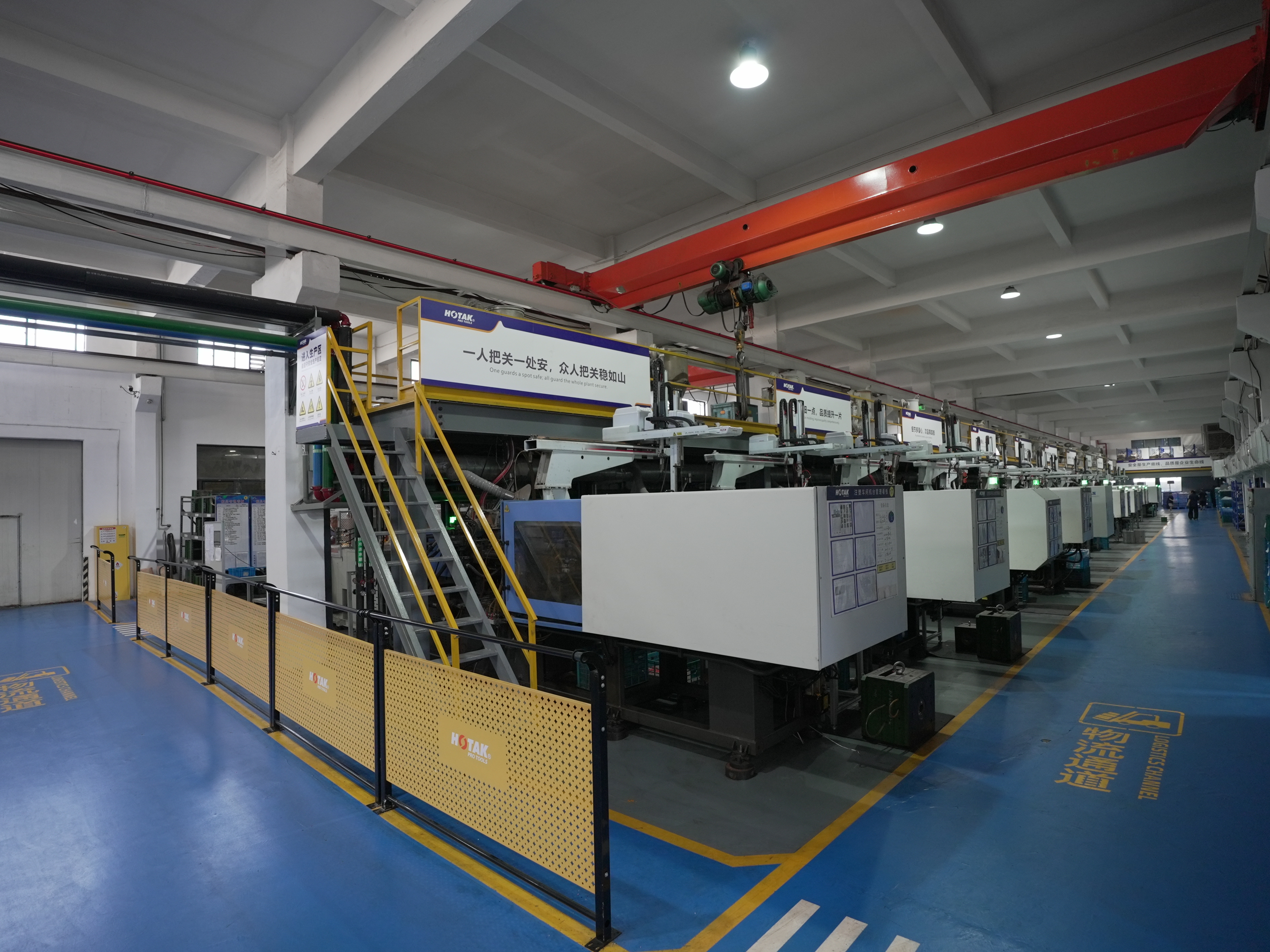
At the supplier level, the documentation base behind this range is factory- and system-oriented rather than model-oriented. The manufacturing base holds ISO9001 quality management system certification, TÜV/GS German safety certification, BSCI business social compliance certification and VPA (Verify Production Audit) approval, and has passed factory audits for Walmart (USA) and Kingfisher (UK). The facility covers more than 45,000 m², produces 18,000,000 units annually, and runs an R&D team of 25 engineers. OEM/ODM customization is supported for hand tools, and the company has established long-term partnerships with global retailers including The Home Depot, Lowe's, Walmart and TTI.
Read that list carefully and it becomes clear what it does and does not prove. Factory audits confirm a production system. Social compliance certificates confirm labour and environmental practices. Neither proves that a specific 4V model conforms to a specific product standard. Buyers who treat a factory audit as a product certificate usually discover the gap during retail onboarding rather than at the quotation stage — which is exactly the point at which switching suppliers becomes expensive.
Classifying Claims: Certificates, Tests and Marketing
The useful question is not "does the supplier have certificates?" but "which document supports which sentence in the offer?" Claims in this segment fall into five groups, and each is verified differently.
| Claim type | Example from this range | Document that can support it |
|---|---|---|
| System and factory level | ISO9001, TÜV/GS, BSCI, VPA, Walmart and Kingfisher factory audits | Certificate with stated scope, issuing body and validity date |
| Product compliance | CE/EMC, RoHS and GS coverage where applicable to the target market | Official test certificate naming the model and the corresponding standard numbers |
| Material and construction | CR-V and S2 steel versus 45# carbon steel; proof torque 15-25% higher than ordinary 45# carbon-steel hand tools; cost 8-12% above low-grade carbon-steel alternatives | Incoming inspection records and material certificates — not a safety certificate |
| Performance and service life | Manual staple gun service life by housing material: plastic above 7,000 shots, iron above 15,000 shots, aluminium-alloy above 30,000 shots | Internal or third-party test protocol stating sample definition and conditions |
| Commercial terms | MOQ 600 units, FOB Shanghai/Ningbo, pre-shipment test, third-party inspection by SGS, 30% T/T in advance and 70% T/T against copy of B/L | Contract, proforma invoice and inspection report |
Two of these rows deserve extra attention. Material claims such as the CR-V versus 45# carbon-steel distinction are design-level statements; they are confirmed by incoming inspection and material certificates, not by a safety test. And the service-life figures above are material-level indications for the manual staple gun range. They should never be inherited by the cordless models, whose wear profile depends on battery cycling, motor load and switch duty rather than on housing material alone.
Where the Review Changes the Buying Decision
Private label and OEM projects. When a buyer is building a branded 4V line, label text, manual language and packaging claims all sit inside the certificate scope. A document that names the factory's own model will not cover a private-label version with different labelling. OEM/ODM customization is available in this range, which makes the labelling question routine rather than exceptional.
Electronics repair and craft applications. Precision tools such as the YJPS-906 electric precision repair tool set and the YJPS-907 26-piece cordless precision power screwdriver set are specified at very low torque — 0.15 N.m electric and 3 N.m manual, at 220 rpm. At that level, a torque claim is only meaningful if the test method and the tolerance are stated. Craft and hobby buyers should ask for the torque definition, not just the number.
Furniture assembly and light upholstery. Two-use and five-use cordless staple and nail guns (YJSG-500 and YJSG-501) are specified at 3.7V with a 2,000 mAh battery and 25W rated power. Fastener compatibility is the claim most often left undocumented. A file that lists rated voltage but not accepted staple types and leg lengths leaves the buyer unable to confirm that the tool suits the job.
Distribution and long-term supply. Distributors carrying a range across multiple catalogue cycles need documentation that survives model updates. The relevant question is not whether a certificate exists today, but who notifies the buyer when a battery platform, charger input or motor specification changes.
Comparison with Traditional Verification: What Files Cannot Do
Document review is a filter, not a substitute for physical verification. Traditional practice in this segment combines three layers: an internal pre-shipment test, an optional third-party inspection — for this supplier, inspection by SGS is available as an acceptance criterion — and commercial terms that allocate risk if the goods do not match, such as 30% T/T in advance with the balance against a copy of the bill of lading.
The limitation is structural. A certificate confirms that a defined configuration conformed to a defined standard at the time it was tested. It does not certify every subsequent production batch, and it does not transfer automatically when a component supplier changes. Factory audits are programme-specific: an approval granted for one retailer's audit programme is evidence of that programme's requirements being met, and it is not a general licence for other customers. Service-life figures, including the plastic, iron and aluminium-alloy staple gun values above, are test-based indications under stated conditions rather than warranties of individual tool performance.
That is why the strongest position for a long-term buyer is documentary plus physical: match every claim to a document, then verify a shipped batch against it. Neither layer alone closes the risk.
Market Trend: Battery Platforms and Documentation Continuity
Several adjacent segments show where 4V documentation pressure is coming from. The global staple gun market was valued at USD 1.54 billion in 2024 with a forecast CAGR of 3.13% through 2032, according to Maximize Market Research. The cordless multi-rotary tools market is projected to reach USD 1,024.95 million by 2026 (Global Market Insights, medium confidence). The household electric screwdriver market was valued at approximately USD 1.8 billion in 2024, with North America holding a 35% share, per DataHorizzon Research.
The platform trend is equally visible in competitor structures. Ryobi operates a 4V interchangeable USB battery system as a consumer market leader, and Dremel maintains a dedicated 4V home and lifestyle tool category covering cordless screwdrivers and rotary tools. Interchangeable USB battery systems and USB-C charging change the compliance surface of a 4V tool: the charger, the cell and the tool are specified as a set, and the documentation must follow the set.
Because verified adoption data for USB-C in 4V tools is not currently available, buyers cannot benchmark this transition numerically. What they can do is make documentation continuity a contractual expectation — written confirmation of which documents are reissued when a battery platform changes. Trade classification adds a second anchor: HS Code 846729 covers hand tools with self-contained electric motors and is the standard classification for most cordless screwdrivers and specialty 4V tools.
Future Outlook
The direction of travel is toward model-level, versioned documentation. Retail compliance requirements in Europe and North America increasingly expect a named model and a named standard rather than a family-level certificate, and longer product lifecycles make document change control part of the supply relationship rather than an administrative afterthought.
For buyers evaluating 4V cordless tools today, the practical next step is unglamorous: request the catalogue and the certificate list together, then check that the two agree model by model. The current range catalogue for this manufacturer is available for download at the 2025 YONGJIA catalogue, and it can be used as the reference list against which the qualification file is compared.
FAQ
Which standards should a 4V cordless tool file address?
Common areas are mechanical safety, electrical safety and chemical restrictions — for many markets this includes CE/EMC and RoHS, with GS relevant for German retail. The correct response to a supplier offer is to confirm the target sales market first, then request official test certificates covering GS, CE-Machinery, EMC and RoHS as applicable, and cross-check the product model against the corresponding standard numbers.
How can a buyer confirm that a certificate covers the model being ordered?
By matching identity fields rather than product names. For the cordless staple and nail guns in this range that means rated voltage 3.7V, battery capacity 2,000 mAh and rated power 25W; for the cordless power screwdrivers it means rated voltage 3.7V, battery capacity from 320 mAh to 2,000 mAh, output speed and torque values. If the document does not carry the same model number and the same nameplate values as the label and packaging, the certificate covers a different configuration.
What happens to qualification files when a model changes?
Documents are tied to a tested configuration, so a change in battery capacity, motor, charger input or housing material can move the product outside the original scope. In practice this means new or updated test documentation is needed, and long-term buyers benefit from a written agreement on who issues updated documents and how quickly after a specification change — particularly where a 4V platform moves toward USB-C charging.
Are factory audits such as Walmart or Kingfisher approvals valid for other customers?
No. Retailer factory audits confirm that a production system met the requirements of that specific programme at the time of the audit. They demonstrate manufacturing discipline and social compliance capability, and they sit alongside system-level certificates such as ISO9001 and BSCI. They do not function as product certificates, and they do not transfer to a different buyer's compliance programme.
Which commercial and inspection terms should be fixed in writing for long-term supply?
For this supplier, standard terms include an MOQ of 600 units, delivery on FOB Shanghai or Ningbo, pre-shipment testing, third-party inspection by SGS as an acceptance criterion, and payment of 30% T/T in advance with 70% T/T against a copy of the bill of lading. Fixing these terms alongside the documentation requirements keeps the qualification file and the commercial agreement aligned when repeat orders are placed.
Qualification review is a repeatable process rather than a one-off request: identify the product type, match the identity fields, classify the claim, and confirm which document supports which sentence.