
Qualification File for Sofa Fabric: GRS and OEKO-TEX Mapping
Qualification File for Sofa Fabric: GRS and OEKO-TEX Mapping
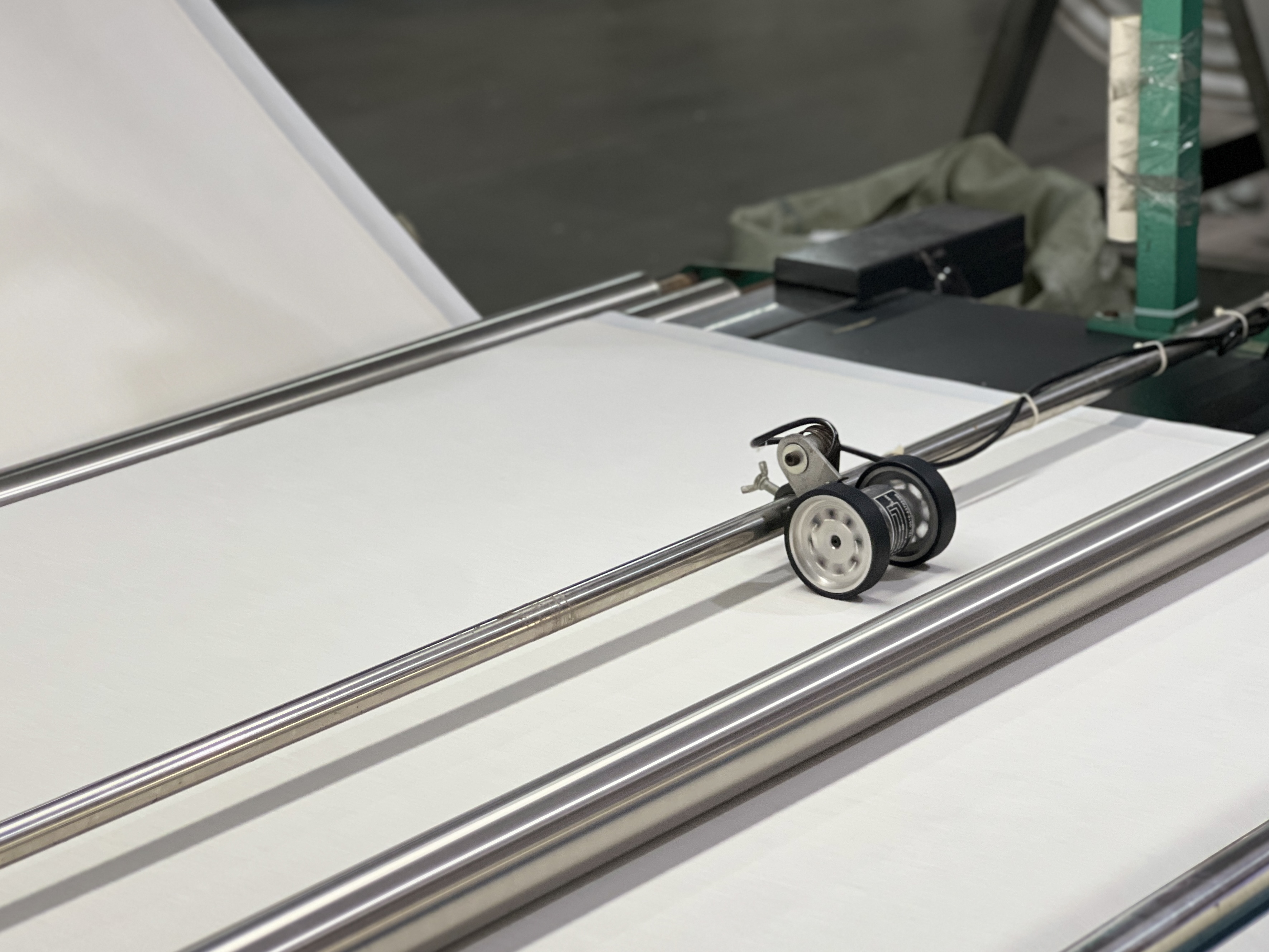
Quality inspection is one half of the evidence chain; the qualification file is the other.
A certificate does not qualify a sofa fabric. The file that ties that certificate to a specific model, colour, production scope and shipment does. In upholstery procurement, buyers routinely receive a short list of abbreviations — GRS, OEKO-TEX, fire-retardant — attached to a quotation for a fabric identified only by a model code. Each abbreviation is meaningful on its own, but none of them, standing alone, tells a buyer whether the article inside the certificate is the article inside the order. The qualification file exists to close that gap. It is a document set assembled before the purchase order, structured so that every certification claim used in a commercial conversation can be traced back to a named document, a named scope and a named product.
This article sets out how to build that file for sofa fabric, using the two certification tracks that appear most often in quotations — GRS (Global Recycled Standard) for recycled material and OEKO-TEX for textile safety — and treating fire-retardant performance as a separate evidence track that belongs in the same file but never in the same slot. OYD Textile's OYD3626 is used throughout as a factual worked example of how the mapping is built, because a general framework that cannot be demonstrated on a real model is difficult to apply.
Why Certification Claims Drift Away From the Quoted Fabric
Certification claims drift for three structural reasons, and each one has a corresponding document check. The first is scope. A certificate is issued for a defined set of articles, a defined production site and, in many schemes, a defined validity period. A buyer who receives an email stating that a fabric is "GRS certified" has learned that the supplier holds a certificate somewhere in its portfolio; the buyer has not learned that the certified scope includes the quote reference on the table.
The second reason is identity. Sofa fabric is quoted by model code, and model codes are internal commercial labels. A woven construction may be listed under one code in a catalogue, sampled under a colour reference, and shipped against a lot number. Where the certificate names a product category or a production site rather than the commercial model code, the link between certificate and quote must be built by the supplier and verified by the buyer. That link is a document, not a reassurance.
The third reason is time. Certificates are reissued, scope statements are extended, and transaction-level documents accompany shipments rather than quotations. A file assembled from last season's document bundle can be internally consistent and still describe a different product. The qualification file therefore needs a document-control section that records issue dates, versions and what happens when a new certificate supersedes an old one.
What GRS and OEKO-TEX Each Attest To — and What They Do Not
GRS and OEKO-TEX answer different questions, which is why one cannot substitute for the other in a qualification file. GRS (Global Recycled Standard) addresses recycled content: it verifies the recycled material declared in a product, requires chain-of-custody controls along the supply chain, and applies chemical, environmental and social criteria within the standard. For a buyer, the operative question is not whether the supplier is "GRS certified" in general, but which certified articles the standard covers and how the recycled content is carried from one tier of the supply chain to the next.
In practice, GRS evidence usually arrives as two distinct document types. A scope certificate states which products, materials and production sites fall inside the certification. Transaction certificates link a specific commercial shipment to that certified scope. A qualification file that contains only the first is incomplete for delivery purposes, because the scope certificate does not, by itself, demonstrate that the rolls on a given order were produced and traded within the certified chain.
OEKO-TEX is best understood as a certification family rather than a single label, and different OEKO-TEX certificates answer different questions about a textile. That is precisely why the file should record the exact designation printed on the certificate rather than the shorthand "OEKO-TEX certified". OYD Textile's catalogue describes its OEKO-TEX certification as certification for safe textile, which is the correct level of description for a product page; the qualification file then has to go one level deeper and capture the certificate designation, the articles listed, any appended article list, the issuing institute and the validity dates from the certificate itself.
Neither track addresses fire performance. GRS is concerned with recycled content and the associated chain of custody and criteria; OEKO-TEX certificates address textile safety questions within their defined scope. A statement that a sofa fabric has fire-retardant performance is a third, separate claim that requires a third, separate document — normally a test report naming the standard, the test method and the result. Treating that report as part of the certification bundle is the most common structural error in a qualification file, because it blends a materials claim, a safety claim and a performance claim into one un-auditable paragraph.
A fourth document type sits alongside these three: independent third-party testing that is not a certification at all. OYD Textile's OYD3235 sofa fabric is covered by a TÜV Rheinland Textile Test Report, report number 180339570a 001, issued by TÜV Rheinland on 17 July 2025, with a documented scope covering furniture and upholstery textile fabrics and applicability to the EU and USA markets. That is a test report, not a recycled-content certification and not a safety certification, and it belongs in the file under its own heading with its own number.
OYD3626 as a Worked Mapping Example
OYD3626 shows how much of a model's identity is already documented before any certificate is attached — and how much the file still has to add. OYD Textile (Haining OuYuda Textile Co., Ltd.), a sofa fabric and upholstery fabric manufacturer based in Haining, Zhejiang, China, catalogues OYD3626 as a woven sofa fabric of 100% polyester, 350±10 GSM, 142±2 cm width, offered in 27 colours and described as a plain chenille construction for modern-style large sofas and upholstered soft beds. The catalogue also records GRS (Global Recycled Standard) certification for sustainable recycled material and OEKO-TEX certification for safe textile, together with fire-retardant performance, pet-friendly suitability, and water-repellent, stain-resistant and easy-clean properties. Its listed application industries include furniture manufacturing, fabric wholesale, interior design, home decor and hotel projects.
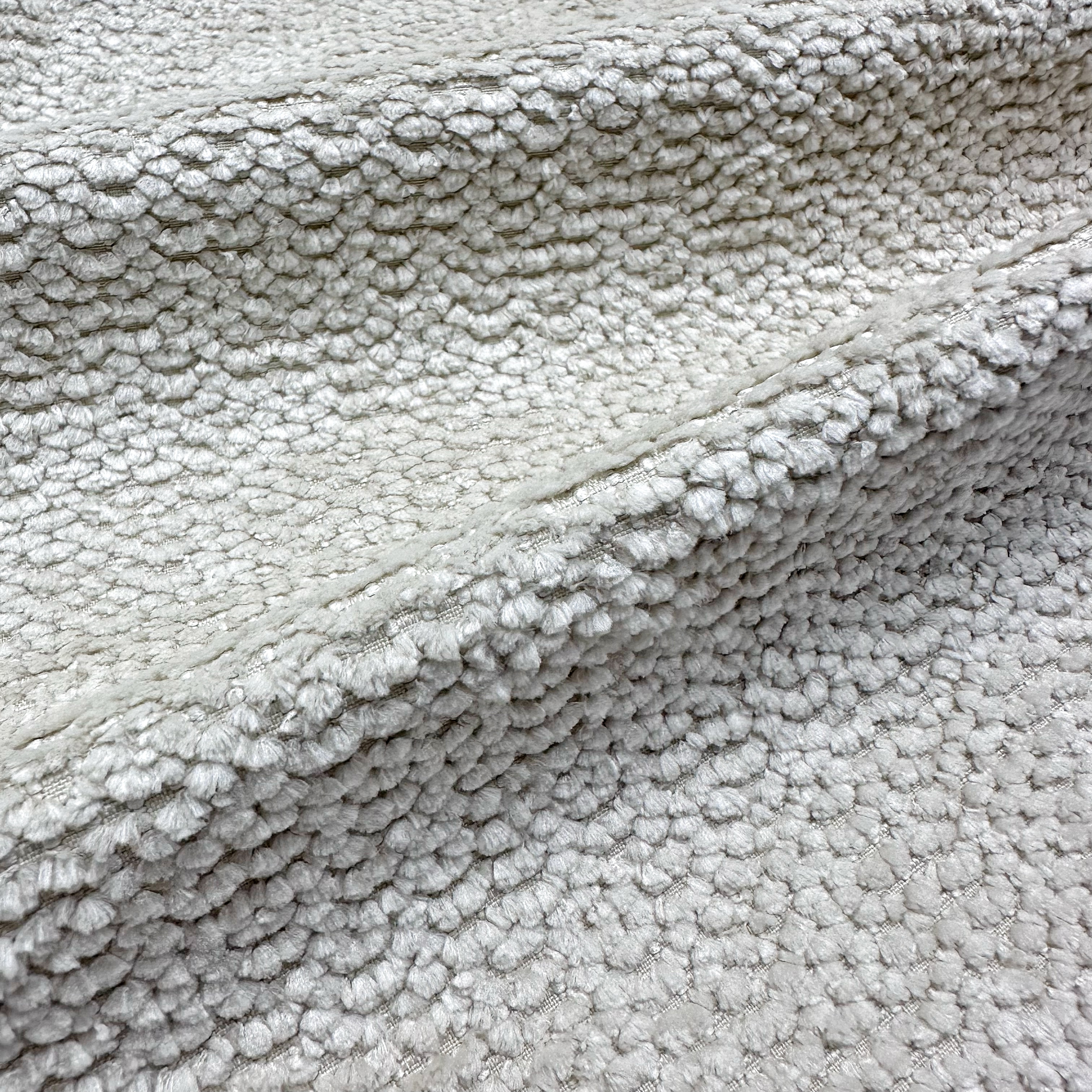
OYD3626, catalogued as a 100% polyester woven chenille at 350±10 GSM and 142±2 cm width.
Everything in the paragraph above is a specification or a claim. None of it is yet a qualification. To convert OYD3626's certification claims into file entries, the buyer needs four additions that the catalogue does not carry: the certificate number and issuing body for the GRS document, the certified scope description and whether OYD3626 appears within it, the exact OEKO-TEX certificate designation together with the list of articles covered, and the transaction-level link that connects a specific order to the certified scope. The same logic applies to the fire-retardant claim, which needs the standard and the test report rather than the adjective.
The reason the mapping must be built per model, and not per supplier, becomes obvious when the range is compared. OYD3626 is a 350±10 GSM 100% polyester woven fabric in 27 colours. OYD3229, a heavy boucle woven fabric, is 620±10 GSM in a 90% polyester and 10% acrylic blend across 7 colourways. OYD3618, a jacquard velvet, sits at 450±10 GSM in 27 colours. Three different constructions, three different compositions, three different colour programmes. A certificate bundle prepared for one of them does not automatically describe the others, and a file that lists the supplier's certifications without naming the model has quietly assumed that it does.
The Qualification File: Eight Sections Buyers Can Audit
A sofa fabric qualification file works when it is organised by question rather than by document type, so that a reviewer can move from claim to evidence without opening every attachment. The eight sections below cover the certification, specification and performance evidence that a research-stage or evaluation-stage buyer typically needs before a fabric enters a project specification.
| Section | Document required | What it must state | Acceptance question |
|---|---|---|---|
| 1. Product identity | Model specification sheet | Model code, construction, composition, weight in GSM with tolerance, width with tolerance, colour programme size | Does the sheet describe the same construction that appears in the quote? |
| 2. GRS scope | Scope certificate | Certified products or product categories, certified production sites, issuing body, validity dates | Is the quoted article inside the certified scope? |
| 3. GRS chain of custody | Transaction certificate for the order | Link between the certified scope and the specific shipment or order reference | Does the transaction document reference this order? |
| 4. OEKO-TEX | Certificate plus any appended article list | Exact certificate designation, articles covered, issuing institute, validity | Is the designations recorded, not just the family name? |
| 5. Fire performance | Test report naming standard and method | Standard applied, test method, result, conditioning, tested article identity | Is the tested article the finished product that will ship? |
| 6. Physical performance | Third-party test report where available | Report number, issuing laboratory, scope, date, tested product | Does the report name the model, not only the supplier? |
| 7. Sample-to-bulk statement | Signed statement plus retained sample reference | Which colour, finish and construction the bulk order will match | Is the approved sample identified by code and date? |
| 8. Document control | Index page | Document numbers, versions, issue dates, superseded documents | Can a reviewer see which version is current? |
The table is deliberately a buyer's document, not a supplier's brochure. Its function is to make an absence visible. If section 3 is empty, the file shows that recycled content has been verified at the certificate level but not yet linked to the order. If section 5 contains a supplier statement rather than a test report, the file shows that fire-retardant performance is asserted but not evidenced. An empty row is more useful to a procurement team than a paragraph of reassurance, because it can be assigned, chased and closed.
Four Acceptance Checks Before a Certificate Enters the File
Acceptance checks convert a document into a verified entry. Four checks cover most of the risk, and they can be applied to any certification document in under ten minutes.
Check one: identity
The name on the certificate must correspond to the article in the quote. Where a certificate lists product categories, materials or production sites instead of commercial model codes, the supplier should provide a written mapping stating which certified category the quoted model falls under. The mapping is a document, dated and attributable; a verbal confirmation is not.
Check two: scope
The certified scope must cover the colour and finish actually ordered. Colour programmes create a specific risk here, because a fabric offered in 27 colours — OYD3626's catalogue figure — is one construction but many articles in commercial terms. If the file cannot show that the colour reference falls inside the certified scope, the recycled-content claim should be recorded as applying to the construction only, not to the ordered colour.
Check three: currency
Every certificate in the file should carry its issue date and, where stated, its validity period. A document that has been superseded should be moved to an archive section rather than deleted, so that the file retains a record of what was relied on at the time of evaluation. The same discipline applies to test reports: the TÜV Rheinland report covering OYD3235 carries the report number 180339570a 001 and an issue date of 17 July 2025, and both belong in the index.
Check four: batch linkage
Certification at the certificate level and certification at the shipment level are different assurances. The batch check asks whether the transaction-level document for the order exists and references that order. This is the check most often deferred to post-order administration; deferring it means the buyer accepts the fabric on a scope-level claim and reconciles the chain of custody afterwards.
Where Fire-Retardant Evidence Belongs in the Review
Fire-retardant performance belongs in the qualification file as a performance section with its own standard reference, its own test report and its own market applicability — never as a bullet point inside the certification summary. The distinction matters because fire requirements are set by the destination market and the product's end use, not by a recycled-content or textile-safety scheme.
The United Kingdom illustrates how quickly that regulatory layer moves. The Furniture and Furnishings (Fire) (Safety) (Amendment) Regulations 2025 came into force in October 2025, removing the display label requirement and focusing on permanent labels, according to the UK Government's Department for Business and Trade guidance. For a buyer specifying upholstery for the UK market, the practical consequence is that label evidence and the underlying test evidence need to be tracked as separate items in the file, and that the applicable version of the regulation must be recorded alongside the test report rather than assumed.
Three questions should therefore accompany any fire-retardant claim in a sofa fabric quotation. Which standard and test method were applied? Which article was tested — the greige fabric, the finished fabric, or a composite of fabric and filling? And for which market and end use was the assessment made? OYD3626's catalogue records fire-retardant performance as a product property; the file's job is to attach the specific report that supports it, in the same way that the GRS and OEKO-TEX claims need their own documents. If a flame-retardant finish is applied as a finishing step, the tested article should also be checked against the finished product that will actually ship, because a certificate or report describing an untreated reference fabric does not describe the delivered roll.
Applying the File to Hotel, Factory and Distributor Scenarios
The same file structure serves three different buying situations, but the section that carries the most weight changes with the buyer.
For a hotel project, the certification and performance documents usually leave the procurement team and enter a project compliance review, where they may be read by a specifier who never sees the fabric. A file built around named models is easier to hand over: OYD3626, listed for hotel project and interior furnishing applications, arrives with its specification sheet, its GRS and OEKO-TEX entries and its fire-performance section already indexed, so the project reviewer can check a claim without contacting the mill. The scenario is a documentation scenario before it is a textile scenario.

Project upholstery: the fabric specification, the certification scope and the fire evidence travel together.
For a furniture factory running an OEM programme, colour-level traceability dominates. A 27-colour fabric programme multiplies one construction into many order lines, and each line needs a scope statement. The factory's own customer will eventually ask which certified material went into which sofa, and the answer has to come from a file organised by colour reference rather than by certificate.
For a distributor holding stock, the unit of the file is the SKU, not the collection. A distributor that maintains one certification bundle for an entire fabric range will, sooner or later, present a customer with a document set that covers a neighbouring model. Building the file per model — with the model code on the index page — prevents that error and makes it possible to answer a tender question without opening the mill's original correspondence.
Paper Bundle vs. Model-Linked File
The difference between a certificate bundle and a qualification file is not volume; it is whether the documents are connected to a product decision. A paper bundle collects what the supplier sent. A model-linked file answers what the buyer asked, in the order the buyer asked it, and shows where the evidence runs out.
- Paper bundle: certifications listed by scheme name, specifications in a separate catalogue, fire performance asserted in a product description, no index, no version control, no transaction-level link.
- Model-linked file: an index page naming the model, each claim mapped to a numbered document, scope statements checked against the quoted colour, performance evidence held in its own section with a standard reference, and a visible list of open items.
The limitation is worth stating plainly. A qualification file records what was documented at the time of evaluation; it does not certify the finished sofa, it does not replace the destination market's legal requirements, and it does not remove the need to test or inspect incoming rolls. Certification schemes and regulations are revised, so the file is a living document that has to be re-checked at each order rather than a one-time deliverable. Its value lies in making the re-check fast and auditable.
What Current Sourcing Signals Suggest
Documentation is becoming a selection criterion rather than an afterthought, and the available market evidence points in that direction without proving it on its own. Dataintelo's research on the furniture performance fabric segment — stain-resistant and high-durability fabrics — values that segment at USD 4.8 billion in 2025, with polyester holding a 38.4% material share. Read carefully, that figure describes a subset of the fabric market defined by performance attributes, which are exactly the attributes that require documentary proof in a qualification file.
At the supply end, China's exports of textile yarns and fabrics reached USD 130.01 billion from January to November 2025, a 0.9% year-on-year increase, according to China Customs data reported by Threadify Analytics. That is an aggregate category covering far more than upholstery, so it should be read as background on supply continuity rather than as evidence about sofa fabric specifically. The analytical point it supports is narrower: in a large, competitive export supply base, a buyer's ability to distinguish documented from undocumented claims is one of the few levers that does not depend on price negotiation.
Conclusion: Build the File Before the Purchase Order
A sofa fabric qualification file is built from ordinary documents — specification sheets, scope certificates, transaction certificates, test reports, sample approvals — arranged so that each commercial claim has exactly one place to be verified. The work is unglamorous and mostly administrative, which is why it is often deferred until a project reviewer asks a question that the sales file cannot answer.
The mapping exercise described here can start with a single model. OYD3626, with its documented construction at 350±10 GSM and 142±2 cm width, its 27-colour programme, and its GRS and OEKO-TEX claims, is a workable first entry: record the claims, request the certificate numbers and scopes behind them, place the fire-retardant evidence in its own section, and mark the transaction-level link as open until the order exists. Buyers who want the underlying product documentation for OYD Textile's sofa fabric range can review the manufacturer's site at OYD Textile, and the company's fabric selection brochure is available for download at the end of this article.
FAQ
Does GRS certification on a sofa fabric mean the finished sofa contains recycled material?
No. GRS certification applies to the material and the certified supply chain within the scope named on the certificate, not to the finished furniture article. A sofa manufacturer using a GRS-certified fabric still has to establish how much recycled content reaches the finished product, which depends on the fabric's share of the sofa's total material weight and on the other components used.
What is the difference between a GRS scope certificate and a transaction certificate?
The scope certificate defines what is certified: the products, materials and production sites inside the certification, together with the issuing body and validity dates. A transaction certificate links a specific commercial shipment back to that certified scope. A qualification file normally needs both, because the scope certificate does not by itself show that a particular order was produced and traded within the certified chain.
Does OEKO-TEX certification cover fire-retardant performance?
No. GRS addresses recycled content and the associated chain of custody and criteria, while OEKO-TEX certificates address textile safety questions within their stated scope. Fire performance is a separate claim that requires a test report naming the standard and test method applied. In a qualification file, the three belong in separate sections with separate document numbers.
Which documents should a buyer request for OYD3626 specifically?
Four groups. A model specification sheet confirming the woven construction, 100% polyester composition, 350±10 GSM weight, 142±2 cm width and the colour reference ordered. The GRS scope certificate together with the certificate numbering and issuing body. The OEKO-TEX certificate with its exact designation and the articles it covers. And a fire-performance test report naming the standard, method and tested article. A sample approval reference for the ordered colour completes the set.
How often should a sofa fabric qualification file be updated?
At each new order, and whenever a certificate, test report or regulation changes. The minimum discipline is a dated index page that shows which document version was relied on at evaluation, so that a superseded certificate is archived rather than deleted. Where a destination market amends its furniture fire requirements — as the UK did with the Furniture and Furnishings (Fire) (Safety) (Amendment) Regulations 2025, in force from October 2025 — the affected section of the file is reopened even if the fabric itself has not changed.
Further product and capability detail is available in the OYD Textile fabric selection brochure.
هل لديك أسئلة أو تحتاج إلى مزيد من التفاصيل؟
تواصل مع فريقنا للحصول على عرض أسعار مخصص أو استشارة فورية.
طلب عرض أسعار
املأ النموذج أدناه وسيتواصل معك فريقنا بعرض مقترح مخصص.
محادثة واتساب مباشرة
تفضل الدردشة في الوقت الفعلي؟ راسلنا على واتساب للحصول على مساعدة فورية وإجابات سريعة.
- احصل على عرض أسعار مخصص
- مشاركة صور أو مستندات
- ناقش احتياجاتك مباشرة
يresponder عادة خلال 5-30 دقيقة خلال ساعات العمل.