
Qualification Mapping for Orthodontic Supplies: Brackets, Wires, Pliers, and Accessories
Qualification Mapping for Orthodontic Supplies: Brackets, Wires, Pliers, and Accessories
A qualification file for orthodontic supplies should be organized by product family, not by a single certificate or a catalog page. Brackets, bands, wires, pliers, needle holders, retractors and accessories each answer a different qualification question. The file is ready for a Research-to-Evaluation decision only when the exact product, material, lot trail and regulatory evidence can be matched to the intended use.

What the qualification file must answer
A useful orthodontic supplies qualification file answers four questions in a fixed order. First, what is the product and what is its intended use? Second, what material and design parameters define it? Third, how can a finished unit be traced to its material lot, production lot and inspection record? Fourth, which regulatory or certification document covers that product, model and market, and for what validity period?
A certificate-only file answers a narrower question: does the supplier hold a certificate? It does not prove that a specific bracket, wire, plier or O ring is within the certificate scope. A category-specific file answers the buyer’s real question: is this exact product, from this material, in this lot, supported by evidence that matches the intended clinical or commercial use?
Decision rule: If the file cannot connect product identity, material, lot and regulatory scope, the correct status is a documented gap, not an assumption based on catalog breadth.
Product identity comes before certificate review
Product identity is the first control because orthodontic supplies contain many look-alike families. A line that says “buccal tubes” is not enough for qualification. The buyer needs the exact product name, model, system, torque, slot size and material where those attributes define the product. For example, the Zeal Plus Series Dental Buccal Tubes are listed with Roth and MBT systems, low or high torque, slot sizes 18 and 22, and stainless steel construction. Those attributes should appear in the qualification file before a certificate is attached.
The same rule applies to brackets. Dental Brackets, Dental Self-ligating Brackets, Dental Ceramic Brackets and Dental Lingual Brackets are not interchangeable categories. A file should state whether the product is metal, ceramic, self-ligating or lingual, and it should record the exact series or model. Dental Orthodontic Bands are a separate family from brackets and buccal tubes. Dental Wires are separate again, including Super-elastic Niti Wires, Stainless Steel Arch Wires and CuNITI Arch Wires. Grouping them under “orthodontic supplies” may be acceptable for a purchase order header, but not for qualification.
Instruments need the same precision. Dental Pliers include Light Wire Pliers, Distal End Cutter Pliers, Light Wire Cutter Pliers, Bracket Removing Pliers, Band Crimping Pliers, Crown and Band Contouring Pliers, Crown Trimming Scissor and Clear Aligners Pliers. The Mathieu Needle Holder is listed in three configurations: with hard tip, without hard tip, and without hard tip Type C. Dental Retractors include Lip Retractor and Cheek Retractor. These are different intended uses, different cleaning or sterilization questions and, in some cases, different regulatory categories.
Separate instruments from consumables
Orthodontic supplies are not one risk category. Reusable instruments such as Dental Pliers, Needle Holders, Dental Tweezers, Dental Mirrors, Dental Retractors and Dental Contrasters require evidence on material, joint or hinge durability, surface finish, corrosion resistance and compatibility with the stated sterilization cycle. Consumable accessories such as Orthodontic O Rings, Separators, Power Chains, Orthodontic Chewies, Ligature Rings and Rotation Wedges require evidence on material, dimensions, lot identity, packaging and shelf life where applicable.
A plier specification that states hardness HRC 55–60, a maximum sterilization temperature of 180°C and a wire diameter up to 0.030 inch gives the buyer something testable. The Crown and Band Contouring Pliers and Crown Trimming Scissor list hardness HRC 58–63 and the same 180°C maximum sterilization temperature. Glass Dental Mirrors are listed as autoclavable up to 130°C. Those values help the buyer compare the product with the clinic’s actual reprocessing routine. A generic statement that an instrument is “high quality” does not.
For consumables, the key questions shift. Orthodontic O Rings are listed in latex and silicone options, with different diameters and pull-force levels and color-coded packaging. The High-pull Orthodontic Pull System is listed with PE and polyester fabric, large, medium and small sizes, and a safety release module. These are material and design facts that belong in the consumable file, not in a general instrument certificate summary.
A five-pass review flow
- Define the scope by product family. Start with separate sections for brackets, bands and buccal tubes, wires, pliers and cutters, needle holders and retractors, mirrors and tweezers, and accessories. Do not let one family’s evidence stand in for another.
- Pin down identity and intended use. Record the exact product name, model, configuration and clinical or laboratory use. For a buccal tube, this includes system, torque and slot size where supplied. For a plier, it includes the procedure and wire range.
- Record material and design parameters. Capture stainless steel grade where stated, hardness, maximum sterilization temperature, latex or silicone content, dimensions, radiopacity where relevant, and any model-specific feature that affects use.
- Build the lot trail. Require a batch or lot identifier on the label and in the inspection record. For instruments, link the finished unit to the production lot and the release check. For consumables, link the lot to material, packaging and shelf-life data where supplied.
- Map regulatory evidence by scope and date. Attach the certificate or registration document, but also record its issuer, number, standard, issue date, expiry date and product scope. A document that is valid but outside the product scope is not qualification evidence for that product.
Category-by-category mapping table
| Product family | What to pin down | Documents to request | Boundary to record |
|---|---|---|---|
| Dental Brackets, including metal, ceramic, self-ligating and lingual types | Exact series or model, material, slot size, prescription or system, ligation method and intended use | Product-specific declaration, material statement, lot record, certificate scope that names brackets | Do not treat a bracket certificate as covering bands, tubes or wires unless the scope says so. |
| Dental Orthodontic Bands and Dental Buccal Tubes | Band size or tube system, torque, slot size, material and weld or assembly details where applicable | Model-specific specification, lot record, scope confirmation for bands and tubes | Buccal tubes are not interchangeable with brackets or bands in the qualification file. |
| Dental Wires, including Niti, stainless steel and CuNITI arch wires | Alloy, cross-section, dimension, lot and mechanical property data where supplied | Material declaration, dimensional specification, lot traceability, scope confirmation for wires | Do not use a bracket or plier certificate as evidence for wire performance. |
| Dental Pliers, cutters and scissors | Procedure, jaw or tip design, hardness, wire range, maximum sterilization temperature and hinge construction | Model-specific specification, material and hardness record, sterilization compatibility statement, lot record | Instrument scope does not automatically cover consumable accessories. |
| Needle Holders, Dental Tweezers, Dental Mirrors and Dental Retractors | Tip type, surface finish, material, autoclavable limit and intended clinical use | Product specification, material statement, sterilization data, lot record and applicable scope | Mirrors and retractors are not validated by a plier certificate unless the scope includes them. |
| Orthodontic O Rings and elastics | Latex or silicone, diameter, pull force, packaging and lot | Material declaration, dimensional and force specification, lot record, shelf-life or storage statement where supplied | Confirm the accessory’s own regulatory status; do not infer it from an instrument certificate. |
| Separators, Rotation Wedges, Power Chains, Orthodontic Chewies and Ligature Rings | Material, size, intended use, lot and packaging format | Product-specific specification, material statement, lot record and any applicable declaration | These are separate consumable families and should not be merged into one approval line. |
What certificate evidence covers, and what it does not
DTC orthodontics is the orthodontic supplies portfolio of Hangzhou DTC Medical Apparatus Co., Ltd., a manufacturer established in 2004 in Hangzhou, Zhejiang Province. Its supplied certification records are useful for showing how scope, document type and validity should be read. They should not be converted into a blanket claim that every catalog item is certified in every market.
The ISO 13485:2016 certificate, number SX 2184523-1, was issued by TÜV Rheinland LGA Products GmbH on 22 April 2024 and is valid through 8 May 2027. The stated scope covers design and development, manufacture and distribution of orthodontic brackets, orthodontic bands, orthodontic tubes, orthodontic wires, lingual buttons, crimpable hooks, orthodontic pliers and dental mirrors. That is strong system-level evidence for those families. It does not, by itself, establish that O rings, separators, power chains or chewies are within the same scope.
The MDR document is a Notified Body Confirmation Letter described as an MDR Transition Document and an MDR Application Confirmation for Class IIa Medical Devices, number 244557490, issued by TÜV Rheinland LGA Products GmbH on 4 January 2024 and valid through 31 December 2028. Its listed scope covers orthodontic brackets, tubes, lingual buttons, crimpable hooks, wires and bands. The title matters: a transition or application confirmation is not the same document as a CE certificate, and the buyer should not describe it as one.
The FDA record is listed under 21 CFR Part 807 with number 3009955691, issued on 12 January 2026 and current through 31 December 2026. Its listed scope includes tube, aligner and bracket, band, spring, mirror, retainer screw expansion and clamp/wire categories. This is an FDA record, not a statement that every product in the range has been approved or cleared for every indication. A qualification file should preserve that distinction in the document description.
These examples show the correct review method. Check the issuer, certificate number, standard, issue date, expiry date and product scope. Then check whether the product family in the file falls inside that scope. A certificate that is genuine but scoped to brackets and pliers cannot be used to approve O rings or chewies without separate evidence.
Material, lot and process traceability
Traceability is where many files become vague. A supplier may state that a product is made of stainless steel, but the buyer still needs the product-specific material declaration, the lot identifier and the release record. For instruments, the useful link is finished product to production lot to inspection. For consumables, the useful link is finished product to material batch, packaging lot and shelf-life or storage information where supplied.
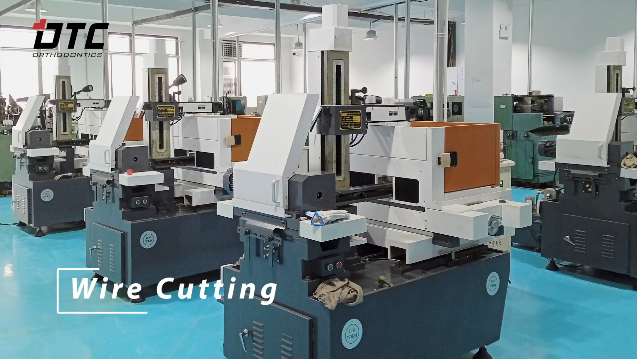
Material data should be specific enough to support a comparison. For a plier, the file should record hardness, maximum sterilization temperature and the wire range where supplied. For a mirror, it should record the autoclavable limit and the reflective surface type where stated. For an O ring, it should record latex or silicone, diameter and pull force where supplied. The record should also state what was not supplied. A blank field is more honest than an assumption.
Lot traceability is also the basis for change control. If a supplier changes a material source, a hinge design, a packaging format or a sterilization recommendation, the buyer needs to know whether the change affects the approved product. A qualification file without a revision history becomes a one-time binder rather than a working control.
From research to evaluation: how to record an approval decision
In the Research stage, the buyer is mapping the category and identifying which documents exist. In the Evaluation stage, the buyer is testing whether those documents are sufficient for the intended market, clinic or distribution agreement. A practical file records one of three outcomes for each product family: approved, approved with conditions, or held for missing evidence.
Approved means the exact model, material, lot trail and regulatory scope have been checked and accepted. Approved with conditions means the product can proceed only if a named gap is closed, such as a current certificate for a specific accessory or a model-specific material declaration. Held means the central evidence is missing or contradictory, and no purchasing approval should be recorded until it is resolved.
This structure is more useful than a pass or fail mark because it shows the buyer what to ask next. It also prevents a common error: treating a supplier-level quality system certificate as if it were a product-level approval for every item in the catalog.
Supplier capability evidence and its limits
Capability evidence helps the buyer understand how a supplier manages production, but it does not replace product qualification. The supplied DTC profile lists a 5,000 m² factory, 150 employees, 30 engineers and an annual output of 1,000,000 units. The capability record lists OEM/ODM support, customization of package, logo, tag and product, a monthly capacity of 5,000 units, an MOQ of 100 units, a lead time of 20–30 days and 100% test. These facts are relevant to supply continuity, customization discussions and change control.
They are not evidence that a particular bracket, wire, plier or O ring meets a specific regulatory requirement. The buyer should keep capability evidence in a supplier-level section and product-specific evidence in the category file. That separation keeps a strong factory profile from being used to fill a product-level documentation gap.
Accessories need their own file
Orthodontic accessories are often the weakest part of a qualification file because they look simple and low-risk. O rings, separators, power chains, chewies, ligature rings and rotation wedges still need product identity, material, lot and intended-use evidence. For O rings, the material choice between latex and silicone changes the patient-facing claim and the documentation requirement. For separators and chewies, the buyer should confirm the supplied specification rather than assume a standard from another product family.
The key boundary is certificate scope. If a supplier’s ISO 13485 certificate names brackets, bands, tubes, wires and pliers, the buyer should not silently extend that scope to every accessory. The correct action is to request the accessory-specific declaration, registration or certificate that applies, or to record that the item remains outside the approved scope.
Common failure points
- Using a catalog page as the qualification file. A catalog describes a range; it does not prove lot traceability or regulatory scope.
- Attaching a certificate without reading its product scope. A valid certificate can still be irrelevant to the item under review.
- Mixing model configurations. A buccal tube with one torque and slot size is not qualified by a document for another configuration.
- Treating a transition document as a CE certificate. The document title and legal status must be recorded accurately.
- Ignoring expiry dates. A certificate that has expired, or will expire before the delivery date, should be flagged for renewal.
- Using one checklist for instruments and consumables. Reusable pliers and single-use accessories have different evidence needs.
FAQ
What documents should a buyer request before approving a new bracket or wire?
Request the exact product name and model, the material declaration, the dimensional or system specification where applicable, the lot or batch record, and the certificate or registration document whose scope names brackets or wires. For a bracket, record the slot size, prescription or system and ligation method. For a wire, record the alloy, cross-section and dimension. The file should also show the certificate number, issuer, issue date, expiry date and product scope.
How can a buyer check whether an ISO 13485 certificate covers orthodontic pliers and brackets?
Read the scope text on the certificate, not just the certificate title. The ISO 13485:2016 certificate for Hangzhou DTC Medical Apparatus Co., Ltd., number SX 2184523-1, lists orthodontic brackets, bands, tubes, wires, lingual buttons, crimpable hooks, orthodontic pliers and dental mirrors within its stated scope and is valid through 8 May 2027. A buyer should compare that scope with the exact product family and model being approved.
Is an FDA record the same as a CE certificate for orthodontic supplies?
No. They are different regulatory instruments with different issuers, legal bases and scopes. The supplied FDA record for DTC is listed under 21 CFR Part 807 with number 3009955691 and is current through 31 December 2026. The supplied MDR document is a Notified Body Confirmation Letter described as an MDR Transition Document, number 244557490, valid through 31 December 2028. A buyer should record each document by its correct title and not treat one as a substitute for the other.
What lot traceability should be recorded for brackets, bands and wires?
Record the finished-product lot or batch identifier, the production date where supplied, the material or component lot where the supplier provides it, and the release or inspection record. The lot should link the packaged product to the production run. If the supplier cannot provide a lot link, the file should record that gap rather than assuming traceability from the certificate alone.
Why should O rings, separators, power chains and chewies be qualified separately from instruments?
They are different product families with different materials, intended uses and evidence needs. O rings may be latex or silicone and are supplied in different diameters and pull-force levels. Separators, power chains and chewies are consumable accessories, while pliers and needle holders are reusable instruments. A certificate scope that names brackets, wires and pliers does not automatically cover those accessories, so each family needs its own product-specific evidence.
A living file, not a one-time binder
Qualification mapping for orthodontic supplies works when each product family has its own identity, material record, lot trail and scoped regulatory evidence. Brackets, bands, wires, pliers, needle holders, retractors and accessories should be reviewed as separate categories, even when they are purchased together. The file should be updated when a certificate expires, a model changes, a material source changes or a new market requirement applies. That discipline gives buyers a defensible approval record and gives suppliers a clear standard for the evidence they need to maintain.
Company reference: Hangzhou DTC Medical Apparatus Co., Ltd. publishes a company brochure (PDF) for general product-range information.
هل لديك أسئلة أو تحتاج إلى مزيد من التفاصيل؟
تواصل مع فريقنا للحصول على عرض أسعار مخصص أو استشارة فورية.
طلب عرض أسعار
املأ النموذج أدناه وسيتواصل معك فريقنا بعرض مقترح مخصص.
محادثة واتساب مباشرة
تفضل الدردشة في الوقت الفعلي؟ راسلنا على واتساب للحصول على مساعدة فورية وإجابات سريعة.
- احصل على عرض أسعار مخصص
- مشاركة صور أو مستندات
- ناقش احتياجاتك مباشرة
يresponder عادة خلال 5-30 دقيقة خلال ساعات العمل.