
Qualification Review for Mining Container Cooling: Project-Specific Evidence to Require
Qualification Review for Mining Container Cooling: Project-Specific Evidence to Require
A qualification review for mining container cooling is not a cover-page check of certificates. It is a project-specific evidence review that connects the selected container and cooling architecture to the site electrical supply, grounding boundary, redundancy requirement, coolant chemistry and material schedule. The review should end with a documented first-startup acceptance record, not with an assumption that a reference project or a management-system certificate has already answered the site question.
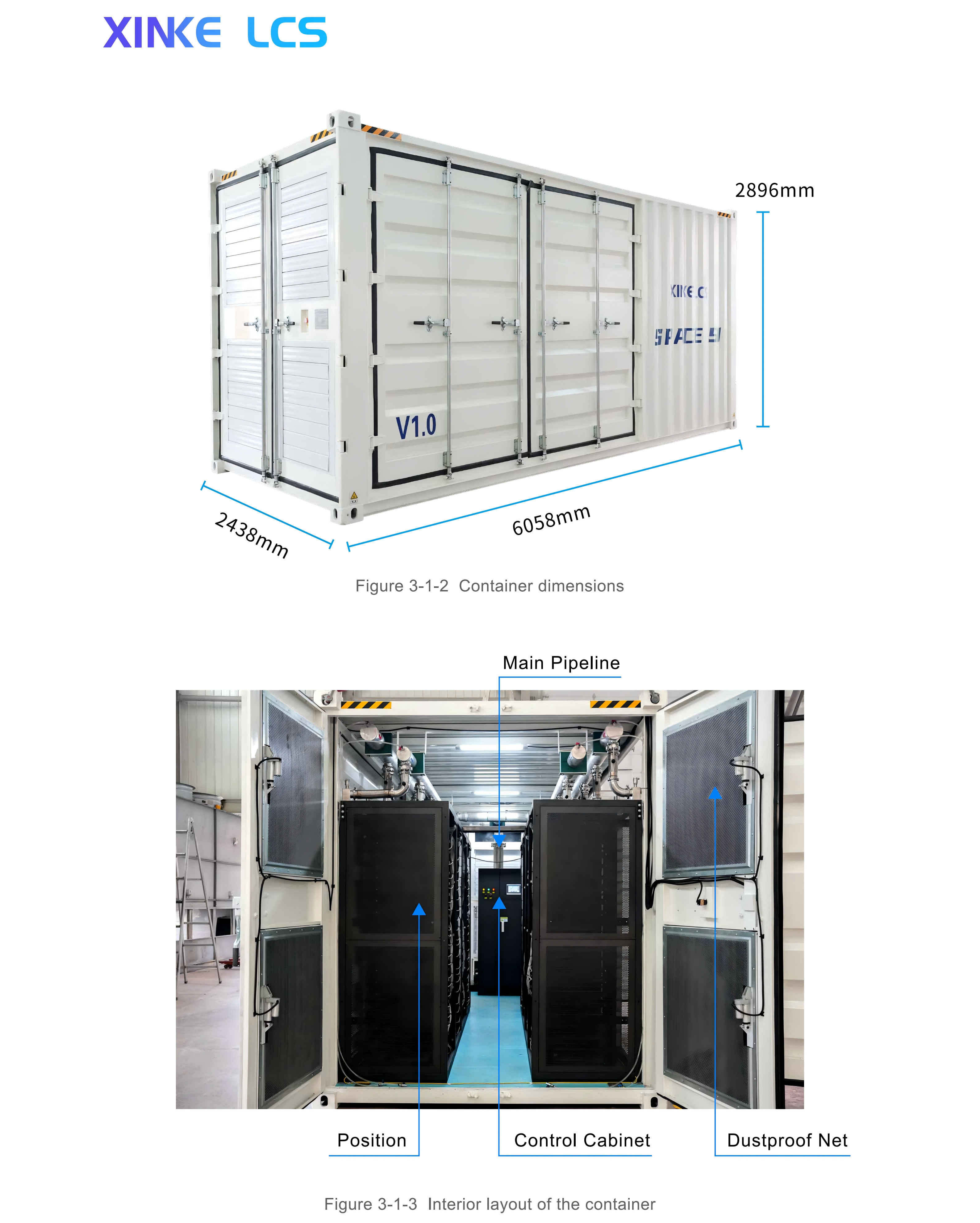
Cover image: a 120-unit liquid-cooled mining container configuration. Project qualification still requires site-specific V/Hz, grounding, redundancy, coolant and material evidence.
xinkelcs Mining Container is a product line from Tangshan Xinke Intelligent Technology Co., Ltd., a China-based company that combines R&D, production, sales and system integration of liquid-cooling infrastructure for blockchain, high-performance computing and AI data centers. Its published data illustrate the difference between a product statement and a project qualification record: the Hydro ASIC Mining Container page lists 120-, 160- and 240-position series and maximum power values, while the AquaPlex-45 prefabricated modular data center container page states that electrical supply and redundancy are project-specific. Both types of information are useful, but neither replaces the project file. The company website is available at xinkelcs.com.
What the qualification review is deciding
The review is deciding whether the proposed cooling package is documented for this site, this miner mix, this electrical interface and this operating boundary. It is not deciding whether the supplier is generally reputable, whether a factory holds a management-system certificate, or whether a project photograph looks credible.
A practical review separates five evidence classes: model data, such as 120-, 160- and 240-position series and 1,200 kW, 1,600 kW and 2,400 kW maximum power values; project design inputs, such as V/Hz, redundancy and coolant compatibility; manufacturing-site certificates and their scope; project references, which show a deployment context but do not disclose every site parameter; and commissioning records, which show what was actually checked at first startup. Only the project design inputs and commissioning records are project-specific evidence. They should be requested in writing.
Electrical supply V/Hz: require the site value, not a model maximum
The most common substitution is to use the container maximum power as if it were the site electrical supply. The Hydro ASIC Mining Container is listed with a maximum power of 1,200 kW for the 120-position model, 1,600 kW for the 160-position model and 2,400 kW for the 240-position model. Those are model maximum power values. They do not state the site voltage, frequency, phase arrangement or interface responsibility.
The AquaPlex-45 prefabricated modular data center container page is more explicit at the project level: its electrical supply is project-specific and expressed in V/Hz, and its redundancy configuration is project-specific. For the Hydro ASIC Mining Container, rated operating conditions are confirmed in the technical agreement. The qualification file should therefore require the exact V/Hz and the electrical interface scope for the selected configuration. A statement such as standard power or suitable for local grid is not a substitute.
A second check concerns power definitions. Available supplier sources use different boundaries: IT load, rack power, rated capacity, operating power and total data-center power. The review should record which definition applies to each number in the proposal. A 1,200 kW maximum power figure, a 1 MW container rating and a 60 kW per-rack figure cannot be placed in one comparison column without stating the boundary. The qualification question is not which number is larger; it is whether the number is defined for the same configuration and the same interface.
Grounding and lightning protection: define what is inside the package
Grounding and lightning protection are easy to list and easy to leave ambiguous. The AquaPlex-45 system scope includes lightning protection and grounding. The liquid-cooled micro module source also lists lightning protection and grounding among its integrated systems. The company profile states that integrated systems can include lightning protection and grounding. A qualification review should require the project scope boundary: what is supplied within the container or package, what is site-provided, where responsibility terminates, and what documentation is handed over.
A line item in a system-scope list is not a completed site grounding design. The buyer should require the project-specific grounding and lightning protection scope to be shown on the interface drawings and tied to the electrical supply. If the selected product source does not itemize that scope in the same way, the review should not assume inclusion from another product page. The correct response is a written scope clarification for the selected model.
Manufacturing approvals do not fill this gap. The CCS Works Approval covers non-cargo carrying equipment containers for the China market and applies to model XKKJ-40HC003 (ISO code 45SM), subject to annual CCS surveillance. It is a works approval for the manufacturing site and the covered equipment-container model. It is not a project grounding study, a lightning-protection design or an electrical-safety certificate for the site installation. ISO 14001 is an environmental management system certification and does not itself certify UL electrical safety compliance; the source also states that it does not document fire-protection or electrical inspection criteria for mining containers. These documents are useful, but they answer a different question.
Redundancy configuration: project-specific must be written down
For the CDU, pump redundancy is project-specific. For the AquaPlex-45, redundancy configuration is project-specific. Neither source establishes a default redundancy level that applies to every mining container project. A proposal that says redundant pumps without defining the configuration, control response and service boundary is not a qualification record.
The review should require the selected architecture redundancy statement in the technical agreement, including which functions are duplicated, how the control system responds, what maintenance isolation is possible and what first-startup check demonstrates the configured behavior. Where automatic switchover is part of the project-configured control scope, it should be documented in the same package. The review should also separate redundancy from alarm response. A low-coolant-flow alarm procedure is an operating response; it is not proof that the redundancy configuration has been delivered or tested.
The CDU range itself shows why model selection matters. The DWW30-20C is listed at 30 kW and the DWW50-25C at 50 kW; the XK-BGCDU-240, XK-BGCDU-600, XK-BGCDU-1200 and XK-BGCDU-2500 are listed at 240 kW, 600 kW, 1,200 kW and 2,500 kW respectively; the sidecar series lists 200 kW, 500 kW and 1,200 kW options. The model designation and capacity must be fixed before redundancy can be qualified.
Coolant compatibility and wetted materials: confirm the selected model
Coolant compatibility is a project decision because the coolant, water quality, freeze protection, corrosion protection and maintenance practice belong to the site. The CDU source states that coolant compatibility is confirmed per project. The application guidance also requires confirmation of freeze protection, condensation prevention, corrosion protection, water quality and local requirements for each site. A qualification review should require the approved coolant, the wetted-material schedule for the selected model and the conditions that the approval depends on.
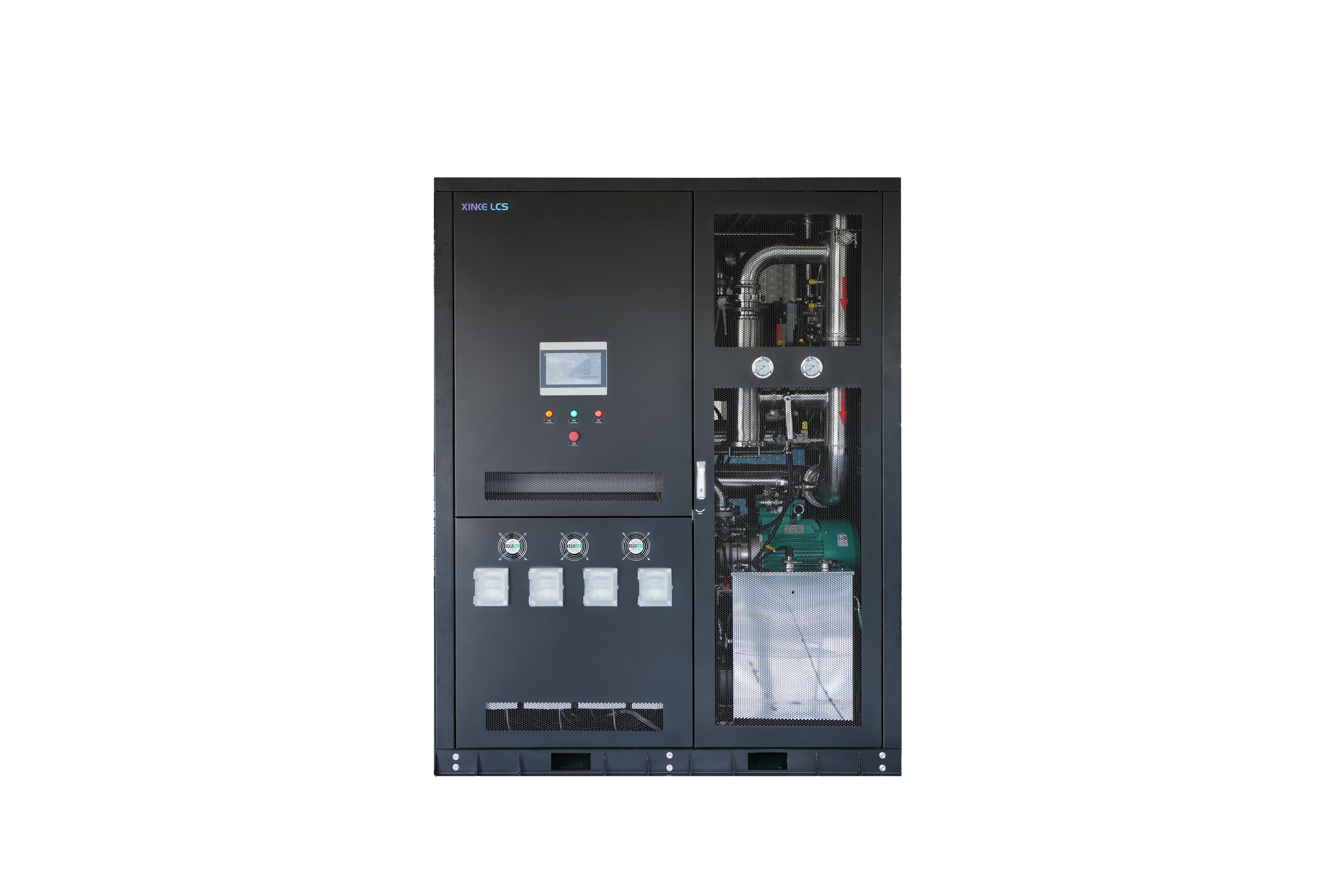
A CDU is one part of the cooling evidence file. Pump redundancy, coolant compatibility and wetted materials remain project- and model-specific.
Material statements need the same treatment. The Hydro ASIC Mining Container material entry lists a painted carbon-steel cabinet and SS304 seamless stainless steel for coolant piping, as specified for the applicable configuration. That is a model-level material statement, not a universal wetted-material schedule for every component in every configuration. For the CDU, the source says the plate heat exchanger and internal piping use stainless steel on applicable models, and it explicitly requires the exact stainless-steel grade and wetted materials to be confirmed against the selected model. A generic phrase such as stainless steel construction is therefore not enough. The review should require the grade, the wetted parts list and the coolant compatibility confirmation for the exact model.
The practical check is to compare three documents: the selected model datasheet, the project coolant specification and the material compatibility confirmation. If any one of the three is missing, the review should record an open item rather than assume compatibility from a similar project.
First-startup acceptance records: evidence of execution, not a certificate
A first-startup acceptance record is the strongest project-specific document in the qualification file because it shows what was checked at the site. The available commissioning guidance sets out a sequence: review approved drawings, coolant specifications and acceptance criteria; verify power, grounding, valves, piping, connections and primary cooling availability; complete cleaning, pressure and leak tests to approved limits; fill and vent using the specified procedure; verify sensors, alarms, interlocks and pump controls; introduce load in stages; and record temperatures, flow and pressure against agreed limits.
That record is traceable evidence for the project where it was produced. It is not a product certificate and it is not transferable proof for another site. The review should require the record to identify the project, the selected models, the approved limits, the actual recorded values, the open items and the sign-off. Safety conditions also belong in the record: only qualified personnel should commission equipment, electrical energy should be isolated and pressure released before a circuit is opened, pumps should not run dry, approved test limits should not be exceeded, and compatible coolant should be used.
This is where many qualification files become thin. A file may contain a certificate, a product photo and a quotation, but no first-startup record. The absence of a record does not prove that startup was not performed; it means the buyer has not been given traceable evidence for that project. The review should treat it as an open evidence item.
What manufacturing certificates do and do not establish
The available certificate set illustrates the distinction. The CCS Works Approval is issued by the China Classification Society with certificate number HE24S1019, issued on 2025-12-31 and valid until 2029-12-30. It applies to the China market, to the manufacturing site and to the non-cargo carrying equipment container model XKKJ-40HC003 (ISO code 45SM), and it is subject to annual CCS surveillance.
The ISO 9001:2015 certificate covers the manufacturing site in China and has a scope covering R&D and production of cloud computing liquid cooling equipment and controls, and production of container bodies. The certificate number is 06724Q20082R0S, issued by Beijing Hengbiao Quality Certification Co., Ltd., valid from 2024-01-30 to 2027-01-29. The ISO 14001:2015 certificate is also issued to the China manufacturing site, with certificate number 06726E00031R001, valid from 2026-01-22 to 2029-01-21. Its scope covers environmental management for R&D and production of cloud computing liquid cooling equipment and controls and production of container bodies, excluding activities requiring qualification.
These certificates support management-system and works-approval questions. They do not establish the electrical supply V/Hz for a buyer site, the grounding boundary, the redundancy configuration, the coolant compatibility of a selected model or the results of a first startup. The review should keep certificates in the evidence file and keep the project-specific questions separate.
A qualification evidence matrix
| Qualification item | Evidence to require | What it does not prove |
|---|---|---|
| Electrical supply | Written project V/Hz and interface scope for the selected model; technical agreement for rated conditions | Model maximum power; a generic standard-power statement |
| Grounding and lightning protection | Project scope boundary, interface drawings, supplied versus site-provided responsibility | A system-scope line item; a works approval |
| Redundancy configuration | Project-specific redundancy statement for CDU and AquaPlex-45; control and service response; first-startup check | The word redundant; a low-flow alarm procedure |
| Coolant compatibility | Approved coolant, water quality and site conditions, compatibility confirmation per project | A generic coolant type; compatibility from a similar project |
| Wetted materials | Selected-model material schedule; exact stainless-steel grade and wetted parts confirmation | A generic stainless-steel statement; one model material list applied to another |
| First-startup acceptance | Project record with approved limits, recorded temperatures, flow and pressure, open items and sign-off | A product certificate; a photo; a reference project |
Assumptions a qualification review should reject
- The container is standard, so the site interface is standard. This is not supported; AquaPlex-45 electrical supply and redundancy are project-specific.
- The maximum power rating is the site electrical supply. This is not supported; 1,200 kW, 1,600 kW and 2,400 kW are model maximum power values.
- The certificate covers the installation. This is not supported; the CCS Works Approval and ISO certificates have stated scopes.
- Redundancy is included by default. This is not supported; CDU pump redundancy and AquaPlex-45 redundancy are project-specific.
- SS304 is the wetted material everywhere. This is not supported; Hydro ASIC Mining Container piping is SS304 as specified, while CDU exact grade and wetted materials must be confirmed.
- A project photo or MW reference proves readiness. This is not supported; such a reference identifies a deployment context but does not disclose every site parameter or measured result.
- A first-startup record from one site qualifies another site. This is not supported; it is traceable evidence for the project where it was produced.
How xinkelcs Mining Container fits the evidence model
xinkelcs Mining Container published information provides several starting points for this review: the 120-, 160- and 240-position Hydro ASIC Mining Container series with maximum power values; the CDU model range from 30 kW to 2,500 kW; the AquaPlex-45 prefabricated modular container with project-specific electrical supply and redundancy; and manufacturing-site certificates with defined scopes. These are inputs to qualification, not a substitute for the project file. The buyer should use them to ask better questions, then require the selected model V/Hz, grounding scope, redundancy statement, coolant compatibility, material confirmation and first-startup acceptance record.
The distinction matters for procurement because it prevents a common failure mode: comparing a highly documented reference with a thinly documented proposal and treating the difference as a performance difference. The qualification review is designed to compare evidence quality first. Once the evidence set is complete, the technical and commercial comparison can proceed on a consistent basis.
Conclusion: sign the evidence matrix before comparing the package
A mining container cooling qualification review should end with a signed evidence matrix, not a collection of brochure pages. The matrix should show the project V/Hz, grounding and lightning protection boundary, redundancy configuration, coolant compatibility, selected-model wetted materials and first-startup acceptance record. Certificates and project references belong in the file, but their scope should be stated beside them.
For buyers, the practical rule is simple: if a claim is project-specific in the source, require it in the project document. If a certificate has a defined scope, read that scope before using it. If a first-startup record exists, use it as traceable evidence for that project and do not convert it into a certificate for another. This is the difference between a qualification review and an assumption.
The English company brochure is available for download here: xinkelcs company brochure.
FAQ
What project-specific electrical details should a mining container qualification review require?
Require the site exact voltage and frequency in V/Hz, the interface scope for the selected model, and the technical agreement that confirms rated operating conditions. Do not substitute a model maximum power rating for the site electrical supply. The AquaPlex-45 source states that electrical supply is project-specific and expressed in V/Hz; the Hydro ASIC Mining Container source states that rated operating conditions are confirmed in the technical agreement.
How should grounding and lightning protection scope be evidenced?
Require a written scope boundary showing what is supplied within the container or package, what is site-provided, where responsibility terminates and what drawings or records are handed over. A system-scope list that includes lightning protection and grounding is a starting point, not a completed site design. The CCS Works Approval is a works approval for equipment containers and is not a project grounding study or electrical-safety certificate.
What redundancy evidence is needed for pumps and cooling?
Require the project-specific redundancy configuration to be stated in the technical agreement, including which functions are duplicated, how the controls respond, what maintenance isolation is possible and what first-startup check demonstrates the configured behavior. The CDU source states that pump redundancy is project-specific, and the AquaPlex-45 source states that redundancy configuration is project-specific. A low-flow alarm procedure is an operating response, not proof of delivered redundancy.
How should coolant compatibility and wetted materials be confirmed?
Require the approved coolant, site water quality and conditions, the selected model wetted-material schedule, and written compatibility confirmation for that model. The CDU source states that coolant compatibility is confirmed per project and that the exact stainless-steel grade and wetted materials must be confirmed against the selected model. A generic stainless-steel statement or a material list from a different model is not sufficient.
What should a first-startup acceptance record contain?
It should document the approved commissioning plan and acceptance criteria, verification of power, grounding, valves, piping, connections and primary cooling availability, cleaning and pressure or leak tests to approved limits, fill and vent, verification of sensors, alarms, interlocks and pump controls, staged load introduction, and recorded temperatures, flow and pressure against agreed limits. It is traceable evidence for that project, not a product certificate or transferable proof for another site.
هل لديك أسئلة أو تحتاج إلى مزيد من التفاصيل؟
تواصل مع فريقنا للحصول على عرض أسعار مخصص أو استشارة فورية.
طلب عرض أسعار
املأ النموذج أدناه وسيتواصل معك فريقنا بعرض مقترح مخصص.
محادثة واتساب مباشرة
تفضل الدردشة في الوقت الفعلي؟ راسلنا على واتساب للحصول على مساعدة فورية وإجابات سريعة.
- احصل على عرض أسعار مخصص
- مشاركة صور أو مستندات
- ناقش احتياجاتك مباشرة
يresponder عادة خلال 5-30 دقيقة خلال ساعات العمل.