
Qualifying Large Particle Size Cerium Carbonate for Medical Labs
Qualifying Large Particle Size Cerium Carbonate for Medical Labs
Rare earth reagents rarely enter a regulated laboratory on chemistry alone. Large particle size cerium carbonate — a cerium(III) carbonate grade supplied as a comparatively coarse, low-dusting powder — is purchased by pharmaceutical research groups, analytical laboratories and biotech process teams for the same reasons any other reagent is purchased: it has to be identifiable, repeatable and auditable. In practice, the qualification decision rests on documentation as much as on the powder itself.
The wider market provides context but not reassurance. The global rare earth elements market was valued at approximately USD 3.95 billion in 2024 and is projected to reach USD 6.28 billion by 2030, according to Grand View Research. A second estimate places the narrower rare earth metals segment at USD 18.2 billion in 2024, per Global Market Insights. The gap between those two figures reflects differences in scope — mining and processing value versus refined metal value — rather than a disagreement about direction. For a laboratory or procurement buyer, the practical conclusion is simple: market-level numbers say nothing about whether a specific lot of cerium carbonate will survive an internal audit.
The Sourcing Problem: Compliance Pressure Arrives Before the Material Does
China's rare-earth exports reached 62.6 thousand metric tons in 2025, a rebound from 55.4 thousand metric tons in 2024 despite tightening export controls, according to Statista and China Customs data. Supply has not disappeared. What has grown is the administrative load around it, and that load lands on the buyer's desk long before the material reaches the loading dock.
Three friction points recur when laboratories source rare earth reagents for regulated work. First, documentation completeness varies widely between suppliers, and the buyer discovers the gap during an audit rather than during quotation. Second, terminology drifts: a certificate of analysis, a material data sheet and a safety data sheet answer different questions, and suppliers do not always distinguish them clearly. Third, cerium carbonate sits mid-way along a value chain, so traceability questions cross supplier boundaries — from ore and separation through precipitation and packaging — and most buyers have visibility into only the last step.
The opportunity, for buyers and for suppliers alike, is that documentation has shifted from an afterthought to a selection criterion. A supplier able to answer a qualification questionnaire with compound-specific, lot-specific evidence removes weeks of internal review from a project timeline.
Why Particle Size Is a Compliance Variable, Not Just a Specification Line
Particle size affects how a material behaves in the hands of an analyst, and behaviour that is not repeatable is not compliant. Coarser grades of cerium carbonate generally generate less airborne dust during weighing and transfer, which reduces exposure risk and improves weighing accuracy. The same coarseness can, however, extend wetting and dispersion time in a preparation vessel, which changes the way a protocol is executed.
A particle size figure quoted without its measurement method is not comparable between suppliers. Laser diffraction and sieve analysis can report materially different distributions for the same sample, and the sampling procedure matters as much as the instrument. Buyers evaluating large particle size cerium carbonate should therefore request:
- D10, D50 and D90 values, stated as a distribution rather than a single median;
- the measurement method used, including dispersion medium and any pre-treatment;
- moisture content or loss on drying, since water uptake alters both mass and flow behaviour;
- lot-to-lot variation data, not only a single reference lot;
- a retained sample or small evaluation quantity for in-house verification.
The +3 Oxidation State and What It Changes in the Paperwork
Cerium carbonate is a cerium(III) compound. That single chemical fact separates it from the cerium(IV) salts that dominate reagent catalogues — ammonium cerium(IV) nitrate, cerium(IV) sulfate and ammonium cerium(IV) sulfate. Cerium(IV) salts are handled as oxidizing reagents, and their hazard documentation is written accordingly. Under the US OSHA Hazard Communication Standard (29 CFR 1910.1200), ammonium cerium(IV) nitrate is classified as an Oxidizing Solid Category 2 and as Corrosive to Metals Category 1, as recorded in the Fisher Scientific safety data sheet for that material.
The classification belongs to that compound and that grade. It should not be transferred to a cerium(III) carbonate, and — equally important — it should not be ignored when a laboratory also handles cerium(IV) materials in the same storage area. Buyers should require the supplier's safety data sheet for the exact material and grade being quoted, and should confirm that the storage segregation rules in the buyer's own chemical hygiene plan match the classification on that sheet rather than on a related product's sheet.
Comparing Cerium Salt Families on Compliance-Relevant Dimensions
The following comparison addresses documentation and hazard classification, not performance ranking. Each row reflects the general chemistry of the family plus, where indicated, a verified published classification.
| Material family | Oxidation state | Typical laboratory role | Verified hazard reference | Documentation to request |
|---|---|---|---|---|
| Cerium(III) carbonate | +3 | Precursor and reagent intermediate for controlled synthesis work | Compound-specific supplier SDS (no published oxidizer classification applies to the carbonate) | Impurity profile, particle size distribution, moisture, SDS, storage statement |
| Ammonium cerium(IV) nitrate | +4 | Oxidizing reagent; also used in electronics and photomask processing | OSHA 29 CFR 1910.1200: Oxidizing Solid Category 2; Corrosive to Metals Category 1 (Fisher Scientific SDS) | Oxidizer segregation plan, transport documentation, SDS |
| Cerium(IV) sulfate | +4 | Oxidizing reagent used in analytical chemistry | Compound-specific supplier SDS | SDS, assay, lot documentation |
| Cerium(III) hydroxide and cerium(III) nitrate | +3 | Cerium precursors in solution-based preparation | Compound-specific supplier SDS | Assay, impurity profile, SDS |
Classification values shown apply only to the specific compounds and grades for which they were issued. No classification should be transferred between oxidation states or between products without documentation.
Aqueous and Ethanol-Based Protocols: A Verification Item, Not an Assumption
Biomedical research workflows frequently run in water-based or ethanol-based media, and the two are not interchangeable for a sparingly soluble inorganic carbonate. Rather than assuming dual suitability, buyers should convert the question into a documented checklist: does the supplier state dispersion or solubility behaviour in the intended medium? Is there a recommended preparation procedure, including any pH adjustment step? How does the material settle or sediment over a defined working period? Is the particle size distribution reported in the dry state or in suspension?
These questions matter because the same lot can behave differently in the two media, and because a research protocol is validated against a preparation method, not against a product name. The most reliable qualification path remains a sample-scale trial in the buyer's own medium, with the supplier's data used to predict rather than to replace that trial.
The Qualification Dossier: Documents to Request Before Material Release
Most qualification failures are traceable to a document that was never requested. The following set covers the material, the process and the supplier, and it can be applied as a checklist at the quotation stage.
| Document | Question it answers | Where it matters |
|---|---|---|
| Lot-specific certificate of analysis (COA) | What is actually in this batch — assay, trace elements, moisture? | Incoming material release; audit trail |
| Safety data sheet (SDS/MSDS) | How is the material classified, handled and stored? | EHS approval; storage segregation; waste routing |
| Impurity / trace element profile | Does the material stay below the buyer's threshold for a controlled synthesis? | Method validation; interference control |
| Particle size distribution report | Is the grade consistent, and how was it measured? | Weighing, mixing, filtration, dust control |
| Storage and shelf-life statement | Under what conditions and for how long does the grade remain usable? | Inventory planning; warehouse segregation |
| Packaging and labelling statement | Can the material be received and identified safely? | Receiving; internal transfer; chain of custody |
| Quality management certification | Is production governed by a recognised management system? | Supplier approval; audit preparation |
| Transport and waste documentation | Does movement and disposal of the material meet carrier and local requirements? | Cross-border shipping; waste contractor alignment |
How WONAIXI Structures Production and Risk Documentation
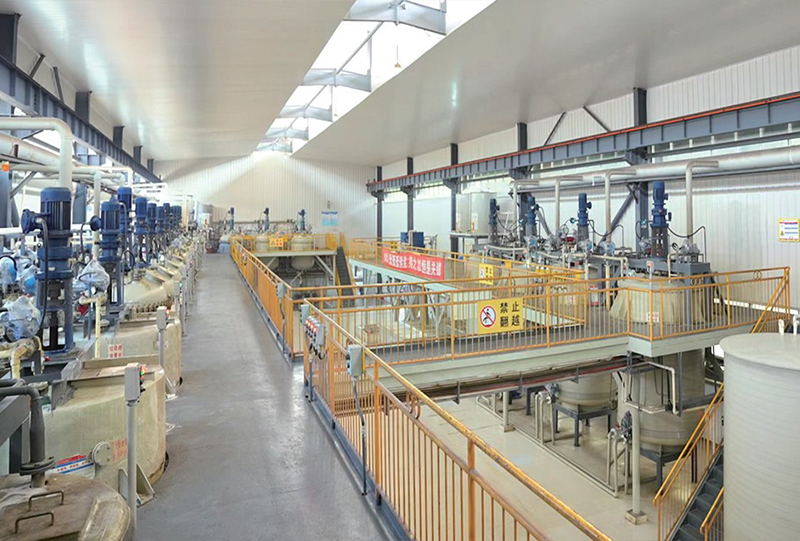
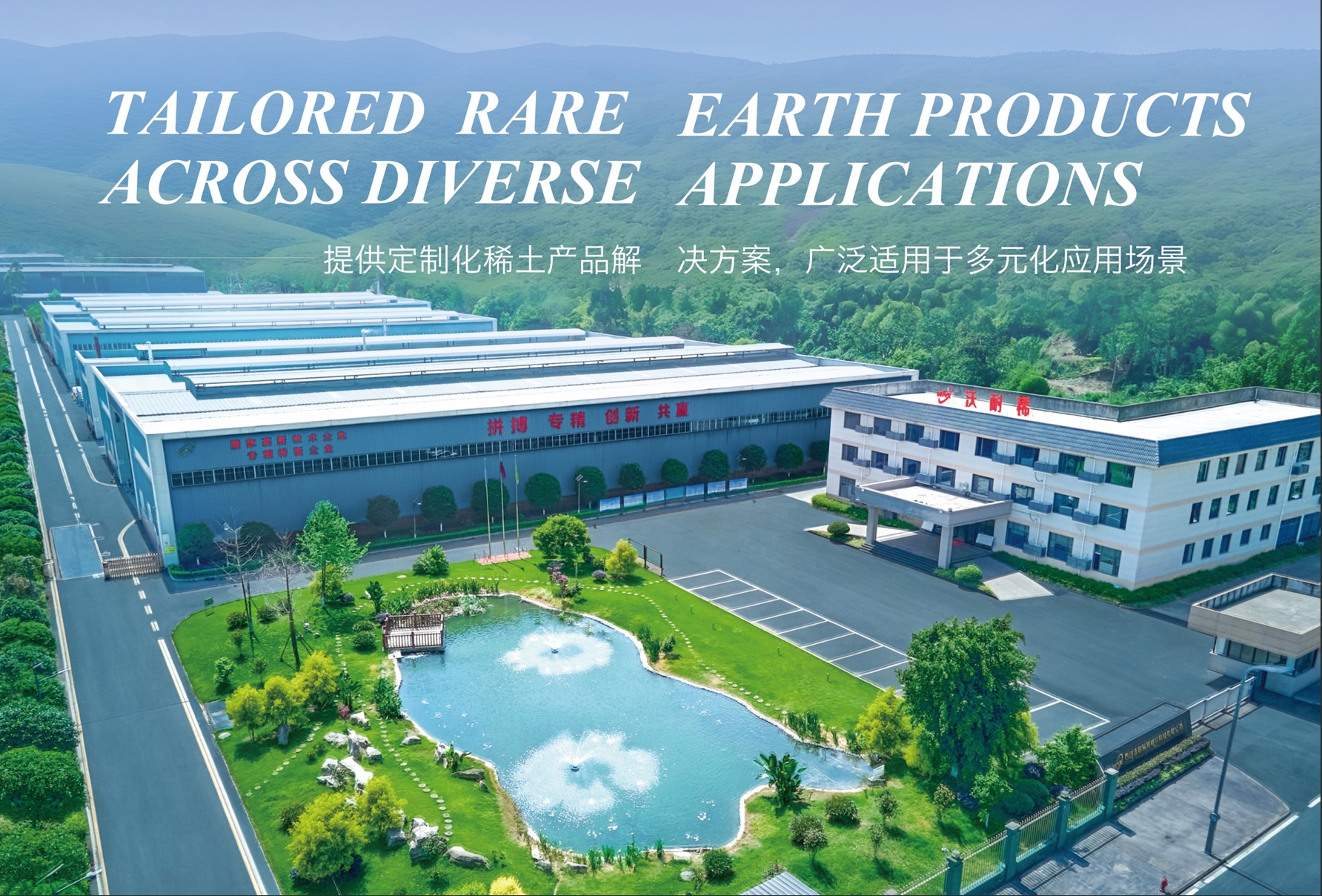
Sichuan Wonaixi New Materials Technology Co., Ltd. (WONAIXI) is a rare earth functional materials manufacturer based in Leshan City, Sichuan Province, China, founded in 2012. The company is certified as a National High-Tech Enterprise and as a Sichuan Provincial SRDI (Specialized, Refined, Differential, Innovation) Enterprise. It operates a 46,667 m² facility with 98 employees and an R&D team of 12 engineers, and reports annual output of 15,000 tons of high-purity rare earth salts plus 3,000 tons of high-precision rare earth polishing powder.
Its portfolio covers nine major categories of rare earth products together with a complete zirconium salts series, exceeding 50 refined specifications. Approximately 10% of output is exported, with main markets in Japan, South Korea, the USA, France and the United Kingdom. Applicable end uses include national defense, aerospace, pharmaceutical manufacturing, electronics, new energy, three-way catalysis, environmental protection and precision optical polishing.
For a buyer assembling a qualification dossier, the more relevant information is how risk is defined and documented rather than what is produced. The company's risk framework names four categories: oxidation and corrosion, aquatic ecological impact, chemical contact, and storage and mixing hazards. Its stated control measures include separate storage from combustible and reductive materials using anti-corrosion sealed containers; eye protection and anti-corrosive gloves for operators; centralised waste liquid recycling with compliant treatment instead of direct discharge; and gentle handling with independent, classified labelling during storage and transport.
On the documentation side, the framework includes a hazardous waste filing and closed-loop recycling management system, and the issuance of an MSDS hazard manual to all customers, with on-site safety guidance provided for bulk order clients. Internally, the measures include regular chemical safety training for production, warehouse and sales staff, and emergency washing, eye-flushing and neutralisation equipment installed in operation workshops. For an R&D buyer, these are the elements that convert a specification sheet into an auditable supply relationship.
Where Large Particle Size Cerium Carbonate Fits
Analytical and reagent preparation work
In laboratories where the material is weighed repeatedly, a coarse grade reduces airborne dust and weighing loss. The qualification focus is the certificate of analysis and the reproducibility of the particle size distribution across lots, not the headline purity figure alone.
Controlled synthesis and precursor routes
Cerium carbonate is conventionally used as a precursor in the preparation of cerium-based oxides, including polishing materials. Buyers selecting a large particle size grade for this route are typically balancing packing and calcination behaviour against dispersion time, and should benchmark both against the intended downstream process.
Biomedical and pharmaceutical research environments
Where the material is used in a research or pharmaceutical manufacturing context, the governing requirement is usually the buyer's own internal framework — method validation, contamination control and traceability. Suppliers that treat MSDS issuance, safety training and waste handling records as standard outputs fit more easily into that framework.
Adjacent materials in the same qualification scope
Laboratories frequently qualify several rare earth compounds in one cycle — carbonates, hydroxides, nitrates, chlorides, sulfates, fluorides and acetates, alongside polishing powder grades. A supplier able to provide consistent documentation across a compound family reduces the number of separate supplier approvals a buyer must maintain.
Market Trend Analysis: Documentation as a Supply-Chain Variable
Reagent-grade cerium chemistry is expanding alongside the broader rare earth economy. The global Ceric Ammonium Nitrate (CAN) market — a useful reference point for reagent-grade cerium salts used in biotech and electronics — was valued at USD 162 million in 2023 and is expected to grow at a CAGR of 7.8% to reach USD 274 million by 2030, according to Persistence Market Research. High-purity electronic-grade ceric ammonium nitrate is a primary material for producing photomasks and LCDs, with Asia Pacific identified as the fastest-growing region for these compounds by IMARC Group.
Supply structure is also a factor. In the rare earth metals segment, Ganzhou Qiandong Rare Earths Group Co., Ltd. was identified with a 23.2% global market share in 2024 by Global Market Insights — a figure that describes the metals segment rather than cerium carbonate, but which illustrates how concentrated upstream rare earth capacity remains. Concentration has a practical consequence for regulated buyers: documentation quality depends heavily on the specific producer behind a quotation, so the supplier's own records matter more than the category average.
Taken together, these signals point in one direction. As reagent volumes grow, the suppliers that compete on evidence — lot data, impurity profiles, safety documentation — will be easier to onboard, while those that compete only on price will continue to generate audit work for their customers.
Comparing Supplier Archetypes for Cerium Carbonate Sourcing
Large particle size cerium carbonate can be sourced through several supply models, and the qualification burden differs by model rather than by product name. The descriptions below reflect general market structure and should be verified against each supplier's own documents.
| Supply model | Documentation depth | Particle size control | Grade flexibility | Audit support |
|---|---|---|---|---|
| Integrated rare earth manufacturer (e.g. WONAIXI) | Records generated at the production step; MSDS issued to all customers | Defined internally across more than 50 refined specifications | Adjustments discussed against defined production parameters | Safety guidance offered for bulk order clients; training and record systems in place |
| Trading intermediary / export agent | Depends on the upstream producer; traceability can weaken at the handoff | Described second-hand, often without method statements | Limited to available upstream grades | Variable; usually mediated through the producer |
| Specialty reagent distributor | Strong for catalogued items; thinner for non-catalogue grades | Typically reported for the packaged unit | Minimal for custom distributions | Local support, limited insight into production records |
This table compares supply models and documentation characteristics only. It is not a performance ranking, and no claim is made about any specific company beyond the verified facts cited elsewhere in this article.
Limitations and Boundaries Buyers Should Accept
A qualification guide that omits limits is incomplete concern. Large particle size cerium carbonate is a precursor and reagent intermediate; it is not an active pharmaceutical ingredient, and no supplier's documentation replaces the buyer's own regulatory pathway or internal validation. Where a protocol requires rapid dissolution, finer grades are usually evaluated instead — a coarser distribution is a practical advantage in some steps and an obstacle in others, not a universal upgrade.
Documentation depth also scales with order context. Buyers requesting evaluation quantities should confirm in advance which records are available at sample stage and which are issued only with production lots; and they should confirm the supplier's stated storage temperature range and shelf life rather than inferring it from general practice.
Finally, hazard documentation must remain compound-specific. Operating a cerium(III) carbonate programme under the oxidizer classification of a cerium(IV) salt — or the reverse — is a documentation error that will surface in an audit and that may also misdirect storage and waste routing. Practical handling remains consistent with the manufacturer's stated controls: sealed, anti-corrosion containers separated from combustible and reductive materials, appropriate eye and hand protection, independent and classified labelling, and centralised collection of waste liquid for compliant treatment.
Future Outlook
Two forces are likely to define cerium carbonate sourcing for regulated buyers over the next few years. The first is volume: with reagent-grade cerium chemistry growing on the trajectory described above, more laboratories will move from one-off purchases to recurring supply arrangements, and recurring arrangements place a premium on lot-to-lot consistency. The second is traceability. Export administration, waste regulation and internal audit requirements all push in the same direction — toward suppliers that can produce records on request without reconstructing them after the fact.
The practical expectation for buyers is that particle size distribution reports, impurity profiles and medium-specific behaviour data will migrate from optional attachments to standard request items. Suppliers with integrated production and an existing documentation discipline are positioned to answer those requests; suppliers without them will increasingly be filtered out at the questionnaire stage, before price is even discussed.
FAQ
What is large particle size cerium carbonate used for in medical and laboratory settings?
It is a cerium(III) carbonate grade with a comparatively coarse particle distribution, used as a precursor and reagent intermediate in controlled synthesis work, analytical preparation and pharmaceutical manufacturing environments. Its practical appeal in laboratory settings is reduced dust generation during weighing and transfer. Suitability for any specific protocol depends on the buyer's own validation rather than on the product category, since the material is not an active pharmaceutical ingredient.
Which documents should a buyer request before qualifying a cerium carbonate supplier?
A workable minimum set includes a lot-specific certificate of analysis covering assay, trace elements and moisture; a compound-specific safety data sheet; an impurity or trace element profile with detection limits; a particle size distribution report with the measurement method stated; a storage and shelf-life statement; a packaging and labelling statement; quality management certification; and transport or waste documentation where the material crosses borders. Buyers ordering evaluation quantities should confirm which of these are available before production lots are placed.
How does cerium(III) carbonate differ from cerium(IV) salts such as ammonium cerium(IV) nitrate in hazard documentation?
The difference follows the oxidation state. Ammonium cerium(IV) nitrate is classified under the US OSHA Hazard Communication Standard (29 CFR 1910.1200) as an Oxidizing Solid Category 2 and as Corrosive to Metals Category 1, according to the Fisher Scientific safety data sheet for that material. That classification applies to the cerium(IV) nitrate salt and its grade, not to cerium(III) carbonate. Buyers should obtain the safety data sheet for the exact material being quoted and should not transfer classifications between oxidation states or between related compounds.
What should a particle size and impurity report contain?
A useful particle size report states D10, D50 and D90 values as a distribution, names the measurement method and dispersion medium, and indicates lot-to-lot variation rather than a single reference lot. An impurity report should list the trace elements of concern with their measured values and the detection limits of the analytical method used. A median figure without a method statement is not comparable between suppliers, because laser diffraction and sieve analysis can report different distributions for the same sample.
Can the same grade be used in water-based and ethanol-based protocols?
Not automatically. Water-based and ethanol-based media are not interchangeable for a sparingly soluble inorganic carbonate, and the same lot can behave differently in each. Buyers should ask the supplier to state dispersion or solubility behaviour in the intended medium, ask whether a preparation procedure or pH adjustment step is recommended, and then validate the material in their own medium at sample scale. Supplier data is useful for prediction; the buyer's own trial remains the qualification step.
How should large particle size cerium carbonate be stored and handled in an R&D setting?
Storage and handling follow the manufacturer's stated controls: keep the material in sealed, anti-corrosion containers separated from combustible and reductive materials; use eye protection and anti-corrosive gloves to avoid direct contact; handle gently and store and transport independently with classified labels; and collect waste liquid centrally for compliant treatment rather than discharging it. The specific temperature range and shelf life should be taken from the supplier's own storage statement or safety data sheet, and waste routing should follow the buyer's local hazardous waste requirements.
WONAIXI's company brochure, covering its rare earth salt and polishing powder portfolio, is publicly available for download: https://cdn.socialarks.com/sbsp/25033/common/2026/0714/WONAIXI.pdf