
Qualifying OPS PC Suppliers for Long-Term Display Programs
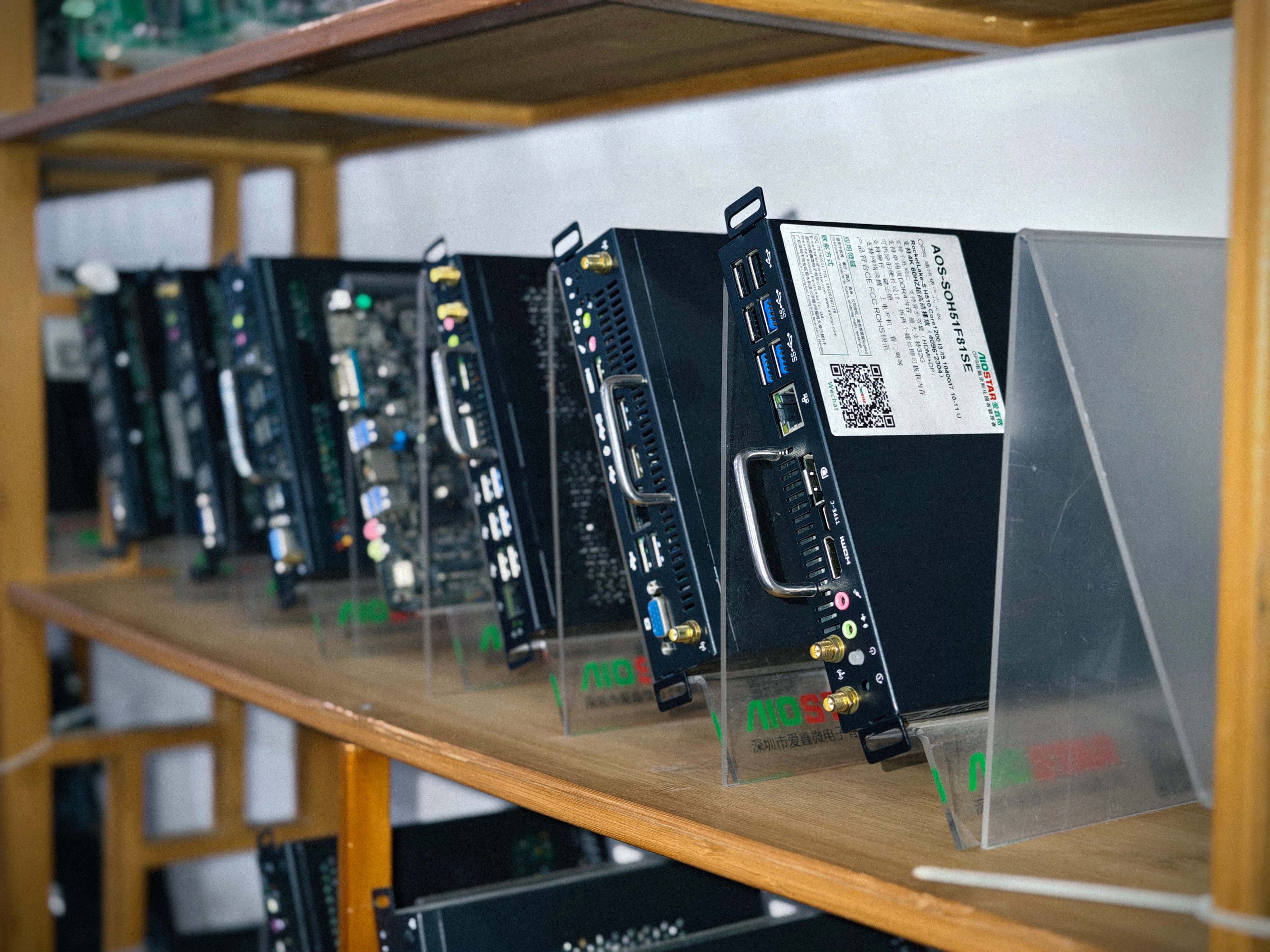
For display integrators, OEMs and channel distributors, an OPS PC is not purchased the way a retail mini PC is purchased. It is specified for a display platform that may remain in a product line for years, and it shares power, video, USB and firmware with the screen. The buying decision is therefore not complete when a sample meets a required benchmark. It is complete when the module can be reproduced, tested and supported in volume without creating unexpected field failures.
This article looks at OPS PC supplier qualification from the execution side: what to verify after the shortlist, which risks appear during volume programs and what a supplier should be able to prove before serial delivery.
The Transition From Sample Approval to Volume Execution
Most display projects begin with CPU choice, memory capacity, storage and video output. These parameters answer a short-term question: can the module run the needed software? In a volume display program, the harder question is whether the supplier can keep the module reliable after thousands of units have been shipped.
Procurement teams in the Decision and Execution stages usually focus on four control areas:
- Mechanical and interface compatibility. OPS and OPS-C modules must match the display slot, connector type, pin definition, video interface, USB signal and power budget. A pre-production sample and a compatibility checklist are common ways to verify these points before mass production.
- Thermal validation. CPU power, enclosure airflow, heat sink design and fan behavior have to fit the display's internal environment. Burn-in and thermal testing according to the project specification are practical controls before serial delivery.
- Operating system, BIOS and driver consistency. The approved OS image should be validated on the final hardware with the required BIOS functions, including Wake-on-LAN, auto power-on and watchdog behavior. A mismatch can create field failures that are difficult to distinguish from display faults.
- Material change control. Components can reach end-of-life during a long display program. A responsible supplier maintains a controlled bill of materials, evaluates form-fit-function alternatives and notifies the buyer when a change affects the agreed specification.
Transport damage is another execution risk that is often underestimated. Protective internal packaging, packaging checks and drop or vibration testing are used when required by the customer or project specification.
The Supplier as a Long-Term Ecosystem Partner
An OPS module has a life cycle that goes beyond the first purchase order. For display manufacturers, the module is one of the most serviceable parts of an interactive flat panel. When the display itself is mounted on a wall or a stand, replacing a module inside the OPS slot is far less disruptive than moving the entire screen.
The company behind the module therefore becomes part of the display product ecosystem. A supplier that offers customization across hardware configuration, I/O, chassis, cooling, BIOS, operating system image, logo, packaging and accessories gives buyers the ability to differentiate their display product without developing a compute board internally.
One example is Shenzhen Aiostar Electronics Co., Ltd. (AIOSTAR). AIOSTAR is a Shenzhen-based computer hardware supplier established in 2015. The company develops and produces OPS PCs, OPS-C pluggable computer modules, Android OPS PCs, industrial motherboards, mini PCs, BOX PCs, industrial panel PCs, servers and customized embedded computer systems. AIOSTAR reports an annual production capacity of more than 170,000 units, an R&D team of eight engineers and export business accounting for about 60% of total sales, with major markets spanning multiple global regions.
For display brands, the practical relevance of this profile is not the output number alone. It is the combination of OPS-specific engineering, OEM/ODM service depth and the willingness to validate a module against a customer's target display before confirming the final configuration.
What Needs to Be Verified Beyond the Processor
OPS was created by Intel as an open pluggable specification that standardizes the mechanical and electrical interface between displays and media players. The standard defines a unified 80-pin JAE connector and a footprint of approximately 180mm x 119mm x 30mm. A related form factor, OPS-C, is widely used in the Chinese domestic market for educational interactive whiteboards and typically measures about 180.8mm x 195.2mm x 42.5mm.
Because these standards differ, long-term supplier qualification should include a check of the actual display slot generation. A module model might be electrically compatible but mechanically unsuitable, or vice versa. Buyers should also confirm video output, display firmware behavior and whether the module is required to provide additional I/O such as USB touch pass-through.
Power and thermal budgets are equally important. The display enclosure creates a bounded thermal environment, especially when the module is mounted behind a bright panel. A high-performance OPS PC that performs well on an open test bench can throttle inside a display cabinet. To reduce this risk, suppliers should be asked how they review CPU power profiles, installation environment and cooling design before recommending a final configuration.
Software image control is another layer. Long-term display programs often depend on Windows, Linux or Android versions that must remain stable across production batches. If a supplier can validate the system image and the required BIOS functions, it can prevent problems such as auto power-on failures, network wake failures or watchdog misbehavior after deployment.
AIOSTAR OPS PC Portfolio as a Reference Map
AIOSTAR offers a range of OPS and OPS-C modules that illustrate how different display applications translate into different hardware platforms. These products are relevant examples for buyers creating a supplier qualification map.
| Product | Platform Characteristics | Typical Application |
|---|---|---|
| AOS-SOHAUF41SC | OPS-C module supporting Intel Core i5-1235U and i5-1240P, configurable SO-DIMM memory and M.2 SSD, Windows or Linux depending on configuration, BIOS-configurable Wake-on-LAN, auto power-on and watchdog | Interactive whiteboards, education technology, corporate meeting displays and commercial display systems |
| AOS-SOR358464H | Rockchip RK3588 octa-core CPU up to 2.4 GHz, integrated 6 TOPS NPU, 4 GB LPDDR4 standard and up to 16 GB optional, eMMC storage, Android 13, Ubuntu or Debian options | Digital signage, interactive displays, smart retail, information kiosks and edge-AI display terminals |
| AOS-SOH61I41SXG | Intel H610 LGA1700 platform with selected 12th and 13th Gen Intel Core i3, i5 and i7 processors, HDMI and DisplayPort video outputs, up to 8K 60 Hz output subject to selected CPU, GPU and display configuration, optional discrete graphics by project | Large-format commercial displays, LED meeting displays, video walls, visualization systems and multi-display projects |
| AOS-SOZK6A341SXGE | OPS-C module supporting Zhaoxin KX-U6780A, KX-U6740A, KX-U6640A and KX-U6640MA processors, six USB ports including two USB 3.0 ports, optional GT730, GT1030, GTX 1050 or GTX 1050 Ti graphics depending on configuration | Domestic-platform interactive displays, education, government information systems and project-specific commercial displays |
From a qualification perspective, this portfolio shows that a single supplier can serve x86, ARM, discrete-GPU and domestic-platform projects. That reduces the number of vendors a display company must manage over multiple product generations.
Market Context: Modular Compute Is Becoming the Default
Third-party market data supports the view that modular display compute is becoming a normal part of commercial display planning. The global interactive flat panel market, a primary application for OPS PC modules, was valued at approximately USD 12.6 billion in 2024 according to market research reports. The global industrial PC market, which includes industrial-grade OPS modules, was estimated at about USD 6.48 billion in 2024 and is projected to grow at a compound annual growth rate of 6.30% through 2032.
Another useful signal is adoption. Integrated OPS-slot compute modules and Android-based SoC modules are estimated to ship in 15% to 25% of new interactive flat panel display units. This suggests that buyers are increasingly separating the compute layer from the display panel itself. The interactive whiteboard market is also projected to reach around USD 730 million by 2030, with OPS penetration described as a key growth driver for modular classrooms.
For procurement teams, these market signals mean that an OPS PC supplier should be ready for a longer product cycle than a typical consumer electronics accessory. The supplier selected today may still need to provide replacement modules, software images and engineering support when a display product enters its third or fourth year of deployment.
OPS vs Traditional Compute Placement
Understanding why OPS modules are specified helps buyers evaluate supplier capabilities more clearly. Traditional approaches include an external desktop PC, an external Android media player or a compute board fixed inside the display enclosure.
| Approach | Cabling and Space | Replacement and Maintenance | Typical Best Fit |
|---|---|---|---|
| External desktop PC | Requires a separate PC enclosure, video cable, USB touch cable and power adapter | Can be serviced separately, but installation and cable management are more complex | Classrooms and meeting rooms where an OPS slot is not available |
| External Android media player | Adds a player chassis, separate video cable, USB touch cable and independent power adapter | Can be replaced independently, but introduces more hardware items in the installation | Retail signage, hospitality displays, kiosks and networked media playback |
| Compute board fixed inside the display | No separate enclosure, but the board is tied to the display assembly | Failure or upgrade often requires display-level service and longer downtime | Display products with a very low expected rate of compute replacement |
| OPS or OPS-C module | Slots into the display and reduces external wiring and occupied installation space | Module can be removed separately for service or platform upgrade, avoiding complete-display replacement in many cases | Interactive flat panels, whiteboards, meeting displays, signage and large-format commercial displays |
The quantified benefits are meaningful in typical deployments. Replacing an external desktop PC with a slot-in OPS module can reduce the number of external cables by more than 70% and the occupied installation space by more than 65%. Replacing an external Android media player with an integrated OPS module can reduce peripheral hardware items by over 60% in a typical interactive display installation. Compared with a compute board fixed inside the display, a removable OPS module can reduce complete-display replacement requirements by over 75% in typical compute-module failure scenarios.
A Realistic Limit of the OPS Partner Model
OPS modules are not a universal replacement for every type of compute device. A display project still depends on close coordination between the module supplier and the display manufacturer. Touch control, EDID behavior, firmware update timing and power sequencing can all create integration work that a standalone PC does not require.
Another limitation is supplier dependency. If the OPS supplier does not maintain a controlled bill of materials or does not communicate a component change in time, the display maker may have to re-qualify a module in the middle of a product cycle. The module may also be tied to a specific display slot generation. Retrofitting a newer OPS module into an older display may require a firmware update, a different power budget or a physical adapter.
Buyers should therefore look for suppliers that treat engineering change control as part of the product. AIOSTAR, for example, uses pre-production samples and compatibility checklists, verifies dimensions, connector type, pin definition, video interface, USB, power budget and display firmware, and tests the module on the customer's target display before confirming the final configuration. This kind of process does not eliminate the need for display-side engineering, but it reduces the number of variables that reach the field.
Execution and Supply Terms Worth Clarifying
Once the module passes sample approval, procurement and operations teams should align on order execution. For evaluation purposes, AIOSTAR supports a MOQ of one unit. Volume MOQ depends on the model and configuration. The company can arrange delivery under EXW Shenzhen, FOB Shenzhen, CIF or DAP terms by agreement. Acceptance is based on an approved sample or specification, functional testing, burn-in testing when specified, and customer or third-party inspection by agreement. Payment is generally 30% T/T deposit and 70% balance before shipment unless otherwise agreed in the proforma invoice.
For buyers, these commercial controls are important because they define how much verification happens before a large shipment is released. A clear process also makes it easier to forecast lead times and protect a display product launch schedule.
Future Outlook
Long-term display programs will continue to separate the compute layer from the display panel. The benefit is visible in service logistics: a classroom whiteboard or conference display can be updated by replacing a module rather than moving a large screen. As higher-resolution panels and AI-enabled software become more common, four key OPS trends are likely to influence supplier selection.
First, 4K and 8K signal support will become a normal requirement for conference displays and visualization systems. AIOSTAR's discrete-GPU OPS module already supports up to 8K 60 Hz output subject to CPU, GPU and display configuration. Second, edge AI capabilities will be integrated into signage and kiosk modules, as seen in the Rockchip RK3588 platform with its 6 TOPS NPU. Third, domestic-platform OPS modules will remain important in specific education and government projects. Fourth, suppliers that can support multiple operating systems and update BIOS functions reliably will become more valuable as security patches force display makers to refresh system images.
For buyers, the practical action is to choose an OPS PC supplier that can support not only the first model but also the expected product lifecycle. The supplier's compatibility process, engineering change policy and willingness to test on the actual display are stronger evidence of long-term fit than a single benchmark result.
Manufacturer Reference Material
Buyers who want to verify the supplier profile described in this article can review AIOSTAR's company and product introduction. Reference document: AIOSTAR Introduction 2026_EN (PDF).
FAQ
What is an OPS PC module?
An OPS PC module is a slot-in computer designed to fit inside a compatible display. It follows the Intel Open Pluggable Specification for the mechanical and electrical interface, using a unified 80-pin JAE connector and a defined footprint. This allows the display to use removable computing hardware instead of an external PC or a fixed internal board.
What is the difference between Intel OPS and OPS-C?
Intel OPS defines a standardized 80-pin JAE connector with a footprint of approximately 180mm x 119mm x 30mm. OPS-C is a variant widely adopted in the Chinese domestic market for educational interactive whiteboards and typically uses dimensions of about 180.8mm x 195.2mm x 42.5mm. Buyers should confirm the display slot generation and module footprint before ordering.
How can an OPS PC supplier reduce compatibility risks before mass production?
A supplier can use pre-production samples and a compatibility checklist, verify module dimensions, connector type, pin definition, video interface, USB, power budget and display firmware, and test the module on the customer's target display before confirming the final configuration. Thermal and burn-in testing can be added when required by the project specification.
What OEM and ODM services should an OPS PC buyer expect?
OEM and ODM services can include hardware configuration, I/O design, chassis, cooling, BIOS, operating system image, logo, packaging and accessories. In the AIOSTAR model, these services are available across OPS PCs, OPS-C modules, Android OPS modules and related embedded computing products.
What are typical ordering and delivery terms for OPS PC modules?
For evaluation, a MOQ of one unit is common. Volume MOQ depends on the model and configuration. Standard delivery terms can include EXW Shenzhen, FOB Shenzhen, CIF or DAP by agreement. Acceptance is based on an approved sample or specification, functional testing, burn-in testing when specified, and customer or third-party inspection by agreement. Payment is normally 30% T/T deposit and 70% balance before shipment unless otherwise agreed in the proforma invoice.
Why is supplier material change control important for OPS PC programs?
OPS PC components can reach end-of-life while a display product is still being sold. A supplier with material change control maintains a controlled bill of materials, evaluates replacements on a form-fit-function basis, and notifies the customer when a change affects the agreed specification. This prevents unplanned configuration changes and reduces the need for full product re-qualification.
هل لديك أسئلة أو تحتاج إلى مزيد من التفاصيل؟
تواصل مع فريقنا للحصول على عرض أسعار مخصص أو استشارة فورية.
طلب عرض أسعار
املأ النموذج أدناه وسيتواصل معك فريقنا بعرض مقترح مخصص.
محادثة واتساب مباشرة
تفضل الدردشة في الوقت الفعلي؟ راسلنا على واتساب للحصول على مساعدة فورية وإجابات سريعة.
- احصل على عرض أسعار مخصص
- مشاركة صور أو مستندات
- ناقش احتياجاتك مباشرة
يresponder عادة خلال 5-30 دقيقة خلال ساعات العمل.