
Qualifying UHF RFID Readers: From Dossier to Line Acceptance
Qualifying UHF RFID Readers: From Dossier to Line Acceptance

A reader that clears a bench test still has to clear an on-line pilot before it can be accepted into a production workflow.
Reader qualification in a smart factory is a staged evidence process, not a specification comparison. Requirements are fixed first, documentation is audited second, bench validation follows, and only then does a reader earn an on-line pilot and a formal acceptance record. Suppliers that cannot produce evidence at each stage leave a gap no datasheet can close.
The stakes are no longer marginal. Mordor Intelligence reports that UHF captured 40.72% of total RFID market revenue in 2025 and projects the UHF RFID market to surpass USD 14.9 billion by 2031 at a CAGR of 12.45%. The same research line states that more than 60% of factories adopting Industry 4.0 deploy RFID readers for asset traceability. Once readers sit on workstations, returnable transport items and tool cabinets, the purchasing question shifts from which model reads farthest to which supplier can prove a configuration works here — and keep proving it over a multi-year program.
DAILY RFID CO., LIMITED is a Guangzhou, China–based RFID manufacturer founded in 2008 that designs and produces RFID tags, readers, antennas and cards in a 28,000 m² factory with an annual reader output of 100,000 units. Its UHF RFID Reader, RFID Fixed Reader, RFID Handheld Reader and AI Powered RFID Reader lines are used below as reference categories only; the gates described apply to any supplier under evaluation.
1. The reader, not the tag, is where most factory projects are decided
A reader is a configurable radio device. RF power, antenna selection, duty cycle, filtering logic and mounting all change field results, so two plants using the same model can report completely different read performance. The tag sets a ceiling; the reader determines whether the installation approaches that ceiling or falls well short of it.
Published specifications rarely resolve the question on their own, because they describe a device family rather than a tested configuration. Merhein, for example, lists an integrated-antenna reader covering 860–960 MHz with support for EPCglobal UHF Class 1 Gen 2, ISO 18000-6C and ISO 18000-6B — a useful screening profile, reported by the supplier and without independent validation attached. Turck states that its UHF readers carry an IP67 protection rating and are intended for harsh industrial conditions involving dust, moisture and temperature fluctuations; that is a portfolio-level statement a buyer must still map to the exact model being purchased. Neither claim is problematic. Both require the same treatment: confirmation at the level of the unit that will be installed.
The air interface itself is settled. UHF readers in this class operate under the EPCglobal Gen2 protocol standardised as ISO/IEC 18000-6C. What varies is everything around the protocol — power headroom, antenna behaviour, enclosure protection, thermal design, host interfaces, documentation quality and the supplier's willingness to be measured.
2. A four-gate qualification model
The model below converts a vague evaluation into a sequence of decisions, each with a defined evidence set. Gates are numbered from zero because the most common qualification failure happens before any supplier is contacted: the requirement was never written down in measurable terms.
| Gate | Question it answers | Evidence required | Owner |
|---|---|---|---|
| Gate 0 — Requirement | What must the read point do, with which tags, in which environment? | Tag list, material and mounting conditions, read zone geometry, expected tag density, cycle time, host system and protocol, duty cycle | Plant engineering and IT |
| Gate 1 — Dossier | Can the supplier document the device in auditable terms? | Model-level datasheet, frequency bands, RF power, protocols, interface documentation, SDK, environmental ratings, test method | Purchasing with engineering review |
| Gate 2 — Bench | Does the device perform against our own tags and materials? | Reproducible read tests, dense-tag behaviour, metal and liquid cases, de-duplication, feedback signals | Automation or auto-ID engineer |
| Gate 3 — Pilot | Does the configuration survive real shifts, real networks and real operators? | Stage-level read records, connectivity logs, thermal behaviour, exception handling, operator acceptance | Operations and maintenance |
| Gate 4 — Acceptance | Is the supply relationship qualified for the program horizon? | Signed acceptance criteria, change notification terms, spares and support commitments, volume and lead-time terms | Procurement and quality |
The gates are sequential, but they are not equal in cost. Gate 2 consumes engineering hours; Gate 3 consumes production time and is the gate most likely to be cut when a project runs late — and the one whose removal is most expensive later.
3. Gate 1: assembling a reader dossier that can be audited
A usable dossier answers a fixed set of questions in writing, in the supplier's own documents, without a sales conversation. The list below is deliberately generic: market-access and conformity documents are jurisdiction-specific, and the applicable set depends on the destination market and its radio regulator, so this checklist does not name specific certification marks.
- Air interface and protocol support. Confirmation of EPCglobal Gen2 / ISO/IEC 18000-6C support, including any additional protocol the plant's tag base may require.
- Frequency coverage by market. Operating bands stated per region — for example ISM 860–868 MHz, 902–928 MHz and 920–925 MHz — rather than a single global range.
- RF power and read behaviour. Maximum transmit power, typical versus guaranteed figures, tag population handling and read rate under load.
- Interface and integration kit. Serial and TCP/IP protocol documents, SDK, demo software, and the steps required to reach a first successful read.
- Environmental and mechanical ratings. Enclosure protection level, operating and storage temperature range, supply voltage and power consumption, mounting constraints.
- Acceptance test method. The functional test the supplier performs before shipment, and the conditions under which it is run.
A documented example shows what completeness looks like in practice. The DL213 Type-C UHF Reader Module specification sheet states ISO18000-6C and EPC Class 1 Gen 2 support, ISM operation at 860–868 MHz, 902–928 MHz and 920–925 MHz, a maximum transmit power of 23 dBm, a reading range of 0.1 cm to 10 cm, simultaneous reading of up to 5 tags with an average read time below 10 ms per 64 bits, a DC +5 V supply at 3 W, a Type-C USB interface, and an operating range of −10 °C to 60 °C with storage from −20 °C to 70 °C. Whatever the reader format, the same fields — band, power, rate, interface, temperature, test method — are what make a device auditable rather than merely described.
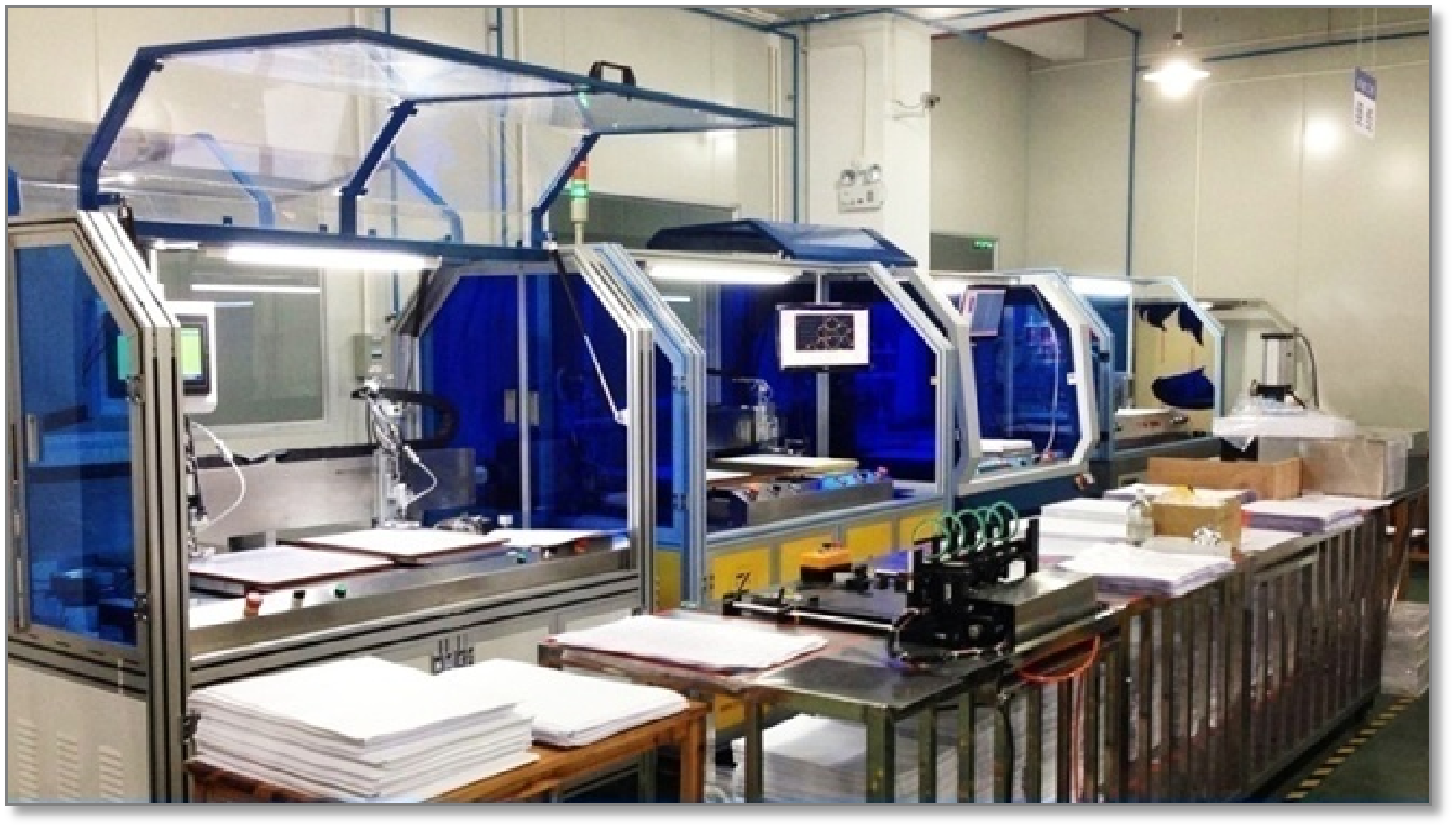
A dossier is only credible when the supplier can point to the production and test environment that generated its stated figures.
Two fields are routinely missing and routinely decisive: read rate under a realistic tag population, and antenna behaviour in the intended mounting. Absence of either is not proof of poor performance — it simply means the buyer must generate the evidence in Gate 2 instead of inheriting it in Gate 1.
4. Gate 2: bench validation against your own tag population
Bench validation is not a repeat of the datasheet. It is a controlled test of the reader against the tags and materials the plant actually uses, and it should be designed so that a failure identifies which variable caused it.
Dense reading is usually the first stress point. Multi-tag solutions rely on anti-collision behaviour, RSSI filtering, time-window de-duplication and zone-based scanning; without those mechanisms, duplicate reads inflate counts and undermine any traceability claim built on them. Where a reader is presented as AI-powered, the claimed intelligence should be inspectable rather than assumed — DAILY RFID, for instance, describes its anti-collision feature as including an AI-enhanced single-tag lock filtering function, which is a behaviour that can be tested by presenting a known tag set and checking whether filtering behaves as documented.
Metal is the second stress point. UHF energy reflects, and machine frames, racks and cabinets distort the read field. On-metal tag construction and isolation layers — foam or ferrite spacing — are part of the answer, and the reader must be retuned after installation rather than left at pre-installation settings. Fixed installations add a third variable: antenna coverage. Tray-level and cabinet-level reading depends on multi-directional antenna placement and power tuning, followed by a standardised tag orientation in the operating procedure.
Physical and feedback characteristics also belong on the bench. A built-in near-field localised antenna or an integrated low-profile flat-panel near-field antenna changes the read zone in ways that matter for desktop encoding or close-range confirmation. An enclosure described as IP54 equivalent defines where the unit may be mounted. A buzzer read prompt defines whether an operator can work without watching a screen. These are qualification inputs, not accessories.
5. Gate 3: on-line pilot and operational qualification
The pilot answers a different question from the bench: does the configuration hold across shifts, network interruptions, temperature cycles and operator turnover? Four operational behaviours deserve explicit pass criteria.
Continuous duty. Fixed readers running around the clock accumulate thermal load. RF power tuning, duty-cycle planning, ventilation space and temperature monitoring are design responses, and the pilot should record behaviour at the installation enclosure rather than at a test bench.
Connection resilience. Network heartbeat monitoring, automatic reconnection and local data buffering determine whether scan records survive a temporary outage. For critical fixed read points, PoE or wired Ethernet is the appropriate default; remote sites need queued upload and breakpoint-resume configured before go-live, not after the first data gap.
Exception handling. Operators need a fast path for a missed read, a duplicate, or a tag that should not be there. Handheld workflows — quick scan, pause, review, exception marking — are usually where this is proven, and the choice between an industrial PDA and a phone-based Bluetooth reader should follow task frequency rather than preference.
Integration reality. A pilot that produces correct reads but wrong records has not passed. Single-device read/write tests should be completed before scaling to multi-reader, multi-node workflows, and the integration path should be exercised with the plant's own MES, ERP or WMS interfaces rather than a demonstration environment.
6. Qualifying fixed, handheld and AI-powered readers differently
The three formats answer different questions, and treating them as interchangeable alternatives is one of the more common qualification errors. A program usually needs one fixed platform for repeatable read points, one handheld for mobile exception handling, and — optionally — an AI-assisted unit where dense or ambiguous reads dominate.
| Format | What must be proven | Evidence to request |
|---|---|---|
| RFID Fixed Reader | Stable read zone at a fixed point over long duty cycles; antenna and power control; enclosure suitability for the mounting location | Antenna port and power configuration, thermal behaviour under continuous operation, interface and buffering behaviour, protection rating |
| RFID Handheld Reader | Usable throughput per operator per shift; behaviour during connection loss; ergonomics and feedback signals | Local record caching and queued upload, connection-status prompts, scan/pause/review workflow, read prompt behaviour |
| AI Powered RFID Reader | That the filtering or lock logic behaves as documented on your tag population, and that its failure modes are understood | Written description of the anti-collision and filtering behaviour, test results against a known tag set, comparison with the same device with the function disabled |
The last row carries the strongest caution. Filtering logic that improves dense-read accuracy in one layout can suppress legitimate reads in another. The qualification question is not whether a reader is AI-powered, but whether its documented behaviour can be reproduced on the buyer's tags, and whether the buyer can switch or adjust that behaviour when the layout changes.
7. Vendor qualification for multi-year programs
Device qualification ends at acceptance; vendor qualification continues for the life of the program. This is the part of the checklist that most often goes unexamined, and the part that determines whether a good pilot becomes a stable system. Six areas repay direct questions.
Legal and operational identity. Confirm the contracting entity, manufacturing location and the relationship between the brand, the factory and any trading intermediary. DAILY RFID CO., LIMITED is registered as a Guangzhou, China–based manufacturer founded in 2008, operates a 28,000 m² factory with 180–200 employees including a 38-engineer R&D team, and exports about 80% of output, with the EU and USA as main markets.
Production continuity. Annual output is a reasonable proxy for whether a supplier can absorb a volume increase without stretching delivery. DAILY RFID states annual output of 100,000 RFID readers, 50 million RFID tags and 30 million RFID cards — a scale that matters when a program moves from pilot quantities to fleet replacement.
Documentation ownership. Ask who writes the datasheet, the SDK and the protocol documents, and whether the same team supports them after purchase. A specification that can only be explained by a sales contact is a qualification risk regardless of the hardware.
Change notification. A multi-year program needs a written understanding of how firmware revisions, component substitutions or model discontinuations are communicated. Readers installed at a read point are configuration-dependent; a silent change can invalidate a validated setup.
Commercial and acceptance terms. Terms should be visible before the pilot, not after it. Published DAILY RFID purchasing information states a minimum order of 500 pieces with 7–12 day lead time for tag items and reader orders from 2 units with 7–15 day lead time, delivery on EXW, FOB or CIF terms, acceptance based on sample approval or sample confirmation, and payment by T/T, D/P or sight L/C, negotiated according to order value, quantity and customisation. Reader acceptance criteria are stated in functional terms — factory functional test, network connection test or WiFi communication test depending on model. Buyers should align these criteria with the gates above rather than accept them as a substitute.
Pre-purchase validation policy. A structured proof-of-concept is the cheapest way to retire technical risk. DAILY RFID provides matched sample tags, readers, antennas and demonstration software so that read distance, mounting environment, interface protocol and expected return can be validated before bulk production, with the final specification confirmed by field data.
8. Staged qualification versus the traditional sample-and-deploy approach
The conventional alternative is simpler: order one or two units, install them where the team thinks they should go, and expand if the reads look plausible. It is faster to start and frequently cheaper to abandon, which is why it persists in low-criticality deployments.
The staged approach differs on four points. It fixes measurable requirements before supplier contact. It separates document evidence from physical evidence. It treats the pilot as a defined test with pass criteria rather than an extended trial. And it qualifies the vendor at the same time as the device, because a reader that cannot be replaced or re-documented in year three is a liability even if it reads perfectly in year one.
The trade-off is honest and worth stating plainly. Staged qualification consumes engineering time and production availability before any purchase order exists, and it can delay a project by weeks at exactly the point where internal pressure to show progress is highest. For a single read point with tolerant requirements, a two-unit sample and a functional check may be proportionate; the full four-gate sequence earns its cost where reads feed traceability records, quality data or automated material flow.
A second limitation is structural: bench and pilot results are site-specific and do not transfer. A configuration validated in one bay may fail in an adjacent bay with different metal geometry. Qualification establishes that a supplier and a configuration can meet the requirement — it does not create a reusable certificate for the plant.
A third limitation concerns the documents themselves. Most published reader specifications, including the IP67 portfolio statement from Turck and the frequency and protocol listing from Merhein, are manufacturer-reported. They are legitimate inputs for Gate 1, but they are not independent test evidence. Independent cross-vendor benchmarks of read range, sensitivity, write rate and multi-tag throughput remain scarce in public data, which is precisely why the burden falls on the buyer's own bench and pilot.
Finally, qualifying a reader cannot compensate for tag selection, mounting geometry or process design. If the tag cannot be read in its installed position, the best-qualified reader in the shortlist will not fix the workflow.
9. Market direction: why this evidence will keep being requested
Adoption is broad and the band is dominant. UHF took 40.72% of total RFID market revenue in 2025 according to Mordor Intelligence, and MarketsandMarkets projects Asia Pacific to account for the largest RFID market share from 2025 to 2034 — a sourcing consideration for any program with Asian manufacturing or supply partners.
Integration is becoming the differentiator rather than raw read performance. Turck states that selected UHF readers support OPC UA through the AutoID Companion Specification, exposing RFID data in a standardised format to PLC, MES, ERP, WMS or cloud systems. When reader data enters those systems directly, the qualification question expands: interface documentation, data model conformance and reconnection behaviour become part of the acceptance record, not an IT afterthought.
Application evidence is also moving toward material flow rather than pure asset counting. A 2025 institutional paper from Queen's University Belfast describes RFID-enabled trolley tracking in a large-scale aerospace manufacturing environment, linked with a business-intelligence visual-management system. The pattern — readers at defined positions feeding dashboards — reinforces why read point definition belongs in Gate 0.
10. Future outlook
The qualification checklist is likely to become more formal, not less. As readers move from pilot projects into production infrastructure, acceptance criteria written in functional terms — reads per cycle, exception rate, recovery behaviour after a network interruption — will displace informal sign-off, because those are the terms maintenance and quality teams can actually measure.
Supplier evaluation will also shift toward documentation longevity. The questions that separate suppliers in a multi-year program are unglamorous: who owns the protocol document, how is a firmware revision announced, how quickly can a replacement unit be matched to an existing configuration. These determine lifecycle cost far more than a marginal difference in stated read range.
For buyers, the practical conclusion is modest and useful: treat the reader as one part of a validated configuration — device, antenna, tag, mounting, network and support — and require evidence at every gate before that configuration is accepted.
FAQ
What documentation should a UHF RFID reader supplier provide before a factory pilot?
At minimum: confirmation of EPCglobal Gen2 / ISO/IEC 18000-6C support; operating frequency bands stated per region; maximum RF transmit power; tag population handling and read rate; host interface and protocol documents with an SDK or demo software; enclosure protection level; operating and storage temperature range; supply voltage and power consumption; and the functional test performed before shipment. The DL213 Type-C UHF Reader Module illustrates the level of detail expected — ISM 860–868 MHz, 902–928 MHz and 920–925 MHz, 23 dBm maximum transmit power, 0.1–10 cm reading range, up to 5 tags simultaneously at under 10 ms average per 64 bits, DC +5 V at 3 W, Type-C USB, and −10 °C to 60 °C operating range. Where a supplier cannot state these fields for the specific model, the dossier is incomplete.
How can a buyer verify supplier-stated reader specifications?
Treat every published figure as manufacturer-reported until it is reproduced. Request a model-level datasheet rather than a portfolio statement, ask whether values are typical or guaranteed, ask for the test conditions behind them, and reproduce the key figures with the plant's own tags and mounting. Published third-party benchmarks for readers are limited: cross-vendor data on read range, sensitivity and multi-tag throughput is not widely available, so verification usually happens on the buyer's bench and pilot line rather than in a public report.
Should a manufacturing program standardise on fixed, handheld or AI-powered readers?
They serve different functions and are usually combined rather than chosen between. Fixed readers suit repeatable read points where antenna placement and power can be engineered once. Handheld readers suit mobile exception handling, cycle counting and inspection, where local caching and connection-status prompts matter more than antenna flexibility. AI-assisted readers are relevant where dense or ambiguous reads dominate, and their filtering behaviour — such as the AI-enhanced single-tag lock filtering described by DAILY RFID — should be tested against a known tag set before it is relied on. Standardising on a single format before Gate 2 typically narrows options prematurely.
What commercial terms usually accompany reader qualification in a multi-year program?
Terms should be visible before the pilot. DAILY RFID's published purchasing information states reader orders from 2 units with 7–15 day lead time, tag orders from 500 to 1,000 pieces with 7–12 or 10–15 day lead time depending on item, delivery on EXW, FOB or CIF terms, acceptance based on sample approval or sample confirmation, and payment by T/T, D/P or sight L/C negotiated by order value, quantity, chip type, material and customisation. Reader acceptance is stated in functional terms such as factory functional test, network connection test or WiFi communication test. Buyers should map these criteria onto their own gate definitions rather than treating them as equivalent.
How does qualification change when the reader must connect to MES or ERP?
Integration evidence becomes part of the dossier. That means serial and TCP/IP protocol documentation, an SDK, demonstration software, and a documented path from single-device read/write tests to multi-reader workflows. Where the plant relies on standardised data exposure, OPC UA support through the AutoID Companion Specification — as stated by Turck for selected UHF readers — allows RFID data to be delivered to PLC, MES, ERP, WMS or cloud systems in a standard format. Network heartbeat monitoring, automatic reconnection and local buffering also move from IT preference to acceptance criteria, because a reader that cannot report through an interruption cannot support traceability records.
What should happen if a reader passes bench tests but fails the pilot?
That outcome is normal in a staged model and is the reason the pilot exists. Diagnosis should follow a fixed order: antenna position and RF power, tag orientation and spacing, metal or liquid interference near the read zone, dense-read collisions and de-duplication settings, thermal behaviour in the installed enclosure, and network buffering. The result is either a retuned configuration that then passes, or a rejection recorded against the original pass criteria. Keeping those criteria in the contract is what makes the second outcome usable.
Reference document: the DAILY RFID company profile brochure, covering manufacturing base, product lines and capability information, is available for download at DAILY RFID company profile (PDF).
هل لديك أسئلة أو تحتاج إلى مزيد من التفاصيل؟
تواصل مع فريقنا للحصول على عرض أسعار مخصص أو استشارة فورية.
طلب عرض أسعار
املأ النموذج أدناه وسيتواصل معك فريقنا بعرض مقترح مخصص.
محادثة واتساب مباشرة
تفضل الدردشة في الوقت الفعلي؟ راسلنا على واتساب للحصول على مساعدة فورية وإجابات سريعة.
- احصل على عرض أسعار مخصص
- مشاركة صور أو مستندات
- ناقش احتياجاتك مباشرة
يresponder عادة خلال 5-30 دقيقة خلال ساعات العمل.