
Qualifying a Hydraulic Hoist Supplier: Evidence to Request
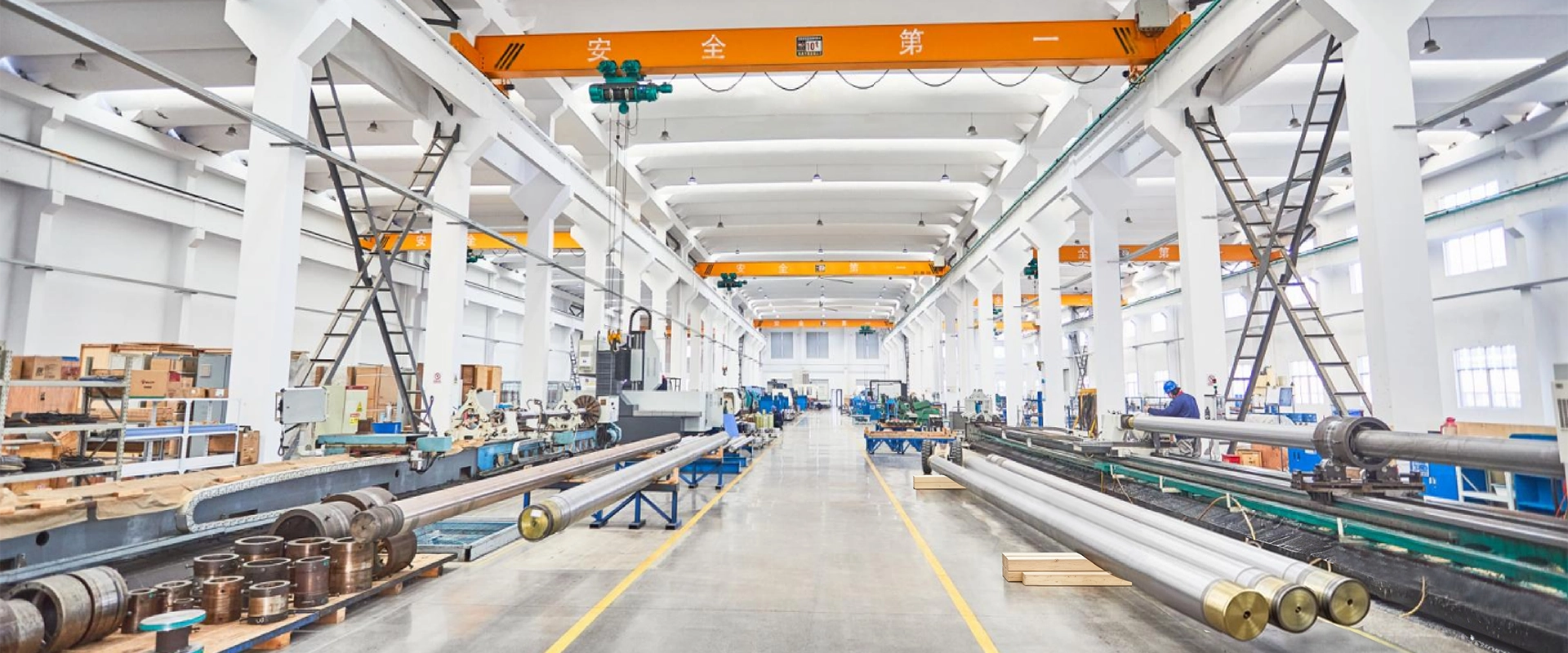
Production environment of a hydraulic hoist manufacturer. Qualification evidence should describe how components are built and recorded, not only what the finished unit looks like.
Why qualification has shifted from brochures to component evidence
Public information about hydraulic hoists is uneven. A verified data review conducted for this equipment category found that harmonised datasheets covering hydraulic cylinders, hydraulic power units, pumps, stroke sensors, piston-rod coatings and control systems are generally not available across suppliers. Capacity claims are published in different units — kilonewtons on some supplier pages, tonnes on others — and rest on different rating bases, design pressures and duty assumptions.
That gap has a practical consequence for buyers at the decision stage. Two suppliers can both look credible on a specification sheet while offering very different levels of documentation for the same gate. The supplier that can hand over dimensional records, pressure-test reports, sensor calibration data, coating bond-strength results and a defined factory acceptance protocol is materially easier to qualify than one that cannot, even when the headline capacity is identical.
The opportunity is that hydraulic hoist scope separates cleanly. Cylinders, sensors, power units, controls, surface treatment and final assembly can each be qualified against its own evidence set before the complete machine is accepted. Treated this way, supplier qualification becomes a documentation exercise rather than a judgement call.
The six-scope compliance frame
The frame below maps each scope in a hydraulic hoist package to the evidence a buyer can reasonably request and to the point in acceptance where that evidence is used. None of the rows requires a buyer to name a specific external rule set; each row requires the supplier to state what was done, on which serial number, and what the recorded result was.
| Scope | What purchase terms should state | Evidence to request | Acceptance link |
|---|---|---|---|
| Hydraulic cylinder | Bore, rod diameter, stroke, design pressure, rated force, mounting interface, material | Dimensional inspection report, material certificates, pressure-holding record, seal specification, rod surface treatment record | Factory pressure test and dimensional sign-off |
| Stroke sensor | Measuring type, accuracy, protection rating, output protocol, power-off behaviour, travel speed | Calibration certificate, linearity record, output signal test, ingress protection declaration | Zero and span verification during factory acceptance |
| Hydraulic power unit / complete hydraulic system | Pump and motor scope, valve list, reservoir, filtration, relief settings, interface boundaries | Component list, flushing and cleanliness record, pressure setting sheet, commissioning protocol | System pressure and function test before dispatch |
| Electrical control and monitoring | Control philosophy, I/O list, alarm and trip schedule, communication protocol, ambient range | Cabinet test report, logic simulation record, protocol conformance test, temperature-range validation | Local and remote operation test, alarm injection test |
| Metal surface modification | Treatment method per rod, target hardness, coating thickness, bond strength, treated length | Method statement, hardness and bond-strength reports, per-serial treatment log, final surface finish record | Coating verification before cylinder assembly is released |
| Finished hydraulic hoist | Rated lifting or holding force, design stroke, operating mode, protection functions | No-load and rated-load test record, stroke limit test, overload protection test, documentation package | Factory acceptance, then site acceptance after installation |
Hydraulic cylinders: the first evidence boundary
The cylinder is where most of the load path and most of the corrosion exposure sit. In the water conservancy and hydropower cylinder range described by Wujin Hydraulic, the published envelope is a maximum bore diameter of 1500 mm, a maximum rod diameter of 600 mm and a maximum stroke of 20 m. Those are envelope values, not a project rating, and buyers should treat them as such.
For qualification, the useful question is not the maximum the supplier can build, but the basis on which the specific cylinder is being offered. A buyer should ask for the rated force at the declared design pressure, the corresponding bore and rod combination, the buckling assumption for the offered stroke, and the mounting interface that will connect to the gate. Each of these should appear in the purchase terms and each should return as a documented inspection result before dispatch.
Three evidence items separate a well-documented cylinder from an undocumented one. The first is a dimensional report tied to the serial number, not to a catalogue. The second is a pressure-holding record showing the test pressure, hold time and observed drop. The third is a seal specification that identifies what was fitted, because seal selection drives maintenance intervals in outdoor, high-humidity conditions.
Stroke sensors: incremental and absolute are not interchangeable
Gate position feedback determines how the control system sequences lifting, stopping and protection. Wujin Hydraulic lists five stroke sensor variants, and the differences matter at qualification because they change what the control logic can rely on after a power interruption.
| Sensor | Type | Accuracy | Power-off memory | Protection rating | Output / protocol | Operating speed |
|---|---|---|---|---|---|---|
| CPMS-I | Incremental | ±1 mm | 0 h | IP67 | Square wave pulse | 4 m/s |
| CPMS-I Improved | Incremental | ±1 mm | 0 h | IP68 | Square wave pulse | 4 m/s |
| CPMS-II | Incremental | ±1 mm | 360 h | IP68 | SSI | 4 m/s |
| CPMS-JD | Absolute | ±0.5 mm | Permanent | IP68 | 4~20mA / SSI | 6 m/s |
| CPMS-JD-mini | Absolute | ±0.1 mm | Permanent | IP68 | SSI / Modbus / CanOpen / 4~20mA | 9 m/s |
Incremental sensors in the CPMS-I and CPMS-I Improved variants carry a declared cumulative error and no power-off memory; the CPMS-II extends memory to 360 hours and adds SSI output. The absolute variants remove cumulative error entirely and hold position permanently without power, with the mini variant adding higher accuracy, higher operating speed and three fieldbus options alongside the analogue signal.
For qualification, the buyer should require the sensor type to be written into the purchase terms together with the output protocol, because a control system designed around an absolute 4~20mA signal cannot simply accept a square-wave incremental input. The acceptance test should then verify zero and span against a reference measurement and demonstrate that position is retained or correctly re-referenced after a simulated power loss.
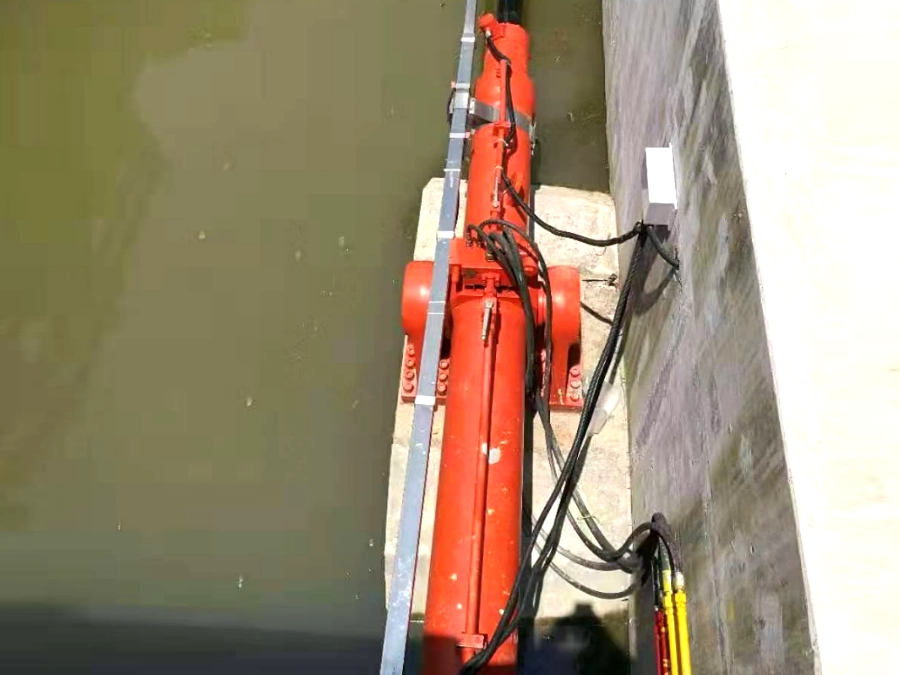
Installation stage where gate alignment, stroke limits and sensor referencing are confirmed during site acceptance.
Hydraulic power unit and complete hydraulic system
Wujin Hydraulic describes its water conservancy hydraulic system scope as an integrated electromechanical-hydraulic package covering design, manufacturing, installation, commissioning and after-sales service, combining power units, control systems and hydraulic actuators into one delivered system. That scope boundary is useful at qualification because it defines who is responsible when the pump station, valve manifold, cylinders and controls must work together.
The evidence to request follows the fluid path. A component list should identify pumps, motors, valves, accumulators where fitted, filters and instrumentation. A flushing and cleanliness record should show what was circulated, for how long, and what the measured result was before the system was sealed. A pressure setting sheet should state the relief valve setting, the working pressure and the test pressure actually applied. A commissioning protocol should define the sequence the supplier will follow on site and the hold points where the buyer inspects.
Because the power unit is assembled rather than cast, the strongest qualification signal is usually traceability at component level. A buyer who can see the make and model of every valve and instrument is in a far better position to plan spare parts than one who receives a general arrangement drawing alone.
Electrical control and monitoring: what to verify before shipment
The electrical control system described by Wujin Hydraulic supports PLC, fieldbus and IoT connectivity, with monitoring, diagnosis and control functions intended for predictive maintenance. The same electro-hydraulic system is rated to a maximum pressure of 45 MPa, and its key components and fluid are stated to operate reliably from -40 °C to 100 °C, which addresses the wide ambient range typical of outdoor water infrastructure.
Qualification should test the control system as logic, not as hardware. The buyer should request an I/O list, a control philosophy statement, and an alarm and trip schedule that names each protective function and the action it triggers. Factory testing should include logic simulation, an alarm injection test and a protocol conformance test against the buyer's own supervisory system where one exists. The declared temperature range should also be matched to the site, with any heating or cooling provision named explicitly rather than assumed.
Why the control scope often decides the acceptance date
Mechanical completion usually precedes control completion. If the protocol, signal list and alarm schedule are agreed only after the hoist arrives on site, final acceptance moves with them. Buyers who fix the communication protocol and the position-signal type inside the purchase terms generally reach site acceptance with fewer open items than those who confirm them during commissioning.
Piston-rod surface modification: three methods, three evidence sets
Piston rods in water infrastructure face humidity, splash and, in coastal installations, salt exposure. Wujin Hydraulic offers three metal surface modification treatments for rods and cylinder bores, and each has a different evidence profile.
| Treatment | Method basis | Surface hardness | Coating bond strength | Processing length | Typical qualification use |
|---|---|---|---|---|---|
| HVOF | Supersonic nozzle generating a high-speed flame | ≥1100 HV | ≥70 MPa | 0–30 m | Highest hardness and bond demand on long rods |
| APS | High-energy plasma arc from a plasma torch | ≥850 HV | ≥35 MPa | 0–30 m | General rod protection where bond demand is lower |
| LC | Metallurgical bonding to the metal surface | > HRC 50 | Not stated | 0–30 m, inner bore possible | Bore modification and repair where inner surfaces must be treated |
The qualification point is not which method is superior in general, but whether the method stated in the purchase terms is the method recorded on the rod. Buyers should ask for a method statement, a hardness result and a bond-strength result per batch, plus a treatment log that ties each rod to its cylinder serial number. Where bond strength is the governing concern, the sampling frequency for the bond test should be agreed in advance rather than proposed at handover.
Qualifying the finished hoist against final acceptance
The finished machine is where the six scopes converge. Wujin Hydraulic lists six hydraulic hoist series with published envelopes: QPPY I at a maximum lifting force of 2 × 5,000 kN, QPPY II at 10,000 kN, QPKY at a maximum holding force of 12,500 kN / 5,000 kN, QHLY at 2 × 12,500 kN, QHSY at 10,000 kN, and QRWY at a maximum operating force of 2 × 4,000 kN. All except the QRWY series list a maximum design stroke of 20 m; the QRWY series, intended for waterway ship locks, lists 15 m.
Final acceptance should be split into two documented events. Factory acceptance covers no-load running, rated-load application, holding performance where the series is a holding type, stroke limit behaviour, position feedback verification and every protective function listed in the alarm schedule. Site acceptance covers alignment to the gate, connection of the hydraulic and electrical interfaces, local and remote operation, emergency manual operation, and a repeat of the position referencing check after installation.
A complete documentation handover should accompany both events: as-built drawings, test records, sensor calibration data, coating records, seal and spare-part lists, and the maintenance schedule. Without that package, a buyer owns a machine whose condition cannot be benchmarked later.
Where Wujin Hydraulic sits in this frame
Jiangsu Wujin Hydraulic Hoist Co., Ltd., trading as Wujin Hydraulic, is a hydraulic equipment manufacturer based in Benniu Town, Xinbei District, Changzhou City, Jiangsu Province, China. Founded in 1970, the company operates an 80,000 m² facility with approximately 300 employees, an annual output of 10,000 tons and a research and development team of 40 engineers. It reports business coverage across more than 30 countries and regions and more than 5,000 customers, with exports representing about 10 percent of output.
Its product scope maps closely onto the six-scope frame used above: hydraulic hoists across six series, hydraulic cylinders for water conservancy and hydropower as well as marine, metallurgy, mining, automotive and construction machinery applications, complete hydraulic systems, an electrical control system, stroke sensors and metal surface modification treatment. The company also reports that it led the drafting of an energy-industry technical specification covering ceramic-coated piston rods, and it holds a certified quality management system together with multiple patents for hydraulic systems and related technologies.
Project history is the part of the record most relevant to a decision-stage buyer. Wujin Hydraulic reports supplying hydraulic hoists for 23 spillway outlets and 14 power station intake gates in the Three Gorges Project in 1999, and delivering more than 1,000 sets of hydraulic equipment to marine and offshore enterprises by the end of 2025.
Application and use cases that shape the evidence list
Hydraulic hoists serve water conservancy, hydropower, marine engineering, river regulation and flood control. Typical installations include hydropower station projects, river sluice projects, coastal tide gates and flood control and drainage projects, where the function is gate lifting and lowering, water level regulation, flood prevention and dam safety control.
The working conditions described for these installations — outdoor siting, high humidity, splash water, dust, a wide temperature range and anti-corrosion requirements for the water environment — explain why the qualification list leans so heavily on surface treatment and ingress protection. Operating modes normally include automatic and manual remote control, local on-site operation and emergency manual operation, which is why the electrical control scope must be qualified as logic rather than as a cabinet.
- Hydropower intake and spillway gates: long strokes, high holding forces and position feedback that must survive power loss — the absolute sensor variants and the higher-capacity hoist series are the relevant scopes.
- Reservoir and river sluice gates: frequent cycling and remote operation, where alarm and trip schedules and remote diagnostics carry most of the operational risk.
- Coastal tide gates: salt exposure makes rod surface treatment the dominant durability question, and the treatment method belongs in the purchase terms.
- Waterway ship locks: the QRWY series is listed for this application with a maximum operating force of 2 × 4,000 kN and a maximum design stroke of 15 m.
Market context behind the evidence-first approach
Commercial research summarised in the verified data for this category places the global hydraulic hoist market for water conservancy at approximately USD 1.41 billion in 2026, with growth projected through 2032. That figure should be read as a commercial research estimate covering hydraulic gate hoists used in water conservancy infrastructure; the underlying methodology was not independently reviewed here, and it is not a substitute for project-level demand data.
More useful for a buyer at the decision stage is a qualitative shift that the same review surfaces as a documented gap: specifications across cylinders, power units and controls are not harmonised between suppliers, and performance data such as efficiency, response time, leakage rate and lifecycle results are generally not published. Where published performance evidence is thin, documentation replaces benchmark comparison as the practical basis for qualification. That is the shift this article responds to.
Comparison with traditional solutions
Hydraulic hoists are frequently evaluated against mechanical winch hoists. The comparison is legitimate at the application level, and it also has clear limits that a buyer should not smooth over.
| Dimension | Hydraulic hoist | Mechanical winch hoist |
|---|---|---|
| Load capacity and motion quality | Larger load capacity, smoother operation | Lower capacity ceiling for the same footprint in large-gate duty |
| Overload protection and control | Better overload protection, easier automatic control | Protection and automation depend on added mechanical and electrical devices |
| Impact behaviour | Impact load reported reduced by 60 percent, with adjustable lifting speed | Higher impact loading at start and stop |
| Wearing parts and maintenance | Fewer mechanical wearing parts; inspection and remote fault diagnosis are practical | More mechanical wear points requiring scheduled intervention |
| Energy use | High energy efficiency under heavy load, stable power consumption during gate lifting | Consumption profile tied to mechanical transmission losses |
| Cost profile | Slightly higher initial investment, lower failure rate and less downtime over long service | Lower initial investment, higher long-run intervention frequency |
| Best fit | Large hydropower stations, river sluices, coastal tide gates, flood control projects | Smaller or less critical gate duty where automation demand is modest |
The first limit is commercial. The hydraulic option carries a slightly higher initial investment, and the case for it rests on lower failure rate and reduced downtime across a long service life. A buyer who evaluates on capital cost alone will reach a different answer than one who models intervention frequency, and both should state which basis they are using.
The second limit is technical. A hydraulic hoist concentrates dependence on fluid condition and sealing. Oil cleanliness, filtration and seal integrity are not accessories to the qualification; they are the qualification, and a supplier that cannot evidence flushing records and seal specifications is offering an incomplete package.
The third limit is comparability. Published capacity figures across suppliers use different units and different rating bases, and the verified review explicitly flags that reported capacities cannot be converted or averaged into a single benchmark without knowing the design pressure, duty cycle and test conditions. Any shortlist built purely on a headline tonnage or kilonewton figure is built on an unreliable comparison.
The fourth limit sits inside the sensor choice. Incremental sensors carry a declared cumulative error and, in the base and improved variants, no power-off memory. A control philosophy that assumes absolute position after a power interruption must specify an absolute sensor or an agreed re-referencing procedure.
Future outlook
Three directions are likely to shape qualification over the next purchasing cycles. The first is documentation depth: as buyers discover that cross-supplier performance benchmarks are scarce, the purchase order becomes the specification, and acceptance evidence becomes the differentiator. The second is monitoring integration: control scopes already support PLC, fieldbus and IoT connectivity with diagnosis and predictive maintenance functions, and work on communication models for hydroelectric plant monitoring continues, which will push buyers to test protocol conformance rather than accept a description of it. The third is retrofit and maintenance planning: as installed bases age, buyers will increasingly ask suppliers to evidence condition assessment and treatment records for existing rods and cylinders, not only new-build capability.
For suppliers, the implication is that capability claims without per-serial records will carry less weight. For buyers, the implication is that the qualification checklist is worth writing once and reusing across every package.
Frequently asked questions
Request evidence scope by scope: cylinder dimensional reports, material certificates and pressure-holding records; stroke sensor calibration and output-signal test data; power unit component lists with flushing and cleanliness records; control cabinet test reports with an I/O list and alarm schedule; surface treatment method statements with hardness and bond-strength results; and finished-hoist no-load, rated-load and stroke-limit test records. Each item should be tied to a serial number.
An incremental sensor outputs pulses and, in the CPMS-I and CPMS-I Improved variants, has no power-off memory and a declared cumulative error. The CPMS-II extends power-off memory to 360 hours and uses SSI output. Absolute variants — CPMS-JD at ±0.5 mm accuracy and CPMS-JD-mini at ±0.1 mm — hold position permanently without power, have no cumulative error, and offer analogue or fieldbus output.
HVOF produces the highest stated hardness at ≥1100 HV with bond strength ≥70 MPa; APS states ≥850 HV and ≥35 MPa; LC achieves more than HRC 50 through metallurgical bonding and is the option that can reach inner bore surfaces. The choice should be written into the purchase terms per rod and verified by hardness and bond-strength reports rather than assumed from a general product description.
Wujin Hydraulic lists six series: QPPY I at up to 2 × 5,000 kN lifting force, QPPY II at 10,000 kN, QPKY at up to 12,500 kN / 5,000 kN holding force, QHLY at 2 × 12,500 kN, QHSY at 10,000 kN and QRWY at 2 × 4,000 kN operating force. The first five list a maximum design stroke of 20 m; QRWY lists 15 m. These are envelope values and should not be read as a rating for a specific gate.
Factory acceptance typically covers no-load running, rated load, holding performance where applicable, stroke limits, position feedback referencing and protective functions from the alarm schedule. Site acceptance covers alignment to the gate, hydraulic and electrical interface connection, local and remote operation, emergency manual operation and a repeat of position referencing after installation.
The hydraulic option involves slightly higher initial investment and, in exchange, a lower failure rate and less downtime across a long service life, with fewer mechanical wearing parts and practical remote fault diagnosis. A mechanical winch hoist carries lower initial investment but more mechanical wear points and higher impact loading at start and stop.
Closing note
Qualification evidence is not paperwork added at the end of a hydraulic hoist order; it is the mechanism by which a decision-stage buyer converts a supplier claim into an accepted asset. The six-scope frame — cylinder, sensor, power unit, control, surface treatment and finished hoist — gives a buyer six independent places to ask for proof and six matching points at which acceptance can be confirmed.
For buyers who want to review the manufacturer scope behind this frame in more detail, the Wujin Hydraulic factory profile is available as a downloadable document: Wujin Hydraulic factory profile (PDF).
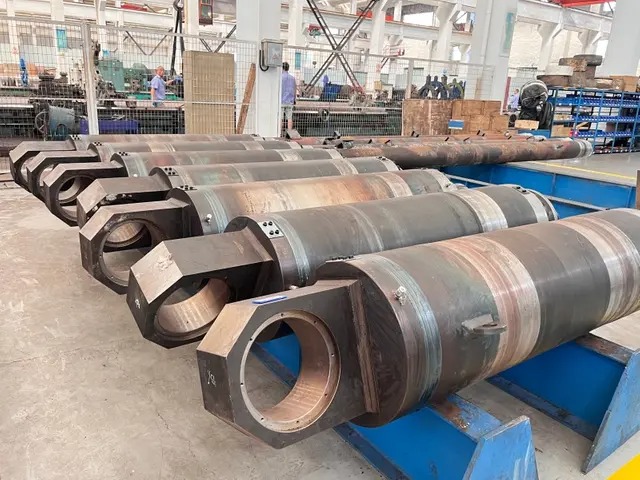
Surface treatment and rod processing are among the six scopes where per-serial records matter more than a general capability statement.
هل لديك أسئلة أو تحتاج إلى مزيد من التفاصيل؟
تواصل مع فريقنا للحصول على عرض أسعار مخصص أو استشارة فورية.
طلب عرض أسعار
املأ النموذج أدناه وسيتواصل معك فريقنا بعرض مقترح مخصص.
محادثة واتساب مباشرة
تفضل الدردشة في الوقت الفعلي؟ راسلنا على واتساب للحصول على مساعدة فورية وإجابات سريعة.
- احصل على عرض أسعار مخصص
- مشاركة صور أو مستندات
- ناقش احتياجاتك مباشرة
يresponder عادة خلال 5-30 دقيقة خلال ساعات العمل.