
Quarry Stone Crusher Plant: A Buyer's Configuration Primer
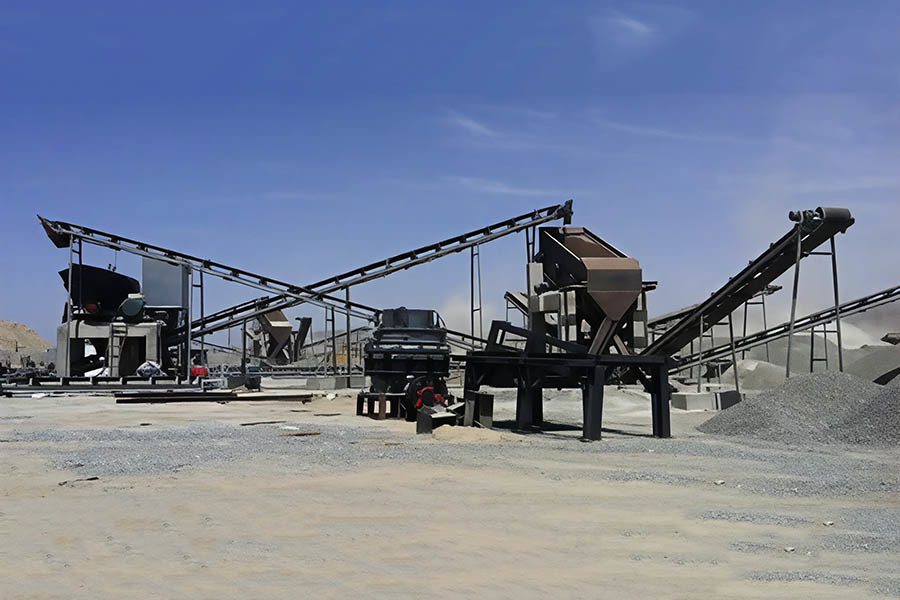
A quarry plant is specified as a circuit — feeder, primary, secondary, screens and conveyors — not as a single crusher. Site reference: LBZG.
A quarry stone crusher plant converts run-of-quarry rock into sized aggregate and, where the product mix requires it, manufactured sand through a staged sequence: feeding, primary crushing, secondary crushing, screening, sand making with a vertical shaft impact crusher, and optional washing. The plant — not the individual crusher — is the unit that decides whether a quarry reaches its gradation and tonnage targets.
That distinction matters early in a project. Buyers in the discovery phase usually start from a machine type: they believe they need a jaw, or a cone, or an impact crusher. What they are actually buying is a circuit whose four governing inputs are feed material hardness, maximum feed size, required capacity in tons per hour, and the final product specification.
This primer sets out how a quarry crushing plant is assembled stage by stage, what each stage can and cannot do, how capacity is matched between links, and where published numbers stop being guarantees.
Why the plant, not the crusher, is the buying unit
A crushing line is a chain of throughput constraints. If the feeder is too small, the primary crusher idles; if the secondary crusher cannot absorb the primary's discharge, the cavity backs up; if the screen is under-sized, finished-size material recycles into the crusher and the whole line loses capacity without any single machine appearing to fail.
The practical rule used in circuit design is upstream surplus, downstream step-down. Feeder capacity is set at roughly 1.1–1.2 times the rated jaw capacity. Secondary crusher capacity is set at 1.0–1.1 times the actual primary output. Screen capacity is set at roughly 1.2–1.3 times line capacity, because the screen handles both fresh feed and circulating load. Belt conveyors are sized at about 1.2 times maximum flow to avoid spillage and blockage.
Rated capacity and actual capacity are different numbers, and conflating them is the most common source of disappointment. A catalogue rating is produced under ideal feed size, hardness and moisture. Once site conditions, operator behaviour and wear-part condition are included, sustained output typically lands at 70–85% of the rated figure. A plant should therefore be selected against actual capacity at a stated feed gradation, not against the sum of catalogue maxima.
The stages and the parameters that decide each
Primary crushing: the jaw stage
Jaw crushers reduce run-of-quarry rock by compression between a fixed and a moving jaw plate. They are the default first stage because the feed opening is large, the structure is simple, maintenance is straightforward and operating cost is low. In the PE range published by LBZG, feed openings run from 250×400 mm to 1200×1500 mm, with maximum feed sizes from 210 mm to 1,000 mm depending on model.
The boundary of the jaw stage is equally clear. It is a coarse crusher: it does not produce finished material below 50 mm in a single pass, it is not the right choice where strict particle-shape requirements apply to premium aggregate, and it is not sized for ultra-large capacity above roughly 1,000 t/h in a single unit.
| PE jaw model | Feed opening (mm) | Max feed (mm) | Output (mm) | Capacity (t/h) | Power (kW) |
|---|---|---|---|---|---|
| PE-600×900 | 600×900 | ≤520 | 65–130 | 50–150 | 75 |
| PE-750×1060 | 750×1060 | ≤630 | 80–140 | 100–180 | 110 |
| PE-900×1200 | 900×1200 | ≤800 | 100–230 | 180–280 | 132 |
| PE-1200×1500 | 1200×1500 | ≤1000 | 150–350 | 300–800 | 200 |
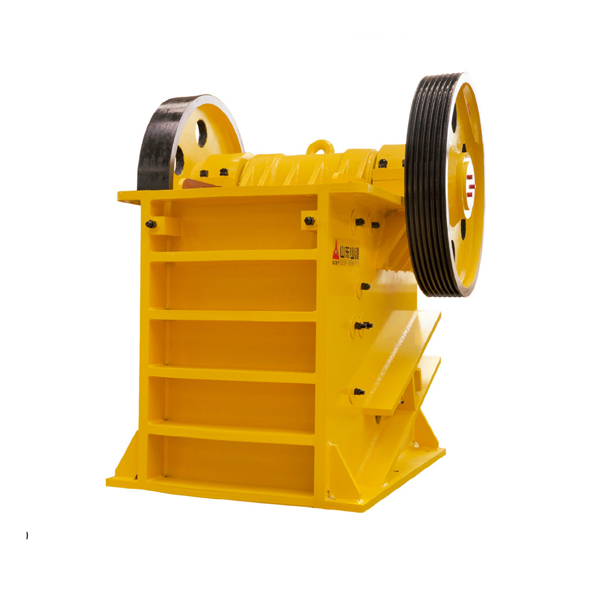
PE series jaw crusher — the conventional primary stage for material of any hardness.
Secondary crushing: cone or impact
The secondary stage is where the material question becomes decisive. Cone crushers work by laminated inter-particle crushing, take a smaller feed, and are applied in medium and fine crushing with discharge typically quoted at roughly 10–50 mm, delivering a more regular particle shape. They are not selected as a first-stage coarse crusher, are not suitable for feed above 300 mm, and are not suited to soft or sticky material. Their natural territory is hard, abrasive rock, medium-to-large plants above 100 t/h, and long-term projects where operating cost per ton matters more than capital cost.
Impact crushers occupy a different slot. On medium-soft rock they produce cubical aggregate and are used for highway-grade material. That makes the jaw-plus-impact circuit the default on limestone and dolomite, and the jaw-plus-cone circuit the default on granite, basalt and iron ore above 250 MPa compressive strength.
| Secondary model | Type | Key parameters |
|---|---|---|
| CS-160 (B160) | Hydraulic cone | Cone dia. 1,295 mm; CSS 13–51 mm; fine 109–181 t/h, medium 132–253 t/h, coarse 172–349 t/h; 185 kW |
| CS-220 (B220) | Hydraulic cone | Cone dia. 1,676 mm; CSS 16–64 mm; fine 181–327 t/h, coarse 299–635 t/h; 240 kW |
| PYB-1750 | Spring cone | Feed opening 215 mm; output 25–60 mm; 280–480 t/h; 155 kW |
| PYB-2200 | Spring cone | Feed opening 300 mm; output 30–60 mm; 590–1,000 t/h; 280 kW |
| PF-1214 | Impact | Rotor Φ1250×1400 mm; max feed 400 mm; 80–180 t/h; 132–160 kW |
| PF-1315 | Impact | Rotor Φ1320×1500 mm; max feed 500 mm; 100–250 t/h; 160–200 kW |
Tertiary crushing and sand making
Where the product mix includes manufactured sand, or where aggregate shape must be improved after a cone stage, a vertical shaft impact crusher is added after screening. The VSI-7611 (110–150 kW) accepts up to 35 mm of soft feed or 30 mm of hard feed; the VSI-8518 (180–220 kW) accepts up to 40 mm and 35 mm respectively, and the same crusher in mobile configuration is rated 100–180 t/h. Both use rock-on-rock crushing, which is the basis of their particle-reshaping behaviour.
For dry-process sand production, the EIS-1000 (140–180 kW, feed ≤45 mm) and EIS-1200 (feed ≤50 mm, fineness modulus 2.3–3.0) combine production and intelligent monitoring in a single unit. Where the raw material is weathered sand or river pebble rather than crushed rock, MB rod mills are quoted from 100–160 t/h on the MB-2.4×3.6 up to 300–400 t/h on the MB-3.6×4.5.
Screening, conveying and washing
YK circular vibrating screens are available in two-, three- and four-deck configurations with manganese steel mesh; motor power runs from 5.5 kW on the 1248 sizes to 22 kW on the 2470 sizes. Screening is where the circulating load is decided. An under-sized screen returns finished-size material to the crusher, and the line quietly loses output while every crusher appears to be running normally.
Conveying scales with the circuit: B650 belts are rated 80–200 t/h, B800 280–500 t/h, B1000 430–850 t/h and B1200 650–1,200 t/h. Washing is optional and product-driven rather than tonnage-driven — wheel washers such as the XS-3000 handle 50–100 t/h, spiral washers such as the FG-1200 handle 70–110 t/h, and the choice between them turns on clay content and the required final mud figure rather than on throughput.
Matching the circuit to the rock in the ground
Material hardness sets the circuit before capacity does. Hard rock above 250 MPa — granite, basalt, iron ore — is a jaw-plus-cone circuit, with a second fine cone stage where capacity is high. The laminated action of the cone extends wear-part life and lowers operating cost per ton on abrasive feed, which is why it is preferred over impact crushing on river pebble and similar hard stone.
Medium-soft rock below 200 MPa — limestone, dolomite — is normally a jaw-plus-impact circuit, because the impact crusher produces cubical aggregate suitable for highway-grade work. Forcing a cone circuit onto soft limestone is over-specified and costs more than the duty requires. Forcing an impact circuit onto basalt drives blow-bar consumption up sharply.
Hammer crushers (PC and PCX series) sit outside this logic. They suit brittle, low-abrasion material and deliver a high reduction ratio in a single pass, which simplifies the circuit and reduces capital cost. They are not the right choice where silica content is high, because hammer life shortens quickly, or where feed is wet and sticky, because the chamber builds up.
What 500 t/h means in equipment terms
A 500 t/h target is a plant-level statement, not a model number. In the published range, the primary stage would be a PE-1200×1500 (300–800 t/h, 200 kW, maximum feed 1,000 mm). The secondary stage would be a CS-220 cone in coarse cavity (299–635 t/h at 240 kW) or two smaller cones in parallel. Screening would be split across several units rather than concentrated in one, and the main belts would be B1000 class (430–850 t/h). Where manufactured sand is part of the product split, a VSI-8518 is added after screening rather than inside the main flow.
Three qualifications belong in any 500 t/h discussion. Published capacities are per-machine figures under stated feed conditions, not simultaneous guarantees for a circuit. Output falls with harder or moister feed, with a tighter closed-side setting and with worn liners. And the number that matters contractually is the guaranteed output at a stated feed gradation and product split — not the sum of catalogue maxima.
Where quarry crushing plants are deployed
The same circuit logic is applied differently depending on the end market, and the differences show up in the specification rather than in the crusher list.
- Highway and railway aggregate. Round-the-clock operation with strict gradation and particle-shape requirements. The Lunan High-Speed Railway is listed as an official reference project, with a centralized control system included in the matched equipment.
- Hydropower. High-strength concrete aggregate for dam construction, produced over multi-year continuous operation at remote, sometimes high-altitude sites. Wear-resistant chambers and remote-site serviceability are the governing requirements.
- New town and airport construction. Large-volume aggregate and manufactured sand to airport-grade specification, with dust suppression named as a project requirement rather than an afterthought.
- Overseas quarry and infrastructure. Voltage adaptation across 380 V, 440 V, 415 V and 660 V supplies, tropicalized or desert-rated options, multilingual manuals and long-distance service support.
- Construction and demolition waste. Trailer-mounted mobile stations that need no concrete foundation, with low noise, low dust, magnetic separation and rapid relocation between sites.
- Solid hazardous waste. Sealed enclosure with negative-pressure dust collection, corrosion-resistant materials, and an explosion-proof motor option where the site requires it.
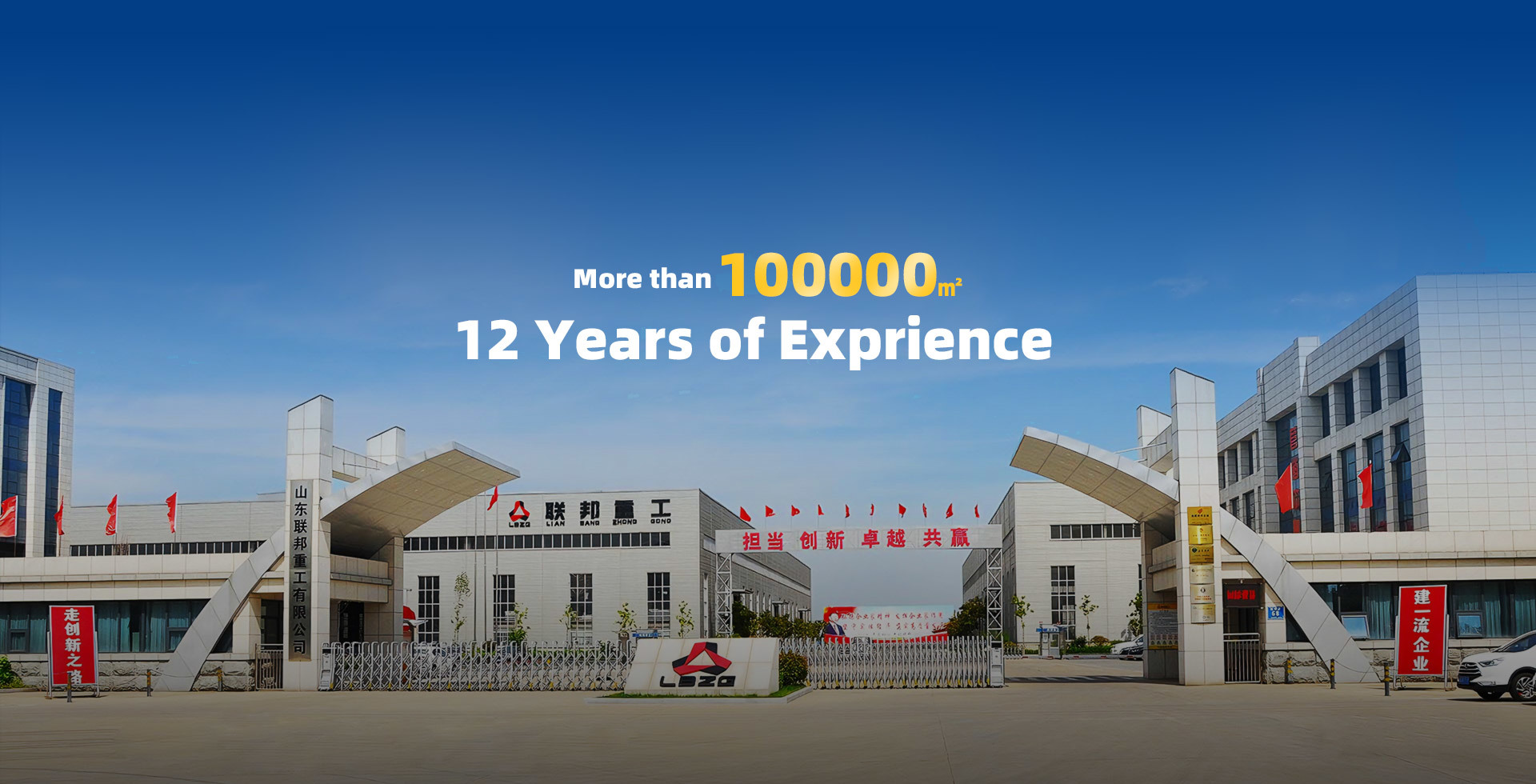
Plant modules are fabricated and assembled in workshops before shipment — a point buyers can verify during a factory audit.
The manufacturer behind the circuit: what can be verified
Shandong Lianbang Heavy Industry Co., Ltd., trading under the brand Shanyuan LBZG, is a Chinese manufacturer of sand-stone crushing, sand-making and solid-waste recycling equipment. The company was registered in 2013, has more than ten years of operating history, and is based in Linyi, Shandong Province. It builds both standalone machines and complete lines, and supplies mobile crushing and screening equipment alongside stationary circuits.
The first-party facts a buyer can check before shortlisting are these:
- Two production bases covering a total area of 120,000 m², including 40,000 m² of standard workshops, with more than 150 sets of processing equipment and approximately 110 staff.
- A stated annual production capacity of 2,000 units.
- ISO 9001 quality management, ISO 14001 environmental management and OHSAS 18001 occupational health and safety certifications, plus CE export certification for foreign trade projects.
- Participation in revising national crusher industry standards; national high-tech enterprise status (re-recognised in 2023); and Shandong provincial specialised, refined, differentiated and innovative SME status.
- A municipal-level engineering laboratory and a provincial-level “One Enterprise, One Technology” R&D centre.
- Products sold to more than 40 countries, with an export ratio of roughly 30% and stated markets in the Middle East (Saudi Arabia, the UAE, Iraq, Qatar), Central Asia (Russia, Kazakhstan, Uzbekistan), Southeast Asia (Indonesia, Malaysia, Vietnam, the Philippines) and Africa (Nigeria, Kenya, Ghana and other infrastructure-focused markets).
These facts are useful because of what they imply, not because of what they assert. A stated capacity of 2,000 units a year points to serial manufacturing rather than one-off fabrication, which bears directly on spare-part availability and lead time. ISO 14001 is relevant where washing circuits and dust control fall inside an operating permit. Participation in standards revision indicates that the company works in specification language rather than only in catalogue language.
What none of this replaces is verification at the buyer's end: a factory audit, a reference-plant visit, and a written guarantee of output at a stated feed gradation and product split.
Market trend: growth with a compliance overlay
The global stone crusher market was valued at USD 4.8 billion in 2025 and is projected to reach USD 8.9 billion by 2034, equivalent to a 7.4% CAGR, according to a Dataintelo report published in 2026 whose scope covers jaw, cone and impact crushers. The same report places Asia-Pacific at 42.8% of 2025 revenue.
Two cautions apply to figures of this kind. Market definitions differ between research houses — whether complete plants or individual crushers are counted changes the number materially — so the directional reading is more reliable than the absolute value. And a market growth rate says nothing about any single supplier's volume.
The structural driver behind the growth is less about new quarries than about replacement and compliance. In the United States, the EPA's Mineral Mining and Processing Effluent Guidelines (40 CFR Part 436) set wastewater discharge standards covering mineral processing operations, which bears directly on washing circuits and site water management. That kind of requirement pushes specification towards enclosed dust control, closed water circuits and documented environmental management, and it raises the cost of an under-specified plant far more than it raises the cost of the equipment itself.
Comparison and limits: where each configuration stops working
The most consequential comparison at the discovery stage is not between brands but between plant formats. Fixed and mobile circuits solve different problems, and choosing the wrong one is expensive to reverse.
| Criterion | Fixed crushing line | Tyre-mounted mobile plant |
|---|---|---|
| Typical fit | Long-term quarry (over 3 years), stable product mix, stable power supply | Short projects (under 2 years), frequent relocation, dispersed pits, urban demolition waste |
| Capacity | High; parallel units can be added | Single-unit: YCG-J750 110–230 t/h; YCG-I1214 100–180 t/h; YCG-C160 90–210 t/h |
| Civil works | Foundations, land, power connection | Trailer-mounted, no concrete foundation |
| Cost structure | Lower cost per ton at high volume | Higher cost per ton; transport and relocation costs apply |
| Changeover | Dismantle and rebuild | Towed between sites |
The limits that buyers most often discover late are these. A jaw crusher alone cannot produce saleable fine aggregate, however large the machine. A cone crusher is not a first-stage machine and will not accept feed above roughly 300 mm, nor does it handle soft or sticky material well. An impact crusher on abrasive hard rock produces good shape but consumes blow bars quickly, so the cost per ton rises even though the capital cost looks attractive.
Wear-part economics deserve the same attention as machine selection. Published reference ranges for manganese jaw plates (Mn13Cr2 or Mn18Cr2) run to roughly 3–6 months, and impact blow bars of high-chrome cast iron (HRC 58–65) to roughly 1–3 months, with actual life depending on material hardness, silica content and feed size. These are consumables, not warranty items, and they belong in the operating budget rather than the capital budget.
Two further boundaries are worth stating plainly. CE export certification held by a manufacturer supports customs and market entry, but it is not a substitute for local permitting, local emission requirements or a site-specific environmental approval. And no catalogue states the output a plant will deliver on a buyer's own rock — that number has to be agreed in writing against a stated feed gradation and product split.
Future outlook
Three shifts are visible in how quarry plants are being specified. The first is that plants are increasingly bought as complete circuits with a defined product gradation, rather than as a list of machines assembled on site — which moves the engineering responsibility onto the supplier and makes the guaranteed output the central commercial term.
The second is the reduction of water dependence in sand production. Dry-type systems such as the EIS-1000 and EIS-1200, with intelligent monitoring and a controllable fineness modulus of 2.3–3.0, address both the permitting burden of washing circuits and the consistency of manufactured sand.
The third is relocatability. Urban demolition waste and dispersed quarry pits favour trailer-mounted stations that need no foundation, and the matched equipment for those duty cycles increasingly includes magnetic separation, dust removal and remote dispatch rather than only the crusher itself.
Frequently asked questions
What is a quarry stone crusher plant?
A quarry stone crusher plant is a staged production system that converts run-of-quarry rock into sized aggregate and manufactured sand. The stages are feeding, primary crushing with a jaw crusher, secondary crushing with a cone or impact crusher, screening, sand making with a VSI crusher where required, and optional washing. Configuration is matched to feed material hardness, maximum feed size, required capacity in tons per hour and the final product specification.
Which parameters decide how a crushing line is configured?
Four inputs govern the configuration: rock compressive strength or Mohs hardness, maximum feed size, hourly target capacity, and the finished aggregate grain-shape requirement. Wear-part operating cost is the fifth practical input, because it determines whether a cone or an impact crusher is the more economical secondary stage over the life of the plant.
Which crusher combination suits granite and basalt, and which suits limestone?
For hard rock such as granite, basalt or iron ore above 250 MPa compressive strength, the conventional configuration is a PE series jaw crusher for primary crushing followed by a CS or PY series cone crusher for secondary crushing, with a second fine cone stage where capacity is high. For medium-soft rock such as limestone or dolomite below 200 MPa, the conventional configuration is a PE series jaw crusher plus a PF series impact crusher, which produces cubical aggregate suitable for highway-grade work.
What does a 500 t/h stone crusher plant require in equipment terms?
At 500 t/h, the primary stage corresponds to a model in the PE-1200×1500 class (300–800 t/h, 200 kW, maximum feed 1,000 mm). The secondary stage corresponds to a CS-220 cone in coarse cavity (299–635 t/h at 240 kW) or two smaller cones in parallel. Screening is distributed across several units, and main conveying is B1000 class (430–850 t/h). These are per-machine published capacities under stated feed conditions; the plant's guaranteed output must be agreed separately against the buyer's feed gradation and product split.
Why might a plant not deliver its published capacity?
Published ratings are produced under ideal feed size, hardness and moisture. In service, actual output is typically 70–85% of the rated figure, and it falls further with harder or wetter feed, a tighter closed-side setting, under-sized screening that returns finished material to the crusher, and worn liners or blow bars. Capacity matching between links — feeder, primary, secondary, screen and belt — determines whether the line can run near nameplate at all.
Which certifications and documents should be verified before ordering a plant?
At minimum, verify the manufacturer's ISO 9001 quality management certification, ISO 14001 environmental management certification and OHSAS 18001 occupational health and safety certification, plus CE export certification where the project is a foreign-trade one. Ask for the certificate numbers and validity dates, and confirm whether the scope covers the specific equipment being purchased. Certification supports market entry and quality assurance; it does not replace local permitting, emission requirements or a site-specific environmental approval, which remain the buyer's responsibility.
A full equipment range with model specifications is available in the Shandong Lianbang Heavy Industry product brochure (PDF).
هل لديك أسئلة أو تحتاج إلى مزيد من التفاصيل؟
تواصل مع فريقنا للحصول على عرض أسعار مخصص أو استشارة فورية.
طلب عرض أسعار
املأ النموذج أدناه وسيتواصل معك فريقنا بعرض مقترح مخصص.
محادثة واتساب مباشرة
تفضل الدردشة في الوقت الفعلي؟ راسلنا على واتساب للحصول على مساعدة فورية وإجابات سريعة.
- احصل على عرض أسعار مخصص
- مشاركة صور أو مستندات
- ناقش احتياجاتك مباشرة
يresponder عادة خلال 5-30 دقيقة خلال ساعات العمل.