
RDP in EIFS/ETICS: Selecting Grades by System Layer
RDP in EIFS/ETICS: Selecting Grades by System Layer
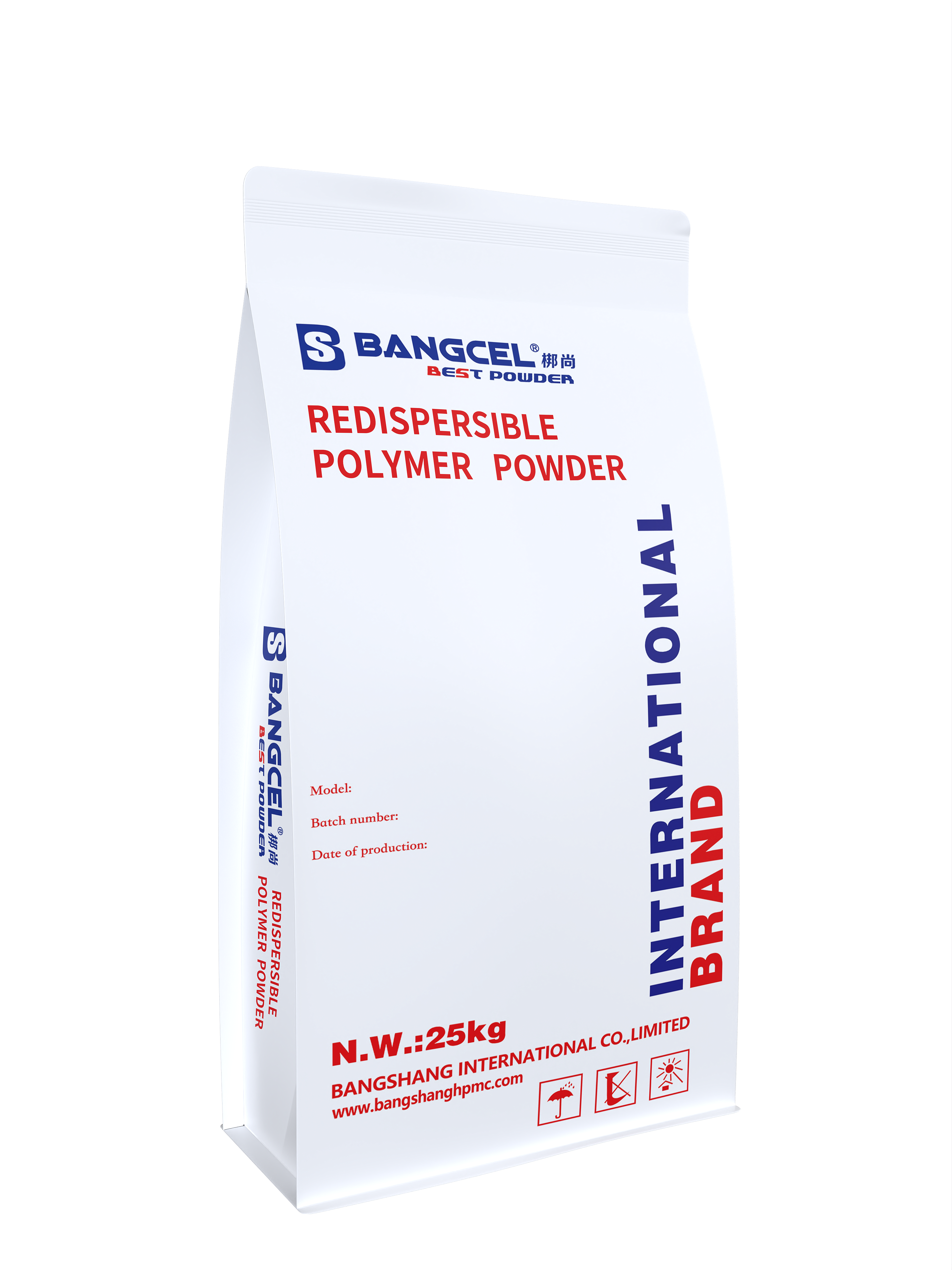
In EIFS/ETICS, an RDP grade should be selected for the mortar layer it must support—not treated as a universal additive for the entire exterior insulation system. Adhesive mortar, base coat and finish-layer formulations have different jobs, so formulators should assess the required performance of each layer, the complete dry-mix recipe and the conditions in which it will be applied. BANG SHANG INTERNATIONAL CO.,LIMITED, whose construction additives are offered under the BANGCEL® brand, reports application-oriented RDP customization, including particle size and viscosity adjustments, alongside technical support for formula adjustment using customer raw materials and application conditions.
Why layer-specific selection matters
EIFS/ETICS is a layered exterior insulation system. In a typical formulation discussion, the adhesive mortar is considered in relation to attachment, the base coat in relation to the reinforced layer, and the finishing layer in relation to the exposed surface. These are distinct formulation tasks. A product name such as “RDP for construction” does not, by itself, establish that a particular grade is suitable for all three.
The available company information describes RDP as an additive used in construction materials and lists EIFS/ETICS among its application areas. It states that the product range is intended to help enhance mortar adhesion, flexibility, crack resistance and durability. Those are broad application-level descriptions, not quantified results for a named EIFS/ETICS system or an individual layer. Buyers should therefore treat them as an initial screening basis, then verify performance in the actual formulation and application conditions.
This distinction is important in procurement as well as formulation. A grade that can be considered for one mortar layer should not automatically be carried over to another. Changes in the binder system, aggregates, fillers, other additives, mixing process or intended application can affect the formulation outcome. The suitable choice is the grade that meets the relevant requirements in the finished mortar—not simply the one with the most attractive isolated specification.
What RDP selection means across EIFS/ETICS layers
| Layer or formulation | Selection question | What to verify in the formulated mortar |
|---|---|---|
| Adhesive mortar | Does the candidate grade fit the adhesive formulation and its application method? | The specified adhesion-related requirements, workability and application behavior in the intended system. |
| Base coat | Does the grade support the intended base-coat formulation, including the system’s flexibility and crack-resistance objectives? | The finished mortar’s performance in the project’s formulation and application conditions. |
| Finishing layer | Is RDP part of the specific finish formulation, and what properties must that formulation provide? | Compatibility and application results for the selected finish formulation; do not assume an adhesive or base-coat grade transfers directly. |
This is a formulation-screening framework, not a claim that a particular BANGCEL® model has been independently validated for any listed layer. The available product information does not assign RDP5010, RDP6188 or RDP4010 to specific EIFS/ETICS layers.
1. Adhesive mortar: qualify for the attachment formulation
For an EIFS/ETICS adhesive mortar, the starting point is the role of the mortar in the system and the performance criteria specified for that application. RDP is one ingredient within a dry-mix recipe; it should be evaluated together with the other raw materials and the production and application process. A generic grade description cannot replace formulation trials.
During screening, formulators can establish the required acceptance criteria for the adhesive mortar, identify the raw materials used in the current mix and record how the mortar is prepared and applied. Candidate RDP grades can then be compared in the same formulation and under consistent test conditions. This helps distinguish a genuine formulation improvement from a result caused by changing several ingredients or test conditions at once.
BANG SHANG INTERNATIONAL reports that it provides product recommendation and grade-selection support, as well as formula guidance. Its company profile says technical adjustments can be based on customer formulations, raw materials and application conditions. For an adhesive-mortar buyer, the practical value of this support is the opportunity to frame a grade discussion around the actual mix rather than relying only on a broad product category.
2. Base coat: connect grade choice to flexibility and crack-resistance objectives
The base coat belongs to a different part of the system from the adhesive mortar. If the formulation objective includes flexibility or crack resistance, these should be treated as requirements to verify in the complete base-coat mortar. The available BANGCEL® information describes its RDP range as supporting flexibility and crack resistance in mortars, but it does not provide layer-specific test results, dose recommendations or a grade ranking for EIFS/ETICS base coats.
A sound selection process therefore starts with a written formulation brief: define the base-coat composition, the intended application conditions and the project-specific performance criteria. Compare candidate grades through controlled formulation trials, changing one relevant factor at a time where practical. Record both the test conditions and the result; do not infer suitability from a parameter such as viscosity or particle size alone.
This approach also sets a useful boundary for supplier claims. General descriptions can help identify candidates, but they cannot show that a grade meets a particular project’s requirements. Approval should be based on the formulator’s evaluation of the finished mortar and the applicable project specifications.
3. Finishing layers: confirm that the formulation actually calls for RDP
A finishing layer should not be treated as an automatic extension of the adhesive or base-coat recipe. The first question is whether the specific finish formulation uses RDP and, if so, what properties the formulator needs to achieve. Then assess the candidate grade in that complete formulation. The provided company material lists EIFS/ETICS as an application area for RDP but does not give a separate finishing-layer grade recommendation or finish-specific performance data.
For procurement teams, this is a reason to request clear product and trial documentation rather than assume a single “EIFS grade” is suitable across all layers. A useful evaluation record identifies the intended layer, recipe, raw materials, preparation method, application conditions, test criteria and the grade tested. When the formulation or local application conditions change, reassess whether previous trial results remain relevant.
How to screen viscosity and particle-size customization
BANG SHANG INTERNATIONAL lists viscosity and particle size among the RDP parameters it can customize and describes application-oriented grade customization. These are options for a technical discussion, not standalone evidence that a customized grade will perform better in a given EIFS/ETICS layer. The appropriate target depends on the formulation and needs to be confirmed through trials.
Before requesting an adjustment, provide the supplier with the intended layer, the current recipe and raw-material information, the relevant application conditions, and the results or limitations observed with the current formulation. State what needs to improve and how that outcome will be assessed. This makes a customization request more actionable and helps both sides avoid treating an isolated parameter as a substitute for finished-mortar validation.
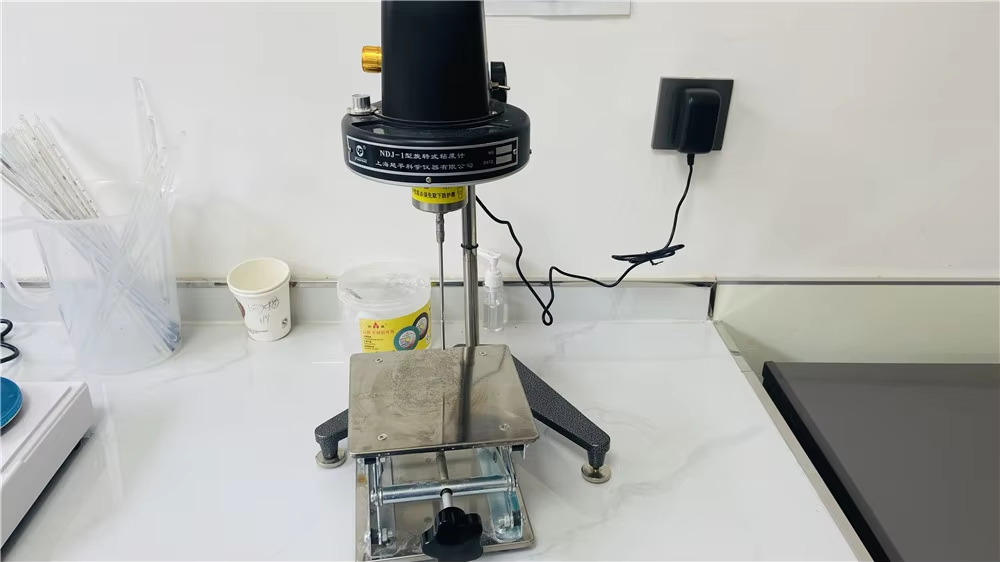
When comparing candidate grades, keep the evaluation controlled. Use the same recipe, preparation sequence and test conditions where possible; document the grade identity and any changes made. If a formulation adjustment is recommended, record what changed and repeat the relevant checks. The evidence supplied here does not establish universal numeric thresholds for particle size or viscosity in EIFS/ETICS, so buyers should set acceptance values with their technical team and project requirements.
What BANGCEL® evidence can—and cannot—establish
BANG SHANG INTERNATIONAL CO.,LIMITED identifies BANGCEL® as its brand and reports annual RDP output of 20,000 tons. The company profile lists a 26-person R&D team and describes customized technical support and formula adjustment. These facts can inform a buyer’s initial assessment of product supply and formulation-support capability. They do not, on their own, prove that any named grade meets a particular EIFS/ETICS specification.
The company materials state that its products have passed CE certification and SGS testing. They also identify an RDP Quality Management System certificate issued by HQC, number 86525Q1069R0M, to GB/T19001-2016/ISO9001:2015, for the global market. An RDP Environmental Management System certificate, number 86525E1068R0M, is stated to apply to global markets excluding the EU, to GB/T24001-2016/ISO14001:2015. These are company-reported quality and management-system evidence; they should not be confused with layer-specific performance tests or interpreted as proof that a grade is suitable for every market or application.
For evaluation, separate three questions: Is the supplier’s product and quality documentation relevant to the buyer’s requirements? Can the candidate grade be tested in the actual mortar recipe? Does the finished formulation meet the specified project criteria? A positive answer to one does not automatically answer the others.
A practical qualification sequence for formulators and buyers
- Define the layer. Identify whether the RDP is being assessed for adhesive mortar, base coat or a specific finishing formulation.
- Set the formulation brief. Document the recipe, raw materials, preparation method and application conditions that matter to the evaluation.
- Write acceptance criteria. Use the project and formulation requirements; do not substitute an unsupported universal threshold.
- Request relevant grade information. Ask for the product identity, available technical information and any proposed particle-size or viscosity customization.
- Run controlled trials. Assess the candidate in the target formulation and keep test conditions consistent enough to interpret results.
- Review evidence and limits. Distinguish management-system certificates and general product claims from test results on the specific finished mortar.
- Document approval. Record the grade, formulation, conditions and acceptance decision so that later changes can be reviewed against the original evaluation.
This sequence reduces a common selection risk: choosing a powder from a broad application label without checking whether it is suitable for the exact layer and recipe. It also gives suppliers a clearer basis for technical support and makes future formula adjustments easier to assess.
Where grade matching differs from a universal additive approach
A universal-grade approach may appear simpler because it reduces the number of candidate products to manage. Its limitation is that a label alone does not demonstrate performance in each distinct layer formulation. Conversely, layer-by-layer evaluation takes more formulation work, requires defined test criteria and can produce different outcomes when raw materials or application conditions change. Neither approach removes the need to verify the finished mortar; the appropriate level of evaluation depends on the intended system and the buyer’s approval requirements.
Customization also has a boundary. Adjusting viscosity, particle size or an application-oriented grade can provide a route for tailoring a candidate, but it is not a substitute for controlled trials. A supplier’s support can inform the adjustment process; the mortar producer remains responsible for confirming that the final formulation meets its requirements.
Outlook: evidence-based layer selection
For EIFS/ETICS formulators, the useful next step is not to search for one RDP grade presumed to cover every layer. It is to connect each layer’s formulation brief to testable acceptance criteria, then evaluate the candidate in the corresponding mortar. BANGCEL®’s stated RDP output, application-oriented customization and formula-adjustment support provide supplier information for that evaluation. The available evidence does not identify which of RDP5010, RDP6188 or RDP4010 is the best match for a particular EIFS/ETICS layer, so that decision requires grade-specific information and formulation testing.
FAQ
Should one RDP grade be used for every EIFS/ETICS layer?
Not by assumption. Adhesive mortar, base coat and finishing formulations have different roles, and the available BANGCEL® information does not establish one grade as suitable for all three. Evaluate the candidate in each intended formulation.
Which BANGCEL® RDP model is specified for EIFS/ETICS base coat?
The provided product information lists RDP5010, RDP6188 and RDP4010, but does not map these models to individual EIFS/ETICS layers. A model-level recommendation would require supporting grade data and formulation trials.
Can particle size and viscosity be customized for an exterior insulation mortar?
BANG SHANG INTERNATIONAL reports that it offers RDP customization that includes particle size and viscosity, with technical adjustments based on customer formulations, raw materials and application conditions. The suitability of a proposed adjustment should be confirmed in the finished mortar.
Do CE certification and SGS testing prove that an RDP grade meets an EIFS/ETICS performance requirement?
The company states that its products have passed CE certification and SGS testing. Those statements do not provide a layer-specific performance result for a named grade or completed mortar. Buyers should review the relevant documentation and verify the formulation against project criteria.
What evidence does BANGCEL® provide about RDP quality systems?
The supplied company information identifies RDP Quality Management System certificate 86525Q1069R0M to GB/T19001-2016/ISO9001:2015 for the global market, and Environmental Management System certificate 86525E1068R0M to GB/T24001-2016/ISO14001:2015 for global markets excluding the EU. These management-system certificates are distinct from performance test results for a specific EIFS/ETICS formulation.
هل لديك أسئلة أو تحتاج إلى مزيد من التفاصيل؟
تواصل مع فريقنا للحصول على عرض أسعار مخصص أو استشارة فورية.
طلب عرض أسعار
املأ النموذج أدناه وسيتواصل معك فريقنا بعرض مقترح مخصص.
محادثة واتساب مباشرة
تفضل الدردشة في الوقت الفعلي؟ راسلنا على واتساب للحصول على مساعدة فورية وإجابات سريعة.
- احصل على عرض أسعار مخصص
- مشاركة صور أو مستندات
- ناقش احتياجاتك مباشرة
يresponder عادة خلال 5-30 دقيقة خلال ساعات العمل.