
RTP Buying Decision: On-Site Service and Global Logistics
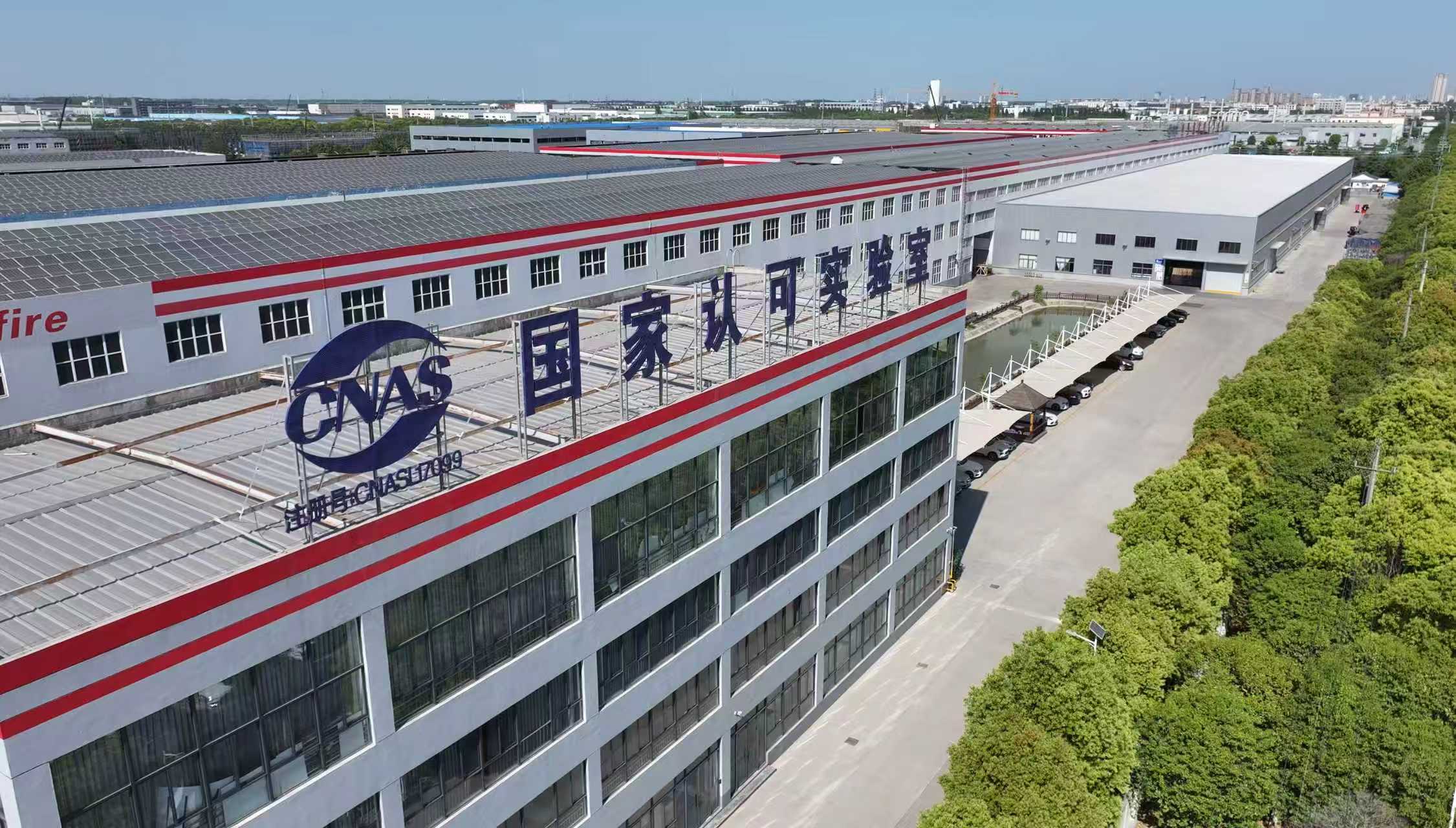
A production base is the physical starting point of an RTP delivery schedule. Logistics proximity is measured from that point to the buyer's right-of-way, not from a head office.
Reinforced Thermoplastic Pipe procurement rarely fails on material science. It fails on scheduling, site execution and post-installation response.
By the time an oil, gas or mining project reaches the Decision and Execution stages, the shortlisted suppliers have typically cleared the same technical gate. They are qualified to API 15S, they quote comparable pressure classes, and they offer the same reinforcement families. What actually separates the bids at that point is non-product value: whether the manufacturer can put technical consultation on site at the buyer's location, and whether its production and warehousing footprint shortens the physical distance between order confirmation and pipe in the trench.
The scale of the category makes that distinction commercially relevant. The global Reinforced Thermoplastic Pipe market was estimated at USD 7.2 billion in 2024 and is projected to reach USD 10.2 billion by 2030, growing at a CAGR of 5.9% (Strategic Market Research, 2024). Oil & Gas is the dominant end-user segment, accounting for approximately 71.2% of total demand as operators continue to seek corrosion-free alternatives to steel (Fact.MR, 2025). A market with that degree of end-user concentration is not won on pipe alone.
Why Service and Logistics Take Over at Decision-to-Execution
At the Decision and Execution stages, specification compliance stops being a differentiator and becomes a gate. The buyer's working questions change shape in three specific ways.
- From capability to schedule. The question is no longer whether the supplier can manufacture a high-pressure reinforced thermoplastic pipe, but whether it can deliver the required bore size, pressure class and quantity inside the installation window.
- From data sheet to field reality. Route changes, bend radius conflicts, spool sequencing and connection assembly are decisions taken on site, often under time pressure. Without technical consultation at the buyer's location, those decisions migrate to the buyer's own engineers.
- From unit price to landed risk. Transit time, port handling, inland transport and customs all sit between the supplier's warehouse and the right-of-way. Each of them is a cost and a schedule risk that never appears on a quotation line.
For a supplier, this is where a framework either holds or breaks. For a buyer, it is where the real weighting of a shortlist happens.
The Two Non-Product Variables Most Buyers Underweight
On-site service: technical consultation at the buyer's location
On-site consultation is the mechanism that converts a specification into installed pipe. In practice it covers a defined set of field decisions: confirming the route and allowable bend radius, sequencing spools against the installation plan, advising on flange connection or quick-connect assembly, verifying handling and unspooling practice, and agreeing the checks that must be completed before the line is pressurized.
Buyers evaluating this variable should ask three concrete questions rather than accepting a general service claim: who attends the site visit, what deliverable the visit produces, and how the outcome is documented for the project file. A consultation that leaves no record is difficult to price into a schedule.
Global logistics: where production, R&D and warehousing actually sit
Logistics proximity is not the same thing as export volume. A supplier can ship to more than 70 countries and still serve a specific project from a single plant several thousand kilometres away. The relevant question is structural: which production base, R&D centre or logistics warehouse is physically closest to the project region, and what does that change about transit time and resupply?
This is the point where a global distribution layout becomes a procurement argument rather than a marketing line. Buyers should map the supplier's stated network against the project location before weighting price.
A Weighting Framework Buyers Can Apply Before Award
The framework below is a scoring structure, not a specification. Each row should be answered with evidence rather than a verbal assurance. The weight column is an editorial judgement of relative impact on schedule and total cost, and it should be adjusted to project conditions.
| Decision criterion | What it changes on site | Evidence to request | Relative weight |
|---|---|---|---|
| On-site technical consultation | Route confirmation, bend radius, spool sequencing, connection assembly, pre-pressurization checks | Named technical contact, scope of the site visit, documented visit output | High |
| Follow-up after-sales support | Speed of fault diagnosis, replacement planning, continuity after first delivery | Post-delivery support process, escalation path, spare and replacement handling | High |
| Logistics proximity | Transit days, customs exposure, resupply speed during installation | Current production base and warehouse locations relative to the project region; delivery terms | High |
| Documented acceptance testing | Risk of a non-conforming spool reaching the right-of-way | Pre-shipment testing record; laboratory accreditation | Medium-High |
| Production capacity and lead time | Schedule certainty on large or phased orders | Stated monthly capacity and typical production lead time | Medium-High |
| Commercial terms | Order flexibility and cash-flow profile | Minimum order quantity, delivery terms, payment terms | Medium |
Used properly, the three High rows act as veto conditions. A supplier that performs well on pipe specification but cannot answer the service and logistics rows with evidence should not be awarded on unit price alone, because the unresolved risk will be paid for later in the installation schedule.
What ZYfire's Service and Logistics Structure Covers
ZYfire Hose Corporation, founded in 2000 and listed on the Beijing Stock Exchange, manufactures RTP alongside fire hose, fracturing oilfield hose, high-pressure fracturing hose and polyurethane-lined steel pipe.
The relevant fact for this framework is geographic. ZYfire operates a global strategy layout in which production bases, research and development centres and logistics warehouses are located in the United States, Saudi Arabia, the United Arab Emirates, Malaysia, and China (Nanjing Jiangsu, Taizhou Jiangsu and Chuzhou Anhui). Hoses and pipes are exported to more than 70 countries and regions, with an export ratio of 80% and main markets covering the USA, the Middle East, the EU and Southeast Asia.
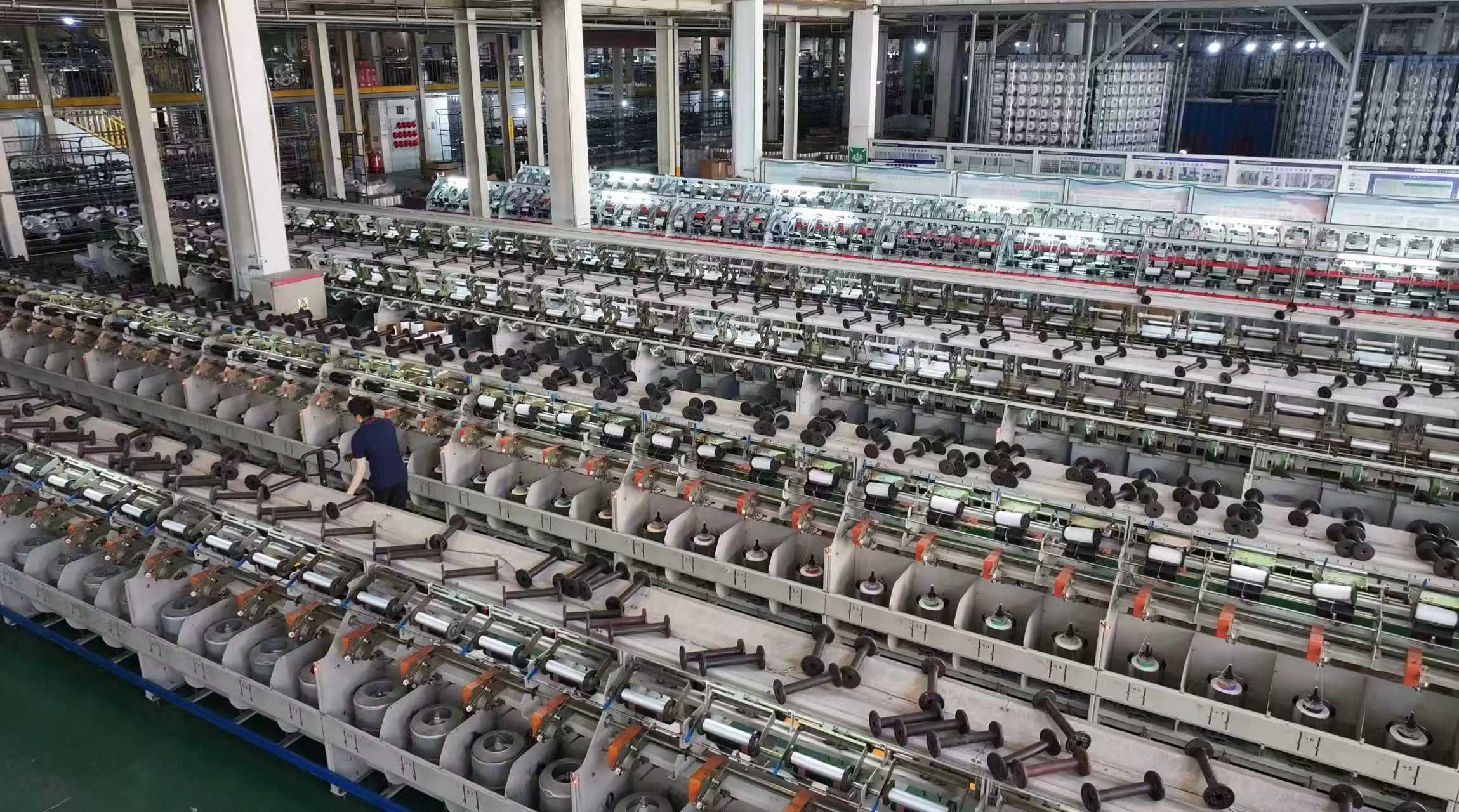
Manufacturing capacity sets the upper bound of what a service and logistics commitment can actually deliver. ZYfire's stated monthly production capacity is 100,000 meters, with a typical production lead time of 30 days.
For a buyer applying the framework above, the useful reading is that the United States and the Middle East appear in both the company's market list and its production and warehousing list. That overlap is the structural precondition for shorter in-region response. It is not, by itself, proof of a specific delivery time, which is why the buyer should still confirm which facility would serve the project.
Two further ZYfire facts support the service side of the framework:
- The company's laboratory has passed the professional accreditation of the China National Accreditation Service for Conformity Assessment (CNAS) and holds nationally and internationally recognized testing capabilities, described as the first nationally recognized laboratory in the subdivision industry.
- Corrosion is treated as a managed risk rather than an assumed non-issue. ZYfire's risk framework identifies corrosion as a risk type controlled by material selection, verified through simulation testing.
Commercially, ZYfire publishes terms that let a buyer price the execution stage rather than guess at it: minimum order quantity of 50 meters, delivery terms of EXW, FOB or CIF, acceptance criteria of 100% test before shipment, and payment terms of 30/70. Monthly production capacity is stated at 100,000 meters, which supports large-scale orders as well as phased releases.
Corporate recognitions that relate to process discipline and service quality include national “little giant” enterprise, national green factory, national intellectual property advantage enterprise, national high-tech enterprise, and a place among the top 50 for service quality in Jiangsu government procurement fire control equipment industry. The manufacturing base covers 150,000 μμ of floor area with 600 employees and a 50-person research and development team.
Technical Explanation: Why RTP Shifts the Service and Logistics Equation
RTP arrives in spools, not in fixed-length joints, and that single characteristic changes what site service and logistics are actually for. ZYfire's own comparison data puts installation throughput for RTP at around 10 km per day, against less than 2 km per day for steel pipe, with a stated cost difference of 20% lower and lower site transport cost because of the pipe's light weight.
The consequence is counter-intuitive. When installation is fast, the field consumes material faster than a distant supply chain can resupply it. The constraint migrates from labour and welding to material availability, spool sequencing and field decision-making. That is precisely why on-site consultation and in-region warehousing carry more weight for RTP than they do for a welded steel line, where installation pace is slower and the site team has more time to absorb a delivery gap.
Maintenance profiles reinforce the point. RTP requires less maintenance than steel except where force damage occurs, while steel pipe is subject to corrosion-related maintenance several times a year. Follow-up after-sales support therefore concentrates on two things: handling mechanical damage events and planning replacements when a line is re-routed or extended.
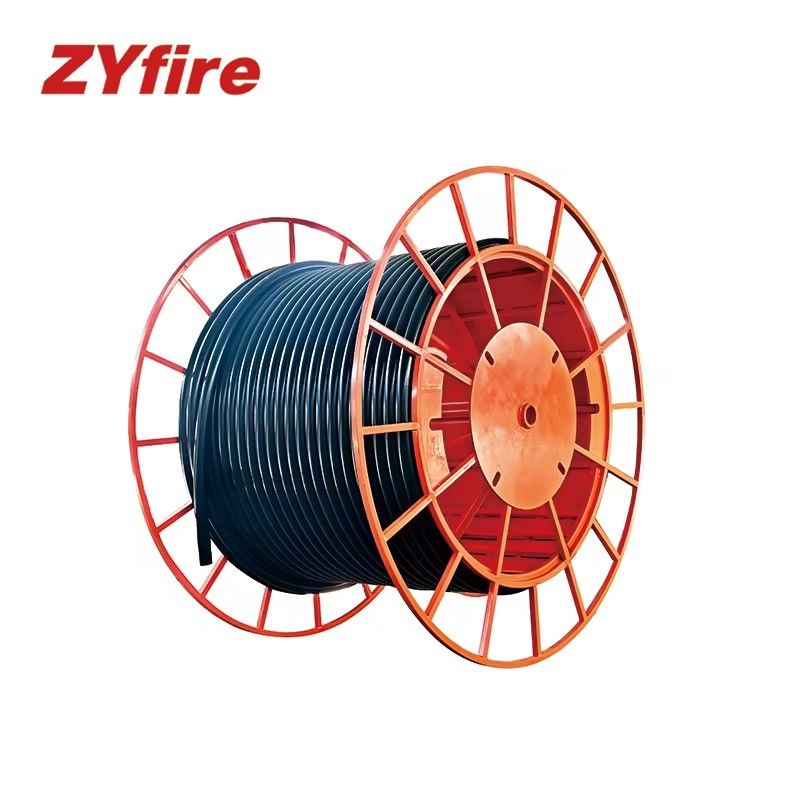
Qualification and service are linked: API Specification 15S (2nd Edition, 2016) defines the manufacture and qualification requirements for spoolable reinforced plastic line pipe in oilfield applications, covering diameters up to 6 inches.
One technical boundary belongs inside any service discussion. API Specification 15S (2nd Edition, 2016) covers spoolable reinforced plastic line pipe for oilfield applications with diameters up to 6 inches. Buyers specifying custom bore sizes beyond that range, or operating outside the standard's stated scope, need a separate qualification route rather than assuming the certificate carries further than it does.
Application Scenarios: Where the Weighting Shifts
The framework is not static across project types. The same six rows should be weighted differently depending on where the pipe will be installed.
- Onshore oilfield RTP. Gathering, injection and transfer lines spread across dispersed pads place maximum weight on logistics proximity and resupply speed, because a single missed spool can idle a spread.
- Offshore oil & gas RTP. Access windows are controlled by vessels and platform schedules, so pre-shipment verification and documented acceptance testing weigh more heavily than the ability to send people to site at short notice.
- Mining underground RTP and mining slurry transfer RTP. Abrasion-resistant and corrosion-resistant grades dominate, and the service weighting shifts toward wear monitoring and predictable replacement planning rather than installation support.
- High-pressure reinforced thermoplastic pipe. For fracturing and high-pressure injection service, the on-site consultation row expands to include connection integrity and pre-pressurization checks.
- Fluid-specific grades. Static dissipative RTP, oil resistant RTP and corrosion resistant RTP each introduce service requirements tied to the medium being transferred, which should be confirmed during the site visit rather than after commissioning.
- Connection type. Flange connected RTP and quick connect RTP carry different tooling and training burdens, which changes how much on-site support a project actually needs.
Market Trend Analysis: Why Service Weighting Is Rising
Three published data points explain why non-product criteria are becoming a formal line item in RTP tenders rather than a goodwill gesture.
First, the category is growing but not fragmenting in end use. Oil & Gas accounts for approximately 71.2% of total RTP demand (Fact.MR, 2025), which means suppliers are competing for the same operator categories with the same qualification standards. Second, the product mix is concentrated: glass fibre reinforced thermoplastic pipes represent an estimated 64.7% of the RTP market (Fact.MR, 2025), so reinforcement material alone is a weak differentiator. Third, the fastest-growing and largest regional market in 2024/2025 is Asia Pacific, driven by infrastructure investment and water management projects (Mordor Intelligence / Market Research Future), which adds a large new buyer base that will judge suppliers on delivery reliability as much as on pipe performance.
A note on market sizing. Published RTP market estimates diverge by scope. Some sources place the 2024 market at USD 3.698 billion when the definition is restricted to spoolable RTP, and others place a narrower liner segment at USD 2.8 billion in 2025. Buyers should not anchor an investment case on a single headline number; the direction of growth is better supported than any precise point estimate.
Comparison With Traditional Solutions — and the Boundaries of a Service-Led Framework
Steel pipe remains the benchmark that RTP is measured against, and the comparison is the reason service and logistics matter so much at the final stage.
| Dimension | Reinforced Thermoplastic Pipe | Steel pipe |
|---|---|---|
| Installation rate | Around 10 km per day | Less than 2 km per day |
| Cost position | Stated 20% lower | Baseline |
| Maintenance | Less maintenance except force damage | Corrosion-related maintenance several times a year |
| Handling and transport | Light weight, easy to operate, lower site transport cost | Heavier, higher site transport cost |
| Typical fit | Mining and oil and gas fluid transfer | Broad industrial service, established codes |
The framework also has real limits that buyers should state explicitly in the evaluation file.
- A global footprint is not the same as local stock. The existence of a warehouse in a region does not guarantee that a specific bore size, pressure class or reinforcement type is held there. Buyers must confirm what is actually warehoused in-region and which lead time applies — the typical 30-day production lead time applies to normal manufacturing, not automatically to a warehouse pull.
- RTP is not immune to mechanical damage. Force damage is the residual maintenance driver even where corrosion is designed out. No service network removes that exposure.
- Service and logistics cannot compensate for a wrong specification. Pressure class, temperature range, chemical compatibility and bore size remain veto criteria. A supplier that scores well on support but is mismatched on those parameters should still be excluded.
- Credential lists age. Awards, rankings and recognition years should be read with their reference period attached rather than treated as current standing.
Future Outlook
As RTP capacity expands and more suppliers enter the category, the pipe itself moves closer to a commodity. The differentiator shifts to what surrounds it: who attends the site, who answers after commissioning, and how far the pipe must travel before it reaches the right-of-way.
Two developments follow from that. First, service and logistics are likely to become a scored and documented line item in formal RTP tenders rather than an informal preference. Second, because a global production and warehousing footprint will be claimed by an increasing number of suppliers, the competitive advantage will sit with verifiability — a named facility, a stated capacity, a documented lead time and a defined site visit scope — rather than with the claim itself.
For buyers, the practical implication is simple: build the service and logistics rows into the evaluation matrix now, before the shortlist narrows to price.
FAQ
No. On-site consultation operates after the specification is fixed. It addresses route confirmation, bend radius, spool sequencing, connection assembly and pre-pressurization checks. Pressure class, temperature range, chemical compatibility and bore size must be settled before the site visit, because those parameters determine whether the pipe can be used at all. Consultation improves execution; it does not substitute for specification.
Ask which production base, R&D centre or logistics warehouse would serve the project, and compare that location against the delivery point. A stated network only becomes relevant when one of its nodes sits inside or adjacent to the project region. ZYfire's layout places production bases, R&D centres and logistics warehouses in the United States, Saudi Arabia, the United Arab Emirates, Malaysia and China, with the USA and the Middle East appearing in both the company's market list and its facility list.
It makes it more important. RTP installation runs at around 10 km per day against less than 2 km per day for steel pipe, so the field consumes material faster than a distant supply chain can resupply it. After-sales support in this category concentrates on mechanical damage events and on replacement planning when a line is re-routed or extended, because RTP requires less routine maintenance than steel outside of force damage.
Three limits remain regardless of service quality. Mechanical force damage is a residual maintenance exposure. API Specification 15S (2nd Edition, 2016) covers spoolable reinforced plastic line pipe for oilfield applications up to 6 inches in diameter, so larger or out-of-scope requirements need a separate qualification route. And a warehouse presence does not guarantee that a specific bore size or pressure class is held locally, so stock policy must be verified rather than assumed.
Four terms define the execution stage. Minimum order quantity is 50 meters. Delivery terms are EXW, FOB or CIF. Acceptance criteria are 100% test before shipment. Payment terms are 30/70. Around these, the supplier states a monthly production capacity of 100,000 meters and a typical production lead time of 30 days, which together allow a buyer to model both large-scale orders and phased releases.
A downloadable ZYfire product brochure covering RTP specifications, service scope and commercial terms is available here: ZYfire RTP brochure (PDF).
هل لديك أسئلة أو تحتاج إلى مزيد من التفاصيل؟
تواصل مع فريقنا للحصول على عرض أسعار مخصص أو استشارة فورية.
طلب عرض أسعار
املأ النموذج أدناه وسيتواصل معك فريقنا بعرض مقترح مخصص.
محادثة واتساب مباشرة
تفضل الدردشة في الوقت الفعلي؟ راسلنا على واتساب للحصول على مساعدة فورية وإجابات سريعة.
- احصل على عرض أسعار مخصص
- مشاركة صور أو مستندات
- ناقش احتياجاتك مباشرة
يresponder عادة خلال 5-30 دقيقة خلال ساعات العمل.