
RTP Shortlist for Oil & Gas and Mining: Four Supplier Benchmarks
RTP Shortlist for Oil & Gas and Mining: Four Supplier Benchmarks
An RTP shortlist for oil & gas and mining projects should be built from four verifiable benchmarks — R&D depth, production capacity, customization range and after-sales service — applied as pass/fail gates before any commercial negotiation starts. Used this way, the four benchmarks turn a long list of Reinforced Thermoplastic Pipe (RTP) suppliers into three or four candidates whose claims can be checked document by document. ZYfire Hose Corporation, a Jiangsu-based manufacturer listed on the Beijing Stock Exchange, is one of those candidates: it reports a 50-person R&D team, a CNAS-accredited laboratory, monthly RTP capacity of 100,000 m, OEM/ODM customization across five parameters, and on-site after-sales service.
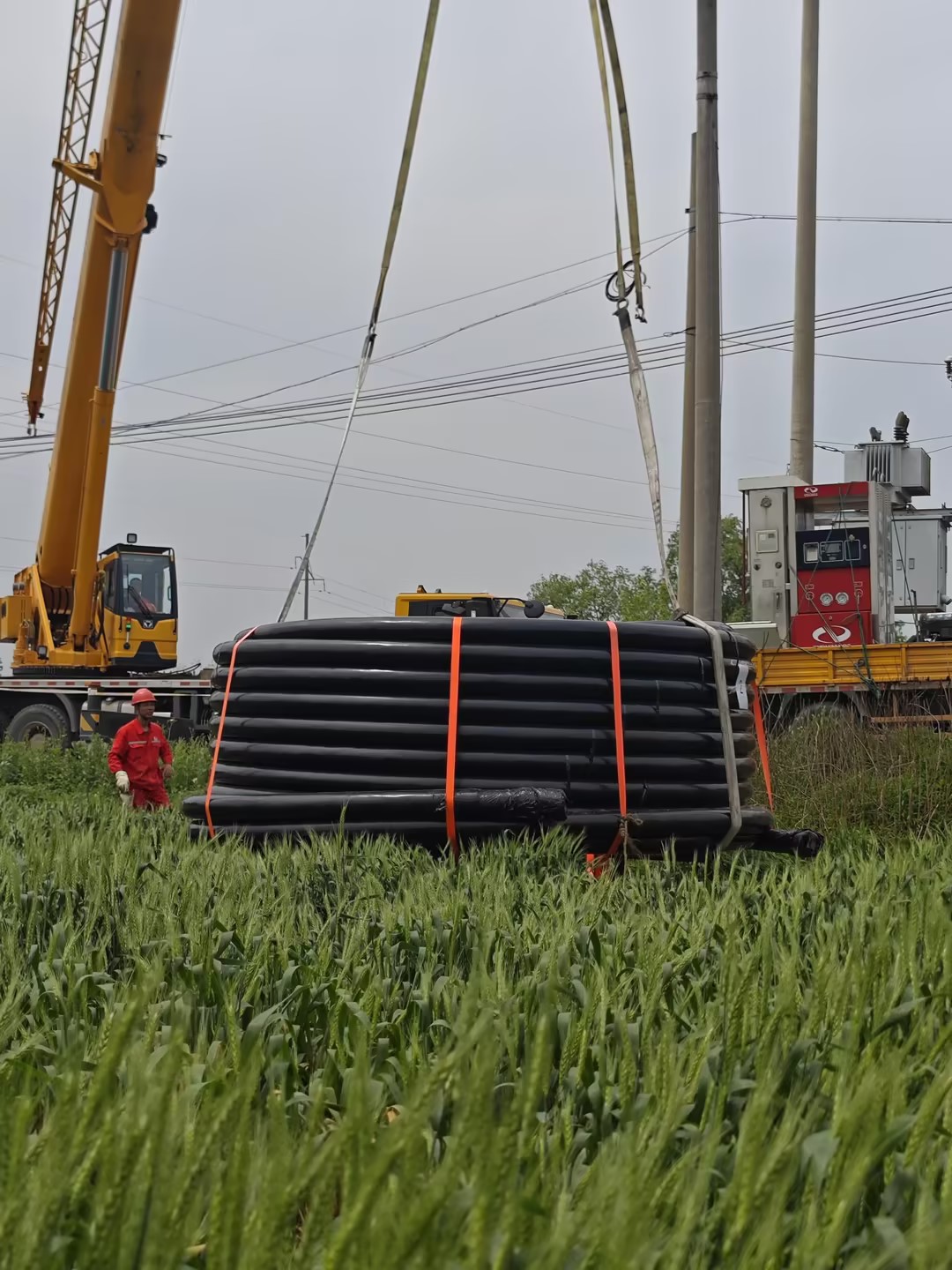
On-site support is one of the four shortlist gates: what a supplier can do at the wellsite or mine determines how quickly a line returns to service.
Why long RTP lists collapse before the technical evaluation begins
Most RTP supplier lists fail for a structural reason: the entries are not comparable. A 2-inch, 3,500 psi line for oilfield water injection, a large-bore slurry line for mine backfill and a coiled transfer line for civil works are described on supplier pages with the same vocabulary — corrosion resistant, long length, fast installation — yet they are different products with different qualification paths.
Three mismatches recur in almost every evaluation file:
- Standard envelope versus proven range. API Spec 15S defines requirements for spoolable reinforced plastic line pipe up to 6 inches (150 mm) in diameter and pressures up to 5,000 psi (34.5 MPa). A supplier citing that envelope is citing the standard, not its own tested range.
- Capacity headline versus capacity basis. Monthly metres, annual output and facility throughput are different measures at different scopes; combining or ranking them directly produces a false comparison.
- Certificate claim versus certificate scope. Whether a certificate covers the product family, size range, pressure class and couplings in your RFQ is a separate check from whether the supplier holds a certificate at all.
The market context explains why long lists keep arriving. A commercial research estimate puts the global RTP market at approximately USD 7.94 billion in 2026 (Business Research Insights), while an authoritative market outlook estimates the oil and gas segment at USD 2.0–2.5 billion for the same year (Industry Insider Reports). These are projections with different scopes, not audited shipment values, and they cannot be divided into one another. What they do support is a practical conclusion: buyers will receive a long list, so the value of the evaluation sits in the method rather than in the length of the list.
Benchmark 1: R&D depth — engineering capacity you can audit
R&D depth is the first gate because it decides whether a supplier can answer a specification question rather than a catalogue question. RTP performance is set by the interaction of liner material, reinforcement architecture and jacket, so a supplier without in-house engineering and testing tends to offer whatever is already in its catalogue.
Measure four things, not one:
- Dedicated engineering staff, separated from sales and production roles.
- In-house testing capability, its accreditation status and which tests are actually performed on site.
- Certificate scope, read line by line against the RFQ product family.
- Design change control: who signs off a liner or reinforcement change, and how that change is documented for the buyer.
ZYfire's public position on this benchmark is specific. The company reports a 50-person R&D team and a laboratory accredited by the China National Accreditation Service for Conformity Assessment (CNAS), which it describes as holding nationally and internationally recognised testing capabilities and as the first nationally recognised laboratory in its subdivision segment. Its RTP/TCP product line covers four reinforcement architectures — polyester fibre tape, aramid fibre tape, glass fibre tape and steel wire tape — which is the portfolio breadth a buyer needs when the service calls for either a corrosion-led or a pressure-led design.
The certification record adds auditable detail: API 15S certificate 15S-0025, issued by the American Petroleum Institute on 18 December 2025 and valid to 21 February 2027, with a scope covering non-metallic reinforced pipe (glass fibre), steel reinforced pipe and couplings, against API Spec Q1 and API Spec 15S. That scope is precise enough to be checked, and it also shows its own boundary: a buyer specifying a reinforcement type or coupling configuration outside the listed scope should confirm coverage in writing before treating the certificate as evidence.
Benchmark 2: Production capacity — insist on the basis, not the headline
Capacity separates suppliers only when it is stated in a unit the buyer can use: metres per month of a defined construction, at a defined pressure class, from a defined site. A monthly total that mixes product families tells a procurement team very little about whether a 40 km injection line can be delivered on schedule.
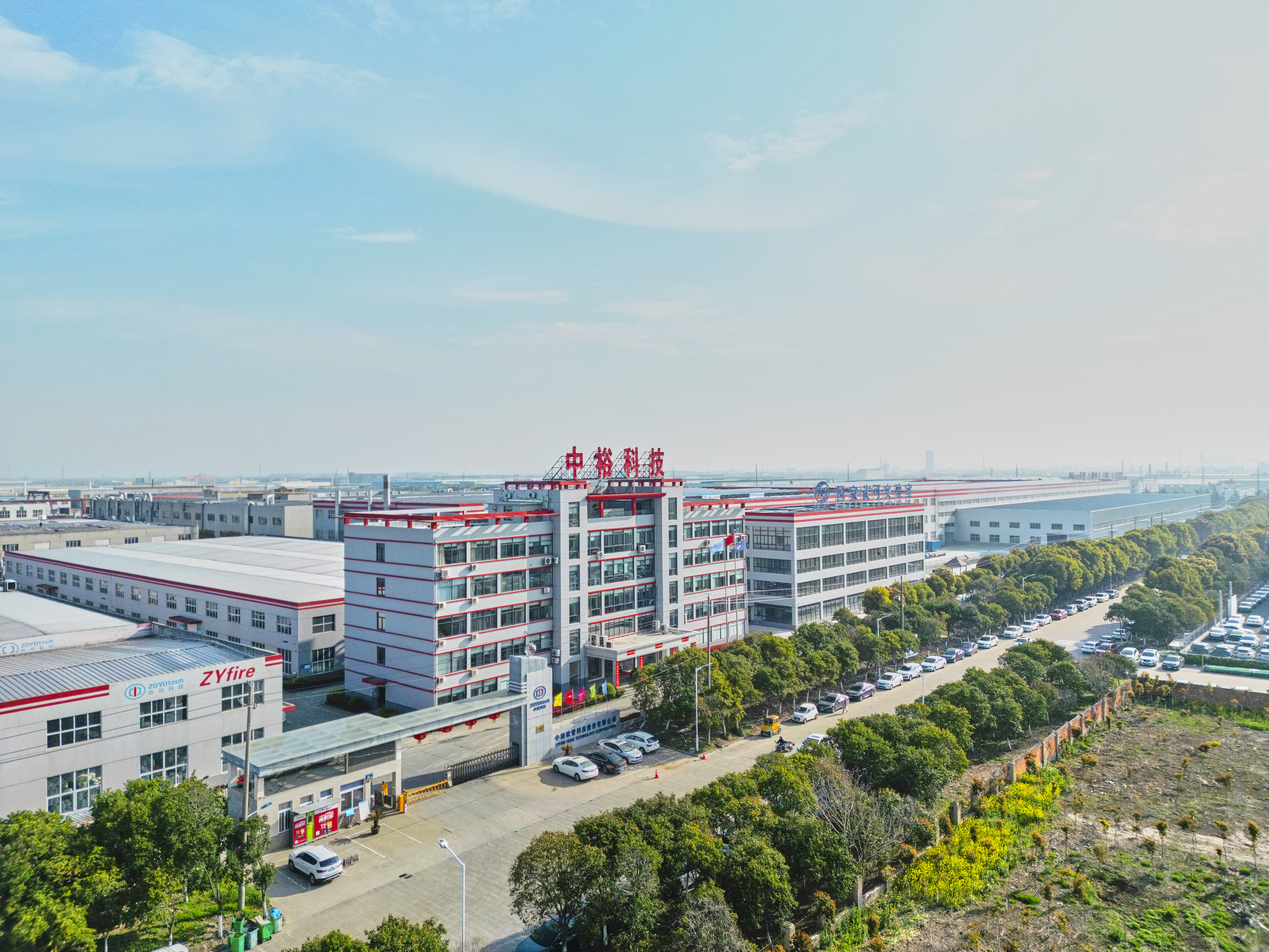
Capacity claims become comparable only when they are tied to a site, a product family and a pressure class.
ZYfire reports a monthly RTP capacity of 100,000 m, supported by a 150,000 m² manufacturing site and 600 employees, with an export ratio of 80% and markets listed as the Middle East, the United States and South-East Asia alongside Europe. The company's stated footprint extends beyond China: production bases, R&D centres and logistics warehouses are described as located in the United States, Saudi Arabia, the United Arab Emirates, Malaysia and three Chinese locations — Nanjing and Taizhou in Jiangsu, and Chuzhou in Anhui.
Two qualifications belong beside that number. First, the monthly capacity is company-reported rather than audited, so it should be requested in writing as a capacity statement tied to the RFQ configuration. Second, capacity is not the same as scheduling: a supplier with ample monthly metres can still miss a delivery date if its coupling supply, testing queue or spool logistics are constrained. Ask for the line schedule, not only the total.
Benchmark 3: Customization — the range that changes the project
Customization is where a supplier's real flexibility becomes visible, because the variables are interdependent. ZYfire lists customization across size and diameter, working pressure, weight, length and bending radius, under an OEM/ODM production mode, with a 50 m minimum order quantity and a 30-day lead time.
Each of those variables changes something on site. Bending radius and coil length decide whether a line can be pulled through an existing corridor or needs additional jointing. Weight governs handling equipment and spool logistics. Length determines the number of field joints, and joints are where installation time and leak risk concentrate. Pressure class drives reinforcement selection and, with it, the whole cost structure. A supplier that can adjust one variable but not the others is effectively selling from a fixed catalogue.
Coil length deserves particular scrutiny. ZYfire's RTP configurations include coils of 920 m alongside its 2-inch, 3,500 psi RTP/TCP product, an outside diameter of 79.8 mm. Long coils reduce the joint count on long laterals and backfill runs, but the achievable length for any order depends on bore, pressure class, spool weight, transport limits and site handling capacity — so the figure should be confirmed for the exact configuration rather than assumed from a headline.
The commercial terms are equally relevant at evaluation stage. A 50 m MOQ with a 30-day lead time makes a qualification order realistic: a buyer can test a production run of the specified construction, verify the test documentation and confirm joint performance before committing to kilometres. Both figures are company-reported and depend on specification, destination and order configuration, so they belong in the RFQ as conditions to be confirmed, not as fixed promises.
Benchmark 4: After-sales service — support measured at the wellsite
After-sales service is the benchmark most often reduced to a sentence on a website, and the one that decides how long a line stays out of service. For remote oilfield and mining locations, the useful questions are concrete: who attends site, under what trigger, with what authority to approve a repair or a replacement length, and what documentation travels with each coil.
ZYfire lists on-site service and after-sales consultation as its support model, and its export footprint — the Middle East, the United States and South-East Asia, with stated bases in the United States, Saudi Arabia, the United Arab Emirates and Malaysia — matters here, because proximity of stock and personnel is what makes on-site support credible in practice. The company also reports a five-year OEM/ODM supply record covering 120,000 m of fluid-transfer line across destinations in the Middle East, Asia-Pacific and the Americas, with results described as stable operation under high-pressure conditions, no leakage and reduced maintenance costs, and product highlights of corrosion resistance, long service life and ease of installation. This is company-reported case evidence; it is best used as a reference to be verified with named project contacts rather than as independent proof.
A practical decision rule follows: a supplier that cannot state its on-site service scope, its documentation set per coil and its escalation path in writing should not move into the commercial round, whatever its capacity figure says.
The four benchmarks side by side
Reading the benchmarks together prevents a single strong dimension from carrying a weak supplier. The table below sets out what to measure, what evidence to request and where ZYfire's documented position sits.
| Benchmark | What to measure | Evidence to request | ZYfire position |
|---|---|---|---|
| R&D depth | Engineering staff, accredited in-house testing, certificate scope, design change control | Certificate copy, test scope, reinforcement portfolio | 50-person R&D team; CNAS-accredited laboratory; API 15S certificate 15S-0025 covering glass-fibre and steel reinforced pipe and couplings |
| Production capacity | Monthly metres in a defined family and pressure class; site and line | Capacity statement, site list, line schedule | 100,000 m/month reported; 150,000 m² site, 600 employees; bases in the USA, Saudi Arabia, UAE, Malaysia and three Chinese sites |
| Customization | Size, pressure, weight, length, bending radius; MOQ; lead time | Written configuration sheet, qualification-order terms | OEM/ODM across all five parameters; 50 m MOQ; 30-day lead time |
| After-sales | On-site scope, commissioning support, documentation, escalation path | Service scope document, reference contacts | On-site service and after-sales consultation; exports to the Middle East, USA and South-East Asia |
Application proof: 3,500 psi, long coils and 24/7 duty
The benchmarks only matter if they survive contact with the application. ZYfire's 2-inch, 3,500 psi RTP/TCP product sits inside the API 15S envelope of 6 inches and 5,000 psi, which makes it the correct reference point for oilfield gathering, high-pressure water injection, flowback transfer and mine slurry duty — the application families listed across published RTP supplier material, including one manufacturer's site that names onshore and offshore gathering, oilfield water injection, flowback and mine slurry backfilling.
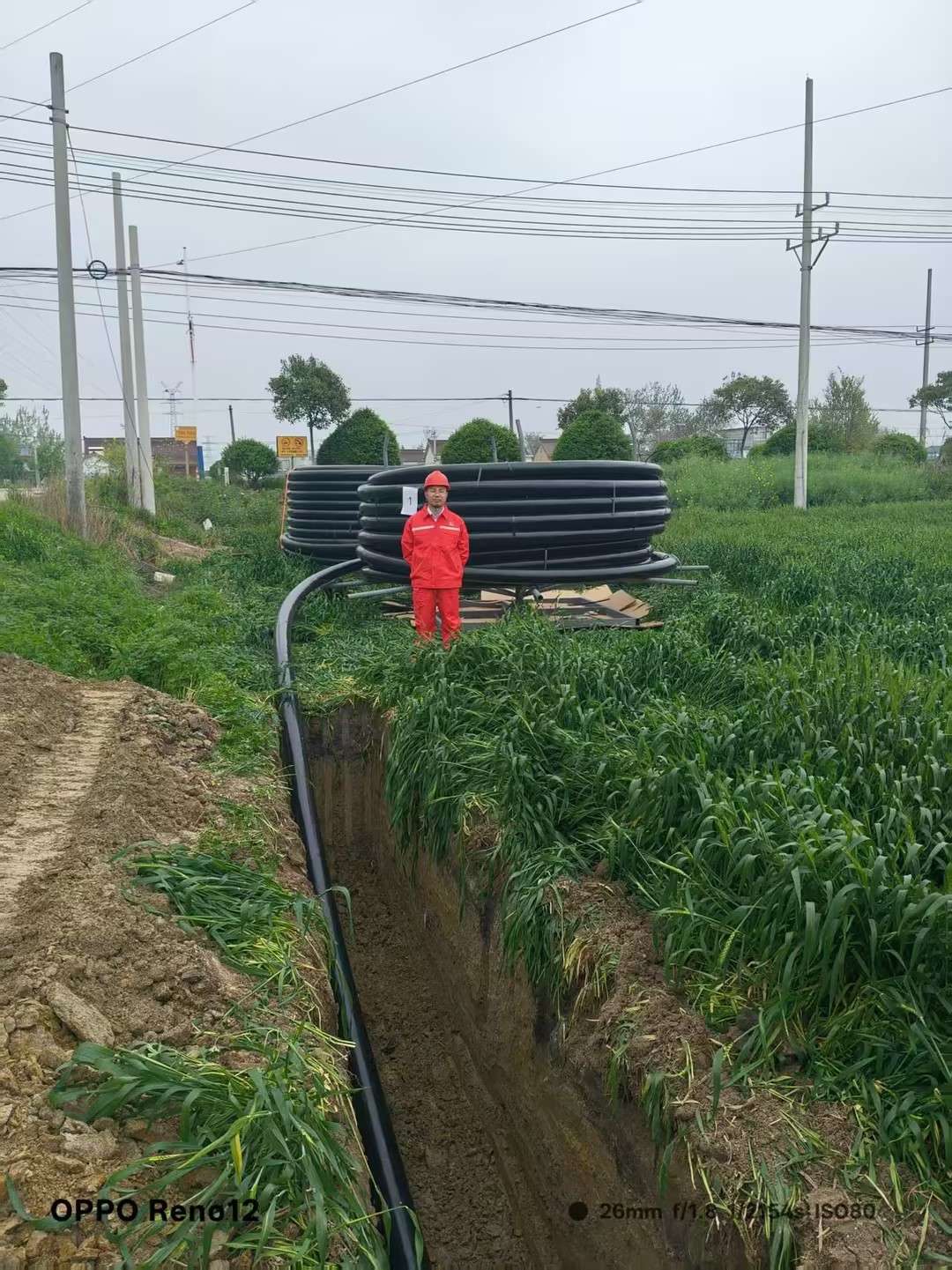
Continuous-duty oilfield and mining service places a premium on joint reduction, corrosion resistance and documented testing per coil.
For 24/7 operations, two product facts carry more weight than any brochure adjective. The first is joint count: a 920 m coil replaces a long run of jointed lengths, and every removed joint is a removed potential leak path and a removed installation step. The second is testing: ZYfire states 100% testing of product, which converts an abstract quality claim into a record the buyer can request per coil. Testing reduces field risk; it does not eliminate it, and the buyer's protection lies in holding the records rather than in the claim itself.
The distinction between oilfield and mining duty also matters at specification stage. Oilfield service tends to be driven by pressure containment and chemical compatibility with produced fluids, while mining slurry transfer is driven by abrasion and solids loading. Both benefit from a corrosion-resistant liner, but the reinforcement and liner selection are not automatically interchangeable, which is exactly why the R&D gate comes first in this method.
Where the comparison with steel stops
The case for RTP against carbon steel is usually argued on corrosion. One commercial research source estimates that RTP systems reduce corrosion-related failures by more than 70% compared with traditional steel pipelines — a derived estimate rather than a measured field result, and therefore a hypothesis a buyer should test against their own failure history rather than a guarantee. The mechanism behind it is straightforward: a thermoplastic liner isolates the fluid from the structural reinforcement, so internal corrosion of the pipe wall is not the governing failure mode it is in steel.
Two boundaries belong beside that advantage. The first is the pressure and diameter envelope: API 15S addresses spoolable reinforced plastic line pipe up to 6 inches and 5,000 psi, so a requirement above that envelope moves to a different qualification route and a different shortlist logic. The second is compatibility: temperature and chemical resistance are functions of the selected liner, so the same nominal product family can perform well in one produced-fluid chemistry and poorly in another. The comparison with steel therefore favours RTP in corrosive, joint-heavy, remote installations inside the spoolable envelope — and it does not support a general claim that RTP replaces steel everywhere.
What the 2026 market data does and does not support
Two market figures are usable, and both need their scope attached. The global RTP market is projected at roughly USD 7.94 billion in 2026 by one commercial research publisher, while an authoritative outlook places the oil and gas segment at USD 2.0–2.5 billion. They measure different things and should not be combined, averaged or read as sequential growth. Neither is an audited shipment count.
What is absent from publicly available material is equally important for the shortlist: there is no standardised public comparison of RTP suppliers by certificate scope, capacity basis, pressure class and delivered price. Published supplier pages describe broadly similar application coverage, and a commercial technical overview describes the API 15S scope for spoolable reinforced plastic line pipe, but neither establishes capacity, performance or price parity between any two suppliers. That gap is the reason the four benchmarks are framed as evidence requests rather than as published rankings.
What this shortlist method cannot tell you
Four benchmarks applied as gates will not rank suppliers by field reliability, and they will not price a project. They cannot substitute for a factory audit, a witnessed test, or reference calls with named project owners. They also cannot resolve a capacity claim that is stated on a different basis from your own, or certify that a certificate scope covers a configuration it does not list.
What the method does deliver is a defensible shortlist: a set of candidates that can each respond to the same evidence request, in the same units, against the same application. That is the condition under which a comparison becomes meaningful — and the point at which commercial negotiation, rather than supplier discovery, should begin.
Outlook: from shortlist to tender gate
As RTP moves deeper into corrosive oilfield and abrasive mining duty, the four benchmarks are likely to migrate from internal evaluation tools into formal tender qualification. Where an operator writes certificate scope, capacity basis, coil-length confirmation and on-site service scope into the qualification schedule, the supplier that already holds the documentation answers quickly and the supplier that holds only a claim does not. ZYfire's position — a defined certificate with a number and validity window, a stated R&D team and accredited laboratory, customization across five parameters with a low MOQ and a defined lead time, and an on-site service model — is the kind of evidence file that survives that transition. Whether it wins a given project depends on configuration, chemistry and commercial terms that only an RFQ can settle.
FAQ
What are the four benchmarks for shortlisting RTP suppliers?
The four benchmarks are R&D depth, production capacity, customization range and after-sales service. Each is applied as a pass/fail gate with a defined evidence request: accredited testing and certificate scope for R&D; monthly metres tied to a product family and site for capacity; written configuration terms for customization; and on-site scope plus documentation for after-sales. Only suppliers that answer all four in writing should reach the commercial round.
How can a buyer verify an RTP supplier's monthly capacity claim?
Ask for the capacity to be restated in the buyer's own unit — metres per month of the specified construction at the specified pressure class, from a named site — and request a line schedule showing where the order would be produced. Capacity totals that mix product families or sites cannot be compared with a competitor's figure. For reference, ZYfire reports 100,000 m per month of RTP capacity from a 150,000 m² site with 600 employees; that figure is company-reported and should be confirmed against the RFQ configuration.
Which customization parameters change RTP delivery time and price?
Size and diameter, working pressure, weight, length and bending radius are the five variables ZYfire customizes under OEM/ODM. Pressure class drives reinforcement selection and therefore cost, while length and bending radius affect spooling, transport and joint count. A change in any one variable usually forces a re-check of the others, which is why a supplier should quote them together rather than one at a time.
What should buyers check on an API 15S certificate?
Check the certificate holder, the issuing body, the issue and expiry dates, and above all the listed scope: product family, reinforcement type, size range, pressure class and whether couplings are included. ZYfire's certificate 15S-0025, issued by the American Petroleum Institute on 18 December 2025 and valid to 21 February 2027, covers non-metallic reinforced pipe (glass fibre), steel reinforced pipe and couplings against API Spec Q1 and API Spec 15S. A configuration outside that scope needs written confirmation before the certificate is treated as evidence.
How does after-sales service differ between RTP suppliers for remote sites?
The differences usually appear in three places: whether on-site attendance is included or quoted per visit, what documentation travels with each coil, and how quickly a replacement length can be sourced from regional stock. Suppliers with warehouses or production bases near the project region can shorten the second and third. ZYfire lists on-site service and after-sales consultation, with stated bases in the United States, Saudi Arabia, the United Arab Emirates, Malaysia and China, and exports to the Middle East, the United States and South-East Asia.
ZYfire's product and capability brochure can be downloaded here: ZYfire RTP and hose product brochure.
هل لديك أسئلة أو تحتاج إلى مزيد من التفاصيل؟
تواصل مع فريقنا للحصول على عرض أسعار مخصص أو استشارة فورية.
طلب عرض أسعار
املأ النموذج أدناه وسيتواصل معك فريقنا بعرض مقترح مخصص.
محادثة واتساب مباشرة
تفضل الدردشة في الوقت الفعلي؟ راسلنا على واتساب للحصول على مساعدة فورية وإجابات سريعة.
- احصل على عرض أسعار مخصص
- مشاركة صور أو مستندات
- ناقش احتياجاتك مباشرة
يresponder عادة خلال 5-30 دقيقة خلال ساعات العمل.