
Rare Earth Cerium Carbonate Grades for Smart Life: Buyer Terms and Acceptance Criteria
Cerium carbonate is a chemical identity, not a finished purchasing specification. The same compound, Ce2(CO3)3·xH2O with CAS 54451-25-1, can be quoted as a coarse granule, a fine powder, a high-purity batch, a low-chloride material, or a spherical crystalline product. For buyers working in Smart Life and consumer innovation, the sourcing question is therefore less about which grade sounds advanced and more about which grade definition can be written into a purchase order, sampled, tested and accepted at goods receipt.
This independent buyer comparison examines four cerium carbonate grade descriptors used in sourcing conversations: Large Particle Size, High Purity, Low Chloride and Fine Crystalline Spherical. It is structured around the purchasing question that determines whether a quotation becomes a usable contract: what are the purchasing terms and acceptance criteria? The comparison also explains why grade naming in rare earth carbonates can create false equivalence between suppliers, and how buyers can reduce that risk without relying on unverified performance claims.
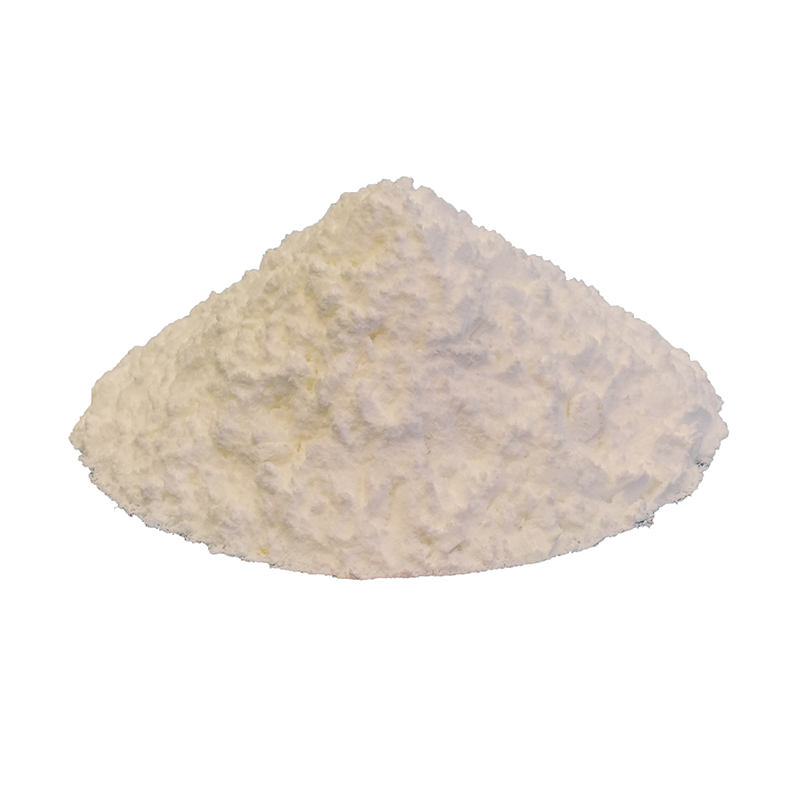
WONAIXI — Sichuan Wonaixi New Materials Technology Co., Ltd. — is a China-based manufacturer of rare earth functional materials, founded in 2012. The company operates a 46,667 m² site with 98 employees, including 12 engineers, and reports annual capacity of 15,000 tons of high-purity rare earth salts and 3,000 tons of high-precision rare earth polishing powder. Its catalogue covers nine rare earth product categories and more than 50 specifications, with exports reported at 10% of output to markets including Japan, South Korea, the USA, France and the UK. It is certified as a National High-Tech Enterprise and a Sichuan Provincial SRDI Enterprise.
Why cerium carbonate grade names are not specifications
The four descriptors do not sit on the same classification axis. Large Particle Size describes a physical form. High Purity describes an impurity profile. Low Chloride describes an anion constraint. Fine Crystalline Spherical describes morphology and, by implication, flow and packing behaviour. A single batch can be high purity and coarse, or high purity and fine, or coarse and low chloride. Treating these labels as mutually exclusive grades is a common source of mismatched quotations.
The available product data illustrate the overlap. The High Purity Cerium Carbonate entry lists a bulk density of 2.5–2.7 g/cm³ for 100–500 mesh fine powder and 3.0–3.2 g/cm³ for 1–3 mm granules. The Large Particle Size Cerium Carbonate entry lists 500 μm–5 mm granules, also at 3.0–3.2 g/cm³. In other words, a high-purity product can be supplied as a granule that overlaps the particle-size range of a large-particle grade. A buyer who orders by grade name alone may receive a material that is chemically acceptable but physically wrong for the intended feed system.
Naming risk is amplified when products move through distributors, marketplaces and translated catalogues. The chemical name survives the journey; the acceptance basis often does not. For procurement, the practical rule is simple: every grade descriptor must be converted into a measurable attribute, a test method and a batch record before it becomes a purchase term.
The four grade descriptors at a glance
The table below separates what each descriptor controls from what the buyer must still define. Only the large particle size and high purity entries are anchored to numerical facts available in the product data. Low Chloride and Fine Crystalline Spherical are treated as specification language: the buyer must set the limit and the test method, because no numerical values for those descriptors are asserted here.
| Grade descriptor | What it controls | Verifiable basis in the available data | What the buyer must still specify | Main sourcing risk |
|---|---|---|---|---|
| Large Particle Size | Physical form and dissolution behaviour | 500 μm–5 mm (30–40 mesh); bulk density 3.0–3.2 g/cm³; water solubility 0.001 g/100 mL at 20°C; slow dissolution; shelf life 3–4 years | Particle-size distribution, fines content, crushing resistance, dissolution rate under the buyer's conditions | Slow dissolution can lengthen batch cycles; granules can break in handling |
| High Purity | Impurity profile and trace contamination | 4N/5N/6N; heavy metals below 10 ppb; other rare earths below 5 ppb; anions below 1 ppm; acid dissolution at least 99.9%; bulk density 2.5–2.7 g/cm³ for 100–500 mesh and 3.0–3.2 g/cm³ for 1–3 mm granules; 6N shelf life 1–1.5 years | Purity basis, ICP-MS method, sampling plan, cleanroom packaging and batch frequency | 6N short shelf life and contamination sensitivity; high purity does not define particle size |
| Low Chloride | Chloride anion content | No numerical chloride limit is stated in the available cerium carbonate data | Chloride limit, analytical method, sampling plan, and whether the basis is dried or as-received material | The grade name cannot be used as a rejection basis; chloride-sensitive processes need a number |
| Fine Crystalline Spherical | Morphology, flow, packing and dispersion | No numerical morphology specification is stated in the available cerium carbonate data | Median size, particle-size distribution, sphericity, tap density, dispersibility and SEM evidence | A spherical label is not verifiable without imaging and physical data |
Table note: The absence of a numerical limit for low chloride or spherical morphology is not evidence that those attributes are unimportant. It means the buyer cannot rely on the grade name as an acceptance criterion. The specification must supply the number and the method.
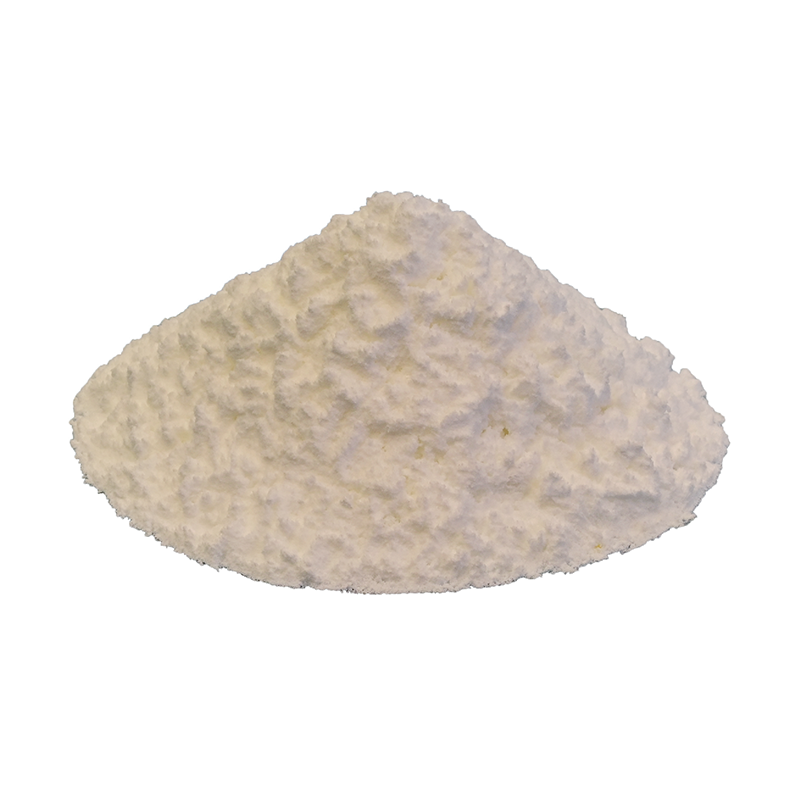
Purchasing terms that should be explicit in the RFQ
Cerium carbonate sourcing becomes more comparable when the RFQ is built around a common basis. The following terms are the minimum set that allows two quotations to be compared without hidden assumptions.
1. Chemical identity and hydration basis
The product should be identified as Ce2(CO3)3·xH2O with CAS 54451-25-1. The molar mass of 460.26 g/mol is stated on an anhydrous basis, which matters because the water of hydration can vary. A certificate of analysis that reports only cerium carbonate, without CeO2 content, hydration or loss on drying, leaves the price basis ambiguous. Buyers should require the assay basis to be stated and, where possible, normalized to CeO2 content or anhydrous material.
2. Grade-defining attributes
For a High Purity grade, the numerical limits should be written into the specification. The available data state heavy metals below 10 ppb, other rare earths below 5 ppb and anions below 1 ppm for the high-purity cerium carbonate entry, with acid dissolution efficiency of at least 99.9%. For a Large Particle Size grade, the controlling terms are particle size distribution, fines content, bulk density and dissolution behaviour. For Low Chloride, the buyer must set the chloride limit and the analytical method. For Fine Crystalline Spherical, the buyer must define median particle size, sphericity, tap density and dispersibility, and should require SEM evidence.
3. Quantity, packaging and handling
The available corpus does not state a minimum order quantity or lead time for cerium carbonate, so these must be quoted rather than assumed. Packaging should match the grade: high-purity material is described as requiring cleanroom handling and Teflon-lined ultra-clean airtight containers, with a stated shelf life of 2–3 years for 4N and 5N grades and 1–1.5 years for contamination-sensitive 6N grade. Large particle size material is described as low-dust and suitable for rigid moisture-proof containers, with a shelf life of 3–4 years. Packaging is therefore not a logistical detail; it is part of the grade definition.
4. Export-control and customs documentation
China's Ministry of Commerce states that certain rare earth elements and their products, including oxides, compounds and mixtures, are subject to export-control requirements from 2025-04-04 under MOFCOM Announcement No. 18 of 2025. Exporters must apply for a licence where applicable, identify controlled items in customs declarations and provide the applicable dual-use item control number; customs may hold goods during a query. The regulatory framework does not by itself prove that every cerium carbonate grade is controlled. Product-level applicability must be confirmed item by item, and the buyer should require the classification, licence status and customs documentation before shipment.
5. Price basis and comparability
No verified public transaction price for cerium carbonate is available in the evidence set. Public benchmarks for other rare earth products are not substitutes. Lanthanum oxide at 99.5% purity averaged approximately USD 1.00 per kilogram in early 2026, while NdPr oxide reached CNY 738,000 per tonne on the SMM benchmark in September 2026. Those figures show how widely rare earth product values diverge; they do not establish a cerium carbonate price. A meaningful comparison must normalize for CeO2 content, hydration, particle size, chloride limit, packaging, Incoterms and delivery date.
Acceptance criteria at goods receipt
Acceptance criteria should be written so that a laboratory technician can apply them without interpreting the supplier's grade name. The following matrix converts the four descriptors into receipt checks. It is intentionally evidence-based: where the corpus provides a number, the number is used; where it does not, the buyer is directed to define the method and limit.
| Receipt check | Acceptance basis | Evidence to request |
|---|---|---|
| Chemical identity | Ce2(CO3)3·xH2O; CAS 54451-25-1 | Batch certificate of analysis plus confirmatory XRD or FTIR |
| Assay basis | CeO2 content or anhydrous basis; loss on drying | Certificate of analysis with calculation basis |
| Purity, high purity grade | Heavy metals below 10 ppb; other rare earths below 5 ppb; anions below 1 ppm; acid dissolution at least 99.9% | ICP-MS and ion chromatography results |
| Chloride, low chloride grade | Buyer-defined limit and method | Ion chromatography or potentiometric titration; sampling plan |
| Particle size | Large particle: 500 μm–5 mm (30–40 mesh); fine high purity: 100–500 mesh | Laser diffraction or sieve report |
| Bulk density | Large particle 3.0–3.2 g/cm³; high purity fine powder 2.5–2.7 g/cm³; high purity granules 3.0–3.2 g/cm³ | Measured bulk density by the stated method |
| Morphology, spherical grade | Buyer-defined sphericity and particle-size distribution | SEM images and image analysis |
| Packaging | High purity: cleanroom, Teflon-lined ultra-clean airtight; large particle: rigid moisture-proof | Packaging specification and seal check |
| Documents | Certificate of analysis, safety data sheet, export licence and customs declaration where applicable | Batch-linked document set |
The commercial consequence is straightforward. A shipment that passes a generic cerium carbonate assay but fails the particle-size, chloride or morphology check is still a failed lot for the buyer's process. Acceptance criteria should therefore be tied to the process feed, not only to the chemical identity.
Application fit in Smart Life and consumer innovation
High Purity Cerium Carbonate is positioned in the product data for applications including high-end optical glass and aerospace optical components, dielectric thin-film deposition for semiconductors and optoelectronics, noble metal catalyst supports for fuel cells, and advanced functional materials for quantum dots and precision sensors. In consumer-facing innovation, the relevant connection is not the label high purity itself, but the level of trace contamination that downstream optical, electronic or catalytic processes can tolerate. The 4N, 5N and 6N distinctions only become meaningful when the buyer's specification states which impurity limits matter and how they will be tested.
Large Particle Size Cerium Carbonate is associated with high-temperature alumina and zirconia ceramics, rare earth additives for steel and aluminium alloys, slow-release phosphate removal in filter-bed water treatment, and noble metal catalyst carriers for automobile exhaust. Its purchasing logic is different from a fine powder: low dust, controlled dissolution and uniform granule shape can matter more than maximum surface area. For a consumer innovation programme, this grade is more likely to appear in durable ceramic components, filtration media or catalyst supports than in a high-purity optical film.
Low Chloride and Fine Crystalline Spherical grades should be evaluated through the application constraint rather than through the name. A low-chloride requirement makes sense when the downstream process is sensitive to chloride, for example in certain catalyst, optical or electronic material routes. A spherical morphology requirement makes sense when flow, packing, dispersion or coating uniformity is critical. In both cases, the buyer should ask for the actual test result and the method, not only the grade label.
WONAIXI's capacity and catalogue breadth are relevant to a multi-grade sourcing discussion: 15,000 tons per year of high-purity rare earth salts, more than 50 specifications and a product range that includes cerium carbonate alongside other rare earth salts and oxides. That breadth supports a conversation about multiple grades from one supplier, but it does not by itself prove that every grade descriptor is available or interchangeable. A buyer should request a grade-specific datasheet, a sample and a batch certificate before qualification.
Market trend: from grade names to auditable grade files
The global rare earth elements market was estimated at USD 4.5 billion in 2026 by Grand View Research. That figure describes the category, not the price of cerium carbonate, but it explains why procurement attention has shifted toward documentation. As export licensing and customs review add administrative lead time, the cost of a documentation error at the border can exceed the price difference between two quotations.
A second trend is the separation of grade naming from grade verification. Buyers increasingly ask for a grade file: a certificate of analysis, a test method, a particle-size report, a chloride result, a packaging specification and the export-control documents, all tied to a batch number. This is not a bureaucratic preference. It is the only practical way to compare a high-purity fine powder with a high-purity granule, or a low-chloride quotation with an unspecified chloride quotation.
Price divergence reinforces the point. The gap between a light rare earth oxide such as lanthanum oxide and a magnet-grade oxide such as NdPr oxide is large, and it is not a guide to cerium carbonate pricing. Cerium carbonate should be benchmarked on its own grade, its own assay basis and its own delivery terms. A buyer who uses a neighbouring rare earth price as a proxy is comparing different products with different supply-demand balances.
Comparison with conventional grade-name purchasing: limits and trade-offs
The first limit is interchangeability. A large particle size grade is not a drop-in replacement for a fine powder in a process that requires rapid dissolution. The coarse material is described as slow-dissolving, with low specific surface area and a bulk density of 3.0–3.2 g/cm³. That is an advantage in a fixed bed or a dust-sensitive handling environment, and a disadvantage in a batch reactor that needs fast acid dissolution.
The second limit is inventory risk at the high-purity end. The 6N grade is described with a shelf life of only 1–1.5 years and a requirement for cleanroom handling and ultra-clean packaging. A buyer who orders a large quantity to obtain a price break may create a contamination and expiry problem that outweighs the unit-price saving. High purity is not automatically the lowest total cost of ownership.
The third limit is definitional. Low Chloride and Fine Crystalline Spherical cannot be accepted on the strength of a grade name alone. If the purchase order does not state a chloride limit, a test method and a sampling plan, the buyer has no objective basis for rejection. The same applies to sphericity: without an SEM image, a particle-size distribution and a tap-density result, the descriptor is not verifiable.
The fourth limit is regulatory. Export-control applicability is product-specific and destination-specific. A supplier's general statement that it complies with export rules is not a substitute for the controlled-item classification and the customs declaration for the actual shipment. Buyers should build licence and documentation lead time into the delivery schedule rather than treating it as a post-order formality.
Future outlook
Cerium carbonate procurement is moving toward method-based acceptance. The grade name will remain useful as a shorthand, but the contract will increasingly depend on a defined assay basis, a particle-size distribution, a chloride limit, a morphology record and a batch-linked document package. Suppliers that can provide these records consistently will be easier to qualify, especially when the end use is in optical, electronic or catalytic consumer products where trace contamination matters.
For WONAIXI, the relevant capability base is the combination of rare earth salt capacity, a catalogue of more than 50 specifications and a stated engineering team of 12. Those facts support a technical discussion about grade selection and batch consistency. They do not remove the need for buyer-side sampling and acceptance testing. The practical next step for a procurement team is to convert the four grade descriptors into a single RFQ matrix, request the same document set from each supplier, and compare quotations only after the basis is identical.
FAQ
What are the purchasing terms and acceptance criteria for cerium carbonate?
The purchasing terms should define chemical identity (Ce2(CO3)3·xH2O, CAS 54451-25-1), assay basis (CeO2 or anhydrous), grade-defining attributes, quantity, packaging, delivery terms and export-control documents. Acceptance criteria should include identity confirmation, assay, impurity limits where specified, chloride limit where specified, particle-size distribution, bulk density, morphology where specified, and a batch certificate of analysis. The grade name alone is not an acceptance criterion.
How do I distinguish large particle size from high purity cerium carbonate?
Large Particle Size describes physical form, typically 500 μm–5 mm (30–40 mesh) granules with a bulk density of 3.0–3.2 g/cm³ and slow dissolution. High Purity describes an impurity profile, with the available data listing heavy metals below 10 ppb, other rare earths below 5 ppb and anions below 1 ppm for the high-purity entry. The two attributes can overlap: the high-purity data also list 1–3 mm granules at 3.0–3.2 g/cm³. Buyers should specify both the purity limits and the particle-size distribution rather than choosing one label.
What should a low chloride cerium carbonate specification include?
It should include a numerical chloride limit, the analytical method, the sampling plan, the sample preparation procedure and the batch frequency for testing. The available corpus does not state a numerical chloride limit for cerium carbonate, so the buyer cannot rely on the grade name to define acceptance. The specification should also state whether the limit applies to the dried material or the as-received material, because moisture and hydration can change the reported result.
What does fine crystalline spherical mean in a cerium carbonate RFQ?
It describes morphology and related physical behaviour, not a chemical purity level. A buyer should translate it into measurable terms such as median particle size, particle-size distribution, sphericity, tap density, flow behaviour and dispersibility, and should require SEM evidence. No numerical morphology specification for cerium carbonate is stated in the available corpus, so the buyer must define the values and the test method in the RFQ.
Which documents should accompany a cerium carbonate shipment from China?
The shipment should be accompanied by a batch certificate of analysis, a safety data sheet, the commercial invoice and packing list, and the applicable export-control and customs documentation. Under MOFCOM Announcement No. 18 of 2025, exporters of covered rare earth items must apply for a licence where applicable, identify controlled items in customs declarations and provide the dual-use item control number where applicable. Product-level applicability should be confirmed for the specific cerium carbonate grade and destination.
Can one cerium carbonate grade replace another in Smart Life applications?
Not automatically. A large particle size grade can be unsuitable where rapid dissolution is required, and a high-purity fine powder can behave differently from a granule in feeding, dust control and packing. A low-chloride or spherical grade is defined by a constraint or morphology that must be tested, not assumed. Substitution should be based on a side-by-side sample trial against the same acceptance criteria, not on the grade name.
For catalogue and capability context, the WONAIXI corporate brochure is available for public download: WONAIXI corporate brochure (PDF).
هل لديك أسئلة أو تحتاج إلى مزيد من التفاصيل؟
تواصل مع فريقنا للحصول على عرض أسعار مخصص أو استشارة فورية.
طلب عرض أسعار
املأ النموذج أدناه وسيتواصل معك فريقنا بعرض مقترح مخصص.
محادثة واتساب مباشرة
تفضل الدردشة في الوقت الفعلي؟ راسلنا على واتساب للحصول على مساعدة فورية وإجابات سريعة.
- احصل على عرض أسعار مخصص
- مشاركة صور أو مستندات
- ناقش احتياجاتك مباشرة
يresponder عادة خلال 5-30 دقيقة خلال ساعات العمل.