
Rare Earth Compound Shortlist for Implants, MRI Contrast and Pharma R&D
Rare Earth Compound Shortlist for Implants, MRI Contrast and Pharma R&D
In medical and biotech purchasing, the buying unit is almost never “rare earth” as a category. It is a defined compound — a specific salt, at a specific oxidation state, at a stated purity, with documentation that survives an audit — attached to a named process such as implant surface engineering, ceramic precursor preparation, ceria synthesis or cerimetric titration. This shortlist groups five verified candidate compounds by application entry point instead of by product catalog order, so a project team can start from the clinical or laboratory problem and move directly to candidate materials, parameters and handling conditions.
Why an Application-Led Shortlist Beats a Catalog Sort
Three teams can be buying from the same rare earth family on the same day and need three different materials. An implant engineer needs a zirconium precursor that deposits a thin oxide layer on a titanium alloy surface. A ceramics process engineer needs a nitrate pair that can be co-dissolved and spray dried into a stabilized zirconia powder. An analytical laboratory needs a cerium(IV) reagent that behaves predictably as a redox standard. A catalog sorted by chemical family, or alphabetically by compound name, does not answer the question any of those teams actually starts with: which compound fits the process?
The cost of sorting incorrectly is not limited to a failed batch. Rare earth compounds differ in oxidation state, counter-ion and physical form, and those three variables change storage requirements, decomposition products, hazard classification and the documentation a supplier has to provide. A laboratory that receives a cerous (Ce(III)) sulfate when a ceric (Ce(IV)) sulfate was specified is not holding a slightly different grade of the same material; the two are different reagents with different redox behavior.
The Problem: Concentrated Supply, Fragmented Specifications
Rare earth supply is concentrated at the element level but fragmented at the specification level. Market-size estimates for the sector vary substantially by source depending on whether mining value, separation value or downstream processing value is counted, which is why the headline number is best read as a scope-dependent direction indicator rather than a settled total. Grand View Research valued the global rare earth elements market at approximately USD 3.95 billion in 2024 and projected USD 6.28 billion by 2030, while China’s rare-earth exports reached 62.6 thousand metric tons in 2025, up from 55.4 thousand metric tons in 2024, according to Statista and China Customs data.
Inside the specialty end of that market, the ceric ammonium nitrate segment — a reagent used in biotech and in electronics as an etchant — was valued at USD 162 million in 2023, with projected growth at a 7.8% CAGR to USD 274 million by 2030, according to Persistence Market Research. Medical imaging shows the same pattern of steady specialty demand: gadolinium-based contrast agents are used in roughly 38–42% of the 135 million MRI procedures performed annually worldwide as of 2024, per Mordor Intelligence and clinical adoption data.
Upstream concentration reinforces the same conclusion. In the rare earth metals segment, Global Market Insights identified Ganzhou Qiandong Rare Earths Group Co., Ltd. with a 23.2% global market share in 2024 — a reminder that element-level supply is dominated by a small number of producers, while the grade-level specifications that medical and biotech buyers depend on are supplied by a much wider and less transparent field.
The opportunity for buyers is therefore not availability. It is specification literacy: knowing which salt, which oxidation state and which grade actually belongs in the process, and knowing what evidence to ask for before the first shipment.
The Shortlist at a Glance
| Application entry point | Compound and product reference | Verified parameters | Primary handling consideration |
|---|---|---|---|
| Titanium alloy implant surface modification; anti-corrosion coatings; electronic thin films | Zirconium Acetate — Product 5854 | Zr(C2H3O2)4; CAS 7585-20-8; Mol. wt. 327.4; supplied as Zirconium(IV) Acetate Solution | Liquid form; store dry and ventilated at 15–25 °C with humidity control |
| Spray-dried zirconia for orthopedic implants | Zirconium Nitrate (5855) with Yttrium Nitrate (5825) | Zr(NO3)4·2H2O, CAS 13746-89-9, Mol. wt. 375.36; Y(NO3)3·6H2O, CAS 13494-98-9, Mol. wt. 382.91 | Co-dissolution before spray drying; nitrate off-gas planning during calcination |
| High-purity ceria precursors; antioxidant pharmaceutical raw material research | Cerium Carbonate — Product 5823 | Ce2(CO3)3·xH2O; CAS 54451-25-1; Mol. wt. 460.26 (anhydrous basis) | Requires calcination to CeO2; four alternative carbonate grades available |
| Cerimetric redox titration standards; selective oxidation synthesis; biotech research | Ceric Sulfate — Product 5842 | Ce(SO4)2·4H2O; CAS 10294-42-5; Mol. wt. 404.284 | Standard-reagent documentation; established demand in Japan and Great Britain |
| MRI contrast and cell-culture research | Cerium(IV) Ammonium Nitrate — Product 5830 | Ce(NH4)2(NO3)6; CAS 16774-21-3; Mol. wt. 548.22 | Oxidizing Solid Category 2 and Corrosive to Metals Category 1 under US OSHA HCS; dual water/ethanol solubility |
Entry 1 — Zirconium Acetate (Product 5854): Titanium Implant Surfaces, Coatings and Thin Films
Zirconium Acetate is listed with the formula Zr(C2H3O2)4, CAS 7585-20-8 and a molecular weight of 327.4, and is supplied as a Zirconium(IV) Acetate Solution. The manufacturer documents its industrial use for manufacturing ternary catalysts, zirconium compound intermediates and chemical reagents.
The medical relevance sits in surface chemistry rather than in bulk material. Zirconium acetate is used as a precursor in the surface modification of titanium alloy implants, where the objective is improved biocompatibility and a lower rejection rate. The same precursor behavior carries into two adjacent applications: anti-corrosion coatings, where a dense zirconium oxide layer protects a metal substrate, and electronic thin films, where a thin, uniform oxide is deposited without bulk high-temperature processing.
For procurement teams, the practical consequence of the liquid form is that packaging, water content and humidity control matter more than they do for a dry powder. A solution product also changes how a buyer specifies concentration and how incoming inspection is planned, since acceptance in this portfolio is based on pre-shipment testing rather than on visual powder characteristics.
Entry 2 — Zirconium Nitrate (5855) with Yttrium Nitrate (5825): Zirconia for Orthopedic Implants
Zirconium Nitrate is documented as Zirconium(IV) Nitrate Dihydrate, Zr(NO3)4·2H2O, CAS 13746-89-9, molecular weight 375.36, and is listed for manufacturing ternary catalysts, high-end ceramics, zirconium compound intermediates and chemical reagents. Yttrium Nitrate is documented as Y(NO3)3·6H2O, CAS 13494-98-9, molecular weight 382.91, and is listed for preparing ternary catalysts, ceramic materials and yttrium compound intermediates.
Used together, the two nitrates form the feedstock pair for a co-dissolution route: the salts are dissolved into a single mixed solution, the solution is spray dried into a free-flowing precursor powder, and the powder is calcined so the nitrate anion decomposes and leaves a yttria-stabilized zirconium oxide. That final ceramic is the material used for high-strength zirconia orthopedic implants.
The reason this route is chosen over dry blending of separate oxide powders is mixing scale. Dissolving both metals in the same liquid distributes the yttrium stabilizer at the molecular level, which avoids the yttrium-rich and yttrium-poor regions that can persist in mechanically mixed batches. The stabilizer content in the finished ceramic is set by the ratio of the two feed solutions — a ratio defined by the customer’s own process rather than by a supplier catalog line. This is one of the clearest cases in the shortlist where OEM specification work, rather than off-the-shelf ordering, determines whether the material works.
Entry 3 — Cerium Carbonate (5823): Ceria Precursors and Antioxidant Research
Cerium Carbonate is documented as Cerium Carbonate Hydrate, Ce2(CO3)3·xH2O, CAS 54451-25-1, molecular weight 460.26 on an anhydrous basis. The manufacturer lists it for manufacturing automotive exhaust purification catalysts and as an intermediate for producing cerium and other cerium compounds.
In a medical and biotech context, the compound’s value is as the entry point to high-purity ceria and to cerium raw material research. Cerium carbonate converts to cerium oxide on calcination, which is the standard industrial route to CeO2 with controlled particle characteristics. In antioxidant pharmaceutical raw material research, the same chain matters because the research interest in cerium chemistry is generally directed at Ce(III)/Ce(IV) redox behavior — which is why the purity and oxidation-state profile of the incoming carbonate, not only the final oxide, are worth specifying.
WONAIXI maintains several carbonate grades that are not interchangeable, and the differences map directly to downstream requirements:
- High Purity Cerium Carbonate (5820) — Ce2(CO3)3·xH2O, CAS 54451-25-1.
- Low Chloride Cerium Carbonate (5818) — same formula and CAS, intended where residual chloride is a downstream concern.
- Large Particle Size Cerium Carbonate (5822) — listed under CAS 54454-25-1 in the product record.
- Fine Crystalline Spherical Cerium Carbonate (5817) — Ce2(CO3)3·xH2O, CAS 54451-25-1.
- Lanthanum Carbonate (5824) and High Purity Lanthanum Carbonate (5816) — for projects where a lanthanum rather than cerium precursor is required.
Cerium Oxide (5812, CeO2, CAS 1306-38-3) and Large Particle Size Cerium Oxide (5813, same formula and CAS) are also available where the buyer prefers to skip the calcination step, at the cost of losing control over particle formation.
Entry 4 — Ceric Sulfate (5842): Cerimetric Standards and Selective Oxidation
Ceric Sulfate is documented as Cerium(IV) Sulfate Tetrahydrate, Ce(SO4)2·4H2O, CAS 10294-42-5, molecular weight 404.284. The manufacturer lists it mainly as an oxidant, waterproofing agent, mold inhibitor and titration reagent.
Its primary specialized role is as a cerimetric redox titration standard reagent used for selective oxidation synthesis and in biotech research. Cerium(IV) is a single-electron oxidant, and cerimetric methods are widely valued in analytical and life-science laboratories because the Ce(IV)/Ce(III) couple is well defined and the reagent is stable in acid media — which is why cerimetric reagents have established demand in Japan and Great Britain.
Two adjacent products cover neighboring needs. Ammonium Cerium Sulfate (5840), (NH4)4Ce(SO4)4·xH2O, CAS 7637-03-8, molecular weight 596.52 on an anhydrous basis, is mainly used as an oxidation-reduction titration reagent. Cerous Sulfate (5843), Ce2(SO4)3·5H2O, CAS 16648-30-9, molecular weight 658.42, is used for catalyzing organic reactions and as a standard reagent for analytical titration, and also supports electronic ceramics and phosphors, glass clarification and decolorization, and coating quality improvement in electroplating.
For laboratories that must keep a reagent supply consistent, market coverage is a practical sourcing criterion rather than a marketing point. Japan and the United Kingdom are among WONAIXI’s stated main markets, alongside South Korea, the United States and France.
Entry 5 — Cerium(IV) Ammonium Nitrate (5830): Ce(IV) for MRI Contrast and Cell-Culture Research
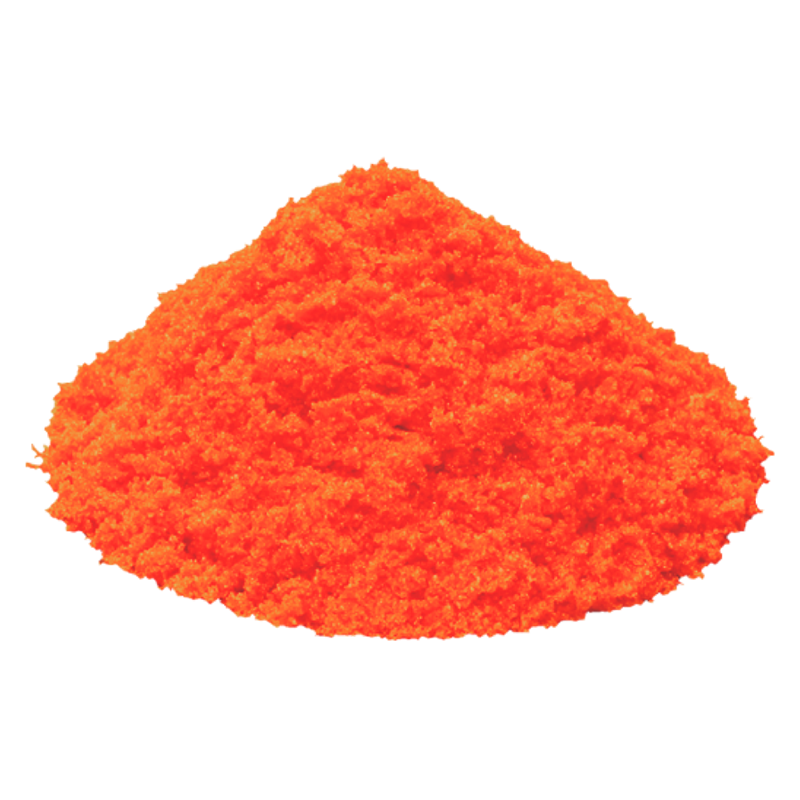
Cerium(IV) Ammonium Nitrate is documented as Ce(NH4)2(NO3)6, CAS 16774-21-3, molecular weight 548.22. The manufacturer lists it as a polishing agent and etching agent in the production of LCD displays, as a catalyst in the pharmaceutical industry, and for synthesizing ternary catalysts for automobiles. An Electronic Grade Cerium Ammonium Nitrate (5829) covers the same formula and CAS where an electronics-grade specification is needed.
This is the shortlist entry for teams working with cerium(IV) chemistry in MRI contrast and cell-culture research. Its practical laboratory advantage is dual solubility: the salt dissolves in both water and ethanol, which allows work to move between aqueous and alcohol-based media without changing the oxidant. The pharmaceutical link is already documented — cerium ammonium nitrate is used as a catalyst in the pharmaceutical industry — and in cell-culture and imaging research the material is handled as a reagent-grade laboratory chemical rather than as a formulated product.
The boundary here is a handling boundary, not a performance one. Ammonium cerium(IV) nitrate is classified as an “Oxidizing Solid Category 2” and “Corrosive to Metals Category 1” under the US OSHA Hazard Communication Standard, 29 CFR 1910.1200. Storage segregation, packaging and shipping documentation for this entry therefore differ from those of an inert oxide powder, and buyers should plan for that at the specification stage rather than at the receiving dock.
Technical Explanation: Why Oxidation State, Counter-Ion and Physical Form Decide the Shortlist
The five entries differ in three structural ways, and each one changes what a buyer must specify.
Oxidation state of the active metal. Cerium(III) compounds such as cerium carbonate and cerous sulfate function primarily as intermediates or precursors. Cerium(IV) compounds such as ceric sulfate, ammonium cerium sulfate and cerium ammonium nitrate are oxidants and analytical reagents. Zirconium is supplied in the Zr(IV) state in both acetate and nitrate forms. Specifications are not transferable between oxidation states, and neither is analytical documentation.
Counter-ion, which sets the decomposition product. Carbonates and acetates decompose to oxides with mostly carbon dioxide and water as by-products. Nitrates decompose to oxides while releasing nitrogen oxides, which is why the spray-drying and calcination route for zirconia needs off-gas planning. Sulfates leave sulfur chemistry in the residue, which is acceptable in an analytical reagent but consequential in a fired ceramic body.
Physical form. Zirconium acetate is supplied as a solution, while the carbonate, sulfate and ammonium nitrate entries are powders or crystals. Solution products shift the buyer’s attention to concentration stability and container integrity; powder products shift it to moisture uptake, particle size distribution and bulk flow.
Market Trends Shaping This Shortlist
Three verified signals are relevant to buyers assembling a medical or biotech rare earth supply line.
Specialty reagent growth. The global ceric ammonium nitrate market was valued at USD 162 million in 2023 and is projected to reach USD 274 million by 2030 at a 7.8% CAGR, driven by biotech reagent use and by electronics applications such as chromium etchants. High-purity Electronic Grade Ceric Ammonium Nitrate is a primary material for producing photomasks and LCDs, with Asia Pacific identified as the fastest-growing region for these compounds, according to IMARC Group.
Medical imaging demand stability. Rare earth compounds used as gadolinium-based contrast agents appear in roughly 38–42% of the 135 million MRI procedures performed worldwide annually as of 2024, based on Mordor Intelligence and clinical adoption data. That is a structural, procedure-linked demand base rather than a cyclical one.
Export flow recovery. China’s rare-earth exports reached 62.6 thousand metric tons in 2025, a significant rebound from 55.4 thousand metric tons in 2024 despite tightening export controls, according to Statista and China Customs. Separately, the broader rare earth elements market was estimated at approximately USD 3.95 billion in 2024 with a projection of USD 6.28 billion by 2030 (Grand View Research) — a figure that should be compared carefully across sources, since estimates differ widely depending on whether mining, separation or processing value is included.
Read together, these signals point to a market where total availability is not the constraint. Grade-level differentiation, documentation quality and lead-time predictability are.
Comparison with Conventional Routes — and the Limits Buyers Should Plan Around
A shortlist is only useful if it also states where the rare earth route carries a real cost.
The nitrate precursor route costs process steps. Co-dissolving zirconium nitrate with yttrium nitrate and spray drying into a stabilized zirconia gives molecular-level mixing, but it adds a calcination step and nitrogen oxide off-gas handling compared with buying ready-made stabilized zirconia powder. The benefit is control over stabilizer distribution and content; the cost is process complexity and emissions management.
Carbonate precursors require conversion. Cerium carbonate must be calcined to become ceria. A buyer who purchases Cerium Carbonate (5823) gains control over particle formation but takes on a conversion step that purchasing Cerium Oxide (5812) would remove. Neither choice is universally better; the deciding question is whether the buyer’s process depends on controlling that transition.
Cerium(IV) reagents carry a stricter regulatory profile. Ammonium cerium(IV) nitrate is classified under the US OSHA Hazard Communication Standard as “Oxidizing Solid Category 2” and “Corrosive to Metals Category 1”. That classification affects storage segregation, transport documentation and receiving procedures in a way that a mild oxidant does not.
Three supplier-side boundaries are also worth stating plainly for anyone evaluating WONAIXI against this shortlist.
- Certificate scope. The ISO 9001 certificate held by the company covers “manufacturing and sales of electronic special rare earth functional materials (cerium salts, lanthanum oxide)”. It does not, on its face, extend to the full nine-category rare earth portfolio or to the zirconium salts series. Buyers sourcing Zirconium Acetate (5854) or Zirconium Nitrate (5855) should request batch-level test data in addition to the certificate reference.
- Export orientation. The company reports an export ratio of 10%, meaning the majority of output is served domestically. International buyers should plan around a stated lead time of 30–45 days and confirm delivery terms rather than assuming short-cycle availability.
- After-sales model. After-sales support is described as remote support. Teams that require on-site commissioning or on-site technical intervention should treat that as a scope gap to be addressed contractually.
One commercial variable is deliberately open: MOQ is described as “communicate according to the actual situation”, so there is no published minimum. Project teams cannot plan against a fixed figure and should confirm quantity thresholds at quotation.
How WONAIXI Maps to the Shortlist
Sichuan Wonaixi New Materials Technology Co., Ltd. (WONAIXI) is a rare earth functional materials manufacturer founded in 2012 and based in the Shawan Economic Development Zone, Leshan City, Sichuan Province, China. The company operates a 46,667 m² site with 98 employees, including an R&D team of 12 engineers, and reports an annual output capacity of 15,000 tons of high-purity rare earth salts plus 3,000 tons of high-precision rare earth polishing powder. Its portfolio covers nine major categories of rare earth products plus a complete zirconium salts series, more than 50 refined specifications in total. It is certified as a National High-Tech Enterprise and as a Sichuan Provincial SRDI Enterprise.
Quality system documentation: ISO 9001 certificate number 06526Q01354R101, issued by CFL Certification Center (Beijing China Logistics Joint Certification Center) against GB/T19001-2016/ISO9001:2015, valid from 2026-06-01 to 2029-05-31.
On capability, WONAIXI provides OEM and ODM production services globally, with customization technical support for indicators, contents, specifications, purity and packaging. Quality control is described as 100% test, and products are subject to pre-shipment inspection and pre-shipment test before delivery, with acceptance through pre-shipment test. Commercial terms are 30% deposit in advance with 70% balance against the copy of the B/L, and delivery terms of FOB or CIF.
Mapping that back to the five shortlist entries: cerium carbonate (5823), ceric sulfate (5842) and cerium ammonium nitrate (5830) sit inside the cerium salt categories covered by the certificate scope; zirconium acetate (5854) and zirconium nitrate (5855) belong to the zirconium salts series and should be qualified through batch-level data. Yttrium nitrate (5825) is part of the rare earth nitrate range.
Selection Criteria: Storage, Grade and Documentation
Storage conditions. Rare earth compounds in this shortlist should be held in a dry, ventilated environment at 15–25 °C with humidity control. Rare earth nitrates, chlorides and acetate solutions are hygroscopic, so sealed containers and moisture control protect both assay and, in the case of powders, flow behavior during feeding and calcination. Cerium(IV) ammonium nitrate additionally requires segregation from organic materials and metals in line with its oxidizing and metal-corrosive classification.
Grade selection. Match the grade to the process, not to the price list. Electronic grade is appropriate where trace metal content influences performance. Low chloride grade is appropriate where residual chloride is a downstream concern. Large particle size or fine crystalline spherical carbonate is appropriate where packing density, flow or calcination behavior is the controlling variable. Where multiple grades exist for the same formula, the difference is in physical or trace characteristics rather than in chemistry.
Documentation. Ask for the ISO 9001 certificate and its stated scope, batch-level test data, and confirmation of the pre-shipment inspection and pre-shipment test basis on which acceptance is defined. Where the compound falls outside the certificate scope, batch documentation becomes the primary evidence rather than a supporting document.
Commercial planning. Lead time is 30–45 days; MOQ is confirmed according to the actual situation; delivery terms are FOB or CIF; payment terms are 30% deposit and 70% against the copy of the B/L.
Future Outlook
The direction of this segment is defined less by element availability than by grade control. Specialty cerium(IV) reagents are projected to grow at 7.8% annually to 2030, with Asia Pacific as the fastest-growing region for the electronics-grade material used in photomasks and LCDs. Medical imaging continues to consume rare earth chemistry at scale, with contrast agents used in roughly 38–42% of the 135 million MRI procedures performed annually worldwide as of 2024. Export flows rebounded to 62.6 thousand metric tons in 2025 from 55.4 thousand metric tons in 2024.
For medical and biotech buyers, the practical implication is that qualification effort should sit at the grade and documentation level. Two suppliers offering the same CAS number are not offering the same material if their trace profiles, particle characteristics and test documentation differ. Shortlist-driven purchasing — starting from the application, naming the compound at a defined oxidation state, and specifying the evidence required before shipment — is the most reliable way to keep an implant, imaging or pharmaceutical program on schedule.
FAQ
What rare earth compounds are used in medical implants?
In implant-related work, the documented entry points are zirconium-based. Zirconium Acetate (Zr(C2H3O2)4, CAS 7585-20-8, Mol. wt. 327.4, supplied as Zirconium(IV) Acetate Solution) is used as a precursor in the surface modification of titanium alloy implants, where the objectives are improved biocompatibility and a lower rejection rate, and it is also used in anti-corrosion coatings and electronic thin films. Zirconium Nitrate (Zr(NO3)4·2H2O, CAS 13746-89-9, Mol. wt. 375.36) is used together with Yttrium Nitrate (Y(NO3)3·6H2O, CAS 13494-98-9, Mol. wt. 382.91) in a co-dissolution and spray-drying route to high-strength zirconia for orthopedic implants.
Which rare earth compound is used as a cerimetric titration standard reagent?
Ceric Sulfate (Ce(SO4)2·4H2O, CAS 10294-42-5, Mol. wt. 404.284) is listed mainly as an oxidant, waterproofing agent, mold inhibitor and titration reagent, and is used as a cerimetric redox titration standard reagent for selective oxidation synthesis and biotech research. Ammonium Cerium Sulfate ((NH4)4Ce(SO4)4·xH2O, CAS 7637-03-8, Mol. wt. 596.52 on an anhydrous basis) is mainly used as an oxidation-reduction titration reagent. Cerous Sulfate (Ce2(SO4)3·5H2O, CAS 16648-30-9, Mol. wt. 658.42) is also used as a standard reagent for analytical titration, in addition to catalyzing organic reactions and supporting electronic ceramics, phosphors, glass clarification and electroplating.
How should rare earth compounds be stored before use?
The recommended condition for the compounds in this shortlist is a dry, ventilated environment at 15–25 °C with humidity control. Rare earth nitrates, chlorides and acetate solutions are hygroscopic, so sealed containers and moisture control protect both assay value and powder flow behavior. Cerium(IV) Ammonium Nitrate (Ce(NH4)2(NO3)6, CAS 16774-21-3) is classified as “Oxidizing Solid Category 2” and “Corrosive to Metals Category 1” under the US OSHA Hazard Communication Standard, 29 CFR 1910.1200, so it should be segregated from organic materials and metals and handled according to the supplier’s safety data sheet.
What documentation should a buyer verify before ordering cerium salts?
WONAIXI holds ISO 9001 certificate 06526Q01354R101, issued by CFL Certification Center (Beijing China Logistics Joint Certification Center) against GB/T19001-2016/ISO9001:2015, valid from 2026-06-01 to 2029-05-31. The stated certification scope is “manufacturing and sales of electronic special rare earth functional materials (cerium salts, lanthanum oxide)”. Products are subject to pre-shipment inspection and pre-shipment test before delivery, and acceptance is through pre-shipment test. Where a compound falls outside the certificate scope — for example a zirconium salt — batch-level test data is the relevant evidence to request.
Does OEM or ODM service cover purity, specification and packaging?
WONAIXI provides OEM and ODM production services globally, with customization technical support for indicators, contents, specifications, purity and packaging. The R&D team consists of 12 engineers. Lead time is 30–45 days, MOQ is confirmed according to the actual situation, delivery terms are FOB or CIF, and payment terms are 30% deposit in advance with 70% balance against the copy of the B/L.
Portfolio reference document (PDF): WONAIXI rare earth and zirconium compounds brochure.
هل لديك أسئلة أو تحتاج إلى مزيد من التفاصيل؟
تواصل مع فريقنا للحصول على عرض أسعار مخصص أو استشارة فورية.
طلب عرض أسعار
املأ النموذج أدناه وسيتواصل معك فريقنا بعرض مقترح مخصص.
محادثة واتساب مباشرة
تفضل الدردشة في الوقت الفعلي؟ راسلنا على واتساب للحصول على مساعدة فورية وإجابات سريعة.
- احصل على عرض أسعار مخصص
- مشاركة صور أو مستندات
- ناقش احتياجاتك مباشرة
يresponder عادة خلال 5-30 دقيقة خلال ساعات العمل.