
Rare Earth Technical & Procurement FAQ: Lanthanum Carbonate & Yttrium Nitrate
Rare Earth Technical & Procurement FAQ: Lanthanum Carbonate & Yttrium Nitrate
Rare earth procurement rarely fails at the negotiating table. It fails earlier — on compound identity, on the analytical basis used for content and quantity calculations, or on documentation that does not match what a receiving laboratory or a customs broker expects. Lanthanum carbonate and yttrium nitrate show the pattern clearly: both are established industrial compounds, and neither can be evaluated from a catalogue line alone.
This article is written as a technical and procurement FAQ for buyers in the evaluation stage of rare earth sourcing for smart life and consumer innovation supply chains. It moves from purchasing terms and acceptance criteria, to the specification fields of Lanthanum Carbonate (La2(CO3)3·xH2O, CAS 54451-24-0) and Yttrium Nitrate (Y(NO3)3·6H2O, CAS 13494-98-9), to the wider set of rare earth nitrates, acetates, sulfates, fluorides, hydroxides, carbonates, chlorides and oxides, and finally to market, regulatory and qualification questions that an FAQ can frame but cannot answer on its own. Product and capability statements attributed to WONAIXI come from the company's published materials; market and regulatory statements are attributed to their sources.
Why Rare Earth Questions Now Arrive Earlier in the Buying Cycle
In a smart-life supply chain, rare earth compounds are rarely the end product. They are intermediates: a carbonate that feeds a chloride or an oxide route, a nitrate that enters a catalyst or ceramic precursor, a fluoride that goes into an optical or metallurgical process. That intermediate position is exactly why evaluation-stage questions are so specific. The buyer is not selecting a material in the abstract; they are selecting a compound identity, a grade, a documentation set and a delivery commitment that must survive incoming inspection, production trials and, increasingly, customs review.
Three question types dominate this stage:
- Commercial terms — minimum order quantity, lead time, packaging, and how price relates to the declared content basis.
- Technical identity — formula, CAS number, hydrate form, molecular weight basis, and the downstream routes the compound is intended to serve.
- Qualification and compliance — what documentation accompanies a lot, how quality is controlled, and whether export-control or declaration obligations apply to the route.
A written FAQ helps because it forces those questions into a fixed sequence, and it also exposes the point at which a general answer stops being useful. Specification data that is not tied to a stated analytical basis can make two quotations look comparable when they are not.
WONAIXI (Sichuan Wonaixi New Materials Technology Co., Ltd.) is a rare earth functional materials manufacturer founded in 2012 and located in the Shawan Economic Development Zone, Leshan City, Sichuan Province, China. The company states dedicated production lines with an annual capacity of 15,000 tons of high-purity rare earth salts and 3,000 tons of precision rare earth polishing powder, a 46,667 square metre manufacturing facility, 98 employees and a 12-engineer R&D team. Its stated export markets include the United States, Japan, South Korea, France, Italy, Thailand, Australia, Pakistan, Spain, Germany, India and Austria.
Purchasing Terms and Acceptance Criteria: Settle These Before Specification
Most disputes at the evaluation stage trace back to a purchasing term that was never written down. The table below sets out the items that should be fixed before a specification discussion becomes a quotation discussion.
| Item | What should be fixed in writing | Why it changes the evaluation |
|---|---|---|
| Compound identity | Product name, chemical formula, CAS number | Similar names can correspond to different hydrates and different CAS registrations |
| Analytical basis | Whether assay, content and price are calculated on a hydrate or anhydrous basis | Quotations built on different bases are not directly comparable |
| Grade and purity | Declared purity and the basis on which it is expressed | Determines whether the grade fits the intended process route |
| Impurity limits | Elements or residual species that must be controlled | Project-specific; set from the process rather than from a catalogue |
| Physical form and packaging | Powder form, pack size, liner and handling requirements | Affects dosing, storage and material handling |
| Minimum order quantity | Minimum quantity per grade | WONAIXI states that MOQ is discussed according to the actual situation |
| Lead time | Production and delivery window | WONAIXI states a lead time of 30–45 days |
| Quality control | How each lot is checked before release | WONAIXI states 100% test |
| Documentation | Which documents are issued per lot and per order | Determines whether receiving and compliance teams can release the goods |
| Regulatory classification | Whether the compound is a controlled item for the intended export route | Determines declaration content and clearance risk |
| Customization | Which parameters can be adjusted | WONAIXI lists indicators, contents, specifications, purity and packaging |
| After-sales support | Support scope after delivery | WONAIXI lists remote support |
Acceptance criteria then convert those terms into a receiving procedure. In practice, four checks carry most of the weight: identity verification against the declared formula and CAS number; basis verification, so that the measured content matches the basis on which the material was purchased; documentation verification, so that the quality and compliance paperwork supports release; and, for a new grade or a new supplier, sample or pilot-lot validation before full production release.
Lanthanum Carbonate: The Specification Fields That Matter
Lanthanum carbonate is the compound most often quoted without a stated basis, which is why its numbers should be read carefully. The verified product data for this compound are as follows.
| Field | Value | Meaning at the evaluation stage |
|---|---|---|
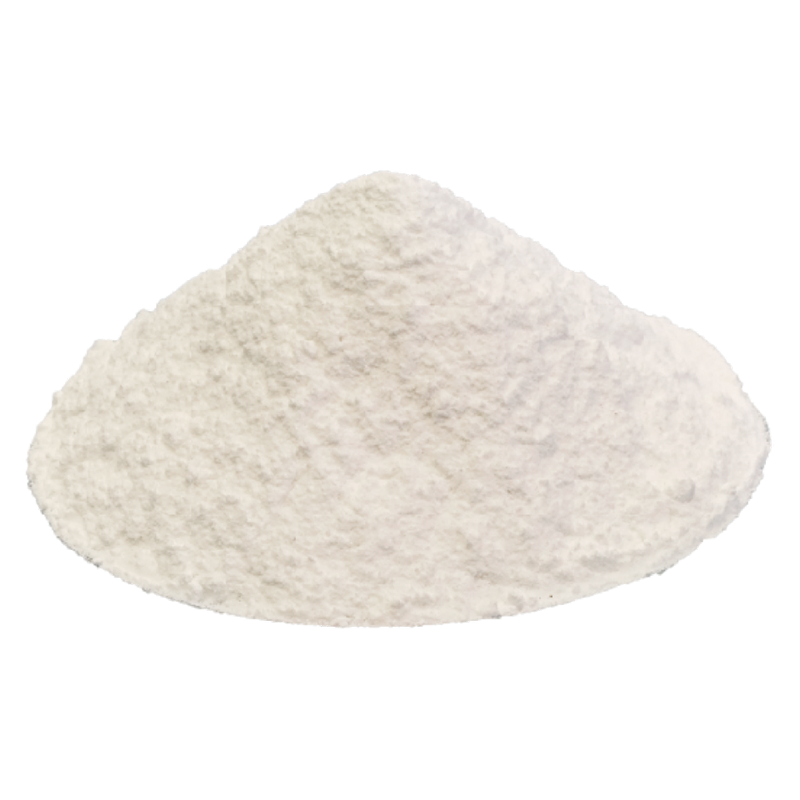
| Product name | Lanthanum Carbonate (hydrate form) | Identify the hydrate, not a generic carbonate |
| Chemical formula | La2(CO3)3·xH2O | The 'x' indicates variable water of crystallisation |
| CAS number | 54451-24-0 | Use as the primary identity key in RFQs and declarations |
| Molecular weight | 457.85 g/mol, anhydrous basis | The figure is stated on an anhydrous basis, not on the as-supplied hydrate |
| Stated role | Intermediate compound of lanthanum; raw material for lanthanum chloride and lanthanum oxide | Positioned as an upstream intermediate rather than a finished functional material |
Two features of this specification deserve attention before a purchase order is issued. The first is the hydrate notation. Because Lanthanum Carbonate carries water of crystallisation while its molecular weight is recorded on an anhydrous basis, buyers should state explicitly whether lanthanum content, assay and price per unit are calculated on a hydrate basis or an anhydrous basis. When that is left open, a supplier's hydrate-basis offer and a buyer's anhydrous-basis expectation can end up being compared as if they described the same quantity of material.
The second feature is the compound's position in the chain. Lanthanum Carbonate is documented as an intermediate of lanthanum and as a raw material for lanthanum chloride and lanthanum oxide, which means its acceptance criteria are usually written by the downstream process rather than by an end-product specification. Buyers who know which downstream compound the carbonate will feed can specify what matters — and avoid over-specifying parameters the process does not actually constrain.
Yttrium Nitrate: A Hexahydrate on a Different Basis Convention
Yttrium nitrate is supplied as a hexahydrate, and the difference in convention between the two products is significant when both appear in the same procurement basket.
| Field | Value | Meaning at the evaluation stage |
|---|---|---|
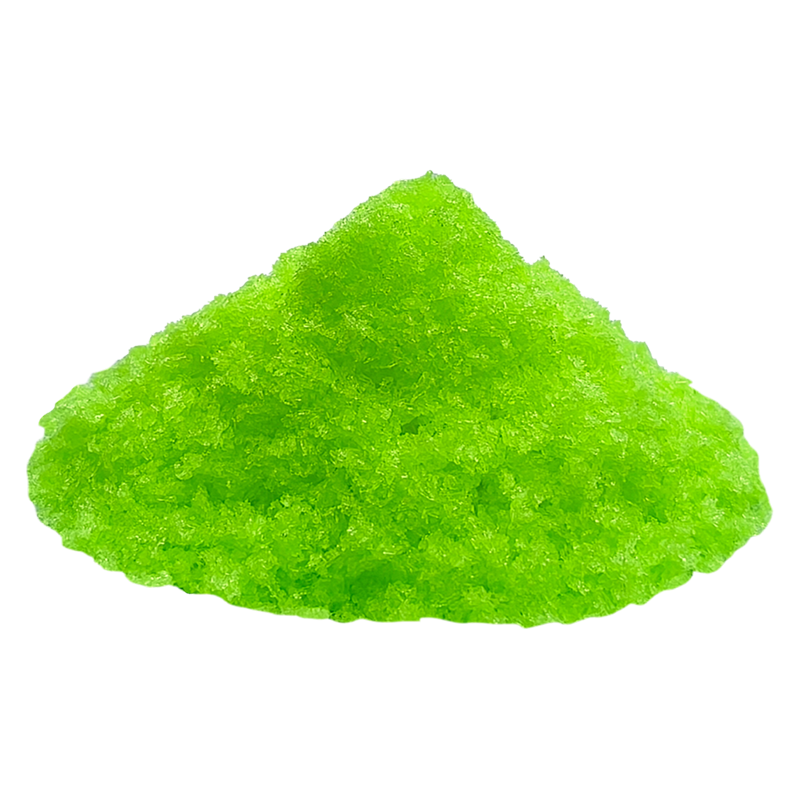
| Chemical formula | Y(NO3)3·6H2O | Six water molecules are part of the supplied identity |
| CAS number | 13494-98-9 | Identity key for RFQs, safety and customs documents |
| Molecular weight | 382.91 | Stated for the hexahydrate form as supplied |
| Supply form | Hexahydrate | Water of crystallisation is included in the delivered mass |
| Stated applications | Preparation of ternary catalysts, ceramic materials and yttrium compound intermediates | Screening guidance for catalyst, ceramic and intermediate programmes |
Read the two data sheets side by side and the practical issue becomes clear. The Lanthanum Carbonate molecular weight of 457.85 g/mol is expressed on an anhydrous basis, while the Yttrium Nitrate molecular weight of 382.91 corresponds to the hexahydrate as supplied. If both compounds are quoted in a single RFQ without a declared basis, the comparison between offers can rest on two different conventions at once. The remedy is procedural rather than technical: require every quotation in the package to state its basis, and require the same basis to appear on the purchase order, the certificate documentation and the receiving record.
Yttrium nitrate's stated application set is also worth reading precisely. It is listed for preparing ternary catalysts, ceramic materials and yttrium compound intermediates — a precursor profile, not a finished-product performance claim. Buyers who need an application-specific performance figure should expect to generate it through their own trial work rather than extract it from a compound listing.
The Wider Compound Set Behind These Two Questions
Lanthanum carbonate and yttrium nitrate are rarely evaluated in isolation. Teams developing catalyst, ceramic, glass, optical or metallurgical programmes usually need several related compounds at once, which is why portfolio structure — and not just a single grade — affects supplier evaluation.
| Family | Examples in the stated product scope | CAS numbers |
|---|---|---|
| Nitrates | Yttrium Nitrate; Neodymium Nitrate; Praseodymium Nitrate; Lanthanum Nitrate; Cerium Nitrate; Cerium Ammonium Nitrate; Zirconium Nitrate | 13494-98-9; 16454-60-7; 15878-77-0; 10277-43-7; 10294-41-4; 16774-21-3; 13746-89-9 |
| Acetates | Lanthanum Acetate; Cerium Acetate; Zirconium Acetate | 100587-90-4; 537-00-8; 7585-20-8 |
| Sulfates | Ceric Sulfate; Cerous Sulfate; Ammonium Cerium Sulfate; Lanthanum Sulfate Hydrate; Zirconium Sulfate | 10294-42-5; 16648-30-9; 7637-03-8; 57804-25-8; 7446-31-3 |
| Fluorides | Lanthanum Fluoride; Cerium Fluoride; Praseodymium-Neodymium Fluoride | 13709-38-1; 7758-88-5 |
| Hydroxides | Lanthanum Hydroxide; Cerium Hydroxide; Yttrium Hydroxide | 14507-19-8; 12014-56-1; 16469-22-0 |
| Carbonates | Lanthanum Carbonate; Cerium Carbonate; High Purity Cerium Carbonate; Low Chloride Cerium Carbonate; Fine Crystalline Spherical Cerium Carbonate; High Purity Yttrium Carbonate | 54451-24-0; 54451-25-1; 38245-39-5 |
| Chlorides | Anhydrous Lanthanum Chloride; Lanthanum Chloride; Anhydrous Cerium Chloride; Cerium Chloride; Neodymium Chloride; Anhydrous Neodymium Chloride; Praseodymium Chloride; Yttrium Chloride | 10099-58-8; 10025-84-0; 7790-86-5; 18618-55-8; 13477-89-9; 10024-93-8; 10025-90-8; 10025-94-2 |
| Oxides | Lanthanum Oxide; Cerium Oxide; Large Particle Size Cerium Oxide | 1312-81-8; 1306-38-3 |
The application statements attached to these compounds are specific rather than promotional. Lanthanum oxide is listed for use in the glass, ceramic and electronics industries. Cerium oxide is listed as a glass decolouriser and glass polishing agent, and also as a raw material for preparing cerium metal, with high-purity cerium oxide noted for rare earth luminescent materials. Lanthanum hydroxide is listed for the glass, ceramic and electronics industries, and cerium hydroxide as a clarifying and decolourising agent in the glass industry. Yttrium carbonate is listed for preparing catalysts, ceramic materials and yttrium compound intermediates. Anhydrous lanthanum chloride is listed for producing lanthanum metal, petroleum catalyst raw materials, hydrogen storage battery materials and pharmaceutical intermediates.
WONAIXI states that its range covers nine major rare earth product categories and more than 50 specialised variants, in addition to a complete zirconium salt series. That catalogue breadth is company-reported. It is useful for screening a multi-product sourcing route, but it is not an audited SKU count and it does not substitute for technical qualification of any individual grade.
Market and Regulatory Signals Shaping 2026 Answers
Procurement answers written in 2026 sit on a market that is not uniform in either price or regulation. The global market for rare earth elements was estimated at USD 4.5 billion for 2026 (Grand View Research). Inside that total, price behaviour differs sharply by element group. NdPr oxide, the magnet-critical mixed oxide, was reported at approximately ¥738,000 per tonne on the SMM benchmark as of September 2026, while Lanthanum Oxide at 99.5% minimum averaged around USD 1.00 per kilogram in early 2026 on a United States import basis (USGS).
The gap between those two figures explains why a general "rare earth price" question rarely produces a usable procurement answer. Light rare earth compounds and magnet-grade oxides behave as different markets, and a buyer benchmarking lanthanum-based intermediates against NdPr benchmarks will draw the wrong conclusion. Benchmark data also carries a timing problem: when export-licensing conditions change, published prices can lag actual spot quotations, so benchmarks are better used as context than as a quotation basis.
Regulatory signals matter as much as price. China's Ministry of Commerce established export-control requirements effective 4 April 2025 covering specified rare earth elements and products, including elemental forms, alloys, targets, oxides, compounds and mixtures (MOFCOM Announcement No. 18 of 2025). Under the associated customs procedure, exporters must identify controlled items in the remarks section of customs declarations and provide the applicable dual-use item control number where one applies, and customs may hold goods while a query is resolved.
That framework is a screening obligation, not a product-level answer. The official notices do not establish that any particular compound or grade offered by a supplier is a controlled item. Classification has to be confirmed product by product against the controlled-item list and the current customs classification before an order is committed, and that check belongs in the supplier qualification file next to the technical documents.
Where an FAQ Stops: Limits of Desk-Level Screening
An FAQ compresses the question set; it does not verify a product. Buyers who treat a compound listing, a CAS number and a company certificate as completed technical qualification usually discover the gap at incoming inspection. Three limits are worth naming openly.
First, identity data is not performance data. Formula, CAS number and molecular weight establish what a material is called, not how a specific lot behaves. They do not confirm purity, rare-earth content, impurity profile, moisture, particle size or lot-to-lot consistency. Those parameters require supplier datasheets, batch analysis and sample testing tied to the intended process.
Second, a management-system certificate has a scope. WONAIXI holds ISO 9001 certification (certificate 06526Q01354R101) issued by CFL Certification Center, valid from 1 June 2026 to 31 May 2029 under GB/T19001-2016/ISO9001:2015, for the manufacture and sale of electronic special rare earth functional materials (cerium salts, lanthanum oxide). A quality management certificate describes audited activities and system controls; it is not a batch test report on the specific compound a buyer is purchasing, and its scope should be read against the product actually being ordered.
Third, cross-supplier comparability is limited. Publicly available supplier information rarely includes directly comparable datasheets across the full range of nitrates, acetates, sulfates, fluorides, hydroxides, carbonates, chlorides and oxides that a buyer may need to evaluate. A shortlist assembled from public pages will usually be incomplete, so the real comparison has to be built from structured RFQ responses.
Compared with a full dossier-based qualification route — technical datasheet review, batch certificates, sample and pilot-lot testing and, where justified, a supplier audit — the FAQ format is a screening tool. It is efficient for deciding which suppliers deserve a dossier request. It is a poor substitute for the dossier itself, and treating it as one shifts cost from the procurement stage to the production stage, where it is more expensive.
Future Outlook
Three shifts are visible in how evaluation-stage rare earth buyers are writing their requirements. The first is documentation-first qualification: specifications are increasingly requested with an explicit basis, CAS number and lot-documentation expectation, so that offers can be compared without follow-up clarification rounds. The second is product-level regulatory mapping: buyers now ask about controlled-item classification and declaration content alongside technical parameters, rather than after a purchase order is placed. The third is sample-led validation, in which pilot quantities are used to verify handling, dosing and process fit before a production commitment.
These shifts favour suppliers that can answer structured questions quickly. WONAIXI's stated customization scope covers indicators, contents, specifications, purity and packaging under an OEM/ODM model, with a stated lead time of 30–45 days and remote after-sales support — capabilities that matter most when a buyer needs a defined grade rather than a catalogue default. Catalogue breadth across nine rare earth categories reduces the number of suppliers a buyer has to onboard, but it does not reduce the documentation burden on any single grade. Buyers should expect breadth and depth to be evaluated separately.
FAQ: Lanthanum Carbonate and Yttrium Nitrate Procurement Questions
1. What should be written on a purchase order for Lanthanum Carbonate?
A purchase order should state the product name, the formula La2(CO3)3·xH2O, the CAS number 54451-24-0, the required grade, the analytical basis used for assay and content, the quantity and packaging, and the documentation set expected per lot. Because the compound is supplied as a hydrate while its molecular weight of 457.85 g/mol is recorded on an anhydrous basis, the order should explicitly state whether content and price are calculated on a hydrate or anhydrous basis.
2. What is Lanthanum Carbonate used for?
In the verified product data, Lanthanum Carbonate is described as an intermediate compound of lanthanum and as a raw material for lanthanum chloride and lanthanum oxide. Its role is therefore upstream of the lanthanum compounds that reach glass, ceramic and electronics applications.
3. Why does the molecular weight of Yttrium Nitrate matter to a buyer?
Yttrium Nitrate is supplied as the hexahydrate, Y(NO3)3·6H2O, CAS 13494-98-9, with a molecular weight of 382.91 stated for that hexahydrate form. Because the supplied material includes water of crystallisation in its delivered mass, content and price calculations should be tied to the hexahydrate basis actually delivered, and to the assay method used to express it. The basis should be stated consistently in the RFQ, the quotation and the receiving record.
4. Which documents should a buyer expect to check when rare earth compound lots arrive?
At minimum, buyers should confirm the identity documentation matching the declared formula and CAS number, the lot-level analysis documentation for the parameters specified in the order, and the compliance documentation relevant to the export route. WONAIXI holds ISO 9001 certification 06526Q01354R101, issued by CFL Certification Center and valid from 1 June 2026 to 31 May 2029 under GB/T19001-2016/ISO9001:2015, covering the manufacture and sale of electronic special rare earth functional materials (cerium salts, lanthanum oxide). Buyers should confirm with the supplier which documents are issued per lot for the specific compound ordered.
5. How long does rare earth compound supply usually take, and what governs the minimum order?
WONAIXI states a lead time of 30–45 days and states that minimum order quantity is discussed according to the actual situation. For evaluation planning, this means sample or pilot quantities should be scheduled well ahead of production demand, and documentation review should run in parallel with material preparation rather than after it.
6. Can rare earth compound specifications be customized?
WONAIXI lists customization across indicators, contents, specifications, purity and packaging, operating under an OEM/ODM model. A customized grade still needs its own written acceptance criteria and its own lot documentation; customization changes the specification, not the qualification requirement.
7. Do China's export-control rules apply to rare earth compounds such as these?
China's Ministry of Commerce established export-control requirements effective 4 April 2025 for specified rare earth elements and products, including elemental forms, alloys, targets, oxides, compounds and mixtures (MOFCOM Announcement No. 18 of 2025). Exporters of controlled items must identify them in customs declarations and provide the applicable dual-use item control number where one applies, and customs may hold goods during a query. The notices set out a framework: they do not by themselves confirm that a specific compound or grade is controlled, so classification should be checked product by product before an order is placed.
8. How do Lanthanum Carbonate and Yttrium Nitrate fit into smart life and consumer innovation supply chains?
Both sit upstream as intermediates. Lanthanum Carbonate feeds lanthanum chloride and lanthanum oxide routes, and lanthanum oxide is listed for use in the glass, ceramic and electronics industries. Yttrium Nitrate is listed for preparing ternary catalysts, ceramic materials and yttrium compound intermediates. Consumer-facing performance claims require application-specific testing; a compound specification alone does not establish them.
9. Does a broad rare earth portfolio reduce sourcing complexity?
Portfolio breadth can reduce the number of suppliers a buyer has to onboard, particularly when a programme needs nitrates, acetates, sulfates, fluorides, hydroxides, carbonates, chlorides and oxides across zirconium, cerium, lanthanum, praseodymium-neodymium and yttrium families. WONAIXI states that its range covers nine major rare earth product categories with more than 50 specialised variants plus a complete zirconium salt series; this is company-reported catalogue information and does not replace grade-level technical qualification.
10. What can this FAQ not confirm?
It cannot confirm purity, rare-earth content, impurity profile, moisture, particle size or lot-to-lot consistency for any specific grade, and it cannot confirm commercial terms, regulatory classification or suitability for a given process. Those require supplier datasheets, batch documentation, sample testing, and product-level regulatory confirmation.
Conclusion
For lanthanum carbonate and yttrium nitrate, the decisive procurement work happens before the price comparison: fixing the compound identity, agreeing the analytical basis, defining the documentation set, and confirming how the export route is classified. Buyers who settle those four items early can compare quotations that are genuinely comparable, and can separate a screening-level answer from a qualification-level one.
A downloadable company brochure covering WONAIXI's product scope and manufacturing capabilities is available here: WONAIXI company brochure.
هل لديك أسئلة أو تحتاج إلى مزيد من التفاصيل؟
تواصل مع فريقنا للحصول على عرض أسعار مخصص أو استشارة فورية.
طلب عرض أسعار
املأ النموذج أدناه وسيتواصل معك فريقنا بعرض مقترح مخصص.
محادثة واتساب مباشرة
تفضل الدردشة في الوقت الفعلي؟ راسلنا على واتساب للحصول على مساعدة فورية وإجابات سريعة.
- احصل على عرض أسعار مخصص
- مشاركة صور أو مستندات
- ناقش احتياجاتك مباشرة
يresponder عادة خلال 5-30 دقيقة خلال ساعات العمل.