
Rated Torque vs. Output Torque: Drive Wheel Lifespan Explained
Two torque figures appear on almost every drive wheel datasheet written for AGV, AMR and automated forklift projects, and buyers routinely compare them as though they described the same capability. They do not. Rated torque defines the workload a drive wheel can carry continuously; output torque defines what it can deliver for a brief interval. Specifying a drive unit against the wrong figure is one of the most common reasons an industrial drive wheel motor runs hot and gets replaced well before its expected service life.
The published figures for the PLT-198 and PLT-210 drive wheel units from Shanghai Plutools Automation Corporation Co., Ltd. — 9.55 Nm of rated torque and 260 Nm of output torque — make that distinction unusually easy to see. The two numbers differ by a factor of roughly 27, and the gap is neither a marketing exaggeration nor a measurement error. It is the difference between a thermal limit and a transient limit, and it decides how a drive wheel behaves over years of service rather than over seconds.
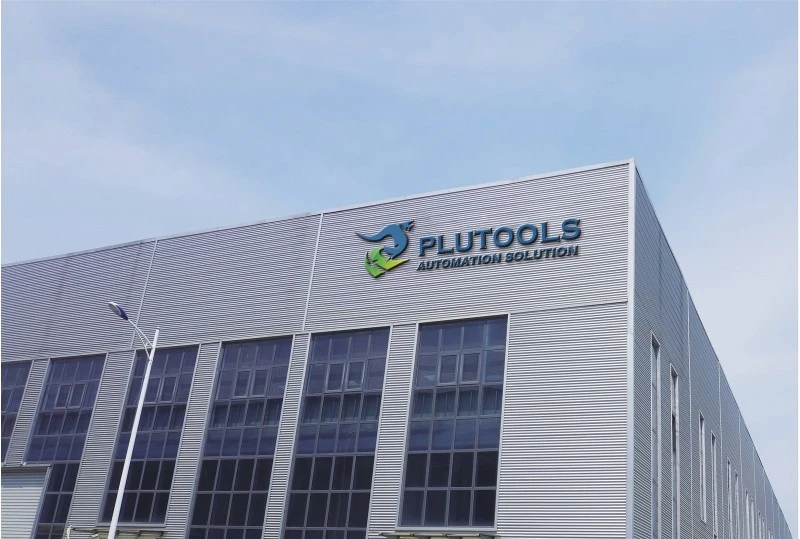
Plutools is a Shanghai-based manufacturer of AGV and AMR drive wheels and motion-control components used in mobile robots, automated forklifts and industrial material handling equipment. Headquartered in Jiading District, Shanghai, the company operates a 10,000 m² modern production facility, employs more than 100 people including a 60-engineer R&D team, holds more than 200 patent technology certifications, and exports roughly 70% of its output to the EU, USA, Southeast Asia, South America, the Middle East, Japan and South Korea.
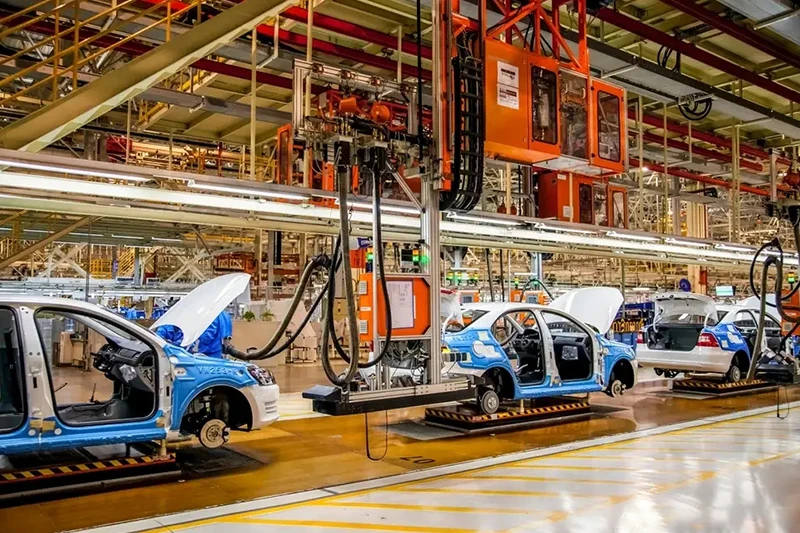
Rated Torque and Output Torque Are Two Different Kinds of Limit
Rated torque is a continuous-duty figure. It describes the torque a drive wheel can deliver indefinitely without exceeding the thermal limits of its motor winding, gear lubricant and bearings. On a datasheet it assumes a continuous duty cycle, meaning the unit runs at that load until temperatures stabilise inside the design limit rather than climbing. For a buyer, rated torque answers a practical question: what load can this drive wheel move, hour after hour, without getting hot?
Output torque — sometimes labelled peak torque — answers a different question: what is the maximum the unit can produce for a short burst? Output torque is bounded by the drive's current limit, by magnetic saturation of the motor, and by the mechanical strength of the gear stage. It is available for seconds at a time, and repeated use generates heat far faster than steady-state operation does.
For the PLT-198 and PLT-210, the published values are 9.55 Nm rated and 260 Nm output. A buyer who reads only the larger number could reasonably conclude the unit handles a continuous load about 27 times heavier than it actually can. That single misreading is enough to turn a sound mechanical design into a recurring maintenance problem.
Why the 9.55 Nm / 260 Nm Split Decides Drive Wheel Lifespan
Motor heating follows current, and current rises broadly in proportion to torque. When a drive wheel is asked to deliver torque above its rated value on a sustained basis — climbing a ramp, pushing through a slightly misaligned load, or dragging a cart heavier than the one originally specified — winding temperature rises above the point where the insulation system is designed to operate.
Two things then happen, slowly and quietly at first. Insulation ageing accelerates as temperature rises, and the lubricant film in the gearbox and bearings thins, which increases friction and heat in a self-reinforcing loop. Polyurethane tires, widely used on forklift drive wheels for load capacity and floor protection, also build up heat under continuous high-slip or scrubbing conditions.
In practice, the failure signature of an undersized drive wheel is not an immediate breakdown but a pattern: thermal protection trips during long shifts, motor housings that run hot to the touch, and service intervals that keep shortening. Under comparable operating conditions, an AGV drive wheel unit of this type has been assessed as delivering approximately 5–10% higher transmission efficiency and 10–15% longer service life than alternatives, with a 15–20% lower estimated failure rate — but those figures assume the unit is first operated inside its continuous rating. Continuous-duty data is what makes the reliability claim reproducible.
How to Use Both Torque Figures in a Drive Wheel Selection Decision
For a decision-stage evaluation, torque data should be applied in a fixed sequence rather than treated as a single headline number.
| Selection step | Torque figure used | What it protects |
|---|---|---|
| Calculate continuous tractive effort: rolling resistance + grade component + continuous payload | Rated torque | Thermal margin and motor lifespan |
| Convert tractive effort into wheel torque: effort × wheel radius ÷ drivetrain efficiency | Rated torque | Gearbox and bearing life |
| Add margin for ambient temperature, floor condition and tire wear | Rated torque | Derating headroom in real installations |
| Calculate acceleration and breakaway torque, plus peak events per hour | Output torque | Acceleration performance and ramp starts |
| Confirm duty cycle class and record it in acceptance criteria | Both | Verifiable, testable specification |
Two engineering notes matter at the acceleration step. First, output torque covers events that occupy a fraction of the working cycle — starting from rest, crossing a floor transition, or reversing direction quickly. Second, the more often those events occur, the closer the effective continuous load moves toward the peak, and the more thermal margin is consumed. A duty cycle with a peak event every few seconds is a very different thermal problem from one with a single ramp start per hour.
Mounting orientation also changes how torque is applied. A vertical drive wheel carries load along a different axis than a parallel horizontal drive wheel, so the vertical load path and the torque path have to be checked separately. Steering drive wheel assemblies combine traction and steering loads in one unit, which means the torque margin has to cover both demands at the same time.
Where the Torque Distinction Shows Up in AGV, AMR and Forklift Applications
Automated forklift drive wheels. Material handling duty combines heavy payloads with frequent breakaway from static friction. Output torque is consumed quickly during those moments, while rated torque governs the long, continuous travel segments — particularly on grades, where the grade component adds to the continuous load for the entire climb.
Dual differential drive wheels. Dual differential drive wheels allow for a zero-turn radius and are widely used in smaller logistics bots. Pivot turns are high-peak, high-frequency events: each rotation demands torque far above steady-state travel, and a warehouse aisle layout that forces constant pivoting will keep a drive wheel close to its peak envelope for much of the shift. This is the scenario where a rated torque margin pays for itself.
AMR and Mecanum / omni configurations. Mecanum wheels and omnidirectional drive systems are increasingly used for AMR applications in high-density warehouses. Lateral motion scrubs the tire against the floor, raising continuous torque demand even when linear speed looks modest, so the continuous rating matters more than the top speed figure suggests.
AGV steering drive wheel assemblies. Integrated steering drive modules combine steering and traction in a single unit, and industry research notes that integrated modules are replacing discrete components to reduce assembly time and maintenance complexity. For the buyer, the practical consequence is that the torque specification now covers a combined load case rather than a single traction load.
Heavy industrial drive wheels. Published product listings quote load capacities from 150 kg to 6,000 kg for vertical drive wheels, with high-capacity variants such as a 406 mm vertical drive wheel rated at a 6,000 kg load. In heavier classes the gap between continuous and peak capability is at its widest, and the cost of a specification error is at its highest.
Market Signals That Turn Torque Transparency into a Procurement Issue
Several measurable trends are pushing continuous-duty torque data from a datasheet footnote into a specification item.
- The global AGV wheel drives market was valued at approximately USD 1.2 billion in 2024 and is projected to reach USD 3.5 billion by 2034, with an expected CAGR of 11.5% from 2024 to 2034 driven by logistics and warehouse automation (Reports and Data).
- The U.S. forklift market was valued at USD 9.11 billion in 2023, with a shift toward electric and automated drive systems (Grand View Research). Electric forklifts now command over 70% market share in many regions as a replacement for combustion models (MarketsandMarkets).
- The industrial logistics segment for AGVs is projected to be the fastest-growing, with a CAGR of 11.6% (MarketsandMarkets).
- Asia Pacific dominated the global AGV market with a 37.6% revenue share in 2025 (Grand View Research), while the China mobile robot market reached 22.1 billion yuan in 2024 with over 139,000 units sold (China Mobile Robot Alliance).
- Lithium-ion battery technology now powers the majority of new AGV and AMR drive units, reducing range anxiety and downtime (Fortune Business Insights).
Regulatory context reinforces the same direction. ISO 3691-4:2023 is the primary international safety standard for driverless industrial trucks and covers steering and braking systems; EN 1175:2020 specifies electrical and electronic safety requirements for industrial trucks and applies to AGV drive wheel assemblies; ANSI/ITSDF B56.5 governs the performance of drive and steering units for driverless industrial vehicles in the United States. Longer duty cycles, larger fleets and tighter electrical safety requirements all raise the cost of a drive unit that is operated outside its thermal design point.
How Plutools Publishes and Applies Torque Data
Plutools publishes rated torque and output torque as separate fields for the PLT-198 and PLT-210, which allows a buyer to check continuous duty and peak capacity against two different requirements instead of reconciling a single ambiguous figure. The engineering rationale is direct: because a drive wheel's lifespan is set by how long it operates above its continuous rating, a supplier that advertises peak torque only effectively transfers the thermal risk to the buyer's maintenance budget.
The company's manufacturing base supports that transparency claim. Plutools operates a 10,000 m² modern production facility with an annual output of 10,000 units, holds more than 200 patent technology certifications, and is recognised as a national high-tech enterprise along with a Specialized and Innovative Enterprise and National Small Giant Enterprise title. Its engineering team of 60 focuses on motion control technologies for AGV and AMR platforms, and roughly 70% of production is exported to the EU, USA, Southeast Asia, South America, the Middle East, Japan and South Korea — markets where duty-cycle documentation is often requested during supplier qualification.
Compared with other domestic AGV drive systems of similar load capacity and operating specifications, this AGV drive wheel unit is characterised by higher system integration, more stable torque output, precise motion control, flexible customisation and stricter quality inspection — features that support consistent operation over long service intervals. Stable torque output is the part most relevant to lifespan: a unit whose output fluctuates forces the control system to compensate, and that compensation reappears as extra current and extra heat.
Comparing Drive Wheel Units: What the Data Shows — and Where the Advantage Stops
| Comparison dimension | Plutools AGV drive wheel unit | Comparable domestic drive systems |
|---|---|---|
| System integration | Higher integration | Discrete assemblies |
| Torque output stability | More stable torque output | Output varies with assembly tolerance |
| Motion control | Precise motion control | Standard control response |
| Customisation flexibility | Flexible customisation | Limited configuration range |
| Quality inspection | Stricter inspection | Standard inspection |
| Transmission efficiency | Approximately 5–10% higher | Baseline |
| Service life | Approximately 10–15% longer | Baseline |
| Estimated failure rate | 15–20% lower | Baseline |
| Maintenance intervals | Extended by approximately 20–30% | Baseline |
| Energy consumption | Approximately 5–10% lower under equivalent load, speed and cycle | Baseline |
| Initial purchase cost | Comparable or approximately 5–10% higher | Baseline |
| Estimated total cost of ownership | 10–20% lower over three years | Baseline |
Those figures come with boundaries that a decision-stage buyer should read as carefully as the numbers themselves.
- Basis of comparison. The performance figures describe other domestic AGV drive systems with similar load capacity and operating specifications, evaluated under comparable load, speed and operating-cycle conditions. They are not a universal ranking against every drive system available in every market.
- Specification dependency. The estimated 15–20% lower failure rate and 10–15% longer service life assume the unit is operated within its rated torque of 9.55 Nm. A buyer who selects by the 260 Nm output figure alone removes exactly the thermal margin that produces those outcomes, and the reliability advantage does not follow.
- Cost payback requires utilisation. Initial purchase cost may be comparable or approximately 5–10% higher, and the estimated 10–20% lower total cost of ownership is calculated over three years. Low-utilisation applications that run a few hours a week may not accumulate enough operating hours to realise that difference.
- Integration is not always needed. For simple, low-duty carts with light payloads and infrequent movement, a standard drive assembly may be sufficient. Higher integration and stricter inspection deliver the most value where assembly time, maintenance complexity and downtime carry real cost.
What Buyers Should Expect Next
Three developments are likely to shape drive wheel specification over the next several years. Duty-cycle-based sizing is becoming the default: buyers are increasingly asked for acceleration events per hour, ambient range and daily operating hours alongside payload, because those inputs determine whether a unit stays inside its rated torque. Integrated steering and drive modules will continue replacing discrete components, which simplifies assembly but concentrates thermal responsibility in a single unit that must be specified correctly. And as omnidirectional and Mecanum configurations spread through high-density warehouses, continuous torque demand will rise even where travel speed does not — making the rated torque figure, not the peak figure, the number that decides how long a drive wheel lasts.
Plutools publishes a drive wheel selection manual covering PLT series specifications, including rated and output torque data for engineering evaluation: Plutools PLT selection manual (PDF).
FAQ: Rated Torque, Output Torque and Drive Wheel Lifespan
What is the difference between rated torque and output torque on a drive wheel?
Rated torque is the continuous-duty torque a drive wheel can deliver without exceeding the thermal limits of its motor, gearbox and bearings, assuming operation inside its rated duty cycle. Output torque is the maximum short-duration torque available for acceleration, breakaway and transient loads. On the PLT-198 and PLT-210 units, the published values are 9.55 Nm of rated torque and 260 Nm of output torque.
Why can a drive wheel rated at 9.55 Nm list an output torque of 260 Nm?
The two figures describe different constraints. Output torque is bounded by the drive's current limit, the magnetic saturation point of the motor and the mechanical strength of the gear stage, and it is available only for short bursts. Rated torque is bounded by heat dissipation, because continuous operation above it raises winding temperature and accelerates insulation ageing. A wide gap between the two is normal and indicates a unit designed with substantial transient reserve.
What happens if a drive wheel is sized by output torque alone?
The continuous load requirement is likely to exceed the unit's rated torque. The motor then runs above its thermal design point, which raises winding temperature, degrades the lubricant film in the gearbox and bearings, and shortens service life. Early symptoms typically include thermal protection trips during long shifts, motor housings that run unusually hot, and progressively shorter maintenance intervals.
How should continuous and peak torque be compared across different drive wheel units?
Compare like with like. Convert the application's continuous tractive effort into wheel torque using wheel radius and drivetrain efficiency, then check that value against each candidate's rated torque with a margin for ambient temperature and floor condition. Use output torque separately for acceleration and breakaway events, and record how often those events occur per working hour. A unit with a higher output torque but a lower rated torque may be less suitable for a long-shift operation than one with the reverse balance.
Does the rated-versus-peak torque distinction apply to all drive wheel types?
The thermal-versus-transient distinction applies to vertical drive wheels, parallel horizontal drive wheels, dual differential drive wheels, steering drive wheel assemblies, and Mecanum or omni configurations. What changes is how torque is applied. A dual differential unit used for zero-turn pivoting draws frequent high-peak events, while a Mecanum configuration raises continuous demand through lateral tire scrubbing.
What information should a buyer provide to a drive wheel supplier for accurate torque sizing?
Continuous payload, maximum grade, wheel radius, target speed, acceleration requirement, the number of acceleration and breakaway events per hour, ambient temperature range, floor condition, and expected daily operating hours. With these inputs a supplier can state whether a unit will operate within its rated torque rather than relying on peak capacity alone.
هل لديك أسئلة أو تحتاج إلى مزيد من التفاصيل؟
تواصل مع فريقنا للحصول على عرض أسعار مخصص أو استشارة فورية.
طلب عرض أسعار
املأ النموذج أدناه وسيتواصل معك فريقنا بعرض مقترح مخصص.
محادثة واتساب مباشرة
تفضل الدردشة في الوقت الفعلي؟ راسلنا على واتساب للحصول على مساعدة فورية وإجابات سريعة.
- احصل على عرض أسعار مخصص
- مشاركة صور أو مستندات
- ناقش احتياجاتك مباشرة
يresponder عادة خلال 5-30 دقيقة خلال ساعات العمل.