
Reading 48V Golf Cart Battery Certificates: MSDS & UN38.3
Reading 48V Golf Cart Battery Certificates: MSDS & UN38.3
HTNXT INDUSTRY REFERENCE · COMPLIANCE DOCUMENTS
Reading 48V Golf Cart Battery Certificates: MSDS & UN38.3
Compliance documents for golf cart batteries are not interchangeable. A safety data sheet, a UN38.3 test report, an ISO 9001 certificate and a product certification each answer a different question. Buyers who treat them as one general ‘certification package’ can approve a battery that is documented for transport but not evaluated for the vehicle, or accept a management-system certificate as proof of cell-level performance.
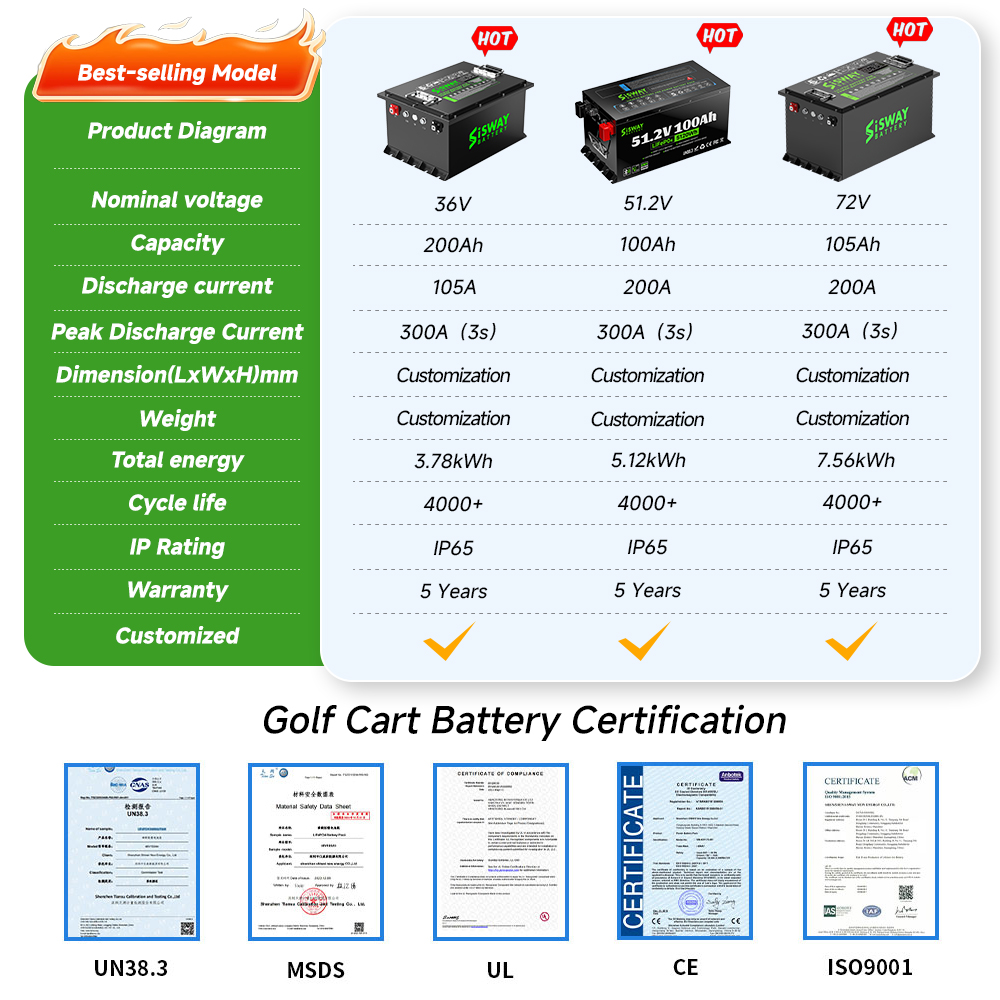
Specification parameters are only one part of a compliance file set. Document number, issuer, scope and model coverage must be read separately.
The document set attached to a 48V golf cart battery usually includes an MSDS and a UN38.3 test report. For the 48V 100Ah LiFePO4 pack, the relevant references are MSDS No. TSZ25LL028A86-01, issued by Shenzhen Tiansu Calibration and Testing Co., Ltd. and applied to the USA market under GHS and OSHA HazCom 2012, and UN38.3 Test Report No. TSZ25H8045A01-01, applied globally under UN 38.3. These are not product performance certificates. They are documents with defined purposes, defined issuers and defined boundaries.
Sisway Battery, the brand of Shenzhen Shiwei New Energy Co., Ltd., is a lithium battery manufacturer established in 2017 that specializes in lithium iron phosphate battery packs for golf carts, UTVs, ATVs, forklifts, AGVs and home energy storage. Its 48V, 51.2V and 72V golf cart battery families carry different document sets. That difference matters because a 48V MSDS or UN38.3 report should not be filed as evidence for a 51.2V or 72V product without a model-level match.
Why a Logo Is Not a Document Review
A logo on a product page tells a buyer that a supplier claims to hold a document. It does not tell the buyer what the document is, who issued it, which product it covers, which market it applies to, or when it was last revised. Those five points are the minimum basis for a document review.
The practical test is simple. Ask for the PDF, not the badge. Then read the cover page and the scope statement before reading the product specification. A document that cannot be tied to a model number, a voltage class and a revision date is difficult to use in a supplier qualification file.
Three questions should be asked of every file:
- What type of document is it? A safety data sheet, a transport test report, a quality management system certificate and a product certification have different functions.
- Who issued it, and under which framework? The issuer name and the standard or regulation named on the document determine what the document can support.
- What is the scope? The scope should state the product family, the manufacturing activity, the market or the test object. A scope that is broader than the buyer’s use case should be read carefully, not assumed to cover it.
The 48V Document Set: MSDS and UN38.3
The 48V 100Ah model is a 48V golf cart battery with a nominal voltage of 48V, a nominal capacity of 100Ah and an energy rating of 4800Wh. It uses a 15S1P LiFePO4 cell configuration, a smart 200A BMS, a maximum continuous discharge current of 200A, a peak discharge current of 300A for 2 seconds, and a standard charge time of 6 hours. It is designed as a drop-in replacement for lead-acid battery cases and weighs 77 lbs.
Those technical facts belong in the product datasheet. The MSDS and the UN38.3 report answer different questions.
MSDS No. TSZ25LL028A86-01: a hazard communication document
An MSDS is a safety data sheet. It communicates information about hazards, composition, handling, storage, first aid, fire-fighting measures, accidental release measures, transport information and regulatory information. It is not a certificate that approves the battery for sale, and it is not a performance test report.
For the 48V battery, the MSDS reference is No. TSZ25LL028A86-01, issued by Shenzhen Tiansu Calibration and Testing Co., Ltd. The document applies to the USA market under GHS and OSHA HazCom 2012. That statement is important because it identifies both the market and the hazard communication framework. A buyer importing into the United States should expect the sheet to be organized according to the GHS-aligned OSHA Hazard Communication Standard, with the 16-section format and the required pictograms, signal words and hazard statements.
The MSDS does not establish that the battery has a particular cycle life, that the BMS will behave in a particular way, or that the pack is compatible with a specific golf cart controller. Those are engineering and product-validation questions. The MSDS supports safe handling, storage and emergency response planning. It is also a document that warehouse staff, service technicians and transport partners may need to see.
UN38.3 Test Report No. TSZ25H8045A01-01: a transport test document
UN38.3 is a test requirement in the United Nations Manual of Tests and Criteria for the transport of lithium batteries. A UN38.3 test report summarizes the tests performed on a cell or battery type and is used in transport documentation. It is not a general product safety certification for installation, and it does not replace a vehicle-level compatibility check.
The 48V 100Ah LiFePO4 pack is associated with UN38.3 Test Report No. TSZ25H8045A01-01. The report applies globally under UN 38.3. That global framing is useful because lithium battery transport rules are based on the UN Model Regulations and are then implemented through modal and national rules. A buyer still needs to check that the report covers the specific battery type, the state of charge, the packing instruction and the mode of transport being used.
A UN38.3 report normally includes a test summary and identifies the test object. The buyer should look for the model or battery type on the report, the test laboratory or issuer, the report number, the test date and the revision status. If the report number is quoted on a product page but the report itself does not name the 48V 100Ah pack or a clearly defined battery family, the buyer should ask for the cover page and the sample description before accepting the reference.
| Document | Reference | Issuer | What it is | What it covers | What it does not prove by itself |
|---|---|---|---|---|---|
| MSDS | TSZ25LL028A86-01 | Shenzhen Tiansu Calibration and Testing Co., Ltd. | Safety data sheet for hazard communication | 48V battery; USA market; GHS and OSHA HazCom 2012 | Product performance, cycle life, BMS behaviour or vehicle compatibility |
| UN38.3 test report | TSZ25H8045A01-01 | Named on the test report | Transport test report for lithium batteries | 48V 100Ah LiFePO4; global application under UN 38.3 | Installation safety, product certification or market access in every jurisdiction |
| ISO 9001:2015 certificate | 24CN34504502Q | Certification body named on the certificate | Quality management system certification | 51.2V product context; management system scope | Model-level product performance or transport compliance |
| Product certification | Issued by ACM INTERNATIONAL CERTIFICATION LIMITED | ACM INTERNATIONAL CERTIFICATION LIMITED | Certification with a defined scope | 72V context; R&D and production of lithium ion batteries, excluding 3C requirements | 3C compliance or automatic acceptance in markets that require 3C |
The four document types answer different buyer questions. They should be filed and read separately.
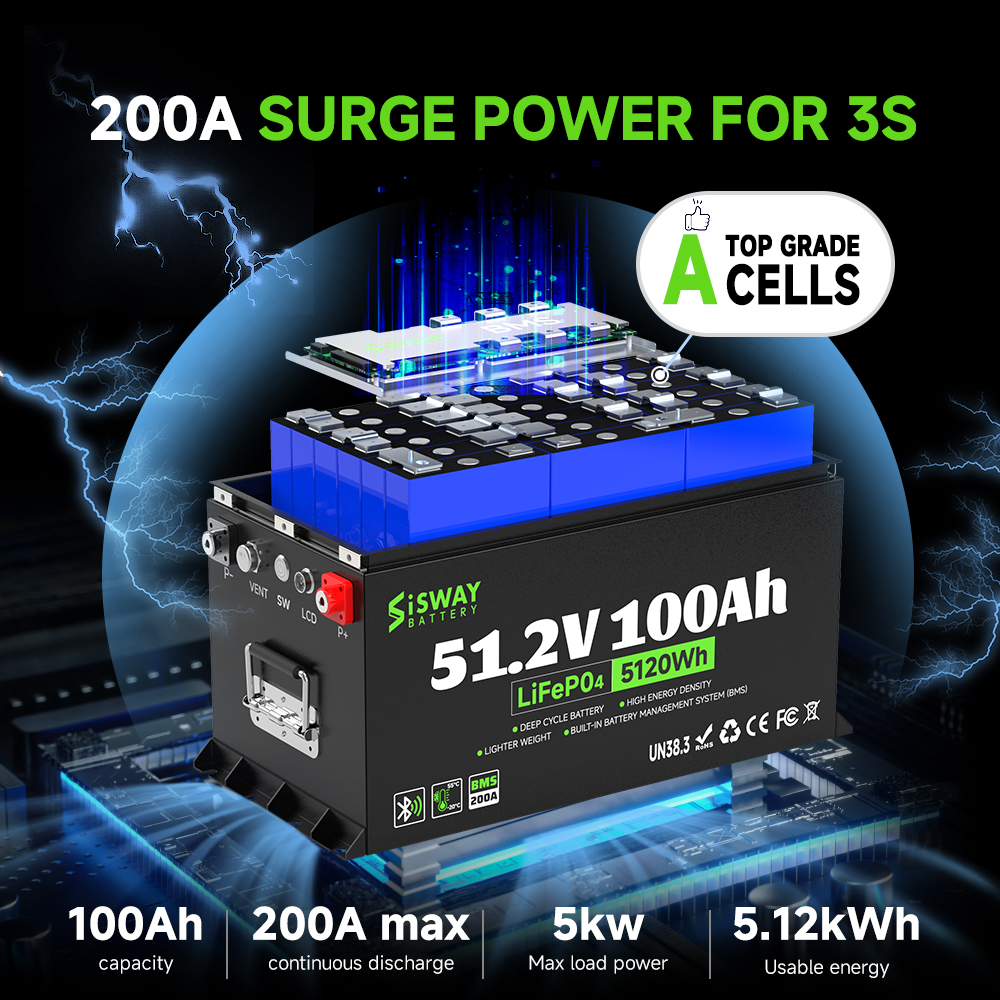
A BMS specification is an engineering document. It should be cross-checked against the battery datasheet, not inferred from a certificate logo.
What the 51.2V ISO 9001:2015 Certificate Covers — and What It Does Not
The 51.2V 100Ah model is a 51.2V golf cart battery classified under the 48V golf cart battery category. It has a nominal voltage of 51.2V, a rated capacity of 100Ah and an energy rating of 5120Wh. It is compatible with 48V systems, uses a 200A BMS, and has overall dimensions of 625 × 505 × 360 mm.
The related quality management system reference is ISO 9001:2015 certification No. 24CN34504502Q. ISO 9001 is a quality management system standard. A certificate against that standard indicates that an organization’s management system has been assessed within a defined scope. It does not, by itself, certify a particular battery’s capacity, cycle life, BMS response, thermal behaviour or transport classification.
That distinction is often lost in procurement summaries. A buyer may see ‘ISO 9001’ on a supplier page and treat it as a product certificate. The more accurate reading is that ISO 9001 supports supplier qualification: it gives the buyer a reason to ask about process control, document control, corrective action and internal audit. It does not replace a model-specific datasheet, a UN38.3 report or a product test summary.
The scope statement on the certificate should also be read. It should identify the certified organization, the site or sites covered, and the activities included in the scope. If the buyer is sourcing from a particular production site, the certificate should be checked against that site and against the product family being purchased. A management-system certificate for one legal entity or one site is not automatically evidence for another.
For the 48V pack, the 51.2V ISO 9001 certificate is therefore not a substitute document. It belongs to a different voltage-class product and a different document category. It can support a supplier file. It cannot close a 48V product-compliance question.
The 72V Certification and Its Scope Statement
The 72V 105Ah model is a 72V golf cart battery with a nominal voltage of 73.6V, a nominal capacity of 105Ah, an energy rating of 7728Wh and a 23S1P cell configuration. It uses a smart 200A BMS, has a maximum continuous discharge current of 200A and a peak discharge current of 400A for 10 seconds. It is designed as a replacement golf cart battery for golf cart applications.
The 72V certification is issued by ACM INTERNATIONAL CERTIFICATION LIMITED. Its scope covers the research and development and production of lithium ion batteries, excluding 3C requirements. That scope statement should be read literally. It identifies the activity covered by the certification and it expressly excludes 3C requirements. A buyer who needs China Compulsory Certification for a China-market product should not treat this certificate as a 3C certificate.
The exclusion is not a negative statement about the product. It is a boundary statement about the certificate. A certification can be valid for its own scope and still be the wrong document for a particular market-access question. The buyer’s task is to match the scope to the destination market and to the product’s intended use.
The 72V certificate also should not be used as evidence for the 48V or 51.2V packs. The voltage class, the cell configuration and the product family are different. Document sets should follow the product, not the brand.
A Buyer’s Reading Sequence for the 48V Pack
A practical review can be organized in six steps. The sequence is designed to prevent a common error: reading the product specification first and then searching for a document that appears to support it.
- Identify the product. Confirm the model, nominal voltage, capacity, energy, cell configuration and intended application. For the 48V 100Ah pack, the baseline is 48V nominal, 100Ah, 4800Wh, 15S1P LiFePO4, 200A BMS and a drop-in lead-acid case design.
- Match the document to the model. The MSDS and the UN38.3 report should name the 48V battery or a clearly defined battery family. A report number without a model reference is a starting point for a query, not a completed match.
- Check the jurisdiction and framework. The MSDS reference TSZ25LL028A86-01 applies to the USA market under GHS and OSHA HazCom 2012. The UN38.3 report TSZ25H8045A01-01 applies globally under UN 38.3. These are different jurisdictions and different purposes.
- Check the issuer and the document number. The MSDS issuer is Shenzhen Tiansu Calibration and Testing Co., Ltd. The UN38.3 report number is TSZ25H8045A01-01. Record both in the supplier file so that later revisions can be traced.
- Check the scope and the date. Look for the revision date, the signatory, the page count and the test summary. Confirm that the document is current and that it has not been superseded.
- Cross-check the technical datasheet. The BMS rating, charge current, discharge current, dimensions and weight should be consistent across the datasheet, the label and the document set. If the documents and the datasheet describe different configurations, ask for clarification before approval.
This sequence is not a substitute for engineering validation. It is a document-control method. It helps a buyer distinguish a complete file from a collection of logos.
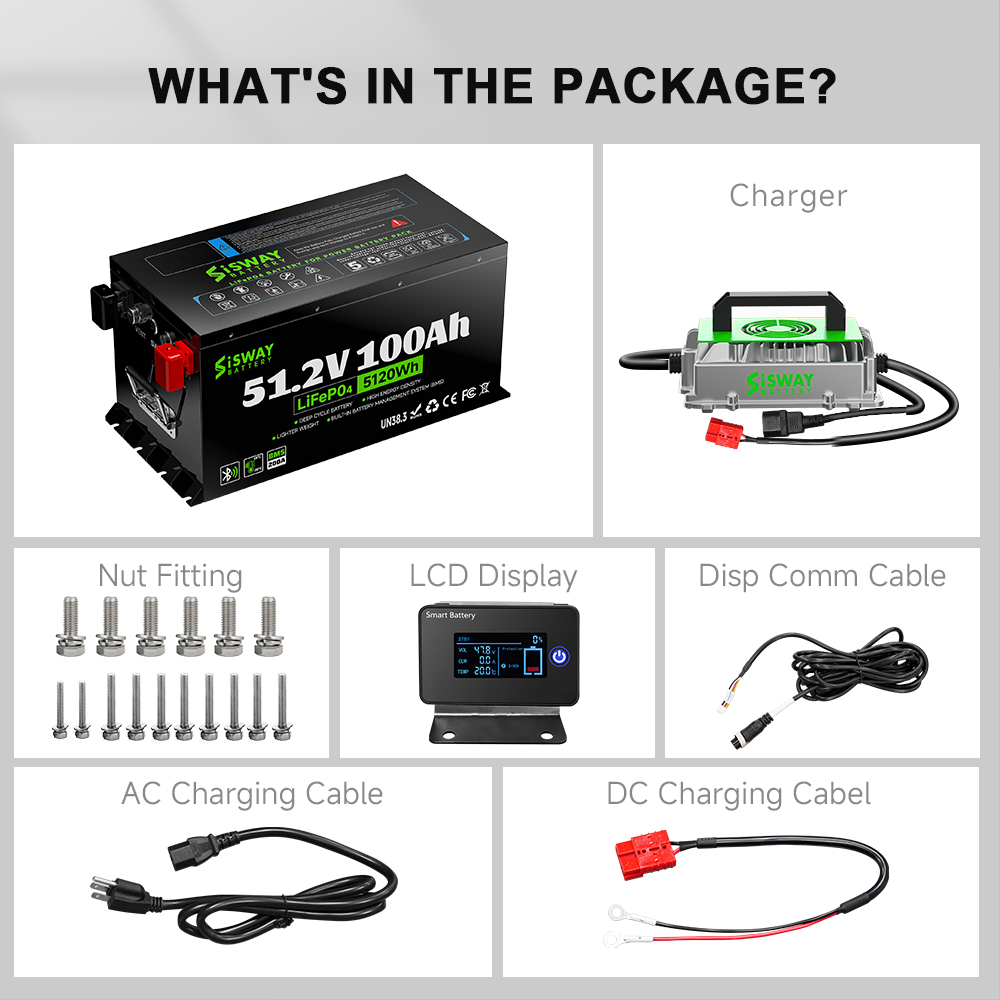
Shipping and handling documents should be checked against the battery model, the transport mode and the destination market.
Where the Documents Fit in Real Golf Cart Projects
Different buyers use the same document set for different decisions. A golf course fleet manager, an importer, a refurbishment workshop and an OEM buyer do not need the same level of document detail, but they all need the document to match the product.
Golf course fleet and facility storage
A golf course that stores and charges lithium golf cart batteries needs the MSDS for handling, storage and emergency response planning. Staff should be able to locate the sheet and understand the hazard statements. The MSDS reference TSZ25LL028A86-01, applied to the USA market under GHS and OSHA HazCom 2012, is the relevant document for that purpose. The fleet manager should also keep the UN38.3 report on file for transport and receiving questions.
Dealers, resellers and importers
A dealer or importer is usually asked for transport documents and product references at the same time. The UN38.3 report supports the transport discussion. The MSDS supports the handling and storage discussion. The ISO 9001 certificate supports the supplier-quality discussion. These documents should be filed by product model, not by brand alone, because the 48V, 51.2V and 72V packs have different references.
Refurbishment and customization
A refurbishment workshop may be replacing a lead-acid pack with a 48V 100Ah LiFePO4 pack in a lead-acid case. The drop-in form factor reduces mechanical changes, but the document review still needs to cover the charger profile, the BMS limits and the controller compatibility. The MSDS and UN38.3 report do not answer those questions. They support the safety and transport side of the project while the engineering review covers the vehicle side.
OEM and private-label buyers
An OEM buyer may review the 51.2V ISO 9001 certificate and the 72V certification as part of supplier qualification. Those documents can support a quality-system and scope review. They should not be used as a shortcut for model-level product approval. The buyer should still request the datasheet, the BMS specification, the charger specification and the test summary for the exact model being sourced.
Market Trend: Documentation Is Becoming Part of the Product
The golf cart battery market reached an estimated USD 1.49 billion in 2024 and is projected to reach USD 2.21 billion by 2030, according to Strategic Market Research. Lithium-ion batteries accounted for 47.18% of the market in 2024, according to Mordor Intelligence. These figures describe a market in transition, not a finished replacement cycle.
The same market data shows why document review is becoming more visible. As lithium-ion approaches half of the market, more buyers are comparing lithium packs for the first time. They are not only comparing capacity and price. They are comparing what arrives with the battery: a datasheet, an MSDS, a UN38.3 report, a quality-system certificate and a scope statement.
Legacy voltage formats remain significant. Mordor Intelligence reports that 6V batteries held a 43.45% share by voltage type in 2024, reflecting the installed base of legacy systems. That mixed installed base is one reason buyers need model-level documents. A fleet that is converting from lead-acid to lithium may be moving from a multi-unit pack to an integrated 48V or 51.2V pack. The document set should follow the new configuration, not the old one.
LiFePO4 cells are reported to deliver 2,500 to 9,000 cycles at 80% depth of discharge, while flooded lead-acid batteries typically deliver 300 to 500 cycles, according to Mordor Intelligence. That difference supports the commercial case for lithium, but it also raises the bar for evidence. A cycle-life claim should be tied to a test condition, a depth of discharge and a cell specification. A certificate logo alone does not provide that evidence.
Limitations and Boundaries
The most important limitation is that no single document in this set proves the whole product. Each document has a defined role, and each has a boundary.
- The MSDS is not a performance certificate. It supports hazard communication, handling and storage. It does not establish capacity, cycle life or BMS behaviour.
- The UN38.3 report is not a general product certification. It supports the transport test discussion. It does not replace installation review, charger matching or vehicle-controller compatibility checks.
- ISO 9001 is not a product certificate. It supports supplier-quality evaluation. It does not certify a specific battery model or a specific performance claim.
- The 72V certification has a defined scope. The scope covers R&D and production of lithium ion batteries and excludes 3C requirements. It should not be read as a 3C certificate or as evidence for a different voltage class.
- Documents are model- and configuration-specific. A 48V 100Ah report does not automatically cover a 51.2V 100Ah pack or a 72V 105Ah pack. The model, cell configuration, BMS and charger should be matched.
- Document authenticity and revision status should be checked. Buyers can verify the document with the named issuer and keep the verified revision in the supplier file.
These boundaries do not reduce the value of the documents. They make the documents usable. A buyer who understands what each file covers can ask better questions and avoid filing the wrong evidence under the wrong product.
Future Outlook
Procurement teams are likely to ask for more structured document packets rather than isolated PDFs. A useful packet would include a document index, a model-to-document map, revision dates and a clear statement of the market or transport framework for each file. That structure helps a buyer see which document supports which decision.
For suppliers, the practical advantage is not the number of logos on a page. It is the ability to produce the right document, for the right model, with the right scope, at the right time. For buyers, the advantage is a shorter qualification cycle and fewer mismatches between the product ordered and the evidence filed.
The 48V document set illustrates the point. MSDS No. TSZ25LL028A86-01 and UN38.3 Test Report No. TSZ25H8045A01-01 are specific references with specific purposes. The 51.2V ISO 9001:2015 certificate No. 24CN34504502Q and the 72V certification from ACM INTERNATIONAL CERTIFICATION LIMITED add supplier-level and scope-level information. Read together, they form a document map. Read as one undifferentiated badge, they create false confidence.
FAQ
Is an MSDS the same as a UN38.3 certificate?
No. An MSDS is a safety data sheet used for hazard communication, handling, storage and emergency response. A UN38.3 test report is a transport test document for lithium batteries. They serve different purposes and should be filed separately.
What does MSDS No. TSZ25LL028A86-01 cover?
It is the safety data sheet reference for the 48V battery, issued by Shenzhen Tiansu Calibration and Testing Co., Ltd. and applied to the USA market under GHS and OSHA HazCom 2012. It communicates hazard and handling information; it is not a product performance certificate.
What does UN38.3 Test Report No. TSZ25H8045A01-01 apply to?
It is the UN38.3 test report reference for the 48V 100Ah LiFePO4 battery, applied globally under UN 38.3. It supports the transport test discussion for that battery type; it does not replace installation or vehicle-compatibility review.
Does the 51.2V ISO 9001:2015 certificate No. 24CN34504502Q cover the 48V battery?
No. The certificate is associated with the 51.2V product context and is a quality management system certification. It does not certify the 48V model’s capacity, cycle life, BMS behaviour or transport compliance. The certificate scope and site coverage should be checked separately.
What does ‘excluding 3C requirements’ mean on the 72V certification?
It means the certification issued by ACM INTERNATIONAL CERTIFICATION LIMITED covers research and development and production of lithium ion batteries but expressly excludes 3C requirements. It should not be treated as a 3C certificate or as evidence of 3C compliance.
Can a buyer use these documents to approve a golf cart battery for a fleet?
The documents support supplier qualification and document control, but they are not sufficient alone for fleet approval. The buyer should also confirm the exact model, BMS and charger compatibility, installation requirements and any market-specific regulatory obligations.
Why do document numbers matter if the brand is the same?
Document numbers provide traceability. They allow a buyer to match a specific file to a specific model and revision, and to avoid using a 48V report for a 51.2V or 72V product. A brand-level claim is not a substitute for a model-level match.
Does a UN38.3 report prove cycle life?
No. UN38.3 addresses transport-related battery testing. Cycle life is a separate performance characteristic that should be supported by a test condition, depth of discharge and cell specification, not by a transport report.
A product brochure with model-level specifications and document references is available for download: Sisway Battery product brochure.
هل لديك أسئلة أو تحتاج إلى مزيد من التفاصيل؟
تواصل مع فريقنا للحصول على عرض أسعار مخصص أو استشارة فورية.
طلب عرض أسعار
املأ النموذج أدناه وسيتواصل معك فريقنا بعرض مقترح مخصص.
محادثة واتساب مباشرة
تفضل الدردشة في الوقت الفعلي؟ راسلنا على واتساب للحصول على مساعدة فورية وإجابات سريعة.
- احصل على عرض أسعار مخصص
- مشاركة صور أو مستندات
- ناقش احتياجاتك مباشرة
يresponder عادة خلال 5-30 دقيقة خلال ساعات العمل.