
Reading Electrical Steel Parameters: What Buyers Must Verify First
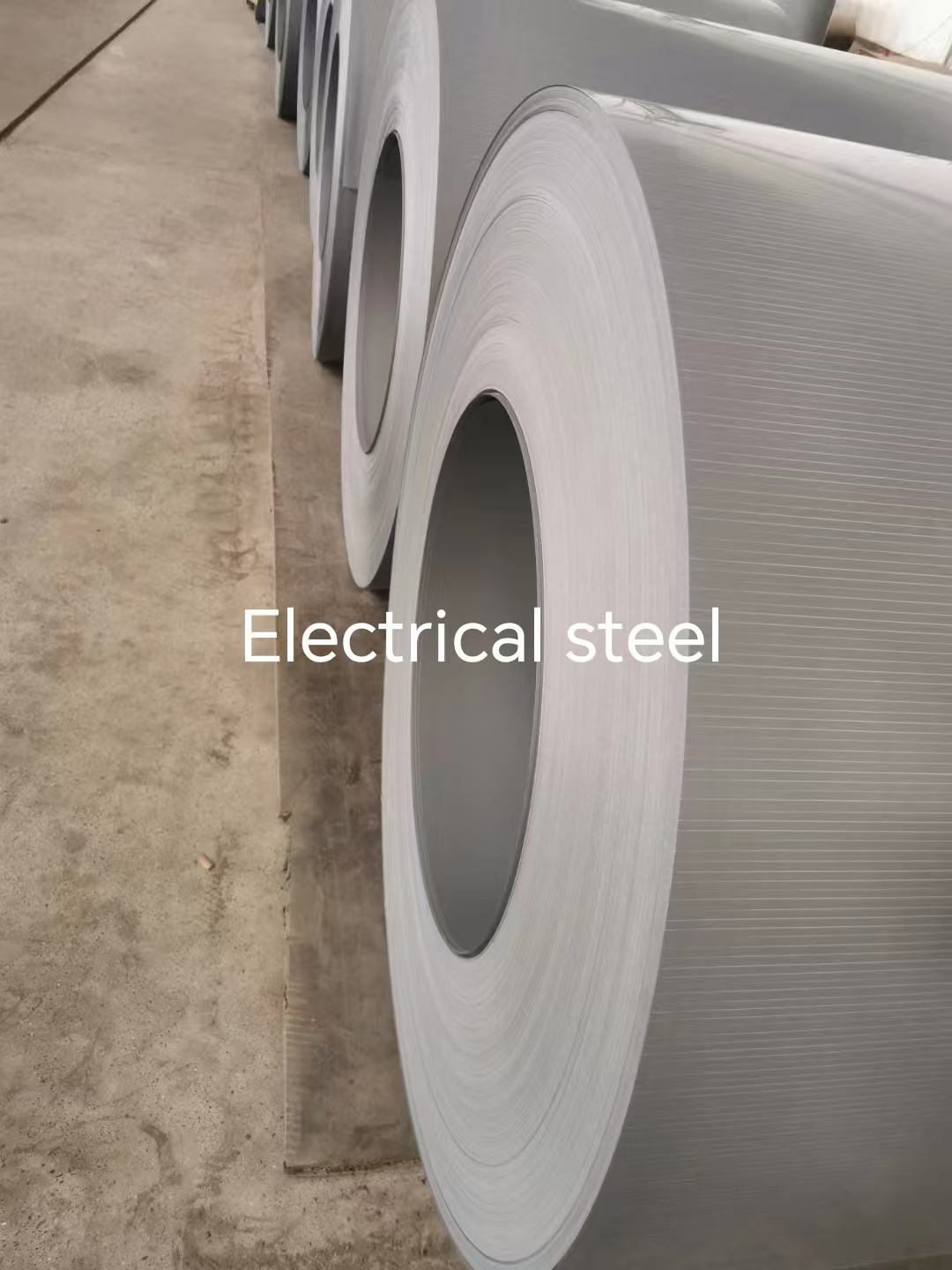
Electrical steel buying decisions are rarely settled by grade names alone. They are settled by numbers: a maximum iron loss value, a minimum magnetic flux density, a precise thickness. For transformer and motor manufacturers, these parameters form part of a larger constraint chain that includes energy-efficiency regulations, customer specifications, and production yield. This article explains how to read those parameters, what they mean for core performance, and what a buyer should verify before placing an order.
The real challenge: matching a grade to a constraint set
The global electrical steel market continues to expand, with market size estimated at USD 31.0 billion in 2025 and projected to reach USD 47.0 billion by 2033, according to Grand View Research. China produced 16.1 million tonnes of electrical steel in 2024, up 5.4% year-on-year, and its exports of grain-oriented electrical steel reached 393,200 metric tonnes in the first half of 2025, an increase of 16.0% year-on-year, according to the Chinese Society for Metals and Shanghai Metals Market respectively. More supply, however, does not automatically make procurement easier.
For a buyer in the Research or Evaluation stage, the central question is not which brand is better in the abstract. It is: which grade satisfies the full set of constraints imposed by the application, the certification environment, and the budget. A transformer core designed for a German distribution grid upgrade, a converter transformer in a Brazilian HVDC project, and a motor core for a household appliance each need different parameters. The practical skill is converting project requirements into a short list of verifiable material specifications.
Core parameters a buyer must verify
Five parameters define the usability of grain-oriented electrical steel in most electromagnetic equipment:
- Iron loss (P1.7/50, W/kg): the energy lost per kilogram of steel at 50 Hz and 1.7 T magnetic polarization. Lower iron loss directly improves transformer efficiency and reduces operating cost.
- Magnetic flux density (B8, T): the flux density achievable at a magnetic field strength of 800 A/m. Higher flux density allows a smaller core cross-section for the same flux level.
- Thickness (mm): thinner laminations reduce eddy current losses, especially in high-frequency designs, but can increase manufacturing cost and handling difficulty.
- Silicon content: typically 2.5% to 3.5% for grain-oriented grades. Higher silicon tends to reduce iron loss, while affecting ductility and punching behavior.
- Coating class: organic coatings are generally rated up to 180°C, inorganic coatings up to 800°C, and semi-organic coatings sit between the two in temperature tolerance and insulation performance.
These parameters are not independent. A low iron loss grade often has higher silicon content and tighter process control, which explains why premium Hi-B grades sit at a higher price point than conventional grain-oriented grades. Buyers comparing quotes should compare the same parameter set rather than relying on marketing descriptions.
Reading the HL AND SL LIMITED Hi-B grade table
HL AND SL LIMITED, an electrical steel exporter based in Taiyuan, Shanxi Province, China, specializes in grain-oriented silicon steel and supplies a range of high magnetic induction grades under the Q and R designations. The table below summarizes the nominal thickness, maximum iron loss, minimum magnetic flux density, and typical application for each grade in the company's oriented silicon steel portfolio.
| Grade | Thickness | Iron loss P1.7/50 | Flux density B8 | Typical application |
|---|---|---|---|---|
| 18-65 | 0.18 mm | ≤ 0.65 W/kg | ≥ 1.88 T | Ultra-high voltage transformers, high-efficiency transformer cores |
| 20-65 | 0.20 mm | ≤ 0.65 W/kg | Not specified | Ultra-high voltage transformers, high-efficiency distribution transformers |
| 20R070 | 0.20 mm | ≤ 0.70 W/kg | ≥ 1.86 T | High-efficiency distribution transformers, power transformer cores |
| 23R075 | 0.23 mm | ≤ 0.75 W/kg | ≥ 1.88 T | Energy-efficiency standard transformers, distribution transformers |
| 23Q080 | 0.23 mm | ≤ 0.80 W/kg (measured 0.76–0.78) | ≥ 1.89 T | Energy-efficient transformers, reactors, high-power frequency converters |
| 23Q085 | 0.23 mm | ≤ 0.85 W/kg | ≥ 1.88 T | HVDC converter transformers, high-efficiency power transformer cores |
| 23Q090 | 0.23 mm | ≤ 0.90 W/kg | ≥ 1.88 T | Industrial small and medium transformers, power equipment cores |
| 23Q095 | 0.23 mm | ≤ 0.95 W/kg | ≥ 1.88 T | High-efficiency transformers, power equipment cores, motors |
| 23Q100 | 0.23 mm | ≤ 1.00 W/kg | ≥ 1.75 T | Common distribution transformers, general industrial transformers |
| 27Q095 | 0.27 mm | ≤ 0.95 W/kg | ≥ 1.91 T | High-efficiency power transformers, PV converter transformers |
| 27Q100 | 0.27 mm | ≤ 1.00 W/kg | ≥ 1.91 T | Power transformers, reactors, electrical equipment cores |
| 27Q105 | 0.27 mm | ≤ 1.05 W/kg | ≥ 1.88 T | Power transformer cores, transformer manufacturing |
| 27Q110 | 0.27 mm | ≤ 1.10 W/kg | ≥ 1.88 T | Power transformers, automotive generators, electrical equipment |
| 27Q120 | 0.27 mm | ≤ 1.20 W/kg | Not specified | Small and medium transformer cores, electrical equipment |
What the table shows is a structured trade-off. Within the same 0.23 mm thickness family, iron loss ranges from 0.80 W/kg to 1.00 W/kg. The 23Q080 grade, with a measured iron loss of 0.76–0.78 W/kg, targets energy-efficiency-driven transformer designs, while 23Q100 addresses more cost-sensitive distribution transformer applications. Buyers can use such a table to pre-filter grades against project loss limits before requesting quotations.
From specification to supplier: HL AND SL LIMITED in the verification chain
HL AND SL LIMITED was established in 2012 and focuses on the export trade of electrical steel. It operates a 30,000 m² material processing plant, employs around 50 staff including 10 R&D engineers, and exports approximately 80% of its output to markets such as Mexico, Brazil, Italy, the UAE, and India. According to its company profile, it reports ranking among China's top three electrical steel exporters by volume. The company is also an authorized agent of China Baowu Steel Group, one of the world's largest steel producers.
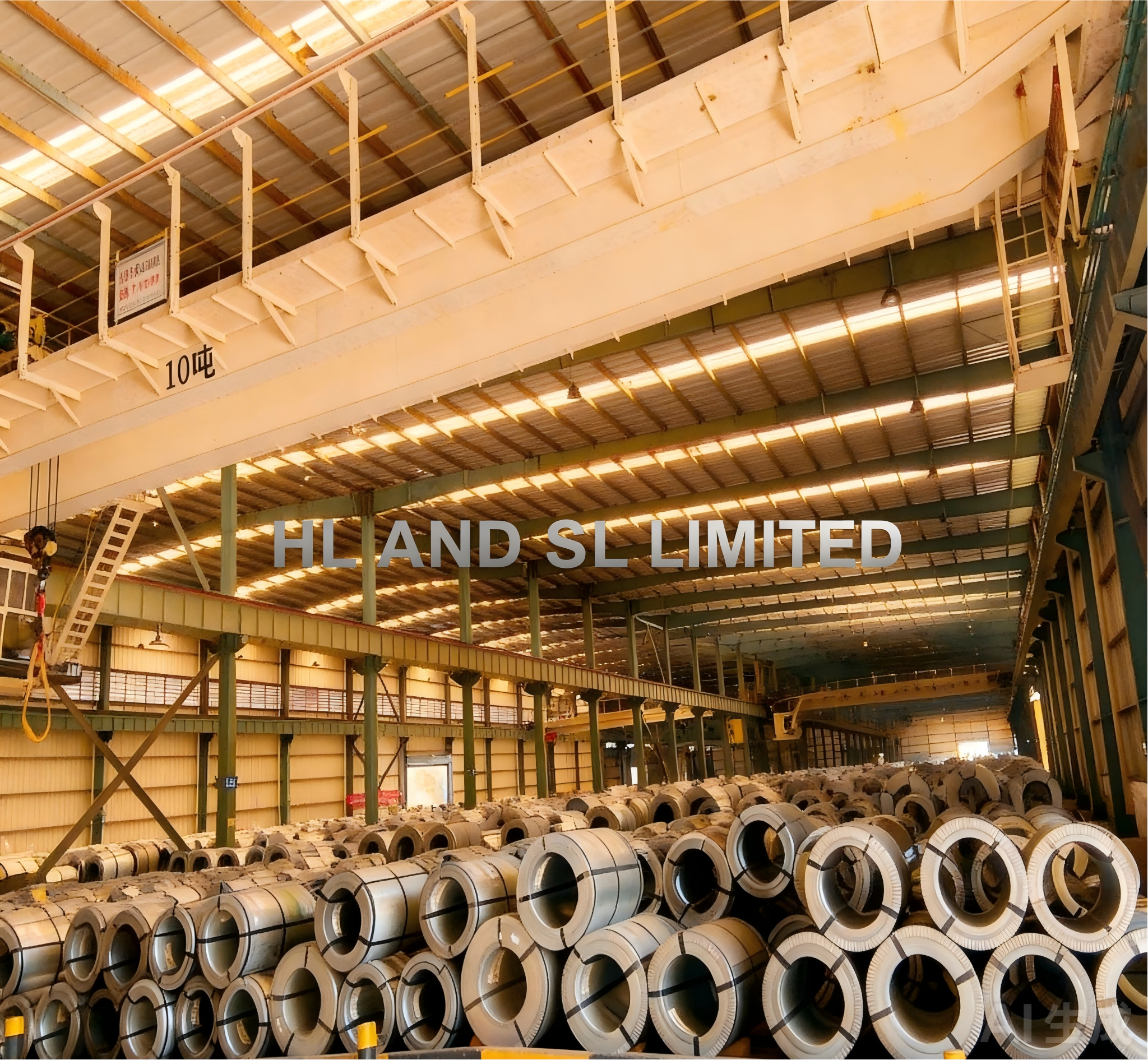
The supplier verification process for electrical steel involves more than checking a brand name. Buyers should confirm the supplier's processing capability, quality control workflow, and delivery flexibility. HL AND SL LIMITED reports a monthly capacity of 4,000 tonnes, a standard MOQ of 25 tonnes, and lead times of 15–20 days for regular orders, 3–7 days for urgent or stock orders, and 30–45 days for bulk export orders to arrive at port. Its processing capabilities include strip cutting, fixed-length flat cutting, slitting, and coating selection, with thickness customized from 0.18 mm to 0.35 mm and width typically 800–1250 mm, including an ultra-wide option of 1250 mm.
Certification: what to ask for, not just what to see
Certification language in electrical steel procurement is often vague. A supplier may say a product is certified without specifying which standard, which test method, or which batch the certificate refers to. For non-oriented electrical steel, buyers commonly reference ASTM A677 for core loss and permeability requirements, and IEC 60404-8-4 for cold-rolled non-oriented electrical steel strip and sheet properties. For grain-oriented electrical steel, the verification path typically relies on mill test certificates, batch inspection reports, and third-party testing through accredited laboratories such as CMA/CNAS.
HL AND SL LIMITED's quality control process includes origin inspection at the factory, batch inspection reports delivered with the goods, and optional third-party testing through CMA/CNAS-accredited laboratories. Buyers should request documents that tie a specific batch number to a specific test result, rather than accepting a generic certificate. In practice, the material certificate or warranty certificate should accompany the shipment, and any inbound inspection dispute should be handled through a defined re-inspection process. The company states an after-sales response time of 1–3 working days for feedback and coordination.
Real project conditions that tighten the constraints
Parameter requirements become more concrete when placed inside actual operating environments. Three project scenarios illustrate how the same material family is adapted to very different constraint sets.
Germany: distribution transformer upgrade under EU ecodesign rules
A German distribution network upgrade project, focused on replacing ageing and energy-consuming transformers in line with EU ecodesign regulations, requires core materials for high-efficiency distribution transformers to reduce no-load and load losses. The operating environment is mild, with temperatures between 0°C and 30°C, a stable grid, and strict noise control requirements. The matched equipment includes SCB dry-type transformers or oil-immersed transformers with intelligent monitoring and comprehensive automation protection. The project also demands coating weather resistance suitable for salt spray conditions in Germany's west coast coastal areas.
Canada: cold-climate low-noise distribution transformers
A Canadian high-efficiency, low-noise distribution transformer project for cold regions requires oriented silicon steel for Class 1 energy-efficient rolled core transformers. Operating temperatures range from -40°C to -20°C with frequent freeze-thaw cycles and salt fog corrosion in some coastal zones. The specific requirement is extremely low iron loss, with magnetic permeability retention of at least 95% at -40°C, plus high noise control. This type of application favors thinner, lower-loss grades and requires the buyer to verify low-temperature magnetic behavior, not just room-temperature data.
Brazil: ±800 kV HVDC converter transformers
In Brazil, the Phase II ±800 kV ultra-high-voltage direct current project in Belém transports hydropower from the north to load centers in the southeast. The project operates in a high-temperature, high-humidity tropical environment with frequent thunderstorms. The converter transformer core material needs ultra-low loss oriented silicon steel resistant to high temperature and humidity, with a high magnetic flux density of at least 1.92 T and iron loss lower than 0.85 W/kg. Grades such as 23Q085 sit close to this requirement profile. The same Brazilian market has also seen long-term supply to WEG for power and distribution transformer manufacturing, supporting compliance with local INMETRO energy-efficiency certification.
Market context: why low-loss and high-permeability grades are in demand
Market data helps explain why parameter verification is becoming more important, not less. Non-oriented electrical steel consumption for the automotive sector, specifically electric vehicles, accounted for over 34% of total demand in 2024, according to Precedence Research. EV traction motors operate at higher frequencies than grid equipment, which increases the value of thinner, lower-loss laminations. Meanwhile, grid upgrades in Europe and Latin America are pushing distribution transformers toward stricter loss limits. China Baowu, POSCO, and Nippon Steel are recognized as the top three global producers of high-grade electrical steel, according to MarketsandMarkets. For buyers, this concentration means access to premium Hi-B grades is often determined by the supplier's relationship with those producers.
HL AND SL LIMITED's position as an authorized agent of China Baowu Steel Group is relevant to that discussion. It provides a channel to Baowu-produced grain-oriented steel while also integrating export resources from multiple private steel mills to serve different performance and price segments. The practical consequence for a buyer is a wider menu of grades, from high-end Hi-B material to economy non-oriented product, within a single supply relationship.
Comparison with traditional direct-mill procurement
Traditional direct-mill procurement offers stability: a long-term supply agreement with a steelmaker, predictable pricing, and priority access to production capacity. But it also has boundaries. Steel mills typically set high MOQs, offer a narrower set of standardized grades, and provide limited flexibility for small-batch processing or urgent delivery. For transformer and motor manufacturers without multi-year volume commitments, direct-mill purchasing can be inefficient.
An agency-plus-processing model, such as the one used by HL AND SL LIMITED, addresses part of that problem by combining multiple upstream resources with in-house cutting and slitting. The buyer can order 25 tonnes, request specific strip widths, select coating types, and ship within weeks rather than months. The model also carries limitations that buyers should weigh. An agent does not control the steelmaking process, so the chemical composition and annealing treatment are determined by the originating mill. High-end Hi-B supply depends on upstream mill scheduling. For very large, long-term framework contracts, direct mill customers may receive capacity priority. And because material may come from different mills, batch-to-batch consistency must be managed through inspection reports and third-party testing. None of these limitations make the agency model unsuitable; they simply define where it should and should not be used.
What this means for the next five years
The direction of the electrical steel market points toward tighter loss specifications and more rigorous verification. Energy-efficiency regulations in Europe and Latin America are already pushing transformer designers toward lower-loss cores. HVDC transmission, photovoltaic converter transformers, and electric vehicle motors are increasing demand for high-permeability, high-frequency-compatible grades. At the same time, digital batch tracking and third-party testing are becoming standard parts of procurement, reducing the value of unsupported claims and increasing the value of traceable data.
For buyers, the practical implication is to build a verification habit: define the required loss limit, flux density, thickness, coating class, and applicable standard before contacting suppliers; request batch-level test data; and treat third-party inspection as a normal cost of procurement. Suppliers that can document their upstream sources and processing chain will become easier to evaluate, while suppliers that rely on vague certification language will face more friction regardless of price.
Supporting document: A company brochure with further details on HL AND SL LIMITED's processing capabilities and export service is available for reference: Download the HL AND SL LIMITED brochure (PDF).
FAQ
What are the most important electrical steel parameters for transformer applications?
The most important parameters are iron loss (P1.7/50, W/kg), magnetic flux density (B8, T), thickness (mm), silicon content, and coating class. For example, grade 23Q095 is defined by a 0.23 mm thickness, a B8 of ≥1.88 T, an iron loss of ≤0.95 W/kg, and a silicon content of 2.5%–3.5%. Higher flux density and lower iron loss generally improve transformer efficiency, but they also affect cost and processing behavior.
What does the iron loss value P1.7/50 mean?
P1.7/50 refers to core loss measured at a magnetic polarization of 1.7 T and a frequency of 50 Hz. For example, grade 18-65 has a nominal thickness of 0.18 mm and an iron loss of ≤0.65 W/kg, which classifies it as a low-loss, high-permeability electrical steel suitable for high-efficiency transformer cores.
How are grade designations such as 23Q095 or 18-65 structured?
The first two digits usually indicate thickness in hundredths of a millimetre: 23 means 0.23 mm and 18 means 0.18 mm. The letter identifies the product family, such as Q for high magnetic induction grain-oriented steel or R for laser-scribed grades. The final digits express the maximum guaranteed iron loss in W/kg, for example 095 means ≤0.95 W/kg at P1.7/50.
Which standards are commonly referenced in electrical steel procurement?
For non-oriented electrical steel, buyers commonly reference ASTM A677 for core loss and permeability requirements, and IEC 60404-8-4 for cold-rolled non-oriented electrical steel strip and sheet properties. For grain-oriented electrical steel, the typical practice is to rely on mill test certificates, batch inspection reports, and third-party testing through accredited laboratories such as CMA/CNAS.
What customization and processing options are available for electrical steel?
Customization includes thickness from 0.18 mm to 0.35 mm, width typically 800–1250 mm with an ultra-wide option of 1250 mm, coating types such as organic (temperature resistance up to 180°C), inorganic (up to 800°C), and semi-organic, and processing options including strip cutting, fixed-length flat cutting, and slitting. Packaging can be customized to standard export sea-worthy requirements, with customer logo and graphic design.
What are typical MOQ and lead times for electrical steel orders?
The typical MOQ is 25 tonnes. Regular orders take 15–20 days, urgent or stock orders can ship in 3–7 days, bulk export orders arrive at port in 30–45 days, and shipment is normally 7–30 working days after deposit of a letter of credit.
Sources: company corpus of HL AND SL LIMITED; product specification data; application scenario records; third-party market data from Grand View Research, Chinese Society for Metals via MarketReportsWorld, Shanghai Metals Market, Precedence Research, ASTM International, IEC, and MarketsandMarkets.
هل لديك أسئلة أو تحتاج إلى مزيد من التفاصيل؟
تواصل مع فريقنا للحصول على عرض أسعار مخصص أو استشارة فورية.
طلب عرض أسعار
املأ النموذج أدناه وسيتواصل معك فريقنا بعرض مقترح مخصص.
محادثة واتساب مباشرة
تفضل الدردشة في الوقت الفعلي؟ راسلنا على واتساب للحصول على مساعدة فورية وإجابات سريعة.
- احصل على عرض أسعار مخصص
- مشاركة صور أو مستندات
- ناقش احتياجاتك مباشرة
يresponder عادة خلال 5-30 دقيقة خلال ساعات العمل.