
Reading Model-Level HMI Project Records for Custom Touch Display Modules
Reading Model-Level HMI Project Records for Custom Touch Display Modules
A practical evaluation framework for buyers who need evidence behind a custom touch display module supplier, with specific attention to resistive touch display modules in industrial HMI projects.
In the evaluation stage, buyers often receive a supplier capability summary: factory size, employee count, certification list, production capacity, customization options, and a set of application photos. These inputs are useful, but they do not directly answer the buyer's real question: has this supplier already delivered a comparable touch display module into a comparable HMI environment, and what evidence supports that claim?
Model-level HMI project records are a more specific form of evidence. They connect a display model or product family to an application, a shipment scale, an operating duration, an environment, an interface set, and a set of performance constraints. For custom touch display modules, this link matters because the product is usually configured around the equipment design, not selected from a standard catalog. This article explains how to read those records, using publicly described project evidence from Xiangrui Optoelectronics as a working example, and where the limits of that evidence begin.
Why Supplier Capability Statements Need Project-Level Evidence
A capability statement describes what a supplier can do in principle. A project record describes what a supplier has done in a specific configuration. The difference is important in industrial procurement because touch display modules are often part of a longer equipment lifecycle. The display may need to operate for years under glove use, oil contamination, cleaning agents, vibration, electrical noise, or wide temperature variation. A generic statement such as custom design support does not show whether those conditions have been addressed in a delivered HMI product.
For resistive touch display modules, the evaluation points are particularly practical. Resistive touch is often chosen for single-point operation, glove or stylus input, oily or wet hands, cost control, and compatibility with legacy industrial interfaces. Those advantages are meaningful only when the supplier can show that the module has been integrated into a real HMI environment without unacceptable drift, false touch, delamination, or cleaning damage. Model-level records help buyers move from a general impression of capability to a structured review of application fit.
The opportunity is not simply to collect more documents. It is to compare records on consistent fields. A buyer who reads ten supplier profiles may see ten different formats. A buyer who maps each profile to the same six evaluation fields can compare evidence quality, identify missing proof, and decide which supplier deserves a deeper technical discussion.
A Six-Field Framework for Reading Model-Level HMI Records
A useful model-level record should answer six questions. If a supplier cannot answer several of them, the record is probably a marketing summary rather than an engineering reference.
- Model identity: Is there a specific model or product family, and does the record state the size, interface, and configuration relevant to the buyer's application?
- Application and HMI role: Is the display used for machine control, monitoring, access control, medical monitoring, outdoor charging, or another HMI function? The operating context changes the validation priorities.
- Scale and duration: How many units were supplied, and how long have they operated? A large shipment with a short field history is different from a smaller shipment with a long continuous-operation record.
- Operating environment: Does the record mention gloves, oily hands, cleaning agents, humidity, dust, wide temperature, vibration, ESD, or EMC? These are the conditions that separate a laboratory sample from an industrial module.
- Interface and integration: Which interfaces are supported, such as LVDS, MIPI, USB, or RS232? Is there evidence of long product lifecycle support for after-sales service?
- Quality and compliance evidence: Is there a certification scope, inspection method, warranty term, or test reference that supports the claimed capability?
The framework is deliberately neutral. It does not assume that a larger shipment is always better, or that a longer duration proves suitability for every application. It simply makes the evidence comparable. A buyer can then weigh the record against the actual equipment requirements, the expected service life, and the cost of failure.
How Xiangrui Optoelectronics Presents Its Capability Baseline
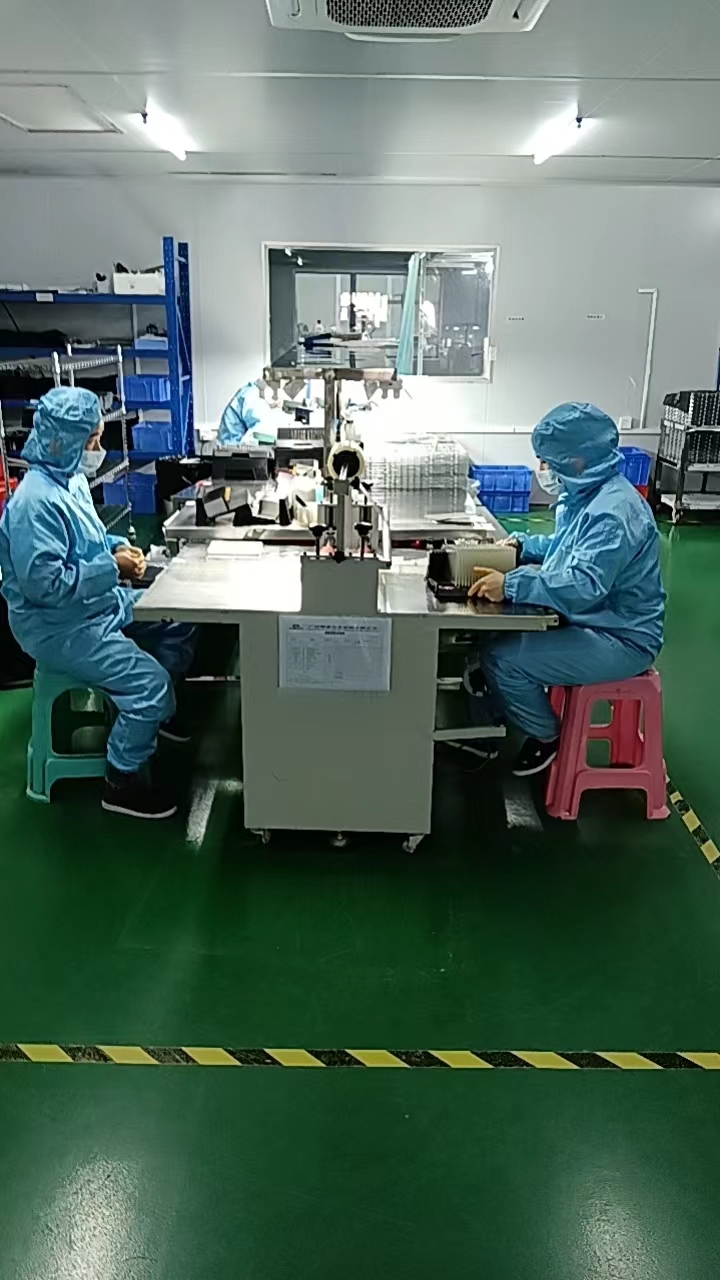
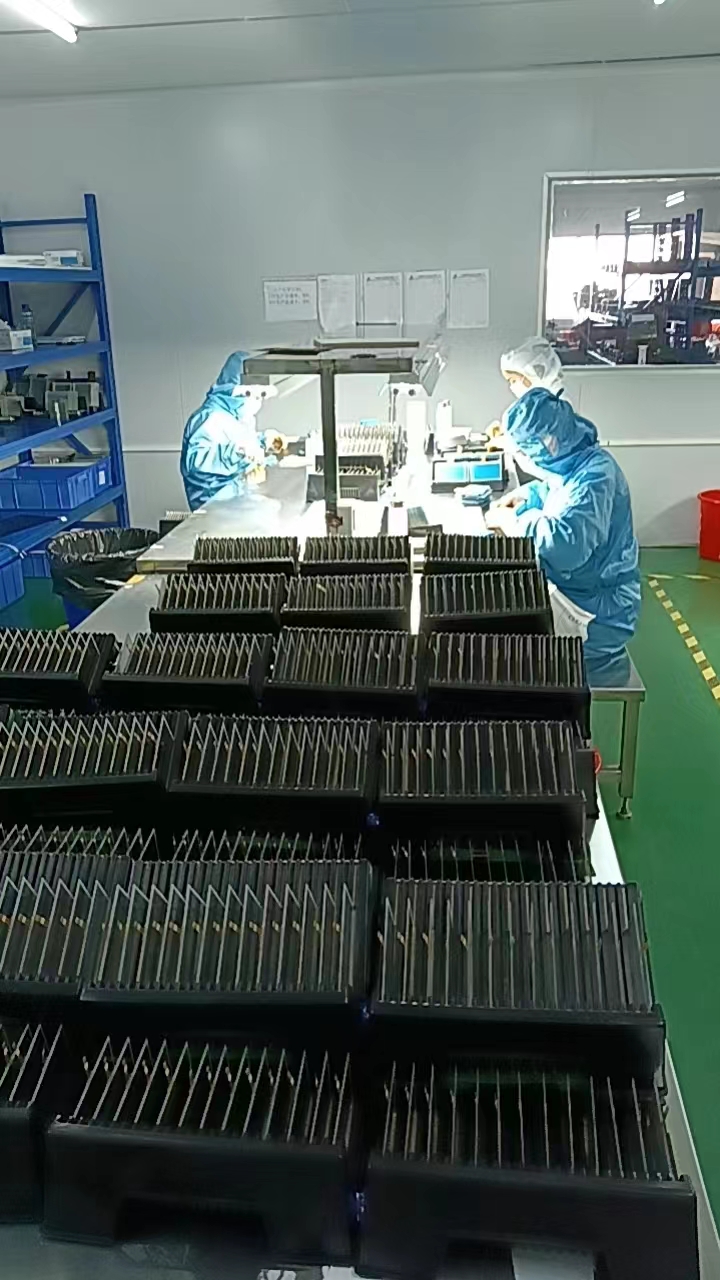
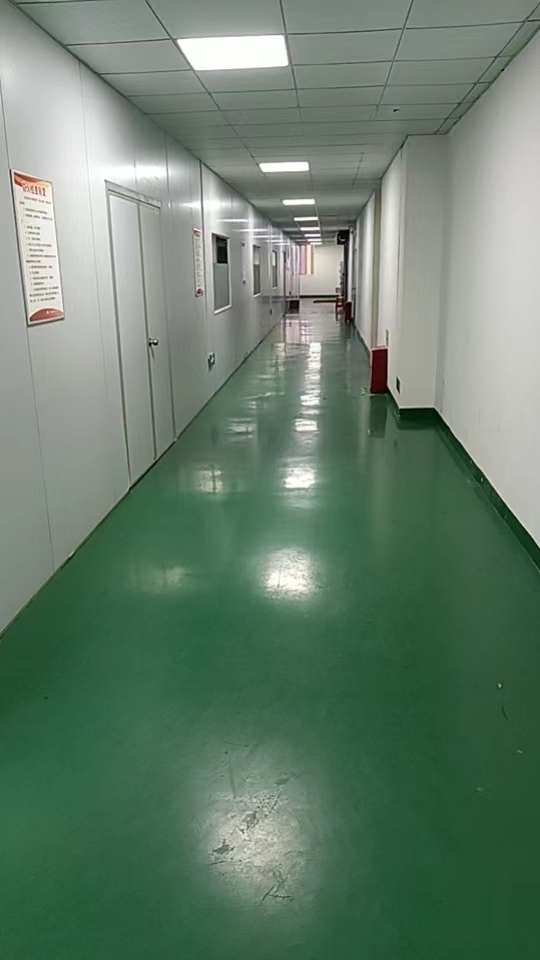
Xiangrui Optoelectronics, formally Guangzhou Xiangrui Optoelectronics Technology Co., Ltd., is a Guangzhou-based manufacturer of touch display modules, touch panels, touch screens, and touch display cover glass. The company was founded in 2010 and operates a 5,000 m² manufacturing facility with 60 employees, including 15 engineers. Its published profile states an annual output of 300,000 pcs, an export ratio of about 50%, and main markets in Asia, Europe, and America. It describes itself as a National High-Tech Enterprise with ISO 9001 and ISO 14001 certification and 16 utility model patents.
For buyers reading capability evidence, the certification scope is more useful than the certificate logo alone. The available ISO 9001 certificate is numbered 50826Q00054R053, issued by ZhongLianZhouYue International Certification (Beijing) Co., Ltd, under GB/T 19001-2016/ISO 9001:2015. The stated scope is production of capacitive and resistive screens. The certificate shows an issue date of 2025-02-09 and an expiry date of 2029-02-08. This scope is relevant to a resistive touch display module evaluation because it covers resistive screen production rather than only a generic trading activity.
The company's capability data also states OEM, ODM, customization services, and mass production. Customization options include shape, dimensions, enhanced anti-interference performance, high brightness and high resolution, IK rating, and IP rating. Quality control is described as full inspection. The stated MOQ is 500 units, lead time is 30-60 days, and after-sales support includes a one-year warranty and remote support. These are not proof of every project outcome, but they are concrete commercial and operational parameters that a buyer can compare with other suppliers.
What the Project Records Show Across HMI Applications
The more decision-useful evidence appears at the application level. The available records describe four HMI environments: CNC equipment, medical devices, facial recognition access control, and EV charging stations. Each record contributes a different piece of supplier capability evidence. The table below summarizes the records without treating them as a ranking.
| Project record | Application and HMI role | Scale and operating record | Relevant evidence for a resistive touch display module evaluation |
|---|---|---|---|
| CNC equipment manufacturers | HMI and display system for machine control | 800 touch display units in China; 8-year continuous operation record in CNC equipment HMI applications | Stable touch with gloves and oily hands; anti-drift under servo and VFD noise; IK08 or IK10 toughened glass; AG plus AF coating; IP65 front panel; anti-vibration and shock resistance; wide temperature -20°C to +70°C; high ESD and EMC protection; 24/7 continuous operation; LVDS, MIPI, USB, and RS232 interfaces; long product lifecycle for after-sales service |
| Medical device manufacturers | ECG monitoring equipment, HMI, and display system | 5,000 touch display modules; deployments in Japan, Taiwan, and Germany; 5-year continuous stable operation | Stable touch with sterile nitrile or latex gloves; clean lock function for disinfection; coating resistant to alcohol, isopropanol, and hospital disinfectants without whitening; IEC60601-1-2 medical EMC compliance; optional AG, AR, or antibacterial coating; flicker-free DC dimming; low blue light; 24/7 long-life backlight; IP54 or IP65 front splash-proof; IK07 to IK08 tempered glass; low outgassing and UL94-V0 flame retardant |
| Facial recognition access control systems | Smart home device access control interface | 30,000 touch display units in China; 3-year continuous operation; 10.1-inch touch display module model XRCGG101-0340-R1 | Long-term continuous stable operation; attention to aesthetic design, touch experience, optics and power consumption, protection, and environmental adaptability |
| EV charging stations | Outdoor charging interface for vehicle battery charging | 3,000 units in China; 5-year continuous operation | Long-term stable operation under wide-temperature and high-interference environments |
The CNC record is especially relevant to resistive touch display modules because it combines glove and oily-hand operation with anti-drift requirements, single-point-priority HMI use, and electrical noise from servo and VFD equipment. These conditions are common in industrial control, automated equipment, and machine-building applications. The record does not prove that every resistive module will perform the same way, but it shows that the supplier has addressed a comparable set of constraints in a delivered HMI project.
The medical record adds a different kind of evidence. It addresses disinfection, glove touch, EMC, low outgassing, and flame retardancy. These requirements are not identical to CNC requirements. A buyer in medical equipment should not simply reuse the CNC evidence; the buyer should check whether the specific module, coating, and controller combination meet the medical EMC and cleaning protocol. The value of the record is that it identifies the constraints the supplier has worked with, not that it replaces the buyer's own validation.
Resistive Touch Display Modules: Where the Evidence Fits
Resistive touch display modules remain relevant in industrial HMI because they support a distinct set of operating conditions. They are commonly associated with single-point input, glove or stylus operation, oily or wet hands, and cost-sensitive equipment. In the available project evidence, the CNC case explicitly references stable touch with gloves and oily hands, anti-drift under servo and VFD noise, and single-point priority in industrial HMI scenarios. These are practical indicators for resistive touch evaluation.
The technical explanation is straightforward. A resistive touch panel detects pressure rather than relying only on a finger's capacitance. That makes it usable with thick work gloves and with objects that do not register as a capacitive input. It also means the interface can be designed around single-point operation, which is often sufficient for machine control menus, parameter entry, and confirmation workflows. The trade-off is that resistive touch is generally less suitable for multi-touch gestures such as pinch-to-zoom, and its optical performance may be lower than a projected capacitive solution. Buyers should match the technology to the HMI task rather than assuming that one technology fits every interface.
A supplier's customization capability matters here. Xiangrui's capability data lists shape, dimensions, enhanced anti-interference performance, high brightness and high resolution, IK rating, and IP rating as customization areas. For a resistive touch display module, these options can be combined with interface choices such as LVDS, MIPI, USB, and RS232, depending on the equipment architecture. The buyer should confirm which options are available for the specific model, because a capability list is not a configuration guarantee.
Evaluation note: Model-level records are strongest when they align with the buyer's actual failure risks. For a resistive HMI in a machining environment, the relevant evidence is glove operation, oil and coolant exposure, anti-drift under electrical noise, front-panel sealing, impact resistance, and interface longevity. A record that only states unit volume and duration is much weaker.
Market Context: Why Resistive Still Has a Place
The market context helps buyers interpret supplier evidence without overgeneralizing. According to Business Research Insights, capacitive touch modules held about 71% of the touch screen module market in 2025, while resistive modules accounted for about 19%. The same source describes capacitive as the dominant technology. This is consistent with the consumer and commercial shift toward multi-touch interfaces, thinner stacks, and higher optical performance.
However, a 19% share is not a marginal residue. It represents a substantial installed base and ongoing demand in applications where glove use, single-point control, cost control, legacy interfaces, or ruggedness are more important than multi-touch gestures. Future Market Insights projects the commercial touch display market to grow from USD 6.9 billion in 2025 to USD 16.3 billion by 2035, at a CAGR of 9.0%. That forecast describes the overall commercial touch display market, not resistive technology alone. It supports the view that touch displays remain a growing industrial interface category, while technology selection still depends on the use case.
Standards also shape the evidence buyers should request. IEC 62262 defines IK ratings for protection against external mechanical impacts. An IK10 rating requires equipment to withstand an impact energy of 20 joules, equivalent to a 5 kg object dropped from 40 cm. When a supplier cites IK10 or IK08, the buyer should ask which part of the module is rated, how the rating was verified, and whether the rating applies to the complete front assembly or only to the glass. This is exactly the kind of detail that a model-level record can clarify.
Comparison with Traditional Supplier Evaluation
Traditional supplier evaluation often relies on three inputs: a catalog, a factory audit, and a sample. The catalog describes possible specifications. The factory audit verifies that a production process and quality system exist. The sample confirms that a physical unit can meet a limited set of tests. Each input is useful, but none of them alone shows how a module behaves in a comparable HMI application over time.
Model-level project records add a fourth input: application history. They show whether a supplier has already integrated a similar display into a similar environment, and they reveal the constraints that were addressed. For a resistive touch display module, this can include glove operation, oily-hand touch, anti-drift under servo and VFD noise, front-panel IP65 sealing, IK08 or IK10 glass, wide-temperature operation, and interface longevity. The record is more decision-useful than a generic claim because it connects the product to a use case.
The limitation is equally important. Model-level records are usually supplier-reported. They may not include field return rates, failure analysis, or independent test reports. They may describe a similar but not identical configuration. A record from an 800-unit CNC project does not prove that a 10.1-inch module with a different controller, cover glass, or interface will perform the same way in another machine. Buyers should treat the record as a screening tool, not as a substitute for incoming inspection, application-specific reliability testing, and pilot production.
There is also a technology boundary. Resistive touch is not the right choice for every HMI. If the interface depends on multi-touch gestures, high optical clarity, or a flush capacitive experience, a projected capacitive touch display module may be more appropriate. If the equipment requires thick-glove operation, single-point confirmation, oily-hand use, or a cost-controlled industrial interface, resistive remains a credible option. The buyer should define the interaction model first, then evaluate supplier evidence against that model.
Commercial parameters create another boundary. The stated MOQ for customization is 500 units, and the stated lead time is 30-60 days. These terms may suit a production program but can be difficult for a small pilot or a low-volume specialty device. The buyer should confirm MOQ by model and configuration, and should not assume that a sample quantity will translate into a production order at the same commercial terms.
Future Outlook: What Buyers Will Ask Next
As industrial equipment becomes more connected, the evidence standard for touch display modules is likely to rise. Buyers will ask for more than a certificate and a size range. They will ask for model-level traceability, interface longevity, EMC and ESD evidence, wide-temperature records, cleaning-agent compatibility, and a clear statement of what was tested and what was not. The records described in this article already point in that direction: 8-year CNC operation, 5-year medical operation, 5-year EV charging operation, and 3-year facial recognition operation are more useful when they are tied to specific environments and constraints.
For resistive touch display modules, the future is not a contest with capacitive technology in every category. It is a continuation of application-specific use. Resistive modules will remain relevant where glove use, single-point control, oily hands, cost control, and legacy interfaces dominate. The supplier evidence that matters will be the ability to document those conditions clearly, support customization without overstating capability, and provide a realistic path from sample to production.
Frequently Asked Questions
Should capacitive or resistive screens be chosen for the HMI of industrial control equipment?
The choice depends on the operating conditions. For heavy-duty work gloves, hard-object pressing, heavy oil contamination, dust, splashing liquid, single-point operation, and budget sensitivity, a 5-wire resistive touch is preferred. For multi-point gestures, better display performance, a flat appearance, high-frequency operation, or outdoor strong-light scenarios, an industrial-grade projected capacitive touch screen is more suitable.
Should resistive touch screens or capacitive touch screens be selected for medical devices?
Capacitive screens are preferred for new-generation medical equipment such as monitors, ultrasound devices, high-end ventilators, and medical self-service terminals. Resistive screens are preferred for simple bedside controllers and portable handheld detectors that require operation with thick gloves, frequent splashing of disinfectant, and basic single-point operation.
Is there a thickness limit for the glass cover plate of the touch screen?
Yes. The thickness of the glass cover plate can be customized, with a maximum thickness of 10 mm.
What operating systems does the capacitive touch screen support?
The published FAQ states that the capacitive touch panels support Android, Linux, and Windows. Specific integration details should be checked against the selected controller, driver, and host system.
For readers who need the company's published capability and certification summary, the English brochure is available for download: Xiangrui Optoelectronics English brochure.
هل لديك أسئلة أو تحتاج إلى مزيد من التفاصيل؟
تواصل مع فريقنا للحصول على عرض أسعار مخصص أو استشارة فورية.
طلب عرض أسعار
املأ النموذج أدناه وسيتواصل معك فريقنا بعرض مقترح مخصص.
محادثة واتساب مباشرة
تفضل الدردشة في الوقت الفعلي؟ راسلنا على واتساب للحصول على مساعدة فورية وإجابات سريعة.
- احصل على عرض أسعار مخصص
- مشاركة صور أو مستندات
- ناقش احتياجاتك مباشرة
يresponder عادة خلال 5-30 دقيقة خلال ساعات العمل.