
Reading a Tattoo Cartridge Needle Compliance File: FDA, CE MDR, RoHS 2.0 and MSDS
Reading a Tattoo Cartridge Needle Compliance File: FDA, CE MDR, RoHS 2.0 and MSDS
A tattoo cartridge needle compliance file is not one certificate. It is a bundle of documents produced by different organisations, for different purposes, covering different markets, and each of them answers only one question. The file attached to product code 4868 — the SP5 cartridge supplied by CREDITECH MED — contains four: an FDA testing report for the United States, a CE MDR document review certificate for the European Union, a RoHS 2.0 certificate for the European Union, and a Material Safety Data Sheet recorded for the global market.
Read in sequence, the four documents tell a buyer what was tested, by whom, against which standards, for which market, and for how long the document is stated to remain valid. Read carelessly, they collapse into a single word — compliant — that none of them actually claims. A testing report is not an approval. A document review certificate is not a performance test. A restricted-substances certificate is not a biocompatibility statement. A safety data sheet is not a clinical claim. The purpose of this guide is to show which fields to read, in what order, and where the file stops being evidence and starts being a claim that still needs to be verified.
Who is behind the file
CREDITECH MED is the brand under which Suzhou Creditech Electronic Technology Co., Ltd., a Suzhou-based manufacturer of tattoo cartridge needles, PMU cartridges and tattoo consumables, supplies professional studios, distributors and private-label brands. The company states that it has operated since 2009, that it works under an ISO 13485:2016 quality management system, and that 90% of its output is exported, with Europe and North America among its main markets. Its stated product coverage includes Fine Line, Round Liner, Round Shader, Magnum, PMU and SMP configurations, produced across the SP5, HM3 and HM6 cartridge models.
That export profile explains why the file contains more than one document for the same product. A single cartridge sold into both the United States and the European Union needs a US document family and an EU document family, and a distributor shipping onward to markets that have no specific tattoo needle regime is usually asked for a globally framed safety document instead. Four documents are the practical minimum for that commercial pattern, not an excessive number.
The four documents at a glance
| Document | Issued by | Market | Standards cited | Issued / valid to |
|---|---|---|---|---|
| FDA testing report, report no. TST2019112501-4EN | TST Testing Technology Co., Ltd. | United States | FDA 21CFR175.300; FDA 21CFR180.22; ASTM C738-94; the certification record additionally lists 21CFR181.32, EPA 3050B-1996 and Stainless Steel GRAS | 2019-12-03 / 2099-01-01 |
| CE MDR document review certificate, no. ICR Polska/DR/HM2311112 | ICR Polska Co. Ltd. | European Union | MDR (EU) 2017/745, Annex II & Annex III | 2023-11-30 / 2028-11-29 |
| RoHS 2.0 certificate, no. TST2019112501-3RC | TST Testing Technology Co., Ltd. | European Union | (EU) 2015/863; (EU) 2017/2102; full set of IEC 62321 series standards | 2019-12-03 / 2099-01-01 |
| Material Safety Data Sheet, no. BCTC2305199480R | Shenzhen BCTC Testing Co., Ltd. | Global (record names EU and USA) | CLP Regulation (EC) No 1272/2008; REACH (EC) No 1907/2006 | 2023-05-17 / 2033-05-17 |
Document one: the FDA testing report for the US market
The US document is a laboratory testing report, number TST2019112501-4EN, issued by TST Testing Technology Co., Ltd. and recorded against the US market. It states its applicable standards as FDA 21CFR175.300, FDA 21CFR180.22 and ASTM C738-94; the underlying certification record lists a wider set that also includes 21CFR181.32, EPA 3050B-1996 and a Stainless Steel GRAS reference. The report was issued on 3 December 2019 and carries a stated validity to 1 January 2099.
The first thing a buyer should notice is who issued it. The document comes from a testing laboratory, not from the US Food and Drug Administration. That distinction is not a technicality: it defines what the document can and cannot do. A testing report records the results a laboratory obtained on a submitted sample, tested against named standards on a named date. It is not an FDA-issued authorisation, clearance or registration, and it should never be described as FDA approval in a tender document, a marketplace listing or a distributor questionnaire, because a buyer who later discovers the difference will treat the whole file as overstated.
The second thing to read is the standards list itself. The citations mix regulatory provisions with test-method references, and the two are not interchangeable. A buyer who needs to know exactly which substances were screened, at what detection level, and on which component — needle, housing, membrane, tip or packaging — should ask the laboratory or the supplier to walk through the test items line by line rather than infer the scope from the standard numbers. The report is a starting point for that conversation, not a substitute for it.
The third thing to read is the sample identification. A report speaks for the sample it describes. Before treating it as evidence for an order, match the model and configuration on the report against the item actually being purchased, and ask whether any material or component change has occurred since the reported test date. Neither question is answered by the certificate number alone.
Document two: the CE MDR document review for the EU
The EU document is certificate number ICR Polska/DR/HM2311112, issued by ICR Polska Co. Ltd. against MDR (EU) 2017/745, Annex II and Annex III. It was issued on 30 November 2023 and is stated to remain valid until 29 November 2028. Its own title describes it as a document review, and that wording matters more than the CE prefix that buyers tend to focus on.
A document review certificate records that a technical documentation set was examined against the structural and content requirements of the named annexes. Annex II of the MDR sets out the technical documentation a manufacturer must compile; Annex III sets out the post-market obligations that sit alongside it. A certificate referencing those annexes is therefore evidence about the documentation system — that a file exists, is organised to the expected structure, and has been reviewed by an outside body — rather than a record of a physical test performed on a needle.
For a procurement team, the practical checks are these. Confirm the legal entity named on the certificate matches the entity that will appear on the contract and the commercial invoice, since a group brand and a manufacturing company are not always the same name. Confirm the product description genuinely covers the item ordered. Confirm the issuing body's current status and the certificate's validity on the day of purchase rather than on the day the file was assembled. And ask, separately, whether a declaration of conformity and CE marking are in place for the specific model and configuration being bought, because the review certificate is one input to that question, not the whole answer.
Whether any additional conformity assessment step applies to a given product depends on how that product is classified and on the market it enters. That determination belongs to the manufacturer and, where relevant, a regulatory adviser — not to a supplier's marketing page and not to an inference drawn from the presence of a certificate number.
Document three: the RoHS 2.0 certificate and the second RoHS record
The RoHS document is certificate number TST2019112501-3RC, issued by TST Testing Technology Co., Ltd. for the EU market, citing (EU) 2015/863, (EU) 2017/2102 and the full set of IEC 62321 series standards. It was issued on 3 December 2019 with a stated validity to 1 January 2099. The IEC 62321 series is the test-method family referenced for screening restricted substances, and the two EU instruments are cited as the applicable requirements in the certificate text.
Two observations follow from the document numbers themselves. First, the RoHS certificate and the FDA testing report share the same report stem — TST2019112501 — and differ only in suffix, -3RC against -4EN. That pattern suggests both documents originate from a single test programme for the same product, which is useful context, but a buyer should ask the supplier or the laboratory to confirm the relationship rather than assume it from the numbering.
Second, the same compliance file may contain a newer RoHS record under a different number. The certification set supplied for this product range includes certificate ICR/VC/HM260680, issued by ICR on 5 June 2026 and valid to 4 June 2031, citing RoHS (2011/65/EU) and covering tattoo needle and tattoo cartridge needle. When two RoHS documents sit side by side, the buyer's task is not to pick the more impressive date. It is to ask which document the supplier is currently relying on for EU declarations, whether both were issued against the same product scope, and whether the older certificate remains part of the active evidence pack or is retained only for continuity.
What RoHS screening does not do is equally important. It addresses restricted substances in the materials tested. It says nothing about needle sharpness, taper consistency, membrane performance, sterility assurance or skin response, and it should not be presented as if it did.
Document four: the MSDS for global handling and transport
The global document is Material Safety Data Sheet number BCTC2305199480R, issued by Shenzhen BCTC Testing Co., Ltd. and recorded for the global market, with the certification record naming the EU and the USA. It cites CLP Regulation (EC) No 1272/2008 and REACH (EC) No 1907/2006, was issued on 17 May 2023 and is stated to remain valid until 17 May 2033.
A safety data sheet is a hazard-communication document. It is organised around identification of the article and its materials, composition information, handling and storage precautions, exposure controls, transport classification and disposal considerations. Its audience is the person who stores the carton, moves it, opens it or disposes of it — not the artist assessing whether a 0.25 mm needle suits fine-line work.
That makes the MSDS the most frequently misread document in the file. Buyers sometimes treat a REACH and CLP reference as a safety endorsement of the finished device. It is not. It indicates that the material composition has been documented against European chemical communication requirements. The productive checks are narrower: does the sheet's material list match the product actually supplied; does it reflect the current packaging and sterilization format; and is the revision date consistent with the latest change to the bill of materials. For the SP5 family, the declared materials are medical-grade stainless steel needles, a medical-grade PC housing, a silicone elastic membrane system, a non-toxic transparent plastic tip and EO sterilization packaging material — and the sheet should be read against that list, not against a generic description.

A compliance document is read through its identifiers first: issuing laboratory, report number, sample description, standards cited and dates of issue and validity.
A six-point reading protocol
Any buyer can apply the same six checks to all four documents in under fifteen minutes. The sequence matters, because each check filters out a class of error before the next one is reached.
- Issuer type. Establish whether the document comes from a testing laboratory, a certification body, or the manufacturer itself. The three carry different evidential weight, and only the first two involve an outside organisation.
- Scope wording. Read the product description in the document, not the product name in the covering email. A scope that names tattoo needles broadly and a scope that names a specific cartridge model are different levels of evidence.
- Product identification. Check whether the document names the model actually ordered — SP5, HM3 or HM6 — and whether the configuration matches. Model substitution is the most common mismatch found in compliance files.
- Standards cited. List them, note the version or year of each, and note the difference between a requirement and a test method.
- Dates. Record the issue date and the stated validity. Both matter: an old report can still be valid, and a current report can still describe a superseded product configuration.
- Continuity. Check page numbering, signatures, stamps and annexes. An incomplete scan of a complete report is still an incomplete document.
Three levels of evidence: system, product and batch
Most confusion about tattoo cartridge needle documentation disappears once a buyer separates three levels of evidence that are often filed together.
| Level | Example in this file | What it establishes |
|---|---|---|
| System | ISO 13485:2016 certificate F04326MD00044R000, issued by Guardian Independent Certification (Beijing) Co., LTD., scope research, development, manufacturing and sales of tattoo needles, issued 2026-06-24, valid to 2029-06-23 | That a quality management system has been certified for the declared scope. It speaks about how the factory is organised, not about any single cartridge. |
| Product | The FDA testing report, CE MDR document review, RoHS certificate and MSDS discussed in this article | That a defined product or product family has been tested or reviewed against named standards, for named markets, within stated validity windows. |
| Batch | Certificate of analysis for the lot, EO sterilization records, biological indicator results, batch code linking carton to records | That the specific units in the buyer's shipment were produced, sterilized and released under the documented system. |
The four documents in this article sit at level two. They are the layer buyers ask for first and examine least carefully. Level three is the layer that answers questions about a specific shipment, and it is a separate request: batch records are generated per production lot and are not usually bundled with a product certificate. Their absence from a four-document compliance file is not evidence that they do not exist; it is evidence that they were not part of that file.
Where the documents stop and the specifications start
None of the four documents verifies the parameters a buyer uses to choose between cartridge models. That work belongs to the specification sheet, to samples, and to batch-level inspection records. In the supplied specification data, the SP5, HM3 and HM6 models are documented with the same parameter set: needle diameters of 0.15 mm, 0.20 mm, 0.25 mm, 0.30 mm and 0.35 mm; taper lengths from 1.5 mm to 7 mm with extra-long taper available; RL, RS, RM, Magnum and Flat configurations; a silicone anti-backflow membrane; compact with rotary tattoo machines; EO gas sterilization; a precision tolerance of plus or minus 0.02 mm to 0.05 mm; a stable controlled ink delivery system; a low-vibration design; and a sterile breathable film packaging system.
Because those parameters converge across the three models, the document trail becomes a genuine differentiator during evaluation. A buyer comparing SP5 with HM3 or HM6 will often find the specification columns nearly identical and the documentation coverage not identical at all.
This is also where a specific caution belongs. The four documents discussed here are recorded against product code 4868, the SP5 cartridge. The ISO 13485 certificate and the newer RoHS record ICR/VC/HM260680 are recorded against a wider model family that includes SP5, HM3, HM6, SP4 and SP6. A buyer sourcing HM3 or HM6 should therefore ask which product-level reports apply to the exact model ordered, rather than inheriting the SP5 file by assumption. That question is easy to answer and expensive to skip.
Sterilization and packaging: the part of the file that is not a certificate
SP5, HM3 and HM6 cartridges are specified as EO gas sterilized and packed in a sterile breathable film packaging system. Neither fact is established by the four documents. An FDA testing report addresses materials and extraction testing; a RoHS certificate addresses restricted substances; an MDR document review addresses technical documentation structure; an MSDS addresses material hazard communication. Sterility assurance is a different evidence chain entirely.
That chain includes sterilization validation for the process, routine monitoring records for each cycle, packaging seal integrity and shelf-life justification, and the batch coding that connects a carton in a warehouse to those records. A buyer who needs to demonstrate infection-control diligence — a clinic, a distributor selling into a regulated channel, or a private-label brand carrying the product liability — should request that chain explicitly. Framing the request as a specific list rather than a general ask for certificates usually produces a faster and more useful response.
Matching the file to market and application
The documents map onto commercial routes quite directly. A distributor selling into the United States needs the FDA testing report and should be able to explain, without overstating it, that the document is a laboratory report rather than an FDA authorisation. A distributor selling into the European Union needs both the CE MDR document review and a current RoHS record, and should know which RoHS record the supplier is relying on. A distributor serving markets with no dedicated tattoo needle regime, or shipping across several regions, typically relies on the MSDS plus the ISO 13485 system certificate as the general-purpose evidence pair.
Application segmentation changes emphasis rather than substance. Fine-line and PMU work puts pressure on taper length and diameter consistency, which is a sampling and inspection question rather than a certification question. SMP work raises the same diameter question alongside membrane behaviour. Liner and magnum work raises ink-flow stability and vibration, both of which are design and specification claims. In each case the compliance file confirms that the product has been examined by outside bodies for defined purposes; it does not confirm that the product performs well in a particular technique.
What market data adds — and what it does not
Third-party research gives context for why documentation requests have become routine, provided it is read as an estimate rather than a measurement. Custom Market Insights, in a report dated 18 August 2026, valued the global tattoo needle market at USD 368.3 million in 2024 and projected it to reach USD 468.6 million by 2033 at a compound annual growth rate of approximately 3.5%; the same source reported that approximately 73% of professional artists preferred cartridge needles over traditional bar needles in 2024. Fortune Business Insights, in a report dated 28 September 2026, projected the global permanent makeup market to grow from USD 162.93 million in 2025 to USD 330.5 million by 2034 at a CAGR of 8.31%. Tattoo cartridge needles are also classified under HS code 9018.39 in the tariff schedules referenced alongside that market data.
These are commercial research estimates with published methodologies, not supplier-verified figures, and they should be used to size a decision rather than to justify one. Their practical relevance here is narrower: where cartridge adoption is high and PMU demand is reported as growing faster than the broader needle market, more buyers in the chain are likely to be handling documentation for cosmetic and fine-detail applications, which is precisely the segment where diameter, taper and membrane questions dominate. Whether that trajectory continues is a forecast, and forecasts carry assumptions.
Boundaries, expiry dates and version control
The boundary of this file is best stated plainly. It does not certify that every subsequent cartridge will match the tested sample. It does not certify needle sharpness, taper accuracy, membrane leak resistance, ink-flow stability or vibration behaviour. It does not certify that a cartridge suits a given technique, skin type or aftercare regime. It does not replace batch release records, sterilization validation or a signed declaration of conformity.
The dates in the file deserve their own line in the buyer's records. The CE MDR document review runs to 29 November 2028, the ISO 13485 certificate to 23 June 2029, the newer RoHS record to 4 June 2031, and the MSDS to 17 May 2033. The FDA testing report and the RoHS 2.0 certificate both carry a stated validity to 1 January 2099 — effectively an open-ended validity field rather than a periodic re-test schedule. Buyers whose due-diligence format requires periodic re-testing, or requires reports to be re-issued after any material or process change, should ask the supplier how the file is kept current rather than assume that a long validity date means no maintenance is needed.
A practical outlook follows from this. Documentation is becoming a managed asset rather than a sales attachment: certificates expire, models are added to a certificate's scope, and a report issued for one product code does not automatically extend to the next. Buyers who maintain a simple register — document number, issuer, scope, model coverage, issue date, expiry date, next review — will catch the mismatches that cause the most friction in audits and tender submissions. Suppliers who can answer scope questions precisely, including the questions their certificates do not answer, tend to hold those accounts longer than suppliers who answer every documentation question with a yes.
FAQ
What do the four compliance documents for the SP5 tattoo cartridge needle actually cover?
Each covers a different subject. Report TST2019112501-4EN from TST Testing Technology Co., Ltd. is a US-market laboratory testing report citing FDA 21CFR175.300, FDA 21CFR180.22 and ASTM C738-94, issued 3 December 2019. Certificate ICR Polska/DR/HM2311112 from ICR Polska Co. Ltd. is an EU document review against MDR (EU) 2017/745 Annex II and Annex III, issued 30 November 2023 and valid to 29 November 2028. Certificate TST2019112501-3RC from TST Testing Technology Co., Ltd. is an EU RoHS 2.0 certificate citing (EU) 2015/863, (EU) 2017/2102 and the IEC 62321 series, issued 3 December 2019. Sheet BCTC2305199480R from Shenzhen BCTC Testing Co., Ltd. is a global Material Safety Data Sheet citing CLP Regulation (EC) No 1272/2008 and REACH (EC) No 1907/2006, issued 17 May 2023 and valid to 17 May 2033.
Is an FDA testing report the same thing as FDA approval?
No. Report TST2019112501-4EN is issued by a testing laboratory, TST Testing Technology Co., Ltd., and records results obtained on a submitted sample against named standards on a stated date. It is not issued by the US Food and Drug Administration and does not constitute an FDA authorisation, clearance or registration. Buyers who need to know whether a specific import requires particular FDA formalities should confirm the current requirements with the manufacturer and, where appropriate, a regulatory adviser rather than rely on the report number.
Does the CE MDR document review certificate cover every EU requirement?
The certificate records a review of technical documentation against MDR (EU) 2017/745 Annex II and Annex III, which set out documentation and post-market content requirements. Its own title describes it as a document review, which distinguishes it from a physical product test. It does not by itself establish that every obligation applicable to a given product has been met, since additional conformity assessment steps can depend on how the product is classified and on the market it enters. Buyers should also ask the manufacturer whether a declaration of conformity and CE marking are in place for the specific model and configuration ordered.
Why are there two RoHS documents, and which one applies?
RoHS 2.0 certificate TST2019112501-3RC, issued by TST Testing Technology Co., Ltd. on 3 December 2019, cites (EU) 2015/863, (EU) 2017/2102 and the IEC 62321 series. A second record, certificate ICR/VC/HM260680, was issued by ICR on 5 June 2026, is valid to 4 June 2031 and cites RoHS (2011/65/EU). Both are recorded against the same cartridge family, and the newer one is recorded against a wider model range including SP5, HM3, HM6, SP4 and SP6. Rather than choosing between them, buyers should ask which document the supplier currently relies on for EU declarations and whether either has been superseded for the exact model being purchased.
Do these four documents also cover the HM3 and HM6 cartridges?
The four documents discussed here are recorded against product code 4868, the SP5 cartridge. The ISO 13485:2016 certificate F04326MD00044R000 and the newer RoHS record ICR/VC/HM260680 are recorded against a wider family that includes SP5, HM3, HM6, SP4 and SP6. Buyers sourcing HM3 or HM6 should confirm with the supplier which product-level reports apply to the exact model and configuration ordered, since a system certificate or a family-level record does not automatically substitute for a model-level document.
What should a buyer request beyond these four documents?
Batch-level evidence is the usual next layer: a certificate of analysis for the specific lot, records from the ethylene oxide sterilization cycle, biological indicator results, packaging seal integrity and shelf-life documentation, and the batch code that links the carton to those records. Buyers may also request the declaration of conformity for the EU, clarification of the sample and test items behind the FDA testing report, and confirmation of whether the safety data sheet reflects the current material and packaging list.
Reading the file as evidence, not as reassurance
The four documents attached to product code 4868 are best understood as a structured evidence set. Each names its issuer, its numbering, its standards and its validity window, and each is limited to the market and the subject it addresses. A buyer who reads the identifiers before the summary line, who matches the model on the document to the model on the purchase order, and who asks separately for batch records and sterilization validation will extract more from these four files than from any number of additional certificates collected without a reading method.
For readers who need the corporate and product background in one place, the company brochure is available for download: CREDITECH MED company brochure. It is a background document, not a substitute for the certificates, test reports and batch records discussed above.
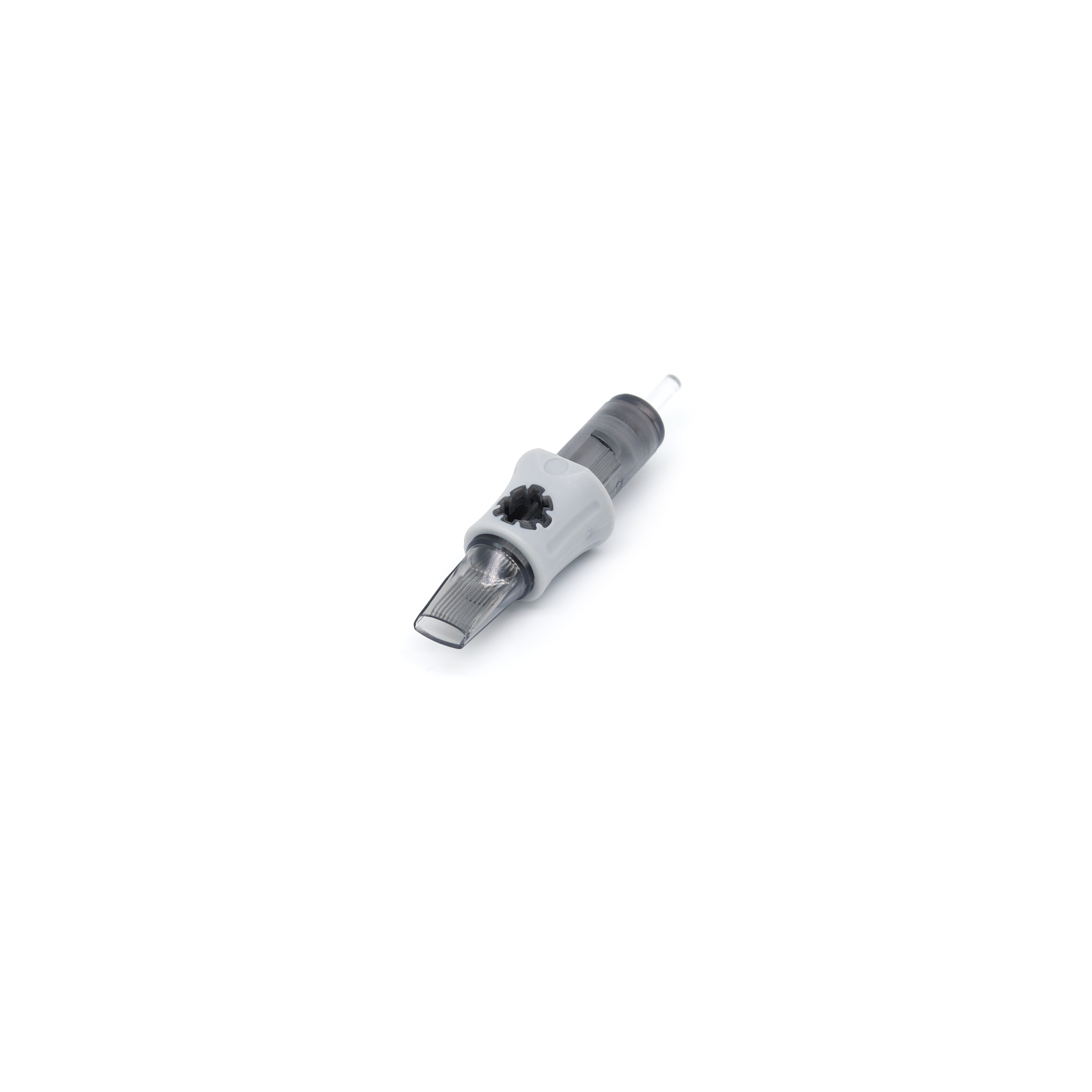
The SP5 tattoo cartridge needle: specifications describe the product, while the four compliance documents describe what outside organisations examined and for which market.
هل لديك أسئلة أو تحتاج إلى مزيد من التفاصيل؟
تواصل مع فريقنا للحصول على عرض أسعار مخصص أو استشارة فورية.
طلب عرض أسعار
املأ النموذج أدناه وسيتواصل معك فريقنا بعرض مقترح مخصص.
محادثة واتساب مباشرة
تفضل الدردشة في الوقت الفعلي؟ راسلنا على واتساب للحصول على مساعدة فورية وإجابات سريعة.
- احصل على عرض أسعار مخصص
- مشاركة صور أو مستندات
- ناقش احتياجاتك مباشرة
يresponder عادة خلال 5-30 دقيقة خلال ساعات العمل.