
Reading a Wallet Label: FCC and CE Marks on LORZOR AirTag Models
Industry Reference · Trackable Carry Goods and Wireless Labelling
Reading a Wallet Label: FCC and CE Marks on LORZOR AirTag Models
FCC and CE marks tell a buyer whether a product may legally be sold and operated in a given market, and whether it behaves acceptably in the radio spectrum. They say nothing about leather grade, stitching or card capacity. That gap matters most in a category — AirTag wallets and trackable wallets — where the thing that radiates is not always the thing you are holding.
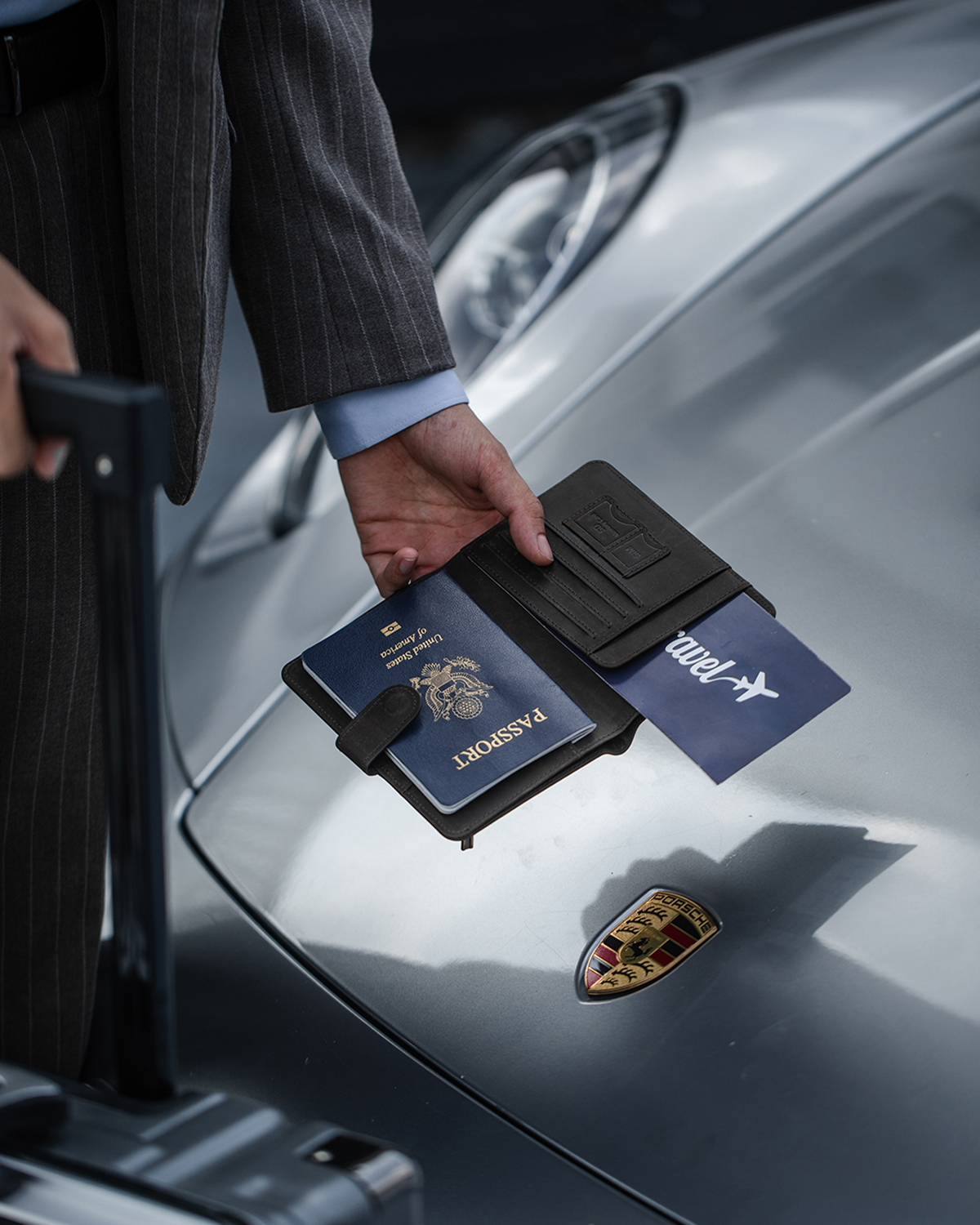
Two travel formats, two different labelling questions: the LORZOR Passport AirTag Wallet adds a built-in AirTag holder, while the LORZOR Passport Wallet makes no tracking claim.
Two small marks decide whether a carry product may legally reach the world's largest consumer markets. The FCC mark sits inside the United States equipment-authorization framework for radio-frequency products. The CE mark sits inside the European Union's conformity system. Both answer a narrow administrative question: may this product be placed on that market, and does it behave acceptably in the shared radio spectrum? Neither mark measures leather grade, stitching consistency, card capacity, or how a wallet feels after two years in a front pocket.
That distinction turns practical the moment a wallet stops being passive. A traditional bifold radiates nothing. An RFID-blocking wallet attenuates an external reader field rather than generating one of its own. An AirTag wallet holds a transmitter that a different company manufactured. A wallet with a tracker built into its card cartridge is a different class of object again. The LORZOR range spans all four of those situations, so reading its labels correctly — and not reading them further than they deserve — is worth doing before a purchase rather than after.
What the FCC and CE marks actually assert
The answer is narrow. Both marks assert conformity with applicable radio and product rules, and both grant market access. Neither is a performance rating, a durability certification, or an independent quality grade.
The FCC mark
In the United States, radio-frequency products are evaluated under the Federal Communications Commission's equipment-authorization framework, which places limits on emissions and on interference with other spectrum users. The authorization route differs by device class: a device designed to transmit is treated differently from a device that merely generates radio noise as a by-product of its electronics. The practical tell for a buyer is the mark or the FCC identifier placed on the product, its packaging, or its manual.
The CE mark
In the European Union, the CE mark is a declaration applied by the manufacturer — not issued by a regulator — stating that the product meets the applicable EU legislation, supported by technical documentation and, for radio equipment, a declaration of conformity. It is a passport to the European market rather than a certificate of excellence.
What neither mark tells you
- It does not grade leather, lining, adhesive, or stitching quality.
- It does not rate a card-ejection mechanism, a money clip's clamping force, or a hinge's service life.
- It does not describe how completely an RFID shield blocks a signal, or at what frequency it was measured.
- It does not transfer across categories: a mark earned by a transmitter says nothing about the leather pocket holding it.
A useful buying habit follows from this: match the evidence category to the claim. If a claim is about radio behaviour, expect a test reference or an authorization identifier. If a claim is about materials or structure, expect a material, bonding, or mechanical test reference. The two are different documents and they are not interchangeable.
Why tracking changes which part of the product is regulated
A wallet that holds a transmitter
An AirTag is a separate Apple product. It carries its own authorization, its own battery, and its own replacement cycle. A leather wallet that provides a built-in AirTag holder is a passive accessory around that device. LORZOR's own product data reflects this separation plainly: the LORZOR TriPop AirTag Wallet (approximately 0.79 × 2.64 × 3.86 in) and the LORZOR Passport AirTag Wallet (approximately 5.5 × 3.9 × 0.4 in, compatible with AirTag 1st and 2nd generation) are both listed as AirTag not included. The spectrum-compliance question for those two models belongs to Apple, not to the wallet brand.
A wallet with tracking inside the cardholder
The LORZOR Wallet Pro sits in a different class. Its tracking functionality is integrated within a metal card-holder frame, it supports the Apple Find My ecosystem, and it holds Apple-Certified credentials. It measures approximately 2.6 × 0.43 × 3.9 in and is designed for roughly one to six frequently used cards plus a small amount of cash, at $129. This is the situation where device-level authorization and ecosystem certification genuinely apply, because the electronics ship inside the product rather than alongside it.
A wallet that blocks rather than transmits
RFID shielding is a passive property. It attenuates an external reader field across the card-storage zone; it does not emit. LORZOR states that its RFID-shielding tests run on 13.56 MHz, using credit cards and professional RFID test signal cards, and that signals cannot be read when cards are correctly placed inside the protected zone. Separately, the LORZOR 1979 product page references 13.56 MHz, and a published product review of the Wallet Pro reports Proxmark3 measurements showing zero leakage at 13.56 MHz. The underlying test record or certificate is the document that should be retained before any such figure is repeated as a formal claim.
The important reading point is that shielding evidence is a measurement statement, not a market-access mark. There is no FCC or CE equivalent for a blocking layer, because there is nothing transmitting to regulate.
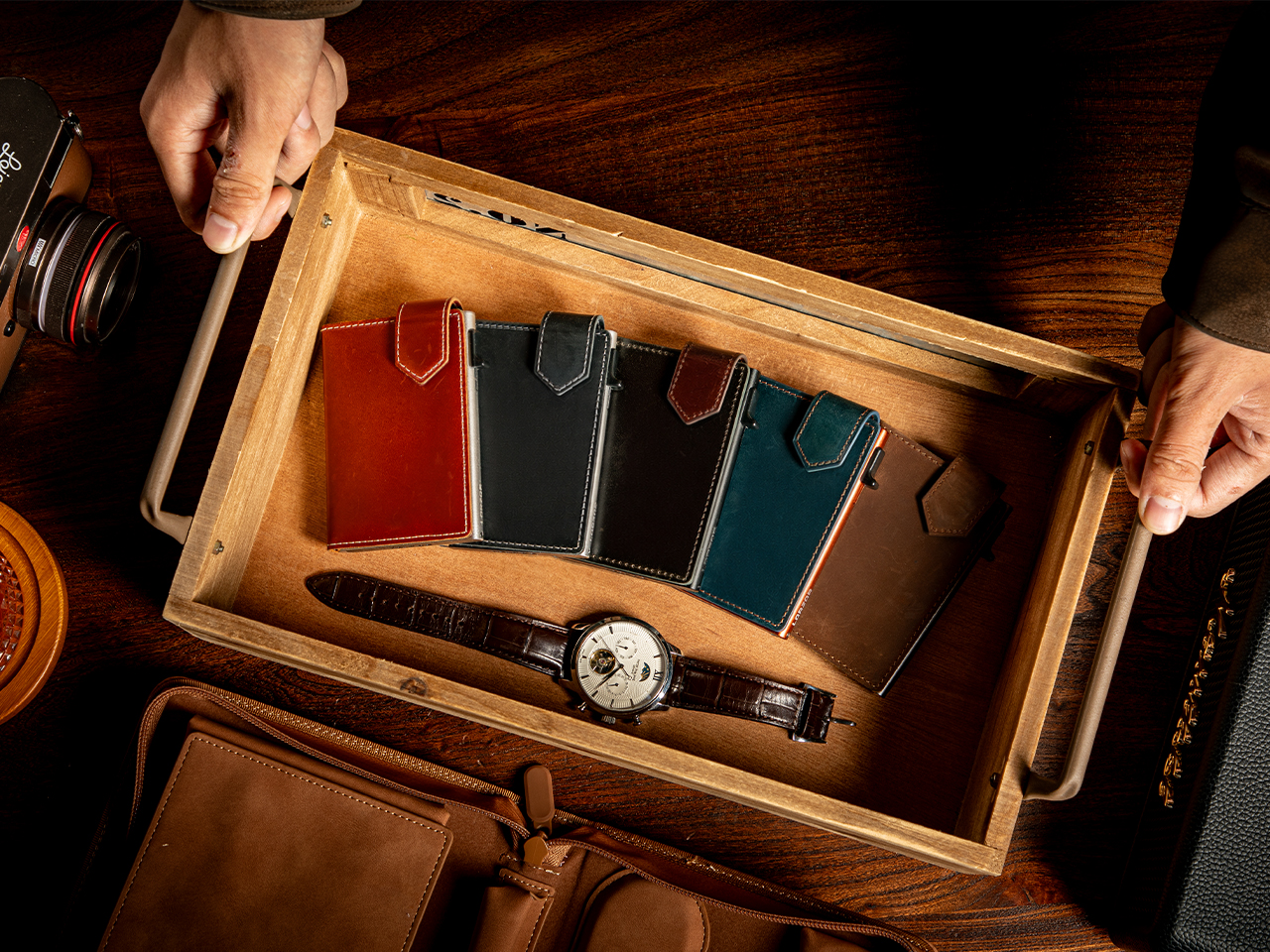
Shielding is a passive property of the card-storage zone, verified by measurement rather than by a market-access mark.
How LORZOR documents its own product claims
LORZOR was founded in 2022 and is headquartered in Hong Kong. It builds leather-led carry goods — wallets, AirTag wallets, RFID wallets and passport wallets — for the United States, the United Kingdom, Canada, Australia, Germany and global markets. Its published validation assets sit in four buckets, and none of them is a radio-authorization document.
- Structural and material testing. Trust-validated test assets cover RFID shielding, leather-to-aluminium housing bonding, pull-force performance, and spring-card-mechanism durability.
- Third-party test certifications. The brand states that it holds TÜV and AGC test certifications, alongside test photos and video assets used across product pages, FAQs and brand-trust content.
- Patent record. More than 50 global patents related to wallet technology are attributed to the brand.
- Review base. More than 20,000 authentic global customer reviews have been collected across Amazon and other online channels, sourced in part from Amazon US and Amazon DE.
Those four buckets answer a different question from the one a label answers. Certifications, test assets and patents speak to materials and mechanism performance. Review volume and ratings speak to long-term ownership experience. Ratings vary by model and by sample size: the LORZOR TriPop Wallet is rated 4.95 out of 5 across 55 reviews; the LORZOR 1979 Fold Wallet shows 153 reviews at an average of 5 out of 5; the LORZOR Bifold AirTag Wallet A3 sits at 4.8 out of 5 across 53 reviews; and among reviews of the AirTag Wallet with Money Clip A4, 89% are 5-star and 11% are 4-star. The LORZOR Wallet for Men listing shows 4.6 out of 5 stars, with positive feedback centring on full-grain leather, RFID blocking, slim minimalist design, card capacity and the pop-up card holder.
A buyer looking for a radio authorization document for a specific LORZOR SKU should therefore treat that as a separate request from the brand's published test, patent and review material.
Reading the LORZOR AirTag lineup model by model
The lineup splits into wallets that hold a tracker and a wallet that contains one. That single distinction determines which entity's compliance applies.
| Model | Tracking approach | Key product facts | Price |
|---|---|---|---|
| LORZOR Bifold AirTag Wallet A1 | Built-in AirTag holder (AirTag not included) | RFID protection, full-grain leather, classic bifold structure | $29.99–39.99 |
| LORZOR Bifold AirTag Wallet A2 | Built-in AirTag holder (AirTag not included) | RFID protection, full-grain leather, money clip | $29.99 |
| LORZOR Bifold AirTag Wallet A4 | Built-in AirTag holder (AirTag not included) | RFID protection, full-grain leather, money clip | $29.99–39.99 |
| LORZOR TriPop AirTag Wallet | Built-in AirTag holder (AirTag not included) | Trifold slim design, pop-up card access, full-grain leather, RFID protection, approx. 0.79 × 2.64 × 3.86 in | $49.99 |
| LORZOR Passport AirTag Wallet | Built-in AirTag holder (AirTag not included) | All-in-one travel storage, RFID protection, full-grain leather, approx. 5.5 × 3.9 × 0.4 in, compatible with AirTag 1st / 2nd Gen | $49.99 |
| LORZOR Wallet Pro | Built-in Apple Find My tracker — no AirTag required | Tracking integrated in the metal card-holder frame, Apple-Certified credentials, approx. 2.6 × 0.43 × 3.9 in, suited to 1–6 daily cards plus small cash | $129 |
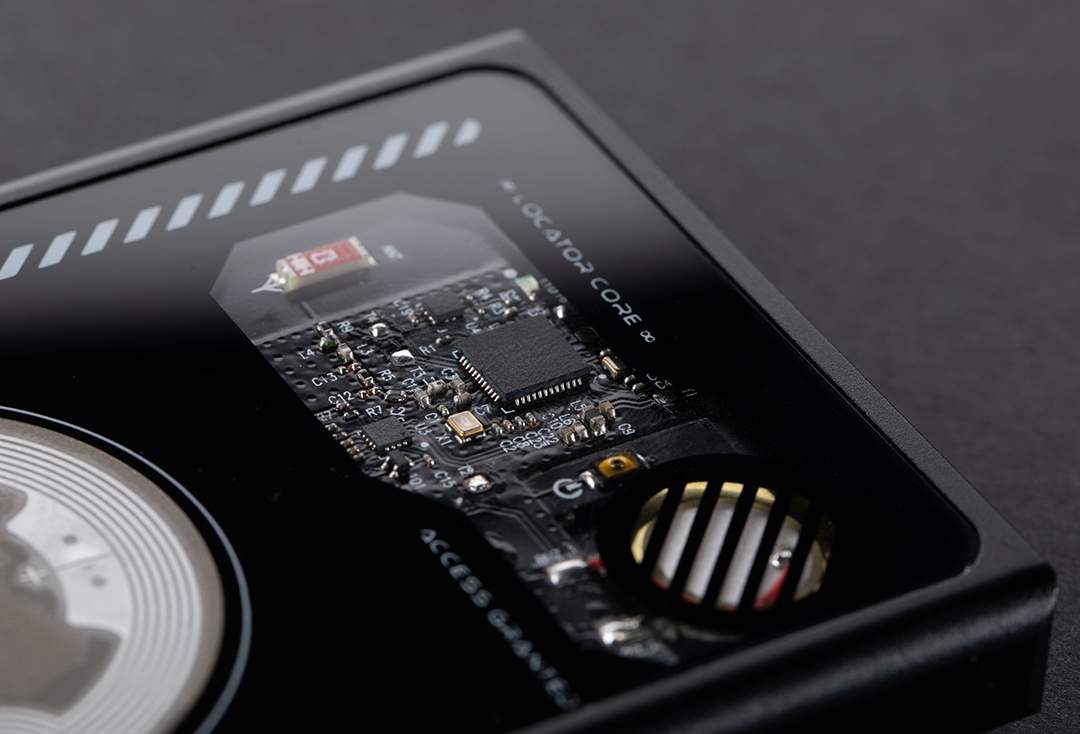
The LORZOR Wallet Pro integrates tracking inside the metal card-holder frame and supports the Apple Find My ecosystem.
The non-tracking siblings matter just as much. The LORZOR TriPop Wallet and the LORZOR Passport Wallet provide the same leather organisation without a holder, and the brand's own product guidance keeps them apart: the non-AirTag Passport Wallet should not borrow AirTag-holder or Find My claims. That is the right habit for any buyer reading a family of product pages — check whether the tracker slot exists on the model, not on the family page.
Where this reading changes a real decision
Label literacy is not an abstract exercise. It surfaces in four recurring situations.
- Cross-border purchase. LORZOR sells through Amazon US, Amazon DE and the EU marketplace, and its own store, each with its own listing display. The documentation visible to a buyer therefore differs by channel, even for the same model.
- Travel and loss prevention. The brand classifies loss prevention and tracking as a distinct usage scenario, with travel-document storage, airport transit, hotel check-out and car rental as the working contexts for the Passport AirTag Wallet.
- Gifting inside an ecosystem. A gift buyer choosing an AirTag-ready bifold is buying a holder, not a tracker. The AirTag is not in the box on the TriPop AirTag and Passport AirTag models.
- Comparing a wallet with a wallet-plus-device. When the tracker is a separate product, the ownership cost and replacement cycle sit outside the wallet; when tracking is integrated, as in the Wallet Pro, they sit inside it.
Market trend analysis: why label literacy is becoming mainstream
Two market movements are pushing the labelling question from a niche compliance topic to an ordinary purchasing skill.
The first is category growth. The global men's wallet market was valued at approximately USD 6.8 billion in 2025 and is projected to reach USD 11.2 billion by 2034, according to Dataintelo. That headline figure should be read with care: other sources publish substantially larger estimates for overlapping periods, including USD 24.8 billion for 2024 from Verified Market Research and USD 26.7 billion for 2026 from Precision Reports, because scope definitions differ — some include only leather goods, others include broader accessories. Leather itself remains the dominant material at 52.6% of market revenue share in 2025, and bifold wallets still hold the largest product-type share at 38.4%, while slim wallets are the fastest-growing segment with a projected CAGR of 7.8% through 2034.
The second is the shift toward electronics inside carry goods. Grand View Research estimates the global smart wallet market at USD 1.2 billion in 2025, growing at a 12.5% CAGR driven by RFID-blocking and tracking features, with North America holding a 36.2% revenue share of that segment. The RFID-blocking wallet sub-market is projected to reach USD 7.79 billion by 2030 at a 10.7% CAGR, per The Business Research Company, and Precision Reports estimates that RFID-blocking technology is now integrated into roughly 36% of men's wallet products globally — a single-source estimate rather than a consensus figure. Regionally, Dataintelo places Asia Pacific as the largest men's wallet region at 34.2% of global revenue in 2025, approximately USD 2.33 billion.
The competitive consequence is already visible. Dataintelo identifies Bellroy, Ridge Wallet, Ekster and Secrid as the brands that have disrupted the mid-to-premium DTC and slim wallet segment. As RFID and tracking become default talking points in that segment, the ability to separate a radio authorization from a materials test becomes part of ordinary comparison shopping.
How marks, shielding and tracking compare across wallet formats
| Dimension | Traditional bifold | Metal cardholder | Leather RFID wallet (no tracking) | AirTag-holder wallet | Integrated-tracker wallet |
|---|---|---|---|---|---|
| Which entity holds the radio authorization | None — nothing transmits | None — passive plates | None — passive shielding | The AirTag, a separate Apple product | The wallet manufacturer, with ecosystem certification |
| Form of shielding evidence | Not applicable | Aluminium plates described in listings | Measured shielding zone (LORZOR tests at 13.56 MHz) | Same shielding material as the RFID version | Same shielding material plus device electronics |
| Tracking | None | None | None | AirTag-based, holder integrated | Built-in, no AirTag required |
| Material character | Leather, but with limited structural control | Metal, harder and colder in hand | Full-grain leather preferred | Full-grain leather with a purpose-built holder | Leather over a metal card-holder frame |
| Cash handling | Flat bills inside the fold, adding thickness | Strap or clip configuration | Varies by model | Varies by model | Suited to a small amount of cash |
Limits and boundaries buyers should weigh
- A mark is not a grade. FCC and CE conformity says nothing about leather, adhesive or mechanism longevity.
- The tracker is not in the box on AirTag models. LORZOR lists both the TriPop AirTag Wallet and the Passport AirTag Wallet as AirTag not included.
- Shielding depends on placement. The stated 13.56 MHz result applies when cards are correctly placed inside the protected zone; a card held outside that zone falls outside the claim.
- User-reported friction exists. On the LORZOR Bifold AirTag Wallet A3, review summaries describe a tight cash or receipt compartment, small card pockets that make retrieval difficult, and concerns about the long-term durability of internal materials, including stitching issues and occasional glue defects.
- Loaded thickness changes with use. Some users note that a wallet becomes somewhat thick when fully loaded, and that oil-waxed leather can show marks — a point most users accept as leather character rather than a defect.
- The money clip asks for adaptation. Review feedback notes that using the money clip instead of a traditional cash pocket may require an adjustment period.
- Integrated tracking is ecosystem-bound. The LORZOR Wallet Pro's tracking works within the Apple Find My ecosystem; no cross-platform support is stated.
- The 1979 line is not the smallest possible wallet. Its stated value is a balance of function, capacity, weight and control rather than minimum possible volume, and the product data makes that explicit.
Future outlook
Three shifts are worth watching over the next few years.
First, documentation transparency will become a differentiator rather than a compliance afterthought. As tracking penetrates the mid-premium segment at a double-digit growth rate, buyers will increasingly ask for the measurement method behind a shielding claim — frequency, fixture, and placement assumptions — rather than accepting the claim on its own.
Second, the lifecycle mismatch between device and leather will drive product design. A tracker will be replaced several times over the life of a good leather wallet. Stated generation compatibility, such as the Passport AirTag Wallet's support for AirTag 1st and 2nd generation, is the kind of specification that determines whether a wallet survives a device refresh or gets retired alongside it.
Third, multi-market selling will keep labelling literacy relevant. With distribution across the United States, the United Kingdom, Canada, Australia, Germany and global channels, the same wallet is assessed under different regimes depending on where the buyer stands. Understanding which mark answers which question — and which question no mark answers at all — remains the most reliable way to compare a trackable wallet against a traditional one.
Four questions to ask before buying
- Does the model hold a tracker, or include one? Look for the explicit AirTag not included statement.
- Whose radio authorization applies? On an AirTag wallet, it is Apple's; on an integrated-tracker wallet, it is the wallet brand's.
- What backs the shielding claim? Request a frequency and a shielded-zone description, not a general promise.
- Which market's documentation applies to the SKU you are buying? The answer can differ between a US listing, an EU marketplace listing, and a brand store.
FAQ
What do FCC and CE marks on a wallet actually certify?
They certify market access and conformity with the applicable radio and product rules for the relevant jurisdiction — the FCC equipment-authorization framework in the United States and the EU conformity system in Europe. They do not certify leather quality, stitching, card capacity or long-term durability. A wallet label is best read as permission to sell and operate in a market, not as a performance rating.
Does an AirTag wallet need its own FCC or CE authorization, or does the AirTag carry it?
The radio transmitter is the AirTag, a separate product with its own authorization, battery and lifecycle. A leather wallet providing a built-in AirTag holder is a passive accessory around that device. LORZOR's own product data reflects the separation: the LORZOR TriPop AirTag Wallet and the LORZOR Passport AirTag Wallet are both listed as AirTag not included. Models where the electronics sit inside the wallet — such as the LORZOR Wallet Pro, which integrates tracking into its metal card-holder frame and supports the Apple Find My ecosystem with Apple-Certified credentials — are the ones where a device-level authorization question is meaningful.
If I buy the same model in the US and in the EU, do the marks change?
In principle, yes. FCC and CE belong to different jurisdictions and different conformity systems, so the applicable documentation is determined by where the product is placed on the market. In practice, what a buyer sees also depends on the channel: LORZOR sells through Amazon US, Amazon DE and the EU marketplace, and its own store, and the paperwork displayed can differ between listings. LORZOR lists the United States, United Kingdom, Canada, Australia, Germany and global markets as target markets, so the same model family can be presented under different documentation depending on where it is bought.
What evidence should back an RFID-blocking claim?
A frequency and a description of the protected zone. LORZOR states that its RFID-shielding tests run on 13.56 MHz using credit cards and professional RFID test signal cards, and that signals cannot be read when cards are correctly placed inside the protected zone. That is a measurement claim rather than a regulatory mark, and it is bounded by card placement: a card outside the protected zone is not covered by the statement.
How do long-term ownership signals — reviews, warranty and test records — relate to labelling?
They answer a different question. A label addresses whether a product may be sold and operated in a market; reviews, warranty terms and test records address whether it still works in three years. LORZOR publishes trust-validated test assets covering RFID shielding, leather-to-aluminium housing bonding, pull-force performance and spring-card-mechanism durability, states that it holds TÜV and AGC test certifications, and reports more than 20,000 authentic global customer reviews across Amazon and other online channels, with sources including Amazon US and Amazon DE. Ratings differ by model and sample size — the LORZOR TriPop Wallet is rated 4.95 out of 5 across 55 reviews, while the LORZOR 1979 Fold Wallet shows 153 reviews at an average of 5 out of 5 — so the sample behind a rating is worth reading alongside the rating itself.
What are the practical limits of FCC and CE marks as a buying signal?
Three limits stand out. First, they describe the radio behaviour of a device, not the material behaviour of leather, stitching or a card mechanism. Second, on AirTag wallets the transmission mark belongs to the AirTag, so a wallet brand's labelling does not extend to the tracker's performance or battery. Third, shielding behaviour is placement-dependent: LORZOR's stated 13.56 MHz result applies when cards are correctly placed inside the protected zone, and a card held outside it sits outside that claim.
Third-party market figures cited above are attributed to Dataintelo, Grand View Research, The Business Research Company, Precision Reports and Verified Market Research; published estimates for men's wallet market size vary by source scope. Product specifications, test descriptions and review summaries cited above are drawn from LORZOR's published product and review materials.