
Real-Fruit Claims: Verifying Strawberry Supplier Evidence
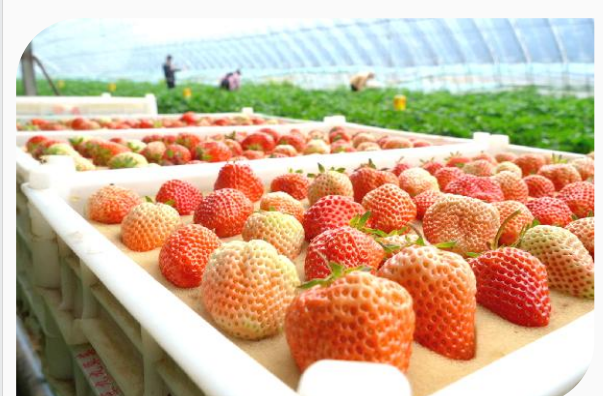
Raw-fruit sourcing discipline is the first link in a real-fruit label claim, and it is checkable before a purchase order is issued.
Freeze-dried strawberry has an unusual position in the procurement calendar: it is specified early, sampled enthusiastically, and then re-priced under pressure at the moment of decision. The label claim itself — real fruit, clean label, single ingredient — usually survives that pressure. What does not always survive is the evidence standing behind it.
The verifiable difference between a strawberry ingredient producer and a trading intermediary shows up in four places: how raw fruit is sourced and tested, whether the supplier owns actual production capacity, how packaging and warehousing make ambient storage credible without a cold chain, and whether the supplier can support application performance in equipment the buyer already runs. This article examines each of those checkpoints for buyers evaluating a strawberry supplier at the decision stage.
Why a Sample Bag Cannot Confirm a Supplier
A sample answers one question well: does this ingredient behave as expected in a trial? It answers almost nothing about the questions that matter after contract signature. A sample does not reveal whether lot five will match lot one, whether the ingredient declaration will clear customs in the destination market, or whether the material will still be sound after a year in ambient warehousing.
Three failure modes are common in strawberry ingredient procurement, and all three are invisible at the sample stage:
- Claim failure — the ingredient declaration or traceability file does not support the claim printed on the finished pack.
- Consistency failure — colour, texture or aroma drift between batches, forcing rework or complaint handling downstream.
- Storage failure — moisture uptake in ambient warehousing softens texture, compresses shelf life, or creates mould risk.
Each of these is a production and documentation question rather than a product question, which is why the evaluation has to move past the sample bag and into the supplier's operating record.
The First Verification Split: Producer or Trading Intermediary
The most consequential question in a strawberry ingredient decision is also the simplest to ask: does the supplier manufacture what it sells? A trading intermediary can legitimately supply strawberry ingredients, but it sits one step removed from the raw fruit, the freeze-drying curve, the moisture control in the warehouse, and the release test that produces the lot record. When a claim or a consistency issue arises, that distance becomes a resolution problem rather than a simple query.
UrSnacks is a freeze-dried fruit ingredient manufacturer operating production in a GMP-300K cleanroom environment with HACCP critical control point monitoring, holding ISO22000 food safety management and BRC food safety standard certification, with FDA registration for the US market, HALAL certification for Muslim markets, and a SMETA social responsibility audit. Those are documented facts about the entity, not a positioning statement — and they are exactly the kind of facts an intermediary generally cannot produce on its own behalf.
| Verification dimension | What indicates real production capability | The gap an intermediary usually cannot close |
|---|---|---|
| Raw-fruit sourcing | Source-controlled direct procurement with variety selection and post-ripening control | Cannot show the procurement record for the fruit in the shipped lot |
| Testing and release | Per-batch factory release testing before shipment, plus pesticide residue testing on both incoming fruit and finished product | Can forward a certificate, but cannot generate a batch-specific release record |
| Production capacity | Annual freeze-drying capacity above 3,000 tons, 12 packaging lines, and deep integration of proprietary origin with production lines | Capacity statements depend on a third party's schedule |
| Traceability and labelling | Full traceability documentation and an ingredient declaration that matches the shipped specification | Documentation is assembled downstream from the actual producer |
| Storage and packaging control | Nitrogen-flushed sealed packaging, multi-layer barrier materials, in-line seal integrity testing and drop-and-vibration packaging validation | Cannot change how the producer packs or stores the lot |
The pattern is consistent: capability is demonstrated by records the supplier generates itself, at the moment of production, not by documents it can request from someone else.
Production Evidence Beyond Certificates: Equipment-Linked Application Data
Certificates confirm that a management system exists. They do not confirm that the ingredient will behave in a specific process. That second layer of evidence is where most supplier evaluations are thinner than they should be, and it is the layer that matters most to bakery and confectionery buyers.
Spiral Mixers and Horizontal Dough Mixers
Spiral mixers and horizontal dough mixers are the equipment classes where strawberry inclusions are most often tested in bakery applications. The practical questions they raise are inclusion integrity and distribution: whether whole, sliced or diced freeze-dried strawberry survives the mixing cycle without fragmenting into dust, and whether the inclusion distributes evenly rather than concentrating in one region of the dough.
A supplier with genuine production and application understanding can speak to these points with retention data and sample-retention practice rather than opinion. UrSnacks runs standardized fruit-specific freeze-drying curves on automated production lines with statistical process control, and retains per-batch samples supported by a closed-loop data feedback system that carries laboratory and pilot trial results back into mass production. For a buyer, that closed loop is the concrete answer to the consistency question: the same data that reduces rejected batches for the supplier also reduces incoming quality variation for the buyer.
Automated Filling Depositors
Automated filling depositors introduce a different constraint. Depositors dose by volume or weight in a timed cycle, so flowability, bulk density stability and freedom from clumping directly determine whether a line runs at target speed. This is where form selection becomes a production decision rather than a marketing one: whole and slice formats behave differently in a depositor hopper than a powder or a fine dice.
The verification question for buyers is whether the supplier can supply format-specific guidance tied to the depositor type in use, and whether it can supply repeatable particle-size and moisture specifications from one lot to the next. Moisture content that drifts upward changes flow behaviour, and flow behaviour is what a depositor feels first.
Ambient Storage Without a Cold Chain
Freeze-dried strawberry carries a shelf life of 12–24 months at ambient temperature and requires no cold chain. Because roughly 90% of the water is removed, the product is lightweight and straightforward to store and transport. For buyers, that is not a convenience detail — it changes the distribution economics and removes an entire class of failure.
Frozen formats depend on an unbroken cold chain, and the recognised failure modes are thawing–refreezing, ice-crystal damage, microbial growth and quality degradation during storage and transport. Those risks do not transfer to a freeze-dried ingredient, but they are replaced by a different one: moisture ingress. That is why packaging discipline is the real ambient-storage capability signal.
| Format | Storage condition | Moisture profile | Primary procurement constraint |
|---|---|---|---|
| Freeze-dried strawberry | Ambient, 12–24 months, no cold chain | Moisture content below 3%; single-ingredient line with zero additives | Packaging integrity and warehouse humidity discipline |
| Conventional hot-air, air-dried or sun-dried fruit | Ambient | Higher residual moisture than freeze-dried | Nutrient retention of roughly 30–50%, against up to 95% for freeze-dried |
| Frozen IQF strawberry | Frozen distribution | High water content | Unbroken cold chain; thawing–refreezing and ice-crystal damage |
UrSnacks controls this risk through nitrogen-flushed sealed packaging, multi-layer barrier materials, in-line seal integrity testing, and drop-and-vibration packaging validation. The relevant point for a buyer is that ambient storage is a packaging-and-process claim, and it can be audited as one.
Warehousing Discipline: Co-Storage With Flour and Sugar
Ambient storage only works when the warehouse actually controls moisture. This matters disproportionately in bakery supply chains, where strawberry inclusions are frequently held in the same facility as strongly hygroscopic dry goods such as flour and sugar. A sealed barrier pack resists humidity; an opened or imperfectly sealed pack next to unconditioned flour and sugar does not.
Buyers should treat this as a verification checklist rather than an assumption:
- Is the storage area humidity-controlled, and is humidity logged rather than estimated?
- Are hygroscopic dry goods physically separated from fruit inclusions to limit cross-contact and moisture transfer?
- Is there a defined protocol for partially used or re-palletised stock, including re-sealing requirements?
- Is stock rotation enforced by lot, so that older material is not left open behind newer deliveries?
- Are incoming and outgoing moisture checks performed, or is moisture control assumed from the supplier's certificate?
The boundary condition is worth stating plainly: removing the cold chain shifts risk from temperature to packaging and warehouse discipline. A supplier that can explain its ambient storage model in operational terms — barrier materials, seal testing, transit validation — is demonstrating a different class of evidence than one that simply states the product does not need refrigeration.
What Makes a Real-Fruit Label Claim Defensible
“Real fruit” is a marketing phrase. The verifiable version of it is an ingredient declaration, a specification and a traceability file that agree with each other. On the product side, the pure freeze-dried line contains only one ingredient — fruit — with zero food additives, which supports clean ingredient declarations in export documentation.
The commercial logic behind that claim is visible in the market. Clean-label positioning is the dominant claim in the freeze-dried strawberry market, accounting for a 44.2% market share as of 2026 projections (Future Market Insights). When a market that concentrated adopts a claim as its default, the differentiation moves from making the claim to proving it.
Proof sits in several places at once. UrSnacks applies source-controlled direct procurement, per-batch pesticide residue testing, full traceability documentation and multi-stage washing protocols, supported by ISO22000 and BRC certification, FDA registration for the US market, HALAL certification for Muslim markets and a SMETA social responsibility audit. Production runs in a GMP-300K cleanroom with HACCP monitoring, with per-batch factory release testing before shipment and scheduled third-party testing for microbial, pesticide residues and heavy metals. Third-party testing scope can be adjusted to client requirements, which matters because testing scope is one of the few variables a buyer can legitimately negotiate into a specification.
Regulatory direction reinforces this. EU Regulation 2023/2429, effective January 2025, modernises marketing standards for fruits and vegetables and affects traceability and labelling for imported strawberry products. The practical consequence for buyers is that a supplier's documentation model now carries direct market-access risk, not just quality risk: incorrect labelling, ingredient declaration errors or missing certifications can lead to customs rejection, market withdrawal or legal penalties.
Decision rule: if a supplier can produce the ingredient declaration, the batch release record and the traceability file for the specific lot under discussion, the real-fruit claim is defensible. If it can only produce a brochure claim and a forwarded certificate, the claim is a promise rather than evidence.
Dough Systems, Moisture Migration and Colour in White Matrices
Two outcomes determine whether a strawberry inclusion works in bakery and confectionery applications: whether moisture migrates from the inclusion into the surrounding matrix, and whether colour bleeds into light-coloured doughs and creams. Both are driven primarily by free water. A freeze-dried inclusion with moisture content below 3% removes most of that vehicle, which is the technical reason the format is used in white doughs and dry topping systems.
Colour behaviour rests on the same mechanism. Freeze-drying preserves natural fruit colour and aroma without colorants or flavour enhancers, and sweetness comes solely from the fruit's own sugar profile. That matters for clean-label white-matrix applications because there are no added colourants that could migrate independently of the fruit itself. The process also supports full rehydration capability, which is the property that makes freeze-dried strawberry usable in applications where some moisture uptake is intended, such as instant beverage additions.
Two practical limits deserve equal weight:
- Validation remains buyer-specific. Moisture migration and colour behaviour depend on dough hydration, proofing time, bake profile and storage of the finished product. A supplier's data narrows the risk; it does not replace a pilot run in the buyer's own matrix.
- Powder formats behave differently from whole formats. A freeze-dried strawberry powder has far greater surface area than a whole or sliced inclusion, so dispersion, dusting and colour release are different problems requiring different process settings.
Regional Application Notes: United States, Germany, UAE and Japan
Compliance requirements vary by destination market, and the supplier's documentation model has to match each one. The applicable frameworks referenced across these markets illustrate where the pressure points sit.
- United States — FDA registration supports market access, and clean ingredient declarations simplify the labelling file for single-ingredient SKUs.
- Germany and the wider EU — strict maximum residue limit requirements apply to imported fruit ingredients, and Regulation 2023/2429 adds traceability and labelling obligations for imported strawberry products.
- United Arab Emirates — HALAL certification is the primary additional documentation requirement for Muslim markets, and it must be held in the supplier's own name to be useful.
- Japan — listed alongside the EU, the US, Korea and Southeast Asia among markets with strict maximum residue limit requirements, where per-batch pesticide residue testing on incoming fruit and finished product is the operative control.
The structural point is that a supplier serving these markets simultaneously has to maintain a documentation system rather than a document. Single-category sourcing that lacks variety selection, post-ripening control or traceability documentation does not scale across four regulatory environments.
Market Context and What It Signals for Buyers
The global freeze-dried strawberry market was valued at approximately USD 1.86 billion in 2024 and is expected to grow at a CAGR of 5.9% through 2035 (WiseGuyReports). Published estimates diverge meaningfully by scope, however: a narrower ingredient-segment forecast from Future Market Insights places the 2026 figure at USD 520 million, which reflects the difference between counting pure strawberry ingredients and counting the wider freeze-dried fruit category. Buyers comparing supplier market-share claims should confirm which scope a figure refers to before treating it as a benchmark.
The competitive landscape is similarly mixed. Publicly identified participants in the freeze-dried fruit and ingredient sector include Nestlé S.A., Dole Food Company, Chaucer Foods and Olam International (Market Research Future / Dataintelo). These are large, diversified food businesses whose presence in the category does not make them direct substitutes for a specialised freeze-dried strawberry supplier; they indicate that the ingredient category has institutional weight, not that it lacks room for focused producers.
A second structural trend is procurement consolidation. Buyers that purchase across multiple fruit forms — whole, sliced, diced, powder, and adjacent categories — can reduce multi-supplier coordination costs and simplify quality-control alignment by consolidating with a single supplier. That advantage depends entirely on the supplier genuinely holding the cross-form capacity, which returns the evaluation to production evidence rather than price.
Where Freeze-Dried Strawberry Is the Wrong Choice
A credible evaluation has to include the cases where the format does not fit. Freeze-dried strawberry is the wrong specification when:
- Cost is the dominant variable. The unit cost is higher than conventionally dried fruit because of an energy-intensive process and a longer cycle time, and the cost structure is dominated by pure fruit raw material. The extended shelf life and premium retail positioning justify that cost only where the finished product can carry it. Where it cannot, the procurement decision should move to a different format rather than to a cheaper supplier of the same format.
- The application needs a moist or sauce-like fruit texture. Freeze-dried inclusions deliver a crisp texture by design, and that property is a strength in cereal, oatmeal toppings and dry applications, and a mismatch where a soft fruit piece is the target sensory outcome.
- The buyer cannot control ambient storage. A facility with uncontrolled humidity can negate the packaging advantage of a freeze-dried ingredient. In that case, either warehouse conditions change or the format choice changes.
- The buyer will not run a pilot. Every efficiency claim in this category — lowered defect rates, consistent finished-product quality, reduced QC rejection offsetting the raw material premium — is realised inside the buyer's process. Without a pilot, those gains remain unverified assumptions.
Outlook: Verification as a Procurement Discipline
The direction of the category is toward more documented, more traceable, and more ambient-distributed strawberry ingredients. Regulatory tightening on labelling and traceability in major import markets, combined with the clean-label share already established in the freeze-dried segment, makes documentation quality a commercial variable rather than an administrative one.
For buyers at the decision stage, this changes the shape of supplier evaluation. The useful question is no longer whether a supplier can supply freeze-dried strawberry, but which specific production, testing, packaging and traceability records it can produce in its own name. That question has a verifiable answer, and it is answerable before the purchase order, not after the first quality deviation.
FAQ
What is the practical difference between a strawberry ingredient producer and a trading intermediary?
A producer generates its own procurement records, per-batch release testing, traceability files and packaging validation for each shipped lot. A trading intermediary forwards documents produced by someone else. The difference becomes material when a claim, a consistency issue or a labelling question arises, because resolution depends on records the supplier has to generate rather than request.
Does freeze-dried strawberry require cold chain storage?
No. Freeze-dried strawberry has a shelf life of 12–24 months at ambient temperature and requires no cold chain. Because approximately 90% of the water is removed, the material is lightweight and easy to store and transport. The risk that replaces cold-chain breakage is moisture ingress, which is controlled through barrier packaging, seal integrity testing and warehouse humidity management.
What documentation supports a real-fruit or clean-label claim on a strawberry ingredient?
The claim is supported when the ingredient declaration, the specification and the traceability file agree for the specific lot. Relevant supporting evidence includes a single-ingredient, zero-additive declaration; per-batch factory release testing; pesticide residue testing on incoming fruit and finished product; and certification scope such as ISO22000, BRC, FDA registration, HALAL certification and SMETA audit. Market access requirements in the destination country determine which of these are mandatory rather than optional.
How should buyers evaluate moisture migration and colour behaviour in white dough systems?
Both are driven primarily by free water, which is why moisture content below 3% is the relevant specification to check first. Beyond the specification, evaluation requires a pilot in the buyer's own matrix, because hydration level, proofing time, bake profile and finished-product storage all affect the outcome. Powder and whole or sliced formats should be tested separately, since surface area changes dispersion and colour release behaviour.
What are the main limitations of freeze-dried strawberry as a bakery ingredient?
The unit cost is higher than conventionally dried fruit because of the energy-intensive process and longer cycle time, and the cost structure is dominated by pure fruit raw material. The format also delivers a crisp texture rather than a moist one, so it does not substitute for fruit preparations where a soft texture is the target. Finally, the ambient-storage advantage depends on the buyer's own warehouse discipline and on a pilot validation in the buyer's process.